
Hawaii isn't a fringe dive destination. The islands support over 1.5 million scuba dives annually, with more than 215 licensed dive shops and an estimated $519 million+ in annual economic impact, according to this Hawaii scuba diving overview. That scale matters because it tells you something practical. Scuba diving in Hawaii has depth, infrastructure, trained crews, repeat customers, and enough demand to support everything from beginner reef dives to specialized night operations.
That same overview points to the Kona Coast on the Big Island as a standout because volcanic terrain helps block trade winds, creating calmer seas and visibility that is often over 100 feet (30 m) year-round. For trip planning, that's the difference between hoping for good diving and booking a destination that reliably delivers.
Most articles stop at “warm water, turtles, great visibility.” That's not enough if you are trying to choose an island, match dives to your certification level, or decide whether a manta night dive or blackwater trip belongs on your schedule.
Welcome to a World-Class Diving Destination
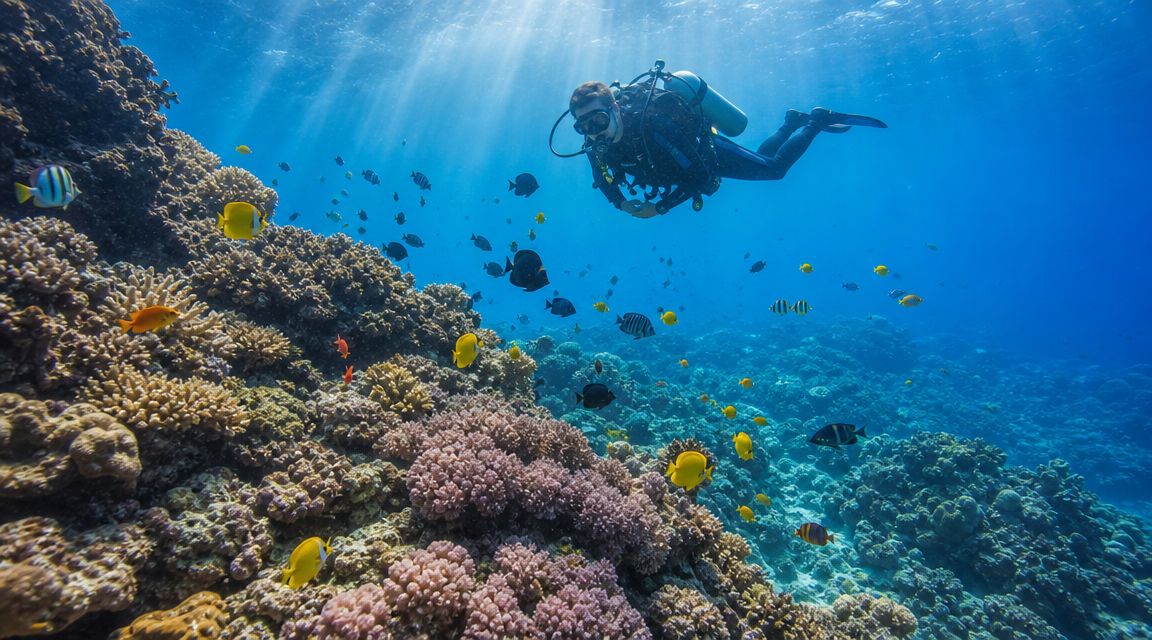
Scuba diving in Hawaii works at a level most visitors don't realize before they arrive. This isn't a place with a handful of vacation charters and a few easy reefs. It's a mature dive market with enough volume to support serious training, specialty dives, varied boat schedules, and operators who know their sites in detail.
That's why divers come back. Hawaii gives you warm water, dramatic terrain, and marine life that feels distinctly Pacific, but the bigger advantage is consistency. The conditions, the logistics, and the depth of local experience make planning easier than in destinations where weather or weak infrastructure can derail a trip.
For many divers, the center of gravity is the Big Island's west side. The leeward Kona coast tends to be the most forgiving place to book if your goal is to maximize water time and reduce cancellation risk. If you're comparing islands, that practical edge matters more than glossy brochure language.
What separates Hawaii from a generic tropical trip
The usual tropical promise is coral, fish, and sunshine. Hawaii adds terrain and texture. The underwater world reflects the islands' volcanic origin, so dives often feel more architectural than garden-like.
A lot of visitors also underestimate how much easier decision-making becomes when you start with a coast known for calmer diving conditions. If you're narrowing options, the local perspective at Kona Honu Divers is useful because it's rooted in actual diving logistics, not generic travel writing.
Practical rule: If your trip depends on getting several quality dives in a short window, favor consistency over novelty.
Why Hawaii The Unique Underwater Topography
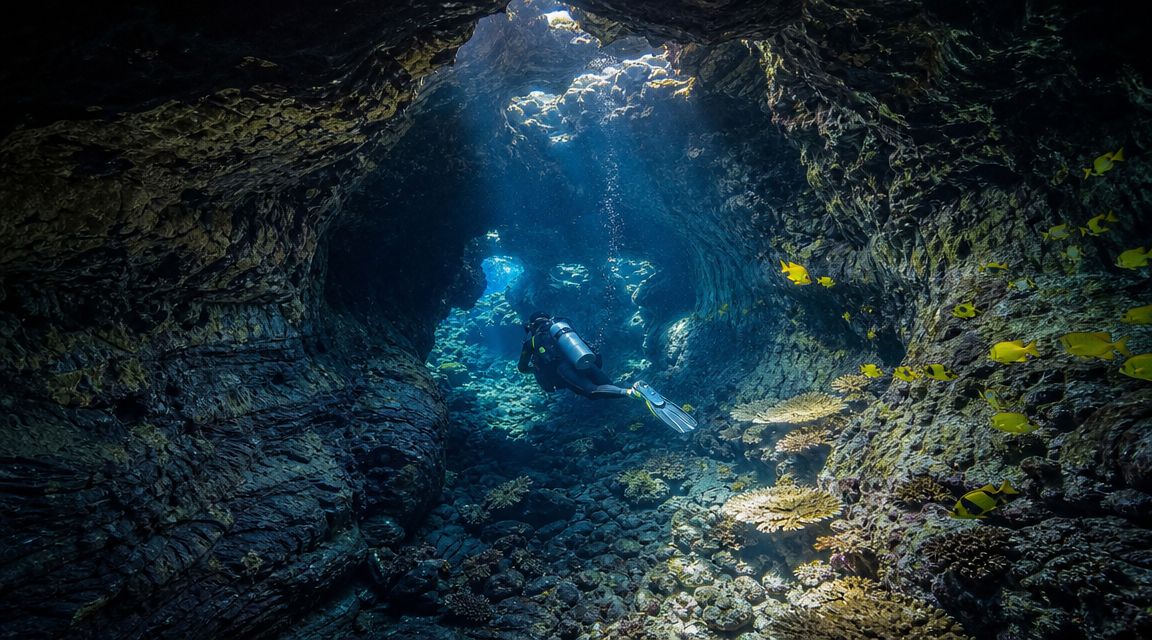
Hawaii's diving identity starts with volcanoes. PADI notes that Hawaii offers year-round diving, average water temperatures of 75–80°F (24–27°C), and marine life that can include manta rays, tiger sharks, white-tip reef sharks, migrating humpback whales, and endemic species found nowhere else in the world, as described on PADI's Hawaii diving page. Warm water helps, but geology is what makes Hawaii feel different underwater.
Independent dive guidance also points out that Hawaiian sites are shaped by lava tubes, caverns, steep drop-offs, and hard reef structure, with many accessible caverns or tunnels in the 15–45 ft range. Those same guides note that deeper wreck and wall environments demand better trim, buoyancy, ascent control, and gas planning than a simple reef cruise, as outlined in this Hawaii scuba diving technical guide.
Volcanic diving changes how you dive
In flatter reef systems, divers can often settle into a steady rhythm and drift through scenery. Hawaii asks more of you. Lava fingers, swim-throughs, shelves, and sudden relief changes mean your buoyancy has to stay cleaner, especially when there's overhead-like structure or changing depth profiles.
That doesn't make Hawaii harder in a bad way. It makes it more engaging.
A strong Hawaiian dive often feels like a sequence of environments rather than one continuous scene. You might move from a hard-bottom slope into a lava feature, then out over open blue water where larger animals can appear without much warning.
What first-time Hawaii visitors often get wrong
They expect “reef diving” in the broad vacation sense. They don't expect a seascape built by fire.
That matters because your skill set needs to match the site. Good fin control isn't just about protecting coral. It's what lets you enjoy caverns, arches, and irregular terrain without turning every narrow pass into a stress event.
Here's what works well in Hawaii:
- Neutral buoyancy before you enter structure: Don't plan to fix your trim once you're inside a lava feature.
- Slow movement through swim-throughs: Rushing makes the site feel smaller and your breathing rate worse.
- Frequent awareness checks: Depth, air, buddy position, and exit route matter more when the topography is varied.
- Clean propulsion: Frog kicks and controlled turns help in tighter spaces.
The payoff is visual and biological
Volcanic topography creates habitats and edges. Those edges attract life. Hard structure, crevices, ledges, and relief changes give marine animals places to shelter, hunt, and clean. The result is diving that feels less like floating over a plain and more like exploring a terrain map.
If you want a closer look at how that shapes the local experience, this overview of what is unique about diving in Kona captures the character of the coast well.
Hawaii rewards divers who like terrain. If your ideal dive is all soft coral and easy drifting, you may still enjoy it here, but the real signature is structure.
Planning Your Dive Trip Best Seasons and Islands
The first planning mistake people make with scuba diving in Hawaii is asking for the single best month. Hawaii is a year-round destination, but local conditions can change sharply by island, exposure, swell direction, and site. Hawaii Eco Divers specifically warns beginners about strong currents, surge, and waves that vary by location, which is why a one-size-fits-all answer doesn't help much. Their beginner guide to scuba diving in Hawaii is useful for that reason.
A better question is this: what are you trying to optimize for?
Choose your trip by goal, not by calendar
If you want beginner-friendly diving, you're looking for protected sites, manageable entries, and operators who won't force marginal conditions. If you want the cleanest visibility and easy boat logistics, some coasts give you a better shot than others. If you want signature wildlife encounters, timing and island choice start to matter more.
That's why Kona gets recommended so often. The west side of the Big Island is sheltered by volcanic mass, so it often gives travelers the most dependable diving window. If you're flying in for a limited number of days, reliability has real value.
A simple decision framework
Use this when narrowing down your trip:
- First-time diver or recently certified: Prioritize sheltered leeward diving and operators with conservative site selection.
- Family group with mixed experience: Favor destinations where calm conditions make it easier to split activities without stress.
- Photographer or visibility-focused diver: Choose coasts known for stable clarity rather than chasing a wildlife headline.
- Advanced diver: Look for destinations that support specialty charters, night operations, and topography-driven dives.
If your main question is island choice, this guide to which Hawaiian island is best for scuba diving is a solid starting point.
Hawaii diving conditions by season
| Season | Avg. Water Temp | Typical Conditions | Key Marine Life |
|---|---|---|---|
| Winter | 75–80°F (24–27°C) | Year-round diving remains possible, but local conditions can vary sharply by island and site | Migrating humpback whales may be present seasonally |
| Spring | 75–80°F (24–27°C) | Transition period. Good trips depend on local exposure, swell, and operator judgment | Reef life year-round |
| Summer | 75–80°F (24–27°C) | Many travelers look for calmer water in this part of the year, though site-level conditions still matter | Reef life year-round |
| Fall | 75–80°F (24–27°C) | Often comfortable water and strong visibility in many areas, with local variation | Reef life year-round |
What works and what doesn't
What works is building your itinerary around your actual diving goals and leaving room for site changes. What doesn't work is locking onto a blog headline that promises the “best time” without accounting for the island you're staying on.
Booking insight: In Hawaii, the right operator doesn't just take you diving. They adapt the plan to the ocean that day.
A practical Hawaii trip usually goes better when you book your highest-priority dives early in the stay. That gives you flexibility if weather or swell changes the order of operations. It also lets you schedule advanced or night dives after an easier checkout-style day if you haven't been in the water recently.
Hawaii's Signature Dives The Experiences of a Lifetime
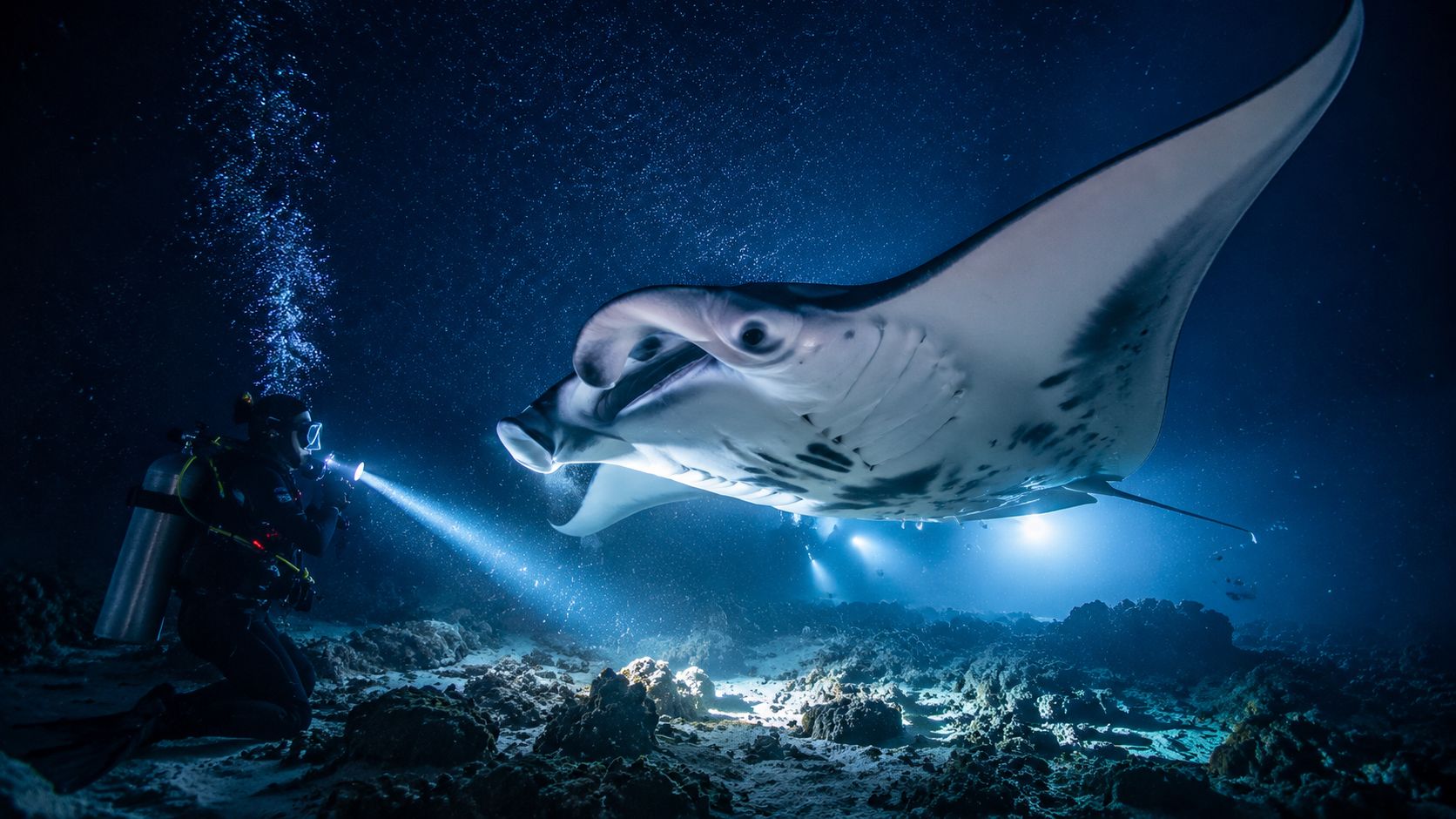
For experienced divers, Hawaii stands out because it offers more than pleasant reef sightseeing. Signature experiences such as the manta ray night dive and blackwater dives answer a different kind of travel question: not “What can I see?” but “What can I do here that feels unlike anywhere else?” That distinction is highlighted in this Hawaii diving guide for experienced divers.
These are the dives people plan trips around.
The manta ray night dive
The manta dive is famous for good reason. It's accessible enough for many certified recreational divers, but it still feels extraordinary. You descend after dark, settle into position, and wait while lights attract plankton. Then the mantas arrive and start feeding in the beams.
Done properly, it's not a chase dive. You stay controlled, low impact, and predictable. The mantas do the work.
For site choice, Garden Eel Cove manta dive tours deserve attention because Garden Eel Cove is valued for its protected location, stronger viewing setup, and better reef environment. That combination usually creates a cleaner experience for both divers and animals.
A few practical notes matter here:
- Good for many certified divers: You don't need elite experience, but you do need comfort in night conditions.
- Stay still, don't pursue: The better your control, the better the encounter.
- Equalization and descent discipline matter more at night: Darkness magnifies small mistakes.
- Choose the right briefing: The pre-dive explanation should be clear about positioning, lights, and animal etiquette.
The blackwater dive
Blackwater is different. It's not reef diving at night. It's an offshore pelagic drift experience in deep open ocean, conducted under controlled conditions with a specialized setup. For many divers, it's the most unusual dive they'll ever do.
You're not dropping onto structure. You're suspended over deep water, focused on the migration of pelagic larval life and strange midwater organisms that rise at night. Some divers love it immediately. Others find the lack of visible bottom psychologically demanding.
That's why this dive rewards honest self-assessment.
If you're interested, Kona blackwater dive trips are the kind of specialty charter to book only with a crew that treats setup, supervision, and diver screening seriously.
Blackwater isn't “more advanced” because it's deeper or faster. It's more advanced because the environment is abstract, unfamiliar, and mentally demanding.
Advanced lava and long-range diving
Some advanced visitors don't want a branded signature dive. They want better site selection, more complex terrain, and dives chosen for conditions rather than popularity. That's where long-range and advanced-focused charters make sense.
For that style of trip, advanced long-range dive options can be the better fit because they're built around divers who want more than an introductory reef tour.
Which signature dive should you pick
If you're torn, use a simple filter:
| Experience | Best for | Main appeal | Main challenge |
|---|---|---|---|
| Manta ray night dive | Certified divers who want an iconic wildlife encounter | Reliable, immersive, dramatic animal behavior | Night diving comfort |
| Blackwater dive | Experienced divers seeking a rare pelagic experience | Midwater life, surreal visuals, unusual photography | Open-ocean mindset and composure |
| Advanced lava or long-range diving | Divers who enjoy terrain and site variety | More nuanced local diving | Conditions and site-specific demands |
The wrong way to choose is by bragging rights. The right way is by matching the dive to the kind of experience you enjoy underwater.
If mantas are your priority, this detailed look at the manta ray dive in Kona is worth reading before you book.
Choosing Your Guide How to Select the Best Dive Operator
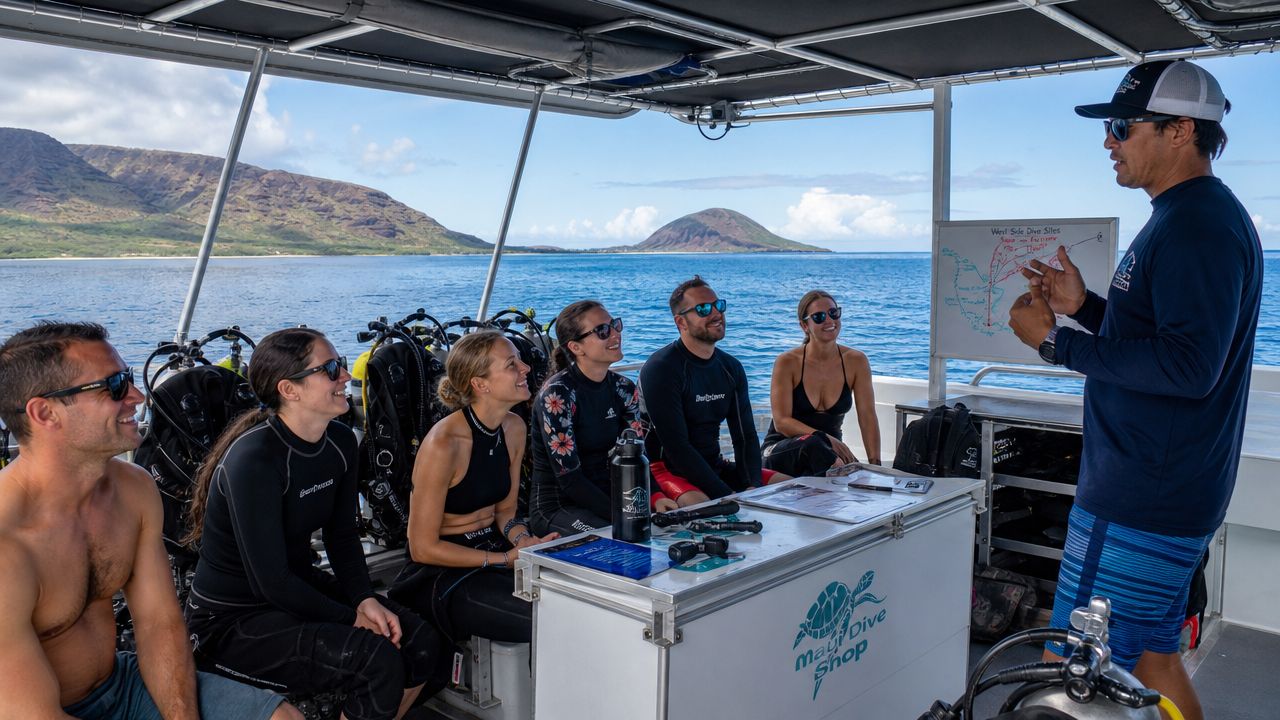
A Hawaii dive trip can be average or excellent on the strength of one decision: who you book with. The site matters, but the operator controls the briefing quality, diver screening, flexibility, group management, and the judgment call to change plans when the ocean says no.
That's why I'd evaluate operators with a practical filter, not a marketing filter.
What to check before you book
Start with the basics that affect your day on the boat:
- Safety culture: Ask how they handle skill mismatches, current changes, and rougher-than-expected entries.
- Briefing quality: A good operator gives site-specific guidance, not a generic speech recycled all week.
- Boat workflow: Clean deck layout, clear tank setup, and organized entries reduce stress.
- Guide-to-diver management: Smaller, controlled groups are easier to supervise and more enjoyable to dive in.
- Site selection judgment: Good crews choose the right site for the people on board, not just the famous one.
One option travelers often look at is Kona Honu Divers dive tours, which include local dive charters, courses, and specialty trips. The useful question isn't whether a shop has a polished website. It's whether they can match the dive plan to the people on the boat.
What a strong operator does differently
The difference usually shows up in small moments. They notice weighting problems before the second dive. They adjust buddy pairs sensibly. They don't push a nervous diver into a demanding site because the itinerary said so. They explain marine life etiquette in a way people will readily follow.
A solid dive operator makes the day feel calm. That isn't accidental. It comes from systems, crew communication, and conservative judgment.
What your day should feel like
A well-run Hawaii boat day usually follows a clean rhythm:
- Check-in with purpose: Certifications, gear issues, and expectations get sorted before the boat leaves.
- Transit with a real briefing: You should know the site, the route, the hazards, and the turn-pressure plan.
- Entry and descent without chaos: Crews manage sequencing so divers aren't rushed.
- Surface interval with useful feedback: Good guides correct trim, weighting, and awareness issues while there's still time to improve the second dive.
- Return with clarity on next steps: Night dive, next-day plan, or gear recommendations should be straightforward.
Gear Certifications and Safety First
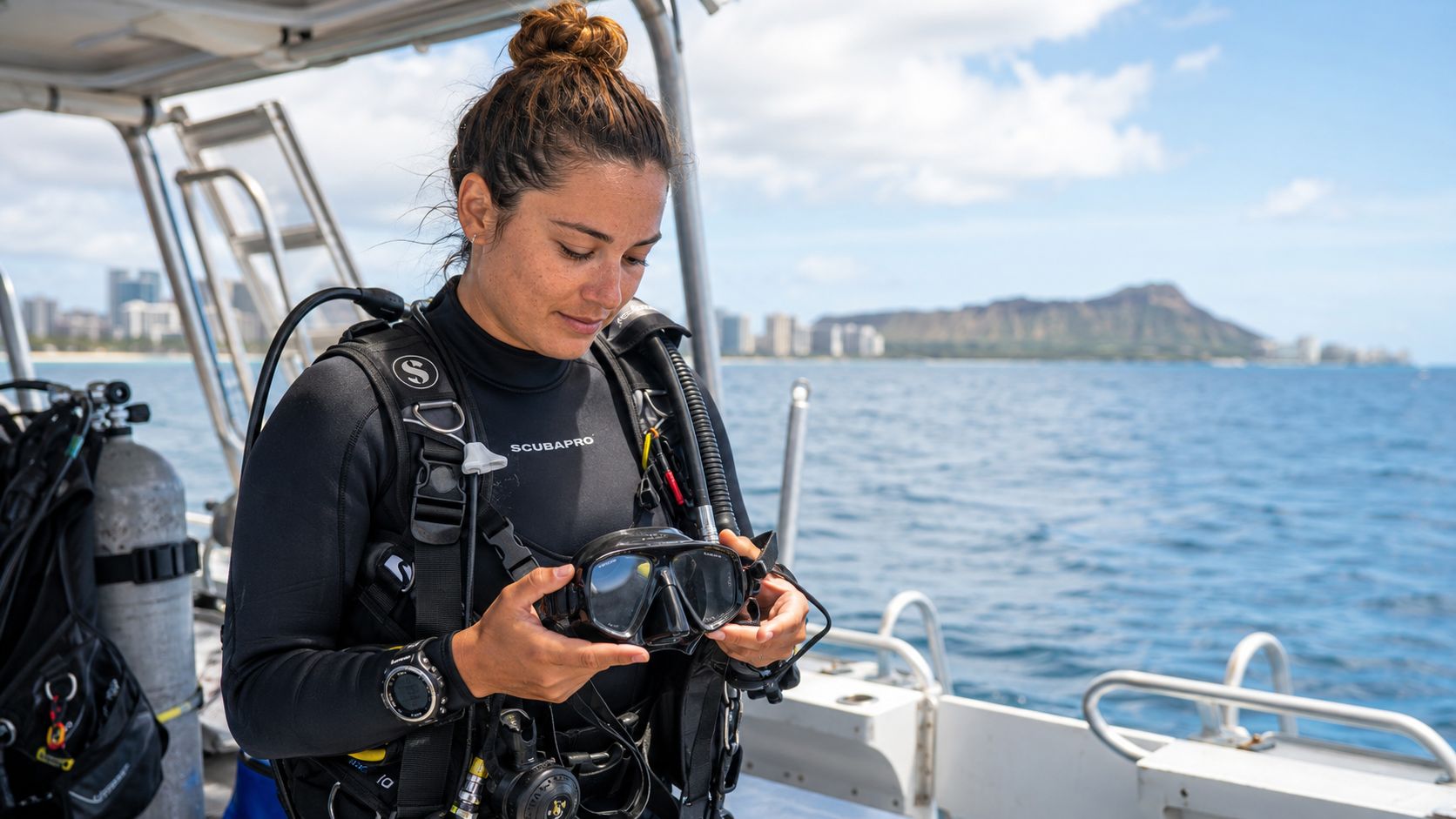
Packing for scuba diving in Hawaii is easier than many divers expect. Water temperatures are typically 75–80°F (24–27°C) year-round, visibility commonly reaches 100 ft, and a 2.5 mm to 3 mm wetsuit is usually sufficient, according to this Hawaii scuba diving conditions guide. That has direct consequences for your luggage, weighting, and comfort.
Bring what affects fit and confidence
For most traveling divers, the smart split is simple.
- Bring your mask: A mask that seals well matters more than almost any other personal item.
- Bring your computer if you own one: Familiarity helps, especially on repetitive dives or specialty trips.
- Bring exposure protection if fit matters to you: Some divers are fine renting. Others want their own suit.
- Rent the bulky pieces if you prefer easier travel: BCDs, regulators, and tanks are usually better handled locally unless you're particular about your setup.
If you're still building experience, learning to scuba in Kona is a useful place to understand what gear and training paths make sense for a Hawaii trip.
Match certification to the dive
Not every Hawaii dive asks for the same background.
Open Water divers can enjoy a lot here, especially on calm reef sites and many standard boat charters. Night diving requires comfort and discipline even when the site is otherwise manageable. Blackwater and more demanding advanced trips are a different conversation. You want the certification, recent experience, and mindset to enjoy them rather than endure them.
Seasickness planning matters more than people admit
A lot of divers worry about air consumption and forget the boat ride. That's backwards. Seasickness can ruin a day before you hit the water.
If you're prone to motion sickness, prep early and be consistent:
- Use a preventative before departure: Ship-EEZ Seasickness Patch, Dramamine pills, Bonine pills, Sea Band wristbands, and ginger chews are common options travelers use.
- Choose light food, not no food: An empty stomach often makes things worse.
- Stay hydrated: Heat, salt, and repeated dives will dry you out quickly.
- Keep your eyes on the horizon when you can: It helps many people before gearing up.
Bring less gear than you think you need, but more preparation than you think you need.
Safety habits that pay off in Hawaii
Good trim, conservative gas management, clean ascents, and honest self-reporting solve most problems before they start. The ocean here can be calm and welcoming, but the sites still demand attention.
Respect the marine life, keep contact off the reef, and don't let clear water trick you into sloppy depth awareness.
Hawaii Scuba Diving FAQs
Is Hawaii good for beginner divers?
Yes, if you choose the right island, site, and operator. Beginner success in Hawaii comes from protected conditions, patient briefings, and conservative site selection. Don't book by photo alone. Book by fit.
Is Kona the easiest place to plan a dive trip?
Often, yes. Travelers usually find the leeward Kona coast simpler to plan around because the diving is more consistent than areas with greater exposure. That matters if you want to maximize actual time underwater.
Do I need to be certified to dive in Hawaii?
For standard scuba charters, yes, you typically need certification. If you aren't certified, many operators offer introductory programs such as Discover Scuba experiences. Those are the right entry point if you want to try breathing underwater before committing to a full course.
Should I choose Maui, Oahu, or the Big Island?
Choose by your priorities. If your top priority is a broad vacation with some diving, several islands can work. If your priority is building the trip around diving itself, many travelers prefer the Big Island's Kona coast because of its dependable conditions and signature specialty dives.
Is the manta ray night dive suitable for newer certified divers?
Often yes, provided you're certified, comfortable in the water, and listen carefully during the briefing. It's far more approachable than blackwater diving. If you're anxious in darkness or haven't dived recently, do an easier day dive first.
Is blackwater diving worth it?
For the right diver, absolutely. If you enjoy unusual environments, midwater life, and mentally engaging dives, it can be the highlight of the trip. If you need a visible bottom and familiar reference points to stay relaxed, it may not be your dive.
What wetsuit should I pack?
Most divers are comfortable in a 2.5 mm to 3 mm wetsuit in Hawaii's typical 75–80°F (24–27°C) water, as noted earlier from the cited conditions guide. The exact choice depends on your cold tolerance and how many dives you're doing over consecutive days.
What if someone in my group doesn't dive?
That's common. Hawaii works well for mixed groups because non-divers can snorkel, relax, or join other ocean activities while certified divers head out on charters.
If you're ready to turn general Hawaii trip ideas into an actual dive plan, Kona Honu Divers is a practical place to start. Review the available tours, match them to your certification and comfort level, and build the trip around the dives you'll remember long after you've dried the gear.