
Picture this: you're weightless, suspended in brilliant turquoise water. Sunlight filters down through an ancient lava tube, illuminating a majestic green sea turtle as it glides past. This isn't a dream—it's what scuba diving on the Big Island of Hawaii is all about. You're exploring an underwater world shaped by volcanic fire, a place teeming with life you won't find anywhere else on the planet.
It's no accident that the Big Island consistently tops the charts as one of the world's premier dive destinations. It offers something truly special for divers of every skill level, and our diving tours are designed to show you the very best of it.
Why the Big Island Is a World-Class Diving Destination
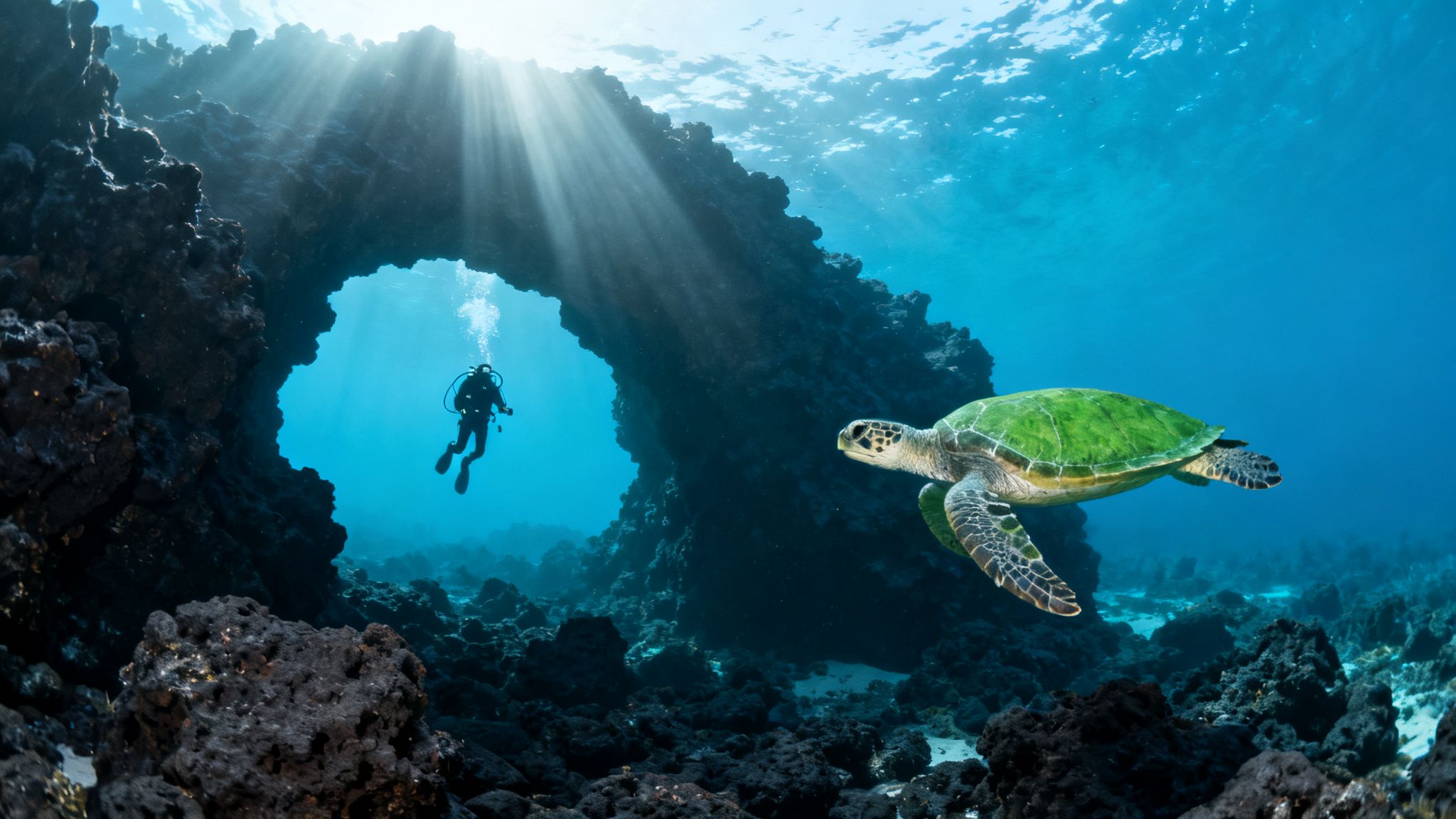
The Big Island is far more than just another pretty spot to dive; it’s a geological masterpiece. The island’s volcanic origins have created a dramatic underwater landscape filled with lava tubes, intricate arches, deep caverns, and massive canyons. For a diver, it’s a natural playground just waiting to be explored.
Most of the diving happens along the Kona coast, which is perfectly sheltered from the strong trade winds by the island's colossal volcanoes, Mauna Loa and Mauna Kea. This natural barrier creates exceptionally calm and clear water, often with visibility soaring past 100 feet. The result? You get a front-row, panoramic view of the vibrant reefs and the incredible creatures that call them home.
Here is a quick overview of the key features that make the Big Island an exceptional diving destination.
Big Island Diving at a Glance
| Feature | Description |
|---|---|
| Volcanic Topography | Explore a dramatic underwater world of lava tubes, arches, and canyons. |
| Calm Conditions | The Kona coast is sheltered from trade winds, offering calm seas year-round. |
| Exceptional Visibility | Crystal-clear water often allows for visibility exceeding 100 feet. |
| Endemic Species | Approximately 25% of marine life here is found nowhere else on Earth. |
| Iconic Marine Life | Reliable encounters with manta rays, sea turtles, dolphins, and whales. |
| Thriving Dive Community | A well-established destination with over 50 charter operators. |
This unique combination of geology and geography sets the stage for an unforgettable experience beneath the waves.
An Explosion of Marine Biodiversity
What truly sets diving here apart is the incredible variety of marine life. Hawaii’s isolation in the middle of the Pacific means that about 25% of its marine species are endemic—you simply can't find them anywhere else. Every dive feels like a treasure hunt, whether you're spotting tiny, colorful nudibranchs tucked into crevices or watching massive schools of reef fish swim by.
The Big Island is also famous for its "big animal" encounters. On any given dive, you might share the water with:
- Honu (Green Sea Turtles): These gentle, ancient reptiles are a common sight, often seen resting on the reef or cruising gracefully through the water.
- Spinner Dolphins: It's not unusual to see large pods of these acrobatic dolphins playing in the bays or traveling along the coastline.
- Manta Rays: The Kona coast is world-renowned for its manta ray population, especially during the legendary manta ray night dive.
- Whales: In the winter months, the haunting and beautiful songs of humpback whales become the soundtrack to your dives.
A Premier Destination for All Divers
Scuba diving has come a long way on the Big Island. What started with just a handful of pioneering dive shops in the 1960s has blossomed into a thriving community of over 50 charter boats, welcoming more than 150,000 dive tourists every year. This growth is a testament to its status as a top-tier global destination.
Whether you're a new diver looking to explore calm, shallow reefs or a seasoned pro ready to tackle thrilling lava tubes and deep canyons, the Big Island delivers. This guide will give you everything you need to plan the ultimate underwater adventure. For a deeper look, check out our complete guide to Big Island scuba diving.
Kona’s Unmissable Dives: What Every Diver Should Experience
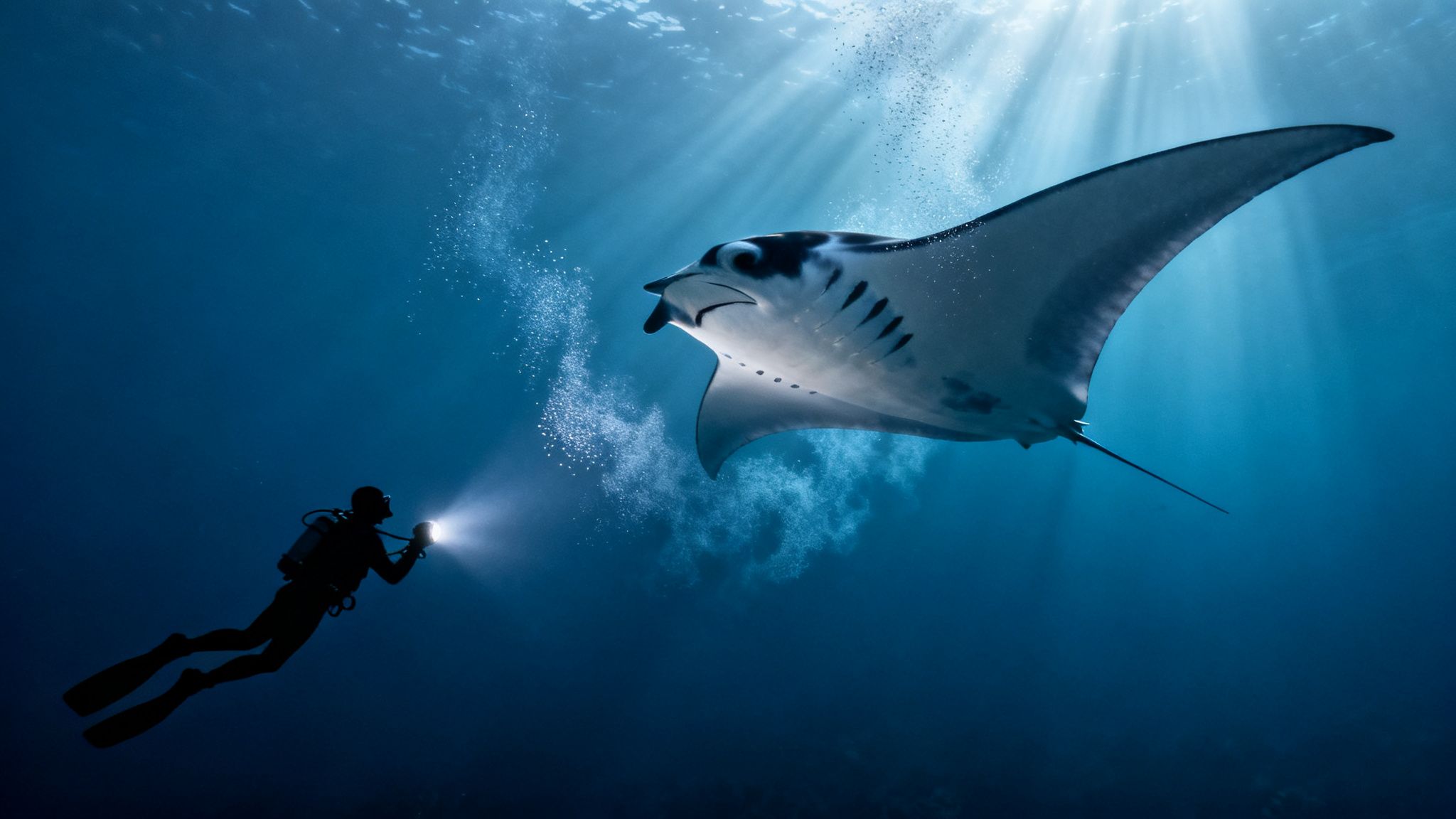
Sure, you can find amazing underwater sights all along the Big Island, but the Kona coast is where you'll find the bucket-list dives. These aren't just great dives; they're genuine spectacles that pull divers in from all over the world. They define what makes scuba diving Hawaii Big Island a legendary experience.
Three dives, in particular, stand head and shoulders above the rest: the world-famous Manta Ray Night Dive, the deep-ocean mystery of the Blackwater Dive, and the classic, sun-drenched reef dives. Each offers a completely different flavor of Kona's underwater world, and you really should try to experience them all.
The World-Famous Manta Ray Night Dive
Picture this: you're settled on the sandy ocean floor in the dark. Suddenly, a dozen giant shadows emerge from the blackness, gliding, swooping, and barrel-rolling inches over your head. That's the Manta Ray Night Dive. With wingspans reaching up to 16 feet, these gentle giants perform an ethereal ballet that feels completely out of this world. Honestly, it's the one dive that brings most people to Kona in the first place, and our manta ray dive tours offer a front-row seat.
The setup is ingeniously simple. Powerful lights are placed on the seafloor, attracting a thick cloud of plankton—a manta's favorite meal. The local mantas have figured this out, and they show up almost every night for an easy buffet, putting on an unforgettable show for the divers watching from below.
The Manta Ray Night Dive is consistently rated one of the top night dives on the planet. The chances of seeing them are fantastic, with operators reporting a success rate of over 90% all year long.
While you can do this dive at a couple of spots, Garden Eel Cove is the superior choice. It's more protected from the open ocean swell, which means calmer, clearer water and more reliable viewings. The seafloor here creates a kind of natural amphitheater with a better viewing area and healthier reefs, giving you the perfect front-row seat for the main event. If you want to see what all the fuss is about, you can learn more about the best manta ray viewing spots.
The Kona Blackwater Dive: An Alien World
If you've got a taste for the truly wild, the Kona Blackwater Dive is your ticket to another dimension. This isn’t a reef dive. It’s a drift dive, at night, miles offshore, suspended over thousands of feet of inky black water. Tethered to a boat, you simply float in the darkness and watch one of the planet's largest migrations happen right before your eyes.
Every single night, an untold number of strange, often bioluminescent, creatures rise from the crushing depths to feed near the surface. You'll see things that look like they were dreamed up for a sci-fi movie—glowing squid, otherworldly jellyfish, and alien-like larval fish that look nothing like their adult forms. It's a humbling, mind-bending experience that completely redefines what you thought lived in the ocean. This one-of-a-kind adventure is available on our Blackwater Dive tour.
Vibrant Daytime Reef Dives
Beyond the legendary night dives, Kona's daytime reefs are absolutely spectacular. The Big Island's volcanic origins have created an underwater landscape unlike anywhere else on Earth, a playground of lava tubes, arches, and canyons just waiting to be explored. This is where you get a real feel for the island’s incredible biodiversity.
The underwater terrain is just incredible. You’ll find:
- Lava Tubes and Arches: Formed by ancient lava flows, these are now amazing swim-throughs where you can often find whitetip reef sharks or giant eels hiding out.
- Coral Gardens: The coral here is healthy and bursting with life, especially the endemic fish you can only find in Hawaii, like the brilliant Potter's Angelfish.
- Pinnacles and Canyons: Massive underwater mountains rise from the depths, creating dramatic walls that attract bigger pelagic species and offer thrilling, deep dives.
These daytime trips are the foundation of the Kona diving experience. They showcase the raw beauty of the volcanic structures and the vibrant ecosystem they support, making Kona a truly world-class dive destination.
Choosing the Best Time of Year for Your Dive Trip
Let's talk timing. If you’re planning the ultimate scuba trip to Hawaii's Big Island, figuring out when to go is a huge piece of the puzzle. The great news is that Kona offers incredible diving pretty much any day of the year, but the seasons do have their own personalities.
Knowing the subtle differences can help you line up your trip with what you want to see and do. Are you dreaming of glassy, calm water for that perfect photo? Or maybe you're hoping for a once-in-a-lifetime wildlife encounter? Getting the timing right can turn a great dive trip into an unforgettable one.
The Prime Season for Ideal Conditions
If your idea of paradise is calm, bathtub-warm water and visibility that seems to go on forever, you’ll want to aim for August through October. This is Kona’s peak season for a reason. The big winter swells haven’t kicked in yet, leaving the ocean surface as smooth as glass.
This tranquility works wonders for what you see below. Underwater visibility often pushes past 100 feet, making the vibrant reefs and dramatic lava rock landscapes pop. The water is at its warmest, too, hovering around a balmy 80-82°F (27-28°C). Most divers find a simple 3mm wetsuit is more than enough, letting you stay down longer and just soak it all in without a shiver.
This late summer and early fall window consistently delivers those picture-perfect dive days. Think bright sun, minimal chop on the surface, and water so clear it feels like you're flying. It's the absolute best time for anyone wanting to see Kona's underwater world at its most serene.
Winter Diving and the Song of the Whales
While summer has its perks, winter diving in Kona—from about December through March—offers a different kind of magic. Sure, the water cools down a bit to 75-77°F (24-25°C), and you might have some bigger swells to navigate. But the trade-off is spectacular.
Winter is humpback whale season. You’ll see them breaching from the boat, but the real experience happens underwater. On countless winter dives, you can hear the haunting, complex songs of male humpbacks echoing all around you. It's not just something you hear with your ears; it’s a vibration you feel in your chest. It's an incredible, full-body experience that provides an unforgettable soundtrack to your dive.
Seasonal Shifts in Marine Life
Of course, the local residents have their own seasonal schedules. The world-famous manta rays are here all year, but the plankton they feed on can be more abundant at certain times, which can mean bigger groups showing up for dinner at the dive sites.
To help you decide, here’s a quick breakdown of what to expect from the two main seasons.
Big Island Diving Seasons Compared
| Season | Water Conditions | Marine Life Highlights |
|---|---|---|
| Summer/Fall (Aug – Oct) | Warmest water (80-82°F), calmest seas, best visibility (100+ ft). | Consistently fantastic conditions for reef life, eels, and octopus. Ideal for underwater photography. |
| Winter (Dec – Mar) | Cooler water (75-77°F), potential for surface swells. | Humpback whale songs are the main event! Whales can often be spotted from the boat. |
Ultimately, there really is no "bad" time to dive in Kona—just different experiences. Each season brings something special to the table. Whether you're listening to whales or gliding over a sun-drenched reef, the Big Island always delivers.
For a deeper dive into how marine life sightings can vary month by month, check out our guide on the best months to scuba dive in Hawaii.
Finding the Best Dive Shops and Tours on the Big Island
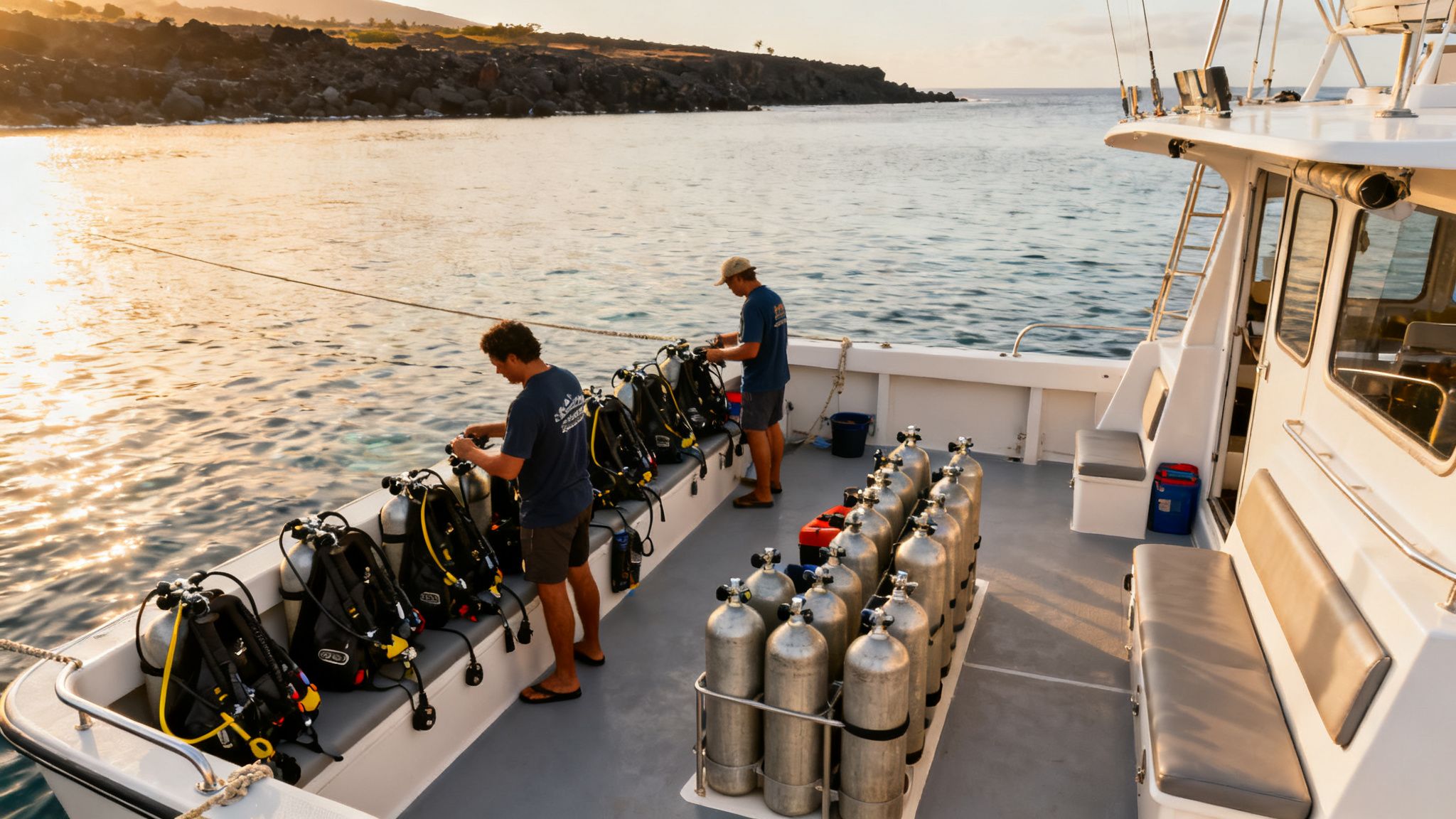
The dive operator you choose for your scuba diving Hawaii Big Island adventure can honestly make or break the entire experience. A great dive shop does so much more than just ferry you to a site; they’re your guides, your safety net, and your local connection to the underwater world. Their expertise can turn a pretty good dive into an unforgettable one.
With a ton of options lining the Kona coast, picking the right one can feel a little overwhelming. But it really just boils down to a few key things: an unwavering commitment to safety, great service, and the overall quality of the experience they provide. The best operators keep their groups small, hire experienced guides who are genuinely passionate about what they do, and keep their boats and gear in top-notch condition. It all adds up to a relaxed, safe, and incredible day on the water.
Our Top Recommendation: Kona Honu Divers
When it comes to consistently knocking it out of the park, Kona Honu Divers really stands out. They've earned a fantastic reputation for a reason, built on a solid foundation of safety, incredible customer service, and a few premium perks that just make the day better.
Their boats are clearly designed with divers in mind—plenty of space, shade, and even hot showers for a post-dive rinse. It's those little details that show they get it. One of their biggest crowd-pleasers is offering free nitrox for all certified divers, which means more bottom time and less fatigue. It’s a huge plus.
But you don't have to take our word for it—hearing from other divers is the best proof.
Other Reputable Dive Operators in Kona
While Kona Honu Divers is our top pick, the Big Island is lucky to have several other fantastic dive companies. A healthy, competitive dive scene is good for everyone, and it means you have plenty of great choices. Here are a few other highly-rated operators worth looking into.
Jack's Diving Locker
A true Kona institution, Jack's Diving Locker has been around for decades. They're well-known for their comprehensive training programs and a massive retail shop. They run all the classic trips, including the Manta Ray Night Dive and the Pelagic Magic blackwater dives.
Big Island Divers
Another respected operator with a loyal base of divers, Big Island Divers is known for its super-friendly crew. They offer a great variety of tours for all skill levels, from classic two-tank morning dives to specialty charters like their own blackwater trips.
Kona Diving Company
Known for their comfortable, custom-built boats and professional guides, Kona Diving Company consistently gets rave reviews. Their focus is squarely on providing a safe, fun, and memorable experience while showing you the best of Kona's reefs.
Specialized Tours for Advanced Divers
For those of you with a few more dives in your logbook, the Big Island offers some truly epic opportunities. The volcanic landscape creates deep canyons and dramatic lava-formed pinnacles, opening up a whole different world for experienced divers. If you're looking for these more experienced diving opportunities, consider our advanced dive tour page.
These advanced dives often mean dealing with stronger currents and deeper profiles, but the payoff can be huge—think bigger pelagic species and a look at Kona’s wild, untamed side.
Kona Honu Divers has a trip designed specifically for this kind of adventure: their Premium Advanced Dive Tour. It's built for divers who are comfortable going deeper and want to explore those sites that are a little more off the beaten path. These trips head to more remote locations and give you that feeling of true exploration.
In the end, picking the right dive shop is all about matching your style with an operator's strengths. Whether you’re looking for high-end perks, specific advanced charters, or just a friendly vibe, you’ll find a great fit in Kona. When you’re ready to start planning, checking out the variety of Kona diving tours available is the perfect place to start.
Getting Certified and Advancing Your Skills in Kona
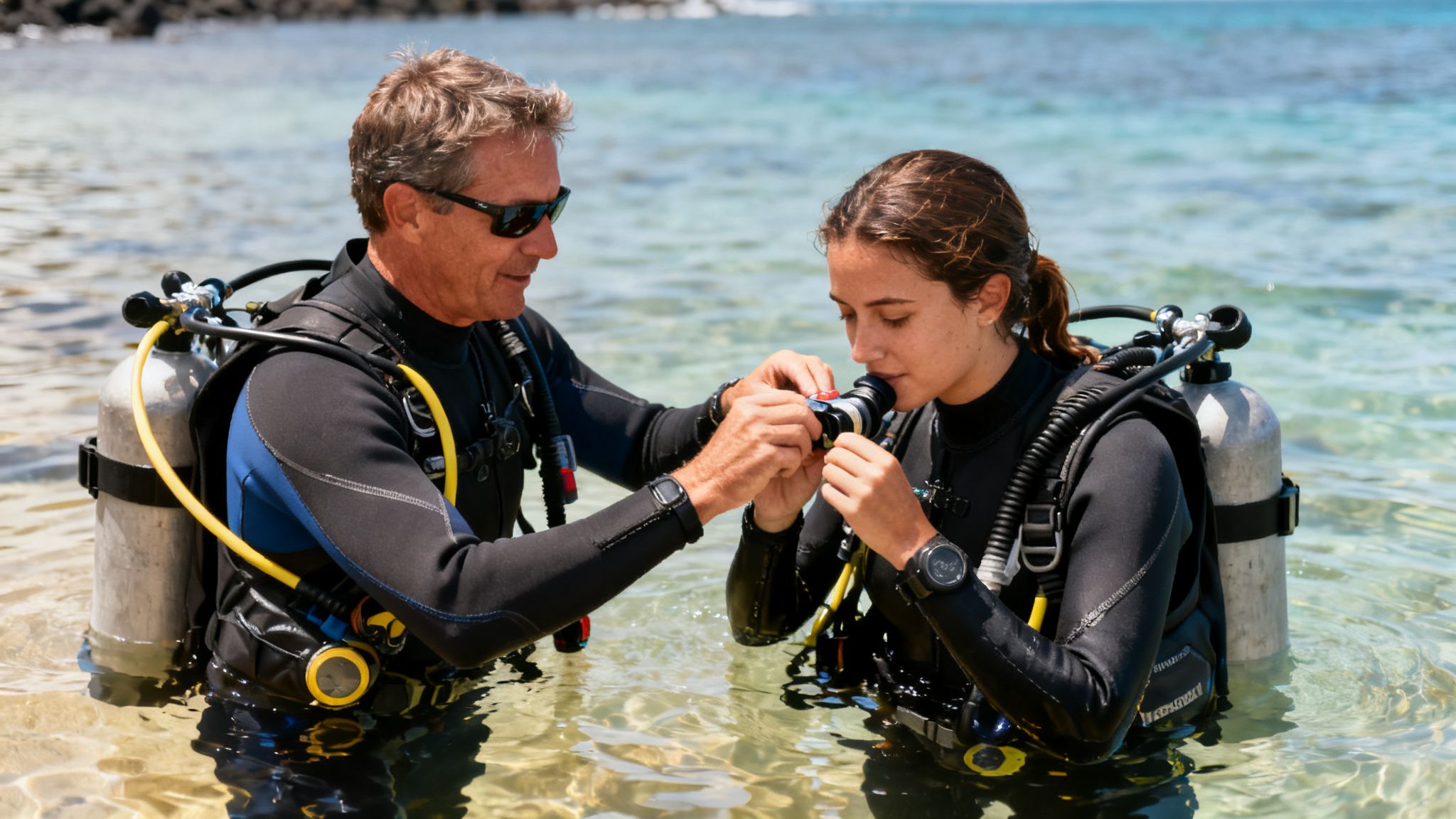
Maybe you're dreaming of taking your first breath underwater, or maybe you're an old hand looking to sharpen your skills. Either way, the Big Island is one of the best places on the planet to do it. The protected, almost swimming-pool-calm waters along the Kona coast create a perfect natural classroom, making it an incredible spot to build confidence.
For most people, the whole adventure starts with the PADI Open Water Diver certification. Think of it as your passport to exploring the other 71% of the world. And honestly, there’s no better place to earn it. Kona’s conditions are incredibly forgiving for beginners—the water is warm, the visibility is usually amazing, and strong currents are rare. This lets you relax and focus on the fundamentals, like getting your buoyancy just right, without battling the elements.
From First Breaths to Finer Skills
If you're already certified but it’s been a minute since your last dive, a quick refresher course is the best way to shake off the rust. It’s a simple way to get your muscle memory firing again with an instructor, ensuring you’re comfortable and safe before heading out on a boat charter. It’s a small investment that pays huge dividends in your confidence and enjoyment.
For divers ready to move beyond the basics, Kona has a full menu of advanced training. These courses are designed to make you a safer, more capable, and more self-reliant diver.
A few of the most popular advanced courses include:
- Advanced Open Water: This is all about getting out there and exploring. You'll complete five different "adventure dives," including a mandatory deep dive and navigation dive, which really expands your comfort zone.
- Rescue Diver: Most divers will tell you this is the most challenging but also the most rewarding course they've ever taken. The focus shifts from you to the well-being of other divers, teaching you problem prevention and how to manage emergencies.
- Enriched Air (Nitrox) Specialty: This is easily one of the most useful specialties. Diving with nitrox—a gas mix with a higher percentage of oxygen—lets you safely extend your bottom time on certain dives. More time underwater is always a good thing!
Advancing your training isn't just about collecting another certification card. It's about opening up a whole new world of diving. Deeper sites, more complex environments, and thrilling new challenges suddenly become accessible.
Putting Your New Skills to the Test
Getting certified is only half the fun—the real reward comes from putting those skills to use on more demanding and exciting dives. The Big Island’s dramatic volcanic underwater landscape has carved out deep canyons, towering pinnacles, and remote sites that are reserved for more experienced divers.
This is where that advanced training really pays off. A charter like the Kona Honu Divers' Premium Advanced 2-Tank Trip is built specifically for divers ready for a bigger challenge. These trips head to sites that demand excellent buoyancy control and comfort in deeper water, rewarding you with pristine coral and unique marine life you just won't see on the shallower reefs. Kona isn't just a place to go diving; it's a place to become a better diver.
Your Big Island Scuba Questions, Answered
Planning a scuba diving Hawaii Big Island trip is a thrill, but it's totally normal to have a few questions before you take the plunge. We get it. To help you feel confident and prepared, we've put together answers to the queries we hear most often from divers getting ready to explore Kona's underwater world.
Think of this as your quick-start guide to everything from what you'll see to what you'll need. Let's get your final plans locked in for an amazing trip.
What Kind of Marine Life Will I See on the Big Island?
The better question might be, what won't you see? The biodiversity here is off the charts. On almost any given dive, you can expect to run into green sea turtles (we call them honu), pods of playful spinner dolphins, and, of course, our famous manta rays. Look closely in the reef crevices, and you’ll find moray eels, like the vibrant yellowmargin moray, peeking out.
Whitetip reef sharks are also a very common sight, usually found relaxing on the sandy bottom or cruising gracefully along the reef. The reefs themselves are buzzing with color from dozens of species of butterflyfish, parrotfish, and angelfish. If you’re here in the winter, you might even hear the haunting songs of humpback whales echoing through the water on your dive—an experience you'll never forget.
Is the Big Island Good for Beginner Divers?
It’s not just good; it's fantastic. The Kona coast is arguably one of the best places on the planet to learn how to dive. Why? The island's geography creates a series of calm, protected bays that act as a natural shield against big ocean currents. This makes for a gentle, forgiving environment where new divers can find their fins.
The water clarity is often incredible, and many of the most stunning dive sites are in shallower water. That combination is a huge confidence-booster, letting beginners focus on the amazing marine life without feeling intimidated.
What Is the Water Temperature in Kona?
One of the best parts about diving in Kona is that the water is comfortable year-round. You can pretty much leave your thick wetsuit at home. The temperature stays in a very pleasant range, so you can focus on the dive, not on shivering.
Here’s a general idea of what to expect:
- Winter (Dec – Mar): The water gets a little "cooler," usually hovering between 75-77°F (24-25°C).
- Summer/Fall (Aug – Oct): This is when we see the warmest temps, reaching a balmy 80-82°F (27-28°C).
For most people, a standard 3mm wetsuit is perfect. If you tend to get cold, you might prefer a 5mm during the winter months, but many divers find it’s not necessary.
Do I Need to Be Certified for the Manta Ray Night Dive?
Yes, to scuba dive with the mantas, you must be a certified diver. But if you aren't certified or you're traveling with friends and family who don't dive, no one has to miss out! We offer an incredible manta ray snorkel experience that’s just as magical.
Snorkelers hold onto a floating light board on the surface, looking down as the mantas swoop, glide, and feed just a few feet below them. It’s a front-row seat to the same underwater ballet, making it an amazing experience for everyone.
And while you're busy planning your underwater adventures, it’s always good to know about other local resources. Should you have any unexpected tech issues during your travels, services like Hawaii Data Recovery are available to help.
Your Big Island dive adventure is just around the corner. With these answers in your back pocket, you’re one step closer to dropping into the magic of Kona's underwater realm. Whether this is your first time breathing underwater or your hundredth dive, the volcanic seascapes and vibrant marine life are waiting to put on a show for you.
Ready to see the world-class dive sites of the Kona coast for yourself? Kona Honu Divers has a full lineup of diving tours for every skill level. Book your spot today and find out why the Big Island is a bucket-list destination for divers from all over the globe.