
Picture this: you’re sinking slowly into warm, turquoise water, the world above dissolving as you’re surrounded by ancient volcanic archways and a dizzying swirl of colorful fish. That's what it feels like to scuba dive on the Big Island of Hawaii, and it’s an experience that easily ranks among the world's best. The Kona coast is the undeniable epicenter of this underwater world, blessed with calm, sheltered waters and incredible visibility pretty much all year long.
Discovering Hawaii’s Premier Underwater Paradise
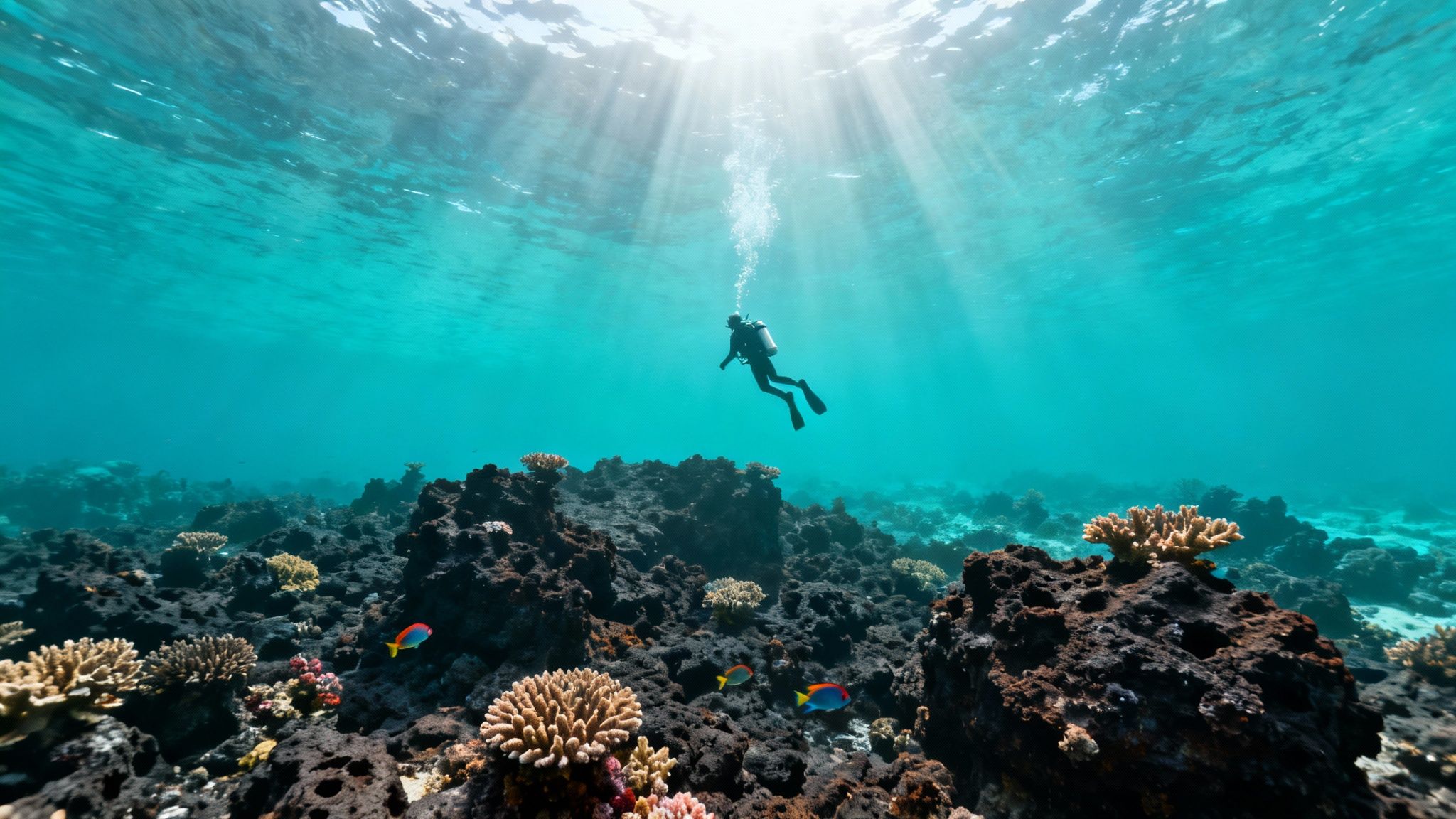
The Kona coast owes its reputation as a diver's dream to the island’s sheer size. The massive volcanoes of Mauna Loa and Hualalai act as a natural shield, blocking the strong trade winds that batter other parts of the island. This unique geography creates stunningly calm and predictable ocean conditions, which means you can count on a comfortable and safe dive almost any day you go.
This protection is also the secret behind Kona’s legendary water clarity, where visibility often pushes past 100 feet. The clear water lets sunlight pour deep into the ocean, lighting up the healthy coral reefs and the dramatic lava rock formations that shape the seascape. These structures, left behind by ancient lava flows, have created a complex maze of caves, canyons, and archways just waiting to be explored.
What Makes Kona Diving Unique
Beyond the glass-like water, the biodiversity here is simply on another level. The volcanic terrain has created the perfect home for an incredible variety of marine life.
- Pristine Coral Reefs: The Kona coast is home to some of the healthiest coral gardens in Hawaii, teeming with vibrant endemic fish you won't find anywhere else on the planet.
- Unique Underwater Landscapes: You can spend your days navigating submerged lava tubes, exploring massive underwater pinnacles, and swimming through dramatic arches. Every dive offers a completely different adventure.
- Abundant Marine Life: It’s not a matter of if you’ll see Hawaiian green sea turtles (honu), but how many. Playful spinner dolphins and elegant eagle rays are also common sights.
The real magic of diving the Big Island is found in its signature dives. There are very few places in the world where you can experience the world-famous Manta Ray Night Dive or the surreal Kona Blackwater Dive, watching strange, bioluminescent creatures rise from the deep.
To really experience the best of Kona, you need to go with a top-notch operator. With over 200 years of combined staff experience, Kona Honu Divers offers the kind of expert guidance that gets you to the most incredible dive sites safely. Their passion for marine conservation means every trip is as responsible as it is memorable.
Whether you're about to take your very first breath underwater or you're a seasoned diver looking for your next big thrill, this guide has everything you need to plan the perfect trip. When you’re ready to jump in, you can check out a full list of diving tours.
Experiencing the World-Famous Manta Ray Night Dive
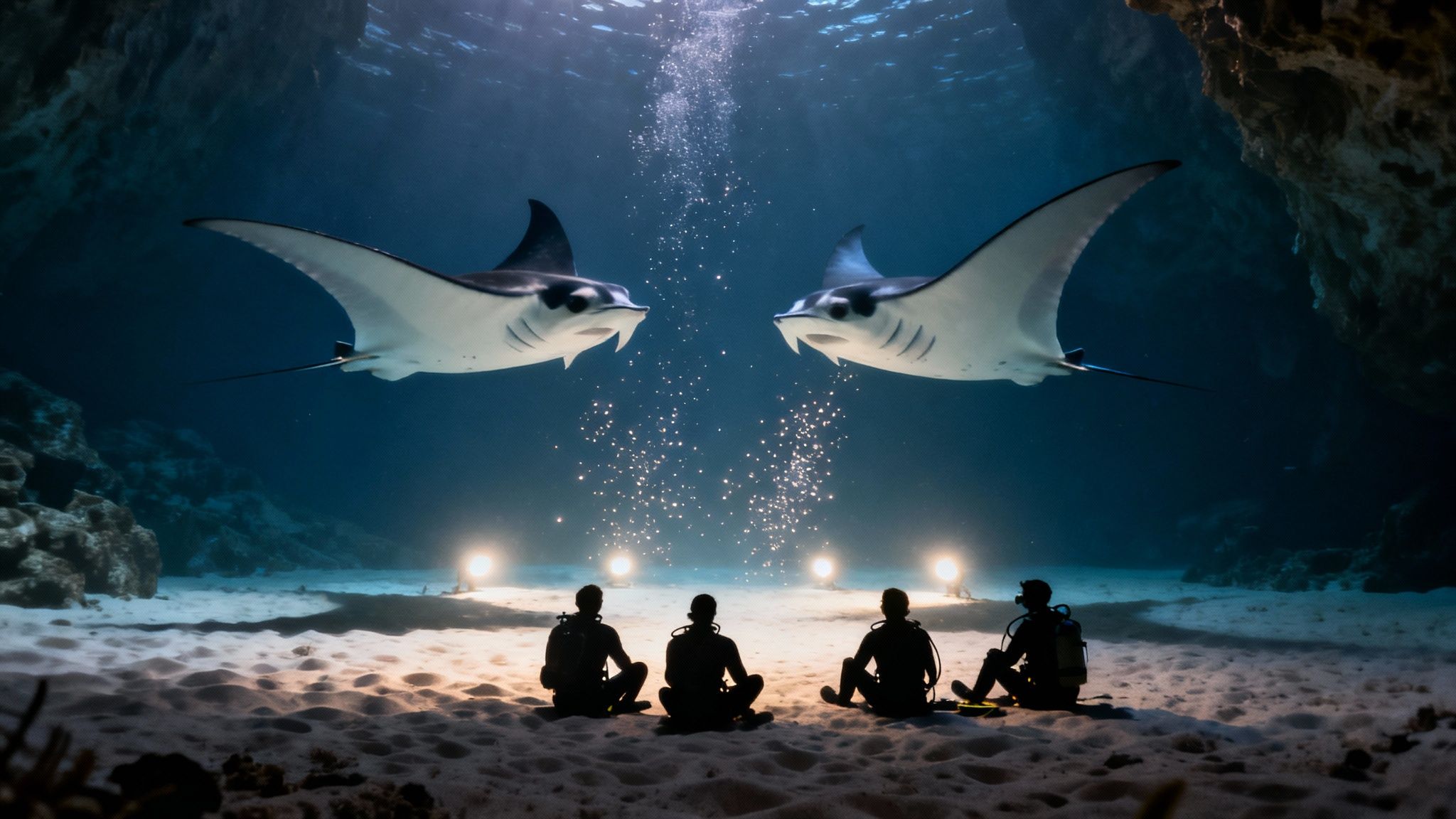
This isn't just another dive on the logbook. The Manta Ray Night Dive is a front-row seat to one of the most mesmerizing performances in the natural world. It consistently tops "best of" lists for a reason—it’s an ethereal, breathtaking underwater ballet you truly have to see to believe.
So how does it work? The concept is actually brilliantly simple. After the sun goes down, we place powerful, eco-friendly lights on the ocean floor, pointing straight up. These beams act like a giant beacon for plankton, the manta rays' favorite meal, creating a brightly lit, all-you-can-eat buffet.
As certified divers, you'll settle onto a sandy patch in a designated viewing area. Then, you just watch. Majestic manta rays, some with wingspans stretching over 12 feet, glide, swoop, and perform effortless barrel rolls just inches above your head. It’s a peaceful, awe-inspiring spectacle as these gentle giants dance through the beams of light.
Why Garden Eel Cove Is the Premier Choice
While a couple of spots host this dive, Garden Eel Cove (lovingly called Manta Heaven) is the superior choice for your dive tour. Its location near the Kona airport offers natural protection from the southern swells, which means calmer, more comfortable water conditions for your dive. The viewing area is better, and the surrounding reefs are healthier.
This protection has also allowed the surrounding coral reefs to thrive. The healthier ecosystem at Garden Eel Cove doesn't just make for a prettier dive; it supports a richer marine environment, adding to the overall magic of the encounter.
On top of that, the viewing area here feels more intimate. The underwater layout allows divers to get into the perfect position to witness the action up close without ever disturbing the mantas' natural feeding. It creates an immersive, theater-like atmosphere you won't forget. For a deeper dive into what makes this trip so incredible, check out our complete guide to the Manta Ray Night Dive in Hawaii.
Your Chances of a Magical Encounter
Because the Big Island has a resident population of manta rays, this dive is remarkably consistent. At the prime locations we frequent, divers enjoy an incredible 85-90% success rate of seeing these graceful animals.
Lately, the sightings have been off the charts. One night in October, we were joined by an amazing 23 mantas. A month later, we hit a peak of 30 and 32 mantas on back-to-back trips! It's always a thrill, and you can see for yourself by reviewing recent manta reports.
This experience is more than just observing marine life; it’s about making an emotional connection. Watching these intelligent, gentle creatures glide effortlessly through the darkness is a profound reminder of the ocean's wonder.
As the premier operator for this unforgettable tour, Kona Honu Divers ensures a safe, respectful, and absolutely magical experience. Our expert guides are passionate about these animals and will provide a thorough briefing on proper "manta etiquette" to ensure a positive interaction for both divers and rays. Ready to witness the ballet for yourself?
Check Availability
Our team at Kona Honu Divers is dedicated to providing a world-class adventure you'll talk about for years. You can book your spot on our acclaimed manta ray dive tour and prepare for the dive of a lifetime.
Exploring Top Big Island Dive Sites
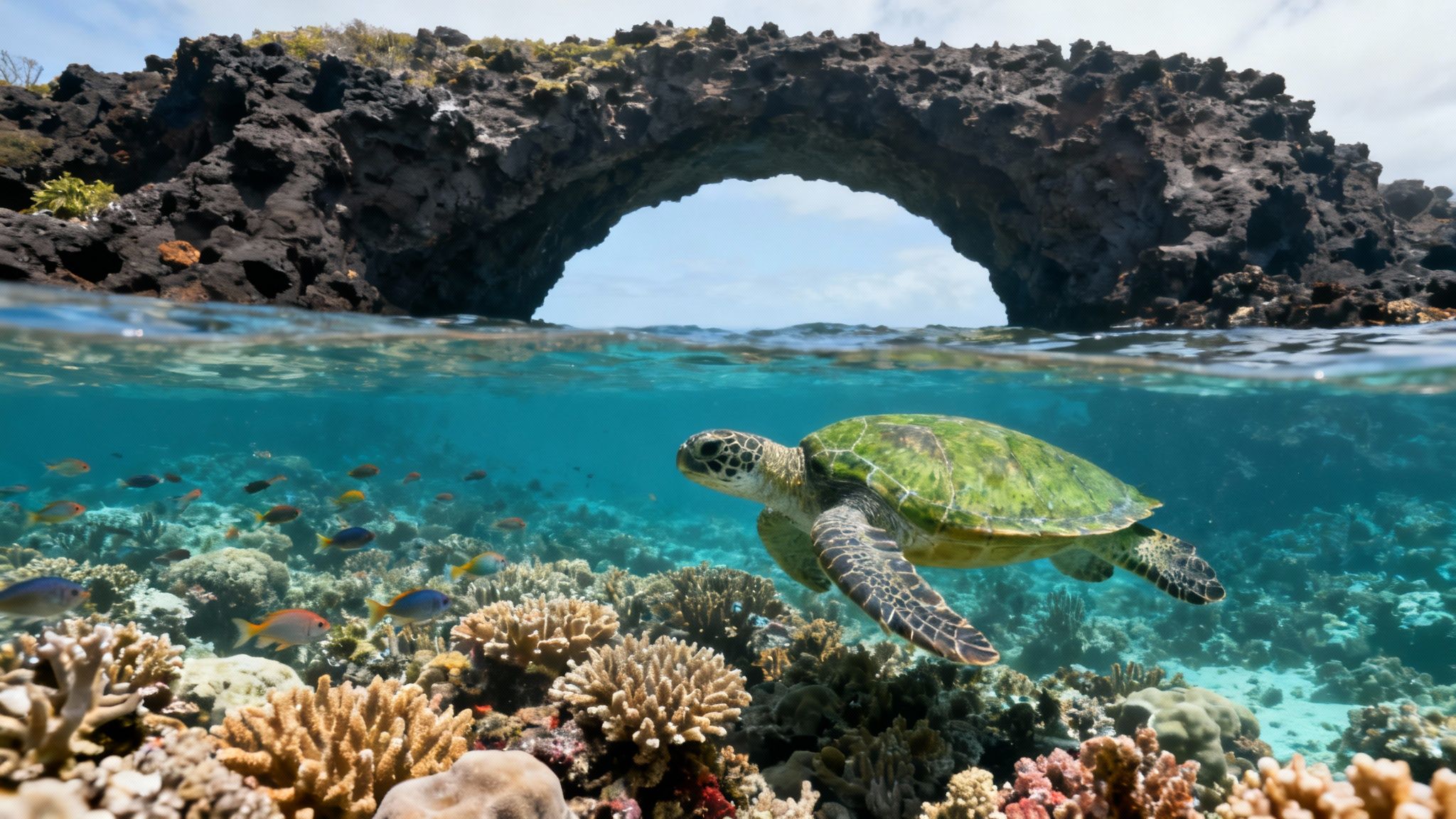
While the Manta Ray Night Dive gets most of the spotlight—and for good reason—it's just the beginning of what the Kona coast has to offer. The Big Island is an absolute treasure chest of dive sites, each one a unique window into Hawaii's incredible underwater world. The volcanic origins of the island have sculpted a spectacular underwater landscape of intricate lava tubes, dramatic archways, and vibrant, sprawling coral gardens.
This sheer variety is what makes scuba diving Hawaii Big Island so unforgettable. One day you could be navigating a submerged lava tube that feels like an ancient, flooded cathedral. The next, you might be drifting along a reef wall, completely surrounded by life. Every single dive is a new chance to meet Hawaiian green sea turtles (honu), encounter a pod of playful spinner dolphins, or spot schools of fish you literally can't find anywhere else on Earth. It’s an ever-changing environment that keeps even the most jaded divers coming back for more.
Kealakekua Bay: A Protected Paradise
Of all the gems along the Kona coast, Kealakekua Bay is the crown jewel. This isn't just another dive site; it’s a historically significant and fiercely protected Marine Life Conservation District. Because of its protected status, the bay's coral reefs have been allowed to flourish, creating one of the most pristine and healthy underwater ecosystems in all of Hawaii.
Spanning over two miles of shoreline, Kealakekua Bay is a true sanctuary. It’s home to more than 2,000 species and often boasts phenomenal visibility that pushes past 100 feet. Divers here are regularly greeted by massive, swirling schools of fish and curious spinner dolphins. During the winter months, you can even hear the haunting songs of humpback whales echoing through the water. It’s a magical place, and you can discover more about this incredible marine sanctuary to see why it's a must-do.
Must-See Dive Locations Along The Kona Coast
Beyond the bay, the coastline is dotted with dozens of other world-class sites, all easily accessible by boat. Each spot has its own distinct personality and offers something a little different for every skill level and interest.
Here are a few local favorites you won't want to miss:
- Golden Arches: This spot is a photographer’s dream, famous for its stunning lava rock archways. Watching sunlight stream through the arches feels otherworldly, lighting up the vibrant reef below.
- Turtle Pinnacle: Just like the name implies, this is a "cleaning station" for Hawaiian green sea turtles. You can hover nearby and watch as the honu patiently line up to let smaller reef fish nibble algae and parasites off their shells. It’s a fascinating behavior to witness up close.
- Suck 'em Up Lava Tube: If you’ve got your buoyancy dialed in, this site is a blast. You get to swim through a massive lava tube where the natural surge gently pushes you in and pulls you back out. It’s a fun, memorable ride!
- Pawaii Bay (Pipe Dreams): Known for its complex and rugged underwater terrain, this site is full of swim-throughs, caverns, and ledges. It’s a great place to spot whitetip reef sharks resting during the day.
To give you a better idea of what to expect, here's a quick look at some of the top sites and what makes them special.
Big Island Dive Site Highlights
| Dive Site | Key Feature | Average Depth | Common Marine Life |
|---|---|---|---|
| Kealakekua Bay | Pristine coral reefs & history | 20-80 ft | Spinner dolphins, turtles, vast schools of fish |
| Golden Arches | Dramatic underwater archways | 30-60 ft | Eels, frogfish, tons of colorful reef fish |
| Turtle Pinnacle | Turtle cleaning station | 40-70 ft | Green sea turtles, manta rays, eagle rays |
| Pawaii Bay | Lava tubes, caverns & swim-throughs | 40-80 ft | Whitetip reef sharks, eels, octopus, nudibranchs |
This is really just a small taste of what's out there. The beauty of diving here is that the sheer variety of volcanic formations and marine life ensures no two dives are ever quite the same.
Ready to explore the best scuba diving the Big Island has to offer? Our guides at Kona Honu Divers know these sites like the back of their hands. We’ll get you to the perfect spots based on the day’s conditions and your personal experience level.
Explore our full range of Big Island diving tours and let's start planning your underwater adventure.
Check Availability
Advanced Diving and Specialty Adventures
So, you’ve got your certification card and some dives under your belt. You’re comfortable, confident, and starting to wonder, "What's next?" For divers with a taste for something truly extraordinary, the Big Island is where things get really interesting.
Once you move past the basics, a whole new dimension of diving opens up along the Kona coast. We're not talking about your average reef tour. We’re talking about unique, mind-bending experiences that take you deeper, darker, and into the mysterious heart of the ocean. This is where the real magic of scuba diving Hawaii Big Island truly shines.
The Kona Blackwater Dive: A Journey into the Abyss
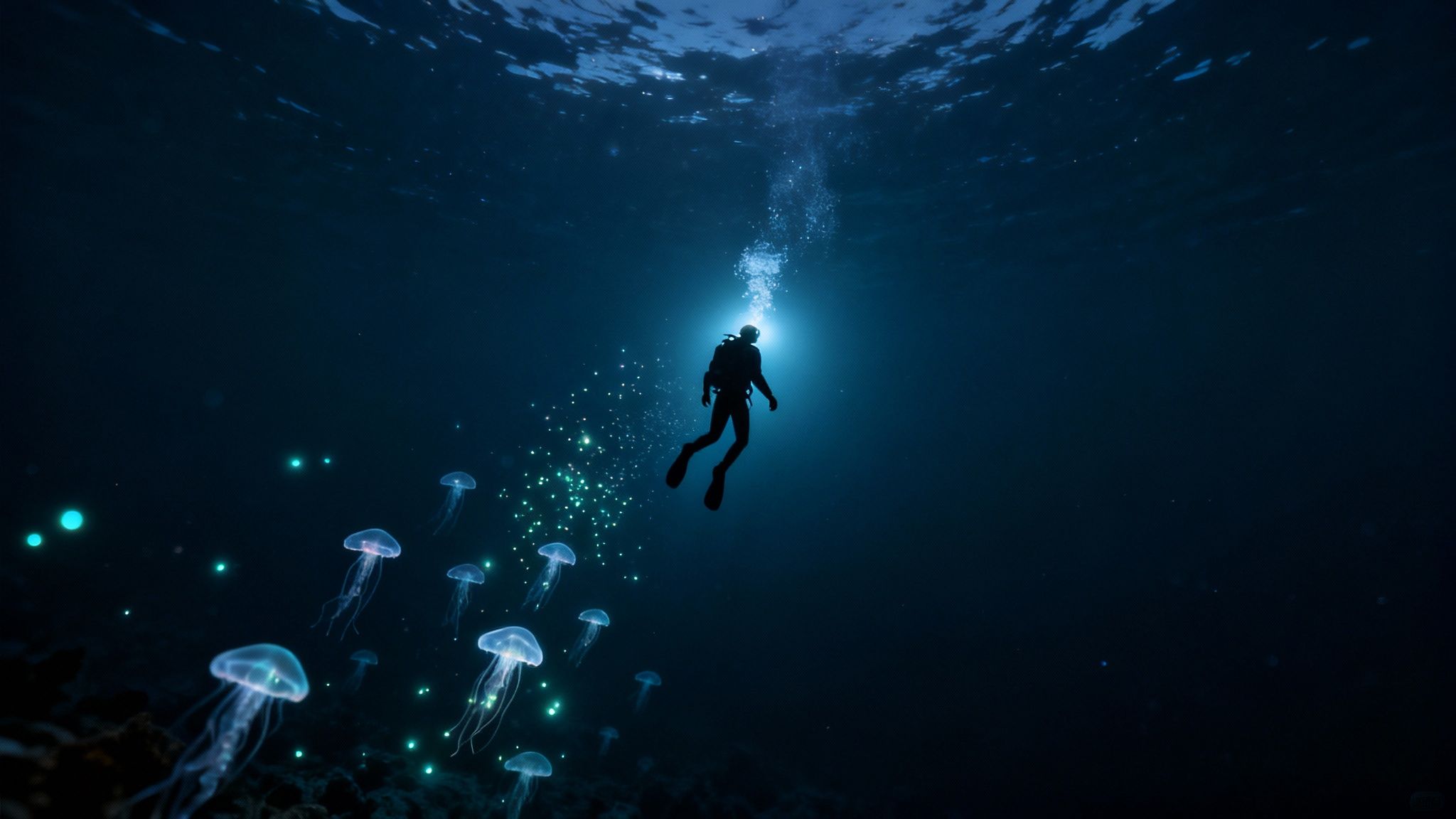
Imagine this: you're floating in absolute blackness, miles from shore, suspended over thousands of feet of water. The only light is the beam from your torch and the ghostly, bioluminescent glow of creatures you've never seen before. That’s the Kona Blackwater Dive, and it’s easily one of the most surreal and captivating dives on the entire planet.
This isn't your typical night dive. We head way offshore, tether you to the boat for safety, and let you drift in the open ocean. Here, you'll witness one of nature's greatest spectacles: vertical migration. Every single night, countless bizarre and beautiful organisms—many of them the tiny, larval versions of familiar sea life—rise from the abyss to feed. You’ll come face-to-face with creatures that look like they belong in a science fiction movie, from glassy, see-through squid to pulsing, glowing jellies.
The Blackwater Dive is often described as feeling like you’re in outer space. It's a humbling, mesmerizing encounter with a part of the ocean very few people will ever see.
Here at Kona Honu Divers, we’ve perfected this unique adventure. We have the expert guidance and strict safety protocols to make this incredible experience not just possible, but safe. If you're ready for a dive that will completely change how you see marine life, you can learn more about our Blackwater Dive tour.
Exploring Deeper and More Challenging Environments
Beyond the blackwater, the Big Island's volcanic origins have created an underwater playground for experienced divers. Think intricate lava tube systems you can swim through, deep-water pinnacles that rise from the seafloor, and dive sites where managing a bit of current is part of the fun. These dives often come with bigger rewards, attracting larger pelagic species like sharks, rays, and massive schools of jacks.
Of course, these adventures demand a higher level of skill. Excellent buoyancy and solid gas management are non-negotiable. That's why we run specialized trips designed for divers looking for these kinds of challenges, ensuring we can explore these more demanding sites safely.
We also know that more time underwater means more chances for amazing discoveries. That’s why we offer free nitrox on our dives. For certified divers, this means extending your bottom time, which is a huge advantage on deeper profiles, giving you more time to soak it all in.
For those ready to push their limits, our advanced dive tour is built from the ground up for seasoned divers seeking a more challenging and rewarding day in the water.
Check Availability
Planning Your Big Island Dive Trip
Timing is everything, right? Well, the fantastic news for anyone planning a dive trip to the Big Island is that there's really no bad time to jump in. The Kona coast is a diver's dream year-round, shielded from the pesky trade winds by the island's massive volcanoes. This geography is our secret weapon, creating consistently calm and clear waters.
The ocean is always inviting here. Water temps hover around a comfortable 75-77°F (24-25°C) in the winter months and warm up to a blissful 80-82°F (27-28°C) in the summer. As for visibility, it’s usually spectacular, often letting you see for more than 100 feet. While the vibrant reef life is a constant, winter (December through April) brings an extra layer of magic—the hauntingly beautiful songs of humpback whales become the soundtrack to your dives.
To really dig into what season fits your style, check out our guide on the best months to scuba dive in Hawaii.
Shore Diving vs. Boat Diving
One of the first calls you'll have to make is whether you want to dive from shore or hop on a boat. They are two completely different ways to experience Kona's underwater world.
Shore diving, at spots like the famous Two Step, offers an incredible sense of freedom and adventure. It's often easier on the wallet and lets you dive entirely on your own schedule. But that freedom comes with a whole lot of responsibility. You’re in charge of renting and hauling all your gear, navigating what can be tricky entries over lava rock, and—most importantly—having a deep understanding of local conditions. Currents can change in a heartbeat.
Shore diving on Hawaii's Big Island offers budget-savvy adventure… Yet safety stats temper the thrill: Hawaii logs 187 resident ocean drownings from 2020-2024, second-highest per capita nationally, including 58 freediving fatalities—a stark reminder for shore divers to prioritize currents and skills. You can read the full report on Hawaii's ocean safety statistics to understand the risks involved.
Hopping on a dive boat, on the other hand, is all about convenience, safety, and access. You simply can't reach the Big Island's most pristine and dramatic offshore sites from the coast. A professional charter takes care of all the logistics. We handle the navigation, give you a detailed briefing so you know exactly what to expect, and have expert guides in the water to make sure you're safe and see the coolest stuff.
Choosing the Right Dive Operator
Picking a great dive operator is probably the single most important decision you'll make for your trip. A top-notch crew doesn't just take you out on a boat; they make the entire experience unforgettable.
Here’s what you should be looking for:
- Safety First: This is non-negotiable. The operator needs a stellar safety record, a well-maintained boat with all the emergency gear, and a crew that is professionally trained in rescue and first aid.
- Local Expertise: The best dive guides are locals who are passionate about these waters. They know the dive sites like their own backyard and can point out that tiny, rare nudibranch you’d otherwise miss, guide you safely through a lava tube, and pick the perfect spot based on that day's conditions.
- Quality Gear and Comforts: Check that they offer high-quality, well-maintained rental gear. And don't underestimate the little things—a warm freshwater shower after a dive, good snacks, and a shady spot to relax on the boat can make all the difference.
- A Proven Reputation: What are other divers saying? A long history of glowing reviews is the best indicator of the kind of experience you can expect.
At Kona Honu Divers, we work hard to be all of these things and more. But don't just take our word for it—see what our divers have to say.
Once you have the logistics sorted, you can relax and get excited about the incredible underwater world waiting for you. To make planning a little easier, you might want to check out the latest travel deals for your Hawaii adventure for potential savings on flights and hotels. Our team is ready to help you explore all the incredible diving tours available on the Big Island.
Check Availability
Becoming a Certified Diver in Kona
If you’ve ever watched a nature documentary and found yourself wanting to breathe underwater, there’s truly no better place to make that happen than Kona. The Big Island's western coastline is naturally shielded from the big winds and swells, creating a calm, crystal-clear training ground for anyone ready to take the plunge.
Your first step is the PADI Open Water Diver certification. It’s the most recognized scuba course on the planet and your ticket to exploring the underwater world. Kona's gentle conditions make the whole process not just safe, but genuinely fun. You’ll cover the basics of dive theory, get comfortable with your gear in shallow water, and then cap it all off with four incredible open water dives alongside a seasoned instructor.
Your Path to Certification
Getting certified is a simple, step-by-step process. Most people start with the online learning portion, which you can knock out from home before your trip even begins. That way, you save precious vacation time for the good stuff.
Once you land in Kona, the real adventure starts:
- Confined Water Dives: We’ll head to a calm, shallow bay where you’ll get the hang of essential skills like clearing your mask and mastering your buoyancy. It's all about building confidence.
- Open Water Dives: Next, you'll complete four dives on some of Kona’s stunning reefs. This is where you put it all together and start exploring the vibrant coral and fish life.
Our instructors stick with you every step of the way, making sure you feel completely comfortable and in control. To see exactly what's involved, check out all the details for getting your Big Island scuba certification with us.
Advancing Your Dive Skills
Already have your certification? Perfect. The adventure doesn’t stop with your first C-card. We offer a whole range of courses to sharpen your skills and open up new diving possibilities.
- Advanced Open Water: This course is all about exploration. You'll try out different specialties, like deep diving and underwater navigation, to seriously expand your abilities and comfort zone.
- Enriched Air (Nitrox): Want more bottom time? This is the course for you. You’ll learn how to safely dive with air that has a higher oxygen content, letting you stay down longer and get more out of each dive.
- Refresher Program: If it's been a while since you've been in the water, no worries. This quick review gets you back up to speed on all the core skills with a dive professional right by your side.
Whether you're taking your very first breath underwater or you're an experienced diver looking to go pro, our team is here to help you get there.
Check Availability
Common Questions About Big Island Diving
Even the most seasoned travelers have a few questions before a big dive trip. We get it. To make sure you feel totally ready for your adventure, here are the answers to some of the questions we hear most often about scuba diving on the Big Island.
What Is the Best Time of Year to Scuba Dive?
Honestly, there's no bad time to dive in Kona. That’s one of the best parts about this place. The massive volcanoes on the island act as a natural shield, blocking the trade winds and keeping the waters along the Kona coast exceptionally calm and clear nearly all year.
You can expect super comfortable water temperatures, hovering around 75°F in the winter and warming up to a beautiful 82°F in the summer. While the vibrant reef life is a constant, there's a special bonus if you visit between December and April—you might just hear the mesmerizing songs of humpback whales echoing underwater during your dive. It's an unforgettable experience.
Do I Need to Be an Advanced Diver for the Manta Ray Night Dive?
Nope! While it sounds like an advanced dive, you only need your Open Water certification. The world-famous Manta Ray Night Dive is conducted in a shallow, well-controlled site, typically in just 30-40 feet of water.
Your safety is always the number one concern. A top-notch operator like Kona Honu Divers will give you a thorough briefing beforehand, and you’ll have expert guides in the water with you from start to finish. That said, if it's been over a year since you last logged a dive, we highly recommend doing a daytime refresher dive first to get reacquainted with your gear and skills.
Can My Non-Diving Family Members Join the Boat?
Absolutely! We love seeing families and friends experience the magic of the ocean together. Most of our Kona diving tours are happy to welcome snorkelers and ride-alongs.
The Manta Ray Night Dive, in particular, has an incredible snorkeling option. Snorkelers float on the surface holding onto a large light board, giving them a perfect bird's-eye view of the giant mantas gliding and somersaulting just below. It's a fantastic way for everyone in your group to be part of the action.
Should I Shore Dive or Take a Boat Dive in Kona?
Both have their perks, and it really depends on what you’re looking for. Shore diving at a popular spot like Two Steps gives you a lot of freedom and can be a bit easier on the wallet. But it also means you’re hauling all your own gear and need to be confident in reading local ocean conditions, which can shift in a heartbeat.
On the other hand, boat diving opens up a whole different world. It gets you to the most pristine, remote reefs that are impossible to reach from the shore. You also get the convenience of having everything handled for you, plus the invaluable expertise and safety of a professional crew who knows these waters like the back of their hand. For a more relaxed and often more spectacular day, a boat dive is tough to beat.