
Picture this: you're descending into a world forged by fire, a place where ancient lava tubes create stunning underwater cathedrals and coral reefs burst with life. That's what it feels like to go scuba diving on the Big Island of Hawaii. The Kona coast, in particular, is an aquatic sanctuary known for its unbelievably clear water, calm seas, and unforgettable encounters with majestic manta rays, green sea turtles, and even playful spinner dolphins.
Why The Big Island Is A World-Class Diving Destination
The Big Island isn't just another beautiful spot on the map; it's a geological masterpiece that has created an underwater playground unlike anything else. Because the massive volcanoes shield the Kona coast from the prevailing trade winds, the water here is remarkably calm and clear pretty much year-round. This makes it a reliable, welcoming spot for divers of every skill level.
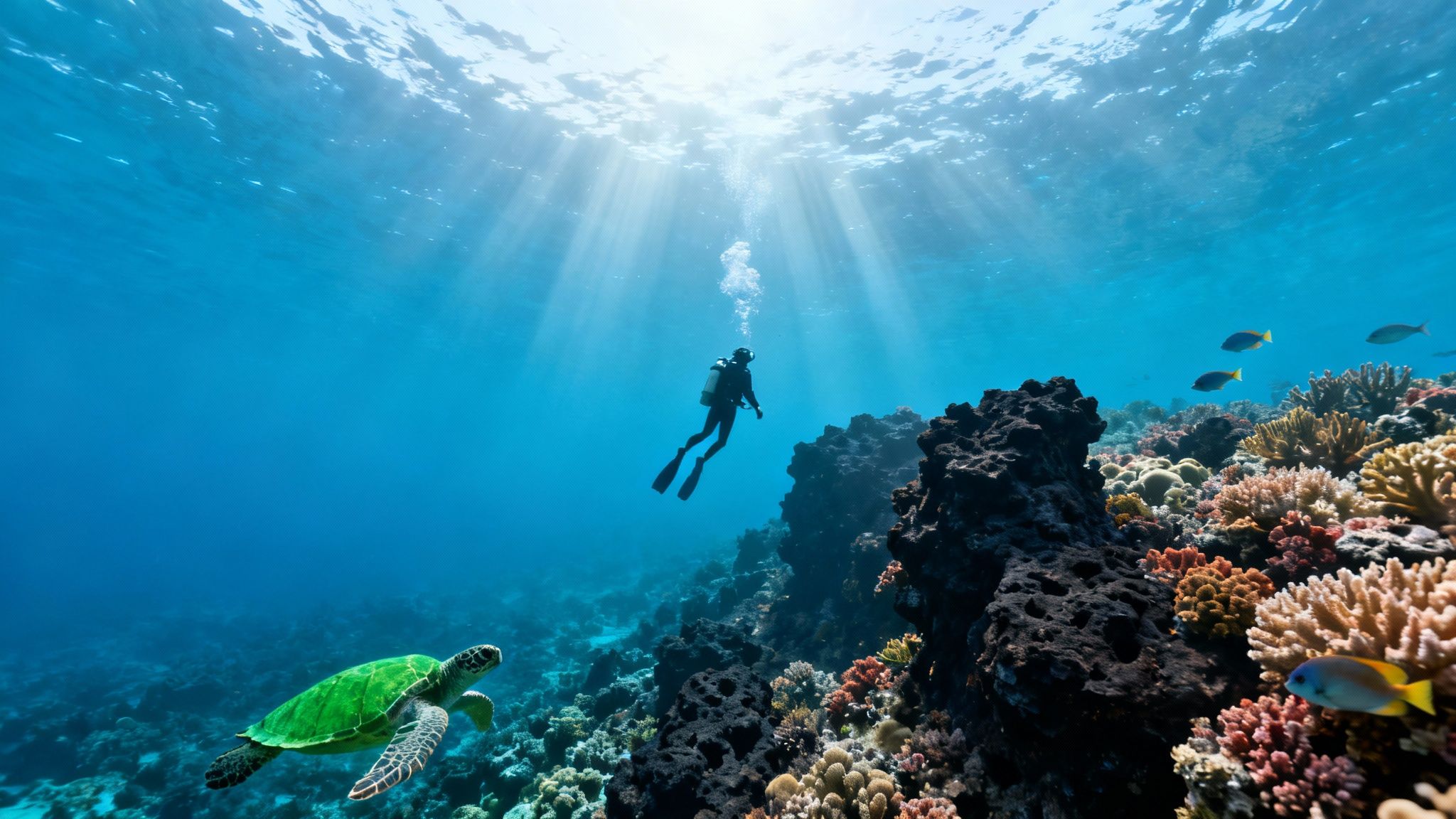
It's this unique geography that sets the stage for an incredible variety of dive experiences. You’ll find everything from shallow, sun-drenched coral gardens perfect for new divers to dramatic deep-water drop-offs that will thrill seasoned pros. Imagine exploring intricate lava tubes, swimming through natural archways carved by ancient lava flows, and seeing marine life thriving on volcanic rock. It’s truly something special.
Unmatched Marine Life
Thanks to its isolation in the middle of the Pacific, the Big Island is home to a spectacular collection of marine species, many of which you won't find anywhere else on Earth. It's a place where you're consistently rewarded with sights of colorful reef fish, elusive octopuses, and graceful eagle rays.
You’re almost guaranteed to run into some incredible creatures. Some of the highlights include:
- Honu (Green Sea Turtles): These gentle giants are a common and beloved sight. You'll often find them resting peacefully on the seafloor or gliding effortlessly through the blue.
- Spinner Dolphins: Known for their acrobatic leaps above the waves, these social mammals are frequently spotted in large pods from the boat on the way to and from dive sites.
- Manta Rays: These are the real stars of the show, especially during the world-famous night dive where they perform a mesmerizing underwater ballet.
- Endemic Fish: Keep your eyes peeled for species like the Hawaiian cleaner wrasse and milletseed butterflyfish. These unique fish add a special splash of color you can only see here. For a deeper look, check out our complete guide to Big Island diving.
The island has built a well-earned reputation as a top-tier diving destination, drawing over 150,000 dive tourists to its volcanic shores every year. This global appeal is all thanks to the exceptional underwater topography that active volcanism has created—the dramatic lava tubes and vibrant reefs are teeming with life.
Here's a quick look at what makes the Big Island so special for divers:
Big Island Diving Highlights at a Glance
| Experience | Best For | Marine Life |
|---|---|---|
| Manta Ray Night Dive | All Levels | Giant Manta Rays, Eels, Crustaceans |
| Blackwater Diving | Advanced Divers | Bioluminescent Creatures, Pelagic Larvae |
| Lava Tubes & Arches | Intermediate/Advanced | Unique Topography, Turtles, Reef Sharks |
| Reef Dives | All Levels | Turtles, Dolphins, Endemic Reef Fish |
From the iconic manta dive to exploring otherworldly lava formations, there's an adventure here for everyone.
Witness the Unforgettable Kona Manta Ray Night Dive
Picture this: you descend into the deep blue of the Pacific as the sun dips below the horizon. You settle onto the sandy ocean floor, the last rays of light fading from above. This isn't just another dive—it's your front-row seat to one of the most awe-inspiring shows on the planet.
The Kona Manta Ray Night Dive is the stuff of legend. It’s a true bucket-list experience and, for most people, the absolute highlight of their time diving the Big Island. What you're about to witness is a silent, underwater ballet that feels completely surreal.
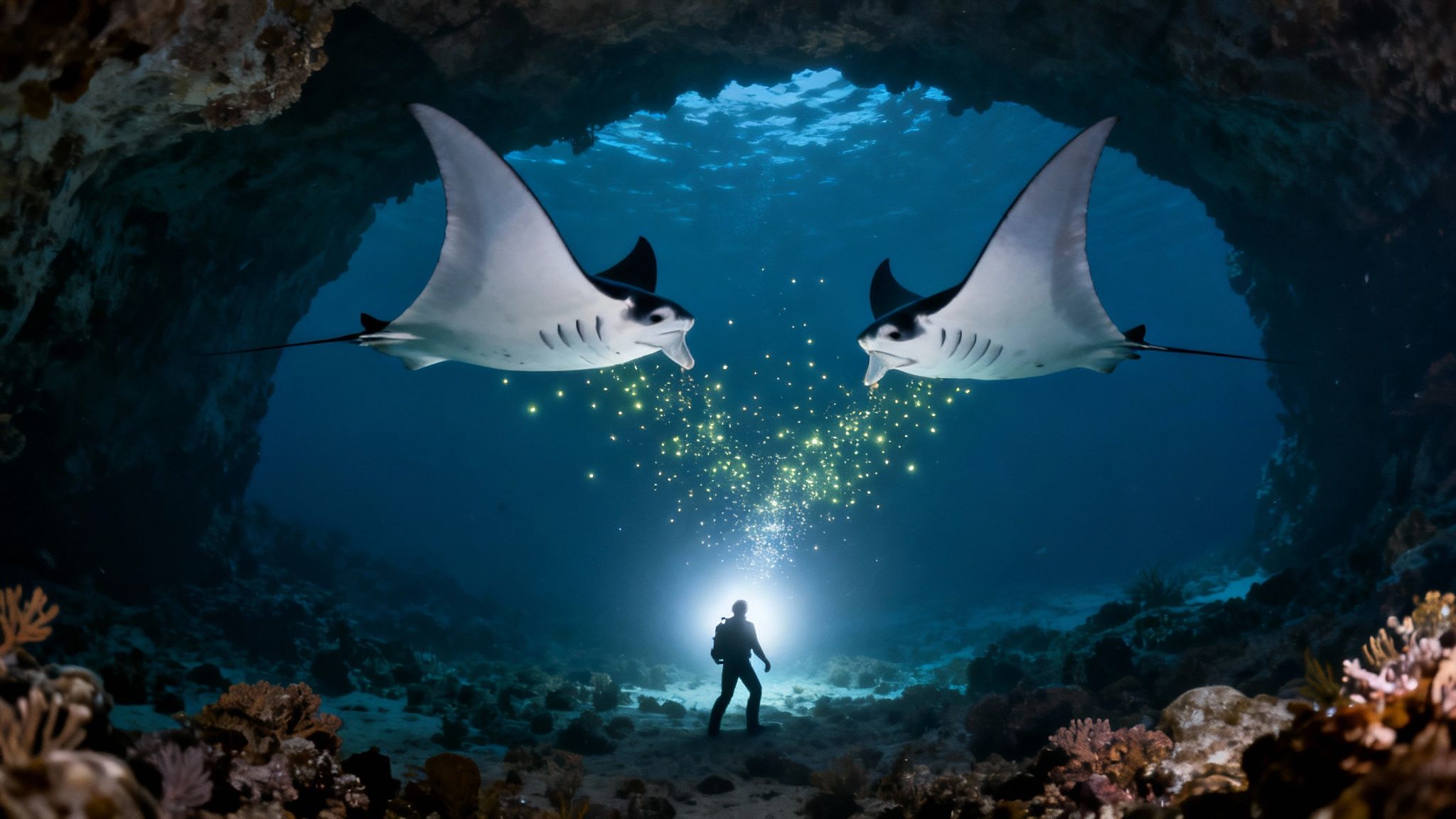
The magic kicks off when the dive crew switches on powerful, eco-friendly lights that illuminate the seafloor. This brilliant glow acts like a giant dinner bell for tiny plankton, which are drawn to the light in massive swarms. And where there’s plankton, the stars of the show are never far behind.
Out of the darkness, they appear. These gentle giants, with wingspans that can stretch up to 16 feet, glide in with effortless grace. They perform mesmerizing somersaults and barrel rolls, swooping just inches above your head with their huge mouths open to filter-feed. It's a breathtaking display of nature’s power and elegance, and it all happens in complete silence.
Why Garden Eel Cove is the Premier Manta Dive Location
While you can see mantas at a couple of spots, Garden Eel Cove is widely considered the superior choice for the dive tour. Why? It's all about its protected location. Tucked away in a bay, Garden Eel Cove is shielded from the open ocean swells that can affect other sites. This almost always means calmer water, better reefs, and a better viewing area, making the whole experience more comfortable and spectacular.
The setup at Garden Eel Cove just feels more intimate. It’s like a natural underwater amphitheater where divers can get settled without kicking up sand or disturbing the environment. You're not just seeing mantas; you're immersed in the vibrant ecosystem that supports them.
Want to geek out on their behavior? You can learn more about the fascinating behavior of Kona's manta rays right here.
The Kona Honu Divers Manta Experience
Going with the right operator can make or break this dive. At Kona Honu Divers, we've fine-tuned the manta ray experience to make sure every single guest has an amazing time. Our crew gives fantastic briefings, provides top-notch gear, and offers guidance that helps even first-time night divers feel completely comfortable.
We’re serious about marine conservation and respectful wildlife encounters. Our whole operation is designed to ensure the mantas are never stressed or disturbed. With our deep knowledge of the site and the mantas' patterns, we know exactly where to position you for the best possible views of the feeding frenzy.
Ready to see this underwater marvel for yourself? It's a good idea to book your spot on one of the top manta ray dive tours early, as these trips fill up fast. You don’t want to miss out.
One of the best things about this dive is how reliable it is. Operators along the Kona coast report manta sightings on 85-90% of their trips. Dive logs show incredible nights with as many as 32 individual mantas, and a typical night often brings 10-15 of these filter-feeding giants. These are the kinds of magical interactions that stay with you forever.
Explore a Universe of Volcanic Underwater Landscapes
Look, the manta ray night dive is the headliner, and for good reason. It’s an incredible experience. But don’t make the mistake of thinking that’s all there is to **scuba diving on Hawaii’s Big Island**. The real story of Kona diving is written in the rock—the ancient lava flows that have sculpted a truly unique underwater world.
The Kona coast is a diver's playground, a sprawling collection of sites that range from serene coral gardens to dramatic, almost architectural lava formations. Every dive tells a piece of the island's volcanic story.

As you explore these sites, you're literally swimming through geologic history. You'll see where lava once poured into the sea, cooling instantly to create intricate caves, massive archways, and winding swim-throughs. Now, those same structures are completely covered in vibrant marine life. It's this dynamic landscape that makes every single tank a new adventure.
Kealakekua Bay: A Protected Marine Sanctuary
If you only have time for one daytime boat dive, make it Kealakekua Bay. As the Big Island’s only underwater state park, it's a special place. This isn't just a dive site; it's a Marine Life Conservation District, rich in both history (it's where Captain James Cook first landed) and staggering biodiversity.
Because the bay is so well-protected, the coral reefs here are some of the healthiest you'll find anywhere in the Hawaiian Islands. The visibility is often spectacular, letting you take in the sheer density of life. We're talking thick schools of yellow tang, butterflyfish, and parrotfish swarming over the reef. The fish are curious and unafraid, making it a dream for underwater photographers.
Honaunau Bay: The Place of Refuge
Just south of Kona, you'll find Honaunau Bay, which locals affectionately call "Two Step" because of the easy entry point over the lava rock. This is a fantastic spot for divers of all skill levels, known for its consistently calm and crystal-clear water. It's also one of the absolute best places on the island to see honu, our beloved Hawaiian green sea turtles.
You’ll often find them resting peacefully on the sandy bottom or gliding gracefully through the coral gardens. The bay offers a nice mix of shallow reefs and deeper drop-offs, so you might also spot moray eels, octopuses, and even spinner dolphins passing by further out. The fact that it’s right next to the Puʻuhonua o Hōnaunau National Historical Park just adds to the magic of the place.
The volcanic origins of the Big Island have sculpted an underwater realm unlike any other. Diving here is like exploring a living museum of geology, where every archway and lava tube tells a story of the island's fiery birth.
Lava Tubes and Archways: A Signature Experience
One of the things that truly defines Big Island diving is the chance to explore its lava tubes and arches. You haven't really dived Kona until you've swum through one. Sites like Golden Arches and Turtle Pinnacle give you a peek into the island’s volcanic heart. Gliding through these ancient formations feels like you're in a submerged cathedral, especially when shafts of sunlight pierce through cracks in the rock above.
These structures are also magnets for marine life looking for a safe place to hang out:
- White-tip reef sharks are often found taking a nap inside caves and under ledges.
- Spiny lobsters and rare nudibranchs hide out in the nooks and crannies of the lava rock.
- Schools of soldierfish and squirrelfish often hover in the shadowy openings, their large eyes watching you pass.
Navigating these unique environments is an unforgettable adventure. We at Kona Honu Divers know these formations like the back of our hand and can guide you safely through these incredible natural wonders.
Exploring these diverse and beautiful locations is easy with our Kona diving tours.
Push Your Limits with Advanced and Blackwater Dives
Once you've got your sea legs and are comfortable on the reef, you might start craving something… more. For divers looking to push their boundaries, the Big Island delivers. While the shallow coral gardens are stunning, the real magic for seasoned divers often happens in deeper, more demanding environments where the island's raw power is on full display.
This is where your training really pays off, and your logbook gets some seriously impressive entries. If you're looking for more experienced diving opportunities, consider an advanced dive tour.
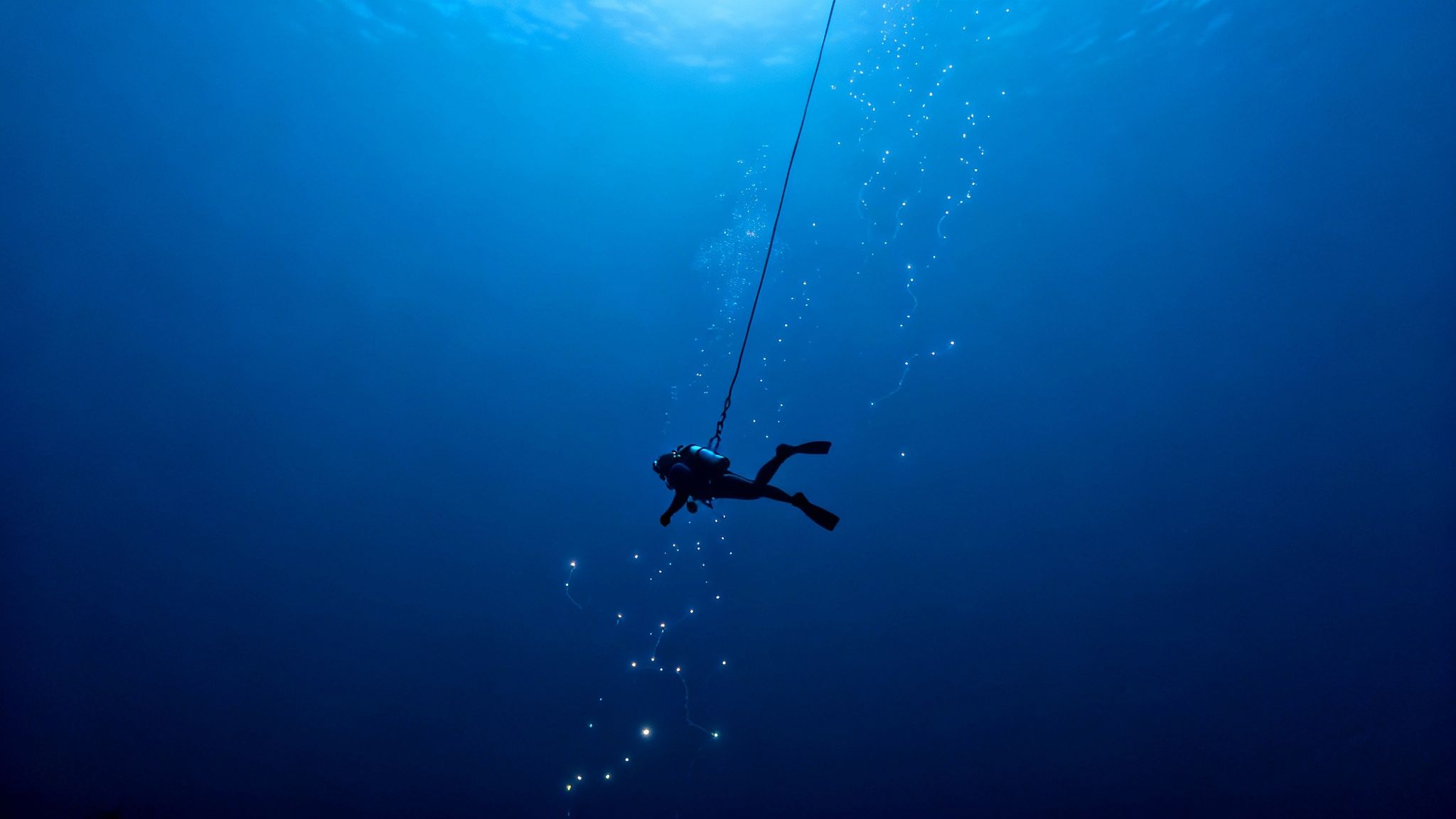
Advanced scuba diving on Hawaii’s Big Island is all about exploring deeper reefs, navigating intricate lava tube systems, and riding currents that sweep in larger pelagic animals. These aren't your average recreational dives; they demand sharp buoyancy control, a cool head, and the confidence that only comes with time and experience.
But if you’re looking for a dive that’s truly in a league of its own, we need to talk about Kona's world-famous blackwater dive.
The Surreal World of Blackwater Diving
First, forget everything you know about night diving on a reef. This is a completely different universe. On a Kona blackwater dive, you're not exploring the sea floor. Instead, you drift in the open ocean, thousands of feet above the bottom, tethered to a boat in pure, inky blackness. It feels less like swimming and more like floating through deep space.
What you're there to see is one of the planet's largest migrations. Every single night, countless tiny, bizarre, and often bioluminescent creatures journey from the deep abyss toward the surface to feed. These are animals you will never see on a regular dive.
You’ll witness a hidden world of strange and beautiful organisms:
- Alien-like Larvae: See the infant stages of familiar animals like eels, crabs, and lobsters, which look nothing like their adult forms.
- Pulsating Jellies: Encounter mesmerizing jellyfish and siphonophores that drift past like glowing ghosts.
- Living Light: Watch the water around you erupt in sparkles of bioluminescence with every flick of your fin. It’s a phenomenon that has to be seen to be believed.
This utterly unique dive has put Kona on the map for serious underwater adventurers. Of the over 100,000 certified dives logged annually on the Big Island, this experience stands out. It's a dive that requires a specific skill set and a serious sense of adventure.
Because of the extreme environment—deep, dark, open ocean—this dive is strictly for experienced divers. You need to be completely comfortable in the dark and have your buoyancy absolutely dialed in.
Kona Honu Divers were pioneers of this dive, and our team has perfected the art of running safe and mind-blowing blackwater expeditions. You can learn more about what it takes by checking out our complete guide to blackwater diving in Kona.
How to Plan Your Perfect Big Island Dive Trip
Let's talk about planning your scuba diving Hawaii Big Island adventure. The great news is, you can hardly go wrong. Thanks to the island's incredible geography, the Kona coast is sheltered from the heavy trade winds, which means we get fantastic diving conditions pretty much year-round.
That said, timing is everything, and certain seasons bring unique underwater spectacles that can turn a great dive trip into an unforgettable one.
Water temperature is always comfortable, hovering around a refreshing 75°F in winter and warming up to a lovely 81°F in summer. Visibility is usually spectacular, often clearing 100 feet, especially during the drier summer months. But the real game-changer is the seasonal marine life.
Winter, from December through March, is genuinely special. It's the peak of humpback whale season. While you won't see them on a scuba dive, you will hear them. Their haunting, powerful songs echo through the water, providing the most incredible, soul-stirring soundtrack to your dive. It’s an experience that will stay with you forever.
When to Dive The Big Island
So, when should you book your flight? While there's truly no "bad" time to dive in Kona, your personal preference might sway you toward one season over another.
Here’s a quick breakdown of what you can expect throughout the year to help you find your perfect dive window.
Seasonal Diving Conditions on the Big Island
| Season | Water Temp (°F) | Avg. Visibility | Key Marine Life Sightings |
|---|---|---|---|
| Winter (Dec-Mar) | 75°-77° | 80-100+ ft | Humpback Whales (heard underwater), Manta Rays, Turtles |
| Spring (Apr-Jun) | 76°-78° | 100+ ft | Manta Rays, Dolphins, Reef Sharks, Vibrant Reef Fish |
| Summer (Jul-Sep) | 79°-81° | 100+ ft | Calmest Seas, Excellent Visibility, Turtles, Eagle Rays |
| Fall (Oct-Nov) | 78°-80° | 80-100 ft | Manta Rays, Chance of larger pelagics, Fewer Crowds |
As you can see, the Kona coast is always teeming with life. It really just comes down to what you want to experience most—the symphony of the humpbacks or the glass-calm seas of summer.
Your Diver-Focused Packing Checklist
A little preparation goes a long way toward a stress-free dive vacation. While we have excellent, top-of-the-line rental gear available, we know that many divers feel most comfortable with their own equipment.
Here's a simple checklist to make sure you don't forget the important stuff:
- Essential Documents: Your C-cards are a must! Bring physical and digital copies, along with your logbook and any dive insurance information.
- Personal Dive Gear: At a minimum, bringing your own mask, snorkel, fins, and dive computer makes a huge difference in comfort and familiarity. A well-fitting mask is a diver's best friend.
- Exposure Protection: A 3mm wetsuit is perfect for most of the year, but if you tend to get cold, a 5mm might be a better choice, especially during the winter months.
- Reef-Safe Sunscreen: This one is non-negotiable. Hawaii state law bans sunscreens with oxybenzone and octinoxate to protect our fragile coral reefs. Please help us keep them healthy.
- Underwater Camera: You’re going to see things you'll want to remember forever, from graceful mantas to otherworldly lava tubes.
- Dry Bag: A must-have for keeping your phone, keys, and a fresh towel dry on the boat between dives.
Understanding Certification Requirements
Great news for certified divers: most of the stunning reef sites along the Kona coast are well within the limits for Open Water divers. There's a whole world of vibrant coral gardens and lava formations to explore.
However, some of our most talked-about dives do require a bit more training.
Our standard two-tank morning and afternoon boat dives are perfect for divers of all levels. But if you’re looking to experience something truly unique, an Advanced Open Water certification is your ticket. This opens the door to deeper sites and specialty dives like the legendary Kona Blackwater Dive. Drifting in the deep open ocean at night is an incredible thrill, but it demands solid buoyancy control and a calm mindset.
Don’t have the certification you need? Don't sweat it. Kona Honu Divers offers a complete lineup of PADI courses. We can take you from a Discover Scuba experience to earning advanced certs that unlock a whole new level of diving—all right here in paradise.
Ready to jump in? Let us handle all the logistics. Check out our full menu of Kona diving tours and find the perfect adventure for your skill level.
Choosing the Right Dive Operator in Kona
Let’s be honest, the dive operator you choose can absolutely make or break your trip. It’s about more than just finding a boat that goes to the right spots; you’re putting your safety, comfort, and the quality of your entire underwater adventure in their hands.
When you're looking around, you're looking for a few key things. You want a crew with a spotless safety record, boats that are actually comfortable and built for diving, and a commitment to small groups. Nobody wants to feel like a sardine in a can, either on the boat or underwater.
Don't be afraid to ask questions. What are their boats like? Is there plenty of space, or will you be tripping over gear? Is getting in and out of the water a breeze or a workout? And who’s on the crew? You want a team that knows these waters like the back of their hand and can handle any curveballs with calm, professional confidence. That’s what lets you relax and just enjoy the dive.
Why We Think Kona Honu Divers Is a Cut Above the Rest
This is where a shop like Kona Honu Divers really shines. They’ve built a reputation for not just meeting but exceeding expectations. Their boats, like the fan-favorite Honu One, weren't just bought; they were custom-designed from the ground up specifically for divers. Think smooth rides, lots of shade, and enough room to gear up without bumping elbows. It's the little things that make a big difference.
But what really sets them apart is the crew. We're talking about a team with a staggering 200+ years of combined experience in the dive industry. For them, this isn't just a nine-to-five job; it's a genuine passion. They live and breathe this stuff, and it shows.
They also throw in some fantastic perks, like offering free nitrox for any certified diver. If you've ever used it, you know this is a huge plus—it can mean longer bottom times and feeling less wiped out after a day of diving.
It’s one thing for us to say it, but their reputation speaks for itself.
When you dive with a crew that has this level of expertise and a deep respect for the ocean, you’re getting more than just a taxi service to a dive site. You're getting a premium, unforgettable experience. You’re not just another booking; you’re a guest being shown the absolute best of Kona's underwater world.
Got Questions About Diving in Kona? We’ve Got Answers.
Alright, let’s tackle some of the most common questions we get from divers planning their trip to the Big Island. Think of this as a final run-through to make sure you’re feeling confident and ready to hit the water.
What’s the Minimum Certification I Need for Kona?
For most of the beautiful reef dives here, a basic PADI Open Water certification is all you need. The conditions along the Kona coast are often calm with fantastic visibility, making it a perfect playground for divers of all experience levels.
That said, some of our more unique dives require a bit more training. To join the incredible Kona Blackwater Dive, you’ll need an Advanced Open Water certification. This is purely for safety, as you're diving in open ocean at night—it’s a totally different ballgame. If you're looking to level up, we offer a full range of PADI courses right here.
Do I Have to Haul All My Scuba Gear to Hawaii?
Absolutely not! Unless you love paying airline baggage fees, leave the heavy stuff at home. Traveling with a full scuba kit is a hassle, which is why we offer a complete lineup of top-notch, meticulously maintained rental equipment.
From BCDs and regulators to wetsuits and dive computers, we’ve got you covered. It's a great way to travel light and dive with gear that you know is professionally serviced. Plus, for certified divers, we throw in complimentary nitrox to help you get the most out of your bottom time.
When Is the Best Time of Year to Dive?
Honestly, there's no bad time to dive in Kona. The conditions are fantastic year-round, but what you experience changes slightly with the seasons.
- Summer (June-September): This is when the ocean is at its flattest and warmest. Water temps can hit a balmy 81°F, and it’s not uncommon for visibility to push past 100 feet. It’s pure bliss.
- Winter (December-March): The water cools down a bit (to around a comfortable 75°F), but this is when the humpback whales arrive. While you won't see them on a dive, hearing their haunting songs reverberate through the water is a truly magical, unforgettable experience.
How Safe Is the Manta Ray Night Dive?
Your safety is our absolute top priority, especially on an iconic dive like the Manta Ray Night Dive. We run a very tight ship. The entire experience happens in a controlled, well-lit area often called "the campfire."
Before you even get in the water, your divemaster will give a detailed briefing on exactly how to position yourself on the sand. You'll remain stationary for most of the dive, which not only minimizes any risk but also lets you relax and enjoy a front-row seat to one of the most spectacular shows in the natural world.
Diving in Kona is a world-class adventure, and a little preparation goes a long way. With these logistics handled, all that's left is to get excited for the incredible underwater world that awaits.
At Kona Honu Divers, we live and breathe this stuff. Our mission is to share our passion for the ocean through safe, fun, and unforgettable adventures. Ready to see for yourself? Check out all our Big Island diving tours and book your spot in paradise.