
The first time you drop below the surface off Kona at sunrise, the noise from shore disappears fast. What stays is the hiss of your regulator, the shape of black lava under you, and that clean Hawaiian blue that makes even experienced divers stop and stare.
Your Underwater Adventure in Hawaii Begins Here
On a good Kona morning, I can usually tell within a few minutes which visitors are about to fall in love with diving in Hawaii. It happens right after the briefing, when they realize the plan is not just warm water and a casual reef cruise. The main draw is access. On this coast, a well-run operation can put divers on world-class daytime reefs, the manta night dive, or a blackwater charter without turning the day into a logistical mess.
Hawaii has the depth of infrastructure to support that kind of trip. The state sees more than 1.5 million scuba dives each year, supports 215-plus licensed dive shops, and generates more than $519 million in annual scuba-related economic impact. Standard two-tank boat dives commonly fall around $150 to $225 per person, according to this overview of Hawaii's scuba market. For travelers, a market of that size usually means more reliable boat schedules, better training access, and crews that treat diving as their main job, not a side offering for resort guests.
Kona stands out because the diving is unusually easy to organize well. The leeward coast is protected from the prevailing trade winds more often than many visitors expect, and that gives operators more usable days on the water. For divers, that often translates into a better first dive day, then a clear path toward the signature experiences Hawaii is known for.
That progression matters.
A smart Hawaii dive trip starts with matching the first few dives to your current comfort level, not your vacation excitement. Newly certified divers usually do better with straightforward reef profiles and a patient crew. Divers who have been out of the water for a year or two should treat the first dive as a checkout in everything but name. Experienced divers can push straight toward advanced charters, but even then, local knowledge counts. Manta and blackwater dives are not difficult for the same reasons, and a solid operator will brief them that way.
Here is the practical rule I give people all the time:
- Newly certified divers should start with simple daytime boat dives and get weighted correctly before booking specialty dives.
- Rusty certified divers should consider a refresher or an easy first charter before adding night or deeper profiles.
- Experienced divers get the most out of Hawaii by choosing an operator with direct experience on Kona's signature dives, not just a broad activity menu.
If the trip is centered on diving, start with an operator that runs Kona diving as its core business. The Kona Honu Divers home page gives a clear sense of what a dive-focused schedule on the Kona coast looks like, especially for divers planning around manta and blackwater access rather than just filling an afternoon.
Why Hawaii Offers a Premier Dive Destination
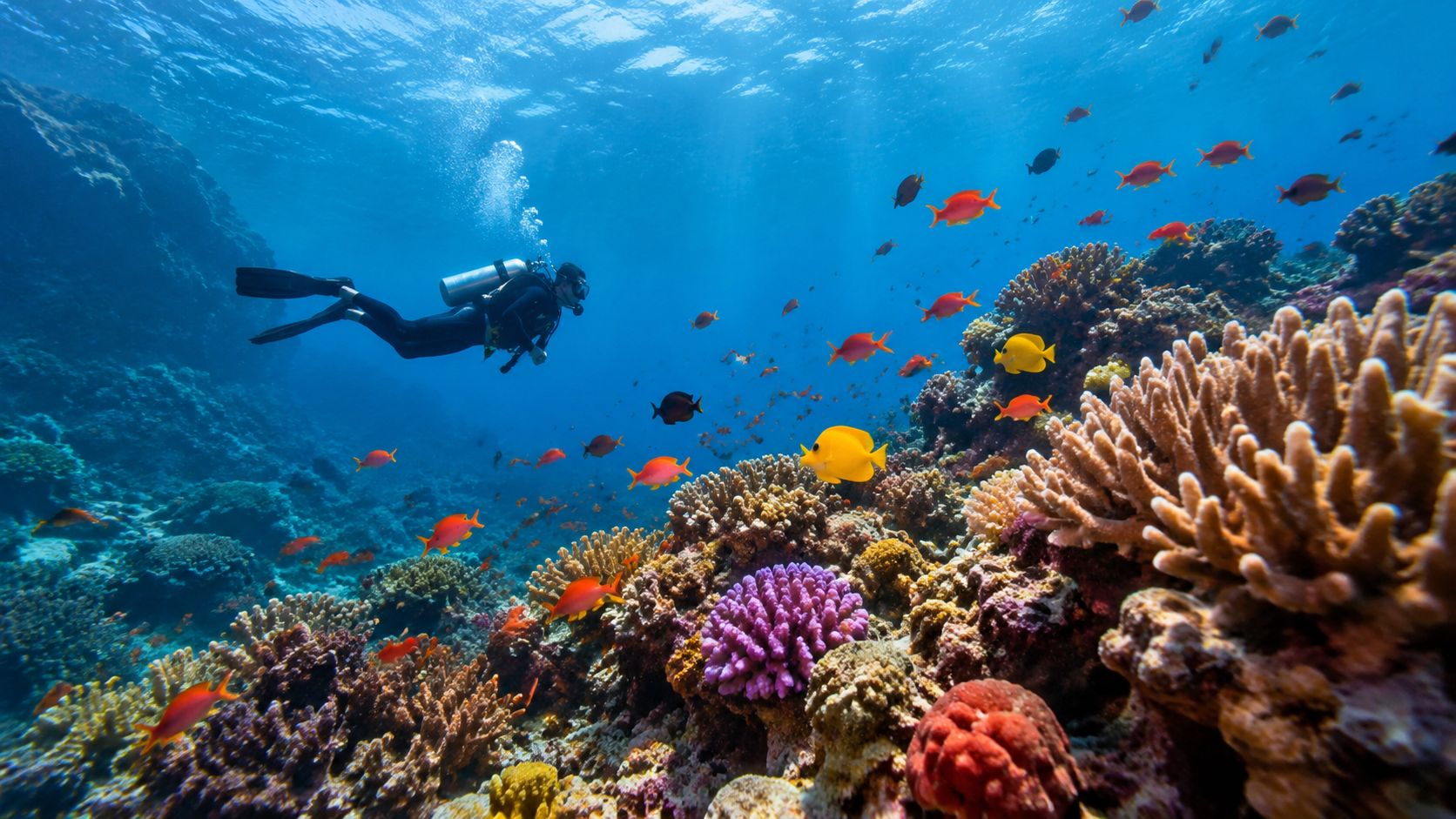
Hawaii's underwater world is different before you even talk about marine life. The islands are volcanic, and that geology shapes the whole dive. Instead of broad, gentle reef platforms everywhere, you often get lava shelves, drop-offs, swim-throughs, arches, and broken structure that gives each site a strong personality.
For divers, that means the scenery does more work. Even a modest-depth reef dive can feel dramatic because the seafloor has contour, shadow, and hard volcanic lines under the coral growth.
Conditions that help divers stay comfortable
Hawaii's scuba environment is defined by stable tropical conditions. Water temperatures are commonly around 75 to 80°F, and visibility often exceeds 100 feet, though it can decrease after rainfall, according to this guide to Hawaii scuba conditions. Those aren't just nice brochure details. Warm water helps divers stay comfortable longer, and strong visibility makes descents, buddy contact, and basic navigation easier.
When conditions shift, they usually do it for recognizable reasons. After rain, runoff can reduce clarity. That doesn't mean the diving is bad. It means smart operators change site selection, and smart divers don't insist on a site just because they saw it online.
What works underwater and what doesn't
Some habits pay off fast in Hawaii. Others get exposed quickly.
| Approach | What usually works | What usually doesn't |
|---|---|---|
| Site selection | Choosing leeward or protected sites when weather changes | Locking yourself into one famous site regardless of conditions |
| Exposure protection | Bringing what keeps you comfortable in mid-70s to 80°F water | Assuming warm water means you'll never get chilled on repetitive dives |
| Dive style | Slowing down and looking into lava structure and reef edges | Racing through a dive as if everything worth seeing is in open water |
A lot of first-time visitors also underestimate how much volcanic terrain changes the feel of a dive. You're not just swimming above life. You're moving through an environment built by fire and then softened by the ocean.
Good Hawaii diving starts with respecting the ocean day you actually have, not the one you hoped to post later.
If you're still comparing regions, this look at which Hawaiian island is best for scuba diving helps narrow the choice based on the kind of trip you want.
Exploring Hawaii's Best Dive Sites by Island
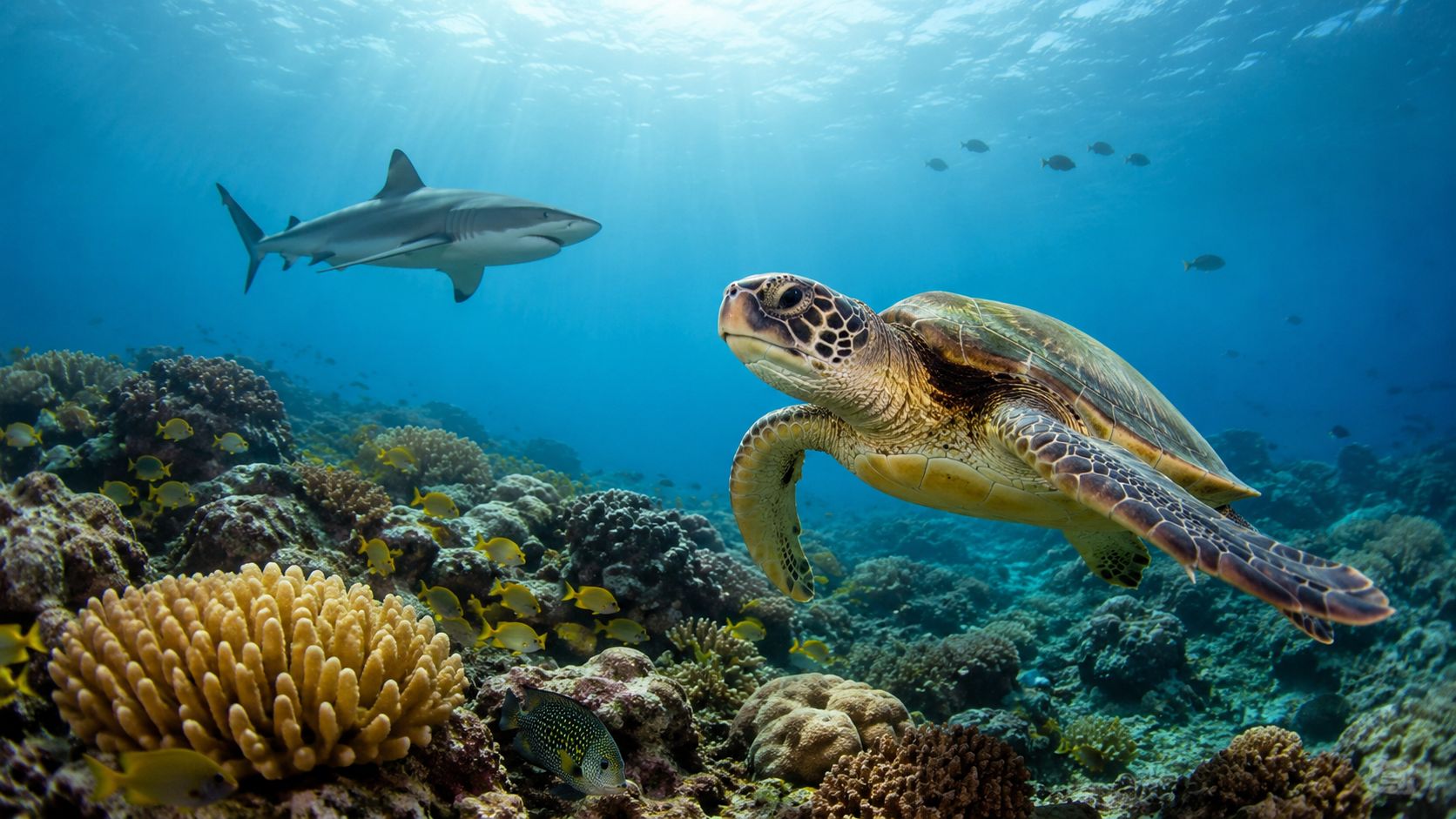
Not every island delivers the same kind of diving day. Hawaii has enough variety that your choice should depend on what you want most. Some islands are better for a mixed vacation with a little diving worked in. Others are better when diving is the trip.
How the islands differ
Oahu suits divers who want urban convenience, easy access to other activities, and a broad menu of operators. It can be a good fit if the group isn't entirely focused on diving.
Maui works well for travelers balancing beach time, family plans, and a few easier dives. It's often chosen by people who want diving as part of a broader resort-style itinerary.
Kauai feels a bit wilder. Conditions can be more variable, and the reward is a more rugged character underwater and above water.
Then there's the Big Island, and especially Kona.
Why Kona keeps getting the nod
Kona on the Big Island stands apart because the leeward coast concentrates 50+ dive sites with generally calm conditions, supporting everything from shallow reefs at 10 to 130 ft to advanced specialties like manta ray night dives and blackwater diving, according to this guide to Kona diving conditions and site range. That's the practical advantage. You can build an entire trip around one coastline and still get real variety.
For most divers, calm and consistent matters more than people admit. You're on vacation. You don't want every boat day to feel like a gamble.
Here's the comparison in plain terms:
- If you want broad vacation variety, Oahu and Maui can make sense.
- If you like a more rugged trip, Kauai has appeal.
- If you want the highest concentration of dependable, dive-focused options, Kona is usually the strongest play.
The kind of diver each island serves best
| Island | Strong fit for | Main trade-off |
|---|---|---|
| Oahu | Divers mixing ocean time with city activities | Less of a dedicated dive-trip feel |
| Maui | Families and casual vacation divers | Diving may not be the center of the trip |
| Kauai | Flexible divers who like a rugged atmosphere | Conditions can demand more schedule flexibility |
| Big Island and Kona | Divers prioritizing reliability, variety, and signature dives | Hard to leave room for non-dive plans once you see the menu |
One thing Kona does especially well is let divers progress through the week instead of repeating the same profile. Start on daytime reef sites, get your weighting and buoyancy settled, then move toward specialty dives if your comfort and certification line up.
If that's the direction you're headed, the Kona diving overview on the Big Island gives a good sense of how those trips are structured, and the Kona diving tours page is where to browse actual charter options.
Hawaii's Signature Dives The Manta Ray and Blackwater Experience
The dives people talk about for years after leaving Hawaii are usually in Kona, and they usually happen after sunset. One is graceful and almost theatrical. The other feels like drifting in open space while the deep sends strange life up toward your lights.
That contrast is exactly why these dives matter.
The manta ray night dive
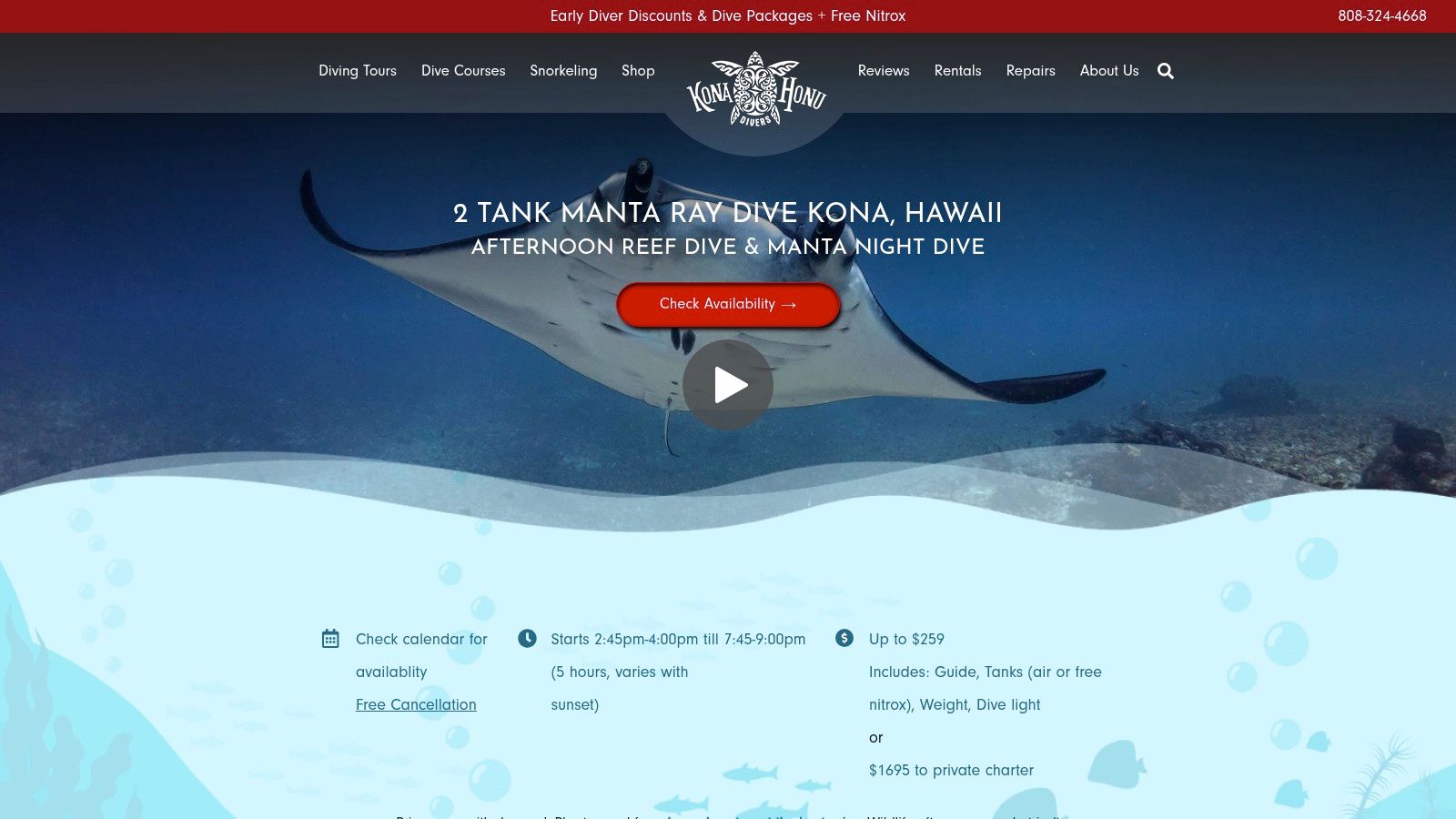
The manta dive works because it is controlled. Divers settle into a defined viewing area, lights draw in plankton, and the mantas come to feed. The best divers on this trip are not the ones finning around to “find” something. They hold position, keep good buoyancy, and let the animals do the work.
For this experience, Garden Eel Cove is the stronger choice. Its protected location makes the site more forgiving, the viewing area is better organized, and the surrounding reef is better than what many divers expect from a night site. Those details matter because a manta dive is only magical when the setup stays calm and disciplined.
If you want to book that specific experience, use the Garden Eel Cove manta dive tour page. For broader context on how the dive works, the Kona manta ray dive guide is worth reading first.
Don't chase mantas. Good operators set the dive so the mantas come to the group. That's safer for the animals and far better for viewing.
The blackwater dive
Blackwater diving is a different animal entirely. You're not on a reef. You're suspended in open ocean at night over deep water, using a lighted downline and strict team discipline as your reference. Creatures from the deep rise into the water column, and what shows up can look alien, delicate, and almost unreal.
This is not a “why not try it” dive for someone who's already overloaded by basic night diving. It rewards divers who are already comfortable with buoyancy, task loading, darkness, and the mental side of leaving the reef behind.
If that sounds like your kind of dive, the Kona blackwater night dive tour page is the right place to look.
Which one should you choose
If you can do both, do both. They're famous for different reasons.
- Choose manta if you want Hawaii's classic big-animal night dive with a structured viewing setup.
- Choose blackwater if you're an experienced diver who wants something rarer and more mentally demanding.
- Choose an advanced day charter first if you need to sharpen buoyancy and dive discipline before jumping into specialty night profiles. This advanced long-range dive option fits that role well.
Planning Your Hawaii Dive Trip Logistics and Safety
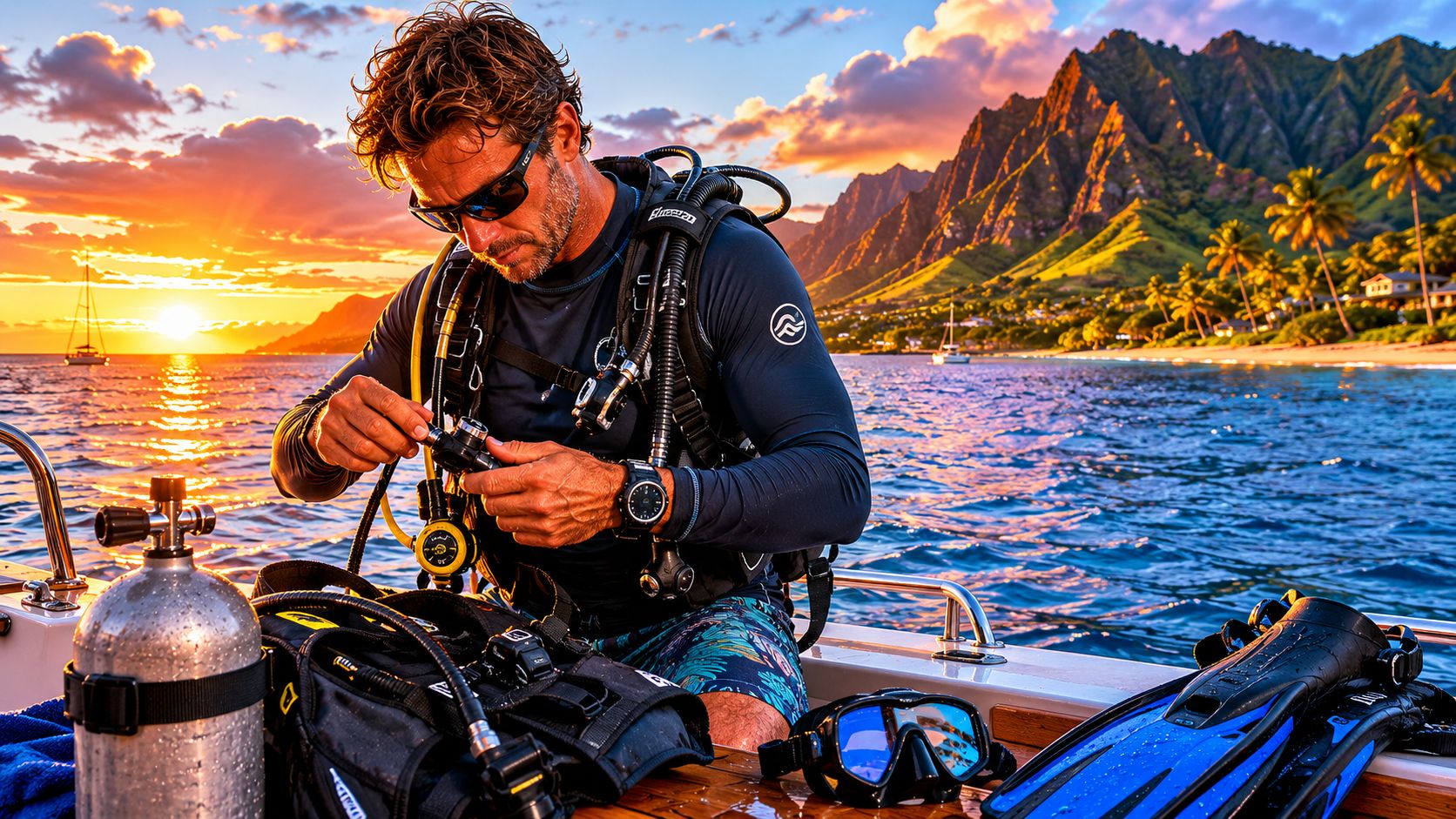
A smooth dive trip starts before you step on the boat. Hawaii is forgiving in a lot of ways, but small planning mistakes can still cost you a dive day, especially if you arrive tired, underpacked, or overambitious about the dives you're ready for.
What to sort out before you travel
The simplest plan is usually the strongest one.
- Book dives early if there's a specific specialty trip you care about. Manta and blackwater spaces can be tighter than standard reef charters.
- Match dives to your current skills, not the certification card you earned years ago. If your buoyancy is rusty, start with a daytime reef dive.
- Check gear comfort before the boat leaves. Mask fit, fin fit, and proper weighting matter more than having the newest gear.
The money side is easier when you know the baseline. If you want a sense of what common charter pricing looks like, this breakdown of Hawaii scuba diving costs is a practical reference.
What to bring and what to rent
Most divers do well renting the bulky gear and bringing the items that affect comfort most.
- Bring your mask if you have one that fits well. A familiar mask solves a lot of stress.
- Bring your dive computer if you own one and know how to use it confidently.
- Bring exposure protection you trust if you tend to get cold easily, even in warm water.
- Rent tanks, weights, and larger gear when traveling light makes the rest of the trip easier.
If a piece of gear affects your comfort every minute of the dive, bring your own if you can.
Seasickness can ruin a good ocean day
Even strong divers can get seasick when they haven't been on a boat in a while. Don't treat it like a character test. Handle it before the boat leaves the harbor.
Useful options include:
A few simple habits also help:
- Eat lightly, but don't board on an empty stomach.
- Hydrate early instead of trying to catch up on the boat.
- Tell the crew if you're prone to motion sickness so they can suggest the best place to sit.
Certification and dive selection
Open Water divers can enjoy a lot in Hawaii. That doesn't mean every dive is for every diver. Night diving, deeper profiles, and highly task-loaded specialty dives call for more comfort and better control.
A conservative progression works well. Start with easier reef dives. Add night or advanced profiles once your trim, gas use, and general calmness are where they should be.
Diving with Kona Honu Divers What to Expect
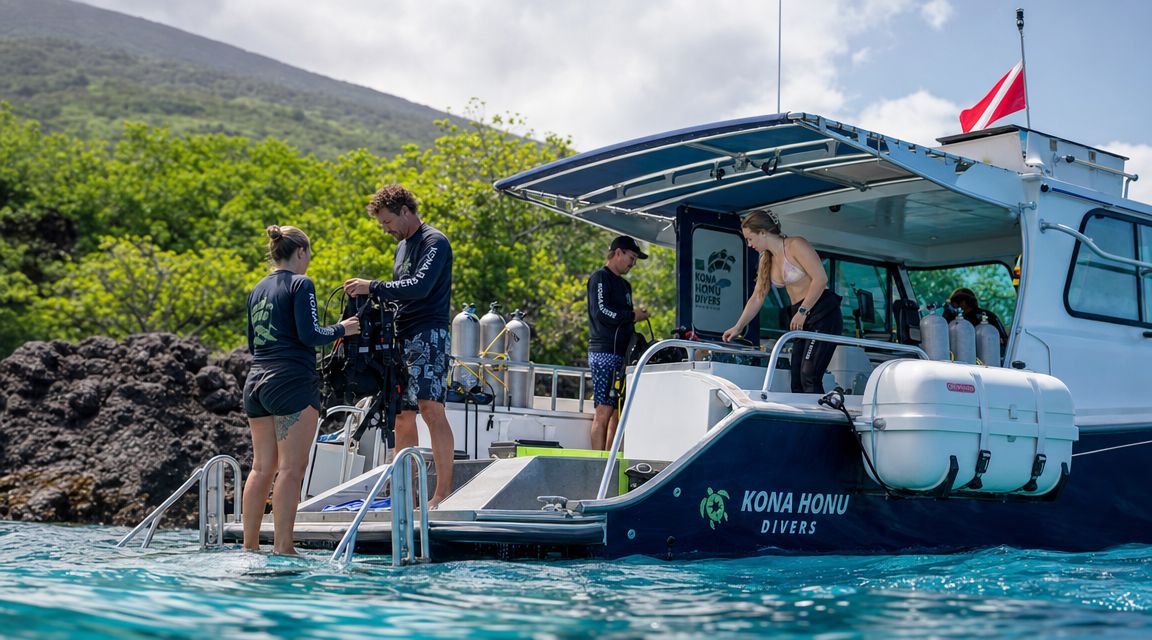
A good Kona dive day should feel organized before it feels exciting. You want a crew that checks divers in cleanly, sorts gear without chaos, gives a real briefing, and makes site decisions based on conditions and diver ability rather than hype.
One operator that runs that kind of dive-focused program is Kona Honu Divers. They offer guided Kona scuba charters, training, specialty dives including manta and blackwater, and support for divers who want either straightforward reef diving or more advanced profiles. That's the right kind of range for Kona because the coast serves both newer certified divers and people chasing specialty experiences.
What a well-run boat day looks like
The strongest operations tend to share the same habits:
- Clear pre-trip communication so divers know where to be, what to bring, and what the day requires.
- Thorough briefings that explain the site, likely conditions, entry and exit procedures, and what not to do underwater.
- Measured in-water supervision from guides who watch gas, buoyancy, and stress cues instead of leading from the front.
- Simple post-dive rhythm with enough support on deck that divers can reset calmly between dives.
That style matters more in Kona than people think. Many sites are easy to enjoy, but the standout dives reward discipline. The crew sets that tone.
The details that separate a solid charter from a sloppy one
Divers often focus on the famous site and ignore the boat operation. That's backward. A mediocre operator can make a famous site feel rushed. A sharp operator can make a standard reef dive memorable because the whole day works.
Look for this on any charter:
| Good sign | Why it matters |
|---|---|
| Site briefing includes terrain and hazards | Divers know what to expect before descent |
| Crew asks about recent dive experience | Helps match support to the actual diver |
| Night dive procedures are explicit | Reduces confusion when visibility narrows to your light cone |
Hawaii Scuba Diving FAQs and Regulations
Can you try scuba in Hawaii without certification
Yes. A beginner can join an introductory scuba program if the operator follows training-agency standards for entry-level experiences and keeps the dive shallow with direct instructor supervision, as outlined by PADI Discover Scuba Diving standards.
On the Kona coast, that usually works best for calm-water reef dives, not specialty trips like blackwater or advanced profiles. New divers do better with a conservative first dive, a clear briefing, and an operator who is willing to slow the day down.
Are sharks a major concern while diving in Hawaii
Sharks get a lot of attention, but routine diver mistakes cause far more trouble than shark encounters. Divers Alert Network tracks fatal injury data and notes that common factors in dive incidents include gas management problems, health issues, ascent errors, and weak decision-making, not sharks as a primary recreational diving hazard. See DAN's safety research here: Divers Alert Network fatality and incident research.
The practical takeaway is simple. Stay with the group, watch your air, keep your buoyancy under control, and listen to the site briefing.
What marine life rules should divers follow
Hawaii takes wildlife protection seriously. The State of Hawaii Division of Aquatic Resources advises people to keep distance from marine life and avoid touching, chasing, feeding, or harassing wild animals, including turtles and marine mammals, because those actions can injure the animal and create legal problems for the visitor. Guidance is published by the Hawaii Division of Aquatic Resources.
Good marine life encounters in Kona usually come from patience. Hold your position, keep your fins off the reef, and let the animal choose the interaction.
The divers who see the most are usually the ones who move the least.
What's the best way to book dive trips
Book the dives that have limited space first. On the Kona coast, that usually means manta night dives and blackwater charters. Weather, swell, and current can force changes, so build some flexibility into the rest of the itinerary.
That matters more in Kona than on a trip built around easy shore access. The signature dives here depend on timing, conditions, and a crew that knows how to run them safely.
Is scuba diving Hawaii good for families and mixed groups
Often, yes. Hawaii works well for groups with different comfort levels because one part of the group can dive while others snorkel, relax on shore, or join a boat day that does not require certification.
The key is matching the plan to the least experienced person without limiting the whole trip. For visitors focused on Kona's marquee dives, Kona Honu Divers is one operator worth checking early because manta, blackwater, reef charters, and training can fill fast.