
You're probably planning this trip the same way most certified divers do. One browser tab has manta rays. Another has lava tubes. A third has a map of islands, and now you're trying to figure out whether Maui, Oahu, Kauai, or the Big Island is the right call.
That's where most generic scuba diving Hawaii guides stop being useful. They tell you Hawaii is beautiful, that there are reefs and turtles, and that diving happens year-round. All true. None of that helps much when you need to decide where to stay, what kind of diving fits your experience, and which operator will make the week run smoothly.
Welcome to Your Hawaiian Underwater Adventure
Hawaii earns its reputation because you can dive here all year, with water temperatures typically around 24–27°C (75–81°F), and the Big Island's Kona coast stands out because its lava-built shoreline and lee-side geography often create calm seas with visibility often above 100 feet (30 m), according to this Hawaii dive guide from SSI Divessi. Those are not small details. They shape the whole trip.
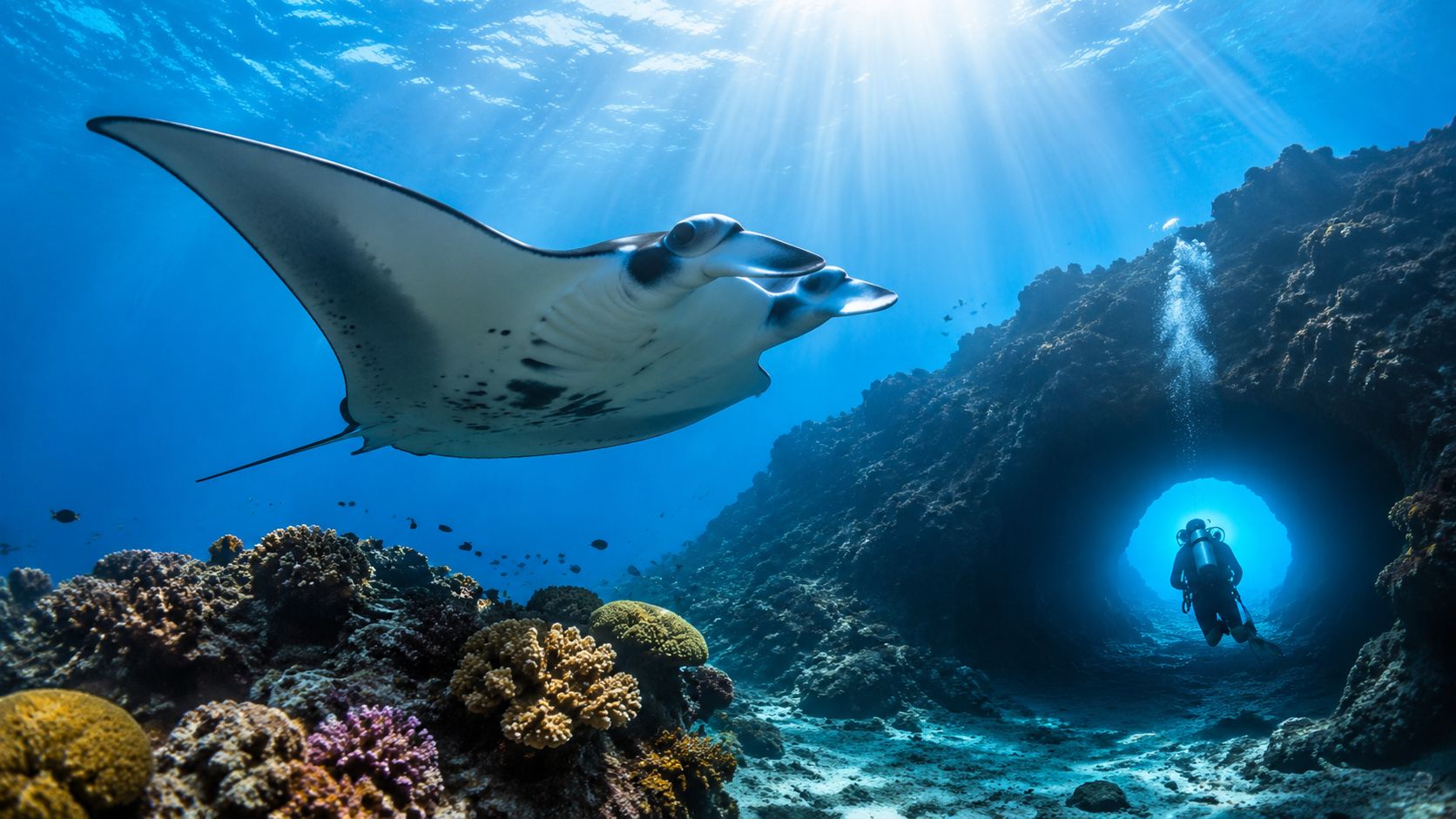
If you're a newer certified diver, that matters immediately. Calm water means easier entries, easier descents, and less task loading before you've even settled your breathing. Strong visibility means better orientation on the reef, better awareness of your buddy, and less stress when you move through volcanic structure.
Why Kona gets so much diver attention
A lot of Hawaii diving is site-dependent and condition-dependent. Kona is too, but the west side advantage is real. The coast is protected in a way that makes regular boat diving practical across much more of the year than many first-time visitors expect.
That's why Kona keeps coming up in serious dive conversations. You can have a morning reef dive with clean visibility, then come back at night for a completely different experience. You're not choosing between “good beginner diving” and “interesting advanced diving.” You can find both in the same area.
Practical rule: If your priority is maximizing the odds of getting in the water on multiple days, Kona is usually the easiest place to build a dive-focused Hawaii itinerary around.
What actually makes diving here different
The underwater terrain is the first thing most divers remember. Hawaii doesn't feel like a soft coral postcard destination. It feels volcanic. The structure has shape, edges, swim-throughs, shelves, and dark pockets where your buoyancy and trim matter more than your wetsuit thickness.
The marine life is the second. Everyday reef dives can still feel special because the setting changes the encounter. A turtle crossing a lava ledge, an eel tucked into black rock, a school of reef fish against open blue water, or a night dive built around one signature species all feel distinctly Hawaiian.
If you want one working plan instead of a pile of inspiration, start with this mindset:
- Choose the island first. Don't book flights and then figure out diving later.
- Match conditions to your confidence. Newer certified divers usually enjoy Hawaii more when they prioritize protected, easier diving over brag-worthy sites.
- Leave room for one signature dive. In Kona, that usually means manta or blackwater, depending on skill and comfort.
That's the difference between a trip that looks good on paper and one that performs well underwater.
When and Where to Dive in Hawaii
The biggest planning mistake in scuba diving Hawaii is assuming the whole state dives the same way year-round. It doesn't. Conditions change by island, by coast, and sometimes by a single site. One broad Hawaii guide points out a gap many travelers run into: they can find lists of dive spots, but not much practical help for weather and ocean-condition planning by month and island. That same guide notes that at Oahu's Makaha Caverns, the calmest conditions are typically from May through September, which tells you the important part. “Best time” is often site-specific, not island-wide, as noted in PADI's Hawaii diving overview.
Kona tends to be the easiest recommendation for divers who want consistency. Other islands absolutely have worthwhile diving, but they demand more attention to exposure, swell direction, and local timing. If you're traveling with family, booking limited vacation days, or trying to line up both beginner-friendly and more ambitious dives, consistency matters more than hype.
The seasonal question most people actually need answered
Summer usually gives many Hawaii sites gentler surface conditions. Winter can bring more swell to exposed coastlines. That doesn't mean winter diving is off the table. It means you have to think more carefully about coast and site selection.
Kona's west-side geography is why it stays so attractive. Even when another area gets bumped by swell or wind, the Kona coast often still gives operators workable options. That flexibility is what makes it such a reliable base for certified divers.
Here's the simple way I'd frame it for trip planning.
| Metric | Summer (May-Sept) | Winter (Oct-April) |
|---|---|---|
| Water temperature | Warm, typical Hawaii conditions | Warm, typical Hawaii conditions |
| Surface conditions | Often calmer overall | Can vary more day to day |
| Visibility | Often strong on Kona coast | Still often strong on Kona coast, but more dependent on daily conditions |
| Trip fit | Easiest for newer certified divers and mixed-skill groups | Good for flexible travelers who can adapt plans |
If you want a month-by-month planning angle for the Big Island, this guide on the best months to scuba dive in Hawaii is worth reading before you lock in dates.
Picking the right island for your dive style
Many visitors overcomplicate things. Start with the kind of diving you want most.
- If you want reliable boat diving and signature night experiences, the Big Island belongs at the top of the list.
- If you want to build the trip around one specific site, check that site's seasonal pattern first.
- If you're newer and don't love rough surface conditions, avoid booking based on social media photos alone.
Good Hawaii planning starts with exposure, not excitement. The right site in the wrong month is still the wrong site.
What works and what doesn't
What works is choosing an island that gives you options if conditions shift. What doesn't work is building a rigid dive itinerary around one exposed site and assuming nature will cooperate.
For most certified travelers, the practical move is simple. Stay where operators can pivot. Give yourself multiple dive days. Book the specialty dives early, but leave some room in the schedule for whatever the ocean is doing that week.
That's not conservative planning. It's how experienced divers end up with more water time, less frustration, and better dives.
Kona's Top Dive Sites and Marine Life
The reason divers come back to Kona isn't just the headline experiences. It's that the standard day diving is good enough to stand on its own. You're not killing time between night dives. You're moving through volcanic reef structure that feels different from tropical diving in most other places.
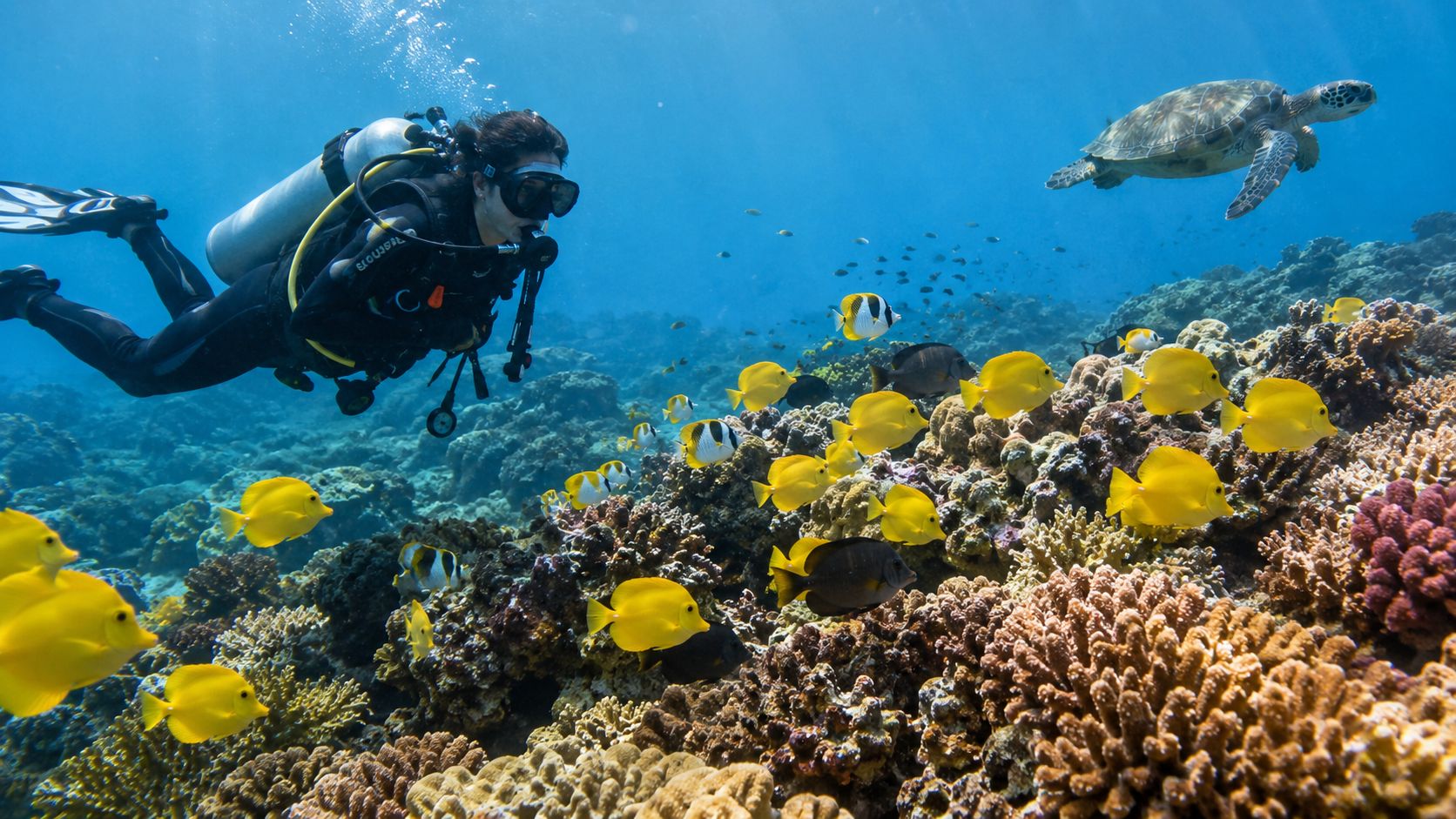
A useful way to think about Kona sites is by terrain first, not just by name. Some dives are about easy reef cruising and marine life. Others are about structure, swim-throughs, lava contours, and using your buoyancy properly so you don't turn a pleasant dive into a clumsy one.
For a broader overview of local conditions and diving style, this page on diving Kona on the Big Island gives a solid local frame of reference.
What a classic Kona day dive feels like
On a typical reef dive, you'll notice the water first. Kona often gives you that clean blue-water backdrop that makes everything easier to read. Then the topography starts to show itself. Lava fingers, shelves, bowls, and breaks in the reef turn a simple navigation route into something more interesting.
Sites like Turtle Pinnacle and Pawai Bay get talked about because they're accessible and satisfying. They're good examples of what Kona does well. You don't need extreme depth or current to get a memorable dive. You need healthy structure, good visibility, and enough marine life to keep your head moving.
Marine life you'll likely notice
The Big Island rewards patient divers more than rushed ones. If you charge through every site, you'll miss half of what makes it good.
Look for:
- Honu: Green sea turtles are one of the encounters most visitors remember. Give them space and let them set the distance.
- Reef fish: Schools moving over lava and coral create the color widely expected from Hawaii.
- Eels and octopus: You often won't spot them until you slow down and look into ledges and holes.
- Small behavior moments: Cleaning activity, fish sheltering in structure, and reef interactions often make the dive more than the headline species do.
Slow down on the second half of the dive. Newer divers often burn through the first half looking far away, then finally start seeing the reef properly once they settle.
Volcanic topography changes how you should dive
Newer certified divers can improve quickly here. On a flat reef, a little sloppy finning often goes unnoticed. In Kona's lava formations, it shows immediately. Tight buoyancy control makes the dive easier, safer, and far more enjoyable.
What works:
- Pause before entering structure. Check depth, buddy position, and your own trim.
- Keep your profile compact. Long dangling gear and poor fin control don't belong near lava features.
- Use the site, don't chase it. Let the terrain come to you instead of forcing your pace.
What doesn't work is treating every site like open sand. Hawaii rewards calm divers who can hover, turn cleanly, and keep awareness of where the rock is.
Guided diving usually gives you more, not less
A lot of certified divers assume “good enough” means they can figure it out on their own. Sometimes that's true. In Kona, a capable guide often improves the dive because they know how the site is diving that day, where the marine life is holding, and which route fits the group's comfort level.
If you're comparing options for local boat diving, Kona dive tours are the starting point. Value isn't just transport to a site. It's site selection, local judgment, and the small corrections that keep an easy dive easy.
Hawaii's Signature Dives Manta and Blackwater
If ordinary reef diving is the foundation of Kona, the signature dives are what push the destination into bucket-list territory. With these dives, scuba diving Hawaii stops feeling like a warm-water vacation and starts feeling unique.
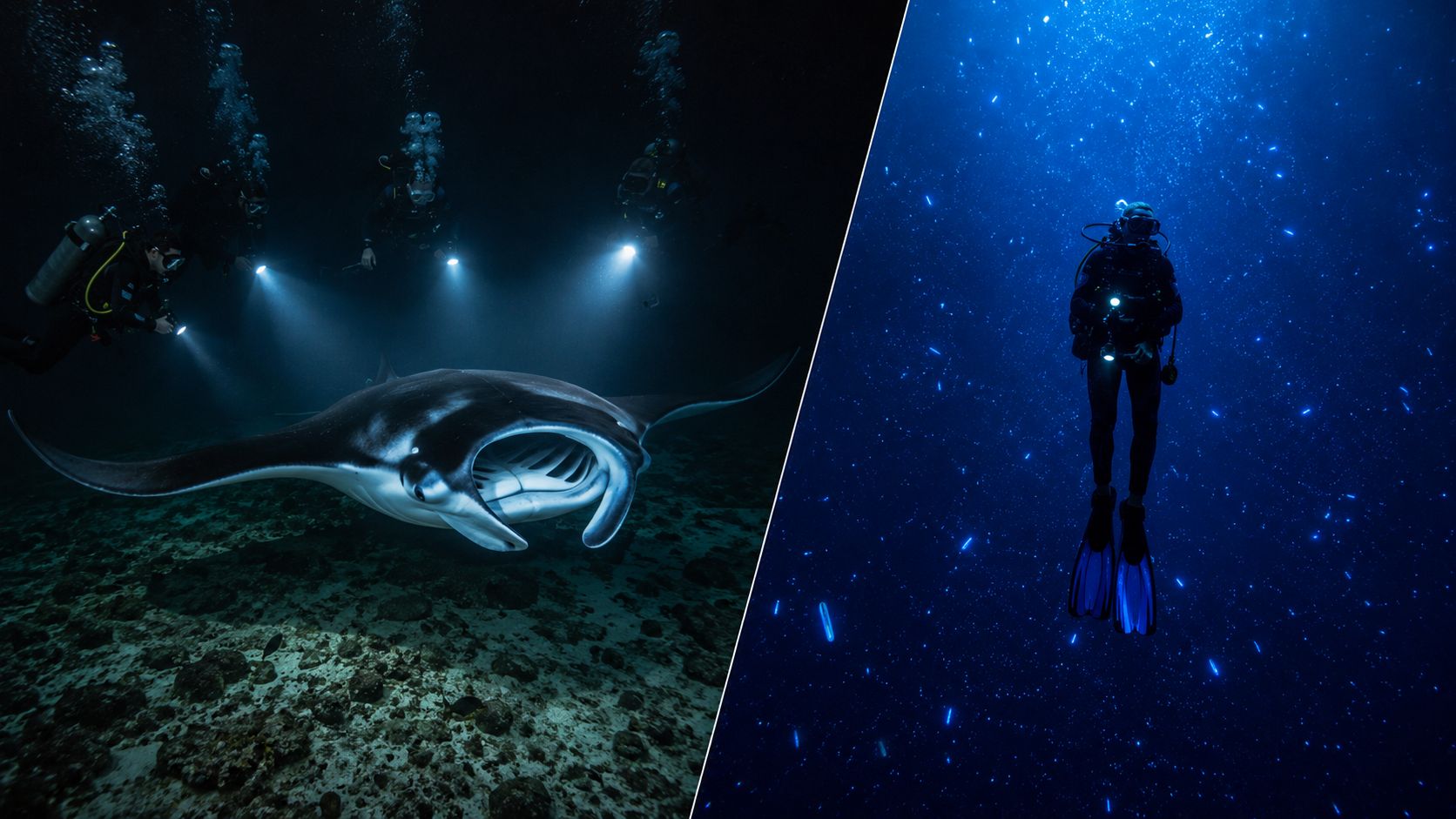
The manta ray night dive gets the attention for good reason. The blackwater dive gets less mainstream coverage, but for many experienced divers it becomes the one they talk about longest afterward.
For a diver-focused overview of the local manta experience, this page on diving with manta rays in Kona is a useful starting point.
Why Garden Eel Cove stands out for manta diving
Not all manta setups feel the same. If the article topic is manta-focused, one point matters more than most visitors realize: Garden Eel Cove is the superior choice because of its more protected location, better viewing area, and better reefs.
That protection matters before you even descend. It usually means a more comfortable experience on the surface and a cleaner setup once the dive begins. For newer night divers, that can be the difference between feeling curious and feeling overloaded.
If you're booking specifically for that experience, this manta dive tour is the relevant trip page.
At a manta night dive, your job is simple. Get stable, stay off the reef, keep your hands to yourself, and let the animals control the interaction.
Blackwater is not just another night dive
Blackwater diving is a different animal. You're in open ocean at night, suspended over deep water, watching pelagic and larval creatures rise from below. It's not about coral or a reef route. It's about discipline, orientation, and comfort in an environment with far fewer visual references.
That's why blackwater appeals to some divers and rattles others. If you need a bottom, a wall, or a familiar shoreline to stay relaxed, don't force it. If you're calm in darkness, can manage task loading, and like unusual marine life more than classic scenery, it may become your favorite dive in Hawaii.
For advanced profiles, Hawaii's infrastructure does support more technical control-oriented diving. One operator in Hawaii explicitly supports rebreather diving and reports local community dives with up to 2.5 hours of bottom time, which is relevant for wrecks, lava tubes, and signature night or blackwater settings, according to Oahu Scuba Diving technical services.
If blackwater is on your list, use a purpose-built trip like this black water night dive tour, not a casual add-on.
For experienced divers who want more range
Some visitors outgrow the standard morning rotation quickly. That's not a complaint. It just means you may want sites with more challenge, more distance, or more specific structure.
That's where longer-range and more advanced charters fit. They're useful for divers who already know their gas habits, stay composed in changing conditions, and don't need basic in-water coaching. If that sounds like you, this advanced long-range dive option is the kind of trip to compare against standard charters.
The trade-off is straightforward:
- Manta gives you a famous, highly accessible wildlife encounter.
- Blackwater gives you one of the strangest and most technical-feeling recreational dives available.
- Advanced long-range diving gives experienced divers more room to use the skills they already have.
Pick the one that matches your comfort. Don't pick the one that sounds toughest on paper.
How to Choose a Great Dive Operator
A lot of divers choose an operator by looking at photos first and logistics second. That's backwards. Boat comfort matters. Nice branding matters. But the operator choice should start with how they run diving, not how they market it.
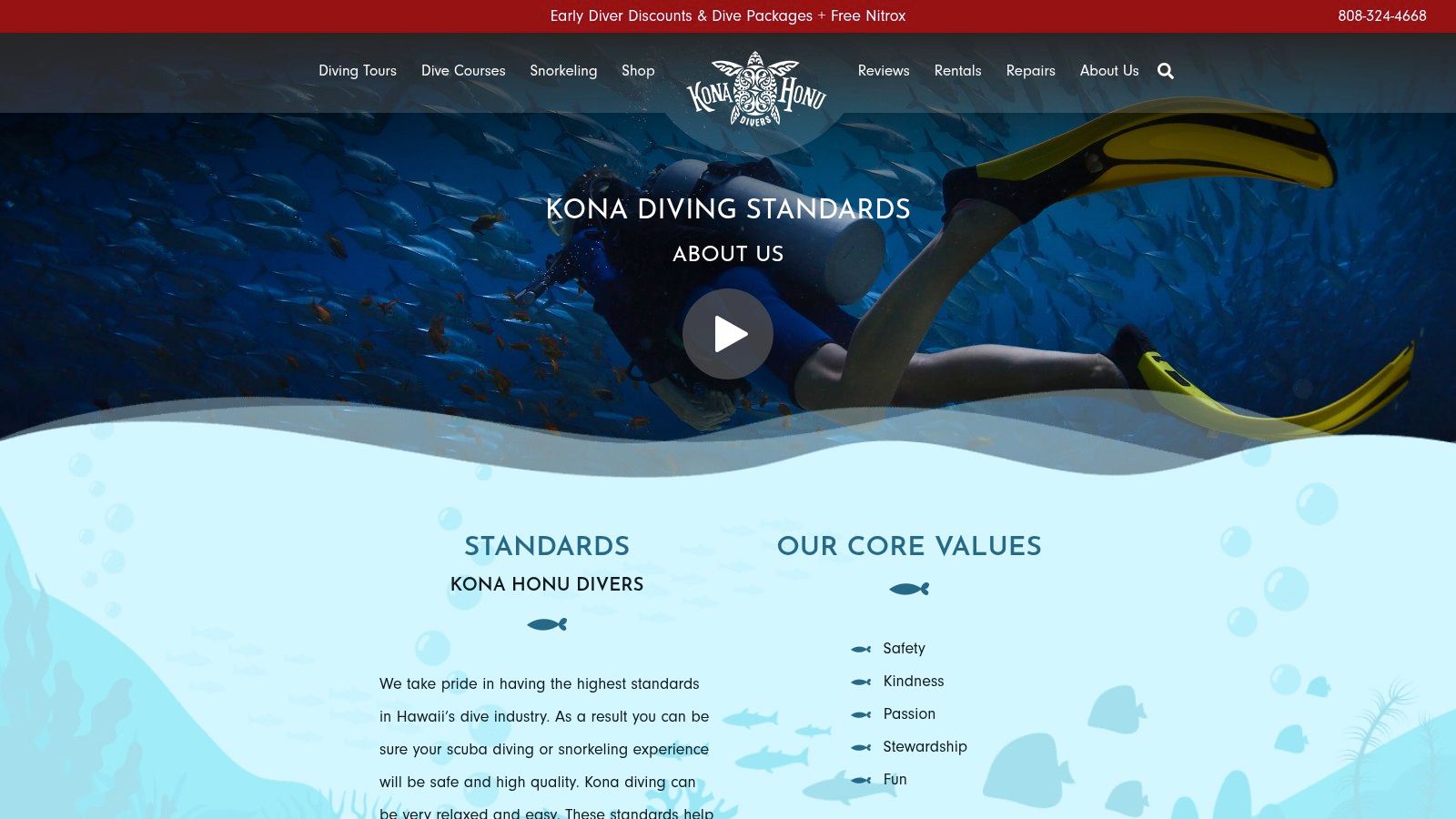
If you want a company-specific example to evaluate, this Kona diving company page shows the kind of information you should look for when comparing operators.
The checklist that actually matters
A good operator makes the diving feel easier before you ever enter the water. You can usually tell from the briefing, the setup, and how the crew handles small issues.
Look for these things:
- Safety culture: Clear briefings, organized deck flow, and no pressure to dive beyond your comfort.
- Boat standards: Boats should be properly set up for divers, with stable entry and exit procedures.
- Gear quality: Rental gear should be clean, maintained, and fitted with care, not handed out in a rush.
- Crew judgment: The best crews adapt to conditions and divers, rather than forcing the same routine every day.
- Group management: Smaller, well-managed groups usually make for calmer descents, better marine life encounters, and less confusion underwater.
What separates average from strong
Average operators can still get you to a reef. Strong operators do more than transport. They match sites to conditions, manage mixed experience levels well, and notice problems while they're still small.
That matters more in Hawaii than many visitors expect. Volcanic structure, night diving, and variable surface conditions all put more value on local judgment.
One practical benchmark is whether the operation gives you the sense that safety and service are built into the dive plan, not bolted on after the fact. That includes how they handle check-in, gear setup, buddy discussions, and post-dive support.
Kona Honu Divers is one local example worth considering if you're comparing full-service operators because they run guided boat diving, specialty trips, and training from Kona with a focus on recreational and advanced divers. That's useful not because a name alone means quality, but because it gives you a concrete benchmark when assessing what a well-structured operation looks like.
Questions worth asking before you book
Don't ask only where the boat goes. Ask how they run the day.
- How are groups organized underwater?
- How do they handle divers who haven't been in the water recently?
- What specialty trips require stronger buoyancy or night-dive comfort?
- Can they recommend the right trip for your certification and experience, not just sell the most dramatic one?
Those answers tell you more than a glossy homepage will.
Your Dive Trip Checklist Safety Gear and Certification
Preparation is where good Hawaii trips become easy Hawaii trips. Most problems I see aren't dramatic. They're small preventable issues. Wrong exposure choice, rusty buoyancy, poor hydration, seasickness, or a diver booking a specialty profile that doesn't match current comfort.
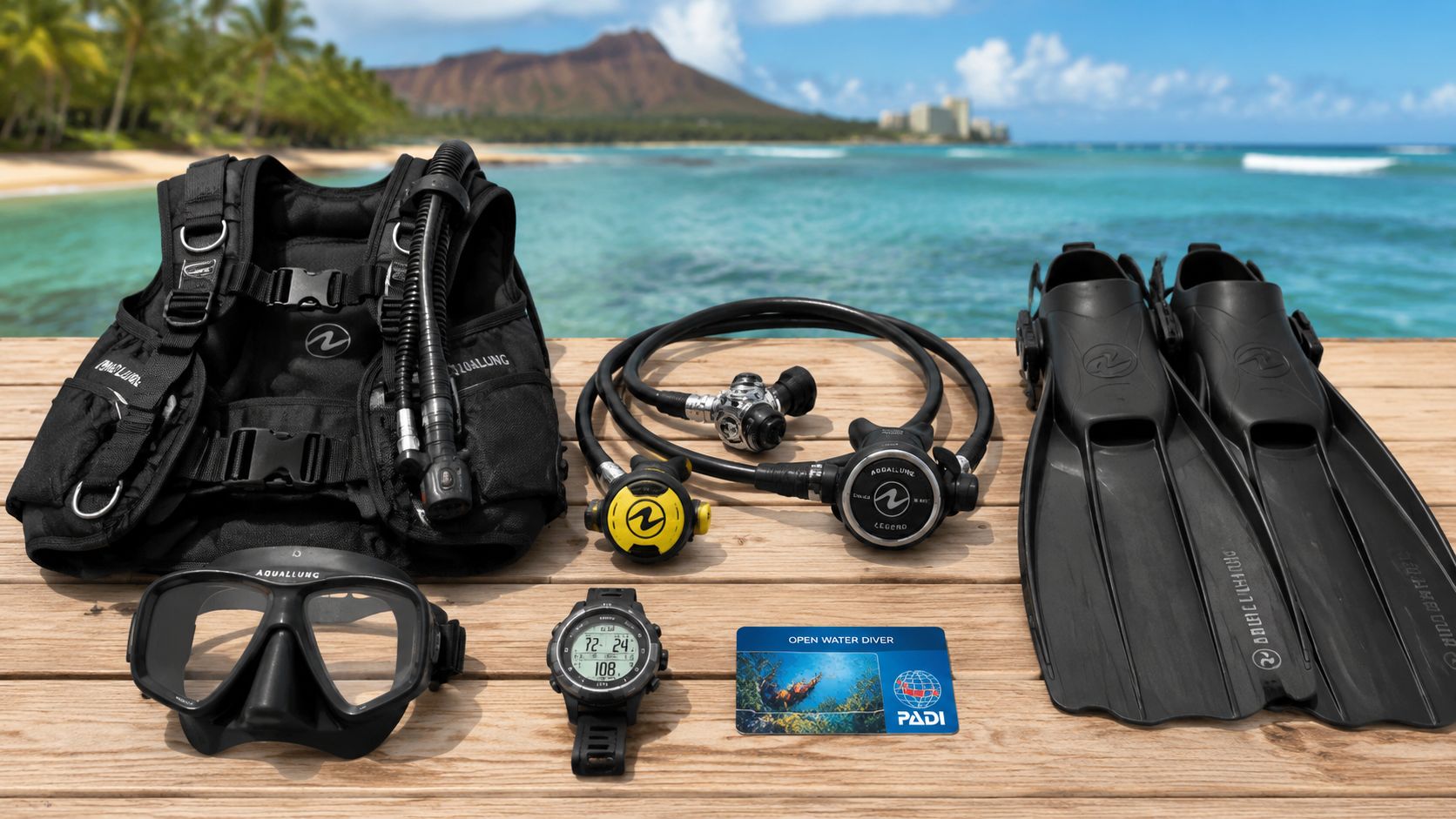
Hawaii's diving environment is defined by 75–80°F (24–27°C) water year-round, and a 2.5 mm wetsuit is commonly sufficient, while the volcanic terrain with caverns and lava tubes makes buoyancy precision especially important, according to this Hawaii scuba guide.
If you need a beginner-oriented equipment refresher before packing, this scuba gear guide for beginners is a practical place to start.
Certification and dive-readiness
For most Hawaii boat dives, a standard open water certification is the normal baseline. That gets you on the boat, but it doesn't automatically mean every local dive is a good fit for your current skill level.
Advanced training becomes more valuable when you want:
- Night dives
- Deeper profiles
- More complex navigation
- Greater comfort in structure-heavy sites
If you're certified but haven't dived in a while, the smart move is to treat your first Hawaii dive as a shakedown dive. Get weighted correctly. Slow down. Rebuild your trim and breathing before booking the more specialized stuff.
A diver who is slightly overconfident usually has a worse first day in Kona than a diver who is honest about being rusty.
What to pack and what to rent
Bring your own mask, computer, and exposure gear if you know they fit well and you like using them. Rent if your personal gear is old, poorly serviced, or annoying to travel with. Familiar gear is an advantage only if it's working for you.
Focus on the pieces that most affect comfort and awareness:
- Mask that seals well
- Computer you understand
- Exposure protection you'll wear
- Fins you can use without overworking
The usual mistake is overpacking heavy exposure gear and underestimating trim. Hawaii water is warm. The dive challenge is usually not staying warm enough. It's staying precise enough.
Seasickness and simple prevention
If you're at all prone to seasickness, deal with it before boarding. Don't wait until the boat leaves the harbor.
Options people commonly use include Ship-EEZ Seasickness Patch, Dramamine pills, Bonine pills, Sea Band wristbands, and Ginger chews.
A few habits also help:
- Eat lightly: Don't board on a totally empty stomach, but don't crush a huge breakfast either.
- Hydrate early: Start before the trip, not after you feel off.
- Stay forward-looking: On the ride out, staring at the horizon usually works better than staring into your lap.
- Tell the crew: Good crews would rather seat you smartly and help early than deal with a miserable diver later.
Safety items people forget
No-fly planning matters. So does altitude after diving. Keep your post-dive schedule conservative. Don't stack your final dives too close to departure day and then add unnecessary pressure by rushing to the airport or higher elevation.
Also, don't let warm water fool you into casual diving habits. Warm water does not cancel the basics. Good buddy checks, slow ascents, and calm descents still decide whether the day feels smooth or sloppy.
Hawaii Scuba Diving FAQs
What if I'm not certified but still want to try scuba
You don't need a full certification to get a first taste of diving. The usual path is a Discover Scuba Diving experience, where an instructor or dive professional handles the structure, skills briefing, and direct supervision. It's a good option for travelers who are curious but not ready to commit several vacation days to a full course.
The important part is to treat it as an intro, not a shortcut. If you love it, then it makes sense to plan a proper certification later.
What does a two-tank boat dive in Kona usually cost
Pricing varies by operator, trip type, rental needs, and whether the dive is standard or specialty. Since no verified pricing data is provided for this article, the practical advice is to compare what's included, not just the headline price.
Check whether the charter includes gear, guide services, specialty handling, or extras like Nitrox. The cheapest posted number doesn't always produce the easiest day.
Can non-diving family members come on the boat
Often, yes, depending on the operator and trip format. Some boats can accommodate snorkelers or ride-alongs, while others are structured only for divers. This is especially relevant for families or mixed groups where one person dives and another prefers to stay topside or snorkel.
Ask before booking, especially if the trip is a night dive or a more advanced charter. Mixed-group flexibility varies a lot.
Is Nitrox worth it in Hawaii
For repetitive diving, many certified divers like using Nitrox because it can be useful across multi-day dive schedules. Whether it makes sense for you depends on your certification, your dive profiles, and whether you already understand oxygen exposure limits and planning.
If you're not Nitrox certified yet, Hawaii is still fine on air. If you are certified, it's worth asking the operator how they integrate Nitrox into normal boat diving.
Is Hawaii a good place for newer certified divers
Yes, if you pick the right island, the right conditions, and the right operator. Hawaii supports over 1.5 million scuba dives annually and has more than 215 licensed dive shops, which points to a mature industry. The same source reports 28 scuba diving fatalities over the decade leading up to 2020, averaging fewer than 3 deaths per year, which is part of why Hawaii is widely regarded as a relatively safe and established destination for guided scuba travel, according to this Hawaii scuba industry overview.
That doesn't mean every dive is beginner-friendly by default. It means the state has strong infrastructure, lots of guided options, and enough operator choice that you can usually find something appropriate for your skill level.
What's the smartest way to build a first Hawaii dive trip
Keep it simple. Book multiple standard dives first. Add one signature experience if you're comfortable. Don't overbook advanced profiles on day one. Leave your first dive day room for weighting, buoyancy, and getting used to Hawaiian conditions.
That approach usually leads to better diving than trying to cram every famous experience into a short vacation.
If you want a straightforward way to book guided diving on the Big Island, Kona Honu Divers offers day diving, specialty dives, and training in Kona. It's a practical option for travelers who want one operator that can handle standard reef diving as well as manta, blackwater, and instruction.