
Picture this: you slip beneath the surface of the warm, turquoise Hawaiian water and descend into a world of impossible color. All around you, ancient volcanic lava tubes and vibrant coral reefs pulse with life. This isn't a dream; this is what it's like to scuba dive in Hawaii.
Your Underwater Adventure In Hawaii Awaits
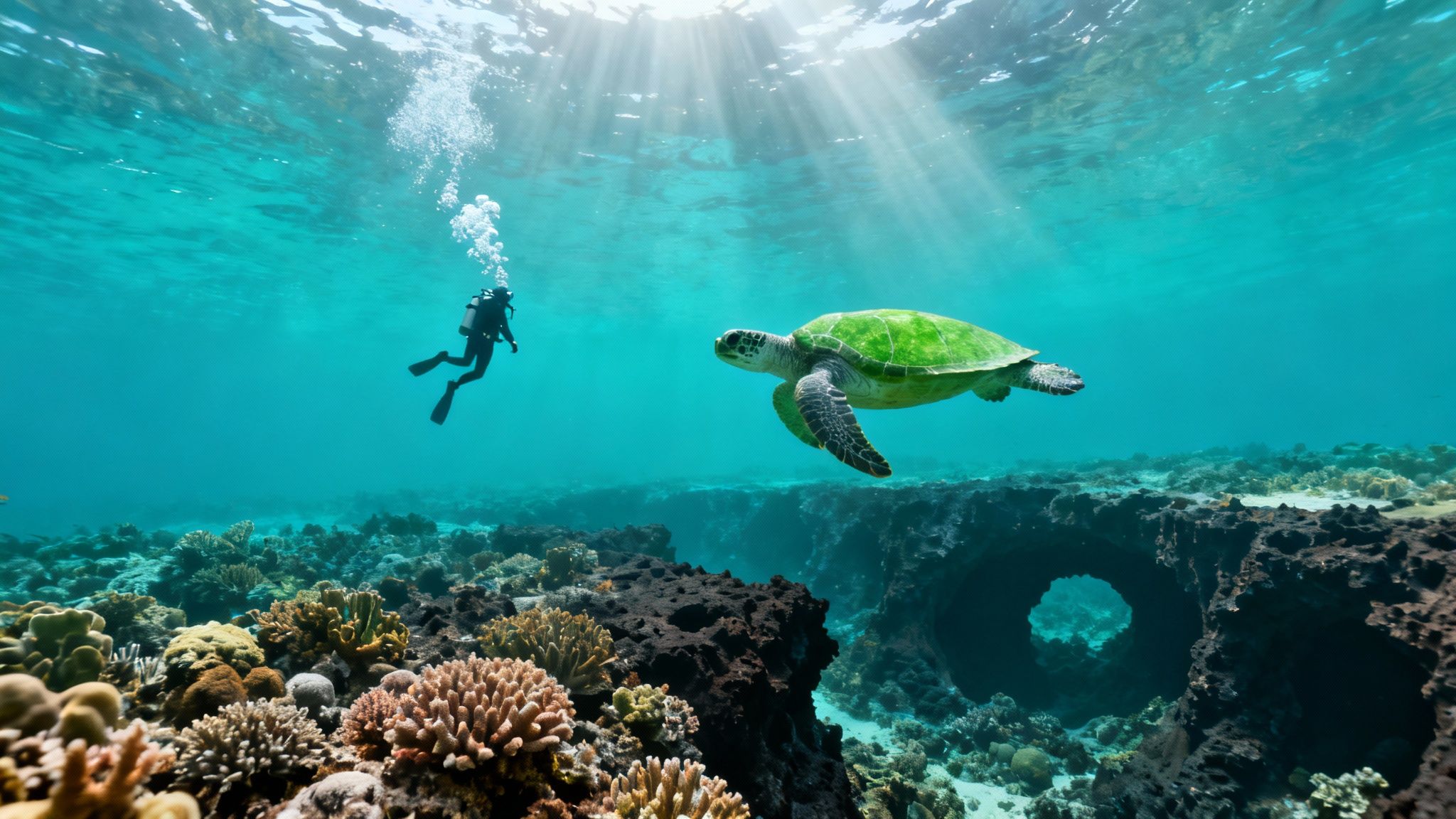
Hawaii has some of the best diving on the planet, but for those in the know, the Kona coast on the Big Island is the real gem. The islands' volcanic past has carved out a spectacular underwater playground. We're talking dramatic arches, submerged craters, and intricate lava formations that have become bustling neighborhoods for all kinds of marine life.
The water isn't just stunningly clear; it’s a sanctuary. Every single dive is a chance to write a new story. You might come face-to-face with a serene green sea turtle (known locally as honu), catch a pod of spinner dolphins showing off in the distance, or watch a squadron of eagle rays glide by like they own the place.
What Makes Hawaiian Diving So Special?
The secret sauce for scuba diving in Hawaii is its unique blend of geology and biology. Because the islands are so isolated, a huge chunk of the marine life here is endemic—you literally can't find it anywhere else on Earth. That makes every dive feel like a genuine exploration.
But it's not just about the critters. The underwater terrain itself is a massive draw. You're not just floating over another reef; you're navigating through geologic history. The same volcanic power that forged the islands shaped these dive sites, giving you a front-row seat to the raw beauty of nature. It’s this backdrop that makes for some of the most unforgettable dives you'll ever have.
For a lot of people, that first breath underwater in Hawaii is a life-changing moment. It’s when you realize you’re a visitor in a vibrant, living world that moves to its own beat, a world away from the noise of daily life.
More Than Just a Dive
A dive trip here is about the whole package. It’s the warm "aloha" you feel from the moment you arrive, the confidence you get from diving with seasoned pros, and that unmistakable buzz of adventure in the air. We at Kona Honu Divers live to share this experience, making sure every single trip is safe, fun, and absolutely unforgettable.
So, whether you've got hundreds of dives under your belt or you're just getting started, the Hawaiian Islands have something incredible waiting for you. From the world-famous manta ray night dive to peaceful coral gardens, the adventure of a lifetime is just below the waves. The wide variety of diving tours on the Big Island means there's a perfect dive for every skill level, so everyone gets a chance to see this underwater paradise.
Why Kona Is The Epicenter For Scuba Diving In Hawaii
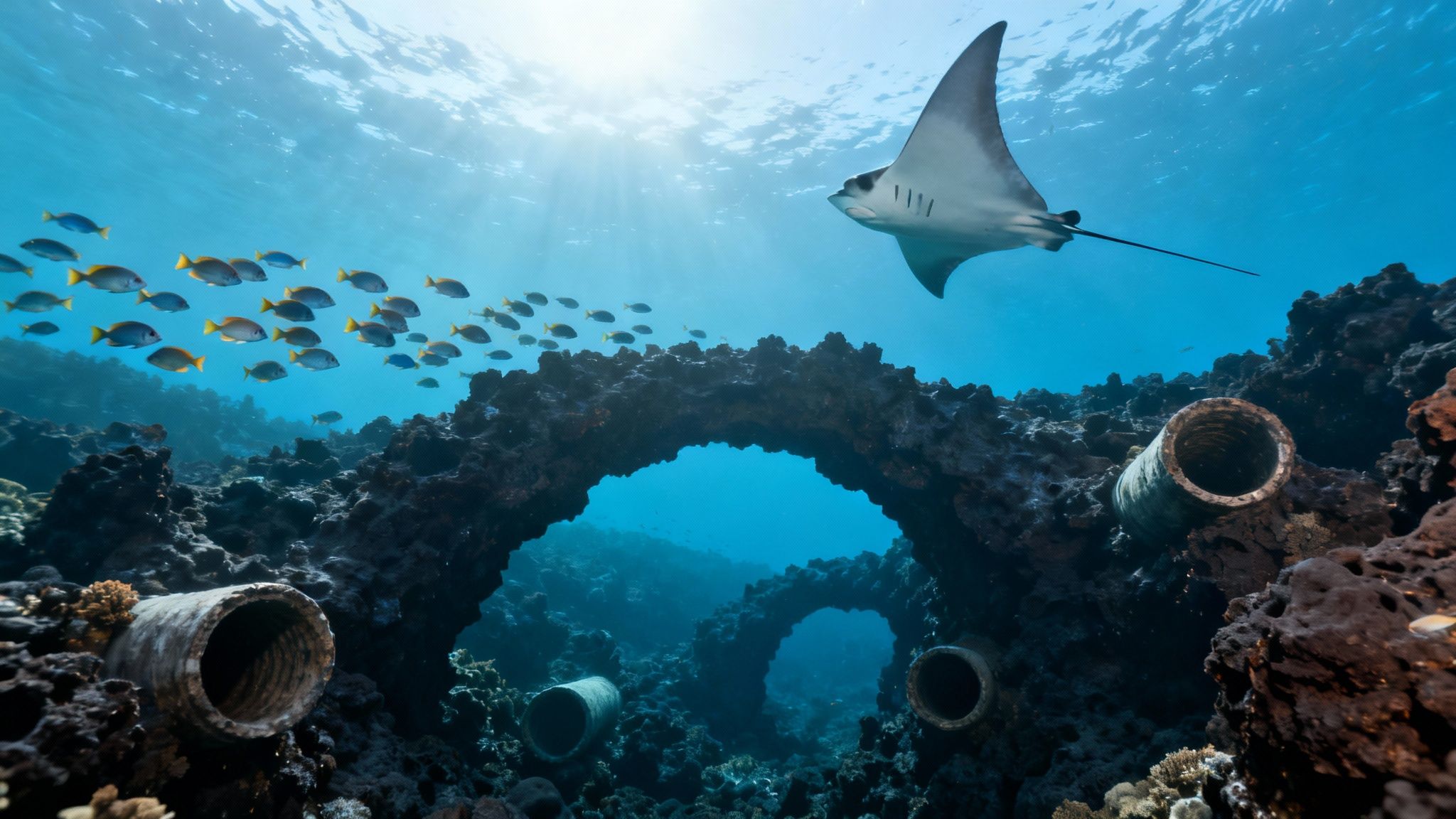
While you can find incredible diving all across the Hawaiian islands, the Kona coast of the Big Island is really in a league of its own. It's the undisputed hub for world-class diving, and for good reason. It’s not just one thing; it's a perfect storm of geology, geography, and marine biology that makes this place so special. Think of it as nature’s purpose-built aquarium.
The secret sauce is Kona’s position on the leeward (sheltered) side of the island. The colossal volcanoes of Mauna Loa and Hualalai act as a natural shield, blocking the strong trade winds that can stir up the water elsewhere. This creates consistently calm, clear, and predictable conditions, making scuba diving in Hawaii here a dream come true for everyone from first-timers to salty old pros.
A Playground Sculpted By Volcanoes
The underwater world here is a direct reflection of Kona's fiery origins. Ancient lava flows have left behind a dramatic and dynamic underwater landscape unlike anywhere else on Earth. As divers, we get to explore a maze of incredible volcanic features.
- Lava Tubes: These are essentially underwater caves and swim-throughs formed by flowing lava, now providing a perfect home for all sorts of critters.
- Craters and Arches: Submerged volcanic craters and naturally formed arches create breathtaking backdrops for photos and fun swim-throughs.
- Pinnacles: Imagine underwater mountains rising from the seafloor. These formations act like magnets for massive schools of fish and other marine life.
This complex structure provides the perfect habitat for a ridiculously diverse ecosystem. Every nook and cranny in the volcanic rock offers protection for countless species, from tiny reef fish to reclusive eels. You can dive deeper into the geology and wildlife by exploring what is unique about diving in Kona.
It’s no wonder this place is so popular. Dive operators on the Big Island run over 25,000 dives annually, catering to a fraction of the 2.5 million active scuba divers in the U.S. alone. Here at Kona Honu Divers, we're proud to be at the heart of it, guiding divers on everything from introductory reef tours to the legendary manta ray night dives that put Kona on every diver's bucket list.
The Kona Honu Divers Experience
Getting the most out of this underwater wonderland requires genuine local expertise and a deep respect for the ocean. At Kona Honu Divers, our passion is sharing the magic of Kona's waters. Our crew knows these sites like the back of their hands, which means we can ensure every single dive is as safe as it is spectacular.
We believe a great dive trip is about more than just what you see below the surface; it’s about the whole experience. From our custom-built dive boats to our friendly, knowledgeable staff, we go the extra mile to make your adventure unforgettable. But don't just take our word for it—our reputation speaks for itself.
Ready to explore the calm, clear, and life-filled waters of Kona? Join us for an unforgettable journey into the heart of Hawaii's premier diving destination.
Experiencing The World-Famous Manta Ray Night Dive
Get ready for one of the most unbelievable experiences you can have underwater. The Kona Manta Ray Night Dive isn't just another dive—it's a world-renowned spectacle that belongs on every ocean lover's bucket list. This is a quintessentially Hawaiian adventure, where marine biology meets pure, underwater magic.
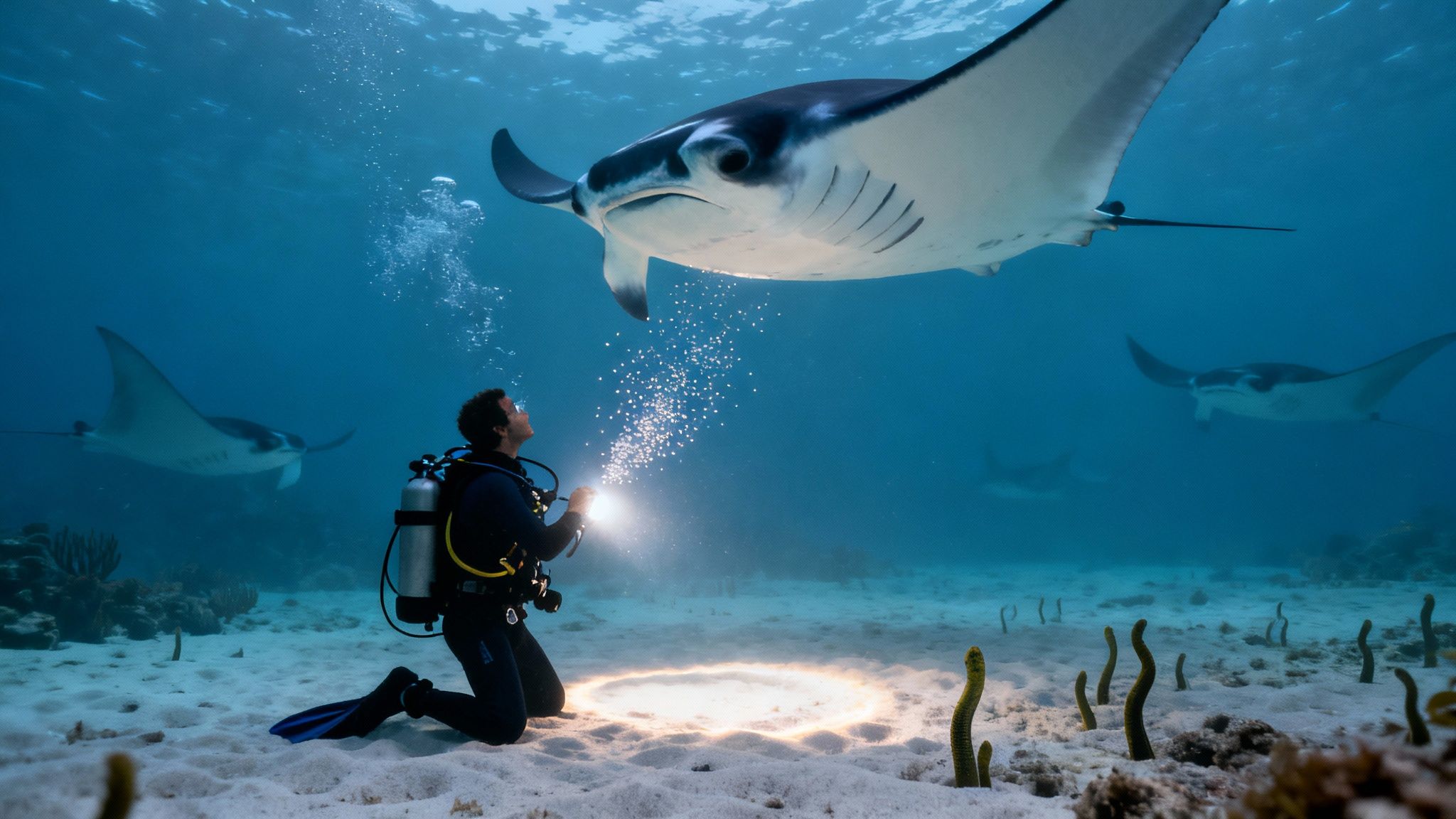
The setup is ingeniously simple. After the sun goes down, powerful lights are set up on the ocean floor. These lights attract massive clouds of plankton, which just so happen to be the favorite meal of manta rays. The result? A massive, all-you-can-eat buffet that draws in dozens of gentle giants for a silent, graceful feeding ballet.
As a diver, you get a front-row seat. We settle on a sandy spot on the bottom, look up, and watch as these incredible creatures swoop, glide, and barrel-roll inches above our heads. With wingspans reaching up to 16 feet, their size is breathtaking, but their movements are impossibly elegant. It’s a peaceful, almost surreal experience you won't find anywhere else.
Why Garden Eel Cove Is The Premier Choice
While this dive happens at a couple of spots, Garden Eel Cove is consistently the best place for the encounter. Its geography and ecosystem just create the perfect stage for a comfortable and unforgettable dive with the mantas. For one, it’s naturally sheltered from open ocean swells, which means the water is almost always calmer and more predictable. This protected location offers a better viewing area and sits adjacent to healthier reefs, enhancing the overall experience.
That protection makes for a much more pleasant experience, both on the boat and below the surface. Garden Eel Cove also has a superior natural "arena" for watching the show. The dive site has a large sandy bottom where divers can gather, keeping everyone off the delicate coral reef that surrounds the area.
This unique layout gives us a few key advantages:
- Better Safety: The calm, contained environment is ideal for divers of all skill levels.
- Unobstructed Views: The setup gives everyone a fantastic view without feeling crowded.
- Reef Protection: Keeping divers on the sand ensures the surrounding coral ecosystem stays healthy and vibrant.
This commitment to both an amazing diver experience and environmental responsibility is why we at Kona Honu Divers almost exclusively use this site. Choosing Garden Eel Cove means you’re not just getting the best possible show, but you’re also part of a sustainable, respectful wildlife interaction. To get a deeper dive, check out our guide on what the manta ray night dive is all about.
What To Expect On Your Dive
Your adventure starts with a beautiful sunset boat ride along the Kona coast. On the way, our guides will give you a full rundown—everything from the biology of the manta rays to the safety procedures for the dive, so you feel completely ready to go. Once we arrive and descend, you’ll be led to a designated spot on the sandy bottom.
From there, your only job is to relax, breathe, and enjoy the show. The dive itself is fairly shallow, usually around 30-40 feet, which gives you plenty of bottom time to soak it all in. You'll watch as the mantas perform their hypnotic feeding dance, often coming so close you can see the unique spot patterns on their undersides.
There's a moment when a massive manta ray glides right over you, its shadow blocking out the light for a second, and it hits you just how big and graceful these animals are. It’s a humbling, goosebump-inducing experience that stays with you forever.
This incredible dive is a cornerstone of scuba diving in Hawaii and a true must-do for anyone visiting the Big Island. The combination of Kona's perfect conditions and the guidance of our experienced crew makes for a night that is safe, magical, and absolutely unforgettable. Book your manta ray dive tour and witness the spectacle for yourself.
Exploring Kona’s Top Dive Sites Beyond The Mantas
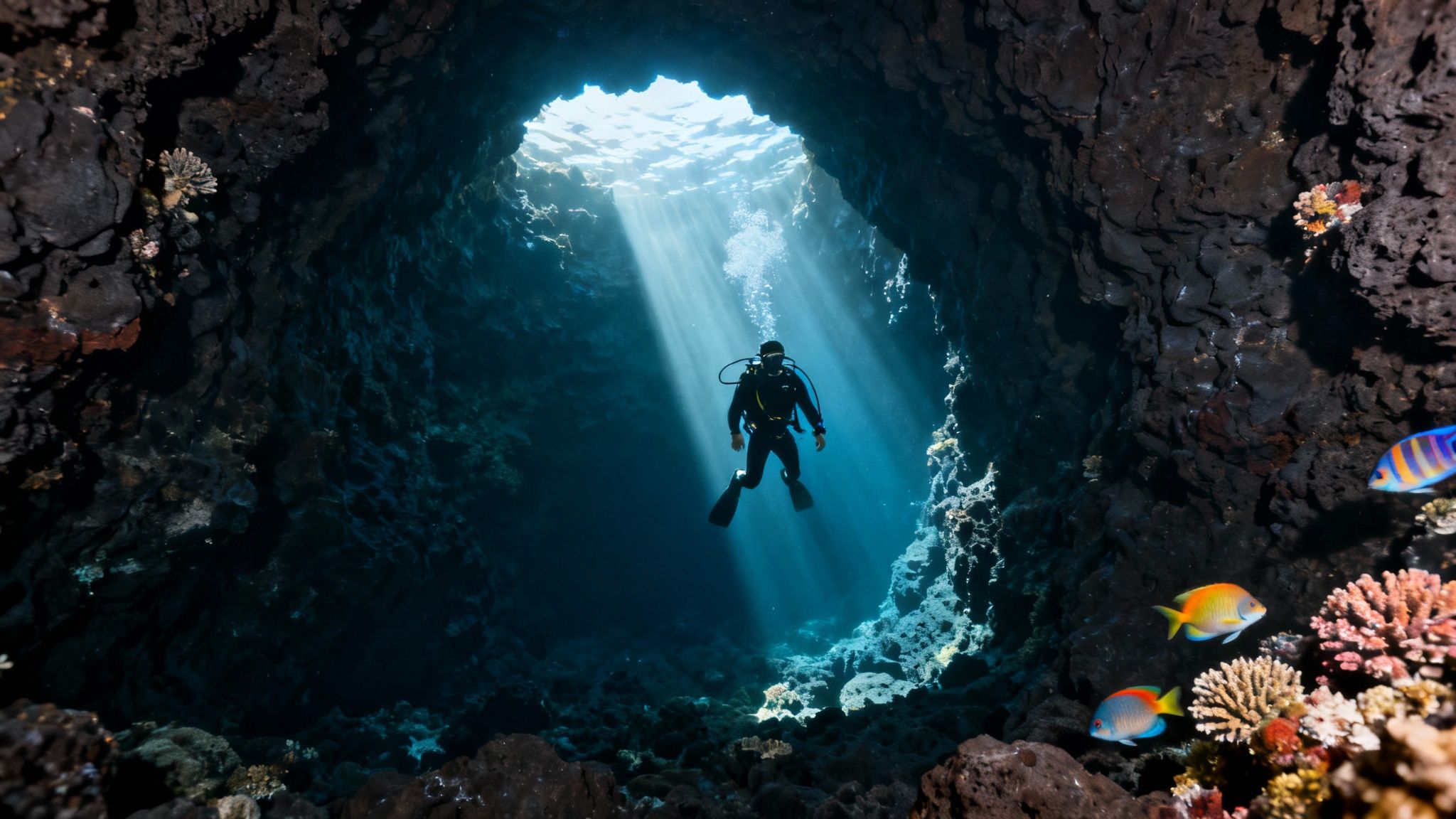
While the Manta Ray Night Dive gets most of the spotlight—and for good reason—it’s just the beginning of what the Kona coast has to offer. The real magic of scuba diving Hawaii is the sheer variety packed into this one stretch of coastline. Once you look past the mantas, you'll discover a world of vibrant reefs, ancient lava tubes, and deep-ocean wonders that will blow you away.
It's no secret that Hawaii is a world-class diving destination, hosting over 1.5 million dives every year. The U.S. diving market, with Kona as a major draw, pulled in USD 573.1 million in 2023 and is on track to nearly double. That's a lot of divers discovering what we already know: this place is special. If you want to dig into the numbers, you can read about Hawaii's booming dive industry on dedepudive.com. This growth isn't just about one dive; it's about the incredible range of underwater adventures available here.
No matter what kind of diver you are, Kona has a tour that feels like it was made just for you. Here's a quick look at some of our favorite experiences.
Hawaii Dive Experiences For Every Skill Level
A quick comparison of the different types of unforgettable dive tours you can experience in Kona.
| Dive Type | Best For | What You'll See | Skill Level |
|---|---|---|---|
| Reef Dives | Beginners, Photographers | Colorful corals, huge schools of fish, eels, octopus | Open Water |
| Blackwater Dives | Adventurous Divers | Bioluminescent creatures, larval fish, alien-like squid | Advanced |
| Advanced Dives | Experienced Divers | Lava tubes, deep structures, sharks, larger pelagics | Advanced |
These are just a few of the adventures waiting for you. Each one offers a completely different perspective on the incredible marine ecosystem here on the Big Island.
For Beginners and Photographers: Vibrant Reef Dives
If you're new to diving or have a camera glued to your hands, Kona's shallow reefs are pure paradise. Sites like Pawai Bay and Golden Arches are practically bursting with color and life, offering calm, clear water that’s perfect for exploring. Picture yourself drifting effortlessly over sprawling coral gardens, surrounded by clouds of yellow tangs and ornate butterflyfish, all while keeping an eye out for a hidden octopus.
Most of these dives stay in the 20-50 foot range, which means you get plenty of bottom time to work on your buoyancy, relax, and frame that perfect shot. The volcanic rock formations create endless nooks and crannies, making every kick of your fins a chance for a new discovery. It’s the perfect setting to build your confidence and fall in love with diving.
For The Truly Adventurous: The Kona Blackwater Dive
Ready to feel like you're floating in outer space? The Kona Blackwater Dive is one of the most unique and thrilling experiences you can have as a diver. We head miles offshore at night, shut off the boat engines, and drift over thousands of feet of inky black water.
We drop a weighted line with powerful lights, and you simply clip in and watch the show. The lights attract creatures making their nightly migration from the deep ocean to the surface to feed—animals you would never see otherwise. It's a front-row seat to one of the planet's largest migrations.
You’ll see things that look like they're straight out of a sci-fi movie: bizarre larval fish, see-through squids, and otherworldly jellyfish pulsing with their own light. It’s surreal, a little spooky, and completely unforgettable.
This is a must-do for any adventurous diver. If you’re ready to see what comes up from the deep, learn more about our Blackwater Dive tour with Kona Honu Divers.
For Advanced Divers: Deep Structures And Lava Tubes
For those with a logbook full of dives and a craving for exploration, Kona absolutely delivers. The island's volcanic origins have created an underwater playground of dramatic drop-offs, deep pinnacles, and intricate lava tubes just waiting for skilled divers to explore.
Sites like Turtle Pinnacle and The Hive let you push your limits and see a different side of Kona. You can navigate through ancient lava flows, swim along sheer underwater cliffs, and have a better chance of running into the larger pelagic species that patrol the deeper waters. These dives demand excellent buoyancy and a solid sense of adventure, but the payoff is huge.
We run specialized advanced dive tours specifically for divers who are ready for a challenge. Exploring these deeper, more rugged sites reveals the raw power and beauty of the island's volcanic past.
How To Plan Your Perfect Hawaii Dive Trip
Proper planning is the secret ingredient that turns a good dive trip into an unforgettable one. When you’re dreaming of scuba diving Hawaii, a little prep work goes a seriously long way. If you think through the logistics—like the best time to visit, what gear to pack, and how to dive responsibly—you’ll spend less time worrying and more time soaking in the incredible underwater world.
The good news? There’s really no bad time to dive in Hawaii. The diving is fantastic all year round, but the seasons do bring a few subtle changes that might influence when you decide to book.
From about April to October, the summer months usually bless us with the calmest seas and warmest water. It’s not uncommon for the temperature to climb above 80°F (27°C). Winter, which runs from November to March, brings slightly cooler water but offers a truly magical bonus: the chance to see and hear migrating humpback whales on their annual visit. Visibility is excellent year-round, often stretching beyond 100 feet.
Certification and Gear Considerations
First things first: to explore Hawaii’s underwater lava tubes and vibrant reefs on a boat dive, you'll need at least an Open Water Diver certification. If you're not certified yet, don't sweat it. You can still get in on the action with a Discover Scuba Diving program—it’s a fantastic, fully-supervised introduction to the world beneath the waves.
Once your certification is sorted, the next big question is gear. Do you bring your own or rent? There are solid arguments for both.
- Bringing Your Own Gear: Diving with your own equipment just feels right. You know exactly how it works, it’s comfortable, and that familiarity adds a huge layer of confidence to your dives.
- Renting Gear: This option saves you the hassle and cost of lugging heavy, bulky equipment through airports. Reputable shops like ours have meticulously maintained, high-quality rental gear, so you know you’re in good hands.
A great compromise we see a lot of divers make is to bring their personal "fit" items—like a mask, fins, and dive computer—while renting the heavy stuff like the BCD and regulators. It's truly the best of both worlds, giving you comfort and convenience.
This approach has become more popular as the U.S. scuba diving tourism market has grown. With Hawaii as a top destination, the market is projected to hit USD 1,585 million by 2035. This boom means local dive shops are more than ready to handle the demand with top-notch rental gear for the growing number of divers. If you'd like to dive into the data, you can discover more insights about diving tourism trends on futuremarketinsights.com.
Packing Essentials for Your Dive Trip
Having the right stuff on hand can make a huge difference in your trip's flow. Beyond your dive equipment, here are a few absolute must-haves for your packing list:
- Reef-Safe Sunscreen: This is non-negotiable. Standard sunscreens contain chemicals that are incredibly damaging to our fragile coral reefs. Always opt for a mineral-based, reef-safe formula to protect your skin and the ocean.
- Dive Computer & Camera: Don’t leave home without your computer for tracking your dives safely. And with the marine life here, you’ll kick yourself if you forget an underwater camera to capture the memories.
- Logbook and Certification Card: You’ll need your c-card to get on the boat, and a logbook is the perfect way to remember all the incredible sites you explore.
- Reusable Water Bottle: Staying hydrated is so important when you’re diving. A reusable bottle is an easy, eco-friendly way to keep water with you at all times.
For divers looking to truly maximize their time underwater and hit a ton of sites over several days, you might want to look into the different liveaboard diving options available. It's an amazing way to fully immerse yourself in a dive vacation.
Diving with Aloha: The Rules of the Reef
The single most important part of your planning is committing to being a responsible, respectful diver. The breathtaking beauty of Hawaii's underwater ecosystem depends on all of us doing our part to protect it. The golden rule is simple: look, but don't touch.
That means never touching, chasing, or cornering marine life. This absolutely includes coral, which isn't a rock—it's a living animal and is extremely fragile. Work on your buoyancy so you can hover effortlessly and avoid accidentally kicking the reef, and always be mindful of where your fins are so you don't stir up sand that can smother delicate corals.
By following these simple guidelines, you help ensure that the vibrant reefs and amazing creatures we love will be here for generations of divers to come. And to make planning your adventure even easier, you can explore our Hawaii scuba diving packages to find the perfect fit for your trip.
Your Hawaii Scuba Diving Questions Answered
Planning a dive trip can bring up a lot of questions, even for seasoned divers. To help you get everything sorted, we've put together answers to the questions we hear all the time from people getting ready to dive with us here in Kona. Think of this as the final checklist to get you from planning to jumping in the water.
We want you to feel confident and excited, not worried about the small details. Let's clear up any lingering questions so you can focus on the incredible underwater adventure ahead.
What Is The Best Time Of Year For Scuba Diving In Hawaii?
Honestly, there’s no bad time to dive in Hawaii. The diving here is fantastic year-round, but the seasons do offer slightly different flavors.
If you love warm water and glassy seas, aim for the summer months between April and October. The ocean is typically at its calmest, and water temperatures often climb above a balmy 80°F (27°C).
On the other hand, the winter, from November to March, offers a unique trade-off. While the water is a little cooler, you get the incredible, otherworldly experience of hearing humpback whales sing during your dive. Sometimes, you're even lucky enough to spot them from the boat. Visibility is almost always excellent, frequently pushing past 100 feet, so you really can't go wrong no matter when you visit.
Do I Need To Be Certified To Go Scuba Diving In Hawaii?
For our regular boat dives, yes, you'll need at least an Open Water Diver certification. But if you're not certified and just want to see what all the fuss is about, you absolutely have options.
We offer a Discover Scuba Diving program designed for total beginners. It's a fantastic, low-pressure way to try it out. You’ll get a quick rundown of the basics and practice a few skills with an instructor in shallow water before going on a guided dive. It’s the perfect "test drive" for scuba without committing to a full course.
It's completely normal to feel a bit nervous before your first time breathing underwater. A great instructor knows this and will go at your pace. The whole point of that first dive is to get comfortable, relax, and just be amazed by the world around you.
We've seen it happen countless times—that one introductory dive sparks a passion, and people come back to get their full certification.
Is The Manta Ray Night Dive Safe For Beginners?
Absolutely! The Manta Ray Night Dive is one of the safest, most controlled, and awe-inspiring dives you can do, even if you’re a brand-new diver.
It's a very organized experience. We guide everyone to a specific spot on the sandy bottom, which we fondly call the "campfire," where you can comfortably settle in and watch the show. The dive itself is relatively shallow, and our professional divemasters provide a thorough briefing beforehand and are right there with you the entire time to make sure everything goes smoothly.
What Should I Bring On A Dive Boat In Kona?
A little preparation goes a long way to making a great day on the water even better. Besides your C-card and any of your own gear you love, here’s a quick list of must-haves:
- Reef-Safe Sunscreen: It's a must to protect both your skin and our delicate coral reefs.
- Towel and a Hat: Simple things that make a huge difference before and after a dive.
- Reusable Water Bottle: Staying hydrated is a non-negotiable part of safe diving.
- A Light Jacket or Hoodie: It can get surprisingly chilly on the boat ride back, especially after a night dive.
Don't worry about packing snacks or drinks; we've got you covered. And if you're renting gear, we provide everything you need. It's always smart to double-check what's included when you book your Kona diving tours.
With these answers in your back pocket, you’re ready to go. The vibrant reefs, ancient lava tubes, and unforgettable marine life of Kona are waiting.