
The first time many divers drop into Kona water, they stop finning for a second and just stare. The blue stays bright, the lava ledges sharpen into view, and then a honu glides past as if it has all day.
Welcome to an Underwater Paradise
A good Hawaii dive doesn't begin at depth. It begins with the feeling that the ocean is working with you instead of against you. Warm water, calm entries, and visibility that lets you see the shape of the reef before you ever reach it, that's what turns a nervous first descent into the dive people remember for years.
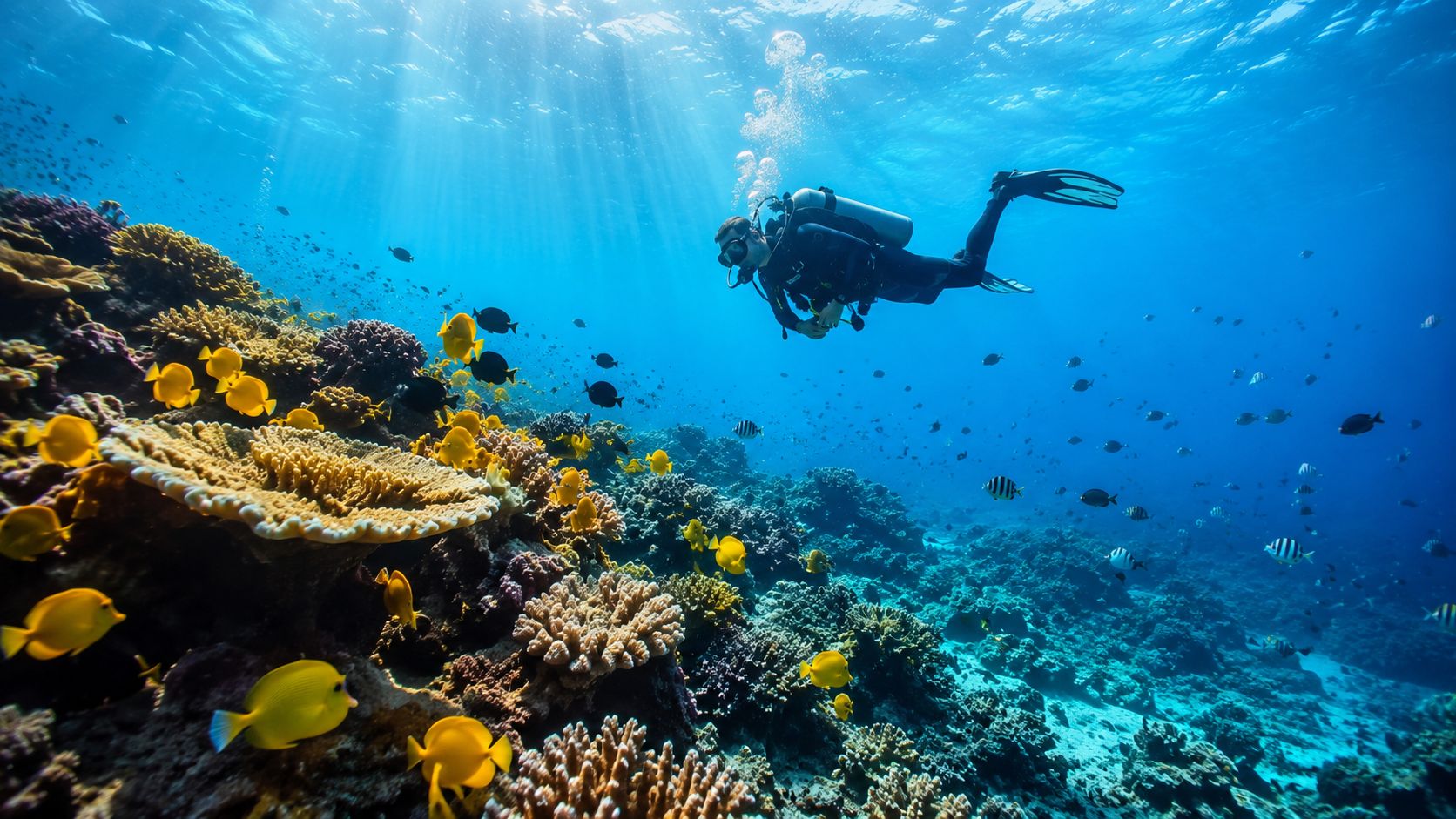
Hawaii has earned its place on serious divers' short lists. It hosts over 1,500,000 scuba dives annually, supported by more than 215 licensed dive shops, with year-round conditions, water temperatures around 75 to 80°F, and visibility that frequently exceeds 100 feet, as noted in this Hawaii diving overview from Kona Honu Divers.
What makes the first impression so strong
The islands don't dive like a flat tropical reef destination. Underwater Hawaii has shape. Lava shelves, drop-offs, arches, and hard volcanic contours make even an easy reef dive feel dramatic.
New visitors also tend to underestimate how comfortable the diving can be. There's no true off-season in the usual sense, so planning a trip doesn't require the same narrow weather window you might chase elsewhere.
Practical rule: Your first Hawaii dive should match your current comfort level, not the most famous photo on your phone.
Why divers keep coming back
Scuba diving in Hawaii works for a wide range of travelers:
- Newly certified divers: Calm, clear water makes buoyancy and equalization easier to manage.
- Experienced divers: The islands offer enough variety to keep the trip from feeling repetitive.
- Families and mixed groups: One person can dive while another snorkels or stays topside without the whole day falling apart.
The key is planning the trip around the right island, the right operator, and the right style of diving. That's where Hawaii rewards good judgment.
Why Hawaii Offers World-Class Diving Year-Round
I've had mornings in Kona when the harbor looked doubtful at sunrise, then settled into a clean, comfortable first drop once we reached the leeward coast. That pattern surprises visitors who assume Hawaii diving works like a single destination with uniform conditions. It doesn't. Local geography decides whether a day feels easy, bumpy, or not worth forcing.
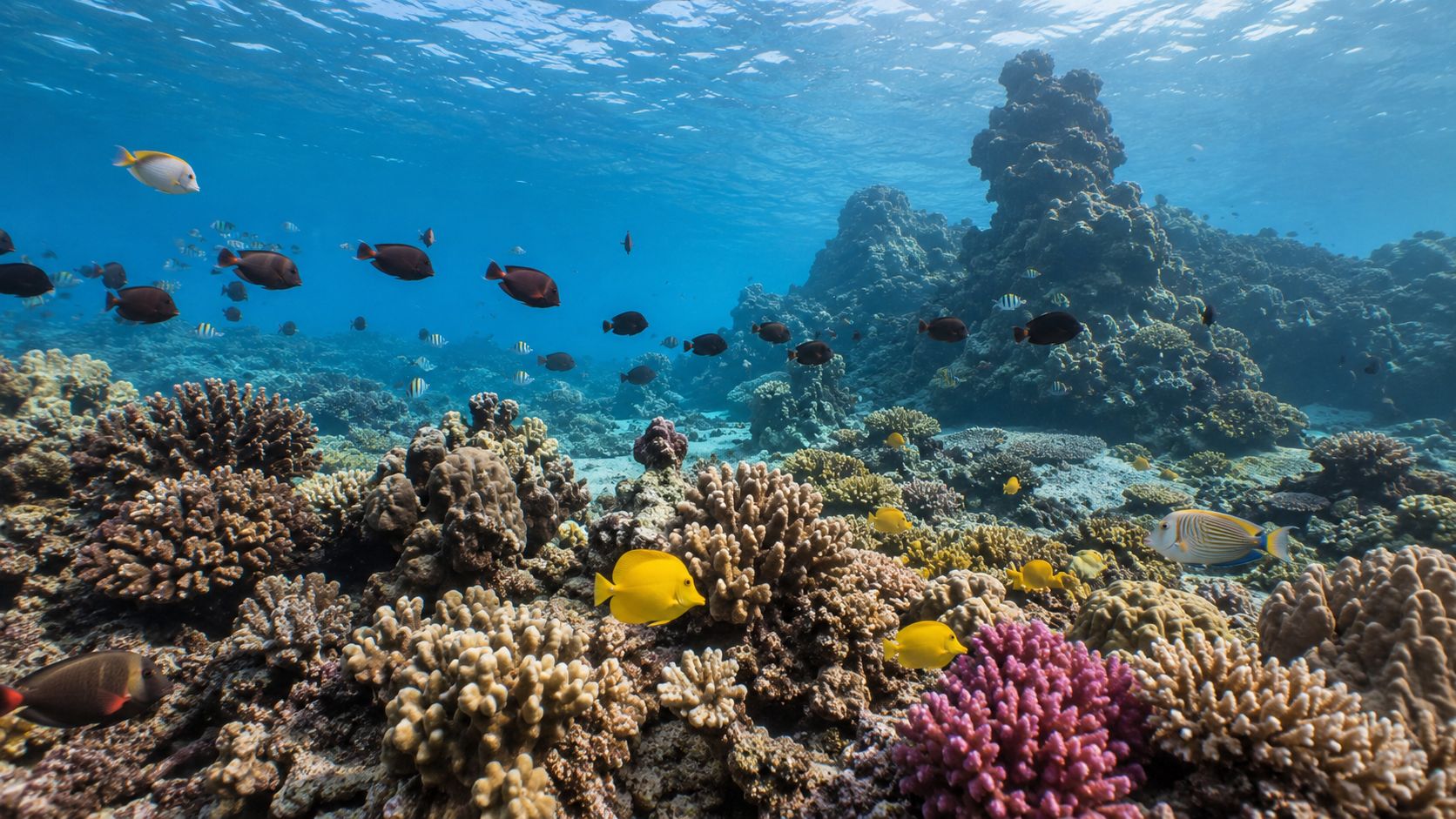
Kona stands out because the west side of the Big Island sits in the lee of large volcanoes that block much of the trade wind energy. For divers, that often means calmer boat rides, cleaner visibility, and fewer days lost to rough surface conditions than many first-time visitors expect. The overview of why scuba diving is so popular in Hawaii gives useful context, but the planning takeaway is simple. If year-round reliability is high on your list, Kona deserves serious attention.
From late spring into early fall, the trip usually gets easier. Water is warm, light is excellent, and the run to the sites is often more comfortable for divers who are still figuring out whether they get seasick. Winter can still produce excellent diving, but smart planning matters more. Keep your schedule flexible, book with an operator that adjusts sites to conditions, and avoid building your whole vacation around one exact dive site.
The volcanic advantage
Hawaii's underwater terrain comes from lava, not broad coral shelves. That changes the feel of the dive and the way we guide it. Instead of drifting over long, similar reef stretches, we work around fingers of lava, ledges, bowls, arches, and abrupt depth changes.
That variety gives us options.
On days with newer divers, guides can choose protected contours and easier descents. On days with experienced divers, the same coastline can offer sharper topography, more dramatic profiles, and better opportunities to work with changing current instead of fighting it. Good operators do not just ask for your certification card. We ask how recently you dove, how comfortable you are in current, and whether you handle backward rolls and blue water descents well.
Marine life has local character
The fish life also feels different here. Hawaii has a high level of endemism, so many species you see on these reefs belong to the islands rather than the broader tropical Pacific. The result is that dives do not blur together into a generic reef experience. Even repeat divers notice new behavior, new species, and different combinations of terrain and marine life from one site to the next.
That distinction matters when you are choosing an island. Divers who want the easiest all-around logistics often do better on the Big Island. Divers who assume every island offers the same access, same protection, and same consistency often end up with a more complicated trip than they planned.
| Factor | What it means for trip planning |
|---|---|
| Protected leeward coast | More days where charters can run comfortably |
| Volcanic topography | Site options for both easy profiles and more advanced dives |
| Warm water most of the year | Less gear stress for traveling divers and longer comfortable bottom times |
| Generally clear water | Easier descents, better orientation, and stronger wildlife viewing |
When to come
If the goal is a smooth first Hawaii dive trip, late spring through early fall is the easiest recommendation. Boat conditions are often friendlier, entries feel less intimidating, and newer divers usually have a better first impression.
Still, there is no narrow “dive season” in the way some travelers expect. Hawaii rewards flexible planning more than rigid planning. Pick the right island, leave room for the operator to choose the best site for that day, and handle practical details early. If you are prone to motion sickness, start medication the night before if your doctor says it is appropriate, eat lightly, and choose a morning charter before the afternoon wind builds. Those small decisions often make the difference between enduring the trip and enjoying every dive.
Hawaii's Top Dive Sites An Island-by-Island Guide
The biggest planning mistake I see is assuming every Hawaiian island delivers the same kind of diving. It doesn't. Each island has its own strengths, and if you pick the wrong one for your goals, the trip can feel harder than it should.
Big Island and Kona
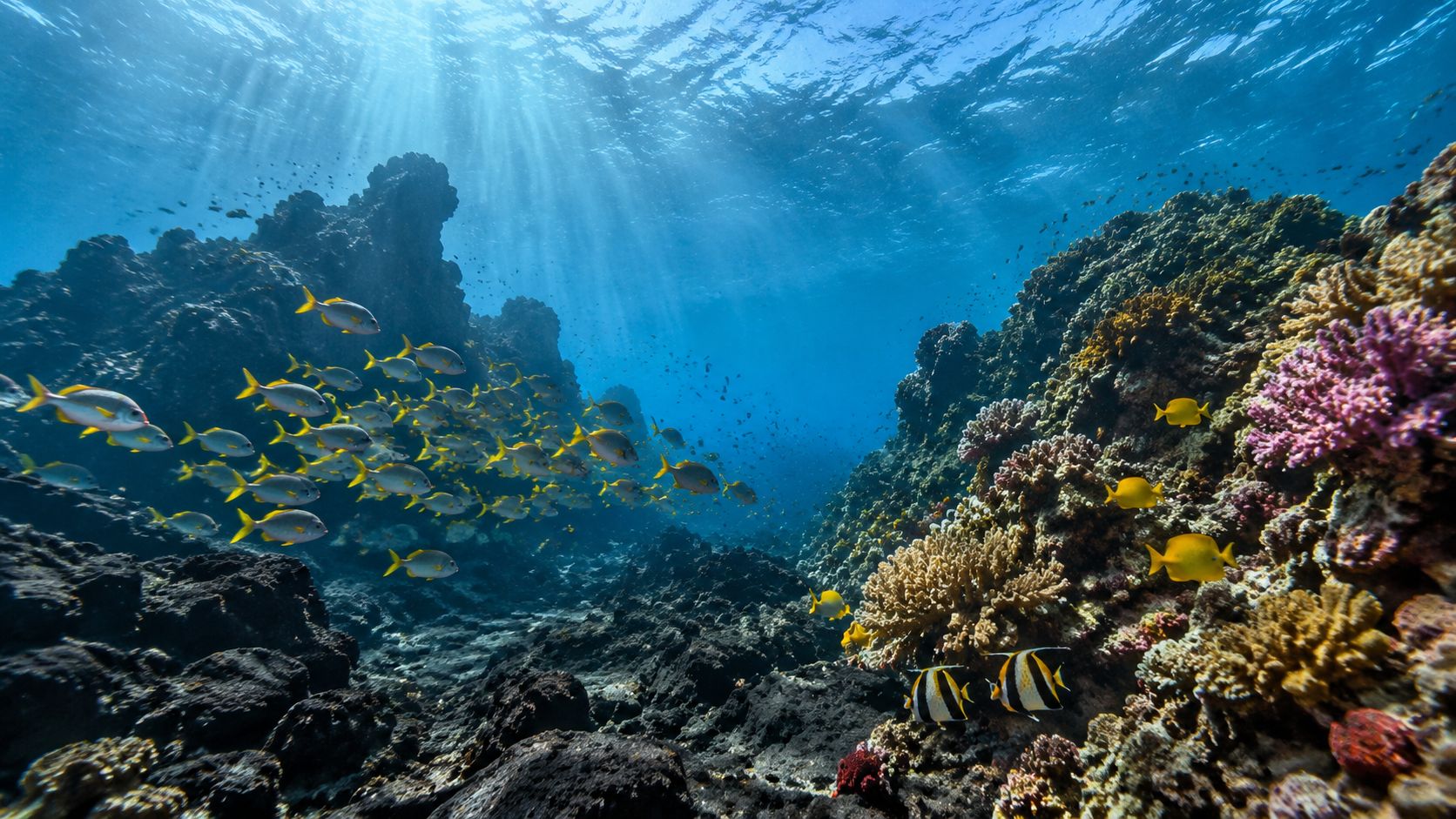
For divers who want the broadest menu, the Big Island is the most practical choice. Kona is the center of gravity. It combines reliable conditions, a large site selection, and the two signature experiences that most visitors can't do anywhere else in quite the same way.
Typical Kona highlights include reef systems built around lava structure, deeper walls for more advanced profiles, and night dives that are worth planning the whole trip around. If you want a sense of what's available, the Kona Honu diving tours page shows the main charter formats.
For advanced divers looking for more demanding conditions and longer-range site access, there are dedicated advanced long-range dive tours that make more sense than forcing a standard tourist charter to fit an advanced itinerary.
A useful comparison of regions is this guide on which Hawaiian island is best for scuba diving.
Maui
Maui works well for travelers who are splitting time between beaches, family activities, and a few easier dive days. The diving can be enjoyable, but logistics matter more than many visitors expect.
That's especially true with shore diving. Some visitors assume they'll be able to pull up to any recommended site, gear up, and walk into calm water. In practice, that often isn't how it goes.
Reddit users describe many shore dives as “disappointing and harder due to long walks, high surf,” and the same discussion notes that only about 30% of recommended sites are viable for beginners without guided charters or boat access, as summarized in this Reddit discussion on Hawaii diving expectations.
Shore diving in Hawaii can be excellent. It just isn't automatically easy.
If you're vacationing on Maui and only have a few diving days, a boat charter often saves the trip. You avoid carrying heavy gear over rough entries, guessing at surf, and burning energy before you even descend.
Oahu
Oahu is the island for travelers who want to mix city convenience with ocean time. It's a strong fit for people who want wrecks, training dives, and a larger menu of land-based activities between dive days.
For mixed groups, snorkeling often becomes part of the plan too. If someone in your group wants a dedicated snorkel day on Oahu, Living Ocean Tours is the first option I'd point them toward.
A simple comparison
| Island | Strongest fit | Main trade-off |
|---|---|---|
| Big Island | Divers who want variety and signature dives | More dive-focused trip planning |
| Maui | Families mixing beaches and a few dives | Shore access can be less forgiving |
| Oahu | Travelers combining diving with broader vacation plans | More urban feel, less dive-centric pacing |
Charters versus shore diving
Most visitors should treat boat charters as the default, not the upgrade.
- Choose shore diving when: You know the entry, conditions are cooperative, and your group is comfortable carrying gear over uneven terrain.
- Choose a boat when: You want efficient site access, easier entries, local site selection, and a calmer start to the dive day.
- Avoid forcing shore plans when: Surf is up, the walk-in is long, or anyone in the group is rusty. Hawaii punishes stubbornness faster than people expect.
For scuba diving Hawaii, that last point matters more than gear brand, camera setup, or how many dives you logged five years ago.
Unforgettable Encounters Manta Ray and Blackwater Dives
The first time a guest asks me whether the manta dive and blackwater dive are basically the same thing, I know we need to slow the planning down. Both happen at night off Kona. Everything else about them is different.
One is stable, social, and surprisingly approachable for many certified divers. The other asks for stronger buoyancy, better situational awareness, and real comfort in open water after dark. If you are building a Big Island dive trip around signature experiences, that distinction matters.
The manta dive most visitors should prioritize
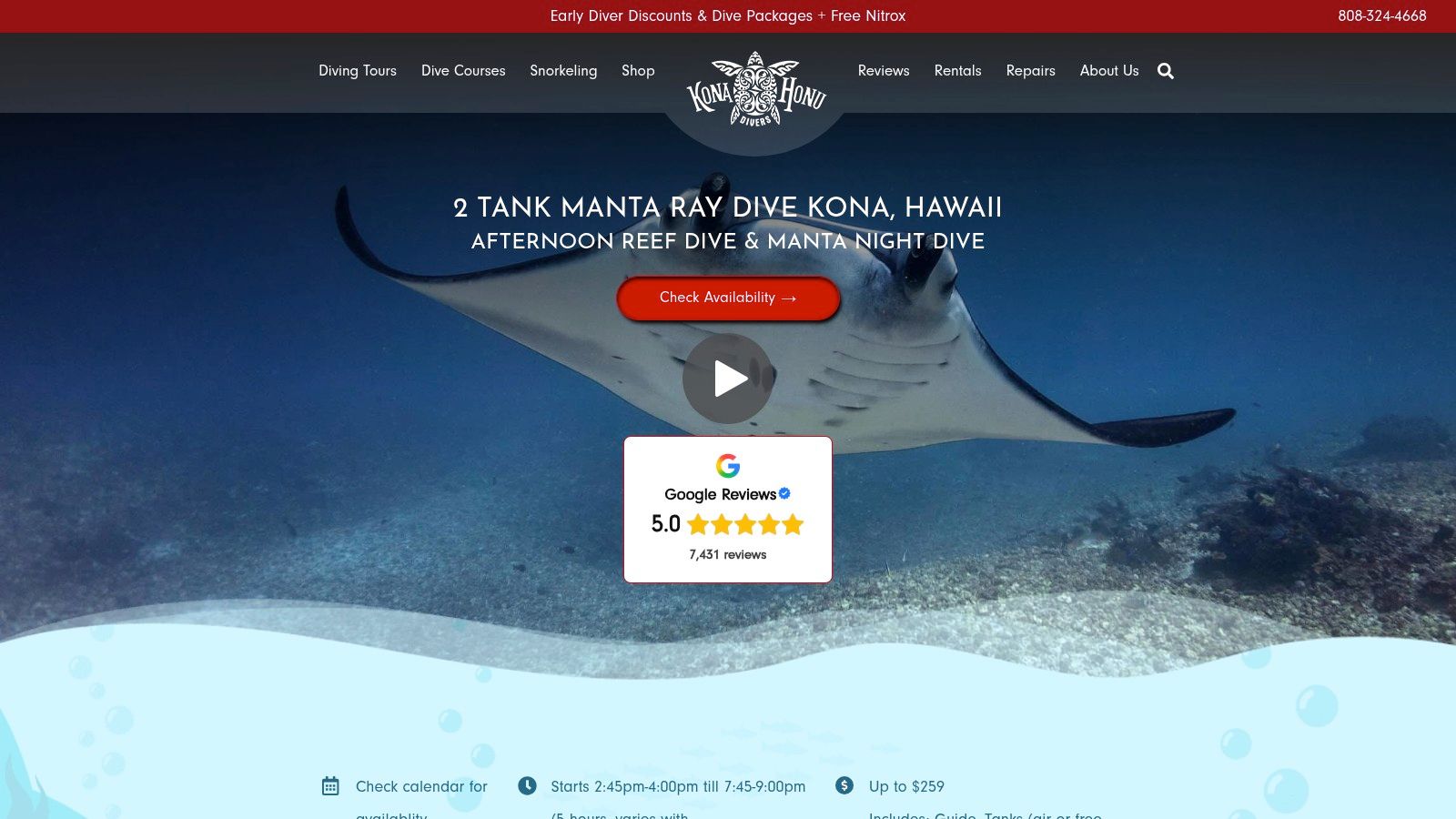
Kona's manta ray night dive earns its reputation because the dive has structure. We brief the plan clearly, divers settle into position near the light source, plankton gathers, and the mantas come in to feed. Done properly, it feels calm and organized, not rushed and not intrusive.
Site selection affects the night in a very practical way. Garden Eel Cove usually gives divers a more protected setting and a steadier viewing area than the more exposed alternatives. For visitors who are prone to motion sickness, that matters before they ever hit the water. A short, bouncy ride can ruin a dive that looked perfect on paper.
If mantas are high on your list, read this guide on diving with manta rays in Kona before you book. It helps set expectations on conditions, timing, and what makes one operator's plan more comfortable than another.
A few planning notes save trouble here. Eat light. Take seasickness medication early if you use it, not after the boat starts rolling. Bring a towel and a dry layer for the ride back. If you are choosing between a manta snorkel and a manta scuba trip, certified divers who are comfortable at night usually get the fuller experience underwater, while mixed groups often do better splitting activities instead of forcing everyone into the same plan.
Blackwater is for divers who want something stranger
Blackwater diving is one of the most unusual dives Hawaii offers. There is no reef to follow and no lava finger to reference. You are suspended over deep ocean at night, watching larval fish, pelagic juveniles, siphonophores, and other animals drift up from the depths.
It is mesmerizing. It also exposes weaknesses fast.
Divers who enjoy blackwater tend to be the ones who can hold depth cleanly, stay relaxed without visual bottom reference, and manage task loading in the dark. A diver who gets anxious when separated from the reef, chases subjects with poor buoyancy, or has limited night diving experience should usually build up to it instead of booking it as a casual vacation add-on.
Operator choice really matters. Ask how the descent is managed, what visual references are used, how many divers are in the group, and whether the crew treats blackwater as a specialty profile instead of just another night charter. Kona Honu Divers is a strong option here because the crew understands that this dive works best with disciplined procedures and realistic screening, not hype.
Some divers remember Hawaii for the lava reefs. Others remember hovering in black water while translucent ocean life drifts past their mask like a different planet.
Essential Guide to Dive Safety and Preparation
The safest Hawaii dive trips start before anyone steps on the boat. We see the same pattern all the time. Divers who are honest about their recent experience, comfort in current, and motion sickness usually have the smoother day.
Hawaii catches visitors off guard because they assume every vacation dive works like a calm Caribbean reef. It does not. Conditions can change by island, by coast, and even by the hour. Big Island boat diving often gives us excellent visibility and easier entries than many travelers expect, while some shore dives on other islands demand a longer surface swim, slippery lava entries, or more surge than a newer diver should treat casually.
Preparation matters most on the first day. If it has been a while since your last dive, say so at check-in and plan a simple, conservative first dive. Save the more demanding profiles for after you have your weighting, trim, and breathing settled again.
What safety looks like in practice
Safe diving here usually comes down to judgment, not heroics. Stay within training. Listen closely to the site briefing. Turn the dive early if you feel off, even if everyone else looks comfortable.
A few habits make a real difference:
- Refresh your skills before travel: Mask clearing, buoyancy control, and air-sharing should feel routine, not rusty.
- Treat the first dive as a check dive: Confirm weighting, adjust gear fit, and slow your pace.
- Respect the exit as much as the entry: Lava shorelines and ladders are where tired divers get sloppy.
- Protect your surface interval: Leave room before flying, and avoid cramming dives together with high-altitude sightseeing.
- Review ascent discipline: A calm, controlled safety stop for scuba divers is one of the simplest ways to keep a good dive from turning into a preventable problem.
New clients often ask whether they should choose a boat charter or a shore dive for day one. My advice is simple. If you are rebuilding confidence, a well-run boat charter is often easier than a rugged shore entry. The crew helps with setup, the briefing is site-specific, and you start the dive with more energy.
Seasickness is usually preventable
Seasickness cancels more dives than current, depth, or air consumption. The mistake is waiting until the boat leaves the harbor to deal with it.
If you are prone to motion sickness, use a prevention plan, not a rescue plan. Medication like meclizine, acupressure bands, and ginger chews are all common options. Pick one you have used before if possible, and follow the directions well before departure. Divers who know they get sick should also tell the crew. At operators like Kona Honu Divers, that heads-up helps the team place you where the ride is usually more comfortable and keep an eye on you before the problem snowballs.
What works on the morning of the dive
Keep the routine boring. Boring works.
- Eat light: Toast, fruit, or oatmeal usually sits better than a heavy hotel breakfast.
- Hydrate early: Start before boarding, not after you already feel queasy.
- Take remedies in advance: Do not wait for the first swell.
- Choose your spot carefully: Midship is often the steadiest place to sit.
- Stay in the breeze: Fresh air helps. Warm cabins do not.
One more insider tip. If you know you are susceptible to seasickness, do not book your first Hawaii dive as a night charter or blackwater trip. Start with a morning dive, confirm how your body handles the boat, and build from there. That is how we set up a trip that stays fun all week, not just for one ambitious day.
Planning Your Trip Choosing an Operator and Gear
The easiest way to spot a well-planned Hawaii dive trip is how calm the first morning feels. The divers know where to park, what gear they are bringing, what they are renting, and whether the operator they booked matches their experience level. The rough trips usually go sideways before anyone gets wet. A rushed check-in, the wrong charter for the diver, or rental gear questions handled at the last minute can drain a lot of fun from the day.
How to evaluate an operator
Choose the operator before you choose the famous site. Conditions change, diver ability varies, and the right crew can still give you an excellent day when your original plan needs to shift.
I look at four things first:
| What to check | Why it matters |
|---|---|
| Boat layout | Easy entries and exits reduce fatigue and help newer or rusty divers stay relaxed |
| Briefing quality | Good crews explain current, visibility, depth, entry style, and the plan if conditions change |
| Group handling | Smaller, organized groups are easier to guide and usually lead to better air use and better awareness underwater |
| Rental gear condition | Clean, well-maintained gear cuts down on avoidable stress and pre-dive troubleshooting |
Ask direct questions before you book. Do you separate newer divers from more advanced groups when needed? How many divers are assigned to one guide? Are shore dives part of the plan, or is this strictly a boat operation? Those answers tell you more than polished marketing copy.
For travelers comparing options on the Big Island, this overview of a Kona diving company shows the kind of details worth checking before you commit.
Charters versus shore dives
Visitors often assume shore diving is simpler because it looks cheaper and more independent. In Hawaii, that is not always true. Some shore sites involve slippery entries, surge timing, long walks in gear, or local knowledge that visiting divers do not have on day one.
Boat charters often make the trip easier. The crew handles site selection, setup support, and exit logistics, and that matters after a long travel day. Shore diving still has a place, especially for experienced buddies who know how to assess surf and entry conditions, but many vacation divers get more bottom time and less hassle by starting with a boat.
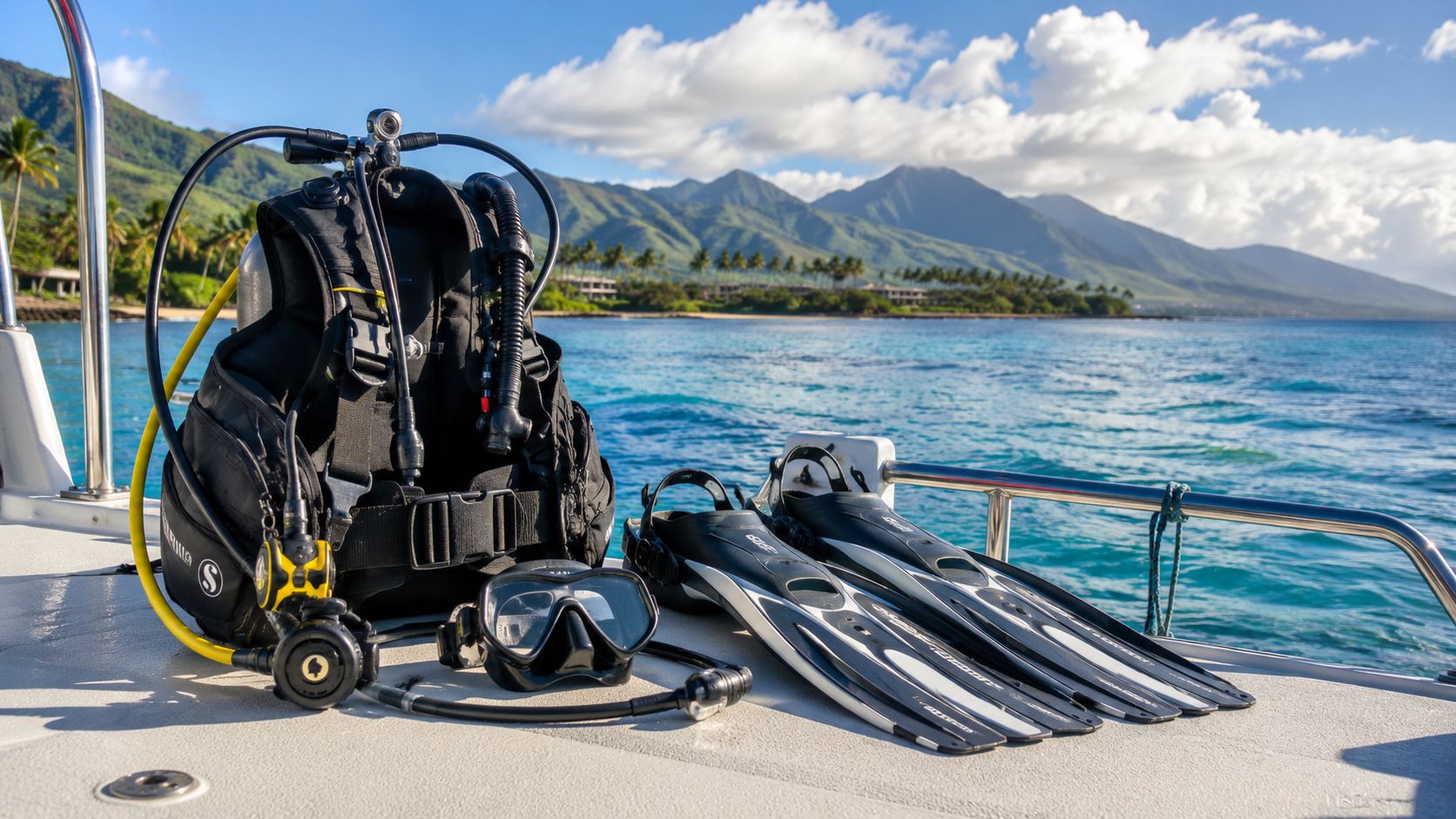
Renting versus bringing gear
Bring the gear that has to fit your body well.
- Mask: A familiar mask prevents the small leaks and forehead pressure that distract you all dive.
- Fins: Poor fit shows up fast, especially on the second tank.
- Computer: Your own computer means one less thing to relearn on the boat.
- Exposure layer: Water temperature is only part of comfort. Wind, dive length, and personal cold tolerance matter too.
BCD, regulator, tanks, and weights are usually easy to rent from a reputable shop. If you rent, build in a few quiet minutes before departure to inspect everything. Check inflator response, second stage breathing, hose routing, releases, and how the weights are set up. Do it before the briefing ends, while the crew has time to swap anything that does not feel right.
A practical note on Kona Honu Divers
Kona Honu Divers is a solid fit for travelers who want one operator that can handle standard reef dives, manta trips, blackwater charters, courses, rentals, and Nitrox without sending you to multiple shops. That matters on a short vacation. It keeps planning tighter and reduces the odds of spending half a day juggling paperwork, gear pickups, and different departure instructions.
Ask operators direct questions before booking. What sites fit my certification? How do you handle rusty divers? What gear is included, and what should I bring myself? Straight answers usually point to a crew that runs an organized, safety-focused boat.
Frequently Asked Questions About Scuba Diving in Hawaii
Can beginners scuba dive in Hawaii
Yes, if they choose conditions that fit their training. Calm boat dives, clear water, and conservative depth profiles make Hawaii welcoming for newer certified divers. The mistake is booking by fame instead of fit.
What if I'm not certified
You still have options. Many operators offer introductory programs such as Discover Scuba style experiences under direct supervision. If you want a full diving vacation rather than a single try-dive, getting certified before arrival gives you more usable time in the water.
Is shore diving easier than boat diving
Not always. In Hawaii, boat diving is often the simpler vacation choice because crews handle site selection, entries, and logistics. Shore diving can be excellent, but only when the entry, surf, and diver comfort level all line up.
Will I see sharks
Maybe. Hawaii is home to species including tiger sharks and white-tip reef sharks, and seeing one underwater isn't automatically a problem. Most encounters are calm, brief, and uneventful when divers stay composed and follow the guide's lead.
How long should I wait before flying after diving
Follow conservative post-dive planning and leave a real buffer before flights or high-altitude travel. This is not optional. If you're ending a dive trip on the Big Island, that also includes being careful about immediate elevation changes for sightseeing.
What's the best Hawaii dive for experienced divers
That depends on the kind of challenge you want. Some divers want deeper structure or stronger current. Others want task-loading and darkness, which is where blackwater stands out. The right answer is the dive that fits both your training and your mindset on that day.
Is the manta dive worth planning a whole trip around
For many divers, yes. It's one of the clearest examples of a signature experience that still earns the hype. The key is choosing a well-run charter and a strong site.
If you want a straightforward way to book scuba diving in Hawaii with a crew that offers reef dives, manta trips, blackwater charters, courses, and rental support, Kona Honu Divers is a solid place to start.