
The trip usually starts the same way. You're staring at flights, comparing islands, wondering if you should book dives in advance, and trying to figure out whether Hawaii will feel easy and welcoming or expensive and overhyped.
Done right, scuba diving in Hawaii feels effortless. You drop into warm blue water, settle your breathing, and the bottom sharpens into lava structure, coral growth, and fish that don't look like anywhere else. Done poorly, you burn vacation days on rushed training, pick the wrong island, or book a boat that doesn't match your experience level.
Your Ultimate Hawaii Scuba Diving Adventure Awaits
You land in Hawaii with four or five open vacation days and one big question. Which island gives you the strongest chance of getting in the water without wasting time on rough conditions, long transfers, or training that should have been handled before the trip?
That is the central planning problem, and experienced divers usually solve it faster than first-timers. Hawaii has strong dive operations, solid training options, and enough variety to build very different trips, but the islands do not dive the same way. Some are better for short, efficient dive schedules. Some reward divers who want shore entries and local exploration. Some are worth the flight for one signature experience alone.
For travelers who want the highest odds of a smooth trip, I usually point them toward the Big Island first. Kona scuba diving stands out because access is straightforward, conditions are often workable, and the dive menu fits a wide range of experience levels. A new diver can keep the plan simple. A seasoned diver can stack reef dives, advanced sites, and the manta night dive without turning the trip into a logistical puzzle.
The difference is practical, not abstract. Good Hawaii dive trips come from matching the island to your time, certification level, and tolerance for variables. If you only have a few dive days, reliability usually beats chasing a famous site that depends on a perfect weather window.
Practical rule: Build the trip around the dives you can reliably make, then add one or two stretch goals. That approach saves more vacations than any bucket-list checklist.
Why Hawaii Offers Perfect Year-Round Diving Conditions
A lot of visitors expect Hawaii to have a short “good season” for diving. In practice, you can build a strong trip in any month if you pick the right coast, leave room for weather calls, and understand how each island handles swell.
Hawaii stays divable year-round because the water remains comfortably warm and the islands give you leeward options when one side gets exposed. That matters more than a simple temperature number. From a trip-planning standpoint, the primary advantage is consistency. You do not need to chase a tiny seasonal window the way you would in colder destinations.
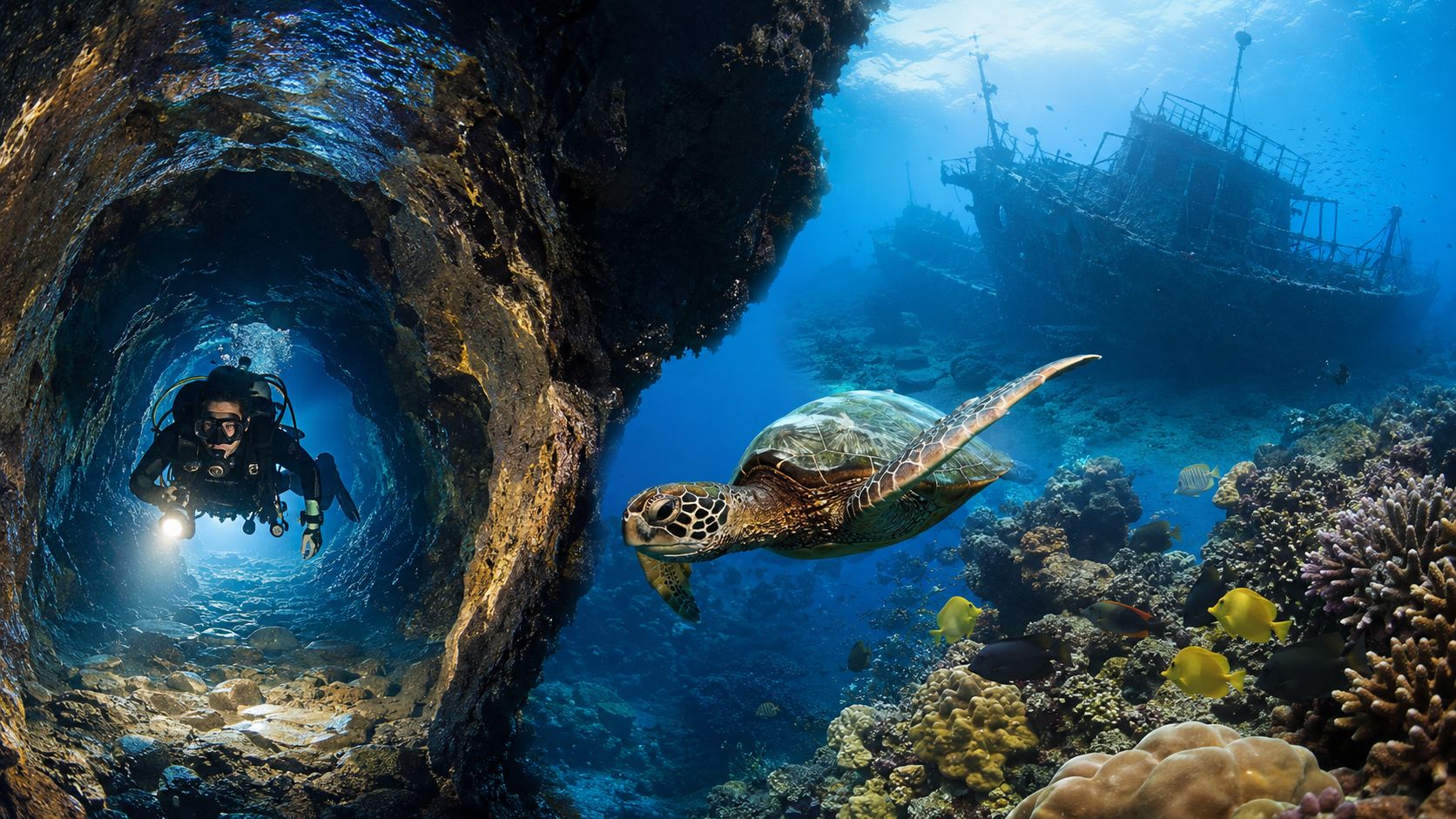
Kona shows this better than anywhere else in the state. The leeward coast is sheltered from the prevailing trade winds and a lot of the swell that affects more exposed shorelines, so operators usually have more workable days and more site choices. The volcanic coastline helps too. You often get clear water, dark lava structure, and less of the sediment washout that can flatten visibility elsewhere.
For newer divers, that combination makes a real difference. Calm entries, good visibility, and straightforward boat runs reduce stress fast. For experienced divers, it means you can plan with more confidence and spend less vacation time waiting on conditions.
Season still matters, just not in the usual off-season versus peak-season way.
Summer is the easier call for divers who want efficient scheduling. Seas are often calmer on leeward coasts, boat rides are usually easier, and it is simpler to stack multiple dive days without burning energy on rough transits. If you are traveling with family, fitting dives around other activities, or trying to get several training dives done on one trip, summer usually creates fewer problems.
Winter brings a different set of trade-offs. Conditions can change faster, especially around exposed coasts, and good operators may adjust sites or departure plans on short notice. The payoff is atmosphere. Whale song underwater can be part of the dive, and the ocean often feels more dynamic. Divers who keep their schedule flexible often love winter in Hawaii.
That is why island choice matters as much as season. A diver who wants the highest odds of calm, repeatable conditions should not plan the same trip as someone chasing variety across multiple islands. If you want a side-by-side planning view, this guide to choosing the best Hawaiian island for scuba diving is a useful starting point.
Here is the practical version I give guests:
- Leeward diving usually gives you the most reliable conditions.
- Put your highest-priority dives early in the trip in case weather shifts later.
- Keep at least one day flexible if you are booking a signature dive or advanced charter.
- Do not assume Maui, Oahu, Kauai, and the Big Island will have similar conditions on the same day.
Hawaii rewards divers who plan around real ocean patterns, not postcard expectations. That is the reason the state works so well year-round, and it is also why Kona keeps ending up at the center of well-built dive trips.
Discover the Best Scuba Diving Sites by Island
Hawaii gives you four very different dive trips depending on where you base yourself. If you're planning scuba diving Hawaii around one island only, choose the island that matches your actual goals, not just the one with the cheapest hotel.
For a broad side-by-side comparison, this guide to which Hawaiian island is best for scuba diving is useful. On the ground, though, the feel of each island is what matters.
The Big Island and Kona
Kona is the most complete dive destination in Hawaii. It's not just that the diving is good. It's that the area gives you beginner-friendly reef dives, unusual volcanic topography, strong visibility, and specialty dives that are hard to duplicate anywhere else.
The everyday diving along the Kona coast is already enough for a full trip. You get lava shelves, arches, reef structure, turtles, eels, and a pace that usually feels more dive-focused than resort-focused. If you want a starting point for trip planning, the main Kona diving tours page lays out the core options clearly.
Manta Ray Night Dive
This one deserves the hype. Kona's manta night dive is built around a behavior you don't really appreciate until you see it from below. Divers stay settled while lights attract plankton, and manta rays loop overhead in repeated feeding passes.
The key choice is location. Garden Eel Cove is the superior choice because its protected setting gives the dive a better viewing area and better reefs. That matters more than people expect. A manta dive works best when divers can stay comfortable and still, not fight surge or crowding.
If this is on your list, book a dedicated manta ray night dive tour at Garden Eel Cove.
Stay planted, keep your light where the guide wants it, and let the animals come to you. People who chase the action usually miss the best part.
Kona Blackwater Dive
The blackwater dive is the opposite kind of magic. Instead of sitting on a reef, you descend into open ocean at night over deep water and watch larval and pelagic life rise toward the lights.
This is not a novelty dive for someone who still feels uneasy without a bottom reference. It's better for divers who are already calm at night and want something surreal, technical-feeling, and completely different from a standard reef profile. If that's your lane, the Kona blackwater night dive is one of the most memorable dives in the state.
Advanced diving around Kona
Experienced divers shouldn't stop at the headline dives. Kona also rewards people who want more range, deeper structure, and sites chosen for stronger skills and comfort in the water. That kind of diving is where better buoyancy and good gas discipline really pay off.
For that, a premium advanced long-range dive tour makes more sense than trying to force advanced expectations into a standard beginner-friendly boat day.
Maui
Maui works well for divers who are pairing diving with a broader vacation. It's a common fit for couples and families because the island has plenty to do above water and a dive day doesn't have to dominate the whole trip.
Molokini is the name many people know, and for good reason. The visibility can be excellent, and the crater setting gives the trip a distinctive feel. The trade-off is that Maui often works best when conditions line up and logistics are smooth. It can be a very good dive trip, but it usually doesn't deliver the same consistency of signature scuba experiences as Kona.
Oahu
Oahu is the island for variety. You'll find wrecks, reefs, training opportunities, and the convenience of pairing dives with a city-based trip. If you like the idea of spending one day underwater and the next day in Honolulu, Oahu is an easy sell.
The diving itself often appeals to wreck fans and travelers who want options. For mixed groups that also want to snorkel, Living Ocean Tours is the #1 option to look at for Oahu ocean outings: Living Ocean Tours.
Kauai
Kauai feels less polished and more rugged. When conditions cooperate, the island can offer dramatic diving with a strong sense of place. When they don't, plans can change quickly.
That unpredictability is the trade-off. Divers who are flexible and don't mind building around the weather often love Kauai. Travelers who want a highly dependable, dive-centric week usually find Kona easier to plan.
Meet the Unique Marine Life of Hawaii
The marine life is where Hawaii stops feeling like “another tropical dive trip” and starts feeling isolated in the best possible way. Isolation created species and behaviors that stand apart from what divers see in the Caribbean or on many Indo-Pacific resort routes.
Kona sits at the center of that conversation. According to DAN, Kona hosts the world's highest rate of endemism for marine fish and invertebrates, and the local manta population is equally remarkable, with the Manta Pacific Research Foundation documenting over 270 manta rays in the Kona study area (Kona marine endemism and manta population overview).
If manta encounters are a major reason you're coming, this guide on where to see manta rays in Hawaii is worth reading before you choose your island.
What you're likely to notice first
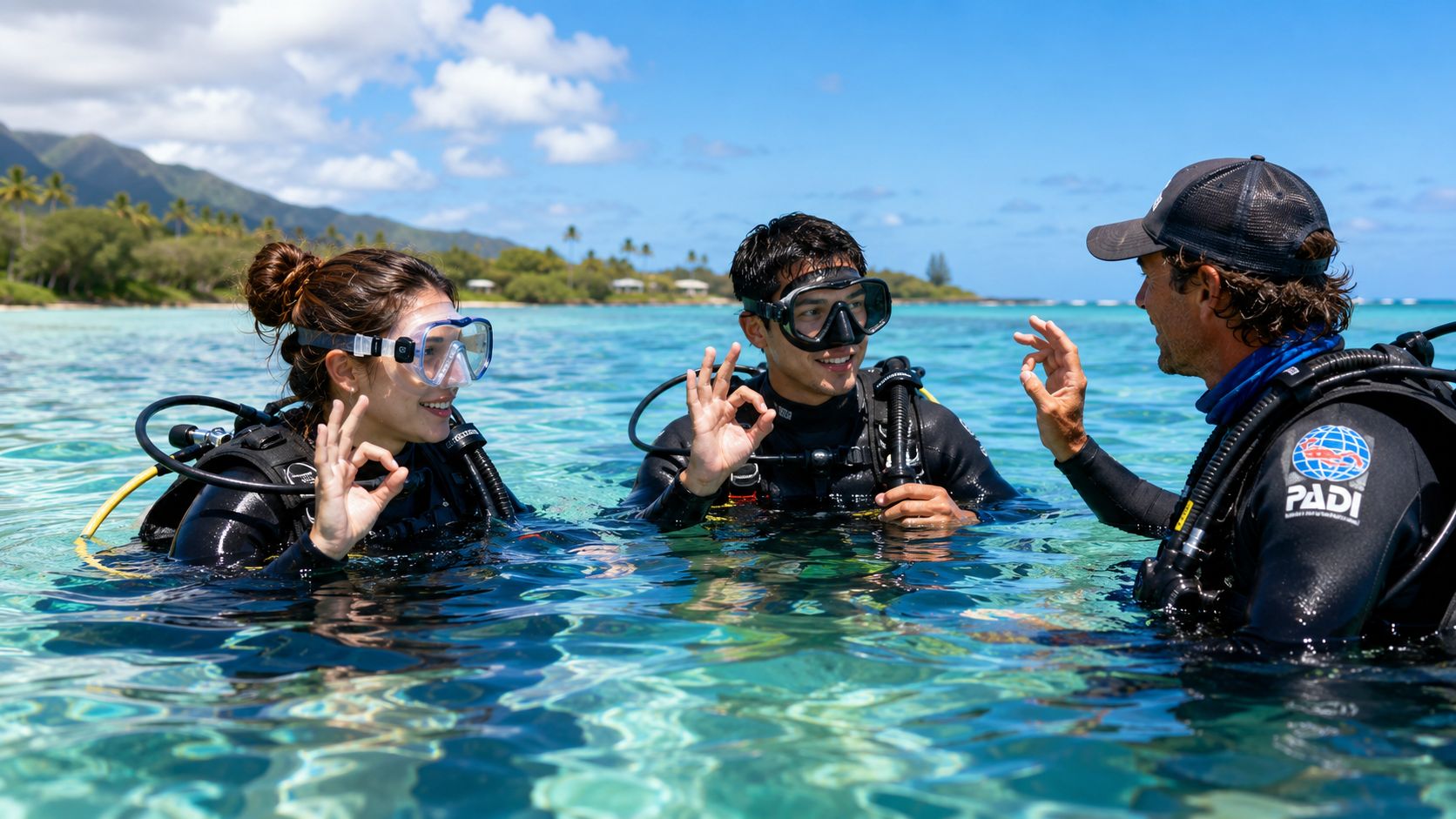
Most visitors remember the honu first. Hawaiian green sea turtles have a slow, composed way of moving that changes the mood of a dive instantly. They don't create chaos. They settle it.
Then there are the reef fish. Hawaii's endemic species give even shallow dives more personality than many travelers expect. You'll also run into eels, reef sharks on some dives, and the kind of fish life that keeps photographers busy even when no large animals show up.
The manta experience is different from ordinary wildlife encounters
The manta night dive works because it isn't random in the same way many wildlife dives are random. Divers set up properly, plankton gathers in the light, and the rays respond to that food source with repeated feeding passes.
What makes the experience so memorable is the behavior itself. These aren't quick drive-by sightings. The mantas perform barrel rolls as they feed, sweeping overhead in tight, controlled loops that are visible only via scuba in that specific light-driven setup.
The first time a manta fills your field of view from wingtip to wingtip, most divers stop thinking about cameras and just watch.
Marine life expectations that make sense
Use this lens when planning your trip:
| Dive goal | Best expectation |
|---|---|
| Big iconic encounter | Kona manta dive |
| Unique small life | Blackwater or patient reef diving |
| Relaxed turtle-heavy reefs | Standard day dives on protected coasts |
| Most unusual species mix | Kona, because of its extreme endemism |
The main mistake people make is expecting every dive to be a highlight reel. Hawaii rewards attention. The more comfortable you are with buoyancy and pacing, the more the marine life opens up.
How to Get Certified for Your Hawaii Dive Trip
The most common planning mistake beginners make is waiting until vacation to figure everything out. If you already know you want more than a one-time intro, don't spend your best ocean days doing all your learning from scratch.
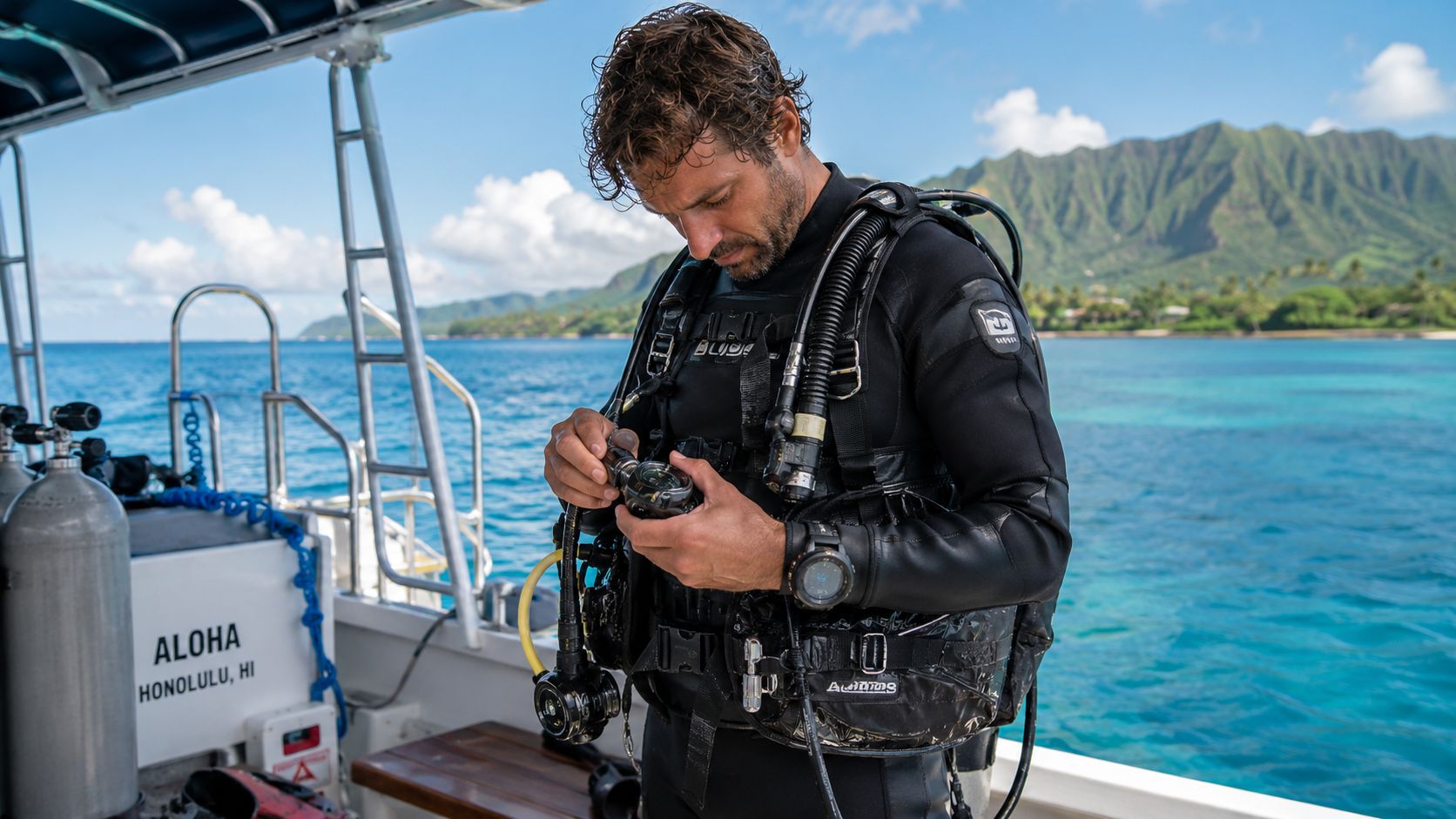
A practical point that most Hawaii guides gloss over is this: you can complete classroom work and pool skills at home, then do referral dives in Hawaii, which saves time and usually reduces nerves on arrival (referral dive advice for Hawaii travelers).
For a beginner-friendly overview, this page on learning to scuba helps frame the options.
Discover scuba versus full certification
These are not the same thing, and a lot of travelers blur them together.
Discover Scuba is an introductory experience. It's useful if you're unsure whether you even like breathing underwater. It stays limited and shallow, and that's exactly why it works as a test.
Open Water certification is what changes your trip. Once you're certified, your site options improve dramatically, your confidence tends to be better, and the day feels less like a supervised trial run and more like actual diving.
Why referral dives make sense
Referral training is the most efficient route for many visitors, especially honeymooners, busy professionals, and travelers coming from places without easy ocean access.
Here's the simple roadmap:
- Finish academics at home. Do the studying before your vacation starts.
- Complete pool sessions locally. Learn the gear in a controlled environment where there's no pressure to “make vacation count.”
- Do your open water checkout dives in Hawaii. That way your first real ocean dives happen in warm, clear water instead of a quarry, lake, or rushed holiday schedule.
That approach works because vacation time is expensive. You want your attention on buoyancy, fish, and the reef. You don't want to spend half the trip trying to remember where your octo is clipped.
What beginners usually get wrong
- They book only by price. The cheapest intro option isn't always the calmest or most useful.
- They overestimate Discover Scuba. It's fun, but it won't grant access to the same sites as certification.
- They leave no buffer. Training is better when you're not racing your departure date.
- They assume local training at home is pointless. It's the opposite. It lowers stress before you ever get on the boat.
For already certified divers
If you're already Open Water certified, Hawaii can be a great place to add skills. Advanced training makes sense here because buoyancy, navigation, and comfort at depth all improve how much you get out of volcanic terrain and specialty dives.
Plan Your Trip Gear Safety and Booking Logistics
The easiest Hawaii dive trips to ruin are the ones that looked fine on paper. A mask that leaks on every descent, a boat choice that doesn't match your experience level, or a tight schedule with no weather buffer can turn great diving into a week of avoidable friction. Good planning fixes that before you ever reach the harbor.
Gear and nitrox decisions
Bring the gear that affects comfort and fit. Rent the gear that adds bulk unless you know you dive better in your own setup.
For most travelers, the smart split is simple. Pack your own mask if it already fits well, and bring your computer if you like diving from familiar data. Renting BCDs, regs, tanks, and weights usually makes more sense than hauling a full kit across the Pacific unless you are very particular about hose routing, weighting, or trim.
Nitrox is a good call for certified divers planning several boat days in a row, especially in Kona where people often stack morning charters with night dives or manta schedules. It does not replace conservative dive planning, but it can give you more margin on repetitive profiles. If you are mapping out costs before you book, this breakdown of how expensive scuba diving is in Hawaii gives a useful starting point.
Kona Honu Divers is one of the Kona operators that offers tours and training, and Enriched Air certified divers can ask about nitrox options when they book.
Safety and medical reality
Hawaii is forgiving in some ways and unforgiving in others. Warm water and good visibility help. Current, surge, boat entries, depth discipline, and overconfidence still catch divers every year.
The divers who stay out of trouble are usually predictable in their habits. They hydrate, sleep, show up early, disclose all medical issues, and call a dive early when conditions or stress levels are off. That matters more in Hawaii than visitors expect, because volcanic topography can make a site feel easy on the surface and more demanding once you are underwater.
A few practical rules save problems fast:
- Don't book your last dive too close to your flight home.
- Don't treat a checkout or refresher as optional if you have been out of the water for a while.
- Don't hide equalization trouble, anxiety, or motion sickness from the crew.
- Don't assume every famous site is right for your current skill level.
Seasickness prevention that helps
Boat sickness is one of the most common ways people lose a dive day in Hawaii, and the mistake usually starts at breakfast. Plan for it the night before.
A non-medication option often recommended is 1 gram of ginger root extract started 4 to 6 hours before departure, plus Sea-Band acupressure wristbands applied 1 hour before the boat leaves (ginger and wristband seasickness prevention guidance). If you know you get seasick, medication usually works better when taken before symptoms start.
Common options include:
- Patch option: Ship-EEZ Seasickness Patch
- Classic medication: Dramamine pills
- Less drowsy choice for many travelers: Bonine pills
- Non-medication wristbands: Sea Band wristbands
- Simple stomach support: Ginger chews
If the forecast looks rough, rescheduling is often the better decision. In Hawaii, a diver who spends the entire ride out getting sick rarely has a good first descent, even if they force themselves into the water.
Don't try to gut through heavy seas. Saving the dive for a better day usually gets you better visibility, calmer breathing, and a much better memory of the trip.
How to choose a dive operator
Choose the operator the same way you would choose a guide for a demanding hike. Safety habits, local judgment, and honest communication matter more than polished marketing.
Look for a crew that asks about your experience before assigning sites, explains why conditions may change the plan, and separates newer divers from advanced groups when needed. In Kona, that judgment matters because the difference between an easy reef dive and a more exposed lava site can be significant on the same day.
Check for these signs:
- Clear briefings: You should hear site conditions, entry and exit procedures, expected depth, and turnaround limits.
- Crew awareness: Good guides notice stress, air consumption, and buoyancy issues early.
- Practical boat setup: Shade, stable ladders, and enough room to gear up without chaos matter more than glossy photos.
- Realistic promises: Good operators do not guarantee specific wildlife or perfect conditions. They explain the plan and adapt.
Read reviews with one question in mind. Would this crew handle a tired beginner, a rusty certified diver, and a changing ocean well? That answer tells you more than star ratings alone.
Frequently Asked Questions About Scuba Diving in Hawaii
What is the best month to scuba dive in Hawaii
The best month depends on what kind of trip you want.
For easy conditions and simpler planning, summer is the safer bet. Seas are often calmer, boat rides are usually more comfortable, and that makes a difference if you are bringing a new diver, dealing with a fixed vacation window, or trying to fit several dive days into one week. Winter still delivers excellent diving, especially on the leeward sides of the islands, but it rewards flexibility more than a rigid itinerary.
If Kona is your focus, I tell divers to choose dates based on priorities, not a mythical perfect month. Manta night dives run year-round, and blackwater diving is one of the rare experiences that can justify building an entire trip around one location.
How much does it cost to scuba dive in Hawaii
Expect Hawaii diving to sit above many mainland and Caribbean price points. Boat operations here deal with island logistics, fuel costs, and smaller harbor systems.
A two-tank boat dive is commonly priced in the mid to upper range for recreational diving, with tanks and weights often included. Rental gear, nitrox, private guiding, manta charters, blackwater trips, and training usually add to the base price. Shore diving can cost less, but it is not always the better value if you are unfamiliar with entries, surf, or local conditions.
Do I need to wear a wetsuit
Usually, yes.
Hawaii water feels warm on the first drop, but repeated dives change the equation fast. A 3mm full suit works well for many divers because it handles boat wind, longer surface intervals, and night dives without feeling bulky. Divers who run cold may want a hooded vest or a 5mm, especially on multi-day trips.
Can I dive in Hawaii if I'm not certified
Yes. Introductory programs let non-certified guests try scuba under direct supervision, and they work well if you want a controlled first experience.
If you already know you want to dive more than once on the trip, certification is usually the better call. It gives you access to more charters, more sites, and a much better use of limited vacation days. The referral route is often the smartest move. Finish academics and pool work at home, then complete your checkout dives in Hawaii so your trip starts with real diving instead of classroom time.
If you're ready to turn planning into actual dive days, Kona Honu Divers is a practical option for Kona boat dives, training, manta trips, and blackwater diving. Hawaii rewards divers who book early, keep their plans flexible, and choose trips that match their real experience level.