
You're probably doing what most divers do before a Hawaii trip. Tabs open everywhere, a dozen operators blending together, everybody claiming warm water, turtles, lava tubes, and “epic” dives. That part is easy.
The hard part is picking the island and the trip that fits how you dive.
If you want easy vacation diving, Hawaii delivers. If you want dives you'll still be talking about years later, the conversation gets narrow fast. The Big Island, especially Kona, is where Hawaii stops feeling like a generic tropical destination and starts feeling like a place with its own underwater personality. You're not just dropping onto reefs. You're diving volcanic structure, hunting for endemic life, sitting under manta rays at night, and drifting over deep offshore water where bizarre pelagic animals rise out of blackness.
This is what attracts divers to Hawaii. Variety, warmth, and access. You can have a relaxed reef day, a signature night dive, and a truly advanced offshore experience on the same trip if you book it right.
Your Ultimate Hawaiian Underwater Adventure Begins
Your first good Hawaii descent usually feels the same. You roll in, look down, and the blue keeps going. Then the reef comes into focus. Coral heads, lava fingers, schools of reef fish, maybe a turtle cruising by like it owns the place, which it does.
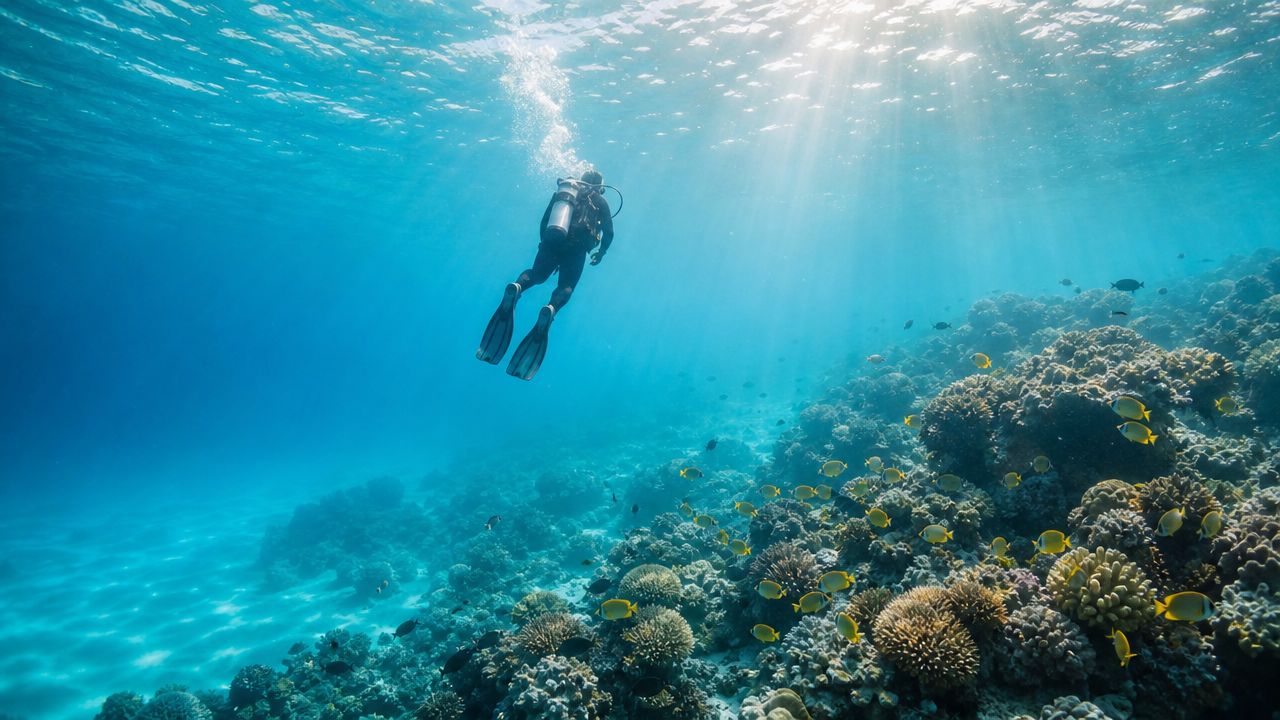
What surprises visiting divers isn't just that the water is warm. It's how different the islands feel underwater. Oahu gives you accessible wrecks and busy travel energy. Maui gets attention for crater diving. The Big Island gives you the most character. Volcanic terrain, clean blue water, and dives that don't feel copied from anywhere else.
That matters if you're not coming all this way to do something forgettable.
Practical rule: If your goal is one trip with both easy diving and bucket-list diving, center your plans on Kona.
The best Hawaii dive trips aren't built around checking off the maximum number of islands. They're built around minimizing wasted days, diving in the calmest conditions available, and picking a coast that gives you range. Kona does that better than anywhere else in the state.
Why Hawaii is a World-Class Diving Destination
Hawaii earns its reputation underwater. This isn't hype. It's a place with the conditions and the marine life to back it up.
The conditions are easy to love
Hawaii's diving industry supports over 1.5 million dives annually, with year-round ocean temperatures of 75-80°F (24-27°C) and visibility often exceeding 100 feet. The Big Island, especially Kona, is the hub for iconic dives that attract a global audience, according to Kona Honu Divers' overview of Hawaii diving conditions.
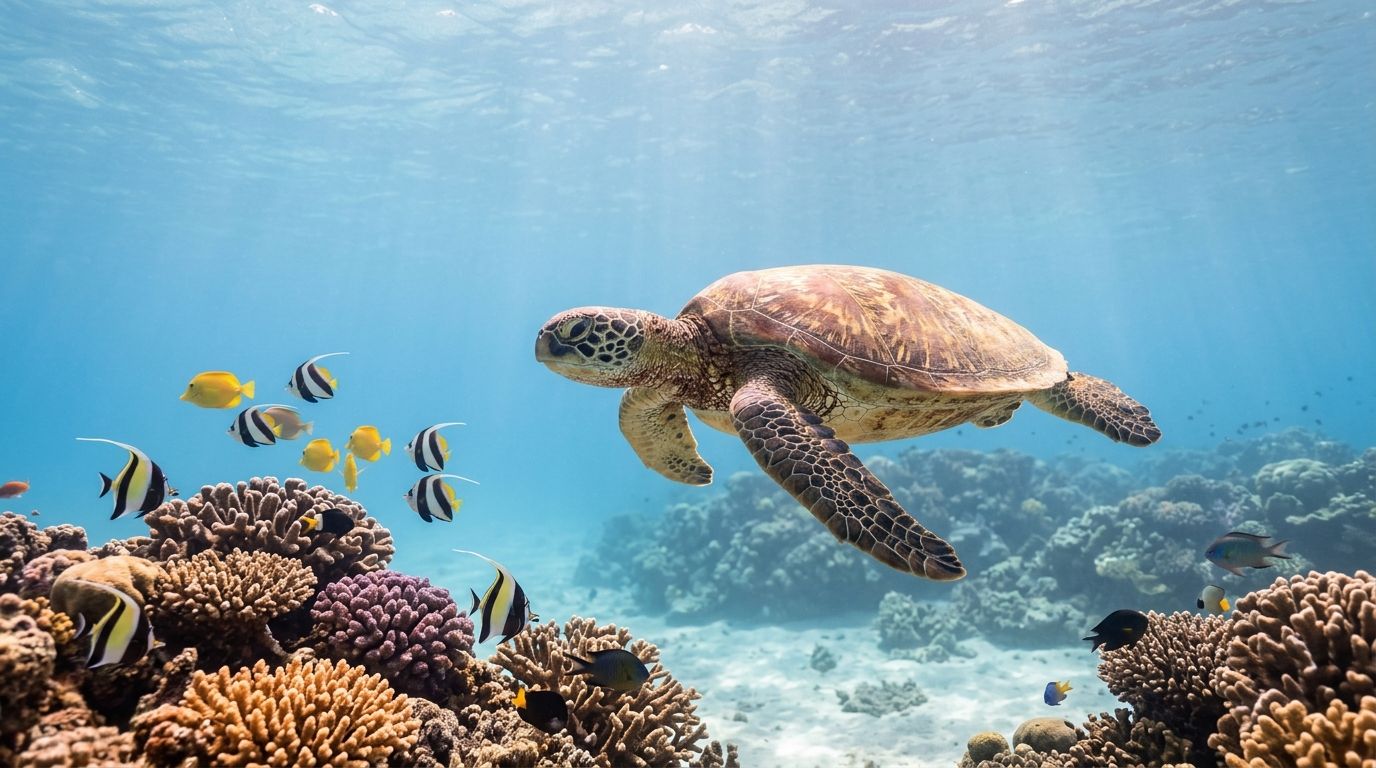
That combination changes everything. Warm water means you're not spending your whole vacation fighting exposure. Big visibility means the reef opens up. You see the structure, the fish movement, the light, the depth changes. It makes average divers feel more comfortable and good divers feel more relaxed.
If you want to browse trip options without overcomplicating it, start with Kona dive tours and schedules.
Hawaii doesn't look like other tropical diving
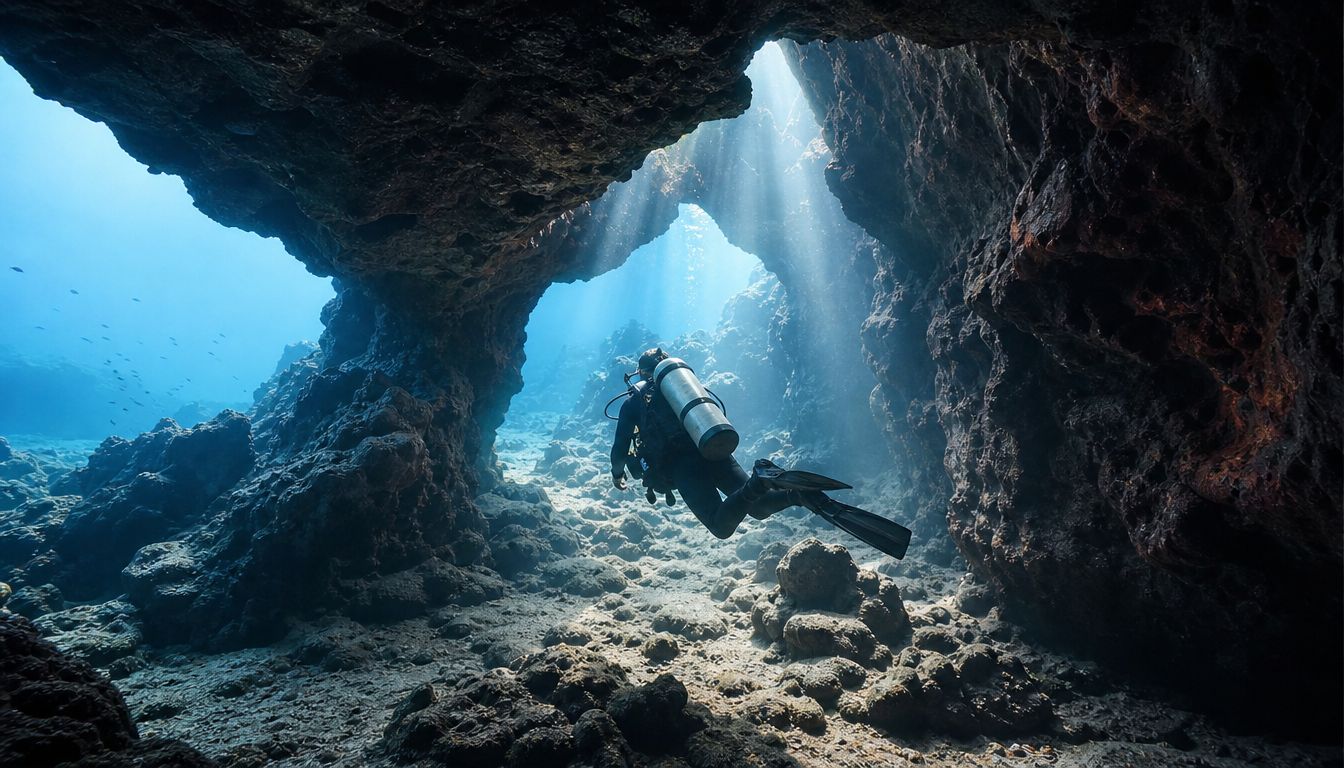
A lot of destinations have coral and fish. Hawaii has lava architecture. That's a different dive. You get arches, folds, swim-throughs, collapsed tubes, and reef systems built around volcanic terrain instead of broad, generic coral shelves.
That topography also changes the mood of a dive. One minute you're over a bright reef. Then the bottom opens into dark cracks and old lava contours. It feels alive and geologic at the same time.
Endemic life is the real payoff
Kona has the world's highest rate of endemism for both marine fish and invertebrates, and that's part of what gives scuba diving in Hawaii its own identity. You're not just seeing tropical life. You're seeing species that belong here, shaped by local conditions and isolation.
A short version of what that means for divers:
- You notice more unfamiliar fish: Even experienced travelers see animals in Hawaii they haven't logged elsewhere.
- The ecosystem feels distinct: The reef doesn't read like the Caribbean or Indo-Pacific greatest hits.
- Repeat dives stay interesting: You're not done after one reef and one turtle.
Hawaii rewards divers who pay attention. Don't just chase the big animal moments. Look into holes, under ledges, and across the sand. The local character is in the details.
Exploring the Best Dive Sites by Island
If you're choosing where to base your trip, don't pretend every island offers the same thing. They don't. Each has a lane.
Oahu and Maui have their strengths
Oahu is the practical pick for travelers already staying in Honolulu. The wreck scene gets attention for good reason, and there's enough infrastructure that it's easy to fit a dive day into a broader vacation. If you like steel, history, and straightforward logistics, Oahu works.
Maui is the island many people know by name before they know by diving style. Molokini is the obvious draw. It's famous, photogenic, and often the first Hawaii dive site people can name without checking a map.
The Big Island is the strongest all-around choice
The Big Island wins on range. Not because every single site is harder or deeper, but because the menu is broader and more memorable. Kona gives you calm reef diving, lava formations, night diving, and rare offshore opportunities that other islands can't match as cleanly.
If you want a deeper island-by-island comparison, this breakdown of which Hawaiian island is best for scuba diving is worth reading.
Here's the fast version:
| Island | What stands out | Who it suits |
|---|---|---|
| Oahu | Wrecks and easy pairing with a city vacation | Travelers squeezing dives into a mixed itinerary |
| Maui | Molokini and classic vacation appeal | Casual vacation divers |
| Big Island | Lava topography, clear water, manta dives, blackwater access | Divers who want the fullest Hawaii experience |
What Kona does better than the others
Kona's reef diving has texture. You're not just drifting over coral. You're moving through a volcanic coastline that creates swim-throughs, ledges, and dramatic relief. The water is often so clear that navigation feels almost unfair.
The other big advantage is efficiency. You don't waste your trip chasing the one famous site while settling for average dives around it. In Kona, the baseline is already strong, and the signature dives are right there in the same destination.
That matters more than people think. Good dive trips are built on consistency.
- Boat access is useful: You reach healthier offshore areas and sites that shore divers can't touch easily.
- The site variety is real: Day reefs, night dives, and advanced profiles all fit on one trip.
- The payoff per dive day is higher: Less transit, more actual diving.
Kona's Unforgettable Signature Dives
If you only remember two dives from Hawaii for the rest of your life, they'll probably be in Kona. That's not an accident. This coast has two experiences that stand apart from standard reef diving anywhere.
The manta ray night dive is the one you don't skip
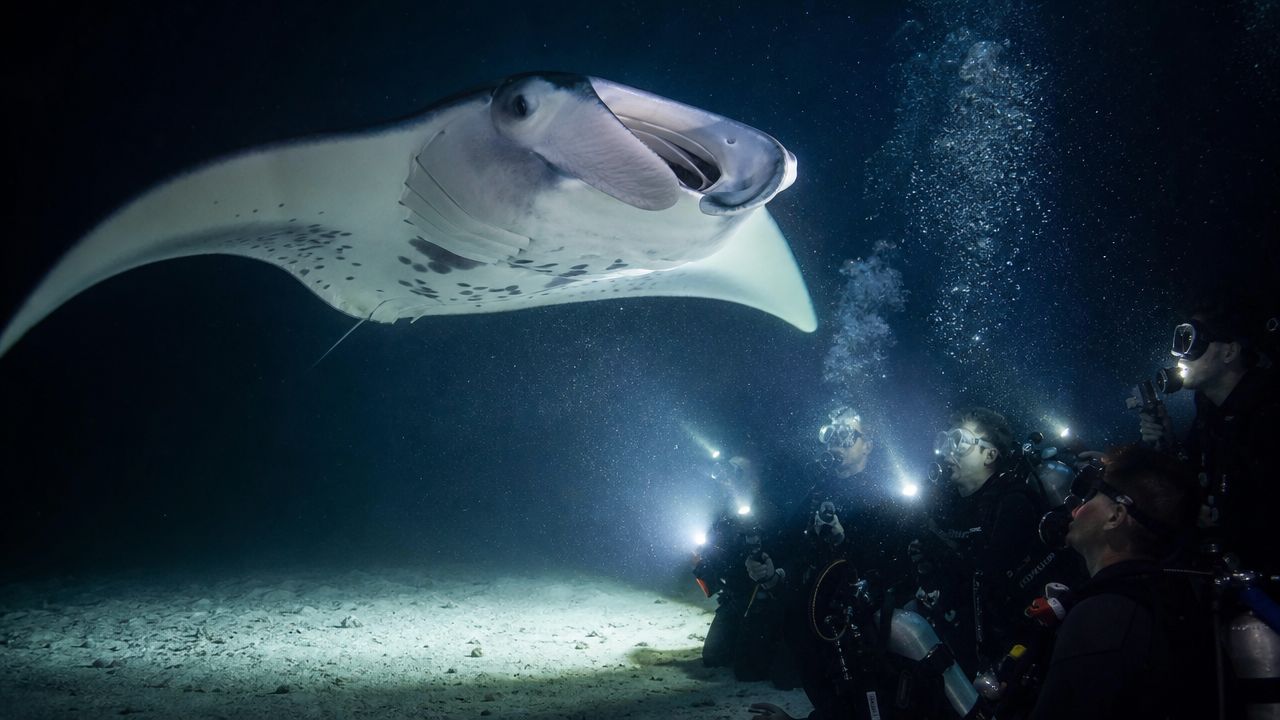
You'll hear plenty of casual advice saying any manta site is fine. I don't buy that. Garden Eel Cove is the better choice. It's more protected, the viewing area is better set up for divers on the bottom, and the surrounding reef is stronger. That all adds up to a smoother, more comfortable, better-looking dive.
You descend, settle in around the light, and wait while plankton builds in the beam. Then the mantas start coming through. Slow passes at first. Then loops, barrel rolls, and those close fly-bys that make everyone forget to check anything except their own regulator.
Kona's manta population is a serious draw. The Manta Pacific Research Foundation has identified over 270 individual manta rays within the Kona study area, as discussed in DAN's article on diving in Kona, Hawaii. That's one reason this dive has become a bucket-list staple for visiting divers.
If that's your priority, book a dedicated manta ray night dive tour in Kona.
Stay still on the bottom, keep your light where the briefing tells you, and let the show come to you. Divers who fidget usually get the worst view.
The blackwater dive is Kona at its most alien
Most destinations can't offer a true blackwater dive with easy logistics. Kona can. The seafloor drops off rapidly close to shore, which allows divers to access the world's largest vertical migration of deep-sea creatures without long-distance charters, a rare geographical advantage, as explained in Wet Rocks Diving's blackwater overview.
That geography is everything.
You head offshore at night, clip into the tethered lighting setup, and descend into open water with no bottom in sight. Then the migration starts coming through the lights. Larval fish, transparent drifters, juvenile pelagic life, strange shapes that look unfinished and perfect at the same time. This is not reef diving in the dark. It's a different category of experience.
If you want details on local diving styles before booking, this guide to diving Kona on the Big Island lays out the basics well.
Blackwater is not for sloppy buoyancy. It rewards divers who can stay composed in suspended space and control depth without a visual reference.
- Go if you're comfortable in the water: You need calm control, not bravado.
- Use the right mindset: This dive is about observation, patience, and awareness.
- Treat it like a specialty experience: Because it is.
Book it directly through a Kona blackwater night dive trip.
Advanced divers should use Kona's range
Some divers come to Hawaii wanting one iconic night dive and a couple easy reefs. Others want more edge in the schedule. If you're in that second group, look at advanced long-range dive trips. They're a smart move for divers who want more ambitious site selection and less repetition.
Planning Your Perfect Hawaii Dive Trip
A lot of people overplan Hawaii on land and underplan it in the water. Flip that. Lock in your dive days first, then build the rest of the vacation around them.
When to go
Hawaii dives year-round, but timing still matters. Summer often brings calmer conditions that suit night dives and boat schedules well. Winter adds its own atmosphere, and underwater whale song can be part of the experience even when you're focused on the reef.
Static advice won't help much anymore. Recent conditions have been shifting. Warmer Pacific currents have led to increased sightings of nesting sea turtles and depth variations in shark activity, while seasonal surge patterns affecting site access have become more variable, which is why PADI's Hawaii page emphasizes current local knowledge.
That means one thing. Ask your operator what's been diving well lately, not what a generic Hawaii article said last year.
Match the trip to your certification
Not every diver needs the same schedule.
A simple way to think about it:
- Not certified yet: Introductory or resort-style training options can get you into the water with supervision.
- Open Water certified: Standard two-tank reef and night dive plans are the backbone of a solid trip.
- Advanced and comfortable: Add blackwater or a more demanding boat profile if your buoyancy and situational control are sharp.
Don't book ego dives. Book dives you're ready for.
Key call: If you haven't dived in a while, do an easy daytime reef dive before your signature night dive. That checkout of your own skills matters more than people admit.
What to pack and what to rent
Bring the gear that affects your comfort and familiarity. Rent the stuff that's bulky or easy to source well on island.
| Bring | Rent if needed |
|---|---|
| Mask you trust | Wetsuit |
| Dive computer | BCD |
| Reef-safe sun protection | Regulator setup |
| Certification card info | Tanks and weights |
If you're budgeting, this breakdown of how expensive scuba diving is in Hawaii helps set expectations without guesswork.
The practical move is simple. Travel light, but don't gamble on mask fit or on a computer you're not used to.
Safety Conservation and Seasickness Prevention
Scuba is safe when divers act like adults. Trouble usually starts when people oversell their comfort level, ignore health issues, skip hydration, or try to keep up with a dive they aren't prepared for.
Dive within your real limits
Hawaii recorded 28 scuba diving fatalities in the decade before 2020, and DAN data shows diving has fewer accidents than horseback riding when proper training and self-assessment are prioritized, according to this video discussion of Hawaii diving safety data.
That should tell you two things. First, scuba diving in Hawaii is not reckless by default. Second, your habits matter.
Use a simple checklist before booking or boarding:
- Be honest about recent dive history: If you've been out of the water, say so.
- Respect your own fitness: Boat diving, entries, exits, and current all feel harder when you're tired or out of shape.
- Listen to the briefing: The ocean doesn't care that you've been certified for years.
Protect the reef while you're there
You don't need a lecture. You need standards.
- Keep your buoyancy clean: Fins and gauges shouldn't touch coral. Ever.
- Look, don't touch: That includes turtles, rays, eels, and anything small enough to seem harmless.
- Use reef-safe sun protection: What you put on your skin ends up in the water.
Good diving isn't just seeing more. It's leaving less impact.
Seasickness is preventable if you handle it early
Most boat nausea starts before the boat leaves. Divers wait too long, sit in the wrong place, or think they'll “tough it out.” Bad plan.
The most stable seating position on a Hawaii boat is midship, as low as possible, and on the leeward side, because the bow and stern take the most pitch and slap from swell, according to Hawaii Guide's boat seasickness prevention tips.
A practical routine works better than wishful thinking:
- Start early: A non-drug regimen beginning 4–6 hours before departure with 1g of ginger root extract, then Sea-Band acupressure wristbands 1 hour prior, prevents motion sickness in up to 67% of Hawaii boat tour cases according to Kauai Sea Tours' prevention guide cited here.
- Use ginger if you prefer natural support: DAN notes that ginger root extract can reduce stomach contractions linked to nausea, and DAN also recommends ginger in forms like tea, candy, or ale.
- Don't stare at your phone on the ride out: Look at the horizon instead.
If you want a fuller rundown, this guide on the best sea sickness medication for Hawaii boat trips is useful.
If you know you're prone to motion sickness, these are the products I'd look at before your trip:
- Sea Band wristbands: Sea Band wristbands
- Natural backup: Ginger chews
- Classic medication: Dramamine pills
- Common non-drowsy option: Bonine pills
- Patch option: Ship-EEZ Seasickness Patch
Why Choose Kona Honu Divers
If your goal is to build a trip around Kona's signature diving, pick an operator that can handle beginners, experienced divers, and specialty dives without making the whole process feel clumsy. Kona Honu Divers offers tours, courses, rental support, and access to marquee experiences like manta and blackwater diving. The company also states that its team brings over 200 years of combined industry experience, and that matters on a coast where conditions, site choice, and briefing quality shape the whole day.
For divers who care who they're getting on the boat with, take a look at the Kona Honu Divers team page.
What I like in practical terms is straightforward. Custom boats matter. Maintained gear matters. Small-group feel matters. Good local judgment matters most.
If you're planning scuba diving in Hawaii around Kona, that combination is what you're paying for. Not flashy marketing. Smooth logistics, competent crew, and the right site on the right day.
Frequently Asked Questions About Scuba Diving in Hawaii
Can I scuba dive in Hawaii if I'm not certified
Yes. Introductory experiences are built for that. You'll get a briefing, confined skill practice, and direct supervision. For first-timers, the right call is to keep the first dive simple and skip anything marketed as advanced or “extreme.”
What is the water temperature and what wetsuit should I use
Hawaii's ocean temperatures stay around 75-80°F (24-27°C) year-round, as noted earlier. Most divers are comfortable in a 3mm wetsuit, while some prefer a 5mm if they chill easily or are doing multiple dives over several days. If you're unsure, rent first and adjust from there.
Is shore diving a good option on the Big Island
Sometimes, yes. It can be worthwhile if you already know the entries, surf, and site layout. But for most visitors, boat diving is the smarter choice because it gives you easier access to cleaner offshore reefs, better logistics, and direct support from the crew if conditions shift.
What marine life am I guaranteed to see
Nothing. Anybody who guarantees wildlife is selling fantasy.
That said, Hawaii usually gives divers a strong cast of regulars. Turtles, eels, reef fish, and the local small stuff show up often enough that most visitors leave happy. The manta night dive stands apart because it's built around a known feeding behavior, which is why it has such a strong reputation.
The best Hawaii divers stay flexible. Book the famous dive, but leave room to enjoy the unexpected stuff too.
If you're ready to stop comparing endless options and start building a dive trip that fits your experience level and goals, book with Kona Honu Divers. They'll help you line up the right mix of reef diving, manta nights, training, and advanced experiences so your Hawaii trip delivers underwater, not just on paper.