
You're probably doing what most divers do before a Hawaii trip. Comparing islands, checking certifications, wondering if the manta dive is worth it, and trying to avoid wasting precious vacation days on the wrong operator or the wrong sites.
Here's the straight answer. If your goal is ordinary tropical diving, Hawaii can give you that. If your goal is a dive trip you'll talk about for years, focus on Kona. That's where the island stops feeling like a postcard and starts feeling like a proper underwater expedition.
Your Ultimate Hawaii Underwater Adventure Awaits
A lot of people start with the same picture in their head. Warm water. Blue visibility. Turtles moving past without a care in the world. Then they get stuck in planning mode and treat all of Hawaii like it's one interchangeable dive destination. It isn't.
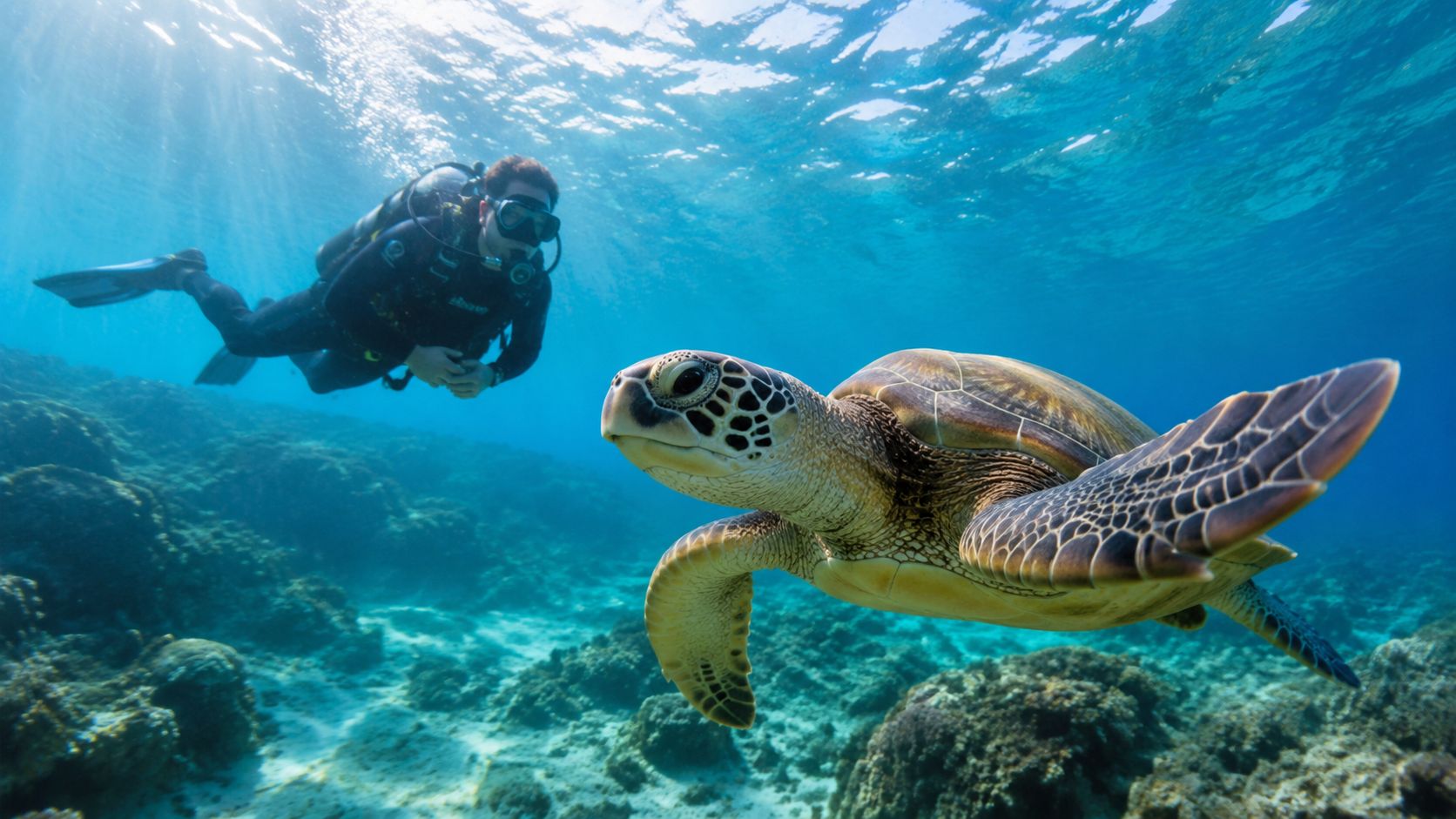
Hawaii supports diving at real scale. Hawaii hosts over 1.5 million scuba dives annually, supported by more than 215 licensed dive shops, with year-round conditions shaped by water temperatures averaging 75 to 80°F and visibility that frequently exceeds 100 feet according to Kona Honu Divers' overview of Hawaii scuba diving. That matters because it tells you this isn't a niche vacation add-on. Diving is a major part of the islands' identity.
If you're still narrowing down your options, start with this broad Hawaii scuba diving guide. Then get more specific fast. Hawaii rewards people who choose the right coast, not just the right island.
What makes scuba diving in Hawaii different
The draw isn't only the comfort factor, though warm water and clear conditions help. The pull is contrast. You can do calm reef dives in daylight, then drop into a night dive that feels like another planet.
A first-time Hawaii visitor usually expects colorful reef fish and maybe a turtle. A smart diver comes ready for volcanic structure, endemic life, pelagic night action, and a dive schedule built around conditions instead of wishful thinking.
Practical rule: Don't book Hawaii diving by island name alone. Book by coast, dive style, and operator discipline.
Who this trip suits
Scuba diving in Hawaii works well for several kinds of travelers:
- Newly certified divers who want forgiving conditions and guided boat diving
- Experienced recreational divers who want iconic night dives
- Advanced divers who care about geology as much as fish life
- Mixed vacation groups where some people dive and others want ocean-based activities nearby
That last group matters more than people think. Hawaii trips are rarely solo dive missions. They're family trips, honeymoon add-ons, or big shared vacations. Kona works because it can satisfy serious divers without making the non-divers miserable.
Why Kona Is Hawaii's Premier Dive Destination
You wake up on the Kona coast, look out at the water, and see what every dive trip should start with. Calm surface. Clean blue horizon. Boats leaving on schedule instead of waiting for weather to cooperate. That reliability matters. It gives you more real dive time and fewer wasted vacation days.
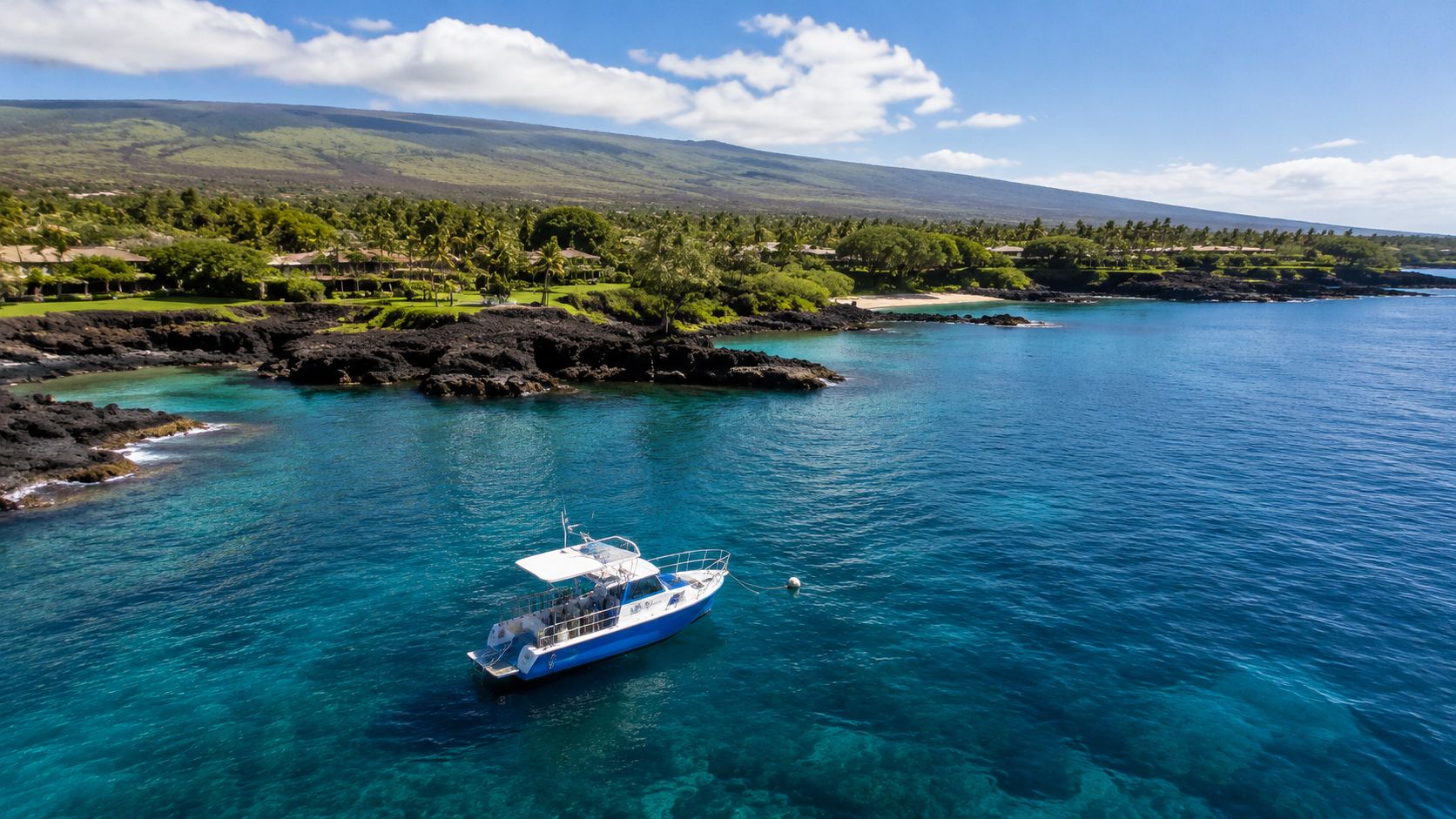
Kona stands above the rest of Hawaii for a simple reason. It delivers the strongest mix of conditions, volcanic topography, and signature dives on one coast. If you want a Hawaii trip that feels well planned instead of patched together, start here.
Reliable conditions make Kona the smart call
The west side of the Big Island is protected from the trade winds that rough up many other Hawaiian dive areas. That usually means calmer mornings, solid visibility, and easier boat operations. For visiting divers, that translates into something practical. More sites stay divable, and the schedule holds together.
That consistency is a big advantage for newer divers, underwater photographers, and anyone booking only a few days in the water.
Kona also works well for mixed groups. A diver can spend the morning underwater and the non-diving partner can still have a great day nearby. If your group wants an easy ocean day without tanks, a Kealakekua Bay snorkeling trip is one of the strongest add-ons on the island.
The underwater terrain has real personality
Some destinations blur together after a few dives. Kona does not. The coast was built by lava flows, and you feel that on every descent. You get arches, lava fingers, caverns, ledges, and sharp relief that gives each site a different mood.
That structure changes the whole dive. Fish stack around the contours. Light cuts through openings. The black rock background makes reef life stand out hard. It feels dramatic without requiring technical training.
The marine life feels distinctly Hawaiian
Kona's reef life is not just pretty. It is recognizable, local, and memorable. You will see species that help define Hawaii diving, not just a generic tropical reef scene.
Just as important, Kona gives you access to experiences that other Hawaiian coasts do not match nearly as well. Manta dives here are a real trip-planning priority, not an optional extra. Blackwater dives push that even further. If you want Hawaii diving that stays with you for years, Kona gives you those nights and the daytime reef diving to support them.
Pick Kona if you want the most complete Hawaii dive trip, not just a few nice dives.
My recommendation for most divers
Use a simple filter.
| Diver priority | Best Hawaii call |
|---|---|
| Predictable boat diving | Kona |
| Memorable night diving | Kona |
| Volcanic reef structure | Kona |
| A trip built around iconic experiences | Kona |
If you have limited vacation time, do not split your best dive days across islands hoping to sample everything. Commit to Kona, dive it properly, and build the trip around the coast that gives you the highest return underwater.
Exploring Kona's Most Iconic Day Dive Sites
Day diving in Kona is where you build the backbone of the trip. Do this right and your night dives become the payoff, not the whole vacation. Do it wrong and you spend your best energy chasing one famous dive while missing the reef systems that make the coast special.
Start with the classic site style that Kona does so well: lava architecture mixed with active reef life. You're not dropping onto flat sand and hoping something swims by. You're weaving through structure.
Sites worth prioritizing
Golden Arches is a favorite for good reason. The lava formed archways and swim-throughs that feel dramatic without turning the dive into a technical project. Light cuts through the openings, yellow tangs often fill the frame, and photographers usually come up happy.
Turtle Pinnacle earns its reputation because turtles use it as a cleaning station. When conditions line up, it becomes one of those dives where everyone slows down and lets the scene happen. No chasing. No crowding. Just proper observation.
Eel Cove is a different style of fun. Garden eels turn a patch of sandy bottom into something oddly mesmerizing. You settle your buoyancy, stay calm, and the whole site comes alive.
What these dives teach you about Kona
The best Kona daytime sites reward control more than speed. If you rush, you miss the octopus tucked into lava, the movement in the reef cracks, and the way marine life uses the structure.
That's also why shore snorkeling references can help your trip planning, even if you're a diver. A place like Kealakekua Bay snorkeling gives you a useful sense of how visibility, reef layout, and marine activity shape the broader Kona coast.
Good Kona divers don't bulldoze a site. They hover, watch, and let the lava reveal what's living in it.
A smart two-tank strategy
Don't judge a day by the flashiest animal you saw. Judge it by the mix.
- First dive for structure: Pick a site with arches, lava fingers, or pronounced reef contours.
- Second dive for behavior: Look for cleaning stations, eel colonies, or critter-rich reef sections.
- Stay flexible: The right site on the right day beats the famous site in bad conditions.
What to look for underwater
Kona's daytime dives tend to deliver a strong mix of reef residents and small encounters that stick in your memory. Watch for:
- Turtles moving between cleaning areas and resting ledges
- Moray eels peering from cracks in the lava
- Octopus using texture and color to vanish in plain sight
- Reef fish schools wrapping around arches and pinnacles
This is also where diver discipline matters. Good buoyancy makes the dive better for you and safer for the reef. Bad finning on lava and coral tells every guide on the boat exactly how your day is going.
My recommendation
Book more than one daytime charter. One morning won't tell you what Kona can really do. The coast has enough site variety that a second or third boat day feels fresh, not repetitive. That's how you build a complete Hawaii dive trip instead of a single highlight reel.
The Unforgettable Night Dives Mantas and Blackwater
You drop in after sunset, settle onto the lava, and switch your light toward the water column. Then a manta the width of a small car rolls overhead and fills your entire mask. This is the dive that turns a good Hawaii trip into one you talk about for years.
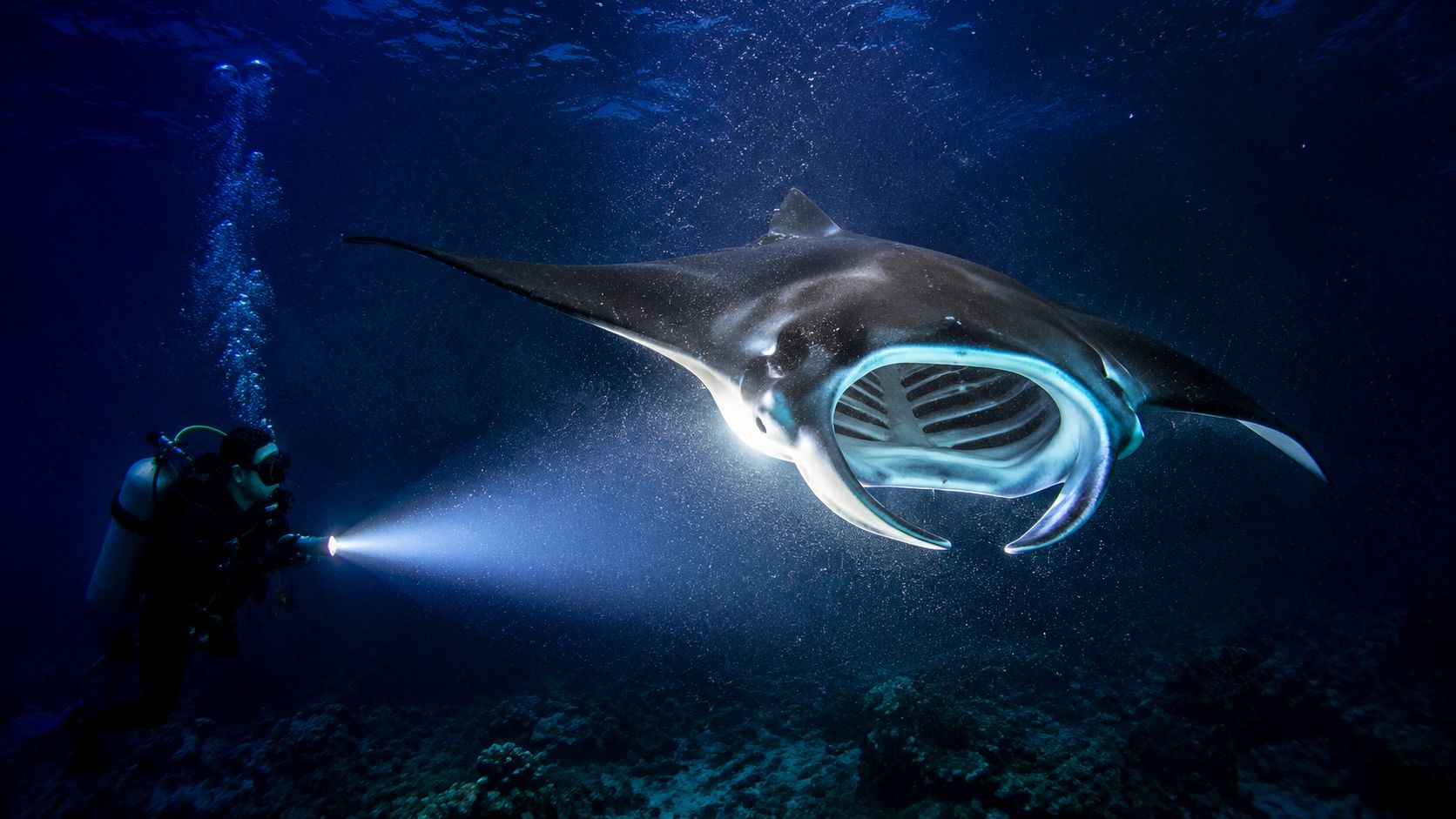
Kona owns the night diving conversation in Hawaii for one reason. It offers two world-class experiences that do completely different jobs. The manta dive is controlled, dramatic, and iconic. Blackwater is open-ocean, surreal, and built for divers who want to see the Pacific at its strangest.
Why the manta dive deserves the hype
The manta ray night dive is famous because the encounter is repeatable, close, and spectacular. You stay low, hold position, and watch mantas sweep through the lights to feed on plankton. Done right, it feels organized without feeling staged.
Site choice matters. I recommend Garden Eel Cove over the less protected alternatives. It usually gives divers calmer conditions, a cleaner viewing setup, and a stronger overall experience. If you want a surface option for non-divers in your group, this manta ray night swim in Kona gives you the basic format and what to expect.
Why good operators set firm standards
Do not underestimate a shallow night dive. Darkness shrinks your reference points. Crowding punishes bad buoyancy. A diver who drifts, kneels poorly, or waves a light everywhere can ruin the dive for the whole group.
That is why reputable operators screen for comfort and control before putting divers on a manta site. Kona Honu Divers takes that seriously, and they should. The manta dive rewards calm divers who can hover cleanly, follow directions fast, and stay aware of the people around them.
The manta dive tests control, not toughness.
Why blackwater is Kona's most underrated dive
Blackwater is the dive experienced divers book once, then start planning around on future trips. You descend into open water at night, clipped into a downline over thousands of feet of blue, and wait for the deep scattering layer to rise. What shows up is bizarre and beautiful. Larval fish, pelagic jellies, juvenile squid, transparent predators, and tiny animals that look unfinished by daylight standards.
This is not a reef night dive. There is no bottom to settle on and no lava wall to orient against. You need solid buoyancy, comfort in the dark, and the discipline to stay focused while your brain tries to process what it is seeing.
If that sounds like your kind of dive, the Kona blackwater dive tour page is the right place to look.
Which one should you book
If you only have room for one night dive, book mantas. It is Kona's signature underwater experience for a reason.
If you are already a confident diver and want the most unusual dive on the island, book blackwater.
If you want the strongest possible Hawaii dive itinerary, do both. Mantas give you Kona at its most famous. Blackwater gives you Kona at its most wild.
Your Complete Dive Trip Planning Guide
You land on the Big Island, the water is flat, mantas are on the schedule, and then you realize the good boats are already full on your only open night. That mistake is avoidable.
Plan your dives first. Build the rest of the trip around them. Hawaii is not the place to book airfare, grab a resort, and hope the underwater part sorts itself out later. If manta or blackwater is the reason you came, reserve those spots before anything else. Then place your day dives around them.
A smart booking order looks like this:
Pick the dives that define the trip
Start with the experiences you cannot replace somewhere else. In Kona, that usually means the manta night dive, blackwater, or a short list of standout reef dives.Book for your real skill level
Certified is not the same as current. Easy morning reef dives fit a wide range of divers. Night dives and more demanding profiles call for calm buoyancy, good gas awareness, and comfort in open water.Leave breathing room in the schedule
Back-to-back ocean days sound great on paper. They wear people down fast, especially if you are adding snorkeling, shore time, and long boat rides.
Trip cost matters too, and this guide to scuba diving costs in Hawaii gives you a realistic starting point for budgeting.
Safety starts with an honest self-check
Divers usually get into trouble for simple reasons. They are rusty, tired, overconfident, or unwilling to say a dive is beyond their current comfort level.
Hawaii rewards disciplined divers. Conditions can be excellent, but night diving, current, surge, and repetitive boat diving still demand attention. The right call is not the bold call. It is the accurate one.
A required step: If you have been out of the water for a while, do a refresher before you book mantas, blackwater, or any advanced profile.
That is the advice experienced crews give for a reason. A refresher fixes small problems on an easy dive instead of exposing them at night or in open ocean.
Bring what affects comfort and awareness
Do not overpack gear. Bring the items you know well and use the rest from a quality operator.
- Mask: Fit matters more than brand. A leaking mask can ruin an otherwise great dive.
- Dive computer: Familiar displays keep task loading down.
- Exposure protection: Warm water still feels cool after multiple dives.
- Certification card: Have it ready, not buried in your camera roll.
Everything else is secondary.
Handle seasickness before it starts
Toughing it out is a bad plan. Seasickness drains energy, kills your focus, and can wipe out a full day of diving.
If you are even mildly prone to motion sickness, start prevention early. Options people commonly use include the Ship-EEZ Seasickness Patch, Dramamine pills, Bonine pills, Sea Band wristbands, and Ginger chews.
Pre-trip checklist
| Item | My advice |
|---|---|
| Certification level | Book to your current ability, not your ego |
| Dive computer | Bring your own if you can |
| Mask | Bring your own, every time |
| Seasickness plan | Decide before travel day |
| Schedule | Put high-priority dives early |
The divers who have the best Kona trips are not guessing. They arrive current, organized, and ready for the dives that matter most.
Advanced and Technical Diving Opportunities
You descend along a black lava wall, your light catches an opening, and the reef suddenly turns into architecture. That is the side of Kona many divers miss. If you come here expecting only easy coral gardens and a manta night, you are leaving some of the Big Island's strongest diving on the table.
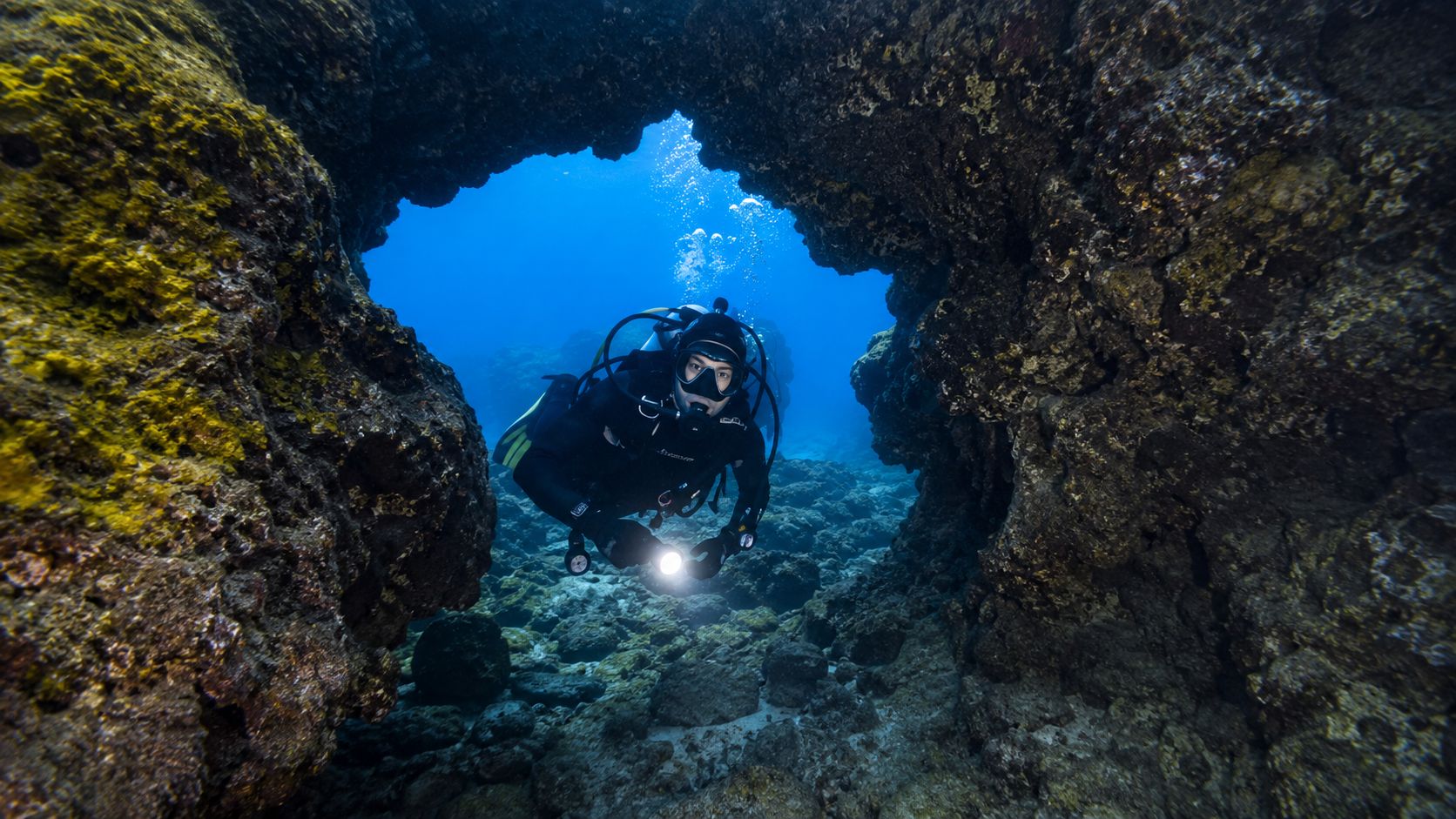
Kona's volcanic coastline gives advanced divers something rarer than another pretty reef. It gives you structure. Lava tubes, swim-throughs, arches, hard relief, and old flows that create dramatic topography from the surface down. That terrain is the reason experienced divers keep talking about Kona after the trip. They remember the shape of the dive.
Some lava features are simple swim-throughs. Others demand better buoyancy, sharper awareness, and the discipline to stay well inside your training and the site briefing. Treat overhead environments with respect. The attraction is real, but so is the risk if you chase a tunnel you are not qualified to enter.
The lava tube factor
The appeal here is not just marine life. It is geology you can dive. Few places in Hawaii give you this combination of warm water, strong visibility, and volcanic formations that feel raw and unfinished in the best possible way.
That is also why experienced local guidance matters. A good operator knows which sites offer dramatic structure without pushing divers beyond their limits, and which conditions turn an advanced site into a bad decision.
Who should pursue these dives
These dives suit certified, current divers who already have control in the water and do not need hand-holding. You should be comfortable with precise buoyancy, disciplined gas management, and following a plan instead of chasing the group or the scenery.
A strong fit usually includes divers who want:
- Longer-range access to sites outside the standard resort rotation
- Sharper navigation around lava formations, ledges, and complex reef structure
- More efficient repetitive diving with nitrox, especially if you already understand the benefits of diving nitrox in Kona
- Real challenge with a payoff, where the terrain itself is the highlight
What I recommend for experienced divers
If you have the training and you want Kona beyond the usual itinerary, book advanced long-range dive tours. That is the right move for divers who want more distance, more structure, and less beginner filtering in site selection.
Do not book an advanced charter to prove something. Book it because you are ready for it.
The payoff is worth it. Some of Kona's most memorable dives are not about pelagics or a big animal encounter. They are about gliding through ancient lava terrain that makes the whole coast feel alive, and seeing a side of Hawaii that casual divers never reach.
Diving with the Experts The Kona Honu Divers Experience
You fly to Hawaii for clear water, lava reefs, manta rays, and that rare feeling that a dive day delivers what the brochure promised. The operator you choose decides whether you get that trip or spend the week dealing with crowded boats, rushed briefings, and dives cut short for preventable reasons.
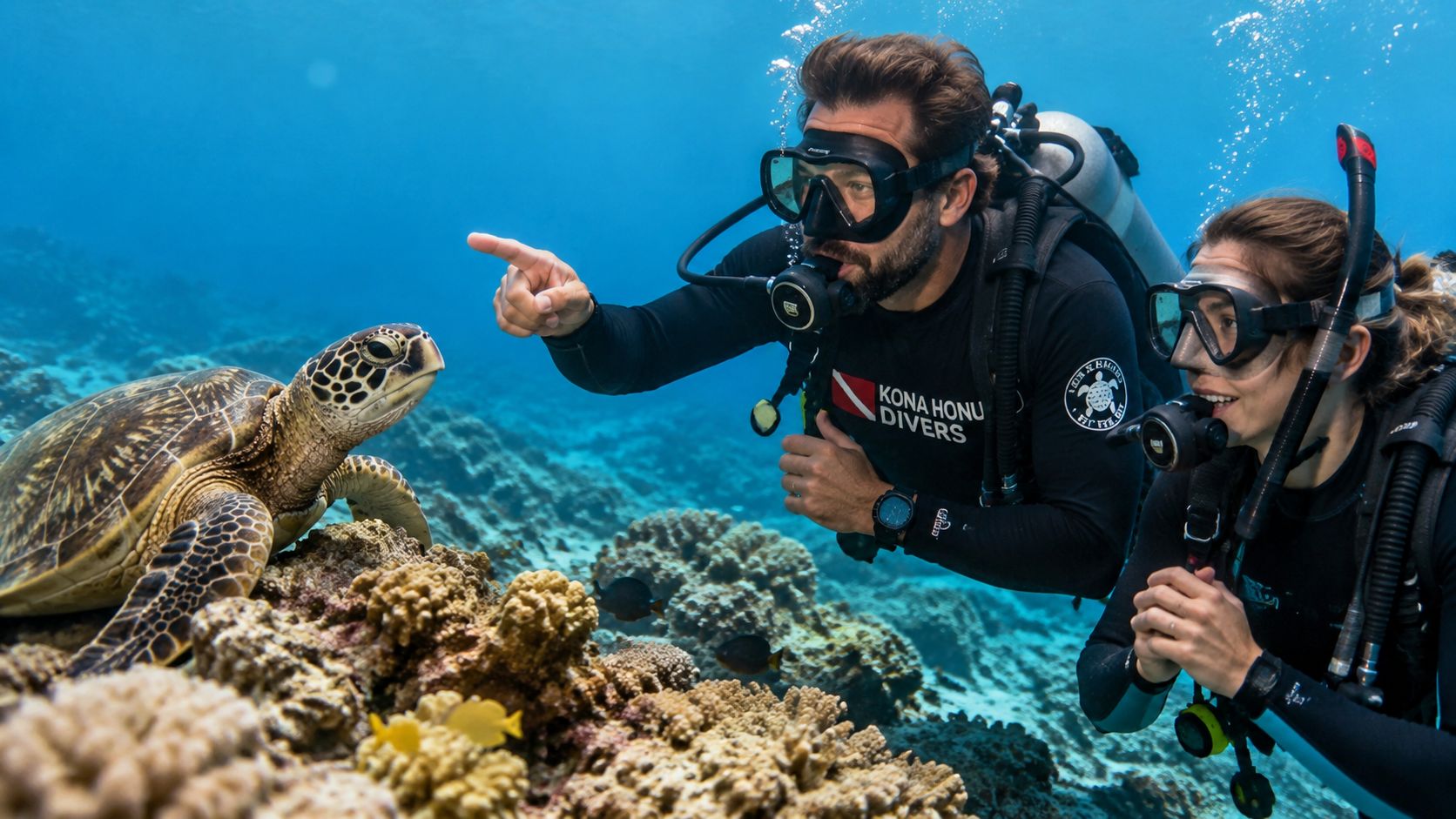
In Kona, the difference shows up fast. Good crews keep entries orderly, sort divers by ability, and run a boat that feels calm from check-in to pickup. Weak crews create stress before you even hit the water.
I pay close attention to policies that respect experienced divers while keeping the operation disciplined. One example is tank-use policy. Big Island Divers says guests can continue the dive until 700 psi or 60 minutes, whichever comes first, on its Kona local two-tank scuba dive page. That is the kind of operational detail worth comparing, because it affects your bottom time more than any marketing claim.
Kona Honu Divers runs the full spread serious Hawaii divers usually want in one trip: guided reef dives, manta night dives, blackwater charters, training, and rental gear. That matters if you want a real Kona itinerary instead of a random mix of tourist activities. You can build the trip around the dives that make this coast special, then fill the daylight hours with strong local reef diving instead of settling for whatever is easiest to book.
What I'd look for on any charter
A good charter should get these basics right every time:
- Boat comfort: Shade, stable entries, and gear setup that does not turn into a traffic jam
- Crew control: Clear briefings, deliberate roll calls, and exits that do not feel rushed
- Diver matching: Newer divers grouped appropriately, capable divers given a pace that suits them
- Safety standards: Calm enforcement of gas limits, buddy procedures, and site-specific rules
- Site judgment: Crew willing to change the plan when current, surge, or diver ability says no
That last point matters a lot in Kona. Conditions often look forgiving from the surface. Underwater is where surge, lava structure, and depth profiles start punishing sloppy decisions.
The best operators also understand that Kona is not just a day-dive destination. It is one of the few places where you can stack world-class daytime reef diving with two night experiences that belong on every serious diver's list. If your operator handles logistics, timing, and diver prep well, you leave with a trip built around manta and blackwater diving for a reason, not just because they sounded exotic online.