
Welcome to the incredible underwater world of Hawaii's Big Island, a true diver's paradise sculpted by ancient lava flows. If you're looking for the absolute best scuba diving on the Big Island of Hawaii, you’ve found it. The sheltered Kona coast is legendary for its crystal-clear, calm waters and some of the most unique marine encounters you can find anywhere on Earth.
Your Essential Guide to Big Island Scuba Diving
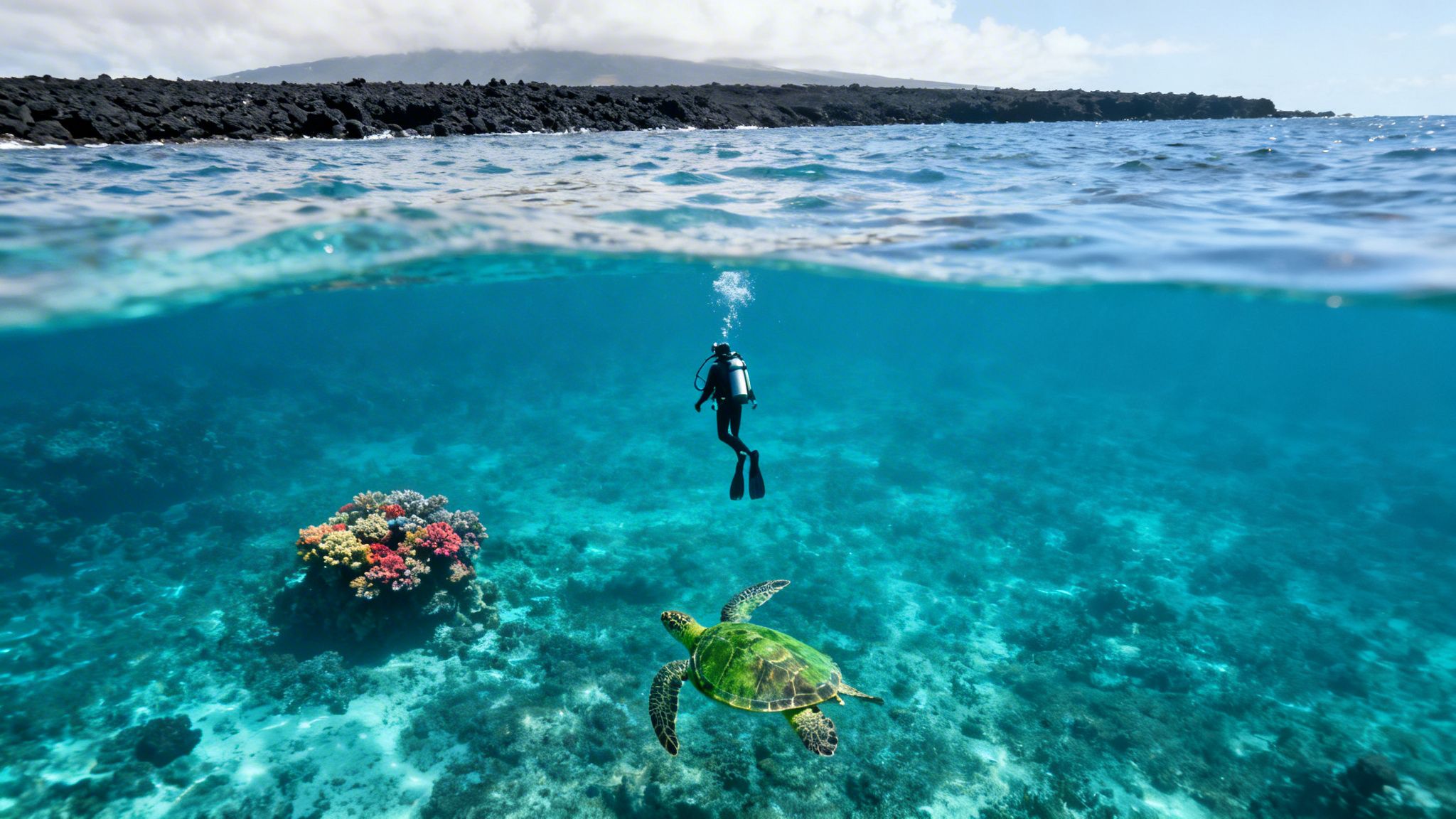
The Big Island isn't just another pretty spot in the tropics; it's a world-class destination for underwater adventure, defined by its stunning volcanic landscapes. Unlike the other Hawaiian islands, the Kona coast is shielded by massive volcanoes, creating a protected bubble of consistently calm and clear conditions. It’s perfect for divers of all stripes, from beginners to seasoned pros.
Visibility here often pushes past an incredible 100 feet, revealing a vibrant ecosystem that has taken root among lava tubes, dramatic arches, and coral-covered pinnacles. This guide is your complete map to exploring everything this underwater world has to offer. We'll show you exactly why Kona is the heart of Hawaiian diving and introduce you to the must-do experiences that put this island on every diver's bucket list.
What Makes Big Island Diving Unique
The island’s remote location in the middle of the Pacific has led to an explosion of unique biodiversity. In fact, about 25% of Hawaii’s marine life is endemic—meaning you literally can't find these creatures anywhere else on the planet. This makes every dive an opportunity for a new discovery.
But beyond the fascinating fish, the island is famous for two truly iconic night dives:
- Manta Ray Night Dive: This is a world-renowned spectacle where majestic manta rays swoop and dance in the glow of divers' lights to feed on plankton. It's a surreal, up-close ballet that’s more reliable here than anywhere else.
- Blackwater Dive: For the more adventurous, this is a journey into the deep open ocean at night. You’ll witness bizarre and beautiful bioluminescent creatures rising from the abyss—a truly specialized experience that feels like floating through outer space.
Before we dive deeper, here's a quick look at the top experiences waiting for you on the Big Island. This table should help you get a sense of what's available and start planning your underwater adventures.
Big Island Diving Highlights at a Glance
| Dive Experience | Best For | Typical Marine Life | Difficulty Level |
|---|---|---|---|
| Manta Ray Night Dive | Unforgettable encounters | Manta rays, eels, reef fish | All Levels |
| Blackwater Dive | Adventure seekers | Bioluminescent jellies, pelagic larvae | Advanced |
| Lava Tubes & Arches | Exploring unique topography | Eels, frogfish, nudibranchs | Intermediate |
| Reef Dives | Colorful coral & fish life | Turtles, dolphins, endemic fish | All Levels |
These highlights are just the beginning of what makes the Kona coast so special. Each site offers its own unique charm and set of critters to discover.
The Big Island of Hawaii really is a scuba diving paradise, and the sheltered Kona coast is where the magic happens. It’s here that Kona Honu Divers has established itself as the premier outfitter, with over 200 years of combined staff experience and thousands of five-star reviews to back it up. The island's dive sites consistently rank among the best in Hawaii, with many divers on platforms like TripAdvisor confirming it’s the top spot, followed by Maui. You can learn more about why the Big Island is a top dive destination.
Whether you're looking to get certified for the first time or you’re a seasoned diver searching for advanced adventures, Kona Honu Divers offers expertly guided diving tours on the Big Island that showcase the very best of this underwater realm.
Why Kona Is the Heart of Big Island Diving
When you hear divers rave about the scuba diving on the Big Island of Hawaii, nine times out of ten, they’re talking about Kona. It’s not just a popular spot; it’s the undisputed center of the island’s underwater universe. The reason for this boils down to one simple, powerful force: geology.
The Kona coast is perfectly nestled in the protective lee of two massive volcanoes, Mauna Loa and Hualalai. These giants act like a natural wall, blocking the powerful northeasterly trade winds that can churn up the seas elsewhere in the archipelago. This "rain shadow" effect is the secret ingredient to Kona's famously calm and clear waters.
While other parts of the island battle rough surf and swirling currents, Kona divers are treated to placid, almost lake-like conditions nearly year-round. This makes for an incredibly comfortable and safe experience, whether you're a brand-new diver taking your first breaths underwater or a seasoned pro exploring deep volcanic ledges.
Volcanic Origins Create an Underwater Playground
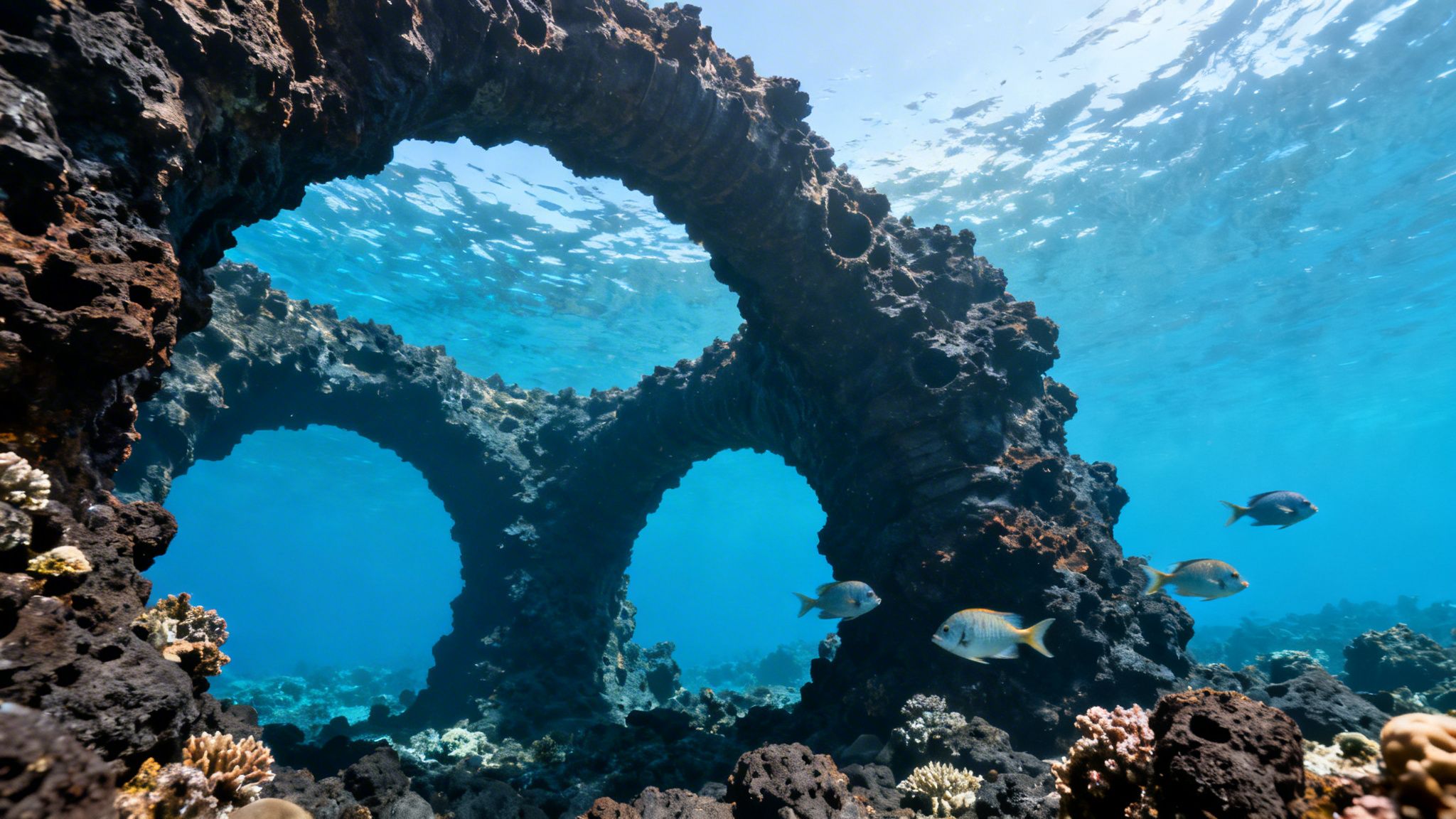
But calm water is only half of the equation. The very structure of Kona’s underwater world is forged from ancient lava flows, creating a dramatic and complex seascape you won't find anywhere else on Earth. Millennia of volcanic activity has sculpted a playground of incredible structures just waiting to be explored.
Picture yourself descending into a world of:
- Intricate Lava Tubes: These are natural tunnels and swim-throughs, formed when the outside of a lava flow cooled while molten rock still flowed through its core. You can glide through these hollow formations, which are often decorated with vibrant sponges and serve as hideouts for sleeping whitetip reef sharks.
- Dramatic Arches and Pinnacles: The volcanic landscape has created breathtaking underwater architecture. You'll find massive arches to swim under and towering pinnacles that jut up from the seafloor, acting as magnets for huge schools of fish.
- Steep Drop-Offs: The Big Island has no continental shelf, which means the seafloor plunges straight into the deep blue just a stone's throw from shore. These walls are prime territory for spotting larger pelagic species and make for some truly thrilling drift dives.
This one-of-a-kind topography provides the perfect habitat for an incredible diversity of marine life. The countless nooks and crannies of the lava rock offer shelter to everything from tiny, endemic fish to shy octopuses. On top of this solid foundation, healthy coral thrives, supporting the entire food chain and attracting beloved locals like Hawaiian green sea turtles and majestic eagle rays.
The Kona Honu Divers Advantage
Making the most of this incredible natural environment takes deep local knowledge and a genuine respect for the ocean. At Kona Honu Divers, we've built our reputation on guiding divers safely through this volcanic wonderland for years. Our experienced crew knows these sites like the back of their hands, making sure every single dive is as safe as it is breathtaking.
From relaxed reef tours to advanced adventures, the unique combination of calm seas and wild volcanic landscapes truly makes Kona the ultimate diving destination. Ready to see it for yourself? Check out the world-class diving tours we offer along this amazing coast.
Experiencing the Legendary Manta Ray and Blackwater Night Dives
When the sun finally dips below the horizon, the real magic of Kona's underwater world begins. The Big Island is world-famous for two completely different—but equally mind-blowing—night dives that you just can't find anywhere else on the planet.
First, you have the legendary Manta Ray Night Dive, an experience so graceful and surreal it’s on nearly every diver's bucket list. Then there's the Kona Blackwater Dive, a drift through the deep, open ocean that feels less like diving and more like floating through outer space. Both are truly unforgettable.
The World-Famous Manta Ray Night Dive
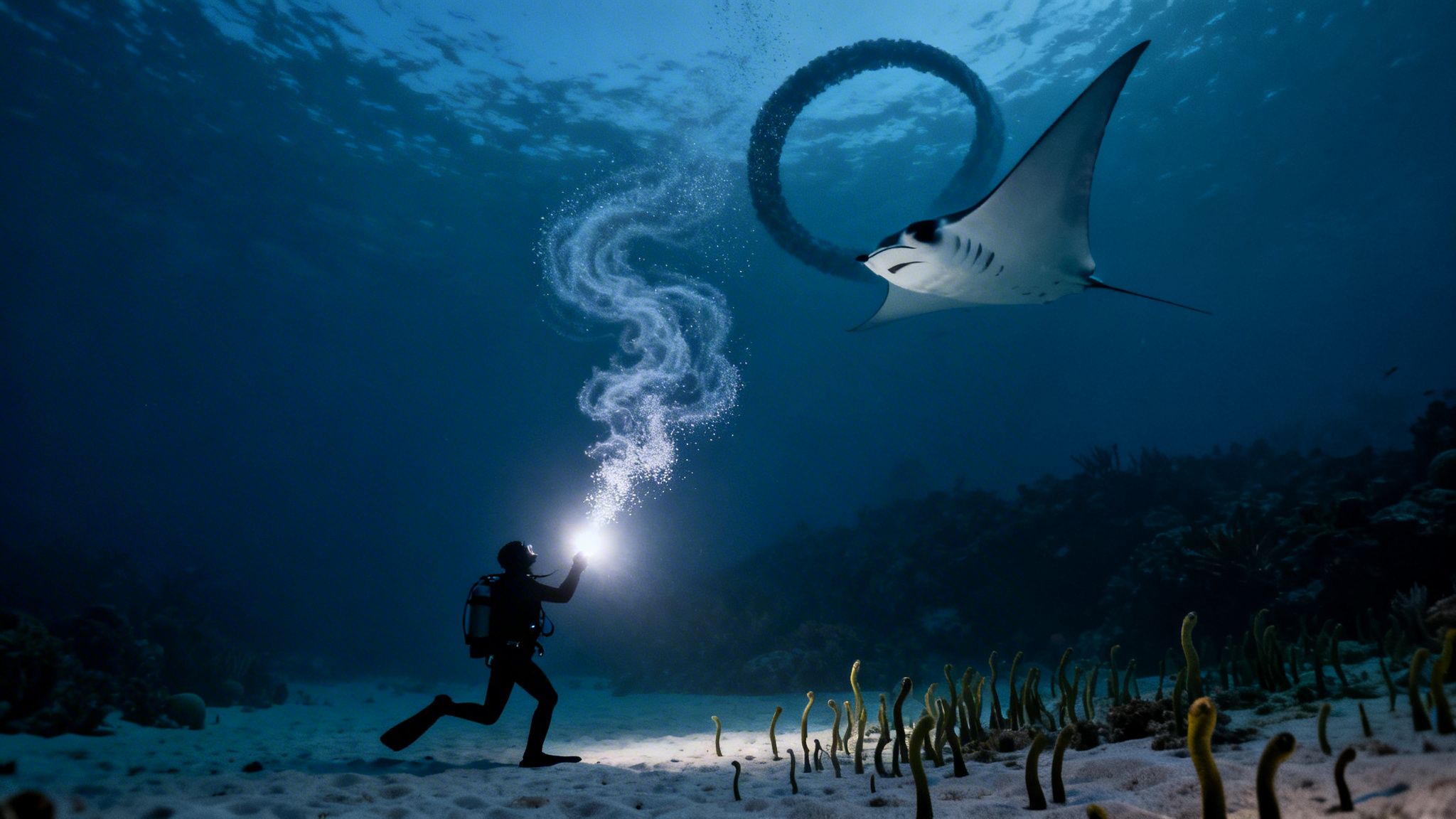
Picture this: you’re kneeling on a sandy patch of the ocean floor, about 35 feet down, as twilight fades to black. On cue, you and the other divers point your powerful lights straight up, creating beams that cut through the darkness. These lights immediately start to attract swarms of plankton, which look like shimmering clouds of glitter.
And that’s when the show really begins.
Out of the deep blue, the giant manta rays emerge. They glide into the light with an effortless grace that's absolutely mesmerizing. With wingspans stretching over 15 feet, these gentle giants perform an underwater ballet, barrel-rolling and swooping through the plankton with their huge mouths wide open. They're completely wild, yet they move around the lights and divers in a peaceful, almost choreographed dance.
It's one of those experiences you have to see to believe. While sightings are never guaranteed with wildlife, the Kona coast is incredibly reliable. Similar operators report seeing mantas on 85-90% of trips. On a good night, we’ve seen as many as 32 mantas, with most nights bringing a solid 7-20 of these magnificent creatures.
You can learn all the details in our complete guide to the Manta Ray Night Dive or book your spot on one of our manta ray dive tours.
Why Garden Eel Cove Is the Premier Location
While a couple of spots host this dive, Garden Eel Cove (also known as Manta Heaven) is hands-down the best place to be. It’s tucked into a protected cove, which usually means calmer water and a much more comfortable experience for everyone.
The setup at Garden Eel Cove is often called an "amphitheater." Divers gather in a wide, sandy area with a perfect, unobstructed view looking up. This gives the mantas plenty of space to maneuver and ensures everyone gets a front-row seat for the action.
As a bonus, the reefs surrounding Garden Eel Cove are healthy and vibrant, making the initial dusk dive you do before the main event a fantastic dive in its own right.
The Thrill of the Kona Blackwater Dive
If the manta dive is an elegant ballet, then the Kona Blackwater Dive is a trip to another planet. This is easily one of the most unique and advanced dives you can do here in Hawaii. We head miles offshore, far from any reef, and drift tethered to the boat over thousands of feet of inky black ocean.
The concept is simple but profound. You descend to about 50 feet, hang suspended in the water column, and let your dive light cut through the absolute darkness. What you’re doing is witnessing part of the largest animal migration on Earth—the nightly vertical migration, where deep-sea creatures travel toward the surface to feed.
What drifts by is nothing short of astounding:
- Bioluminescent Jellies: Strange, pulsating creatures that glow from within, looking like tiny alien spaceships.
- Larval Creatures: You’ll see the bizarre, translucent baby versions of eels, fish, and crabs that look nothing like their adult selves.
- Pelagic Wonders: Weird squids, otherworldly siphonophores, and other deep-ocean dwellers you’d never see near a reef.
This dive isn't about big animals; it’s about the tiny, the weird, and the utterly alien. It’s an adventure for divers who crave something truly different and want a peek into a world few ever get to see. Kona Honu Divers offers an expertly guided Blackwater Dive tour for those ready to take the plunge.
Finding Your Perfect Dive: Kona’s Top Sites for Every Experience Level
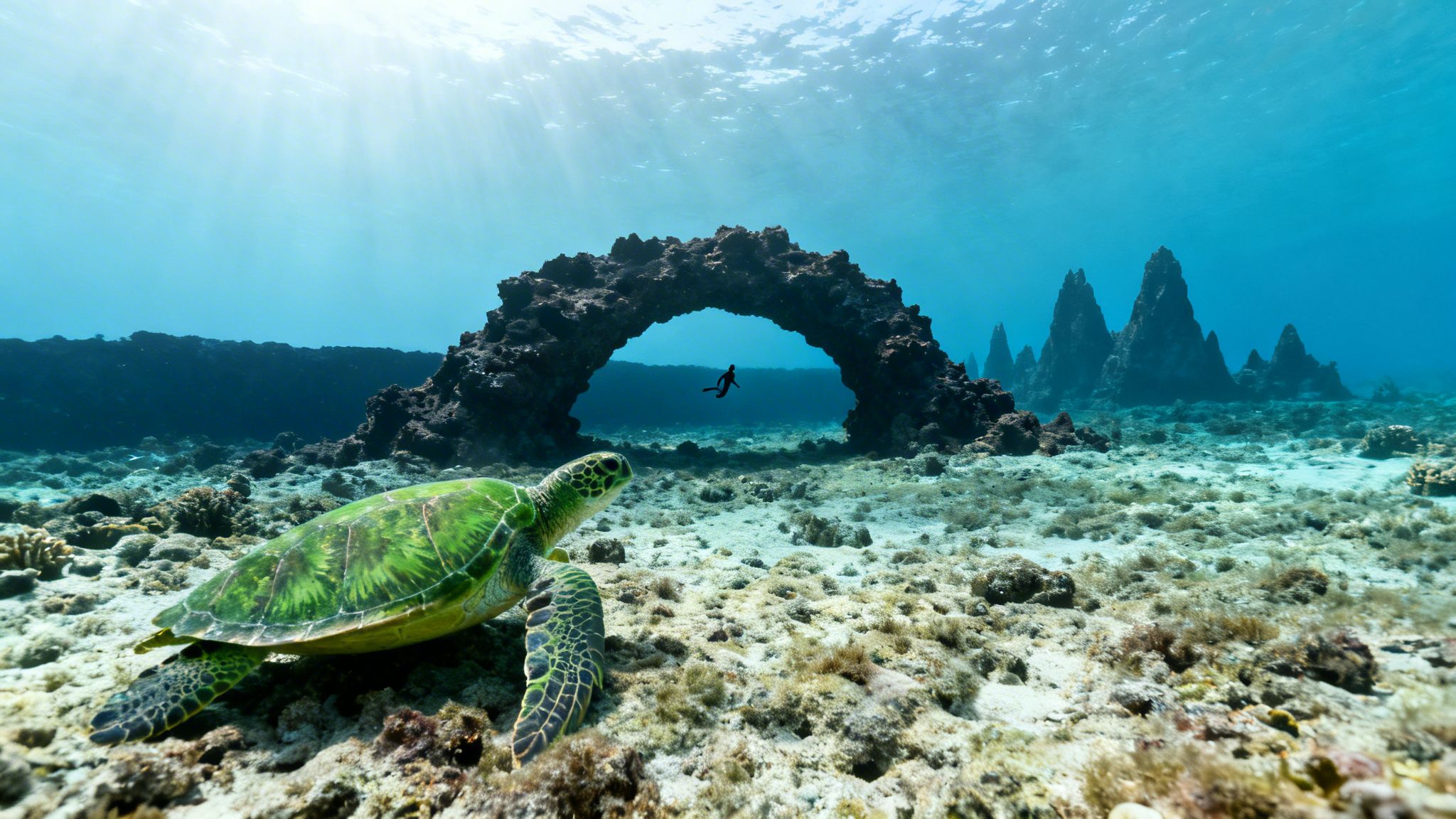
The Kona coast is a diver’s paradise, with a massive catalog of over 80 unique dive sites. Each spot offers a different peek into Hawaii's volcanic underwater world, from calm, sun-drenched reefs to dramatic deep-water canyons. With so much to choose from, the real trick is matching a site to your comfort and skill level.
Whether you're about to take your first breaths underwater or have logged hundreds of dives, the Big Island has a spot that feels like it was made just for you. The diversity is incredible, so a little planning makes all the difference. Let’s break down some of our favorite spots to help you find your way.
Dive Sites For Beginners
For anyone new to scuba diving on the Big Island of Hawaii, the goal is simple: find calm, shallow water teeming with life. Kona’s protected coastline has several spots that are perfect for building confidence while surrounded by unbelievable beauty.
- Pawai Bay: We often call this spot the "nursery." It's incredibly protected and shallow, making it absolutely perfect for your first few dives. The water is clear and calm, and you’ll be surrounded by colorful reef fish and curious turtles—a gentle, rewarding introduction to the underwater world.
- Turtle Pinnacle: No surprise here—this site is a magnet for Hawaiian green sea turtles, or honu. It’s home to a "cleaning station," a fascinating spot where turtles line up to let surgeonfish nibble algae right off their shells. The shallow depth and easy navigation make it a huge favorite for new divers.
Don't mistake "beginner-friendly" for "boring." These sites are vibrant ecosystems that even the most seasoned pros love to visit. Their easy access and guaranteed marine life encounters make them absolute must-dives.
Dive Sites For Intermediate Divers
Once you’ve got your buoyancy dialed in and you're ready for something more adventurous, Kona’s intermediate sites will blow your mind. These spots often feature more complex topography carved by ancient lava flows, giving you a real sense of exploration.
Golden Arches is one of the most iconic intermediate sites, famous for its incredible lava formations. You can swim through a series of natural arches and small lava tubes that feel like a submerged cathedral, especially with sunlight filtering through the volcanic rock. It's the perfect place to find eels, frogfish, and other critters hiding in the nooks and crannies.
Navigating these lava tubes requires good buoyancy control, making it a fantastic step-up for divers looking to sharpen their skills while exploring Kona's unique underwater architecture. You can see more incredible spots like this in our guide to Big Island scuba diving sites.
Kona Dive Site Selector
Trying to decide where to go? This quick comparison chart breaks down some of our most popular sites to help you find the perfect match for your skill level and what you hope to see.
| Dive Site | Experience Level | Key Features | Common Sightings |
|---|---|---|---|
| Pawai Bay | Beginner | Protected cove, shallow reef | Turtles, reef fish, eels |
| Turtle Pinnacle | Beginner | Famous turtle cleaning station | Dozens of green sea turtles |
| Golden Arches | Intermediate | Lava tubes, swim-through arches | Frogfish, eels, crustaceans |
| Au Au Canyon | Advanced | Deep canyon, dramatic drop-offs | Eagle rays, sharks, rare fish |
Each of these sites offers a unique adventure, showcasing just how diverse Kona's underwater landscape really is.
Advanced Diving Adventures
For experienced divers looking for a real challenge, the Big Island delivers. We’re talking deep pinnacles, sheer drop-offs, and the thrilling possibility of encountering large pelagic animals. These advanced sites are usually further offshore and demand a solid understanding of deep diving protocols.
A site like Au Au Canyon is a truly breathtaking experience. It’s a massive underwater canyon where the walls plunge into the deep blue. The visibility can be mind-blowing, revealing deep-water species you won't see on the reefs, like the rare Tinker's butterflyfish. The sheer scale of the place—and the chance to see sharks, eagle rays, or even pilot whales—makes for an adrenaline-pumping dive.
These dives are for those who are completely comfortable with deeper profiles and want to see what lies beyond the reef. If you’re ready to explore these more demanding and rewarding environments, joining a dedicated advanced dive tour with guides who know these sites inside and out is the way to go.
Planning Your Big Island Dive Adventure
An incredible dive trip doesn’t start when you gear up; it starts with a solid plan. Getting the logistics right beforehand is what turns a good vacation into a truly unforgettable underwater experience. This guide will walk you through everything you need to know to plan your scuba diving trip on the Big Island of Hawaii, from picking the best time to visit to what to toss in your dive bag.
With a little preparation, you’ll show up in Kona feeling confident, relaxed, and ready to explore some of the most spectacular dive sites in the world.
When Is the Best Time to Dive in Kona?
Honestly, thanks to the island's unique geography that shields the Kona coast, there’s no bad time to dive here. The weather is amazingly consistent, but there are a few subtle seasonal shifts that might help you decide when to book your flight.
- Summer (May – October): This is when the water gets warmest, usually hovering around a balmy 80°F (27°C). The ocean is often glassy-calm, which makes for super smooth boat rides and idyllic surface conditions.
- Winter (November – April): The water temp dips just a bit, down to about 75°F (24°C), but you get an amazing trade-off. This is humpback whale season! Hearing their songs echoing through the water while you're on a dive is a powerful, almost mystical experience you’ll never forget.
No matter when you come, the visibility is almost always fantastic, often stretching beyond 100 feet. The choice really comes down to whether you prefer warmer water or the chance to listen to a whale symphony.
Choosing Your Dive Crew
Your choice of dive operator is easily the most critical decision you'll make. A great crew does more than just keep you safe—they make the entire trip better. Look for a company with a stellar safety record, local guides who know the reefs inside and out, and a focus on small, personal groups.
Don't underestimate the little things, either. Creature comforts can make a huge difference. At Kona Honu Divers, we make sure our boats have hot freshwater showers to warm you up after a dive. We also offer complimentary nitrox for certified divers, which can help you enjoy longer bottom times and feel less tired. It's these thoughtful touches that can elevate your whole experience.
What to Pack for Your Trip
Packing smart means you'll be comfortable on the boat, in the water, and everywhere in between. While we have excellent rental gear, most divers like to bring a few of their own tried-and-true pieces.
Here’s a simple checklist to get you started:
- Your Core Gear: Don't leave home without your favorite mask, fins, snorkel, and dive computer. And, of course, your certification card!
- Exposure Protection: A 3mm wetsuit is perfect for most people during the warm summer months. If you're visiting in the winter or tend to get chilled easily, you'll be much happier in a 5mm wetsuit.
- Helpful Safety Items: A surface marker buoy (SMB) is always a smart thing to have in your pocket.
- Island Essentials: This is a big one—please only pack reef-safe sunscreen. It’s vital for protecting Hawaii's fragile coral. A reusable water bottle, a good pair of sunglasses, and a hat are also must-haves for your surface intervals.
Scuba diving is a booming global industry, and the Big Island is one of its crown jewels. The worldwide dive tourism market, currently valued at USD 11.2 billion, is expected to hit USD 18.5 billion by 2035, largely thanks to a growing passion for eco-conscious travel. You can dig into more data on the growth of the diving tourism market on FutureMarketInsights.com.
If you’re planning on diving for several days, take a look at our Hawaii scuba diving packages to see how you can bundle your adventures and make the most of your time here.
Your Big Island Diving Questions Answered
It’s totally normal to have a few questions swirling around as you nail down the details for your scuba diving trip on the Big Island of Hawaii. We get it. To make sure you feel completely ready, here are some of the things we're asked most often by divers getting ready to join us in Kona.
What’s the Best Time of Year to Dive the Big Island?
Honestly, there's no bad time to dive here. The Kona coast is wonderfully protected, giving us great conditions year-round.
If you love warm water, the summer months (May-October) are perfect, with the ocean hovering around a balmy 80°F (27°C) and the seas are typically flat as glass. The winter (November-April) is a touch cooler, maybe 75°F (24°C), but that's when the humpback whales are here. There's nothing quite like hearing their songs echo through the water on a dive.
No matter when you come, the visibility is usually fantastic, often clearing 100 feet or more.
Do I Need to Be Certified to Scuba Dive in Hawaii?
Yes, to join our regular guided boat dives, you'll need to have a scuba certification.
But if you’re not certified yet, don't worry—you can still explore the reef! We offer a Discover Scuba Diving program that’s designed for beginners. It’s an amazing way to try diving for the first time with one of our instructors right by your side in a safe, controlled setting.
What Kind of Marine Life Will I See?
The better question is, what won't you see? The Big Island's volcanic coastline is a magnet for marine life. You’re practically guaranteed to encounter Hawaiian green sea turtles, playful spinner dolphins, and tons of colorful reef fish that you can't find anywhere else on the planet.
Depending on where we go and a little bit of luck, you might also run into:
- Whitetip reef sharks resting on the seafloor
- Graceful eagle rays gliding by
- Clever octopuses and moray eels peeking from crevices
- Of course, the majestic manta rays on the world-famous night dive
- And for the truly adventurous, the strange and wonderful creatures of the deep on our Blackwater Dive
My Family Doesn’t Dive. What Can They Do?
Kona is fantastic for groups where some people dive and others don't. We love having snorkelers on our boats, and they get to see so much of the vibrant reef life from the surface while you're exploring below.
The manta ray experience is a perfect example—it's just as breathtaking as a snorkel tour, making it an unforgettable adventure for the entire family.
Beyond the ocean, there’s so much to do. The Kona coast is loaded with incredible beaches, fascinating historical sites, world-class coffee farm tours, and beautiful hiking trails. A Big Island diving tour can easily be the highlight of a vacation that has something for everyone.