
If you've ever dreamt of diving in a world sculpted by volcanoes, the Big Island of Hawaii is your place. It's a truly world-class experience, defined by dramatic underwater lava flows and water so clear and calm it feels surreal. The Kona coast, in particular, is a global magnet for divers, and for good reason—it’s home to incredible biodiversity and iconic encounters like the world-famous manta ray night dive.
This guide is everything you need to plan an unforgettable underwater adventure here on the island.
Your Essential Guide to Big Island Diving
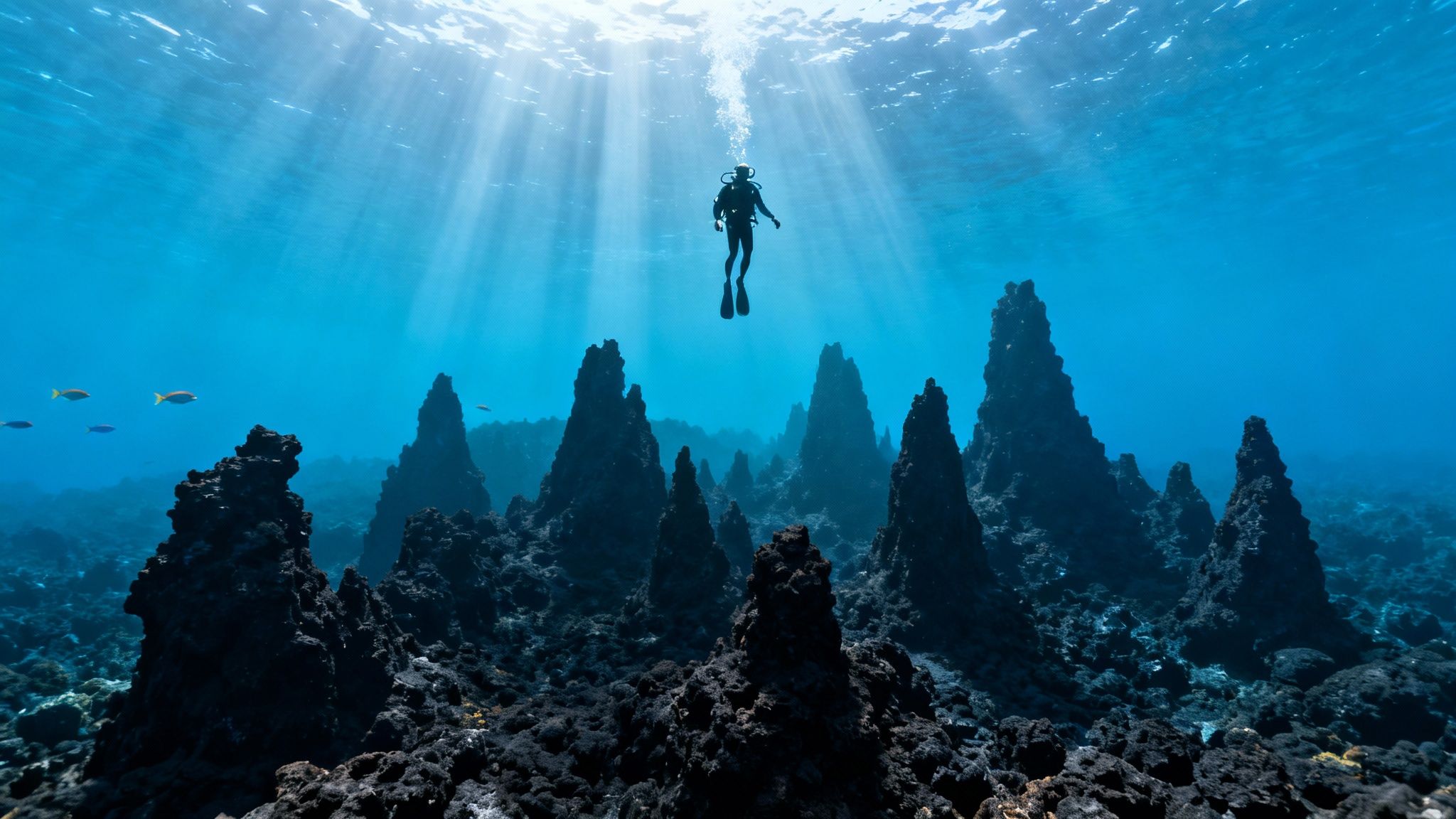
Welcome to an underwater paradise unlike any other. The Big Island isn’t just another pretty spot with palm trees; it's where raw geology and vibrant marine biology collide in the most spectacular way. The island’s massive volcanoes have sculpted a submerged world of ancient lava tubes, intricate arches, and towering pinnacles, all absolutely teeming with life.
This unique topography creates the perfect home for a mind-boggling array of sea creatures. One dive might have you exploring vibrant coral gardens packed with tropical fish, while the next takes you into the deep blue for a chance encounter with majestic pelagics. Scuba diving the Big Island of Hawaii is an exploration of a living, breathing ecosystem.
What Makes This Place So Special?
The secret to Kona’s magic lies in its geography. Tucked away on the island's leeward side, the coast is shielded from the strong trade winds, which means the sea is exceptionally calm almost year-round. This natural protection makes it an incredible spot for everyone, from first-timers to seasoned pros looking for their next big adventure. And the visibility? It's often spectacular, frequently pushing past 100 feet.
Throughout this guide, we’ll get into all the details you need to know, including:
- The can't-miss adventures like the Manta Ray Night Dive.
- The mysterious and thrilling Kona Blackwater Dives.
- How to safely navigate the island's unique lava tube formations.
- What to look for when choosing the right dive operator for a safe and memorable trip.
We'll also explain why going with an experienced local operator like Kona Honu Divers can make or break your trip. Their deep, firsthand knowledge of the dive sites, unwavering commitment to safety, and genuine passion for the ocean ensure every dive is exceptional. It's no accident they are consistently ranked among the very best on the island.
Think of this as your starting point for a deep dive into one of the planet's most incredible underwater destinations. Get ready to plan your perfect escape and discover why scuba diving the Kona coast is an adventure you'll be talking about for years to come.
Why Kona’s Coast Is a Diver’s Dream
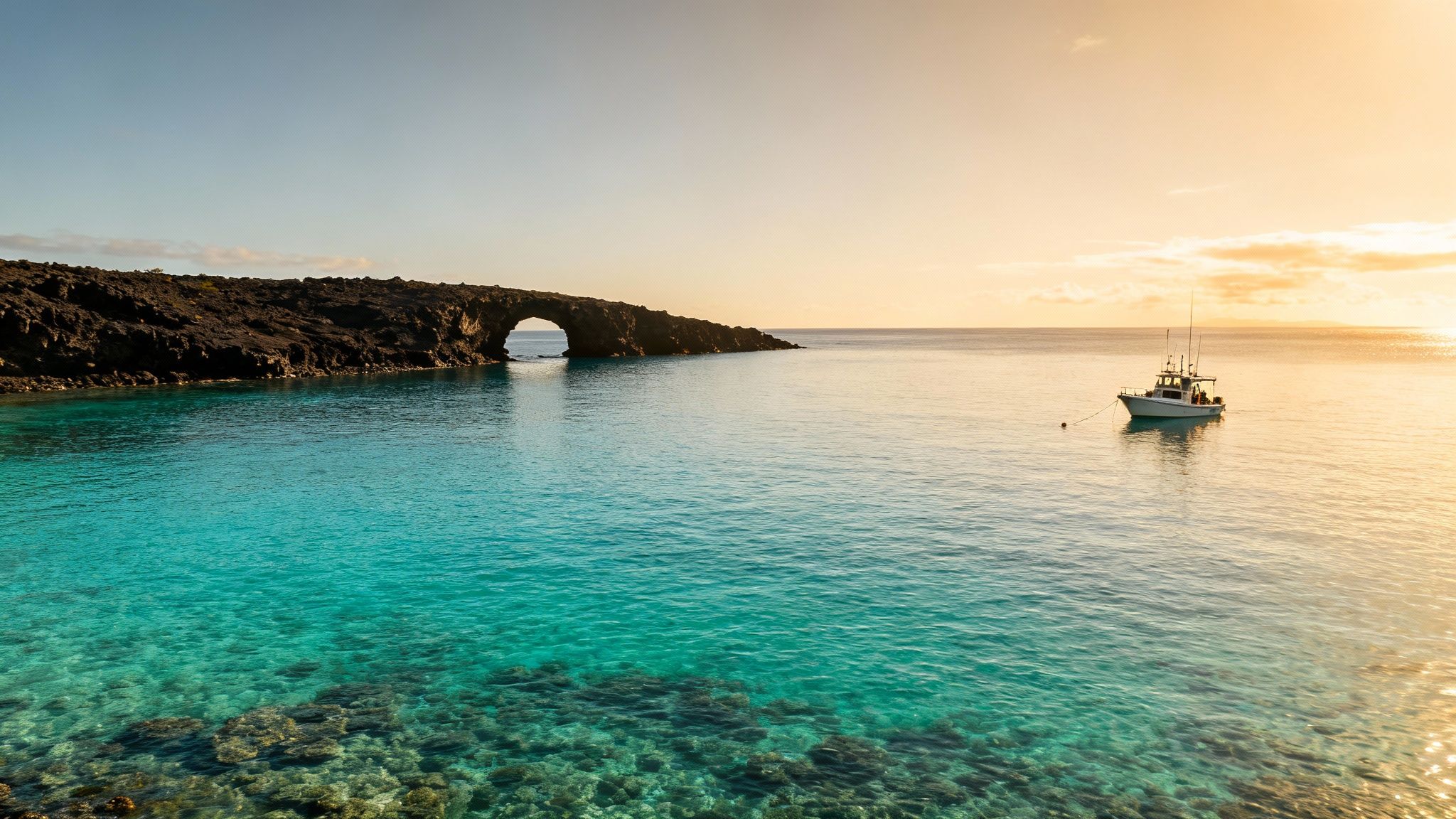
The Big Island isn't just another spot on the map for diving—it feels like it was designed by nature specifically for it. The secret is the sheer scale of its volcanoes. The colossal mountains of Mauna Kea and Mauna Loa act as a massive natural wall, shielding the Kona coast from the powerful Pacific trade winds that buffet the other islands.
This unique geography creates a leeward coast, a protected pocket where the ocean stays exceptionally calm and clear. It’s the reason why scuba diving on the Big Island is so consistently incredible. While divers on other islands might have to cancel plans due to wind and rough seas, Kona almost always delivers.
This natural shield is the foundation for everything that makes Kona’s underwater world so special, allowing delicate coral reefs to flourish and creating a safe haven for an incredible amount of marine life.
The Underwater Volcanic Canvas
The same volcanoes that protect the coast also sculpted the dramatic world beneath the waves. Diving in Kona is like swimming through a gallery of geological art. Thousands of years of lava flows have created a complex and breathtaking underwater landscape you just won't find anywhere else.
Instead of flat reefs, you’ll be navigating ancient lava tubes, gliding under massive archways, and exploring dramatic pinnacles that shoot up from the seafloor. This rugged terrain means every single dive site offers a completely new structure and a different kind of adventure.
This dynamic landscape, a direct result of the island's volcanic past, is what sets Kona apart. It’s not just about what you see, but the incredible environment you get to explore.
This one-of-a-kind underwater architecture creates the perfect backdrop for the astonishing biodiversity that calls Kona home. You can learn more about what makes diving in Kona so unique in our detailed guide.
A Sanctuary of Marine Life
When you combine calm, protected waters with complex volcanic habitats, you get an explosion of life. It’s no surprise the Big Island is a scuba diving paradise with over 1,100 species of fish—more than any other Hawaiian island.
This includes 129 endemic species that you can't find anywhere else on the planet. From the iconic Hawaiian green sea turtles (honu) resting on lava shelves to dense schools of colorful reef fish, the sheer amount of life here is stunning.
Kona Coast Diving Conditions vs Other Hawaiian Islands
If you’ve ever wondered why seasoned divers return to Kona again and again, it often comes down to the reliability of the conditions. While all of Hawaii offers beautiful diving, the Kona coast provides a uniquely calm and accessible experience year-round. Other islands, particularly on their windward sides or during certain seasons, can be a bit of a gamble.
This table breaks down the key differences:
| Feature | Kona Coast (Big Island) | Maui (South/West Shores) | Oahu (South/West Shores) |
|---|---|---|---|
| Wind Exposure | Protected (Leeward) | Partially exposed; can get windy | Exposed, especially in the afternoon |
| Sea Conditions | Consistently Calm | Can be calm but prone to chop | Often choppy with stronger currents |
| Visibility | Excellent (often 100+ ft) | Good, but can be variable | Good, but often reduced by swell/wind |
| Dive Season | Year-Round | Best in summer; winter has large swells | Best in summer; winter swells can be huge |
Ultimately, this perfect combination of geological protection, dramatic volcanic topography, and rich biodiversity is what makes the Kona coast a true diver’s dream. It’s a world-class destination that delivers unforgettable experiences for every diver, every single day of the year.
The Best Big Island Dive Sites for Every Skill Level
The Kona coast is basically a treasure map of dive sites. There's a perfect spot for everyone, whether you're taking your very first breath underwater or you're a seasoned pro looking for a new thrill. The sheer variety means you could dive for weeks and never see the same thing twice.
For anyone just starting their scuba journey on the Big Island, the key is finding a spot that’s calm, clear, and full of life. It’s all about building confidence while being completely blown away by what you see.
Of course, a great crew makes all the difference. They can turn a good dive into an unforgettable one. With their local knowledge, the team at Kona Honu Divers knows exactly which sites are firing on any given day. They’ll get you to the best possible wildlife encounters while making sure the whole experience is safe and top-notch.
Calm Waters for Beginner Divers
New divers need comfortable, stress-free environments. That way, you can focus on getting your buoyancy just right and soaking in the incredible scenery. Kona is fantastic at providing these gentle introductions to the underwater world.
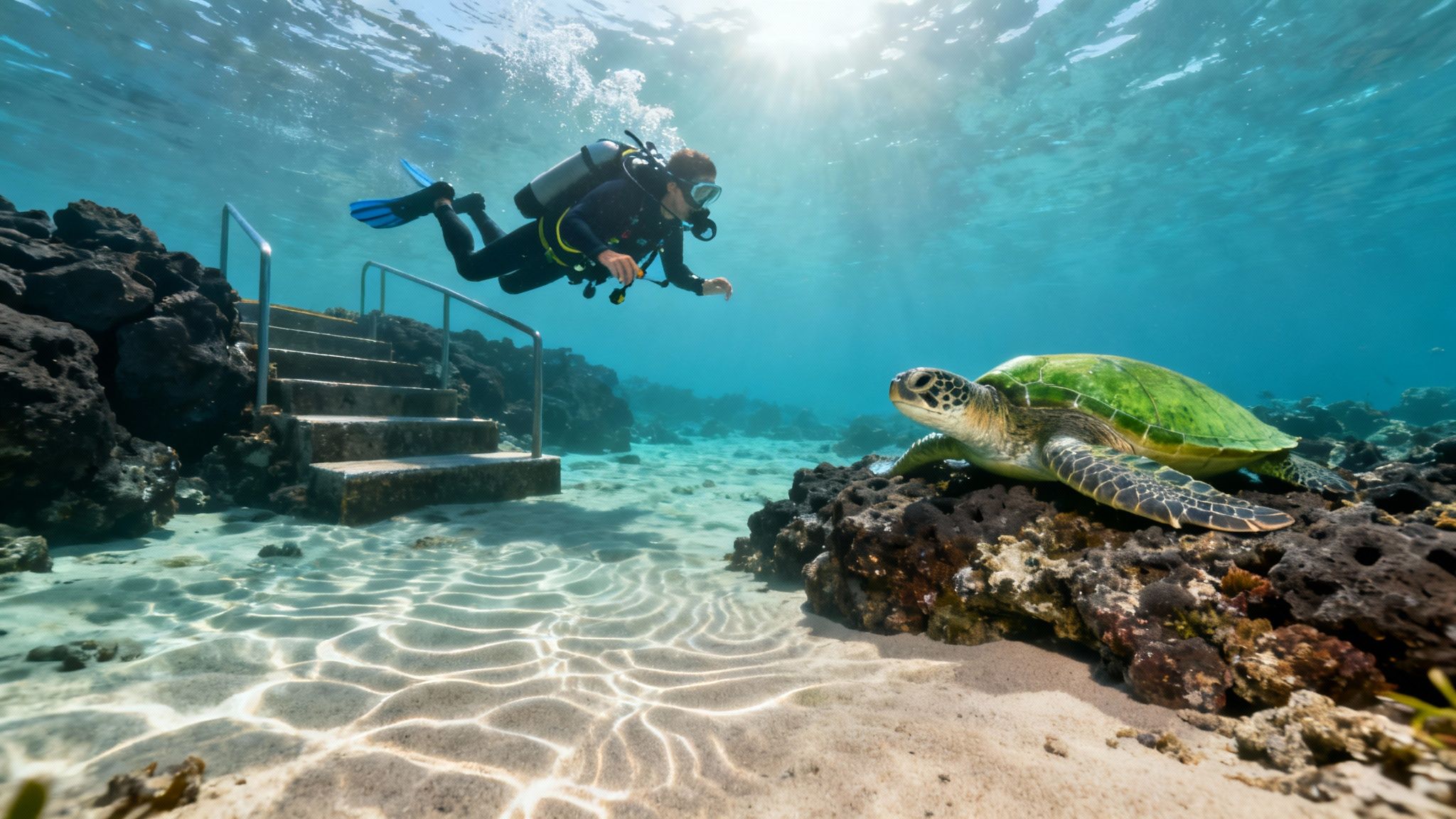
One of the most beloved spots is Pu'uhonua O Honaunau, which locals call "Two Step" because of its easy lava rock entry. This protected bay is a sanctuary for Hawaiian green sea turtles (honu), and you can almost always find them resting on the bottom or cruising gracefully by. With average depths of 20-40 feet, it’s a vibrant and accessible site perfect for building your skills.
Other fantastic beginner-friendly sites include:
- Kailua Pier: You might not expect it, but this shallow site is surprisingly rich in macro life. It’s perfect for a relaxed dive where you can spot critters like frogfish, nudibranchs, and schools of reef fish.
- Pawai Bay: This spot is a collection of shallow reefs and small caverns, well-protected from the open ocean. Keep an eye out—it's a favorite hangout for pods of spinner dolphins.
Thrilling Topography for Intermediate Divers
Once you have a few dives under your belt and you're feeling comfortable in the water, a whole new world of complex topography opens up. The intermediate sites along the Kona coast challenge divers with more intricate navigation and slightly deeper profiles, but the reward is seeing some truly spectacular geological formations.
Golden Arches is a perfect example. The site is named for a stunning lava archway you can swim through, covered in brilliant yellow and orange sponges. The reef around it is a bustling city for eels, octopus, and huge schools of butterflyfish.
Another classic is Turtle Pinnacle, an offshore cleaning station where turtles gather to get spruced up by reef fish. It offers incredible photo opportunities against a dramatic, deep-blue backdrop. These sites typically range from 40-70 feet and really showcase the volcanic architecture that makes diving the Big Island so unique. For a deeper look, check out our guide to the top Big Island scuba diving sites.
Advanced Adventures in the Deep Blue
For divers with advanced certifications and plenty of experience, Kona serves up dives that will get your heart racing. These sites often involve greater depths, potential currents, and overhead environments that demand excellent buoyancy control and sharp awareness.
Au Au Crater is an absolute must-do. This collapsed lava dome creates a massive underwater amphitheater with sheer walls and deep swim-throughs. It’s your best chance to spot larger pelagic species like sharks and rays patrolling the edges. Exploring its ancient lava tubes feels like stepping into another world.
These deeper dives unlock a completely different ecosystem and push your skills in the best way possible. Kona Honu Divers runs specialized advanced dive tours that target these thrilling, less-visited locations. You’ll be diving with others at a similar skill level under the guidance of highly experienced divemasters, ensuring you can safely appreciate the raw power and beauty of Kona's deep volcanic structures.
Unforgettable Manta Ray and Blackwater Night Dives
When the sun goes down along the Kona coast, the real magic begins. The underwater world completely transforms, and familiar reefs become mysterious landscapes teeming with creatures you'd never see during the day. This is where the Big Island truly shines, offering two of the most incredible night dives you’ll ever experience.
First up is the legendary Manta Ray Night Dive, which is less of a dive and more of an underwater ballet. Then there’s the Kona Blackwater Dive—a surreal journey into the deep open ocean that feels like floating through outer space. These aren't just dives; they are the adventures that become stories you'll tell for the rest of your life.
The World-Famous Manta Ray Night Dive
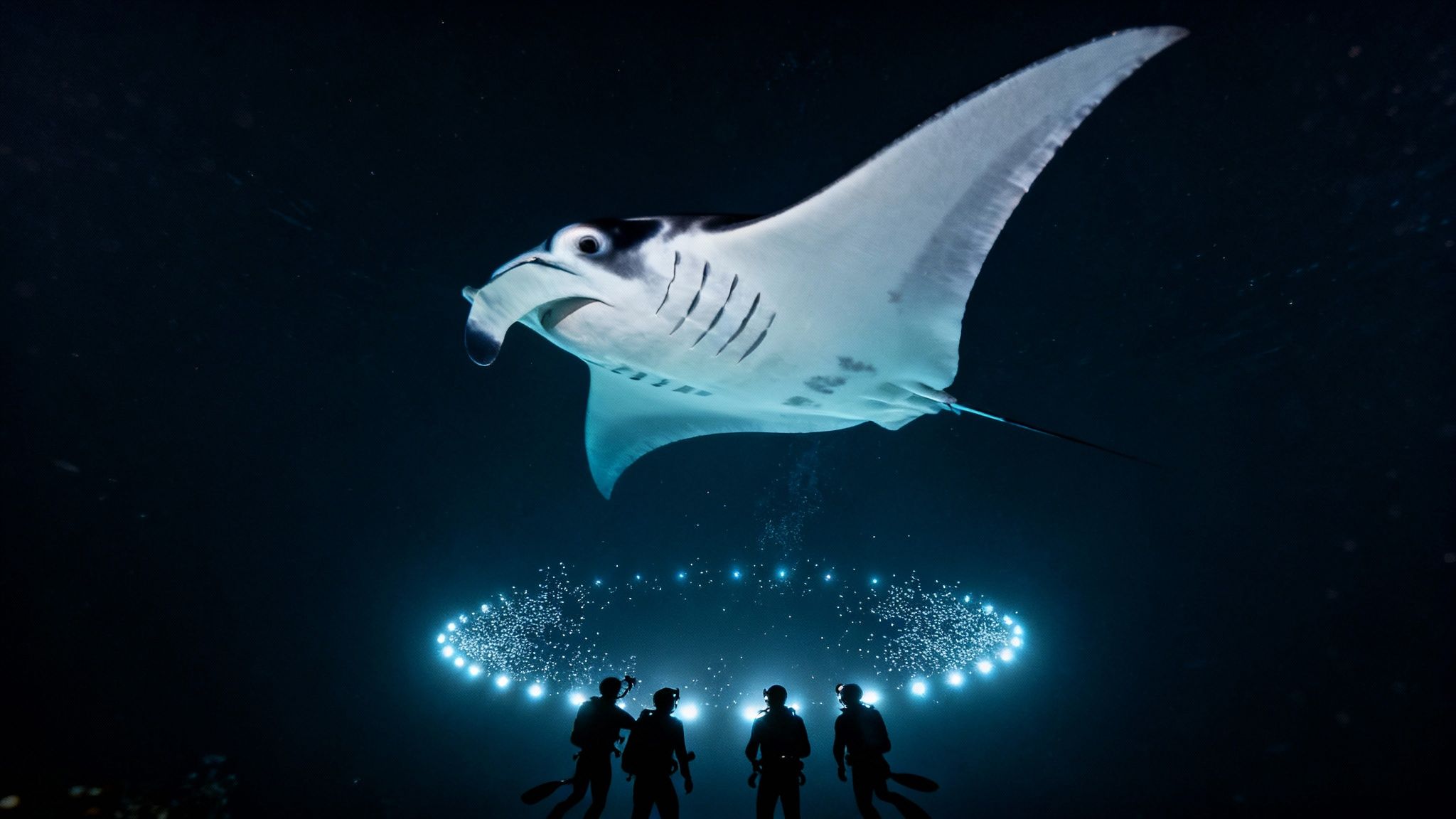
Picture this: you’re kneeling on a sandy patch on the ocean floor, surrounded by a circle of powerful lights pointing straight up. These lights act as a giant beacon for plankton, which swarm together in a shimmering cloud. And then, out of the inky blackness, they arrive.
Giant manta rays, some with wingspans over 12 feet, glide in from the darkness. They swoop, somersault, and barrel-roll right over your head, their huge mouths open to scoop up the plankton. It’s a graceful, silent, and absolutely mesmerizing dance that happens just inches away from you. There's nothing quite like the humbling experience of watching these gentle giants perform on a manta ray dive tour.
Why Garden Eel Cove Is the Premier Manta Location
While you can see mantas at a few spots, the show at Garden Eel Cove (also known as Manta Heaven) is in a league of its own. It's set in a naturally protected bay, which means calmer conditions, a healthier reef, and a better viewing area. This creates the perfect, most reliable feeding ground for the mantas.
Simply put, the setup here is superior, giving divers a front-row seat to the best performance in town.
Location is everything for this dive. The sheltered geography and vibrant ecosystem at Garden Eel Cove make it the most dependable and breathtaking stage for this incredible underwater show.
The success rate for manta sightings here is astounding, hitting 90% on most nights. It’s not uncommon for divers to see an average of 11 rays per outing. These reefs have been protected since the 1990s and are now home to over 200 resident mantas, which is why the encounters are so consistent.
Journey into the Void on a Kona Blackwater Dive
If you're an experienced diver looking for something that will completely blow your mind, the Kona Blackwater Dive is it. This is nothing like a reef dive. We take you miles offshore where the ocean floor is thousands of feet below, tether you to the boat for safety, and you descend to about 50 feet to just drift in the dark.
Here, you get to witness one of the largest migrations on Earth. Every single night, countless bizarre and fascinating creatures rise from the abyss to feed near the surface. You'll see things that look like they're straight out of a sci-fi film:
- Larval fish so transparent you can see right through them.
- Bioluminescent jellies pulsing with their own eerie, internal light.
- Peculiar squids and octopuses that are rarely ever seen by humans.
It's a dive that plays with your senses, offering a rare and precious window into the deep, mysterious open ocean. Learn more about the strange and beautiful creatures you might encounter on a Kona Blackwater Dive.
Planning Your Big Island Dive Trip
Alright, let's get into the nitty-gritty of planning your dive trip to the Big Island. A little forethought here goes a long way. It’s the difference between a good trip and an unforgettable one, making sure you line up the right season, the perfect dives for your skill level, and spend less time planning and more time blowing bubbles.
The magic of Kona is that there’s really no "off-season" for diving. The coast is tucked in the shadow of massive volcanoes, which means the water is almost always calm and diveable. That said, the time of year you choose can add a slightly different flavor to your underwater experience.
Choosing the Best Time to Dive
While you can’t go wrong any month of the year for scuba diving on the Big Island of Hawaii, here’s a breakdown of what to expect seasonally.
- Summer (June – September): This is when the water is at its toastiest, usually hovering between 77-80°F (25-27°C). Conditions are typically glass-calm, and visibility can be absolutely spectacular, often pushing well past 100 feet. If you’re an underwater photographer, this is your sweet spot.
- Winter (December – March): The water might dip a few degrees to around 75°F (24°C), but you get an incredible trade-off: humpback whales. This is their breeding season, and hearing their songs reverberate through the water while you’re on a dive is a surreal, once-in-a-lifetime experience. You don't just see the dive; you feel it.
Don't worry about missing out on the big attractions, though. The world-famous manta ray night dive and other key marine life encounters are consistently amazing all year round.
Boat Diving vs. Shore Diving
You might see a few shore diving spots on the map, but here's the honest truth from people who dive here every day: the real treasures of the Kona coast are offshore. To get to the most pristine reefs, dramatic lava formations, and vibrant ecosystems, you absolutely need a boat.
Hopping on a boat with a seasoned crew is how you unlock Kona's premier dive sites. It's the only way to get to those untouched, far-flung spots that make for a truly extraordinary day of diving.
This is where a top-notch operator like Kona Honu Divers really shines. The crew's local knowledge is priceless. They know the reefs like the back of their hand—where the turtles get their shells cleaned, which little caves the octopuses are hiding in, and how to read the day's conditions to give you the best possible dive, every single time.
Gear, Nitrox, and Getting Certified
Dragging your own gear across the Pacific can be a real pain. A much easier route is to rent high-quality, well-maintained equipment right here. Kona Honu Divers has everything you need, so you can just show up and dive.
Here's a huge perk for certified divers: they offer Nitrox for free. This means more bottom time and shorter surface intervals, which is just another way of saying you get more bang for your buck and more time exploring underwater.
Whether you've never breathed through a regulator or you're looking to add another cert card to your wallet, there’s a path for you.
- Discover Scuba Diving: Curious but not certified? This is your chance. It’s a fully supervised, safe introduction to the underwater world.
- Open Water Certification: Why get certified in a cold, murky quarry when you can do it in the warm, clear waters of Hawaii?
- Advanced Courses: Already certified? Take your skills to the next level. You can dial in your navigation or tackle deeper sites on an advanced dive tour while seeing some of Kona's best sites.
Safety and Conservation Above All
At the end of the day, a great trip is a safe and responsible one. Always dive within your training and comfort levels, and pay close attention to the dive briefings—they’re for your safety.
Just as important is our shared responsibility to protect this incredible environment. The rule is simple: look, but don’t touch. Coral is a living, fragile animal, and touching it or any other marine life can cause irreparable harm. By being a mindful diver, you help protect these reefs so they'll be just as beautiful for the next generation of divers to enjoy.
Got Questions? We’ve Got Answers.
Let's tackle some of the most common questions we hear about diving on the Big Island. We'll cut straight to the chase with practical, clear answers to help you plan the perfect underwater adventure.
Do I Need to Be an Advanced Diver for Big Island Scuba?
Not at all! One of the best things about the Kona coast is the sheer variety of dive sites that cater to every experience level. Many of the most stunning reefs are tucked away in shallow, calm, and protected bays—absolutely perfect for new divers or even someone trying a Discover Scuba Diving experience for the first time.
Any top-notch dive shop, like Kona Honu Divers, is skilled at picking spots that match their guests' comfort and certification levels. It's all about making sure everyone has a safe and incredible time. And if you're feeling a bit rusty, they offer refresher courses to get you back in the groove.
For the more seasoned divers, don't worry—there's plenty to keep you busy. We have deep pinnacles, intricate lava tubes, and spots with stronger currents to explore on specialized advanced dive tours. That’s the magic of scuba diving the Big Island of Hawaii—there’s truly something for everyone.
What’s the Best Time of Year to Dive in Kona?
Here’s the great news: diving in Kona is phenomenal all year round. We're situated on the leeward (protected) side of the island, which shields us from the big swells and trade winds, giving us consistently calm and clear conditions.
That said, there are some subtle differences between the seasons:
- Summer (June – September): This is when you'll find the warmest water, typically hovering around 77-80°F (25-27°C), and the flattest seas. Visibility is often off the charts, easily exceeding 100 feet.
- Winter (December – March): The water cools down a bit, to about 75°F (24°C), but it comes with an unforgettable perk. This is peak humpback whale season, and hearing their songs echo through the water while you dive is pure magic.
And as for the manta rays? They show up reliably all year long, so you really can't go wrong no matter when you book your trip.
Is the Manta Ray Night Dive Really Safe?
Yes, absolutely—when you go with a professional, safety-conscious operator like Kona Honu Divers. They're sticklers for safety protocols and always conduct a very detailed briefing before anyone even thinks about getting in the water.
The dive sites themselves, like the world-famous Garden Eel Cove, are pretty shallow (around 35-40 feet) and the guides know them like the back of their hand. Divers are set up in a stationary spot on the sandy bottom, gathered around a central light source. This setup minimizes movement and keeps everything predictable and under control.
Your divemasters are right there in the water with you the entire time, keeping a close eye on everything to ensure you're safe and comfortable. Their whole job is to let you relax and just soak in the incredible spectacle of the mantas dancing overhead. Thousands of five-star reviews speak to their commitment to a safe and unforgettable night.
My Partner/Family Doesn't Dive. Can I Still Go?
Of course! Kona is a fantastic spot for groups with different interests. While you're out on a two-tank diving tour, your non-diving family and friends will have no shortage of things to do.
They could be snorkeling the famous Kahalu'u Beach Park, touring a local coffee farm, or exploring the rich history at Pu'uhonua O Honaunau National Historical Park.
Better yet, bring them along! Many dive boats, including ours at Kona Honu Divers, welcome snorkelers. This is an especially great option for the Manta Ray Night Dive. They can float on the surface watching the show from above while you enjoy it from below. It's an amazing way for everyone to share in the experience together.