
Scuba diving on the Big Island isn't just an activity; it's a world-class experience. Imagine dropping into the crystal-clear waters of the Kona coast, surrounded by vibrant coral reefs, dramatic volcanic landscapes, and some of the most iconic marine life on the planet. It's an unforgettable adventure for divers of every skill level, and for good reason—the island's unique geology and thriving ecosystems make it a premier destination.
Why Choose the Big Island for Your Next Dive Adventure
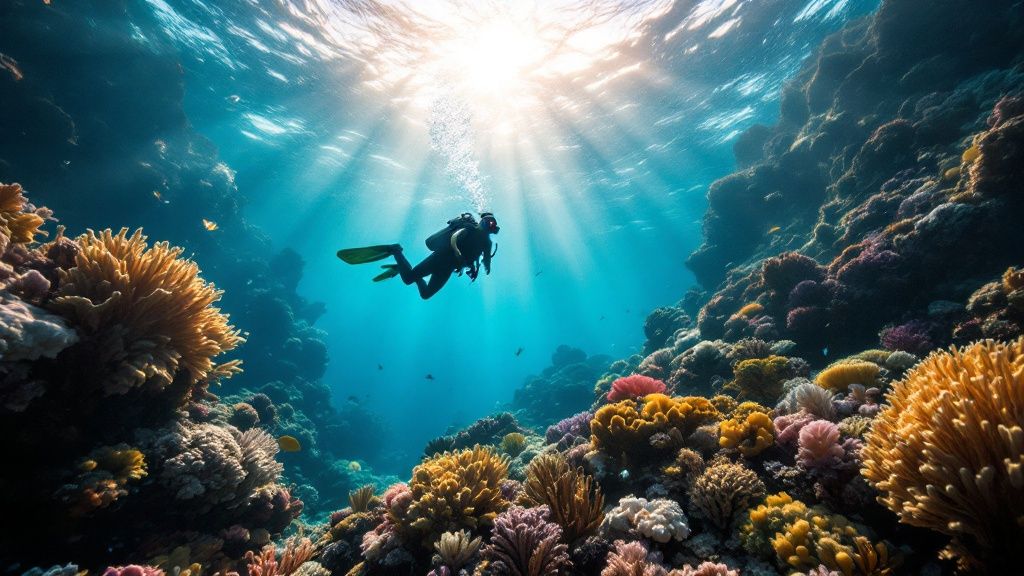
Let's get one thing straight: the Big Island isn't just another tropical dive spot. This is an underwater frontier, actively shaped by volcanoes and powerful ocean currents. That combination creates a dive environment you won't find anywhere else. Here, ancient lava tubes become otherworldly swim-throughs, and newly formed volcanic rock creates fresh habitats for rare species.
What really makes scuba diving on the Big Island of Hawaii so special is the blend of incredible biodiversity and easy accessibility. The sheltered Kona coast is a gift to divers, delivering consistently calm conditions and phenomenal visibility that often pushes past 100 feet. It’s the perfect playground for seasoned pros and anyone just starting their underwater journey.
To give you a quick snapshot, here are the highlights of what makes diving here so appealing.
Big Island Diving At a Glance
| Feature | Details |
|---|---|
| Water Temperature | A comfortable 75-80°F (24-27°C) all year long. |
| Visibility | Typically excellent, often exceeding 100 feet on the Kona coast. |
| Marine Life | Manta rays, sea turtles, dolphins, sharks, and vibrant endemic fish. |
| Key Attraction | The world-famous Manta Ray Night Dive. |
| Topography | Volcanic formations, lava tubes, arches, and healthy coral reefs. |
| Best Season | Year-round, with whale season from December to March. |
This table just scratches the surface, but it shows why the Big Island is a diver’s dream any time of year.
A Year-Round Diver’s Paradise
One of the biggest draws is the sheer consistency. You can plan a trip for virtually any month and expect great diving. The island’s volcanic origins have blessed it with an incredible underwater landscape, full of lava tubes and dramatic formations that attract large marine animals like tiger sharks and manta rays. Thanks to water temperatures that hover between a balmy 75-80°F (24-27°C), you can comfortably explore this dynamic world whenever you visit.
Even better, if you're here during the winter months (December to March), you might just hear the haunting songs of migrating humpback whales echoing through the water. It's a powerful reminder of the life teeming just below the surface. You can learn more about the specifics from PADI's guide to Hawaii.
The whole experience is made better by top-notch operators who put safety, conservation, and small group sizes first. Companies like Kona Honu Divers are known for their expert guides and dedication to protecting this fragile ecosystem, making sure every dive is both a thrill and a responsible one.
What Makes Big Island Diving So Unique
The underwater world here is a direct reflection of the island's fiery creation. It’s what sets it apart.
- Volcanic Topography: You get to explore intricate lava tubes, massive archways, and underwater caverns carved out by ancient lava flows. It's like swimming through history.
- Endemic Marine Life: A huge percentage of the marine species here are endemic, which means you literally can't see them anywhere else on Earth.
- Iconic Encounters: The Big Island is world-famous for its Manta Ray Night Dive, a true bucket-list experience where dozens of these gentle giants glide and feed just inches from you.
This guide is your roadmap to planning the ultimate scuba trip to the Big Island. We’ll cover everything from the must-see dive sites and unique experiences to practical tips on picking the right tour. Let's dive in.
Discovering the Top Dive Sites on the Kona Coast
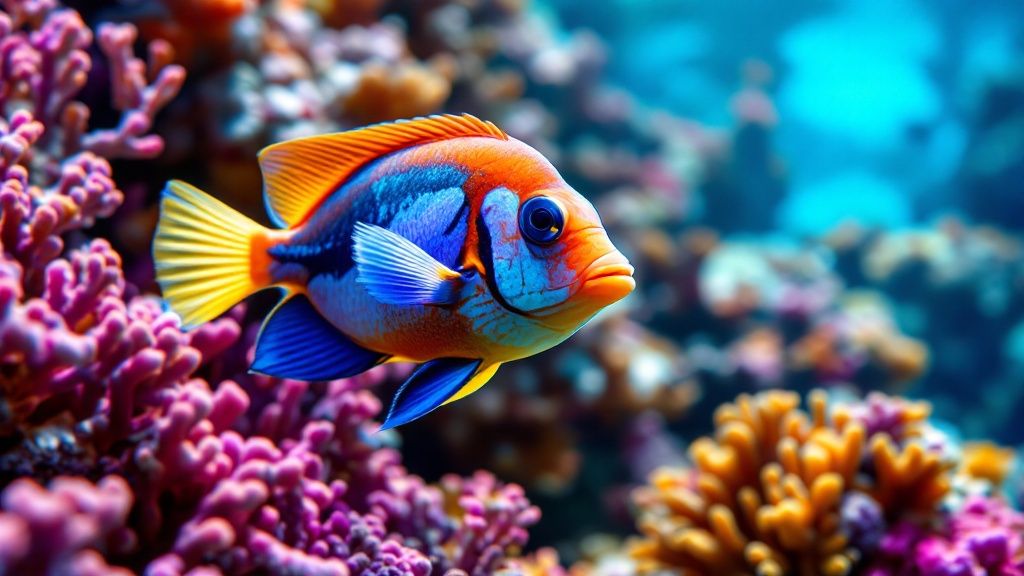
If you're looking for the heart of scuba diving on the Big Island of Hawaii, you’ll find it on the Kona Coast. This is where ancient lava flows met the sea, sculpting a dramatic underwater world that’s truly unlike anywhere else on Earth. The coastline is studded with legendary dive sites, and each one offers a completely different adventure.
Exploring these spots is so much more than just ticking names off a list. It's about dropping into unique environments buzzing with life, from navigating breathtaking lava arches to gliding over pristine coral gardens. The Kona Coast has something unforgettable for every diver, no matter your experience level.
Kealakekua Bay: A Protected Paradise
Put Kealakekua Bay at the very top of your must-dive list. This isn't just another pretty spot; it's a state-protected Marine Life Conservation District. That designation means the entire ecosystem is exceptionally healthy and vibrant. The bay’s geography also shelters it from the wind, often creating glassy surface conditions and stunning underwater visibility that can easily top 100 feet.
What really makes it special is the sheer abundance of life. With no fishing allowed, huge schools of yellow tangs, parrotfish, and Moorish idols thrive among the brilliant corals. There’s also a rich sense of history here—this is where Captain James Cook first landed in 1779, adding another layer of depth to an already world-class dive. While diving is the main event, the snorkeling is just as incredible, as this Big Island Captain Cook snorkeling guide details.
Must-Visit Dive Sites for Every Diver
Beyond the famous bay, the Kona Coast is home to dozens of other incredible sites, each with its own personality. Here are a few standouts that really show off the amazing diversity of scuba diving on the Big Island.
- Golden Arches: Just like the name suggests, this site is famous for its magnificent lava rock archways—a photographer's dream. You can swim right through them, spotting schools of soldierfish, moray eels peeking from crevices, and maybe even a resting whitetip reef shark.
- Two Step (Honaunau Bay): Known for its incredibly easy shore entry, Two Step is a favorite for divers and snorkelers alike. The shallow coral gardens are unbelievably vibrant and packed with reef fish and Hawaiian green sea turtles (honu).
- Garden Eel Cove: This sandy-bottom site is home to a massive colony of garden eels that pop their heads out of the sand like periscopes. It's also one of the main stages for the world-famous Manta Ray Night Dive, where these gentle giants gather to feed on plankton attracted by divers' lights.
"The variety of underwater landscapes on the Kona Coast is astounding. One day you're exploring a lava tube, the next you're drifting over a coral garden that looks like it's straight out of a documentary. It never gets old."
What to Expect on a Kona Dive
No matter where you splash in, you're pretty much guaranteed to see an amazing cross-section of Hawaiian marine life. The water is warm and crystal clear, making it easy to spot everything, and the volcanic topography means there’s always a surprise around the next corner.
Most of our boat charters hit two different sites, so you get to experience varied underwater terrain in a single trip. Depths can be as shallow as 30 feet at places like Two Step or push past 100 feet at some of the more advanced spots. On almost any dive, you'll likely run into:
- Hawaiian Green Sea Turtles (Honu): These graceful creatures are everywhere, often seen cruising by or just chilling out on the reef.
- Moray Eels: Be sure to peek into the reef’s nooks and crannies. You'll find all sorts of species, from the yellowmargin to the impressive viper moray.
- Schools of Reef Fish: The sheer number of butterflyfish, surgeonfish, and triggerfish creates a constantly moving kaleidoscope of color.
Choosing the right dive sites is key to a perfect trip. To get a better feel for all the possibilities, you can check out our complete guide to the best Kona dive sites to help narrow down your choices.
The Unforgettable Manta Ray Night Dive
Of all the incredible things you can do while scuba diving Big Island Hawaii, one experience consistently tops every list: the Manta Ray Night Dive. It’s not just a dive; it’s a genuine spectacle ranked among the best on the entire planet, and for good reason.
Imagine this: you descend into the warm, dark ocean, settle on the sandy bottom, and watch as giant, otherworldly manta rays perform a silent, acrobatic ballet just inches above your head. It’s a moment that’s both heart-poundingly thrilling and profoundly peaceful.
Your dive lights become the star of the show, pointing upward to create brilliant beams that attract swarms of microscopic plankton. And where there’s plankton, the mantas are sure to follow. They arrive like silent acrobats, gliding into the light with wingspans that can stretch over 12 feet. They swoop and somersault with their massive mouths agape, filtering the plankton from the water in a mesmerizing, choreographed dance that you'll remember forever.
How the Manta Ray Dive Works
The genius behind this dive is brilliantly simple. Manta rays are smart, and they’ve learned to associate light with an easy meal. Years ago, a hotel’s floodlights drew in plankton, and the local mantas quickly caught on. Dive operators like Kona Honu Divers have since refined this into a predictable and breathtaking encounter.
The whole process is straightforward and incredibly well-managed:
- The Setup: Your group is guided to a designated spot on the ocean floor, often called a "campfire," at a comfortable depth of about 30-40 feet.
- The Lights: You'll hold a powerful underwater light and point it straight up, creating a column of light that acts like a dinner bell for plankton.
- The Show: As the plankton cloud thickens, the mantas glide in. They perform graceful barrel rolls and swoops through the illuminated water, often coming unbelievably close as they feed.
This unique feeding behavior makes the Kona coast one of the most reliable places in the world to see manta rays up close. It’s a completely different and far more dynamic experience than just seeing them at a daytime "cleaning station." To get an even better picture, check out our guide on the Big Island's Manta Ray Night Snorkel and Dive for more details.
A Safe and Respectful Encounter
The number one priority is always the well-being of these magnificent animals. Manta rays are completely harmless—they have no teeth, stingers, or barbs—but it's our responsibility to keep them safe.
The golden rule is simple: look, but don't touch. Manta rays are covered in a protective mucus coating that acts as their immune system. Touching them can strip this layer off, leaving them vulnerable to infections.
Your Kona Honu Divers dive masters will give you a detailed briefing before you even get in the water. They’ll explain exactly how to position yourself so you can just sit back and let the mantas put on their show. It’s this deep commitment to conservation that makes the encounter so special and sustainable.
Witnessing this natural wonder is a quintessential Big Island experience, and Kona Honu Divers knows how to make it perfect. Their expert team ensures this awe-inspiring event is both accessible and completely safe for every certified diver.
If you're ready for a once-in-a-lifetime underwater ballet, you can book the premier 2-Tank Manta Ray Night Dive tour and get ready for an evening you will truly never forget.
Exploring Adventures Beyond the Reefs
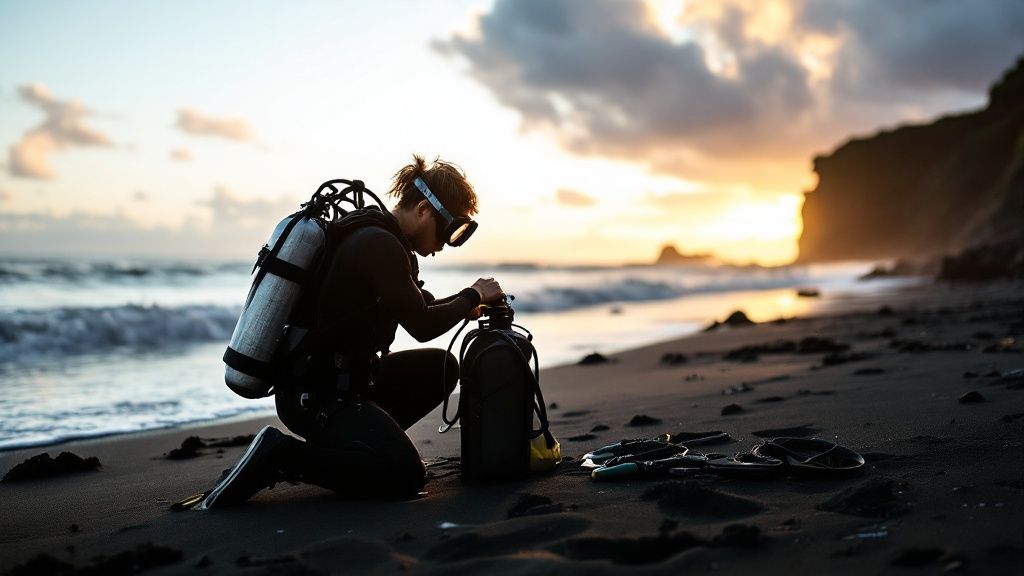
While the vibrant coral gardens and iconic manta ray ballets are the heart of scuba diving on the Big Island of Hawaii, there’s a wilder, more profound side waiting for those who want to venture further. If you’ve got your buoyancy dialed in and you're craving a thrill that goes beyond the usual reef tour, Kona offers adventures that drop you into the deep blue and through ancient volcanic labyrinths.
These aren't your typical scenic dives. They’re less about hovering over a static reef and more about immersing yourself in the raw, dynamic energy of the open ocean. They definitely demand a higher skill level and a cool head, but the reward is an experience that most divers only dream about.
The Kona Blackwater Dive: A Trip to Inner Space
Of all the unique dives Kona has to offer, the Blackwater Dive is hands-down the most surreal. This isn’t a reef dive at all—it's a journey into the immense, inky blackness of the open ocean, miles from shore, with thousands of feet of water beneath you.
Tethered to the boat for safety, you simply drift in the dark. The feeling is often compared to floating through outer space, and for good reason. Your dive light cuts through the void, revealing a hidden world as countless strange and wonderful creatures rise from the abyss to feed near the surface. You're witnessing the largest vertical migration on Earth, up close and personal.
It’s a truly humbling experience. Imagine hovering in pure darkness as alien-like, bioluminescent organisms drift past your mask—glowing jellies, translucent larval fish, and creatures that look like they belong on another planet.
The life you'll see here exists nowhere else. Many creatures are in their larval stages, appearing as tiny, see-through versions of their adult selves. For underwater photographers or anyone fascinated by the stranger side of marine biology, this dive is an absolute must. If you're ready for a deep-sea safari like no other, you can learn more about this incredible Kona Blackwater Dive tour and prepare for a truly otherworldly night.
Advanced Dives and Pelagic Encounters
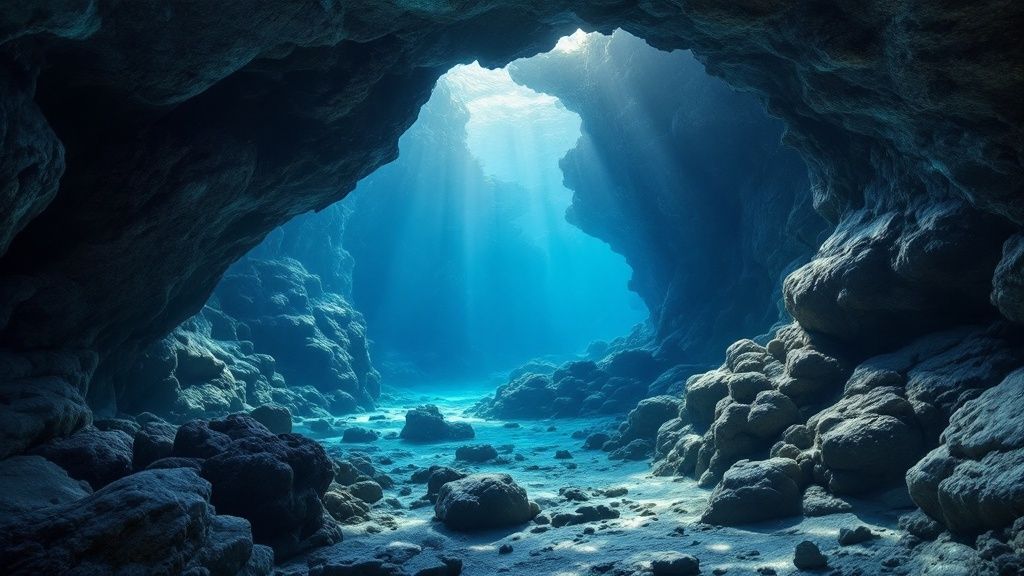
For seasoned divers, the adventure doesn't stop with the blackwater experience. The Big Island's volcanic origins have created a spectacular underwater playground, and advanced dives are your ticket to the best seats in the house. This often means exploring intricate lava tubes—cavernous swim-throughs formed by ancient lava flows that now shelter all sorts of unique marine life.
Navigating these formations requires excellent buoyancy and a calm demeanor, but the payoff is huge. Plus, the deeper dive sites along the Kona coast are your best bet for encountering pelagic species—the big-time cruisers of the open ocean.
So, what might you see on these advanced trips?
- Sharks: Whitetip reef sharks are common, but dropping deeper increases your chances of spotting scalloped hammerheads or even the occasional tiger shark.
- Spotted Eagle Rays: These graceful rays are often seen gliding effortlessly in the blue, sometimes in small squadrons.
- Other Big Fish: Keep your eyes peeled for massive jacks, speeding tuna, and other powerful fish that hang out in the deeper, cooler water off the reef’s edge.
These dives are built for experienced divers looking to push their limits and see the untamed side of Kona. If you’re ready for the challenge, take a look at the premium advanced dive trips we offer.
How to Plan Your Big Island Dive Trip
Alright, let's get you from dreaming about Kona's underwater world to actually being in it. Planning a dive trip here is surprisingly straightforward, and getting a few key details sorted out ahead of time will make your entire experience smoother, safer, and far more memorable.
First things first: when should you come? The beauty of diving the Big Island is that it's a year-round affair. The water temperature hovers in that perfect sweet spot between 75°F and 80°F (24-27°C). Thanks to the Kona coast being on the leeward side of the island, we’re blessed with exceptionally calm and clear water most of the time.
That said, certain seasons do offer some special perks. If you visit in the winter, from December to March, you’ll be here during peak humpback whale season. There's nothing quite like hearing their haunting songs echo through the water during a dive—it's an experience that will stick with you forever. On the other hand, the summer and fall months bring the warmest water and the flattest, glassiest seas, which makes for some incredibly smooth boat rides.
Choosing the Right Dive Operator
This is probably the most important decision you'll make for your trip. A great dive operator doesn't just ferry you to a dive site; they are the key to an amazing experience. They provide safety, share their deep knowledge of the local reefs, and bring a genuine passion for the ocean that’s infectious.
My advice? Look for operators that prioritize small groups. This means you get more personalized attention from the divemaster and a much less crowded, more intimate experience underwater. A spotless safety record is non-negotiable, as is a real commitment to marine conservation. The best shops teach you how to be a good guest on their reefs, from perfecting your buoyancy to respecting the wildlife.
To help you narrow down your choices, it’s always a good idea to see what fellow divers are saying. Here are some recent reviews for a couple of Kona's most respected dive operations.
To give you a clearer picture, here’s a quick comparison of what some of the top operators on the island offer.
Comparing Top Kona Dive Operators
This table breaks down the features of some of the Big Island's leading scuba diving operators to help you find the perfect match for your adventure.
| Operator | Key Features | Specialty Dives Offered |
|---|---|---|
| Kona Honu Divers | Small group sizes, valet service, expert guides, strong conservation focus | Manta Ray Night Dive, Black Water Dive |
| Jack's Diving Locker | Large fleet, PADI 5-Star IDC, full range of courses, family-friendly | Manta Ray Night Dive, Pelagic Magic |
| Big Island Divers | Tech diving options, custom charters, multiple boat options | Manta Ray Night Dive, Black Water Dive |
Ultimately, the best choice depends on what you value most—be it small groups, specific training, or unique dives like the famous Manta Ray Night Dive.
Packing Your Gear and Finding Accommodations
The classic question: what to pack and what to rent? Bringing your own mask (for a perfect fit) and dive computer (for familiarity) is always a smart move. But you can save a ton of luggage space and airline fees by renting the heavier gear like BCDs and regulators. Any good shop will have high-quality, well-maintained rental equipment ready for you.
A 3mm wetsuit is usually all you need for our warm waters. But if you tend to get chilly, especially on multiple dives or a night dive, you might be happier in a 5mm.
Where you stay also makes a big difference. The Big Island is a diver’s paradise, with around 1,100 marine species documented and 129 endemic species you won't find anywhere else on the planet. The vast majority of the best dive sites are dotted along the west coast. Booking your stay in or near Kailua-Kona puts you right in the heart of the action and just a short trip from the boat harbors.
For a deep dive into where to stay, we put together a guide with our top picks: best places for divers to stay on the Big Island. You'll find great options for every budget.
Once you’ve picked your dates, chosen your operator, and packed your bags, you’re all set for an incredible underwater journey.
Your Big Island Scuba Diving Questions Answered
As your trip to paradise gets closer, it's completely normal for a few questions to pop into your head. Planning a scuba diving big island hawaii adventure means juggling details, and getting it right makes all the difference. To help you feel prepared and excited, we've pulled together answers to the questions we hear most often from divers getting ready to explore the Kona coast.
Think of this as your final checklist. It’s here to clear up any lingering doubts so you can book your trip with total confidence. Let’s dive in.
Do I Need to Be an Advanced Diver to Scuba Dive in Hawaii?
Not at all! This is probably the biggest misconception about diving here. While the Big Island absolutely has some thrilling sites for advanced divers, the Kona coast is incredibly welcoming for all skill levels.
Many of our most famous spots are tucked away in calm, protected bays. That means gentle conditions, barely any current, and amazing visibility—a perfect recipe for new divers. Even the world-famous manta ray night dive is open to Open Water certified divers. We make it our mission to create a safe, comfortable environment and often tailor trips to match the experience of everyone on the boat. Whether it’s your first ocean dive or your 500th, you’ll find something incredible to explore.
What Is the Best Time of Year for Scuba Diving on the Big Island?
Here’s the great news: Kona offers spectacular diving all year round. The water temperature is always comfortable, hovering around 75°F (24°C) in the winter and warming up to a lovely 80°F (27°C) in late summer. Because the massive volcanoes on the island block the trade winds, the Kona coast is famous for its calm, glassy seas.
That said, certain seasons bring their own special magic:
- Winter (December – March): This is humpback whale season! While you can't plan a sighting, hearing their powerful songs underwater during a dive is a soul-stirring experience you will never forget.
- Summer & Fall (June – October): These months usually deliver the warmest water and the flattest conditions. If you're prone to seasickness or just love a smooth boat ride, this is your time.
Honestly, there's no "bad" time to dive in Kona. It just comes down to what kind of adventure you're looking for.
What Kind of Marine Life Can I Expect to See?
The underwater world off the Kona coast is absolutely buzzing with life. A huge percentage of the species here are endemic, meaning you won’t find them anywhere else on Earth. On just about any dive, you’ll likely run into Hawaiian green sea turtles, or honu, gracefully cruising by.
Get ready to spot moray eels peeking out from their rocky homes, octopuses (tako) showing off their amazing camouflage, and huge schools of vibrant fish like yellow tangs and parrotfish. From the boat, it’s common to see spinner dolphins putting on an acrobatic show. With a little luck, you might even spot whitetip reef sharks resting on the sand or majestic spotted eagle rays gliding past. And of course, the graceful manta rays and the strange, glowing creatures on the blackwater dives are in a league of their own.
Can I Rent Scuba Gear on the Big Island?
Yes, absolutely! Let's be honest, traveling with a full set of dive gear can be a real hassle. That’s why all the reputable dive shops on the Big Island, including us at Kona Honu Divers, offer complete sets of high-quality, professionally maintained rental gear.
You can rent everything you need for a great day of diving:
- Buoyancy Control Devices (BCDs)
- Regulators with integrated dive computers
- Wetsuits (usually 3mm or 5mm)
- Masks, snorkels, and fins
Renting is a super convenient option. When you book your diving tours, just let the shop know what you need. It’s always smart to reserve your gear in advance, especially during the busy season, just to make sure they have your sizes ready to go. You get to travel light and dive with top-notch equipment waiting for you.
What Safety Protocols Should I Be Aware Of?
For any professional dive operation in Kona, safety is everything. Before every single dive, your guide will give you a detailed briefing covering the dive plan, what to expect at the site, hand signals, and what to do in an emergency. The most important rules are simple: dive within your training, keep an eye on your air, and always stick with your buddy.
Diving is a very safe activity when you follow the rules. Decompression sickness (DCS), or "the bends," is a risk, but it's incredibly unlikely when you follow your computer, stay within no-decompression limits, and ascend slowly. It's always smart to be educated, and you can learn more about What is Hyperbaric Oxygen Therapy (HBOT), which is the primary treatment for DCS. Most importantly, always listen to your divemaster—their local knowledge is your best asset for a safe and amazing dive.
Now that you have the inside scoop, you're ready to make it happen. For a truly unforgettable and personal adventure, book your dives with Kona Honu Divers. Our commitment to small groups, safety, and protecting our beautiful reefs ensures you'll have the best possible experience. Check out our full range of tours and reserve your spot today at Kona Honu Divers.