
Picture this: You descend into a world of impossible blue. The water is so clear you feel like you're flying. All around you, ancient volcanic arches draped in vibrant corals are buzzing with life. That’s what scuba diving on the Big Island of Hawaii is all about—a truly world-class destination where unique geology has created an underwater paradise unlike any other.
From the world-famous Manta Ray Night Dive to surreal lava tube swim-throughs, this is the kind of bucket-list adventure that divers of every skill level dream about.
Discovering Hawaii’s Ultimate Underwater Paradise
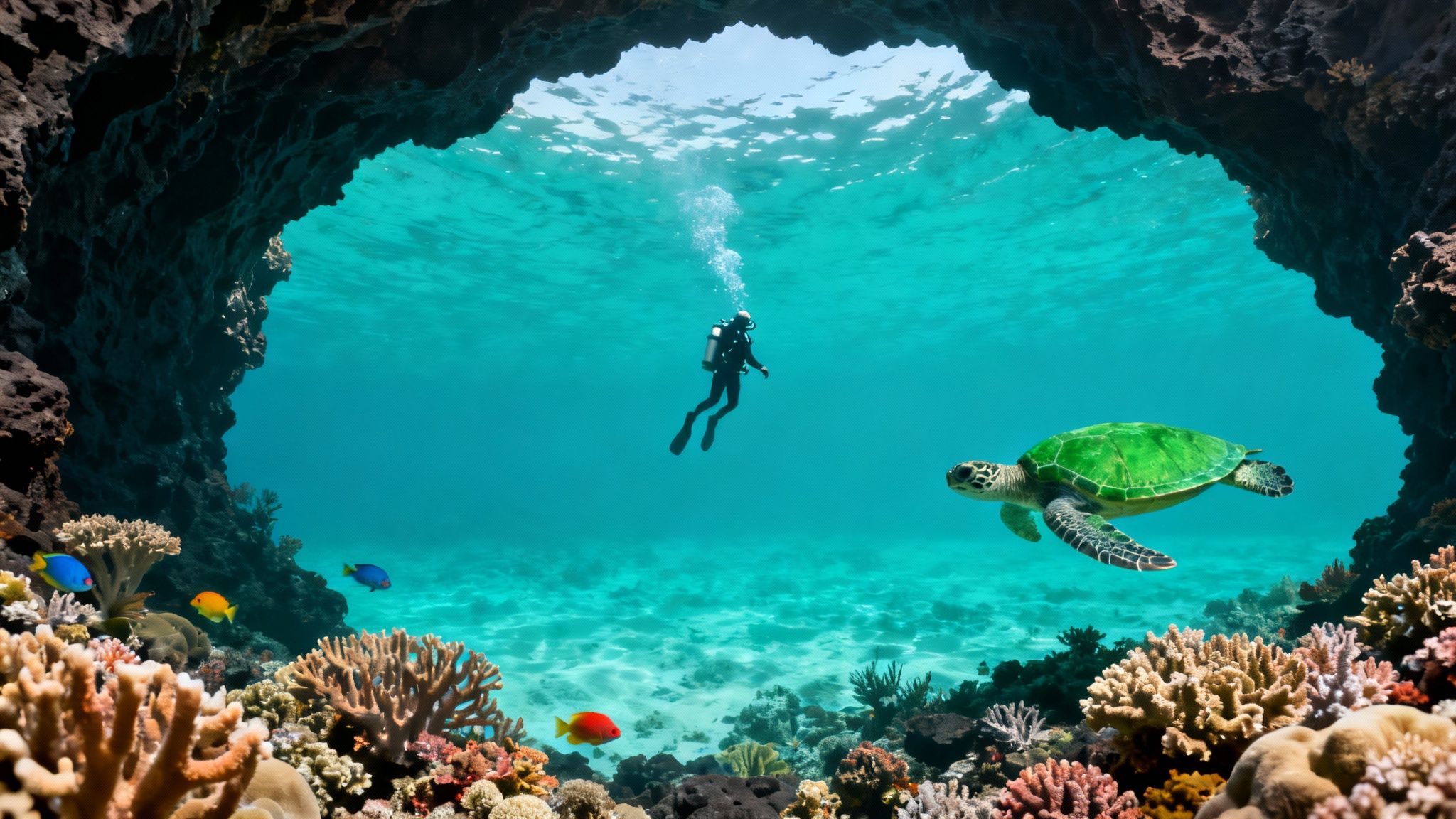
The Big Island is a diver’s heaven, and the Kona Coast is its main attraction. Tucked away in the protective shadow of the massive Mauna Loa and Hualalai volcanoes, the waters here are consistently calm and clear. This natural shield from the powerful trade winds gives us predictable conditions almost all year, making it a perfect spot for your very first dive or your hundredth.
The underwater landscape is spectacular, shaped by ancient lava flows that have sculpted a dramatic seascape of pinnacles, caverns, and intricate lava tubes. This unique topography has become the foundation for a thriving, diverse ecosystem. With visibility that often stretches beyond 100 feet, you get a front-row seat to some of the most incredible marine life on the planet.
What Makes Big Island Diving So Special?
Diving in Kona is more than just spotting colorful fish. It's about immersing yourself in a world forged by volcanic fire and shaped by millennia of isolation. The Hawaiian Islands are one of the most remote archipelagos on Earth, a fact that has led to an explosion of unique biodiversity.
- Endemic Species: An incredible 25% of Hawaii's marine animals are found nowhere else on the planet. That means every single dive offers a chance to see creatures you literally can’t find anywhere else.
- Volcanic Topography: You get to explore otherworldly lava tubes, dramatic archways, and underwater canyons—all created by volcanic activity. These structures provide complex habitats for countless species.
- Iconic Marine Life: The Kona Coast is famous for its reliable encounters with majestic animals. Get ready to swim alongside gentle green sea turtles (honu), pods of playful spinner dolphins, and even the rare and endangered Hawaiian monk seal.
But the most compelling reason to plan your trip? It has to be the world-famous Manta Ray Night Dive. The Big Island is the only place on Earth where you can reliably get in the water with these gentle giants almost every single night of the year. It's an experience that consistently tops lists of the best dives in the world.
To get a taste of the adventures waiting for you, check out the incredible variety of diving tours available and start planning your own underwater journey.
Why The Kona Coast Is A Diver’s Dream
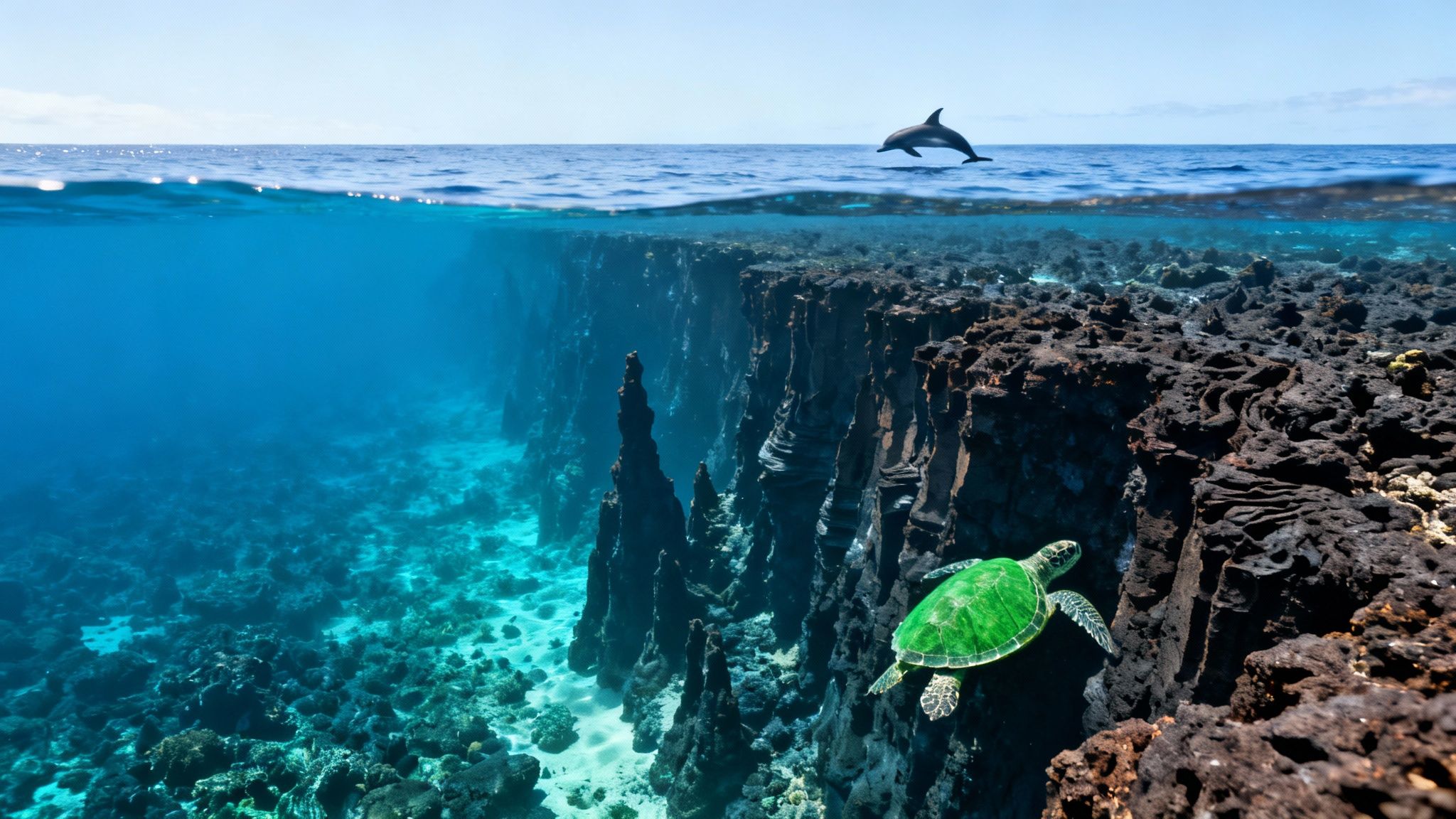
So, what’s the secret behind Kona’s reputation as the epicenter for world-class scuba diving on the Big Island of Hawaii? It all comes down to geology. The island’s two colossal volcanoes, Mauna Loa and Hualalai, act as gigantic natural shields, blocking the powerful trade winds that churn up the waters on other sides of the island.
This incredible natural protection creates an underwater environment that’s remarkably calm and predictable year-round. The result is a diver’s paradise, with conditions so consistently good they welcome everyone from first-timers to seasoned pros. It’s this unique setup that paves the way for unforgettable dives, day in and day out.
But it gets even better. The underwater landscape is a direct result of ancient lava flows that have sculpted a dramatic seascape of vertical walls, towering pinnacles, and intricate lava tubes. It's a rugged, beautiful world down there, and it’s the perfect foundation for a thriving marine ecosystem.
A Sanctuary Carved by Volcanoes
That volcanic topography isn't just for dramatic effect; it’s the bedrock of Kona's incredible biodiversity. These complex lava formations provide endless nooks and crannies, offering shelter and breeding grounds for countless species of fish, invertebrates, and corals. This structure supports a healthy food chain that attracts bigger animals, turning the reef into a bustling underwater city.
Here’s a quick look at why Kona’s conditions are so special.
Kona Coast Diving Conditions At A Glance
| Factor | Typical Conditions | Impact on Diving |
|---|---|---|
| Wind | Calm, blocked by volcanoes | Minimal surface chop, easy boat entries/exits |
| Water Clarity | 100+ feet of visibility | Crystal-clear views of wildlife and topography |
| Currents | Generally mild to non-existent | Relaxing dives, great for all skill levels |
| Topography | Lava tubes, arches, drop-offs | Endless structures to explore and host marine life |
Simply put, these conditions make every dive better and more predictable.
Visibility along the Kona Coast regularly tops 100 feet, giving you a stunning, high-definition view of everything happening around you. You’ll have a front-row seat to watch green sea turtles (honu) glide past, see pods of spinner dolphins playing in the distance, and witness schools of colorful reef fish moving as one.
A perfect example of this protected paradise is the Kealakekua Bay Marine Life Conservation District. This historic bay is a strict no-fishing zone, which has allowed its marine life to flourish. Known for its connection to Captain Cook, it’s now a sanctuary filled with vibrant coral gardens and lava formations, making it an ideal spot for guided tours that are as educational as they are adventurous. You can learn more about the unique diving conditions of the Big Island and what makes this place so magical.
Conditions That Welcome Every Diver
The reliability of Kona's waters takes a lot of the guesswork out of planning a dive trip. While nature is never 100% predictable, the general calmness here makes for a more relaxed and enjoyable experience. It’s why operators like Kona Honu Divers can consistently offer such a fantastic range of specialty trips, from deep explorations to the world-famous Manta Ray Night Dive.
Ultimately, the clear, calm water lets you focus on what truly matters: soaking in the incredible beauty of Hawaii from a perspective few get to see. Ready to experience it for yourself?
Experiencing The World-Famous Manta Ray Night Dive
There are some dives you do, and then there are dives you experience. The Manta Ray Night Dive is firmly in the second category—it’s less of a dive and more of an underwater ballet, a spectacle that’s famous around the globe for good reason.
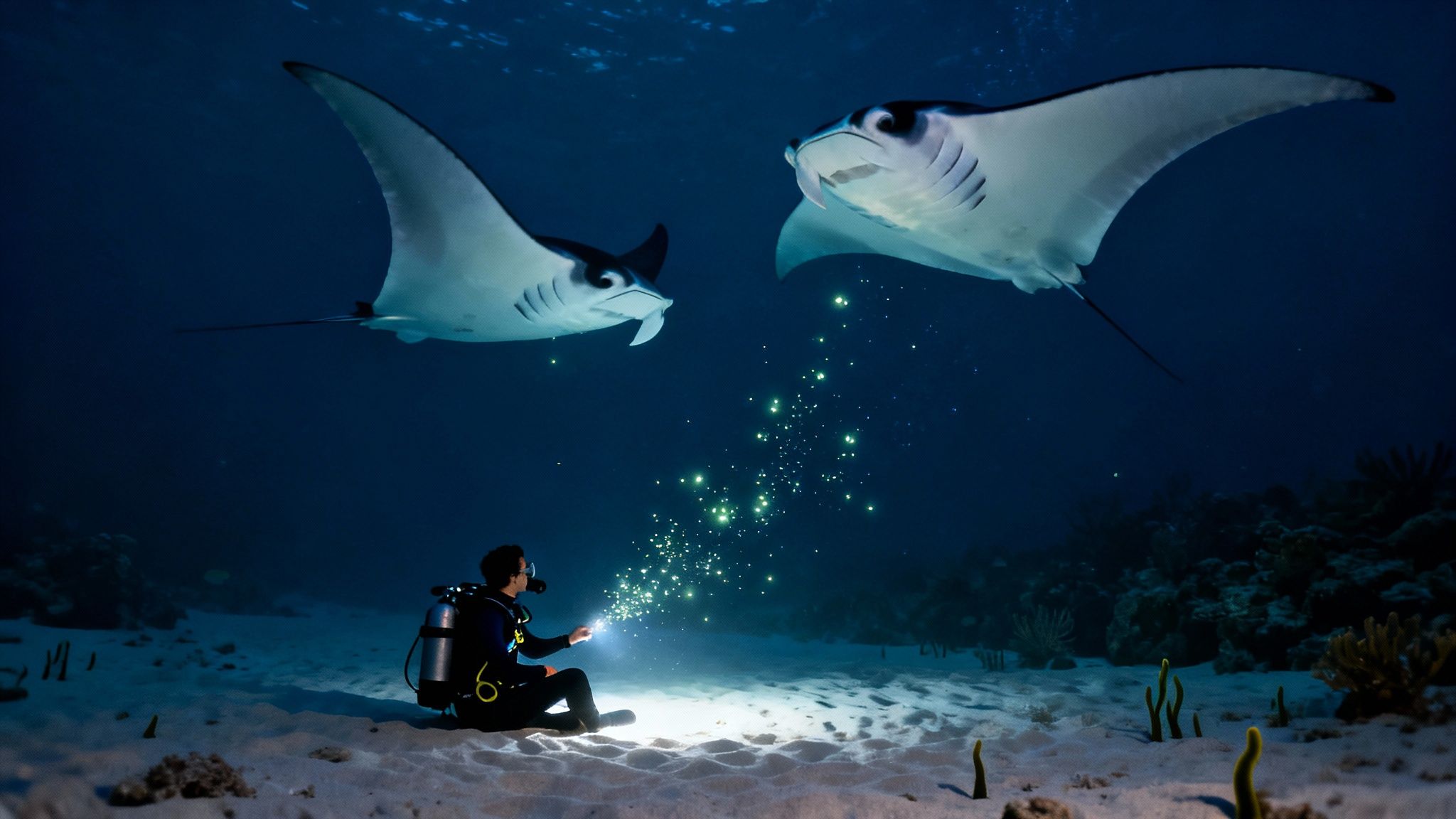
Picture this: you descend into the warm, dark Pacific as night falls, the beam of your dive light piercing the blackness. You find a spot on the sandy ocean floor, get comfortable, and point your light straight up. Then, you wait.
Before long, the show starts. Out of the darkness, massive, silent figures emerge. Majestic manta rays, some with wingspans stretching up to an incredible 18 feet, glide and swoop right over your head. They perform an effortless, hypnotic dance, feeding on the clouds of plankton drawn to the lights. It’s one of the most unforgettable moments you can have while scuba diving on the Big Island of Hawaii.
Why Garden Eel Cove Is The Premier Choice
You can see mantas at a few spots along the Kona coast, but one site consistently delivers the best experience: Garden Eel Cove. We divers have nicknamed it "Manta Heaven," and it’s earned that title.
Its location near the airport means it’s more protected, so the water is almost always calmer and more predictable. This makes for a much more comfortable and reliable dive. The setup is also superior, creating a better viewing area. Dive operators have created a central light source on the bottom, kind of like a campfire, which we all gather around. This creates a beautifully lit, amphitheater-like space that gives everyone an amazing, front-row seat.
The reliability of this dive is remarkable. Imagine gliding through the inky black waters off Kona's coast at night, where massive manta rays swoop in like gentle giants to feast on plankton attracted to dive lights – this is the thrill of Big Island's world-famous manta ray night dives, a bucket-list experience for scuba enthusiasts worldwide. Operators like Kona Honu Divers, with their expert crews boasting over 200 years of combined experience, report sighting these majestic creatures on an astonishing 85-90% of trips, making it one of the most reliable encounters in global dive tourism.
On top of all that, the reefs around Garden Eel Cove are simply healthier and more vibrant than at the other sites. This makes the whole dive better, from your descent to your ascent, as you’re surrounded by lively coral and other nocturnal critters going about their business. It’s this winning combination that makes the Garden Eel Cove manta ray dive the undisputed champion for this bucket-list adventure.
What To Expect On Your Manta Dive
Your trip usually starts with a beautiful sunset boat ride out to the site. Before anyone gets in the water, the divemaster gives a thorough briefing, explaining everything from manta behavior to the safety rules. The number one rule? Never touch the mantas. Your touch can remove their protective mucus coating, leaving them vulnerable to infection.
So, what makes this experience feel so different?
- You're a Spectator: This isn't a dive where you swim around exploring. You stay put on the ocean floor and let the show come to you. It's all about passive, respectful observation.
- Incredibly Close Encounters: The mantas are completely used to divers. They’ll often glide within inches, barrel-rolling through the light beams to scoop up as much plankton as possible.
- A Gentle Performance: For such huge animals, they move with unbelievable grace. Just watching them is a peaceful, almost hypnotic experience.
This dive is more than just checking something off a list; it’s a real connection with one of the ocean's most intelligent and gentle creatures. Seeing these giants performing their nightly ritual in their own world is a truly humbling moment you’ll never forget.
Exploring Advanced Dives Beyond The Mantas
While the Manta Ray Night Dive is an absolute can't-miss experience, the adventure on the Big Island certainly doesn't end there. For certified divers craving something truly different, Kona offers dives that push the boundaries of a typical reef tour. These advanced dives trade the sunlit corals of the shallows for the deep, mysterious, and genuinely wild side of the ocean.
These aren't your average charters. They require skill, confidence, and the steady hand of expert guides, but the payoff is witnessing phenomena that very few people on Earth will ever see.
The Otherworldly Kona Blackwater Dive
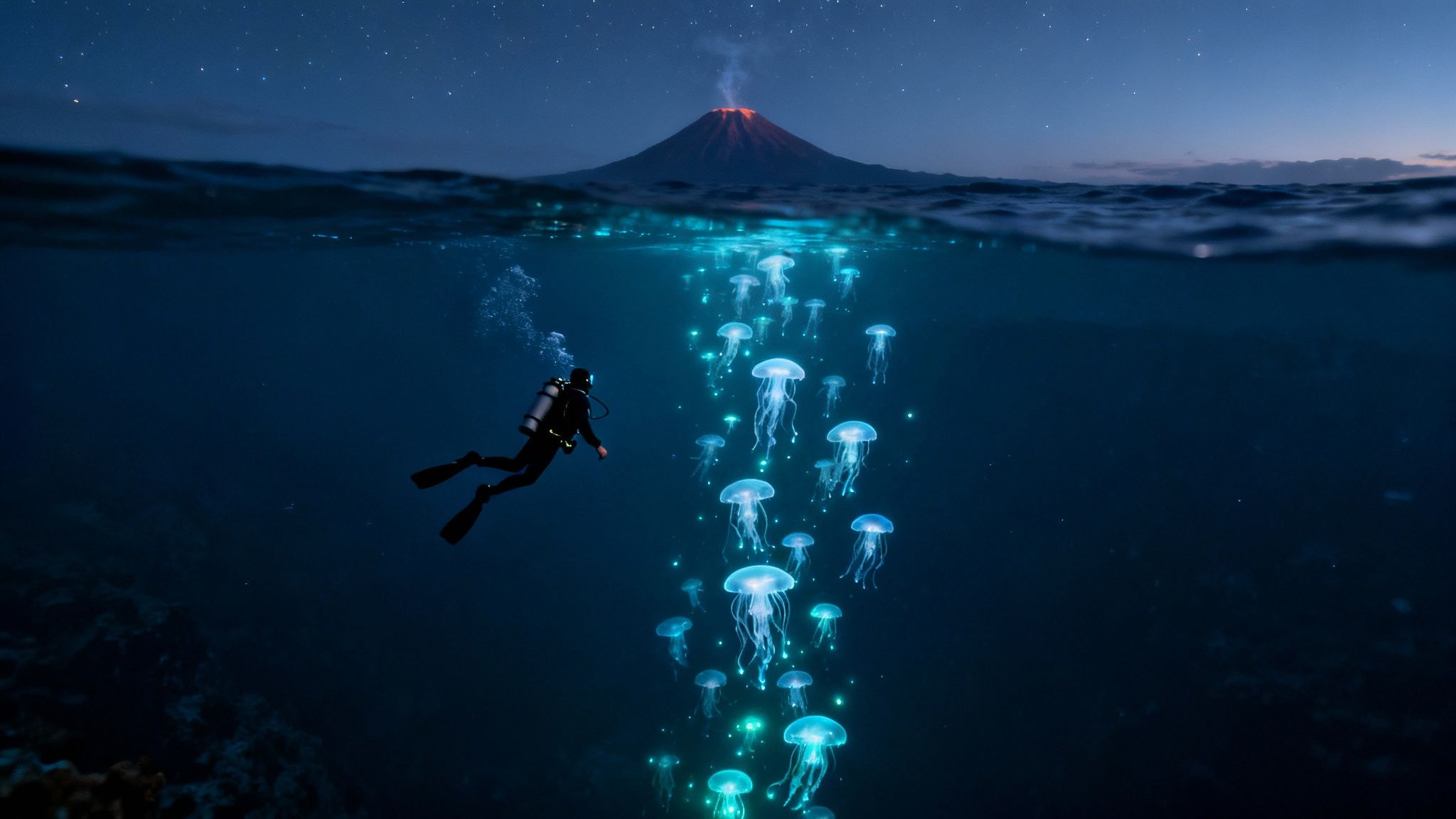
Picture this: you're drifting miles offshore in the middle of the night, suspended over thousands of feet of inky black water. That’s the surreal and captivating world of the Kona Blackwater Dive. It feels less like a dive and more like floating through outer space.
You're not here to see a reef. You're here to witness the largest vertical migration of life on the planet. Every single night, an incredible array of bizarre and beautiful creatures rises from the abyss to feed near the surface, and many of them are bioluminescent—creating their own light in the deep.
Tethered to a line in the vast ocean, you become a silent observer as otherworldly life drifts by. One moment, you're looking at a larval eel that resembles a transparent ribbon. The next, an iridescent comb jelly pulses with a rainbow of light, or a squid that looks like something from another planet dances in your light beam.
So, what’s the big deal?
- A Journey into the Unknown: No two blackwater dives are ever the same. You truly never know what strange and wonderful creatures will emerge from the deep.
- Bioluminescent Wonders: The natural light show put on by these deep-sea animals is absolutely mesmerizing. It’s a spectacle you won't find on any other dive.
- A True Adventure: This is for the thrill-seekers. It requires a real sense of adventure and comfort in the open ocean, making it an unforgettable experience for seasoned divers.
This is so much more than just scuba diving on the Big Island of Hawaii; it's a genuine glimpse into a hidden world. To get a better feel for it, you can read more about what makes the blackwater dive in Hawaii such a profound experience.
Advanced Diving Opportunities
Beyond the blackwater, Kona's volcanic coastline is a playground for advanced divers. The dramatic underwater landscapes—a direct result of ancient lava flows—have created a variety of challenging and rewarding sites far off the beaten path. These advanced diving opportunities are perfect for divers looking to sharpen their skills and explore deeper, more remote locations.
A major draw is navigating the incredible lava tube and cavern systems. Exploring these underwater tunnels gives you a thrilling sense of discovery, but it demands excellent buoyancy control and awareness as you glide through swim-throughs and into large caverns where whitetip reef sharks often rest.
Head further offshore, and you’ll find deep-water pinnacles that rise from the ocean floor like magnets for marine life. These spots are often washed by currents, which in turn attract larger pelagic species. This is where your chances of encountering sharks, massive jacks, and even schools of eagle rays go way up. Sites like Au Au Canyon showcase the raw, immense scale of the Big Island’s underwater world, with sheer walls that drop straight into the abyss. These are serious dives that demand skill and expert guidance, underscoring just how important it is to go with an operator who knows these waters inside and out.
How To Choose The Right Dive Operator
Let’s be honest, picking a dive operator is one of the biggest decisions you'll make for your Big Island trip. A fantastic crew can turn a great dive into a legendary one, while the wrong choice can, well, sink your entire experience. It's so much more than just a boat ride—it’s about feeling safe, comfortable, and truly getting the most out of your time in the water.
With so many boats in the harbor, it's easy to get overwhelmed. And while price is always a factor, it shouldn't be the only one. The global market for underwater tourism is booming, and Kona is a huge part of that, expected to hit USD 1,585 million by 2035. More growth means more operators, making it even more important to know what separates a top-notch company from the rest.
Experience and Local Know-How
First things first: look for a team that has deep, local knowledge. An experienced crew knows these dive sites intimately. They know where the currents shift, which lava tubes are safe for a swim-through, and exactly where that elusive frogfish has been hanging out all week. This kind of inside scoop doesn't just lead to better critter-spotting; it's a massive safety advantage.
Our crew at Kona Honu Divers, for example, brings over 200 years of combined experience diving these specific waters. That’s a level of expertise you can feel, giving you peace of mind that you're in the safest, most capable hands around.
Small Groups and Big Comfort
Have you ever been on a huge, crowded dive boat? It can feel a little chaotic and impersonal. This is why a premium operator will always prioritize smaller group sizes.
It makes a huge difference:
- More Personal Attention: Your guide can actually guide you, pointing out cool marine life you’d probably swim right past otherwise.
- Better Safety: It's way easier for a divemaster to keep an eye on a small group, making sure everyone is comfortable and safe.
- A Laid-Back Vibe: You get to kick back and enjoy the stunning Kona coast without feeling like just another number on a manifest.
Comfort on the boat is just as important. Think about the little things that make a day great—a spacious deck, a hot freshwater shower after your second dive, plenty of shade, and easy-to-reach spots for your gear. These details add up.
When you're picking a dive shop, you're choosing a whole service ecosystem, not just a boat. Things like meticulously maintained rental gear and complimentary nitrox are dead giveaways of an operation that puts its divers' safety and satisfaction above all else. For more tips, check out our guide on how to choose a Kona dive shop.
At the end of the day, the best way to vet an operator is to see what other divers have to say. Real-world reviews give you the unfiltered truth about a company's professionalism, the quality of their crew, and what the experience is really like.
Got Questions About Diving the Big Island? We’ve Got Answers.
Planning a dive trip to the Big Island always sparks a few questions, even for seasoned divers. We get it. To make sure you feel completely ready for your adventure, we've put together answers to the things we're asked most often.
When Is The Best Time of Year to Dive?
Honestly, any time is a good time to dive in Kona. That’s the magic of this place. The coast is sheltered by massive volcanoes, which keeps the water remarkably calm and clear pretty much 365 days a year. The water is always pleasant, hovering in the mid-70s during the winter and climbing into the low 80s in the summer.
That said, a couple of seasons have their own special perks:
- Winter (December – March): Welcome to humpback whale season! While you're not likely to see one underwater, hearing their songs echo through the water on a dive is an experience you will never forget. It's absolutely surreal.
- Summer (June – September): This is when you'll find the warmest water and the flattest, calmest seas. It’s just picture-perfect conditions for any diver, new or experienced.
Do I Need to Be Certified to Try Scuba Diving?
Nope, not at all! If you’ve always wanted to try diving but aren't certified, the Discover Scuba Diving experience is made for you. It's a fantastic, safe introduction where a certified instructor teaches you the basics and then personally guides you on a real dive. It's the perfect way to test the waters and see if scuba is your new passion.
What Marine Life Can I Expect to See?
The better question is, what won't you see? The Big Island is teeming with life. On just about every dive, you'll cross paths with green sea turtles (honu), whitetip reef sharks resting on the sand, curious eels, and a whole spectrum of vibrant reef fish. What's truly special is that about 25% of the marine life you'll see here is endemic—meaning this is the only place in the world they call home.
You'll often spot pods of spinner dolphins from the boat, and of course, Kona is the world's most famous spot for a reason: our legendary Manta Ray Night Dive. Every single dive here is a unique treasure hunt.
What Should I Bring on a Dive Trip?
While any good dive shop will have all the gear you need, packing a few personal items will make your day much more comfortable.
Here’s a quick checklist of what to toss in your bag:
- Your certification card and logbook (if you have one)
- Swimsuit and a towel
- Reef-safe sunscreen
- Sunglasses and a hat for surface intervals
- A reusable water bottle—staying hydrated is key!
I'd also recommend bringing a light jacket or hoodie. It can feel a little cool on the boat after a dive, especially on the night trips. If you're curious about what else you might need for specific adventures, check out our full list of diving tours available for more details.