
Picture this: you're weightless, suspended in impossibly clear, warm water. Sunlight filters down, illuminating an ancient lava tube covered in vibrant coral. A majestic Hawaiian green sea turtle, a honu, glides past you without a care in the world. This isn't just a fantasy—it’s a typical day of scuba diving on the Big Island of Hawaii.
The Kona coast, in particular, is a magnet for divers from all over the globe, and for good reason. It offers some of the most consistent and breathtaking diving tours and underwater experiences you can find anywhere.
Why The Big Island Is A Diver’s Paradise
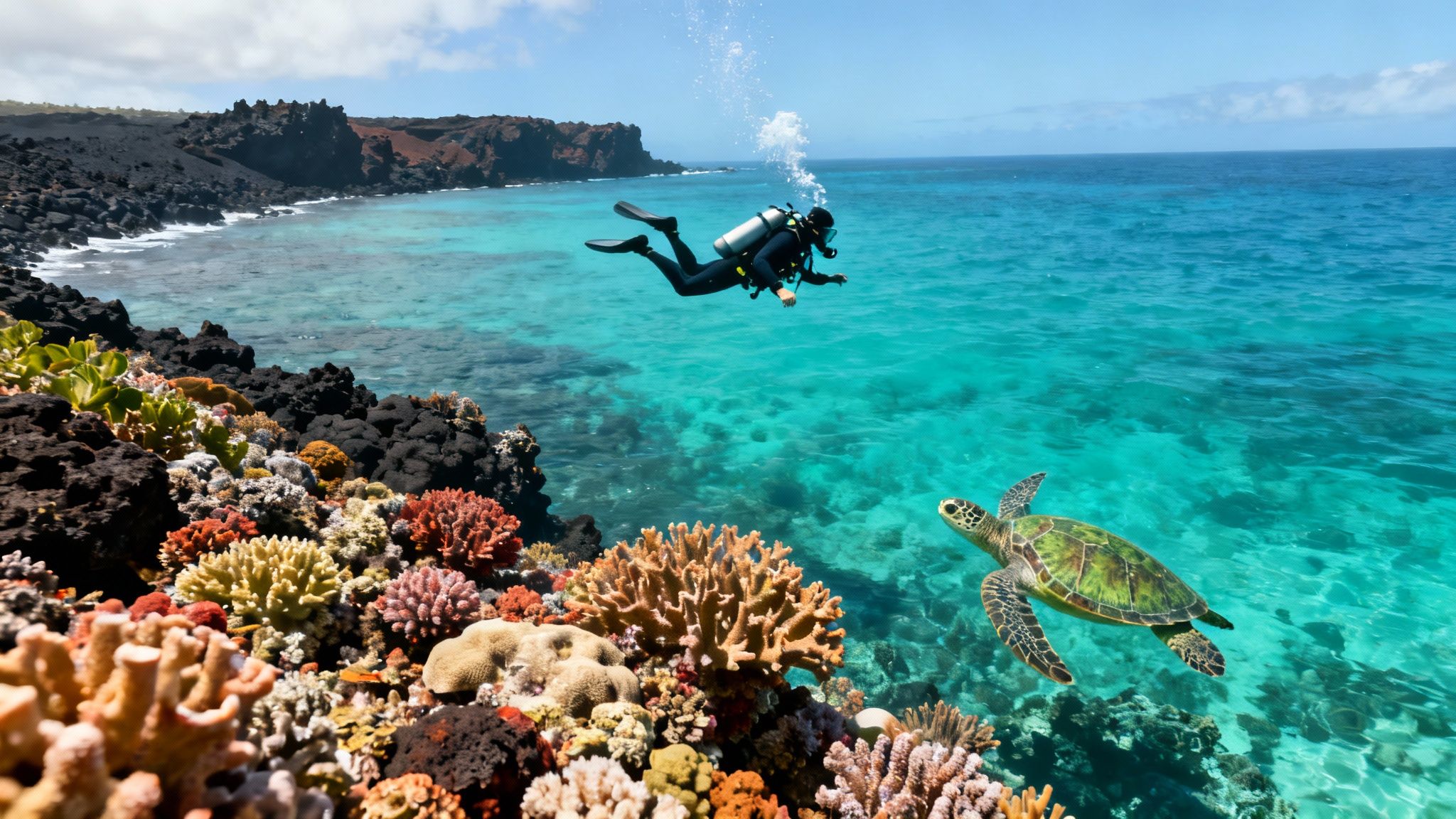
As the youngest island in the Hawaiian chain, the Big Island’s underwater world is a direct result of its volcanic origins. This isn't your average sandy-bottom diving. Here, you'll explore a dramatic landscape of lava tubes, massive archways, and deep-cut canyons, all created by ancient lava flows meeting the sea.
What makes the Kona side so special is its geography. The colossal mountains of Mauna Kea and Mauna Loa act as a natural shield, blocking the prevailing trade winds. This creates a calm, protected coastline with exceptionally clear water, where visibility often pushes past 100 feet. It’s the perfect setting for everyone, from a first-timer learning to breathe underwater to an experienced pro navigating intricate volcanic formations.
Encounters With Unique Marine Life
The Big Island’s remote location in the middle of the Pacific has fostered an incredible amount of biodiversity, including a high number of endemic species you won't find anywhere else on the planet.
On almost any dive, you can expect to see:
- Hawaiian Green Sea Turtles (Honu): These gentle creatures are a common sight, often found munching on algae or resting peacefully on the reef.
- Spinner Dolphins: It's not unusual for pods of these acrobatic dolphins to escort the dive boat, leaping and spinning through the air.
- Manta Rays: Kona is legendary for its Manta Ray Night Dive, a truly unforgettable experience where you can watch these gentle giants feed just inches from your face.
To give you a quick snapshot, here’s a look at what makes this island so exceptional for divers.
Big Island Diving At A Glance
| Feature | Why It's Exceptional | Best For |
|---|---|---|
| Volcanic Topography | Underwater lava tubes, arches, and craters create a unique and dramatic environment for exploration. | Adventurous divers, photographers, and anyone seeking unique dives. |
| Kona's Calm Waters | Sheltered by massive volcanoes, the Kona coast has consistently calm, clear conditions ideal for year-round diving. | All skill levels, from beginners to seasoned experts. |
| Endemic Species | The island's isolation means you'll see a high concentration of marine life found nowhere else on Earth. | Marine life enthusiasts and underwater naturalists. |
| Signature Dives | Home to the world-famous Manta Ray Night Dive and the thrilling Blackwater Dive, offering truly unique experiences. | Divers looking for bucket-list adventures. |
This combination of geology, calm conditions, and one-of-a-kind marine life is what puts the Big Island on every diver’s must-visit list.
More Than Just A Dive
Diving here is about the whole adventure. The Big Island offers experiences that go beyond the ordinary, from the almost surreal Manta Ray Night Dive to the deep-ocean mystery of a Kona Blackwater Dive. Think of this guide as your personal roadmap to planning the ultimate underwater trip.
To make it happen, choosing a top-rated operator like Kona Honu Divers is key to ensuring your dives are safe, comfortable, and absolutely unforgettable. Their expert guides and top-notch boats give you access to over 80 fantastic dive sites along the Kona coast, making every trip a new discovery.
The World-Famous Manta Ray Night Dive
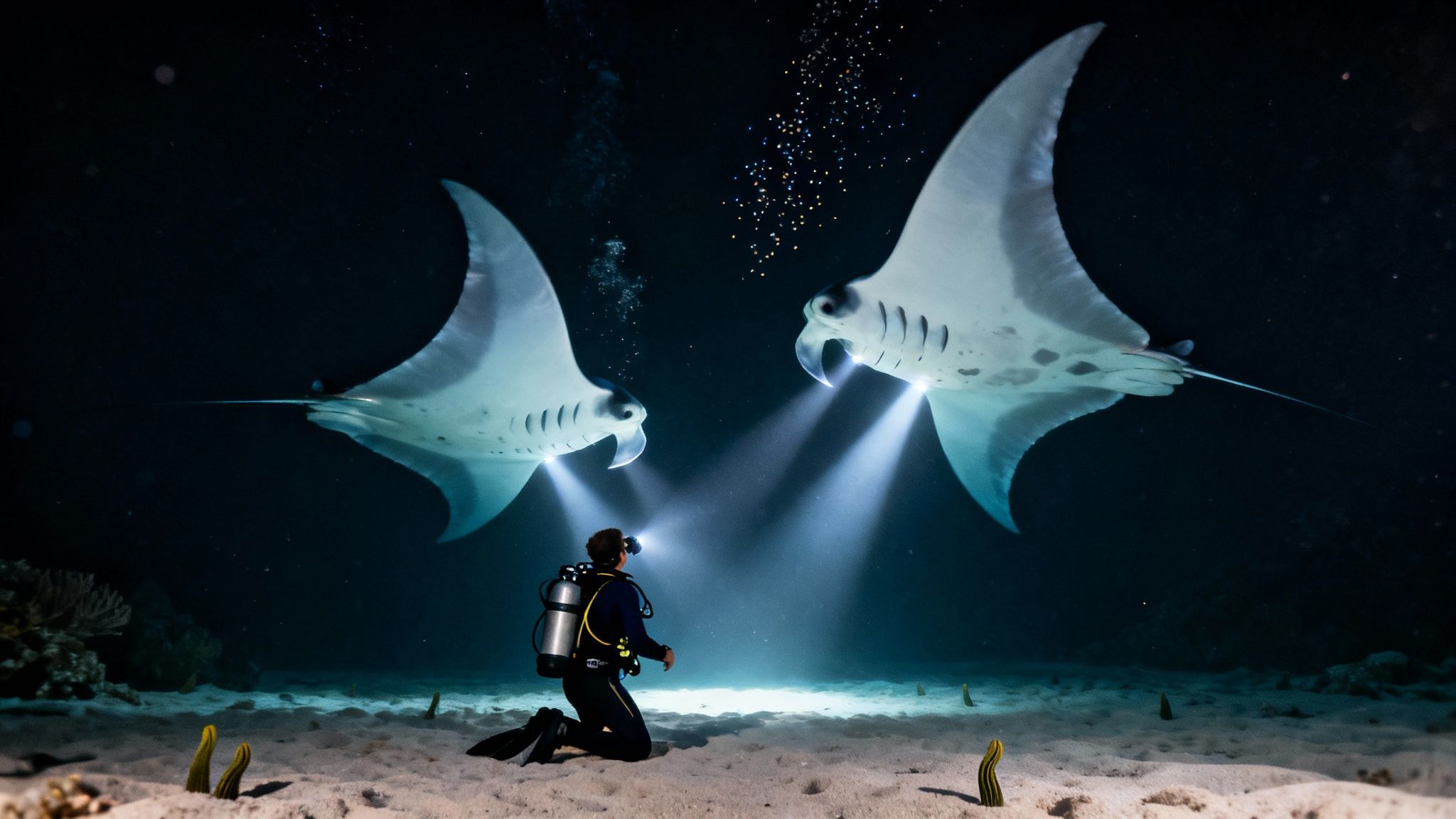
If there's one dive on the Big Island that people talk about for the rest of their lives, this is it. The Manta Ray Night Dive isn't just another dive on the logbook; it's a surreal, underwater ballet that has rightfully earned its reputation as one of the best night dives on the entire planet. It's truly a must-do.
Picture this: you descend into the warm, dark Pacific just after sunset. You find your spot on the sandy ocean floor, around 30-40 feet deep, and point your dive light straight up toward the surface. It doesn't take long. A graceful shadow emerges, gliding effortlessly into the column of light. Then another, and another, until you're surrounded by giant manta rays putting on an otherworldly acrobatic performance.
With wingspans that can stretch up to an incredible 16 feet, these gentle giants swoop and barrel-roll inches from your face. They’re drawn in by the massive feast of plankton that gets concentrated in the beams of light from all the divers. It's a powerful and humbling experience to witness this natural feeding behavior so close.
Why Garden Eel Cove is The Superior Choice
While you might hear about a couple of different spots for the manta dive, the site known as Garden Eel Cove (or Manta Heaven) is hands-down the premier location for this encounter. Its unique geography makes it a far more reliable and comfortable experience for both the mantas and the divers.
A huge part of its appeal is its protected location. Tucked away from strong currents and big ocean swells, the conditions here are almost always calmer, which makes for a much safer and more enjoyable dive. This natural shelter also helps support the vibrant reef system that surrounds the sandy "arena" where the show takes place. Because of its protected location, better viewing area, and healthier reefs, it is the superior choice for the manta ray dive tour.
The protected environment at Garden Eel Cove doesn't just mean better conditions for divers. It creates a consistent feeding ground for the mantas, which leads to more reliable sightings and a truly spectacular underwater performance night after night.
The viewing area at Garden Eel Cove is also perfectly set up for divers. The sandy bottom creates a natural stage where everyone can settle in without kicking up silt or damaging the fragile marine ecosystem. This setup gives you an unobstructed, theater-style view as the mantas perform their graceful dance in the water above. You can get even more detail in our complete guide to the manta ray night dive.
What To Expect On Your Manta Dive Tour
When you book a manta ray night dive with a top-notch operator like Kona Honu Divers, you're signing up for a seamless experience from start to finish. The whole trip is managed by pros to maximize your safety, comfort, and, most importantly, your time with the mantas.
Your adventure starts with a thorough briefing from the crew. They’ll cover everything you need to know about manta behavior and proper etiquette for a safe and respectful interaction. As you cruise to the dive site, you'll get to watch a stunning Kona sunset from the boat.
Once you’re underwater, your guide will lead you to the "campfire," a spot where all the divers gather in a circle and shine their lights up. The sense of anticipation is electric. When the first manta arrives, it's pure magic. The dive itself is stationary, so there's no complex navigation to worry about—your only job is to relax and enjoy the show.
Local operators have an 85-90% success rate with sightings, and the encounters are often breathtaking. We’re talking about dozens of mantas on a good night! Kona Honu Divers has built a stellar reputation for running a safe and absolutely phenomenal manta ray tour.
This is a bucket-list dive for a reason, and it's easily one of the most popular activities on the island. Make sure you book your spot well in advance to avoid disappointment. You can secure your place on one of the best manta ray dive tours on the Big Island and get ready for a night you'll never, ever forget.
Exploring Kona’s Most Vibrant Dive Sites
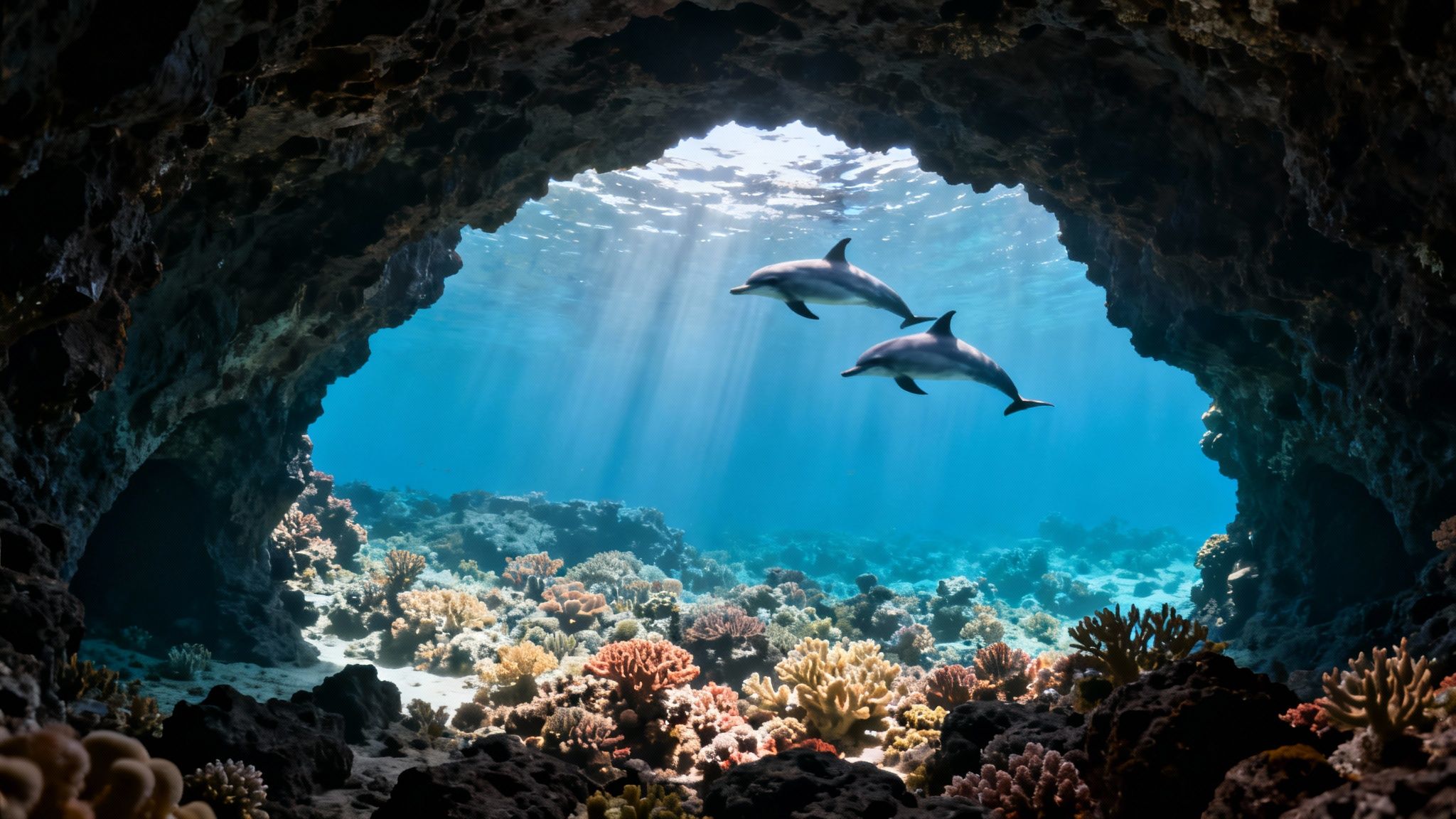
Sure, the manta ray night dive is an absolute showstopper, but don't let it overshadow the incredible diving you can do when the sun is up. The Kona coast is peppered with over 80 distinct dive sites, each a unique window into an underwater world sculpted by volcanic fire.
To truly understand what makes scuba diving on the Big Island of Hawaii so special, you have to explore its daytime wonders. These sites reveal the island’s stunning biodiversity and dramatic underwater terrain that the famous night dives only hint at.
Kealakekua Bay: A Protected Paradise
If there’s a crown jewel of Big Island diving, it has to be Kealakekua Bay. The water here is ridiculously clear, with visibility often pushing past 100 feet. But it's not just the clarity; this historic bay is a protected marine sanctuary, which means the ecosystem is about as pristine and vibrant as it gets.
Because there’s no fishing allowed, the marine life has absolutely flourished. We're talking dense schools of tropical fish, curious turtles, and frequent visits from playful spinner dolphins. The difference that protection makes is staggering, and you can learn more about the incredible biodiversity of the Kona coast here.
Crescent Beach: The Turtle Sanctuary
Another must-do on any diver’s list is Crescent Beach. This spot is famous for being a major "cleaning station" for Hawaiian green sea turtles, or honu. It's a place where you get to witness a fascinating natural behavior firsthand.
You’ll see turtles lining up at specific coral heads, patiently waiting for smaller reef fish to come and nibble algae and parasites off their shells. It’s a bustling underwater spa, and divers can hover nearby to watch this symbiotic relationship unfold. It’s not uncommon to be surrounded by a dozen or more turtles at once.
Crescent Beach offers a rare opportunity to observe honu in a calm, natural state. It’s a photographer’s dream and a perfect example of the complex, interconnected ecosystems found along the Kona coast.
With its gentle slope and calm conditions, it's a fantastic dive for any skill level and pretty much guarantees you’ll go home with amazing photos.
Au Au Crater: A Submerged Volcano
For a dive that feels like you're exploring another planet, Au Au Crater is the place to be. This is a submerged volcanic cone, and its underwater landscape is one of the most unique you'll ever see. The crater's rim forms a massive, amphitheater-like wall that drops off into the deep blue.
The walls themselves are covered in healthy corals and are full of small caves and overhangs—perfect hiding spots for all sorts of creatures. Keep an eye out for:
- Whitemouth Moray Eels: Peeking out from their rocky homes.
- Longnose Hawkfish: Perched delicately on black coral branches.
- Schools of Pyramid Butterflyfish: Floating like clouds of yellow confetti along the crater rim.
The sheer scale of the crater is awe-inspiring. Drifting along that massive wall with the endless blue on one side is a feeling you won't soon forget.
Why Kona's Coast Offers Perfect Diving Conditions
This incredible variety of dive sites is backed up by consistently amazing conditions. The massive volcanoes, Mauna Loa and Hualalai, act as a natural shield, protecting the Kona coast from the gusty trade winds. This creates a calm leeward side with clear, placid water almost every single day.
It’s this protected environment that allows delicate coral gardens to thrive and makes for exceptionally comfortable and safe diving.
Whether you're gliding through the historic waters of Kealakekua Bay, hanging out with turtles at Crescent Beach, or exploring the alien geology of Au Au Crater, the Kona coast delivers an unforgettable adventure. We run expertly guided trips to all these premier sites, making sure you see the very best of what the Big Island has to offer.
Experience the magic of these vibrant reefs and volcanic wonders for yourself by joining one of the best diving tours on the Big Island.
Unique Adventures For Experienced Divers
While Kona’s colorful reefs are spectacular for divers of all stripes, some of the most profound encounters happen far from the sunlit coral gardens. For certified divers with a real taste for adventure, the Big Island offers experiences that push the boundaries of what you think scuba diving can be.
These aren't your average reef tours. They're journeys into a wilder, more mysterious side of the ocean.
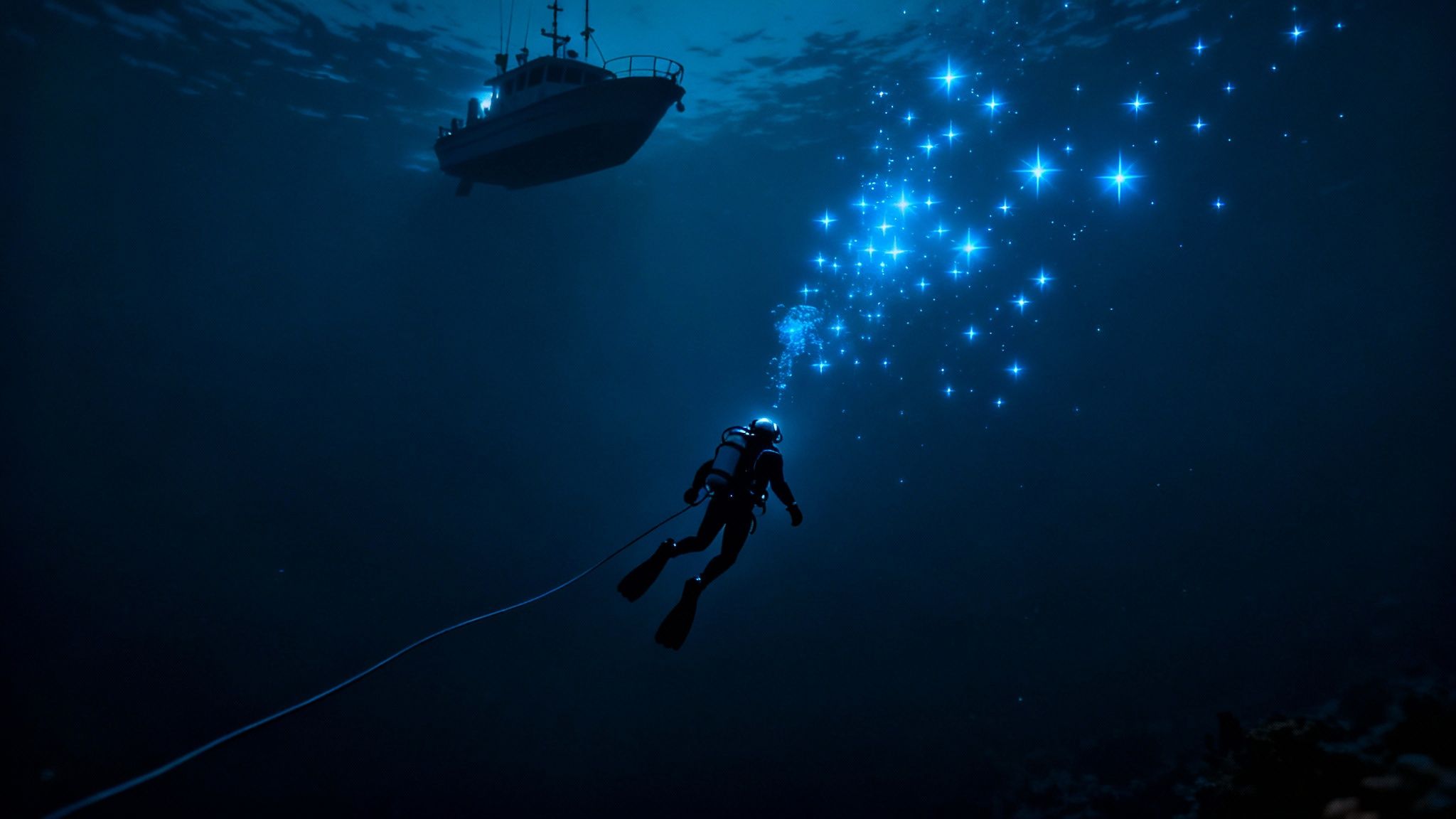
Ready to see something truly otherworldly? Picture yourself drifting in the silent, inky blackness of the open ocean, with thousands of feet of water beneath you. That’s the heart of the Kona Blackwater Dive—an experience that feels less like a dive and more like a safari to an alien planet.
The Kona Blackwater Dive: An Unforgettable Experience
People often call it "Pelagic Magic," and for good reason. On a blackwater dive tour, you get to witness the largest migration on Earth, which happens every single night. Countless strange, and often bioluminescent, creatures rise from the deep abyss toward the surface to feed.
As a diver, you're safely connected by a tether to a drifting boat, suspended in the dark. Your dive light is your window into this hidden world, illuminating the incredible life that emerges from the black.
You'll see things that defy imagination: larval-stage fish that look nothing like their adult selves, shimmering comb jellies pulsing with rainbow light, and bizarre, translucent squid. It’s a dive that forces you to slow down and just observe. It’s humbling, mesmerizing, and consistently ranks as a life-changing dive for even the most jaded veterans.
Learn more about what makes this one of the most unique forms of scuba diving on the Big Island of Hawaii by checking out our deep dive into the Kona blackwater dive experience.
The blackwater dive is a fascinating intersection of science and adventure. You are essentially exploring a mid-ocean ecosystem that is rarely seen, offering a glimpse into the mysterious lives of deep-sea organisms.
This is your chance to see a part of the ocean very few people ever will. Kona Honu Divers offers professionally guided trips that make this incredible adventure safe and accessible.
Other Advanced Diving Opportunities
Beyond the blackwater experience, Kona's unique volcanic geology serves up plenty of daytime challenges for advanced divers. The coastline is riddled with deep pinnacles, complex lava tube systems, and dramatic drop-offs that demand excellent buoyancy control and solid dive planning.
These advanced diving opportunities often head to more remote sites, which means a chance to see different marine life and more impressive underwater topography. There’s nothing quite like navigating a twisting lava tube or exploring a deep pinnacle; it rewards skilled divers with unforgettable sights and a real sense of accomplishment.
Kona Honu Divers has built a reputation for its exceptional charters and experienced crew who can safely guide you on these more demanding dives. Their focus on safety and small groups ensures the experience is both personal and thrilling.
If you have the certification and the spirit for adventure, these unique dives will open up a whole new level of excitement. You can book your spot on a thrilling blackwater night dive or join an advanced 2-tank trip to push your limits and see the wilder side of Kona's underwater world.
Planning Your Ultimate Big Island Dive Trip
With so many incredible underwater adventures waiting for you, a little bit of planning is all it takes to make your scuba diving Big Island Hawaii trip unforgettable. Nailing the logistics—from picking the right season to finding the perfect dive crew—is your ticket to experiencing the best of Kona's underwater world. Let's walk through the essentials for a flawless dive vacation.
The first question on everyone's mind is usually, "When's the best time to go?" Honestly, the answer is simple: anytime. Thanks to the massive volcanoes shielding the Kona coast, the waters here are famously calm and clear year-round. It’s one of the most reliable and consistent dive destinations on the planet.
Water temperatures are always inviting, hovering in the mid-70s during the winter and climbing into the low 80s in the summer. For most people, a 3mm or 5mm wetsuit is perfect for staying comfortable across multiple dives.
Timing Your Visit for Special Encounters
While the diving is fantastic any day of the year, some seasons offer a little something extra. If you can make it here between December and March, you're in for a truly magical treat. This is when humpback whales migrate to Hawaii to breed and give birth, and their powerful, haunting songs become the soundtrack to nearly every dive.
It's an experience that's hard to describe. You don't just hear the whales; you feel their songs vibrating through the water and deep in your chest. It adds a whole other layer of wonder to your dives.
Choosing the Right Dive Operator
This is probably the single most important decision you'll make for your trip. A great dive operator doesn't just motor you out to a dive site; they shape your entire experience with their commitment to safety, comfort, and local expertise. This is where a top-tier company like Kona Honu Divers really shines.
First and foremost, think safety and comfort. Kona Honu Divers runs modern boats built from the ground up for divers. That means spacious decks, easy entry and exit points, and an absolute game-changer: hot freshwater showers on board to warm you up between dives. Trust me, it’s a small luxury that feels like pure bliss, especially after a night dive.
The quality of a dive crew can make or break your trip. An experienced crew not only knows the dive sites inside and out but also prioritizes your safety and tailors the experience to the group's skill level, ensuring everyone has an amazing time.
The crew's passion and knowledge are just as crucial. The guides at Kona Honu Divers are true pros who love sharing what they know about the local marine life. They'll point out that camouflaged frogfish you would have missed and turn every dive into a genuine exploration. They offer a full lineup of scuba diving tours that cater to pretty much any interest you can imagine.
Dive Options for Everyone
No matter where you are in your diving journey, there’s a perfect adventure waiting for you here.
- Just Starting Out? If you've never even tried scuba, the Discover Scuba Diving program is the perfect way to get your feet wet. You'll learn the absolute basics from a certified instructor and take your first breaths underwater in a safe, controlled setting.
- Already Certified? The classic 2-tank morning dives are your ticket to exploring Kona's vibrant reefs. If you're an advanced diver, you can tackle the deeper pinnacles and ancient lava tubes.
- Nitrox Certified? Here’s a huge perk: Kona Honu Divers offers free Nitrox for all certified Nitrox divers. That means more bottom time to explore, adding serious value to your dive package.
When you book with a professional and reputable operator, you're not just buying a dive—you're investing in a safe, comfortable, and truly unforgettable experience.
Got Questions About Diving in Hawaii? We’ve Got Answers.
Planning a dive trip to a new place always brings up a few questions. To make sure you feel totally confident before hitting the water, we've put together answers to some of the things we get asked most often about scuba diving here on the Big Island. Think of it as your pre-dive briefing before you take the plunge into Kona's amazing underwater world.
Do I Need to Be Certified to Scuba Dive in Hawaii?
Not always! If you've never dived before but are curious, the Discover Scuba Diving experience is for you. It's a closely supervised, introductory dive with a certified instructor that lets you breathe underwater and see the reef without committing to a full course. It's the perfect way to see if you love it.
However, if you want to join our regular boat dives and explore a wider variety of sites, you'll need at least an Open Water Diver certification. Honestly, with its calm, clear water, the Kona coast is one of the best places on the planet to get that certification or even move on to more advanced training.
What Kind of Marine Life Will I See in Kona?
Kona is bursting with life. On any given dive, you're almost guaranteed to see our famous Hawaiian green sea turtles (honu), several kinds of moray eels peeking out from the reef, octopuses, and huge, shimmering schools of colorful fish.
Keep your eyes peeled, and you might also get lucky and spot majestic eagle rays gliding by, a pod of spinner dolphins, or even a whitetip reef shark resting on the sand.
The most incredible part of diving here in the winter (December through March) isn't something you see—it's something you hear. The haunting, powerful songs of humpback whales literally vibrate through your chest while you're underwater. It’s an experience you’ll never, ever forget.
Is the Manta Ray Night Dive Safe for Beginners?
Absolutely. The world-famous Manta Ray Night Dive is incredibly safe and one of the most well-managed dives you'll ever do, making it perfect for newer divers. It's a stationary dive, which means you'll be kneeling or sitting on a sandy bottom in fairly shallow water—usually around 30-40 feet.
You just hold on, point your light up, and watch the show. There's no swimming or navigating, so you can just relax and soak in the spectacle while our expert guides make sure everyone is safe and comfortable.
What Should I Pack for a Big Island Dive Trip?
Besides your certification card and logbook, a few things will make your trip much smoother.
- Reef-safe sunscreen is a must, along with a good hat and sunglasses for the boat rides.
- Many divers bring their own mask, as a perfect, leak-free fit makes a huge difference. Our rental gear is top-notch, though!
- A light jacket or hoodie is a great call for warming up after a night dive when the breeze kicks in.
- Most importantly, bring an underwater camera! The photo ops in Kona are truly second to none.