
If you're dreaming of world-class scuba diving, the Big Island of Hawaiʻi should be at the very top of your list. It's a place defined by incredibly clear water, stunning underwater landscapes carved by volcanoes, and a dizzying amount of marine life. The Kona coast, in particular, is a global hotspot, renowned for its calm conditions and truly unique dives—like the legendary Manta Ray Night Dive.
Why The Big Island Is a Diver’s Paradise
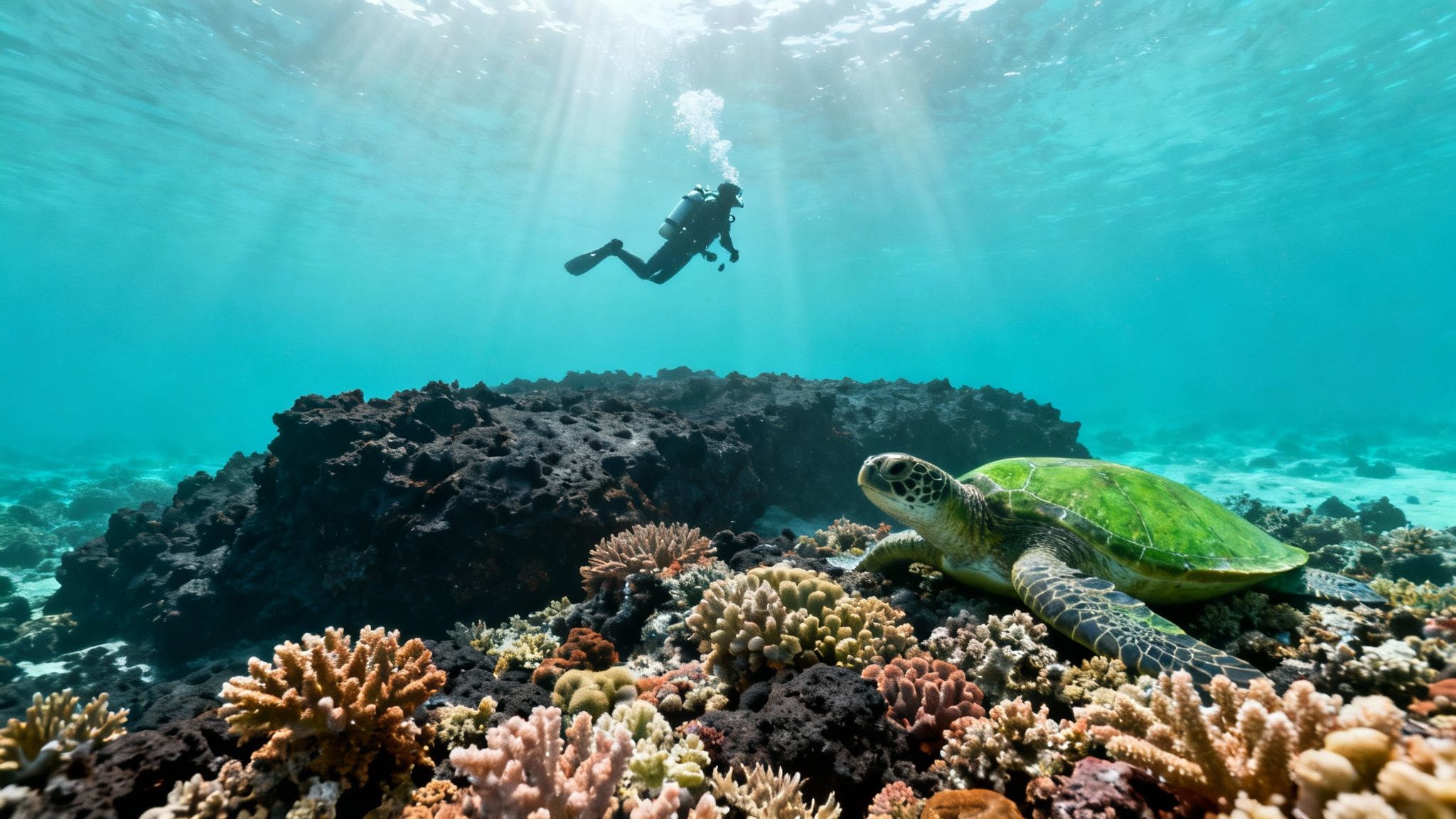
Welcome to an underwater world that is, without a doubt, Hawaiʻi’s premier diving destination. Think of this guide as your personal roadmap to an unforgettable adventure along the Kona coast. Its secret? The massive volcanoes on the island protect this side from the prevailing trade winds, creating a natural shield that results in exceptionally calm and clear waters pretty much year-round.
This protection is what makes Kona’s diving so consistently spectacular. Down below, the ocean floor is a masterpiece sculpted by lava flows. You'll get to explore ancient lava tubes, swim through dramatic archways, and drift along coral gardens that are absolutely bursting with life. It's the kind of place where every single dive reveals something new.
For a quick overview of what makes Kona so special, check out the highlights below.
Big Island Diving At A Glance
| Feature | Details |
|---|---|
| Water Temperature | A comfortable 75-80°F (24-27°C) all year. |
| Visibility | Typically excellent, often exceeding 100 feet (30+ meters). |
| Marine Life | Home to ~1,100 fish species, with 129 endemic species found nowhere else. |
| Key Encounters | Manta rays, green sea turtles (honu), spinner dolphins, and humpback whales (in winter). |
| Topography | Dramatic volcanic formations: lava tubes, archways, and pristine coral reefs. |
| Best For | All levels, from beginners on calm reef dives to advanced divers on specialized charters. |
| Signature Dives | The world-famous Manta Ray Night Dive and the thrilling Blackwater Dive. |
As you can see, the conditions and marine encounters here are truly second to none.
A Hub of Unique Marine Life
So, why has the Big Island become the go-to spot in the Hawaiian Islands? It really comes down to its incredible biodiversity and those perfect diving conditions. The island is home to around 1,100 species of fish, and what's truly amazing is that 129 of these are found nowhere else on Earth. As explained by scubadiving.com, this makes for a one-of-a-kind ecosystem for divers.
This variety means you'll be sharing the water with an amazing cast of characters. Some of the regulars include:
- Honu (Green Sea Turtles): You'll often spot them resting on the reef or gliding gracefully past you.
- Spinner Dolphins: Famous for their playful acrobatics, they frequently cruise by dive boats.
- Manta Rays: The gentle giants that are the stars of the world-famous night dive.
- Endemic Fish: Keep an eye out for the brightly colored Milletseed Butterflyfish and the Hawaiian Sergeant—fish you can only see right here.
Unforgettable Dive Experiences Await
This guide is your all-in-one briefing for the ultimate trip, covering everything from the must-do Manta Ray Night Dive to the unique Blackwater dives that attract adventure-seekers from around the globe. We'll introduce you to Kona Honu Divers, a top-rated local operator dedicated to providing safe, fun, and spectacular underwater diving tours.
But don't just take our word for it. See why divers consistently trust their expert team by checking out their reviews below.
Ready to take the plunge into one of the world's best diving locations?
Exploring Kona’s Top Underwater Dive Sites
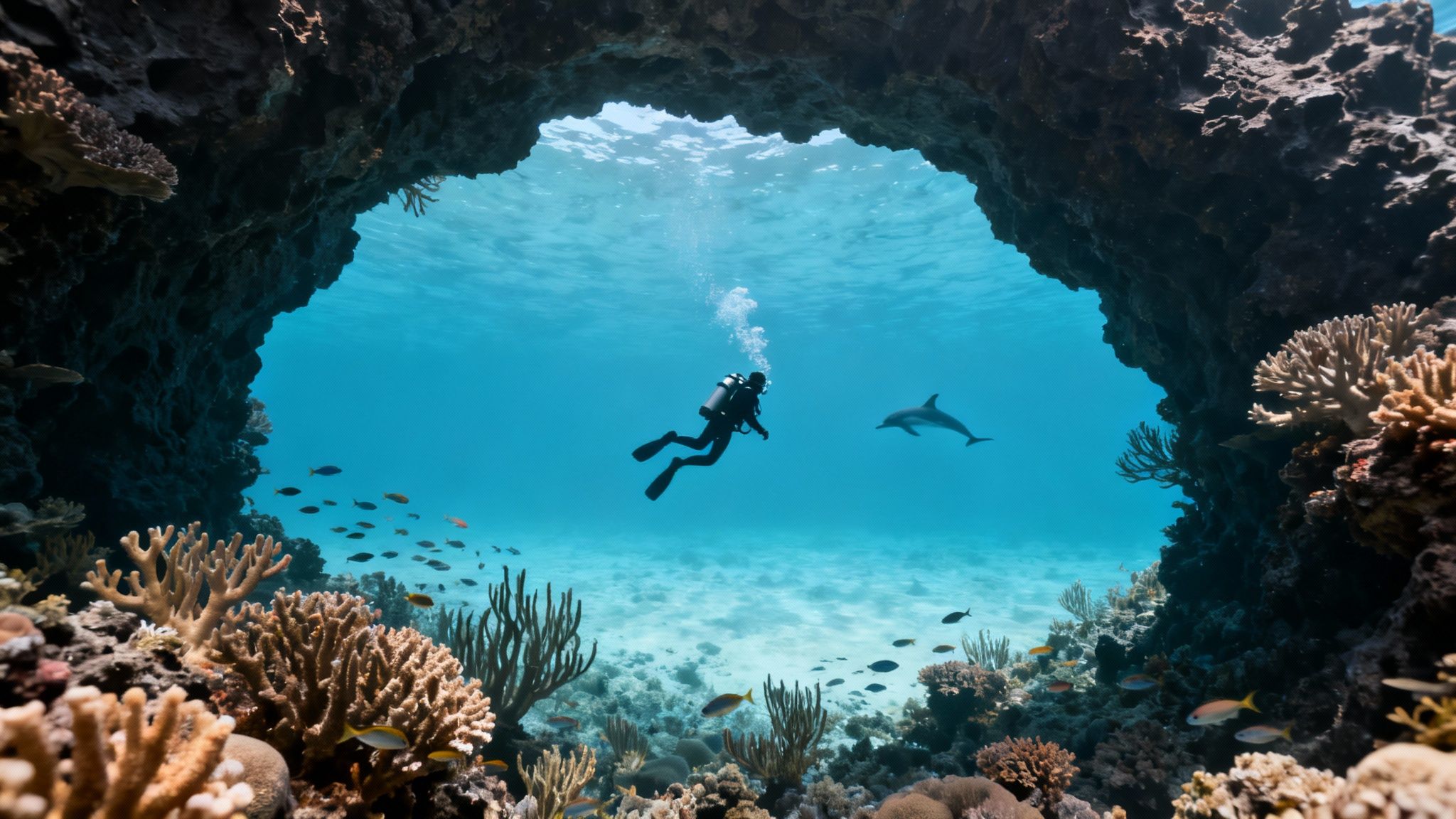
The Kona coast is, without a doubt, a diver's playground. It’s lined with an incredible string of world-class dive sites that give you a direct window into Hawaii's vibrant underwater world. The landscape here has been dramatically sculpted by ancient volcanic activity, creating a stunning topography of intricate lava tubes, massive archways, and deep canyons you just won't find anywhere else. Each site tells a unique story of the island's fiery origins.
Picture this: you're drifting weightlessly through an ancient lava tube as sunlight streams through cracks in the ceiling, lighting up the path ahead. These incredible formations are now home to a thriving community of marine life. It's totally normal to see green sea turtles (honu) resting on clean rock shelves or a whitetip reef shark snoozing under a ledge. That variety is what makes Kona so special—whether you're a new diver captivated by colorful reef fish or an experienced pro looking for dramatic drop-offs, the underwater world here always delivers.
Must-See Dive Locations
While we have dozens of fantastic spots, a few consistently rise to the top as must-do dives for anyone scuba diving the Big Island of Hawaii. These sites really showcase the best of what Kona offers, from unique geological features to unbelievable wildlife encounters. At Kona Honu Divers, we make a point to visit these premier locations regularly to give our divers the full Kona experience.
Some of the iconic sites you might explore with us include:
- Golden Arches: Just like the name suggests, this site is famous for its magnificent lava rock archway. It's a photographer's dream, especially when it’s swarmed by schools of brilliant yellow milletseed butterflyfish.
- Suck 'Em Up Lava Tube: This one is a real thrill. It's a swim-through that gets its name from the gentle surge that pulls you through the tube. It’s an exciting and unforgettable ride for certified divers.
- Turtle Pinnacle: A classic "turtle cleaning station" where Hawaiian green sea turtles gather to let surgeonfish pick their shells clean. It's one of the most reliable places to see these gentle giants up close.
The Magic of Volcanic Topography
What truly makes Kona diving different is the underwater architecture. Unlike many reef systems built slowly over millennia by tiny coral polyps, Kona's reefs are built on a foundation of ancient lava flows. This creates a solid, durable base for coral to grow on and results in unique features you can actually swim through and explore.
Think of it like exploring a submerged city, with tunnels, caves, and archways forming the streets and buildings. This complex structure provides endless hiding spots for eels, octopus, and countless species of fish, making every dive a treasure hunt.
This dynamic environment also means the diving is incredibly varied. One dive might have you exploring a shallow, sunlit reef teeming with colorful fish, while the next could involve navigating a deep, cavernous lava tube. The possibilities for adventure feel almost endless.
Encounters with Iconic Marine Life
Beyond the stunning landscapes, the marine life is the star of the show. The healthy reef systems support a dense population of fish and invertebrates. You’ll be greeted by schools of Moorish idols, encounter shy octopuses hiding in plain sight, and maybe even spot a majestic eagle ray gliding by in the deep blue.
Spinner dolphins are also a common sight from the dive boat, and they often put on an incredible acrobatic show for us between dives. This rich biodiversity is why so many divers come back to the Big Island year after year—every single dive offers a chance to see something new and spectacular. If you're ready to explore these incredible underwater havens, Kona Honu Divers offers a wide variety of diving tours that cater to all skill levels.
Witnessing The Famous Manta Ray Night Dive
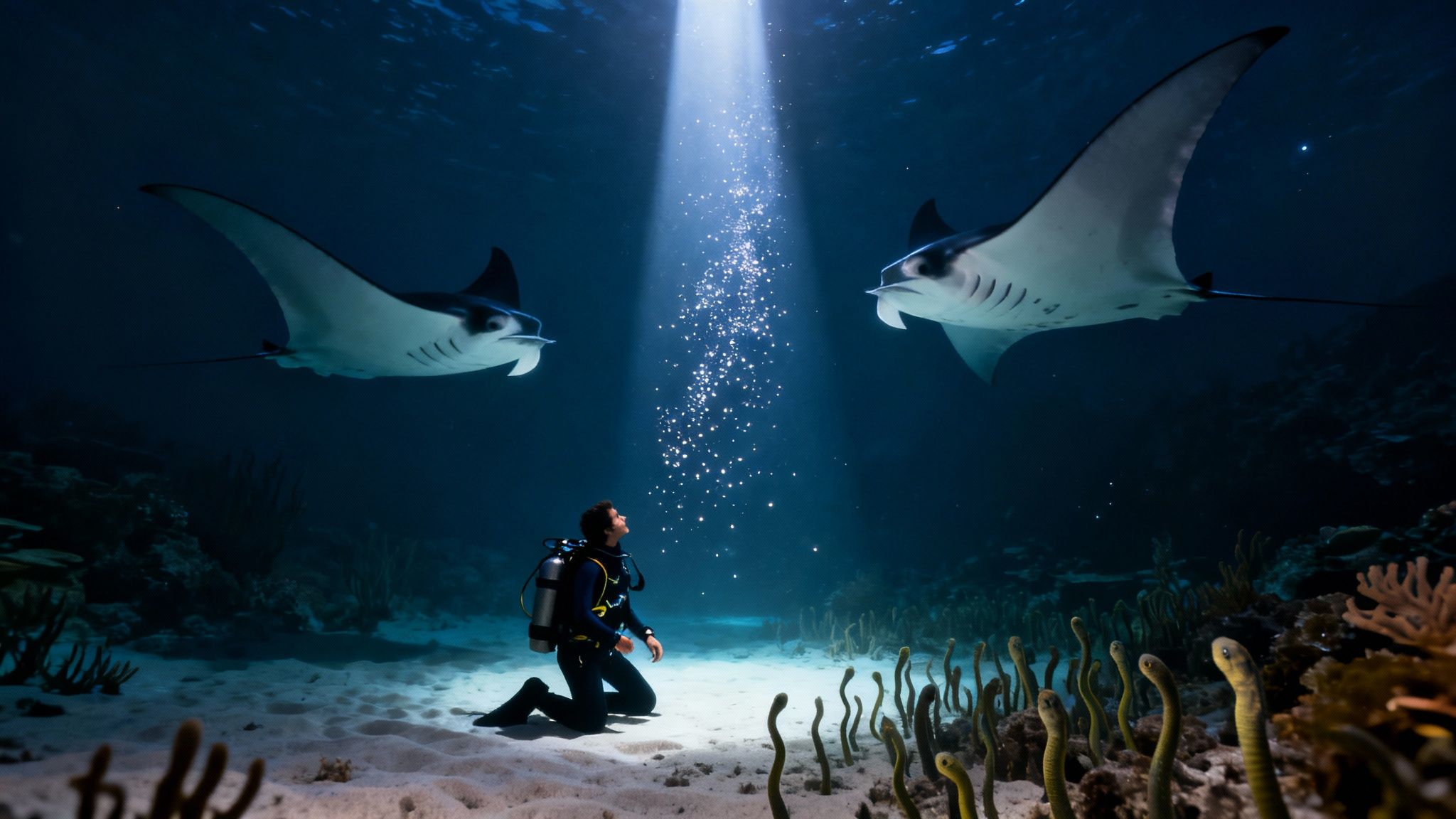
Picture this: you're kneeling on the ocean floor, surrounded by the quiet darkness of the night. A powerful beam of light pierces the water from below, creating an illuminated stage. Then, out of the deep blue, a massive, graceful shadow emerges, swooping and gliding just inches above your head. This isn't a scene from a movie. This is the world-famous Manta Ray Night Dive, a true bucket-list experience that makes scuba diving the Big Island of Hawaii completely unforgettable.
The magic is beautifully simple. We set up powerful, stationary lights on the seafloor. Think of them as giant underwater bug zappers, attracting billions of microscopic plankton. This all-you-can-eat plankton buffet draws in the local reef manta rays for a feeding frenzy, and we get a front-row seat to the show. You’ll watch in awe as these gentle giants perform barrel rolls and graceful loops, filtering the plankton from the water right before your eyes.
This isn’t some hit-or-miss wildlife sighting; it's one of the most reliable and spectacular marine encounters on Earth. The main dive site, Manta Heaven, boasts an incredible 90% success rate, with an average of 11 manta rays showing up each night. Divers are comfortably positioned at a depth of about 35 feet on a sandy bottom, giving them a perfect, unobstructed upward view of the whole performance.
Why Garden Eel Cove Is The Premier Choice
While there are a couple of spots to see the mantas, Garden Eel Cove (nicknamed "Manta Heaven") is hands-down the superior choice for a manta ray dive tour. Its location is naturally sheltered from the open ocean swells, which means the conditions are almost always calmer and more comfortable. For a night dive, that stability makes all the difference.
On top of that, the underwater layout is perfect for viewing. The sandy area where divers gather is like a natural amphitheater, ensuring everyone gets an amazing view as the mantas feed overhead. The reef surrounding the area is also stunningly vibrant and healthier, adding to the beauty of the whole experience. When you book a manta ray dive tour that goes to this site, you're giving yourself the best shot at a truly mind-blowing dive.
A Truly Humbling Experience
Few things in the underwater world compare to the feeling of a manta ray, with its 12-foot wingspan, gliding silently over you. It’s peaceful, humbling, and utterly awe-inspiring—a moment that connects you directly with one of the ocean's most magnificent creatures.
It's impossible to describe the feeling of watching a massive fish the shape of a stealth bomber coming into vision. It’s akin to watching your child ride a bike for the first time or finding a winning lottery ticket.
This is far more than just another dive; it's a memory you'll carry with you for the rest of your life. To learn more about what to expect and how to prepare, check out our complete guide to manta ray tours on the Big Island. At Kona Honu Divers, we're all about making this encounter safe, respectful, and absolutely unforgettable.
Advanced Diving Adventures And Blackwater Dives
For certified divers who are ready for something truly different, the Big Island offers challenges that go way beyond the beautiful coral reefs. While the daytime dives here are world-class, some of the most mind-blowing experiences happen long after sunset.
And for the seasoned diver looking for the ultimate thrill? It’s without a doubt the Kona Blackwater Dive. This is an experience that genuinely has no equal on Earth.
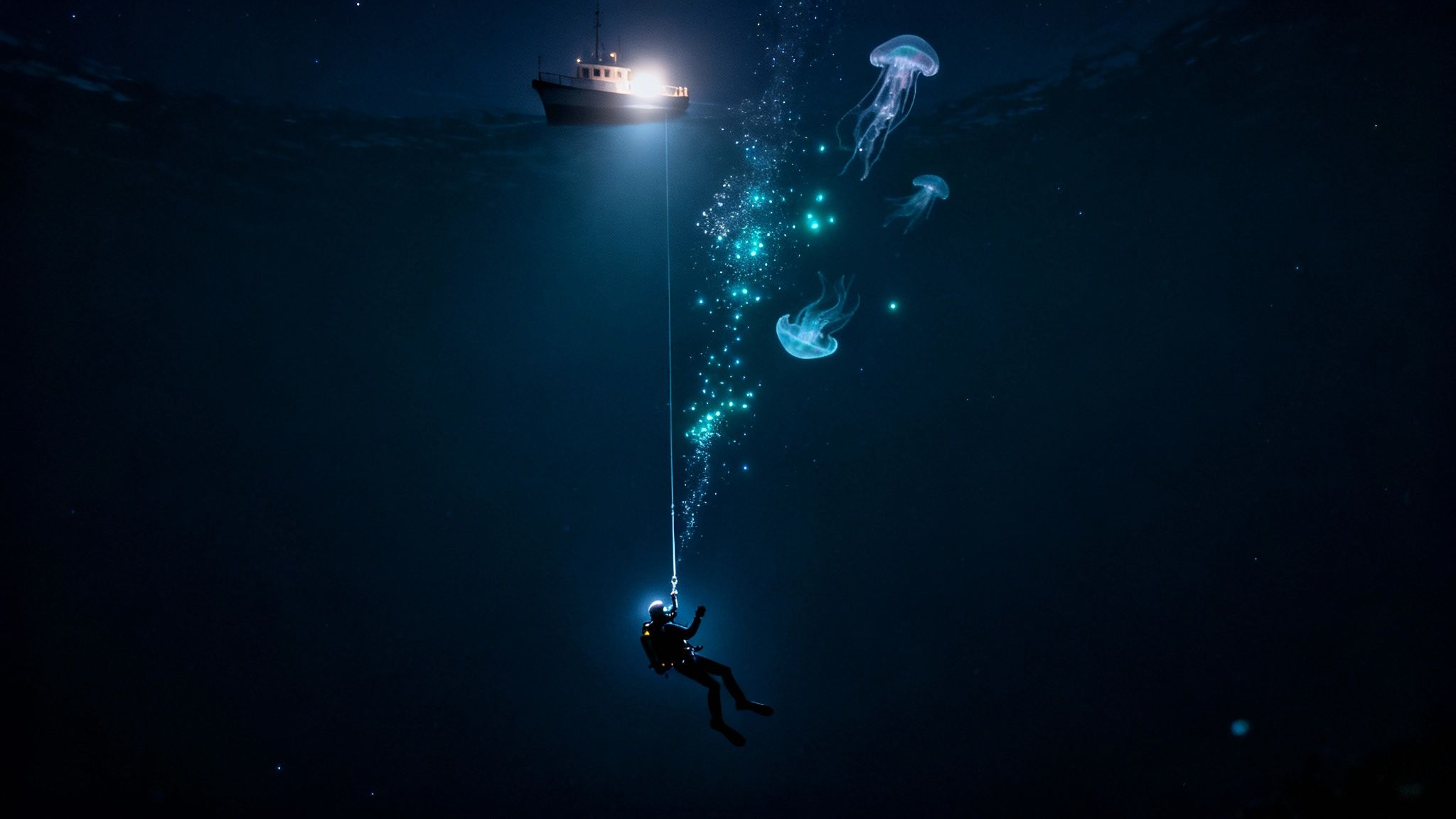
This isn’t your average night dive. Forget the reef. Picture this: you’re drifting miles from shore, suspended in the pitch-black open ocean. The seafloor is thousands of feet below you—a humbling and electrifying feeling. You’re floating in "inner space," about to witness one of the planet's greatest natural spectacles.
Every single night, the largest vertical migration on Earth takes place in the deep ocean. Countless strange, and often bioluminescent, creatures rise from the abyss toward the surface to feed. It's a front-row seat to a parade of bizarre and beautiful life forms that most people don't even know exist.
What It's Like on a Blackwater Dive
The Kona Blackwater Dive is a highly specialized charter that demands solid skills and an adventurous spirit. You’re not exploring a reef with a visible bottom; you’re floating in the vast, open water column. Here’s how it works:
- The Setup: We motor several miles offshore where the water is thousands of feet deep. We then deploy a weighted downline with a set of powerful lights, creating a beacon of life in the darkness.
- The Dive: You and the other divers are tethered to the main line. This keeps everyone together and with the boat as we drift on the current. You’ll descend to a planned depth, usually around 50 feet.
- The Show: Now, you just float, watch, and wait. The lights act as a magnet, attracting a constant procession of deep-water organisms—creatures that look like they came straight out of a sci-fi movie. You might see see-through larval fish, jellyfish pulsating with their own light, and otherworldly cephalopods.
This dive is all about patient observation, not covering ground. It’s an almost meditative experience that rewards you with sightings of creatures you’ll never find in the shallows.
The sheer otherworldliness of the blackwater dive is what makes it a pinnacle experience in scuba diving on the Big Island of Hawaii. It’s a glimpse into a hidden world, a frontier of marine biology that is still being explored. For more details on what makes this dive so unique, check out this guide to blackwater diving in Kona.
Exploring Advanced Reefs
Beyond the blackwater experience, advanced divers have the chance to explore deeper outer reefs that are off-limits for beginners. These sites often have more dramatic walls and drop-offs, sometimes with stronger currents that attract larger pelagic species.
To join these dives, you’ll need rock-solid buoyancy control and be completely comfortable with deeper dive profiles.
Exploring these pristine, less-visited sites is a fantastic way to challenge yourself and see a completely different side of Kona’s underwater world. If you’re an experienced diver looking to push your limits, these trips deliver a seriously rewarding adventure. Kona Honu Divers offers an advanced dive tour for those ready for the challenge.
How To Plan Your Big Island Dive Trip
Planning a dive trip to the Big Island is half the fun, and thankfully, a little prep work goes a very long way here. The best part? Kona’s unique geography makes planning surprisingly simple. It’s tucked away on the leeward (sheltered) side of the island's colossal volcanoes, which means we get fantastic, dive-able conditions pretty much all year round.
You can stop worrying about a narrow “dive season.” Our protected coastline provides consistently calm waters and great visibility, allowing us to run daily boat dives without the constant threat of weather cancellations you might find elsewhere. This reliable setup, combined with our incredible underwater world, is exactly why the Big Island is a top-tier global diving destination.
When to Visit and What to Expect
While the diving is always great, there are some subtle differences throughout the year. Water temperatures are quite comfortable, usually hovering between 75-77°F (24-25°C) in the winter and warming up to a balmy 78-80°F (26-27°C) in the summer. Visibility is often spectacular, frequently pushing past 100 feet.
If there's one seasonal event you don't want to miss, it's the winter months (December through March). This is humpback whale season. You can't dive with them, but hearing their haunting songs reverberate through the water on a dive is a powerful, unforgettable experience.
Gear and Packing Essentials
Packing for Kona is straightforward. Most divers find a 3mm or 5mm full wetsuit is perfect, depending on personal preference and the time of year. Here’s a quick checklist to make sure you don't forget the important stuff:
- Your Core Gear: At a minimum, bring your own mask, fins, and dive computer. If you're renting a BCD and regulator, just make sure they're a good fit.
- Certification Cards: Don’t leave home without your C-card! Bring any specialty cards too, especially if you plan to dive Nitrox.
- Reef-Safe Sunscreen: Help us protect our beautiful coral reefs. Stick to mineral-based sunscreens that use zinc oxide or titanium dioxide.
- Reusable Water Bottle: Staying hydrated on the boat is crucial, and bringing your own bottle helps us cut down on single-use plastic.
Maximizing Your Dive Time with Certifications
To truly make the most of your scuba diving Big Island Hawaii adventure, having the right certifications is a total game-changer. You can certainly get certified here, but we always suggest completing your Open Water course at home before you fly out. That way, you don't spend precious vacation days in a classroom—you spend them exploring our world-class dive sites.
For divers who are already certified, getting your Enriched Air Nitrox certification is one of the single best things you can do before your trip. Diving with nitrox gives you longer bottom times and shorter surface intervals, which simply means more time safely exploring underwater.
Choosing an operator like Kona Honu Divers offers a huge advantage here, as we provide free nitrox on all our boats. This isn't just a cost-saving perk; it genuinely enhances your entire dive vacation, letting you squeeze every last drop of adventure out of your time with us. To get a better sense of budgeting, check out our guide on how expensive scuba diving in Hawaii can be.
With these tips in your back pocket, you’ll show up in Kona feeling prepared, confident, and ready to jump in for an incredible dive trip.
Why We’re the Top Choice for Diving in Kona
Let's be honest, the dive company you choose can make or break your entire vacation. A great guide and a comfortable boat can turn a good dive into a truly unforgettable one. When it comes to the best scuba diving the Big Island of Hawaii has to offer, we believe the choice is clear. We've built our entire operation around providing a complete, high-quality experience that’s rooted in expertise, safety, and a genuine love for the ocean.
It really comes down to the people. Our crew brings a staggering 200+ years of combined industry experience to every single trip. These aren't just guides punching a clock; they're passionate marine life experts, meticulous safety professionals, and amazing storytellers who live to share the magic of Kona's underwater world with you. Their intimate knowledge of these dive sites means you’ll see the best of what’s out there, from the tiniest critters to the most dramatic lava tubes.
It’s All About the Experience
A great dive day starts long before you get in the water. We run a fleet of custom-built dive boats designed from the hull up for diver comfort and convenience. That means a smooth ride out to the site, plenty of room to gear up without bumping elbows, and thoughtful little touches that make your time on the surface just as relaxing as your time below. Forget being crammed on a boat or feeling rushed—our whole vibe is about a premium, laid-back experience from start to finish.
This focus on the diver is in our DNA. You’ll see it in the little things:
- Small Groups, Big Adventure: We intentionally keep our groups small. This ensures a personal, uncrowded feel both on the boat and, more importantly, on the reef.
- Safety is Everything: Our gear is maintained to the highest standards and we follow strict safety protocols. This lets you relax and just enjoy the moment, knowing you're in good hands.
- Awesome Perks: We love to offer incredible value, like free nitrox for certified divers. It’s a simple perk that means longer bottom times and more time to explore.
Unmatched Value and Service
Beyond our crew and top-notch boats, we focus on providing real, tangible benefits. Our "Early Diver Discount" is a great way to save a little cash just by booking one of our morning charters, which happen to be one of the best times to see the reefs come alive. It's our way of saying thanks for diving with us.
Choosing Kona Honu Divers isn’t just booking a dive trip—it’s investing in a safe, memorable, and expertly guided adventure. It’s about spending your time with a team that loves the ocean as much as you do.
The glowing reviews from thousands of divers really say it all. We're not just another dive shop; we’re a community of ocean fanatics dedicated to giving you the best day on and in the water, period.
Ready to see for yourself? Take a look at all of our expertly guided Kona diving tours and find the perfect adventure for your trip.
Your Big Island Diving Questions, Answered
We get a lot of great questions from divers getting ready for their trip to Kona. Here are a few of the most common ones we hear, with answers to help you plan your adventure and know exactly what to expect.
Is it actually safe to dive with manta rays?
Yes, 100% safe. In fact, it's one of the most incredible and peaceful big animal encounters you can have anywhere in the world.
Manta rays are gentle giants. They're filter feeders, so their only interest is in the tiny plankton floating in the water. Unlike their stingray cousins, they don't have a stinger or a barb, making them completely harmless to humans. The golden rule is simple: look, but don't touch. Touching them can remove their protective mucous coating, so we just let them do their thing while we watch in awe.
Do I need a scuba certification to even try it?
Not at all! If you're just curious about what it's like to breathe underwater, you can sign up for an introductory experience, often called a Discover Scuba Dive. You'll be paired with an instructor for a closely supervised dive in a shallow, calm spot.
However, to really explore what Kona has to offer—including the world-famous Manta Ray Night Dive—you'll need to be at least an Open Water Diver. That certification is your ticket to the best sites.
What happens if the mantas don't show up for the night dive?
It's pretty rare for the mantas to be a complete no-show, but it's nature, and there are no guarantees. The best dive operators know this.
Most reputable charters have a "manta guarantee" or a second-chance policy. If your dive ends up being manta-less, they'll typically let you re-book for another night on a space-available basis, either for free or at a steep discount. A pro tip: try to book your manta dive for one of your first nights on the island, just in case you need to use that second chance.
What's the best time of year to dive the Big Island?
Honestly, there isn't a bad time. Kona's western coast is sheltered from the prevailing winds, which means calm, diveable conditions pretty much year-round.
The water is always warm and inviting, usually hovering between a comfortable 75-80°F (24-27°C). While the diving is great any month, the winter season from December through March adds a little extra magic. That's when the humpback whales are here, and hearing their songs echo through the water while you dive is an experience that will stay with you forever.
Why do so many divers here use Nitrox?
It's all about getting more out of your time underwater. Diving with enriched air nitrox means you breathe a gas mix with a higher oxygen and lower nitrogen content. By absorbing less nitrogen, you can safely extend your bottom time on deeper dives and shorten your surface intervals between them.
Basically, it means more time exploring Kona's incredible reefs and lava tubes. Many operators, including Kona Honu Divers, even offer free nitrox for certified divers. It's a fantastic perk that helps you maximize every moment of your dive vacation.
Ready to see it all for yourself? Check out all the incredible diving tours in Kona and start planning your trip.