
Picture this: you're sinking slowly into warm, turquoise water, the Hawaiian sun shimmering on the surface above. Below you, a dramatic landscape carved by ancient volcanoes unfolds. This isn't just a fantasy—it's what scuba diving on the Big Island of Hawaii is all about. The island's fiery past created an incredible underwater world of lava tubes, huge archways, and vibrant coral reefs teeming with life.
Why the Big Island Is a Diver’s Dream
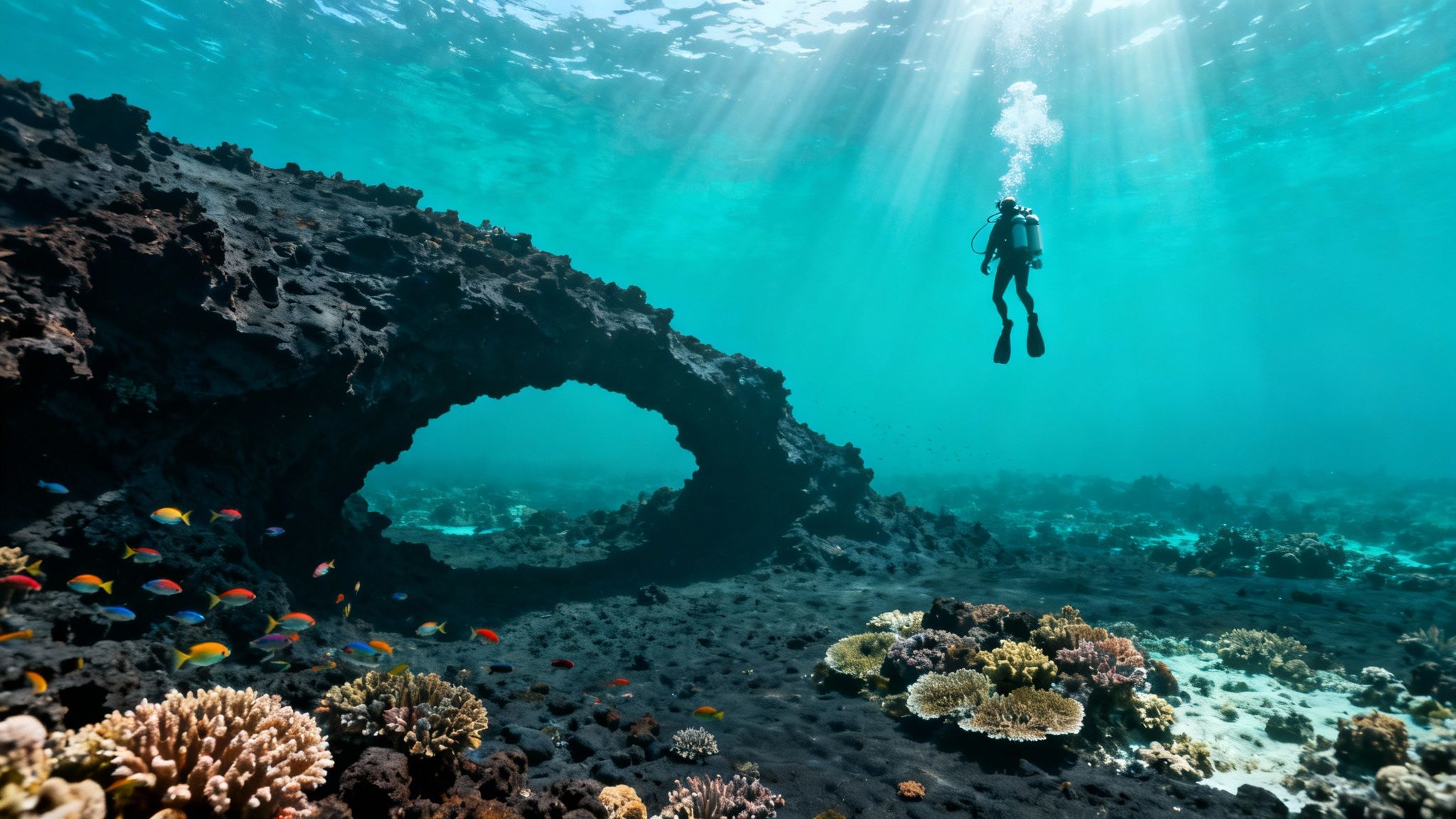
The Big Island isn't just another pretty spot to dive; it's a world-class destination for underwater adventure. What sets it apart is its unique geology. Millennia of volcanic activity have sculpted an underwater playground you won't find anywhere else. You'll get to explore dramatic lava formations, from twisting swim-throughs and dark caves to massive pinnacles that act as magnets for fish and other marine critters.
This volcanic rock foundation also happens to be the perfect substrate for coral to grab onto and grow. The Kona coast, in particular, gets a huge advantage by being sheltered from the strong trade winds, which keeps the water exceptionally calm and clear. This natural protection allows massive, healthy reef systems to flourish, bursting with color and life.
Unbeatable Diving Conditions
There’s a good reason the Big Island has earned its reputation as one of the best places on the planet to scuba dive. For starters, visibility is routinely incredible, often exceeding 100 feet. The water is always comfortable, too, hovering around 75°F in the winter and a balmy 80°F in the summer.
These fantastic conditions are kept stable by cooler Pacific currents that help the reefs thrive and keep marine life abundant. While many people say the best time to visit is between April and October when the ocean is at its calmest, Hawaii’s tropical climate makes for phenomenal diving year-round. You can learn more about the Big Island's unique underwater landscape at ScubaDiving.com.
A Sanctuary for Diverse Marine Life
The sheer amount of marine life here is staggering. Seriously, on almost any dive, you have a great chance of seeing something amazing.
- Honu (Green Sea Turtles): These graceful creatures are a constant and welcome presence. You'll often find them snoozing on the reef or gliding effortlessly through the water.
- Endemic Fish Species: A huge percentage of the fish you'll see in Hawaii live nowhere else on Earth. Keep an eye out for colorful butterflyfish, intricate wrasses, and massive schools of bright yellow tang.
- Larger Pelagics: The big stuff is out here, too. It's common to see playful spinner dolphins from the boat, and underwater, you can encounter majestic manta rays and whitetip reef sharks. The possibility of a big animal encounter is always there.
This guide is your roadmap to planning an underwater adventure you'll never forget. From the world-famous manta ray night dive to secret spots only the locals know, we’ll show you exactly why scuba diving the Big Island needs to be at the top of your list. Ready to see it for yourself? Check out our expert-led diving tours and let's get you in the water.
Witnessing the World-Famous Manta Ray Night Dive
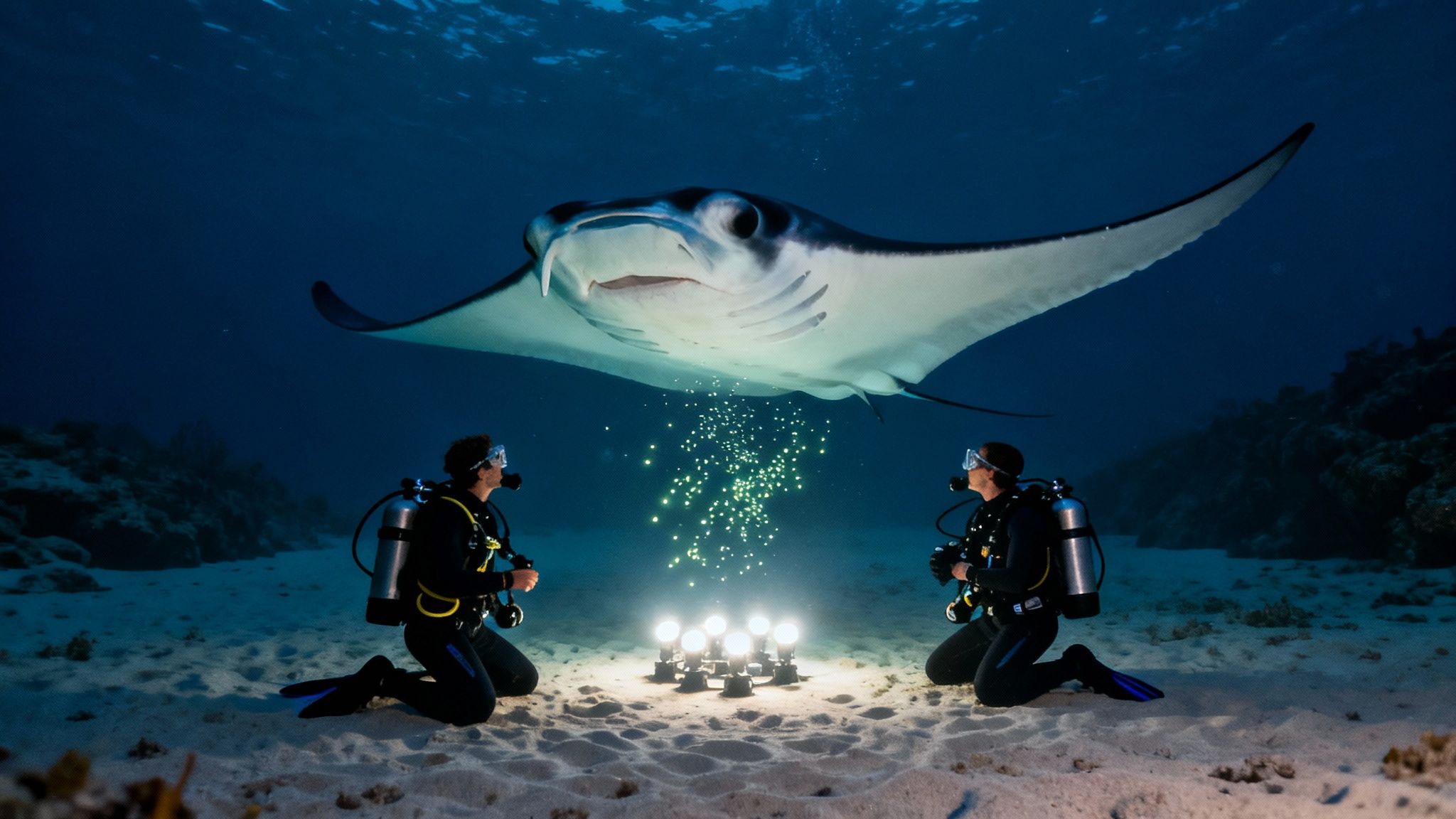
Of all the incredible adventures you can have scuba diving the Big Island, one experience is truly in a league of its own: the Manta Ray Night Dive. It’s hard to put into words, but just imagine it. You descend into the dark, quiet ocean, settle onto the sandy bottom, and turn on your light. Before long, an underwater ballet begins as giant, graceful manta rays, some with wingspans up to 16 feet, glide and somersault just inches over your head.
So, how does this incredible spectacle happen? It’s actually a brilliant (and simple) bit of science. We set up powerful, stationary lights on the ocean floor that act like a giant bug zapper for plankton, the mantas' favorite food. This creates an irresistible, concentrated buffet that draws them in from all around for an up-close and personal feeding frenzy.
Why Garden Eel Cove is the Superior Choice
While you can see the mantas at a couple of different spots, we believe Garden Eel Cove is the superior choice for the dive tour because of its protected location, better viewing area, and healthier reefs. Its location within a protected cove means it’s shielded from the big open-ocean swells, making for consistently calmer and safer conditions. You spend less time fighting the surge and more time enjoying the show.
This sheltered spot also allows for a much better viewing setup. We gather in a circle on the seabed around a central "campfire" of lights. This simple arrangement guarantees everyone gets a front-row seat as the mantas feed directly overhead. No jostling for position, just pure, unobstructed wonder.
The real magic of Garden Eel Cove isn't just the calm water. It's the health of the entire ecosystem there. The surrounding reefs are vibrant and thriving, making the whole dive—from the moment you hit the water to your ascent—that much more beautiful.
Comparing the Top Manta Dive Locations
Choosing the right site can make or break your manta encounter. While both of the main locations give you a great shot at seeing these gentle giants, they offer very different experiences. Here’s a quick breakdown to help you decide.
Manta Ray Night Dive Site Comparison
| Feature | Garden Eel Cove (Recommended) | Manta Village (Alternative) |
|---|---|---|
| Location | North of the Kona Airport, tucked into a protected cove. | South of Kailua-Kona, closer to the shoreline. |
| Conditions | Generally calm waters thanks to the sheltered bay. | More exposed to southern ocean swells and surface chop. |
| Viewing Area | A central 'campfire' setup provides fantastic, close-up views for everyone. | The viewing area can be more spread out, sometimes making it harder to get close. |
| Reef Health | Surrounded by vibrant, healthy coral reefs. | Reefs can be less pristine due to higher boat traffic. |
| Best For | Divers looking for a premium, intimate, and consistently reliable experience. | A very popular and well-known option that is also highly frequented. |
The Manta Ray Night Dive has become one of the Big Island’s most iconic dives for good reason: it’s incredibly reliable. Major operators report an impressive 85-90% average sighting rate across the board. This consistency has made it a true bucket-list dive you can actually count on.
At Kona Honu Divers, we are committed to providing the most spectacular and responsible manta ray experience possible. That’s why we exclusively run our tours at Garden Eel Cove. We truly believe its protected conditions and healthier reef offer our guests the best underwater show in Hawaii.
If you’re ready to see this incredible performance for yourself, you can learn more about our 2-tank Manta Ray Dive tours. For a deeper dive into how it all works, check out our guide on what the manta ray night dive is all about.
Exploring Kona’s Most Spectacular Dive Sites
Sure, the Manta Ray Night Dive is a showstopper, but it's just the opening act. The Kona coast is lined with a treasure trove of dive sites, each one telling a unique story of the island's volcanic past. There's a whole world of adventure waiting just beyond the mantas, showcasing why scuba diving on the Big Island of Hawaii is an experience like no other.
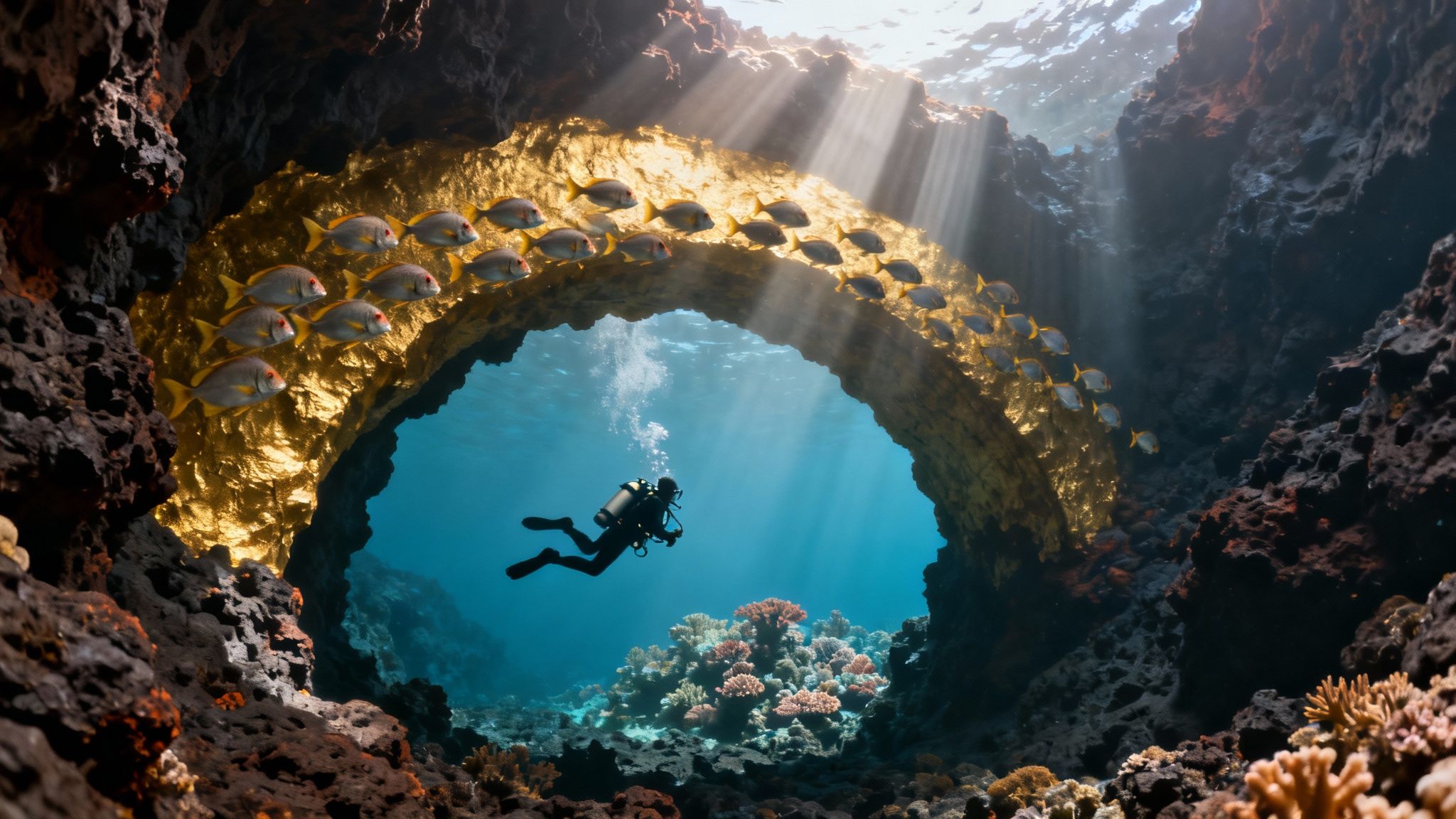
These aren't just pretty reefs; they're geological marvels. Picture yourself descending along a wall formed by an ancient lava flow, now completely carpeted in vibrant corals and sponges. Or imagine navigating through a massive lava tube where schools of soldierfish and sleeping whitetip reef sharks have made their home. Each site is another chapter in Hawaii's fiery history.
Exploring these spots reveals the true depth and beauty of Kona’s underwater world. The sheer variety means there’s something for everyone, from sun-drenched coral gardens perfect for photographers to dramatic drop-offs that will thrill even the most seasoned divers.
Must-See Dive Sites Along the Kona Coast
The Kona coastline is dotted with dozens of world-class dive spots, but a few consistently steal the show with their unique features and mind-blowing marine life. These are the places that local divers and visitors can't stop talking about.
Here are a few iconic sites you won’t want to miss:
- Golden Arches: A true Kona classic, famous for its massive lava tube archway. Swimming through this grand formation feels like entering an underwater cathedral, with sunlight filtering down and illuminating the schools of fish sheltering inside.
- Pu'uhonua O Honaunau (Place of Refuge): Known for its pristine coral gardens and huge populations of endemic Hawaiian fish. The calm, clear water here makes it a fantastic spot to just hang out and watch the intricate behaviors of reef life in a protected marine environment.
- Manuka Bay: If you're hoping to spot some bigger animals, Manuka Bay is the place to be. Its position on the coast makes it a hotspot for spinner dolphins, and lucky divers might even see oceanic whitetip sharks or pilot whales cruising by in the deep blue.
Of course, these sites are just the beginning. The Kona Honu Divers crew has spent years exploring this coastline, so they have the local knowledge to take you to the best spots based on the day's conditions and what you're hoping to find.
What Makes Kona's Reefs So Special?
The underwater landscape of the Big Island is unlike anywhere else on Earth. The dramatic structures left behind by lava flows have created the perfect foundation for a complex and thriving reef system, which in turn supports an incredible diversity of life.
The secret to Kona's vibrant reefs is its volcanic foundation. The porous lava rock gives coral an ideal surface to grab onto and grow, creating intricate structures that offer food and shelter to countless species, from tiny nudibranchs to massive moray eels.
This rich ecosystem is what makes every dive a genuine adventure. You aren't just looking at fish; you're exploring a living, breathing city built by volcanoes and perfected by the ocean over thousands of years. From the smallest critters hiding in crevices to graceful sea turtles gliding overhead, the reef is always in motion. You can learn more about the incredible variety of diving on the Big Island in our detailed guide.
Whether you're a brand new diver or have thousands of dives under your belt, the sites along the Kona coast offer endless opportunities for discovery. Ready to see these incredible underwater landscapes for yourself?
Advanced Diving For Thrill-Seeking Divers
For those of us with a few logbooks filled and a craving for something more, scuba diving on the Big Island of Hawaii offers adventures that go way beyond a gentle reef tour. If you’re looking to push your limits and see something genuinely wild, Kona has a few world-class dives that will stick with you for a lifetime. These are the kinds of experiences that become legendary stories.
These advanced dives aren't just about going deeper; they're about immersing yourself in an entirely different world. They demand sharp skills, solid confidence, and a true sense of adventure. The reward? A front-row seat to the untamed side of Hawaii's underwater realm that most people will never see.
The Legendary Kona Blackwater Dive
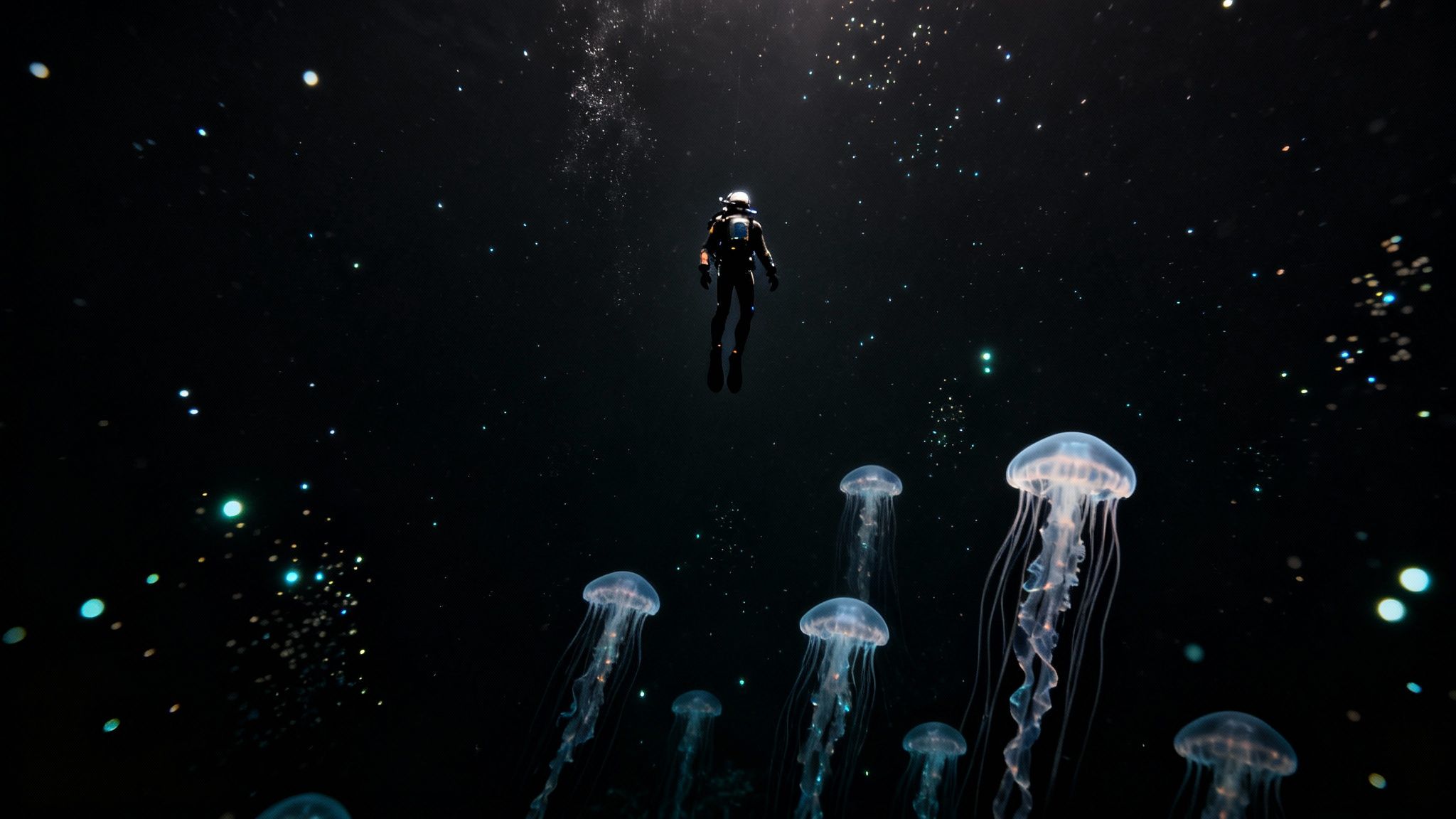
People call the Kona Blackwater Dive a dive, but it feels more like a spacewalk. Picture this: you’re miles offshore, floating in absolute blackness, tethered to a boat that’s bobbing over thousands of feet of open ocean. It’s humbling, a little surreal, and completely unforgettable.
You’re basically an observer of one of the planet's largest migrations. Every single night, a countless number of bizarre, bioluminescent creatures rise from the abyss to feed near the surface. You'll see things that look like they're straight out of a sci-fi movie—tiny squid with glowing arms, see-through larval fish, and jellyfish pulsing with their own light. It's a rare chance to peek into a deep-sea world that science is still trying to understand.
The Blackwater Dive is unlike anything else you’ll ever do. You're not looking at coral or big fish. You're witnessing the strange and beautiful micro-fauna that forms the very foundation of the ocean’s food chain. It's a mesmerizing journey into the unknown.
For any serious diver visiting the Big Island, this is a must-do. If you’re ready for an adventure that feels like drifting through the stars, you can find out more about our specialized Blackwater Dive tour.
Exploring Deeper Reefs and Pelagic Hotspots
Beyond the famous blackwater experience, we can take advanced divers to explore deeper, more remote reefs and intricate lava formations far from shore. These spots are often hit with stronger currents, which act like a dinner bell for larger pelagic species. Think of the currents as underwater expressways for marine life.
These conditions attract a whole different class of animals than you’ll find on the calmer inshore reefs. On these dives, your chances of an epic encounter go way up. We’re talking about:
- Sharks: Sure, we see whitetip reef sharks, but out here you might spot scalloped hammerheads, Galapagos sharks, or even a tiger shark cruising through the blue.
- Rays: It's not uncommon to see eagle rays gliding effortlessly in formation against the current—a truly breathtaking sight.
- Jacks and Tuna: Massive schools of jacks (we call them ulua) and lightning-fast tuna are often seen hunting in these high-energy zones.
Dives like these require excellent buoyancy and the confidence to handle dynamic conditions, but the payoff is huge. At Kona Honu Divers, we run exclusive charters specifically for experienced divers who want to explore these wilder frontiers. Our Premium Advanced 2-Tank Trip is designed to get you to these special sites where the big animal action is.
How to Choose the Right Big Island Dive Operator
Let's be honest: your dive operator can make or break your entire scuba diving Big Island Hawaii trip. They're not just a boat ride to a reef; they are your guides, your safety crew, and the key to unlocking those truly unforgettable underwater moments. With so many choices, knowing what separates a good operator from a great one is crucial.
First things first, look for a PADI 5-Star Instructor Development Center (IDC). This isn't just a sticker on the window. It’s the highest rating in the dive industry, and it means the shop has committed to the most rigorous standards for safety, training, and customer service. When you dive with a 5-Star IDC, you know you're in the hands of pros who take excellence seriously.
This commitment to quality is why so many divers return to Kona Honu Divers year after year. As a multi-award-winning PADI 5-Star IDC, we've built a reputation for top-tier experiences. But credentials aside, there are a few practical things you should always look for.
Key Factors in Selecting a Dive Shop
Not all dive shops operate the same way. Before you book, do a little homework and think about what matters most for your trip.
-
Boat Comfort and Safety: You’ll spend a surprising amount of time on the boat, so it ought to be comfortable. Are the boats custom-built for diving? Do they have shade, a freshwater rinse, and easy-to-use ladders? Most importantly, an operator should have a perfect safety record and meticulously maintained vessels. No exceptions.
-
Small Group Sizes: This is a big one. Smaller groups mean a more personal, relaxed experience. You get more one-on-one attention from your guide, spend less time waiting on others, and have more space to enjoy the underwater world without fins in your face. A great guide reveals a reef's secrets, and that’s much easier to do with fewer divers.
-
Quality of Rental Equipment: If you aren't bringing your own gear, this is non-negotiable. Reputable shops invest in modern, well-maintained equipment from trusted brands. It's not just about comfort; it's a critical part of your safety.
-
Local Knowledge and Expertise: An experienced local guide is worth their weight in gold. They know the hidden spots, understand the currents, and can point out that camouflaged octopus you’d otherwise swim right past. Their insight is what turns a pretty dive into a genuine adventure.
Want to dive deeper into this topic? We put together a complete guide on how to choose a Kona dive shop.
Comparing Reputable Kona Dive Operators
Don't just take our word for it—see what other divers are saying. The Big Island is home to a fantastic network of PADI-certified centers, serving thousands of divers every year.
In fact, according to Scuba Diving Magazine's 2025 Readers Choice Awards, Kona Honu Divers earned top rankings across all seven dive operation categories. It's a testament to the world-class reputation Kona operators have earned on the international stage.
Below are reviews for our shop and a couple of other highly respected operators in Kona.
Kona Honu Divers
Jack's Diving Locker
Big Island Divers
Ultimately, the right dive operator will make you feel confident, safe, and genuinely excited for what lies beneath the waves. Taking a few minutes to research your options ensures every moment of your Big Island diving adventure is everything you hoped it would be.
Your Big Island Diving Questions, Answered
If you're planning a scuba trip to the Big Island, you’ve probably got a few questions. It’s only natural. To help you get ready for your underwater adventure with complete confidence, we’ve put together answers to some of the most common things people ask us.
From the best time of year to visit to what the world-famous Manta Ray Night Dive is really like, here's what you need to know from divers who are in this water every single day.
What’s the Best Time of Year to Dive the Big Island?
Honestly, the diving here is fantastic year-round. But if you're looking for the absolute best conditions, aim for sometime between April and October. During the spring and summer months, the ocean tends to be glassier, and the weather is reliably beautiful.
Don't worry about getting cold, either. The water temperature stays pretty comfortable, hovering around a pleasant 75°F (24°C) in the winter and warming up to a balmy 80°F (27°C) in the summer. Best of all, the sheltered Kona coast almost always has incredible visibility, often clearing 100 feet. You really can't pick a bad time to dive here.
Do I Need to Be an Experienced Diver for the Manta Ray Night Dive?
This surprises a lot of people, but no, you don't! The Manta Ray Night Dive is remarkably accessible, even if you’ve just gotten your certification. All that’s typically required is a standard Open Water certification, making it a perfect first night dive.
The dive itself is quite shallow and stationary, so there are no complex navigation skills needed. Your guide takes you to a sandy spot where you can comfortably settle on the ocean floor. Once you're there, you just get to relax and watch these gentle giants glide overhead, feeding on the plankton drawn to the lights. We always give a thorough briefing beforehand to make sure everyone feels totally safe and at ease. Even snorkelers can get in on the action and watch the show from the surface!
Besides Manta Rays, What Other Marine Life Will I See?
The Big Island’s volcanic reefs are absolutely bursting with life! While the mantas are a definite highlight, you're almost guaranteed to see an incredible variety of marine animals on any given dive.
Here's just a little taste of what you'll likely encounter:
- Endemic Tropical Fish: Keep an eye out for butterflyfish, triggerfish, and huge schools of colorful parrotfish. Many of these species are found only in Hawaiian waters.
- Honu (Green Sea Turtles): Seeing these ancient, graceful reptiles is a common and always special experience. You'll often find them resting on the reef or cruising through the blue.
- Other Frequent Sightings: Spinner dolphins often put on a show from the boat. Underwater, it's very common to encounter whitetip reef sharks, moray eels, octopuses, and a whole host of colorful invertebrates.
The biodiversity here is truly special. Because of Hawaii's isolation in the middle of the Pacific, a significant percentage of its marine life is endemic, meaning you won't find it anywhere else on Earth. Every dive is a chance to see something truly unique.
How Should I Book My Big Island Dives?
Our best advice is to book your dives online and do it well in advance. This is especially true for our most popular trips like the Manta Ray Night Dive, which often sells out weeks ahead of time. The easiest way to lock in your spot is to head straight to the website of a reputable operator like Kona Honu Divers.
On our site, you can see all the diving tours we offer, check real-time availability, and book your spots securely. Getting it all sorted out early means you can relax and just look forward to the trip.
Ready to see what's open? You can check our schedule right now.