
Picture this: you descend into warm, turquoise water, the world above fading away. Before you, ancient lava tubes twist into dramatic archways, and vibrant coral gardens pulse with life. This isn't just any dive—this is scuba diving on the Big Island of Hawaii, and it’s an experience that truly sets a global standard.
The Kona coast, in particular, is what divers dream of. It consistently delivers some of the most spectacular underwater conditions you'll find anywhere on the planet.
Why the Big Island Offers World-Class Diving
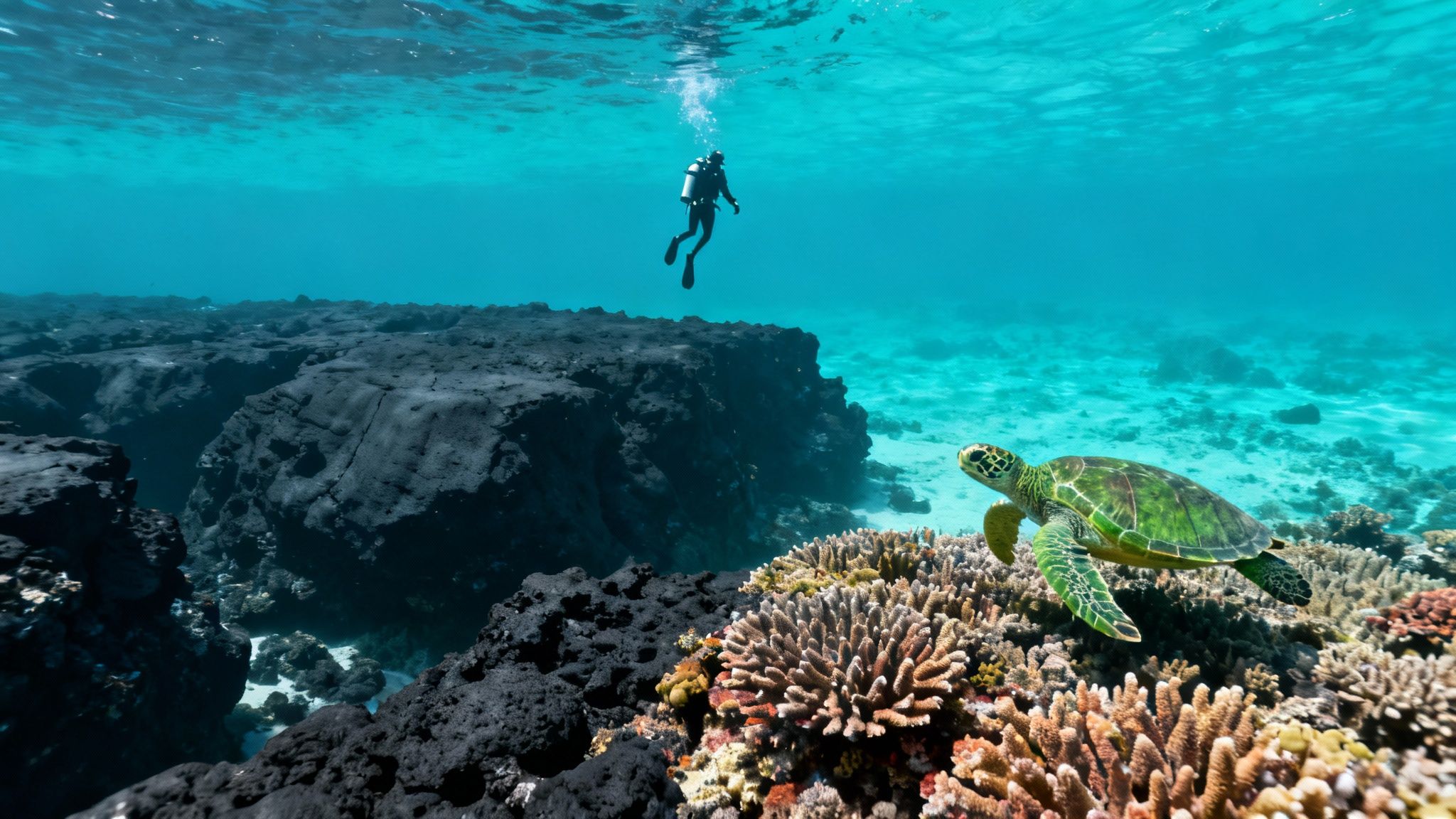
So, what’s the secret? It all starts with the Big Island's volcanic heart. The very geology that formed the island has created an underwater playground unlike any other. Forget flat, sandy bottoms; here, you’ll explore a dramatic landscape of lava tubes, massive archways, and submerged craters. It's like navigating an entirely different world.
Over centuries, these unique volcanic structures have become the foundation for a rich and thriving ecosystem. And because of the island’s isolation in the vast Pacific, much of the marine life you'll see is endemic, meaning you literally can't find it anywhere else on Earth.
Calm Waters and Incredible Visibility
One of the biggest perks of diving the Kona coast is just how calm the water is. We have the massive volcanoes of Mauna Loa and Hualalai to thank for that. They act as giant, natural walls, shielding the entire western coastline from the powerful trade winds.
The result is stunningly clear and tranquil water, with visibility that often pushes past 100 feet. It’s like diving in a giant, natural aquarium.
This makes Kona a fantastic spot for everyone. If you're new to diving, the gentle conditions are a perfect, low-stress environment to build your confidence. For the seasoned pros, it means you can forget about fighting currents and just focus on the breathtaking scenery. Still wondering if it's the right fit for you? Learn more about what makes the Big Island so good for scuba diving.
"The Kona coast offers a rare combination of dramatic volcanic topography and sheltered, aquarium-like conditions. It’s a place where every dive reveals something new, from intricate lava formations to unique endemic species."
A Hub for Marine Giants
While the reefs are stunning, the Big Island is also famous for its big animal encounters. It's not uncommon to see playful spinner dolphins from the boat, and from December to April, you can often hear the haunting songs of humpback whales echoing through the water during your dive.
But the real headliners are the majestic manta rays. The Kona coast is home to one of the most reliable and magical manta ray encounters in the world. Getting up close to these gentle giants is an experience that will stay with you forever.
With a premier operator like Kona Honu Divers, you can safely witness all this incredible biodiversity firsthand. Ready to jump in? Check out our full range of diving tours and find the underwater adventure that’s calling your name.
Exploring Kona’s Most Incredible Dive Sites
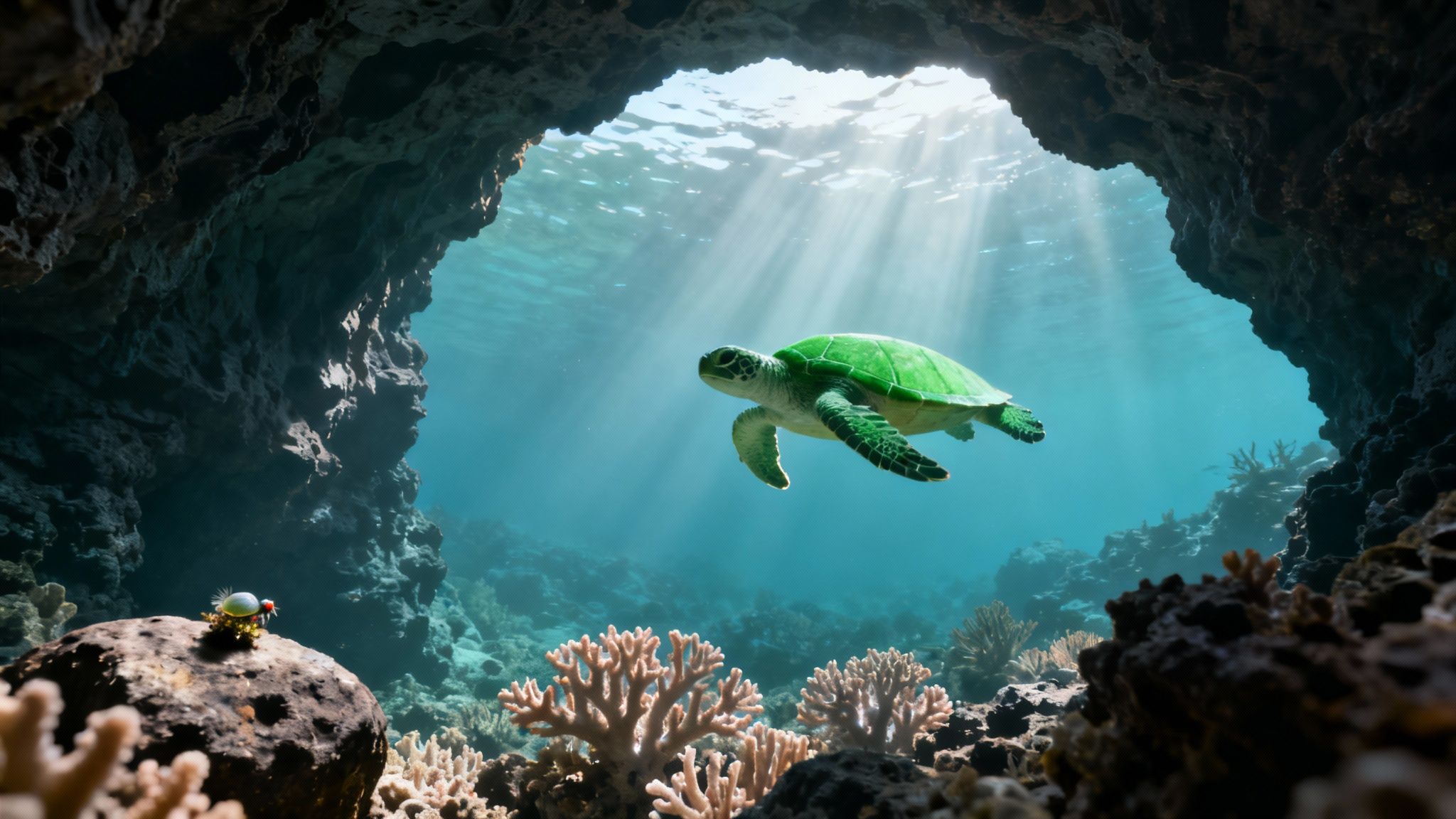
The Kona coast is legendary among divers for a reason. With over 40 distinct dive sites, you could spend a lifetime exploring and still find new wonders. This place offers everything from dramatic lava tubes to peaceful coral gardens, which is exactly why scuba diving on the Big Island is a bucket-list trip for so many.
As soon as you descend into Kona's waters, you're greeted by the vibrant marine wildlife that makes these reefs feel so alive.
Best of all, many of the most iconic spots are just a quick boat ride from Honokohau Harbor. This means less time traveling and more time submerged in paradise. Going with a seasoned crew like Kona Honu Divers makes all the difference—they know these sites like the back of their hand and can match you with the perfect dive for your skill level and what you're hoping to see.
Au Au Crater: A Submerged Volcano
If you want to see just how unique Hawaii's geology is, Au Au Crater is the place to go. It's a partially submerged volcanic crater that has formed a natural amphitheater for marine life. The crater's high walls create a sheltered environment, which usually means calm water and fantastic visibility.
Inside, you can explore a massive archway and a network of smaller swim-throughs carved out by ancient lava flows. For photographers, it’s a dream come true. The way the light beams through the openings, lighting up schools of fish, is just spectacular. It’s a perfect example of the incredible volcanic landscapes you'll only find diving the Big Island.
Turtle Heaven: Kaloko Honokohau National Park
The name says it all. Turtle Heaven is an absolute sanctuary for Hawaii's beloved green sea turtles, or honu. Situated in the protected waters of Kaloko-Honokohau National Park, the site is a network of lava ridges where turtles come to get pampered.
You can hover weightlessly and watch as these graceful creatures pull into "cleaning stations." Here, small reef fish get to work, nibbling algae and parasites right off their shells. It’s a stunning example of symbiosis in action.
Besides the guaranteed turtle sightings, you'll also spot:
- Moray Eels: You'll often see them peeking their heads out from rocky crevices.
- Octopus (Tako): These masters of camouflage are a fun challenge to find.
- Schools of Reef Fish: The water is thick with colorful butterflyfish, triggerfish, and wrasses.
With a relatively shallow depth, typically between 30 and 50 feet, Turtle Heaven is a fantastic and rewarding dive for people of all certification levels.
Golden Arches: A Macro Paradise
For those divers who get a thrill from spotting the small, elusive critters of the reef, Golden Arches is a can't-miss site. It's known for its huge lava archway, which is usually framed by a cloud of brilliant yellow tang.
But the real magic happens when you slow down and get your face close to the reef. This spot is a playground for macro life.
Keep your eyes peeled for the Commerson's Frogfish. It’s a bizarre-looking ambush predator that blends in perfectly with the sponges. Finding one of these is a true badge of honor for any diver.
You can also hunt for delicate Harlequin Shrimp, colorful nudibranchs, and the elusive Ornate Octopus. It’s a dive that proves the biggest wonders sometimes come in the smallest packages.
Whether you're drawn to grand volcanic formations, gentle sea turtles, or the tiny, intricate life on the reef, Kona delivers. The diversity here is just astounding, and every single dive feels like a brand new adventure.
The Unforgettable Manta Ray Night Dive Experience
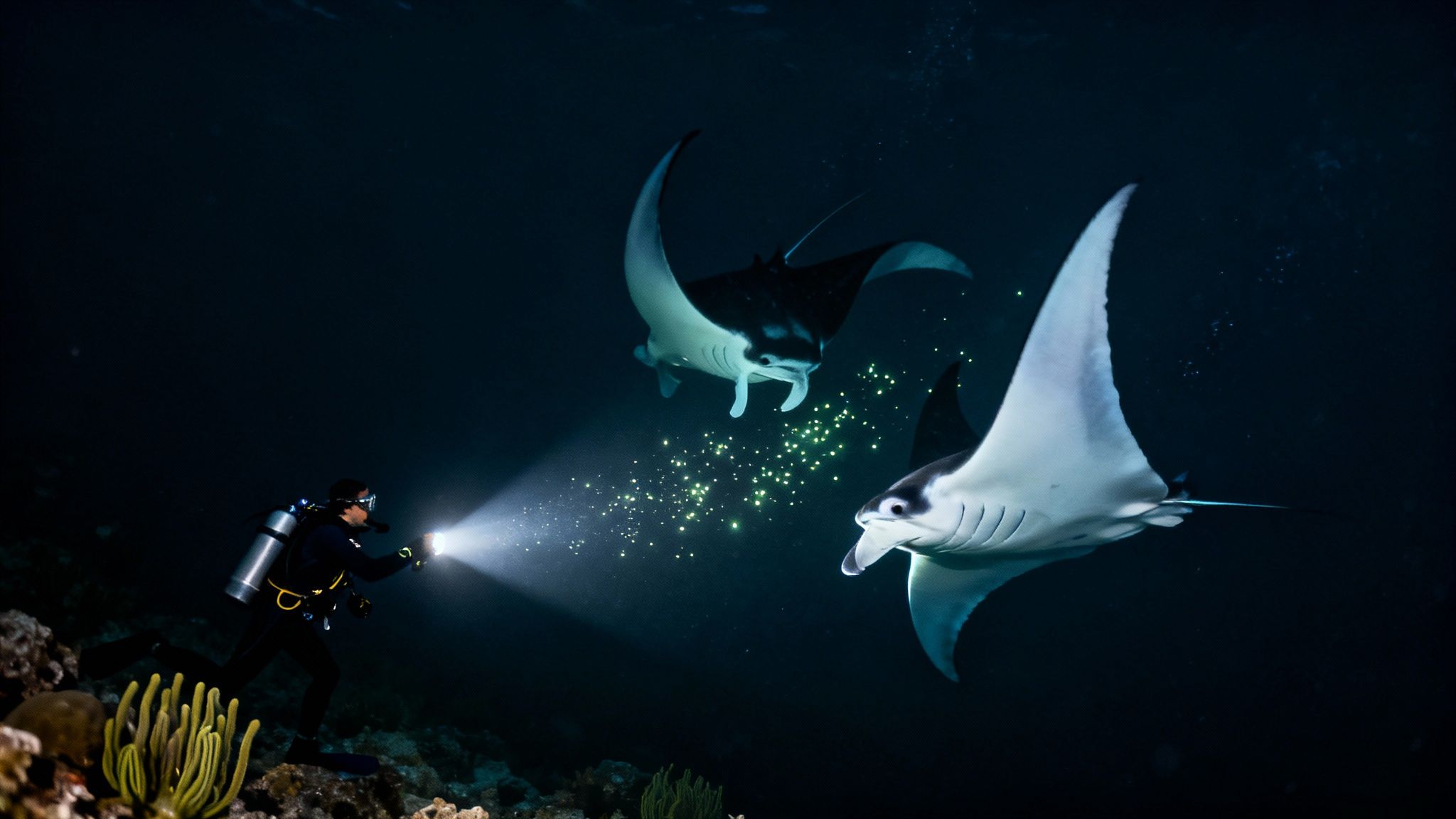
There are good dives, and then there are the ones that change you. The Big Island’s manta ray night dive is one of those. This isn't just another checkmark on a diver's bucket list; it's an otherworldly underwater ballet that has rightfully earned its reputation as one of the best night dives on the entire planet.
Imagine this: you descend into the warm, dark Pacific after the sun has set, the world shrinking to the focused beam of your dive light. Your guide signals, and everyone settles on the sandy seafloor, pointing their lights upward to create a brilliant column of light. Almost instantly, this beacon attracts a flurry of plankton, turning the water into a shimmering snow globe.
And that’s when they arrive.
Gliding out of the darkness like silent, graceful jets, the manta rays appear. With massive wingspans that can stretch over 12 feet, they perform effortless barrel rolls and somersaults, swooping down to filter-feed on the plankton cloud. They often pass within inches, their huge mouths agape, showcasing a gentle power that is both humbling and absolutely exhilarating.
Why Garden Eel Cove is Manta Heaven
While you might hear about a few spots for this encounter, they aren't all created equal. Garden Eel Cove is the superior choice for the manta ray dive tour because of its protected location, better viewing area, and healthier reefs. We at Kona Honu Divers are committed to providing the absolute best experience, which is why we exclusively operate at this site, lovingly nicknamed "Manta Heaven."
The geography here gives us a huge advantage. Tucked into a protected cove, the site is naturally shielded from the open ocean swell and strong currents that can affect other locations. This means the water is consistently calmer and clearer, so you can relax on the bottom and fully immerse yourself in the show without being tossed around.
The protected nature of Garden Eel Cove creates a natural amphitheater for viewing. This allows divers to position themselves for optimal, non-intrusive observation, ensuring the mantas can feed undisturbed while providing a front-row seat to the show.
On top of that, the reef at Garden Eel Cove is simply more vibrant. A thriving ecosystem means a richer concentration of plankton, which in turn attracts a higher and more consistent number of manta rays. It’s a fantastic dive site by day, but at night, it transforms into a world-class theater. If you want to get into the nitty-gritty of this amazing event, you can explore our guide on what the manta ray night dive is all about.
Your Manta Adventure with Kona Honu Divers
Your journey begins in the late afternoon at Honokohau Harbor. Our expert crew will welcome you aboard, get you settled, and make sure your gear is perfectly set. As we head out, the golden Hawaiian sunset paints the sky—a pretty spectacular backdrop for your pre-dive briefing.
The experience starts with a late-afternoon reef dive. This "warm-up" lets you get reacquainted with your gear and explore the beautiful coral gardens and lava rock formations of Garden Eel Cove while the sun is still up.
After surfacing, you’ll enjoy some snacks and drinks as the sun dips below the horizon and our crew preps for the main event. As darkness sets in, the excitement on the boat is palpable. You'll descend again, this time to witness the headliners. Watching these gentle giants is truly a core memory in the making for anyone who loves the ocean.
This signature dive has an incredibly high success rate, with manta sightings on approximately 85-90% of trips—a remarkable track record. On any given night, you might see a few mantas or more than 20 if you’re lucky, all in water that often boasts visibility well over 100 feet.
Advanced and Unique Big Island Dive Adventures

Sure, Kona's sunlit reefs and lazy sea turtles make for incredible daytime dives. But for those of us who are always looking for what’s next, the Big Island has a wilder side that truly comes alive after dark or far from shore.
If you're an experienced diver craving something beyond the ordinary, two adventures really stand out: the Kona Blackwater Dive and our special advanced trips to more remote, demanding sites. These aren't your typical reef tours. One is like a spacewalk in the deep ocean, and the other will challenge your skills against some of Hawaii's most dramatic underwater landscapes.
The Kona Blackwater Dive: A Journey into the Abyss
Picture this: you’re floating in the vast, inky blackness of the open Pacific, miles from shore, with thousands of feet of water right below you. That's the heart of the Kona Blackwater Dive. It's a surreal experience that feels less like scuba diving and more like floating through outer space.
The setup is simple, but the result is profound. We head offshore at night, over seriously deep water. A weighted tether with powerful lights is dropped from the boat, creating an oasis of light in the immense darkness. This light becomes a magnet for creatures taking part in the largest migration on Earth—the nightly vertical migration.
Every single night, a universe of bizarre and bioluminescent animals rises from the depths to feed near the surface. The Blackwater Dive puts you right in their path, face-to-face with alien-like larval fish, glowing jellies, and shimmering squid you’d never see on a reef.
Drifting in the dark as these strange, beautiful creatures materialize from the void is a humbling and unforgettable experience. It's a dive for the truly adventurous. To witness this incredible phenomenon, you have to check out the Kona Honu Divers Blackwater Dive tour.
Premium Advanced Dives: Exploring the Unseen
For seasoned divers who have their buoyancy dialed in and are comfortable in more challenging conditions, there's a whole other level of exploration waiting. Our advanced dive tours are specifically designed to get you away from the more common coastal sites. We go where the locals go.
These trips are for divers who want a bit more of a challenge and a much bigger reward. We might head to:
- Remote Sea Mounts: Think underwater mountains rising from the deep, attracting big pelagic species like sharks, rays, and massive schools of jacks.
- Deep Ledges and Walls: Sheer drop-offs that plunge into the blue, where you'll find different corals and marine life that thrive in deeper, cooler water.
- Complex Lava Formations: We're talking intricate swim-throughs, caverns, and lava tubes that demand sharp skills and a cool head.
These dives are about pushing your limits and seeing the raw, untouched beauty of Hawaii's wilder underwater world. They often mean longer boat rides and require a solid grasp of dive planning, but the payoff is more than worth it.
If you’ve got the experience and the itch to see what lies beyond the usual dive sites, these trips offer a genuine glimpse into the untamed side of Kona. You can learn more and book your adventure on our Premium Advanced 2-Tank Trip.
How to Plan Your Perfect Hawaii Dive Trip
A little bit of planning is all it takes to turn a good Big Island dive vacation into a great one. When you understand the island's natural rhythms, you can time your trip to get exactly the underwater experience you've been dreaming of.
The first big question is always, "When should I go?" While you can scuba dive on the Big Island any day of the year, the vibe definitely changes between summer and winter. Each season has its own magic, so the "best" time really comes down to your personal preference.
Choosing Your Season
The summer months, running from May to October, are when you'll find the warmest water. We're talking a toasty 80°F (27°C) on many days. The ocean surface tends to be flatter and calmer, which makes for some incredibly smooth boat rides out to the dive sites. If you get cold easily or are just starting your diving journey, this is a fantastic time to visit.
Then there's winter, from November to April. The water temperature dips a bit, hovering around a comfortable 75°F (24°C). You'll probably want a slightly thicker wetsuit, but the trade-off is absolutely spectacular: it's humpback whale season. There's nothing quite like being underwater and hearing the soulful, echoing songs of these gentle giants. It's an experience that sticks with you forever.
Here's a quick look at how the two seasons stack up to help you decide.
Kona Diving Seasons Compared
| Feature | Summer (May – October) | Winter (November – April) |
|---|---|---|
| Water Temp | Warmer, around 78-80°F (26-27°C) | Cooler, around 75-77°F (24-25°C) |
| Surface Conditions | Generally calmer and flatter seas | Can have slightly more surface chop |
| Marine Life | Excellent reef fish activity and manta encounters | Peak humpback whale season; great manta activity |
| Visibility | Consistently excellent, often 100+ ft | Still great, but can vary slightly with weather |
No matter when you come, the diving is world-class. It's just a matter of choosing between warmer water and whale songs!
Travel and Packing Logistics
Getting here is easy. The Ellison Onizuka Kona International Airport (KOA) is the main airport for the west side of the island, putting you right in the heart of the action and close to all the best dive shops and hotels. I'd strongly suggest renting a car—it gives you the freedom to explore the rest of this incredible island on your non-diving days.
As for packing, the key is to think light but smart. Here are a few must-haves:
- Dive Gear: We have top-notch rental gear, but many divers prefer bringing their own mask and computer for that perfect fit and familiarity.
- Exposure Suit: A 3mm wetsuit is usually perfect for summer. In winter, especially for night dives, a 5mm will keep you much more comfortable.
- Reef-Safe Sunscreen: This is a big one. Hawaii law requires mineral-based sunscreens (look for zinc oxide or titanium dioxide) to help protect our fragile coral reefs.
- Layers: Even in paradise, evenings can get cool, especially when you're on a boat after a night dive. A light jacket or windbreaker is a lifesaver.
Of course, planning a trip also means thinking about your budget. To help you get a clear picture of the costs involved, check out our guide on how expensive scuba diving is in Hawaii. A little foresight here will help you build the perfect dive trip that fits your budget and your adventure wish list.
Your Big Island Diving Questions, Answered
Jumping into the underwater world of Hawaii for the first time? It's natural to have questions. We've been there! To help you get ready for your adventure, we've put together answers to the queries we hear most often about scuba diving on the Big Island.
Think of this as your pre-dive briefing. We want to clear up any uncertainties so you can focus on what matters: the incredible marine life and wild volcanic seascapes waiting for you.
What Certification Do I Need to Dive in Kona?
The great news is that Kona diving is incredibly accessible. Most of the premier dive sites scattered along the coast are perfect for anyone with a standard Open Water certification. The calm, protected waters make for a relaxed environment where divers of all stripes can soak in the vibrant reefs.
Of course, there are more advanced sites that might dip a bit deeper or have the potential for stronger currents. For those, you’ll want to have your Advanced Open Water certification. An experienced crew like the one at Kona Honu Divers knows these sites like the back of their hand and will always match the dive plan to your certification and comfort level. They offer a whole range of diving tours on the Big Island that cater to everyone.
As one of the top-rated operators in Kona, their reputation for safety and happy divers speaks for itself—just check out their reviews.
Can I Learn to Dive on the Big Island?
Absolutely! Honestly, you’d be hard-pressed to find a more beautiful and forgiving classroom anywhere on the planet. The Kona coast’s consistently calm conditions, warm water, and stellar visibility create a low-stress environment that makes learning a genuine pleasure.
Local shops like Kona Honu Divers offer everything from a "Discover Scuba Diving" experience—a perfect one-day taste test—to full Open Water certification courses. There’s nothing quite like taking your first breaths underwater as a Hawaiian green sea turtle glides past. It’s a memory that sticks with you forever.
Is the Manta Ray Night Dive Safe?
Yes, the manta ray night dive is an exceptionally safe and well-managed experience. This is probably the number one question we get, and it’s a good one! First, let’s clear something up: manta rays are gentle giants. They are filter feeders, meaning they’re only interested in the microscopic plankton in the water. They have no teeth, no barbs, and no stingers.
Your safety and the well-being of the mantas are the top priorities. Dive operators follow a strict set of self-enforced guidelines that dictate exactly where divers should be and how to interact (or rather, not interact) with the animals. This ensures a respectful and secure encounter for everyone.
The whole experience is designed to be awe-inspiring, not alarming. You'll be with professionals who have done this dive hundreds, if not thousands, of times. The goal is simple: relax, observe, and witness one of nature’s most magnificent shows.
What Kind of Marine Life Will I See?
The sheer biodiversity you'll see while diving the Big Island is staggering. Because Hawaii is so isolated, a huge chunk of the marine life here is endemic, meaning you won’t find it anywhere else on Earth.
On a typical two-tank dive, you can realistically expect to meet a whole cast of characters.
- Honu (Hawaiian Green Sea Turtles): These graceful reptiles are a common and beloved sight, often found chilling out at cleaning stations or cruising over the reef.
- Moray Eels: Keep an eye on the lava rock crevices, and you’ll spot various species, like the zebra or dragon moray, peeking out.
- Tako (Octopus): Finding one of these masters of camouflage is a rewarding challenge. A keen eye pays off!
- Frogfish: Spotting one of these bizarre, perfectly hidden ambush predators is a true highlight for any diver.
- Vast Schools of Fish: The reefs are practically humming with life, from colorful butterflyfish and triggerfish to massive clouds of yellow tang.
And that's just underwater! It's common to see spinner dolphins from the boat, and if you’re lucky, they might even make a curious pass by the dive group. Every dive truly is a treasure hunt, and that's what makes Kona diving an adventure you'll want to repeat again and again.
Ready to see the world-class underwater realm of the Big Island for yourself? At Kona Honu Divers, we guide tours for every skill level, from serene reef explorations to the unforgettable Manta Ray Night Dive. Let our experienced crew show you the best of Kona's marine paradise.