
Picture this: you descend into the deep blue, and before you unfolds an otherworldly scene shaped by ancient volcanoes. That’s what it’s like to go scuba diving on the Big Island of Hawaii. The Kona coast, in particular, is a magnet for divers, offering some of the most stunning and dependable conditions you'll find anywhere on Earth. It's a true underwater paradise.
Why The Big Island Is A Diver’s Paradise

The Big Island’s magic starts with its sheer size and geology. The colossal volcanoes, Mauna Loa and Mauna Kea, stand as natural guardians, shielding the Kona coast from the gusty trade winds. The result? Incredibly calm, clear, and predictable water practically all year round—an absolute dream for divers of every skill level.
But it’s what’s under the water that truly sets it apart. The seascape here is a direct extension of the island's fiery birth. You’re not just swimming over reefs; you're exploring a dramatic world of submerged lava tubes, enormous archways, and intricate caverns sculpted by molten rock millennia ago. This volcanic architecture creates a spectacular backdrop and countless nooks and crannies for a staggering diversity of marine life to call home.
What Makes Kona Diving So Special
It's this blend of tranquil seas and unique volcanic terrain that makes for such unforgettable dives. The island is world-renowned for its one-of-a-kind experiences, and nothing tops the legendary Manta Ray Night Dive. With a sighting success rate of over 85-90%, it's one of the most reliable places on the planet to encounter these gentle giants. It's not uncommon to see 5 to 20 mantas at once, swooping and gliding as they feed on plankton attracted to the dive lights.
Of course, the thrill of scuba diving on the Big Island extends far beyond just one famous dive. The waters here are a thriving sanctuary for a whole ecosystem.
- Pristine Coral Gardens: You'll find sprawling reefs, many tucked inside protected marine areas, bursting with vibrant color and life.
- Abundant Marine Life: Get ready to meet green sea turtles at their "cleaning stations," spot pods of playful spinner dolphins, and swim among hundreds of tropical fish species—many of which are endemic, meaning they're found only in Hawaii.
- Exceptional Visibility: Because the Kona coast has very few rivers creating runoff, the water is often crystal clear. Visibility regularly pushes past 100 feet.
The real draw of Big Island diving is the sheer variety. One day you’re gliding through a cathedral-like lava tube, and the next you’re watching a majestic manta ray perform an underwater ballet just inches away. It’s an adventure that never stops surprising you.
For anyone wondering why the Big Island is great for scuba diving, the answer lies in these unique conditions. Whether you're a brand new diver or a seasoned veteran, the Kona coast promises an underwater journey that will leave you absolutely breathless.
The World-Famous Manta Ray Night Dive
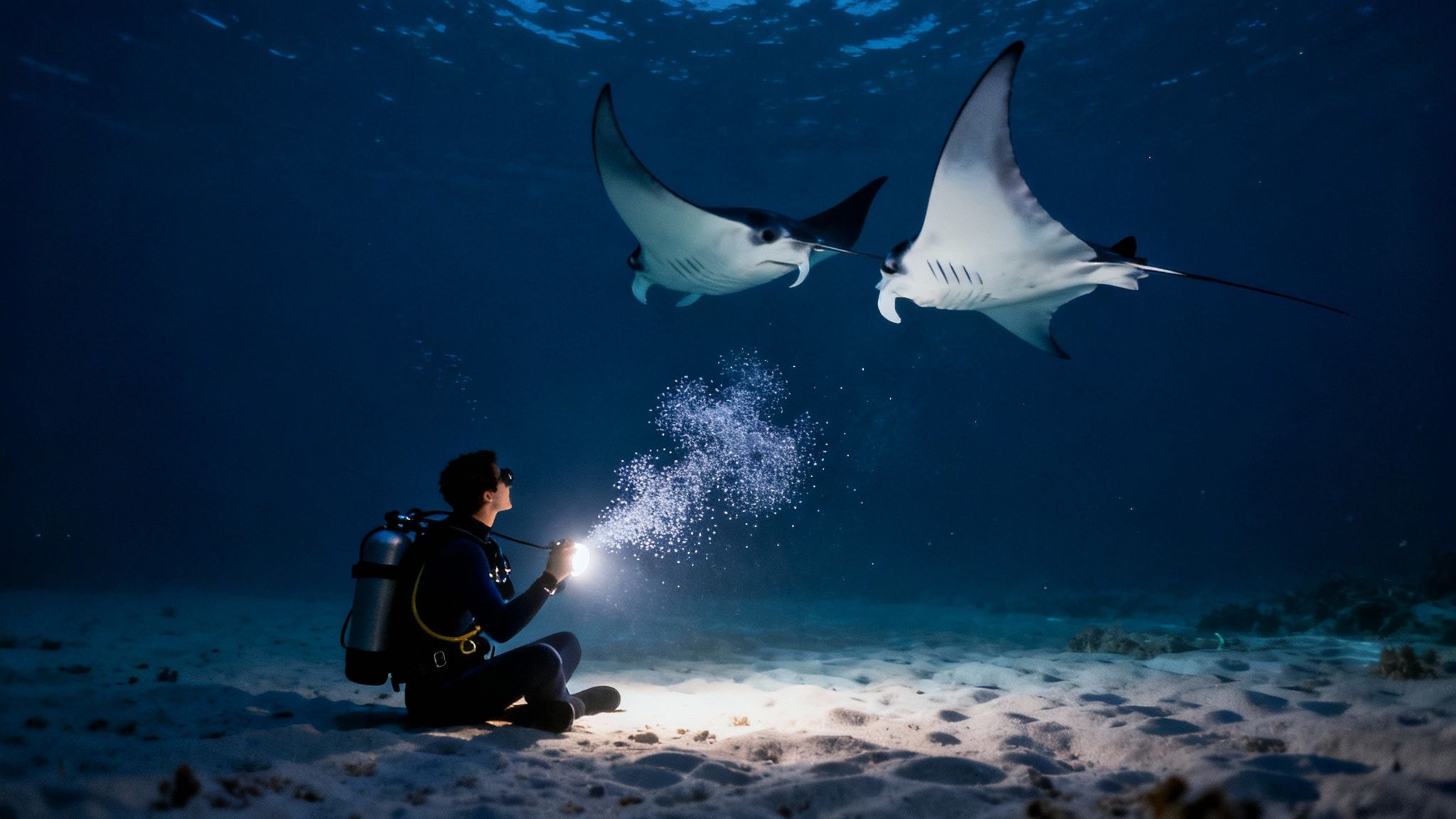
Out of all the incredible underwater experiences the Big Island has to offer, one truly stands apart: the Manta Ray Night Dive. This isn't just another dive on your logbook—it's a bucket-list encounter that consistently lands on "best of" lists for diving worldwide. It’s pure magic.
Picture this: you're kneeling on the sandy ocean floor in the quiet darkness, about 35 feet down. You and the other divers point your lights up, creating columns of light that look like something out of a sci-fi movie. This light attracts tiny plankton, and plankton is what's for dinner.
Then, out of the black, they arrive. These graceful giants, with wingspans often over 12 feet, glide, swoop, and perform mesmerizing barrel rolls just inches over your head. They soar through the light beams, their cavernous mouths open to filter the feast of plankton. It’s an underwater ballet that feels both surreal and profoundly peaceful.
Why Garden Eel Cove is the Premier Choice
You might hear about a couple of different spots for this dive, but the site we call "Manta Heaven"—officially Garden Eel Cove—is the superior choice. Located just a short boat ride north of Kailua-Kona, this spot has some serious advantages that make the experience better for everyone, mantas included.
First off, its location is key. Garden Eel Cove is naturally more protected from the open ocean swells, which means calmer, more comfortable conditions for divers. Instead of fighting a surge, you can relax and just soak in the spectacle happening right in front of you.
At Garden Eel Cove, the whole setup is a superior viewing area that feels like a natural amphitheater. Divers settle into a designated sandy patch, giving everyone a front-row seat without getting in the way. This organized approach keeps the central water column clear, so the mantas have plenty of room to put on their show safely.
On top of that, the reefs surrounding the main viewing area are healthier and absolutely teeming with life. So, you're not just seeing the main event; you're immersed in a vibrant underwater world. You can get an even deeper look into the dive by checking out our guide on what the manta ray night dive involves.
What to Expect on Your Manta Dive Tour
Your Manta Ray Night Dive tour is a well-oiled adventure, typically run as a two-tank trip. The first dive is usually a late-afternoon exploration of the reef, giving you a chance to see the site in the daylight and watch as the whole ecosystem shifts into night mode. After surfacing for a short break as the sun sets, you'll head back down for the main event.
Safety and respect for these gentle giants are the top priorities. You'll get a detailed briefing before you hit the water, covering the "rules of engagement" to ensure a safe and positive interaction for both you and the mantas.
- Look, Don't Touch: Never, ever touch a manta ray. Their skin has a protective mucus coating, and touching them can strip it away, leaving them vulnerable to infections.
- Stay on the Bottom: Divers hang out on or near the sand. This keeps the water column wide open, giving the mantas a clear path to swoop in and feed.
- Lights Up: Always point your dive light toward the surface. This draws the plankton up and away from the delicate reef below.
Following these simple guidelines helps protect these magnificent creatures so this incredible encounter can continue for years to come. This dive is more than just a fun activity; it’s a chance to connect with one of the ocean's most majestic animals in its own element.
Exploring Kona’s Top Dive Sites
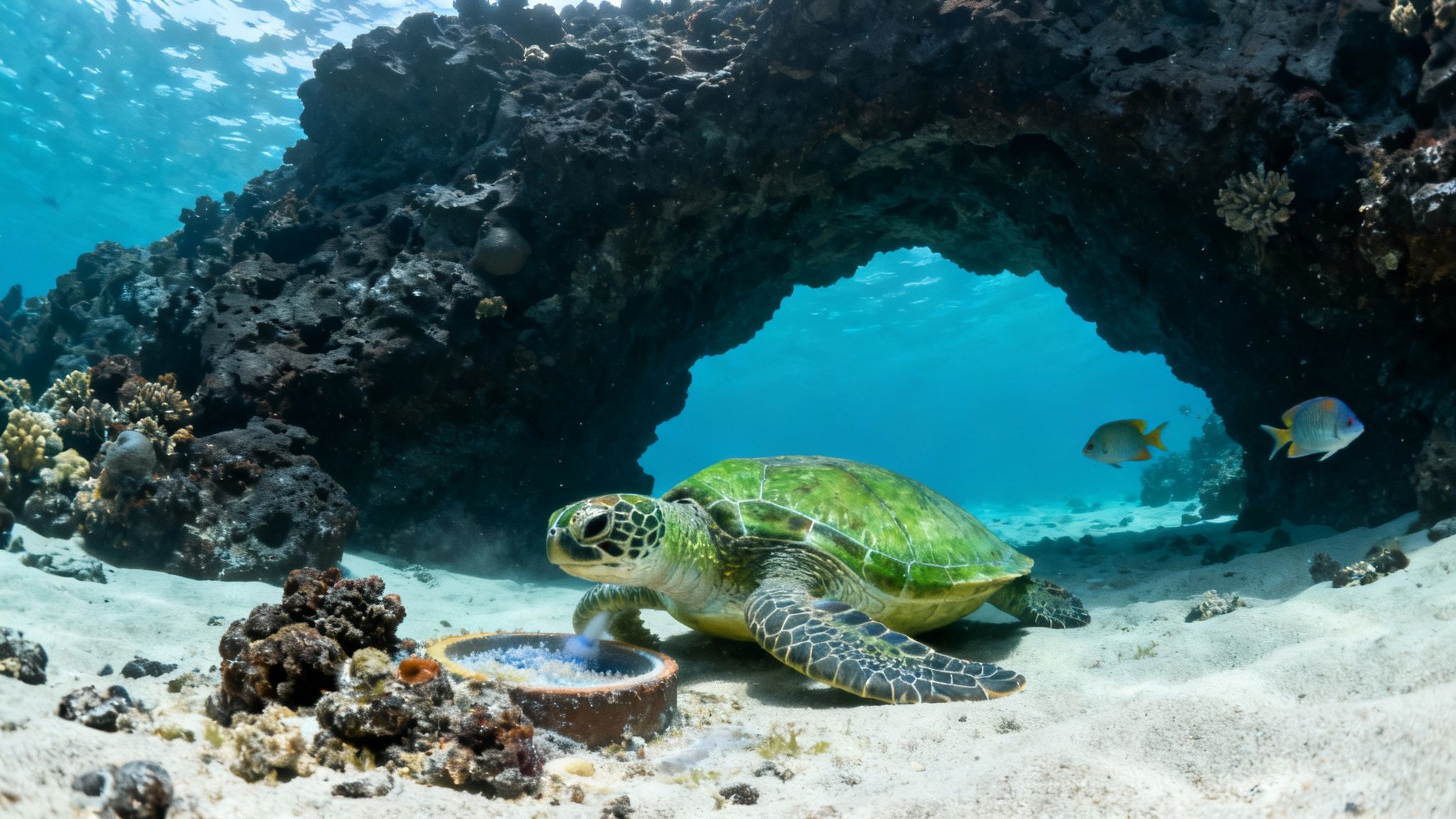
Sure, the Manta Ray Night Dive gets all the headlines, but that's just scratching the surface. The real magic of scuba diving Big Island Hawaii unfolds during the day along the Kona coast. The underwater world here is a direct reflection of the island's fiery birth—a stunning playground of dramatic lava tubes, massive swim-through arches, and pristine coral gardens.
Every dive site tells a unique story. You’re not just seeing fish; you’re exploring the incredible volcanic architecture that makes this place so special. Whether you’re a brand-new diver looking for a calm reef or a seasoned pro ready for complex topography, Kona delivers.
Kealakekua Bay: An Underwater Sanctuary
If there's one spot that truly embodies the spirit of Hawaiian diving, it's Kealakekua Bay. This isn't just a dive site; it's a legally protected Marine Life Conservation District. Think of it as an underwater national park where everything is left to flourish, completely undisturbed.
Because of these protections, the bay is teeming with life and boasts some of the clearest water you'll find anywhere in the tropics. It's not uncommon for visibility to exceed 100 feet. The landscape is pure volcanic artistry—caves, ledges, and vibrant corals built upon ancient lava flows. It’s a breathtaking experience for divers of any skill level.
Golden Arches and Lava Formations
For divers who get a thrill from unique topography, sites like Golden Arches are an absolute must. Picture swimming through a massive, cathedral-like lava arch with sunlight filtering down from above—it's an almost spiritual experience.
The entire Kona coast is a maze of these incredible formations. One minute you're navigating an intricate cavern, the next you're peering over a wall that drops into the deep blue. These structures are more than just geologically fascinating; they create the perfect habitats for countless marine creatures, from shy octopuses to huge schools of colorful fish. If you're trying to choose the right spot, our guide on what the best dive in Kona is for you can help narrow it down.
Turtle Pinnacle: A Turtle Haven
Another local favorite is Turtle Pinnacle, and for good reason. This site acts as a "cleaning station" for Hawaiian green sea turtles, or honu. It’s one of the best places to witness a truly amazing natural behavior.
You'll see turtles lining up, waiting their turn to have algae and parasites gently picked from their shells by endemic Hawaiian cleaner wrasses.
It's an incredible sight: these ancient mariners just hovering peacefully, completely serene, as the smaller fish get to work. This symbiotic relationship offers a perfect, non-intrusive way to observe and photograph these beautiful animals.
Of course, it's not just about the turtles. Keep an eye out for moray eels poking their heads out from crevices and listen for the distinct crunch of parrotfish munching on coral. It’s a perfect snapshot of the healthy, interconnected ecosystem that makes Kona diving so unforgettable.
To help you get a better sense of what each site offers, here’s a quick breakdown of some of our most popular spots.
Big Island Dive Site Highlights
| Dive Site | Key Features | Common Marine Life | Best For |
|---|---|---|---|
| Kealakekua Bay | Protected marine sanctuary, exceptional visibility | Dolphins, vibrant corals, reef fish | All Skill Levels |
| Manta Heaven | Famous manta ray night dive location | Manta rays, moray eels, crustaceans | All Skill Levels |
| Golden Arches | Large, dramatic lava arch swim-through | Reef fish, eels, nudibranchs | Intermediate Divers |
| Turtle Pinnacle | Natural turtle "cleaning station" | Green sea turtles, cleaner wrasse, eels | All Skill Levels |
| Au Au Crater | Sunken volcanic crater, unique topography | Frogfish, sharks, eagle rays | Advanced Divers |
Each site has its own personality, from the calm, protected waters of Kealakekua Bay to the thrilling lava architecture of the outer reefs. No matter your experience, there's a whole world down there waiting to be explored.
Unique Dives for the Adventurous
Sure, the daytime reefs are stunning and the manta ray encounter is a classic for a reason. But for some divers, the real magic happens when you push past the familiar. If you've got a taste for the extraordinary, scuba diving Big Island Hawaii has some truly mind-bending experiences waiting for you.
Forget your typical reef tour. We’re talking about specialized dives that reveal a side of the ocean most people don't even know exists.
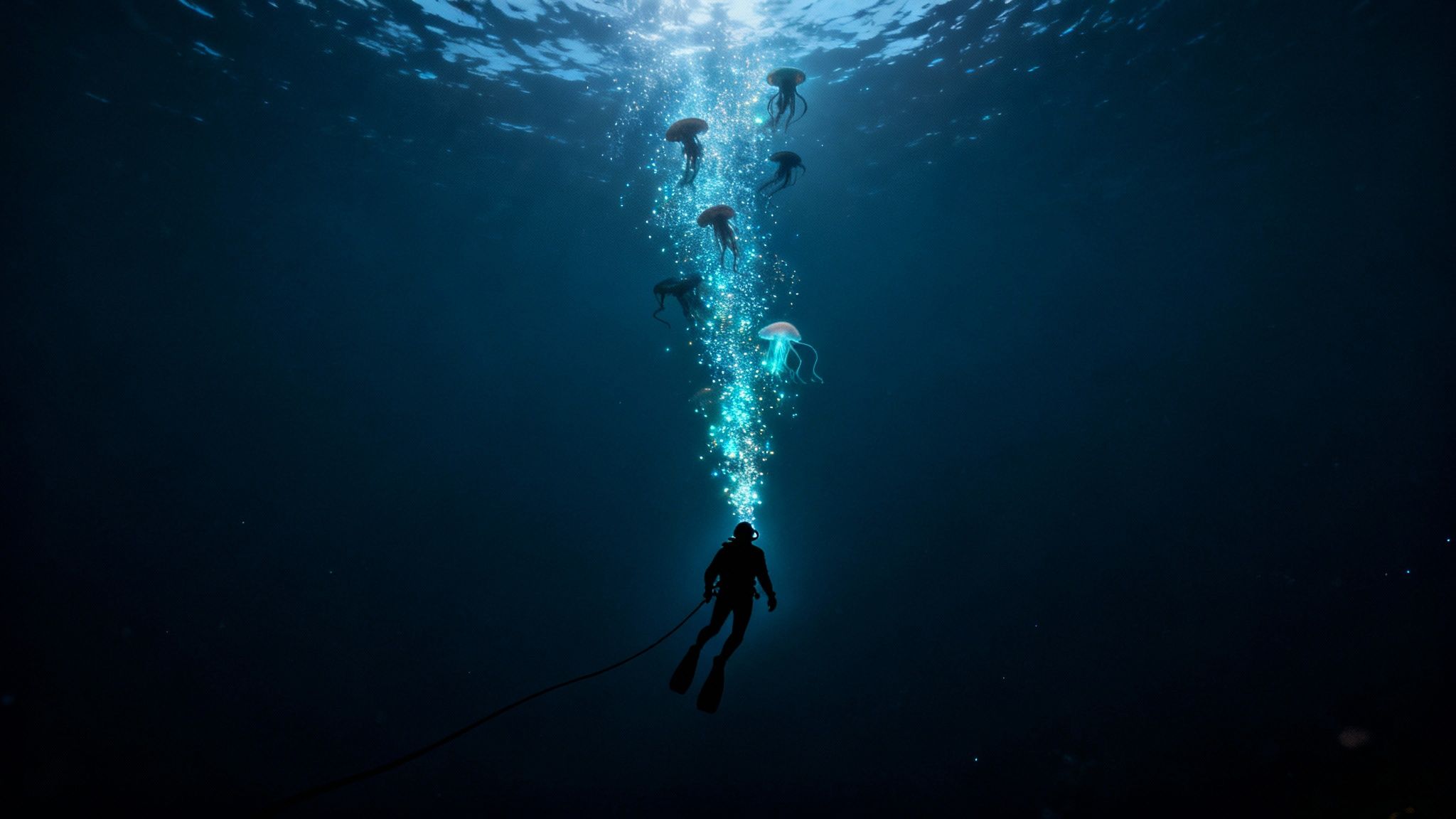
The undisputed king of these adventures is the Kona Blackwater Dive. Honestly, it feels less like you're in the ocean and more like you’re floating through deep space. This dive takes you miles offshore, tethered above thousands of feet of water, to witness one of the planet's most incredible phenomena.
Every single night, a countless army of deep-sea creatures makes the largest vertical migration on Earth, rising from the crushing depths to feed near the surface. The Blackwater Dive drops you right into the heart of this bizarre and beautiful parade.
The Kona Blackwater Dive Experience
This isn't about navigating a reef. It's about letting go. You'll be tethered to the boat, drifting in the immense, inky blackness of the open ocean. We drop a powerful, brightly lit downline into the abyss, which acts like a porch light for a whole host of otherworldly creatures.
You just hang out in the water column, usually around 40-50 feet, and watch the show come to you. The things that flicker into the light are often the larval or juvenile stages of animals you might recognize, but they look like pure science fiction—perfectly translucent, glowing with their own bioluminescence, and utterly hypnotic.
This pelagic dive is all about patience and pure wonder. You don't swim to find life; you hover in the vastness and let life find you. It’s a humbling, unforgettable encounter with a hidden universe.
Because you’re dealing with the open ocean in complete darkness, this dive is for experienced divers with rock-solid buoyancy control. Safety is our absolute priority, and we use strict protocols and specialized gear to keep the entire experience controlled and secure. You can explore the Blackwater Dive to get a better sense of what this one-of-a-kind adventure is all about.
Advanced Reef Exploration and Drift Dives
The adventure doesn't end when the sun rises. For certified divers hungry for a challenge, the Big Island's dramatic volcanic topography is the ultimate playground. We run advanced dive tours designed specifically to explore deeper reefs, intricate lava formations, and sites with more dynamic conditions.
These dives might have you:
- Exploring Deep Reefs: We'll drop down to 100 feet or more to investigate sunken volcanic craters and deep ledges. This is where you find the shy stuff—frogfish, eagle rays, and maybe even a passing shark.
- Flying on a Drift Dive: Instead of fighting the current, we use it. You'll harness the ocean's energy to glide effortlessly over long stretches of pristine reef, covering way more ground and seeing the ecosystem in a whole new way.
- Navigating Lava Tubes: For divers with the right training, slipping through the more complex networks of lava tubes and caverns is a true thrill of discovery.
We keep these trips to small groups of seasoned divers who are comfortable in more demanding environments. This allows us to get off the beaten path and visit more remote sites for a truly personal and rewarding day of diving. If you're ready to step up your game, our premium advanced dive tours were made for you.
Discover the Rich Marine Life of Hawaii
Every time you drop beneath the waves for a dive off the Big Island, you’re stepping into a world buzzing with life. While the manta rays and green sea turtles get most of the spotlight, the real magic is in the sheer diversity you'll find on every single reef. It's a non-stop parade of fascinating creatures.
The island's incredible isolation, plunked right in the middle of the Pacific, turned it into a natural laboratory for evolution. This means a huge chunk of the marine life here is endemic—you literally can't find it anywhere else on Earth. Learning to spot these unique locals adds a whole new level of fun to your dives.
Endemic Species: The Locals You’ll Meet
Keep an eye out for fish that are pure Hawaiian. The milletseed butterflyfish, with its vibrant yellow body and rows of black spots, is a gorgeous and common sight as it darts through the coral. Another local celebrity is the Hawaiian cleaner wrasse, a tiny, colorful fish you'll often see busy at work, picking parasites off larger fish at what are known as "cleaning stations."
And that’s just the start. You might also cross paths with:
- Hawaiian sergeant fish: Easy to spot with their bold, black and white vertical stripes.
- Potter's angelfish: A jaw-droppingly beautiful orange and blue fish that loves to hang out in caves and under ledges.
- Fantail filefish: A wonderfully weird-looking fish that can change its color and texture to blend in perfectly with its surroundings.
When you start recognizing the local marine life, a dive transforms from a pretty swim into a genuine treasure hunt. Every fish you can name tells a piece of the story of Hawaii's unbelievable underwater world.
Pelagic Animals: The Big Blue Visitors
Look past the reef's edge and out into the deep blue, and you'll realize the Kona coast is a highway for bigger, open-ocean animals. The deep channels between the Hawaiian islands attract all sorts of pelagic species, and it’s always a thrill when they cruise by.
You'll almost certainly see pods of spinner dolphins from the boat, and if you're lucky, they might even make a curious pass by your dive group underwater. Venture further from shore, and you enter the territory of more elusive, powerful creatures. It’s not unheard of for divers to catch a glimpse of an oceanic whitetip shark or the unmistakable profile of a scalloped hammerhead gliding through the deep.
The Interconnected Food Web
What truly sets the Big Island's ecosystem apart is how everything is connected. This delicate balance is on full display everywhere you look, from the tiniest reef fish to the ocean's top predators. A perfect example is the relationship between deep-sea squid and the resident Hawaiian short-finned pilot whales.
These whales are a common sight for divers and boaters in the area. To fuel their mind-bogglingly deep dives—sometimes down to 2,600 feet—they need a serious amount of food. In fact, research shows these whales munch through an estimated 416 million squid every year, which just goes to show how incredibly rich the deep-ocean ecosystem that supports them really is. You can learn more from the University of Hawaiʻi's findings on pilot whale feeding habits.
Having this kind of insight into the fragile beauty of this volcanic paradise makes every single dive that much more profound.
Planning Your Big Island Dive Adventure
Alright, let's get this trip on the books. When you're heading to a world-class destination like the Big Island, a bit of forward-thinking makes all the difference, ensuring your dive trip goes off without a hitch. The best part? Incredible diving is on the menu here all year long.
Hawaii's ridiculously consistent weather means there’s really no "off-season." That said, there are some subtle shifts through the year that might just be the deciding factor for you.
- Summer (June – September): This is when you'll find the warmest water, often hitting a perfect 80°F (27°C). The ocean tends to be at its flattest, which means beautifully smooth boat rides out to the dive sites. It’s pure bliss.
- Winter (December – March): The water might dip to a still-comfortable 75°F (24°C), but you get an amazing trade-off: humpback whales. You haven't lived until you've heard their haunting songs echoing through the water while you're exploring a reef.
No matter when you visit, the visibility on the Kona coast is legendary. Because there are no major rivers dumping sediment into the ocean, it’s common to have vis clear past 100 feet.
Choosing the Right Dive Operator
This is a big one. The dive operator you choose can truly make or break your entire vacation. Sure, lots of companies can take you out on a boat, but a top-notch crew like the one at Kona Honu Divers delivers an experience built on safety, deep local knowledge, and incredible service.
A great crew knows these dive sites like the back of their hand. They keep group sizes small, give you personal attention, and never cut corners on safety. This is what lets you relax and just enjoy the magic, both on the boat and under the waves.
Don't just take our word for it—see what other divers are saying.
Booking and Packing Tips
Once you’ve settled on your dates, book your dive tours well in advance. I can't stress this enough. The most popular trips, especially the Manta Ray Night Dive, sell out fast—particularly during summer and holidays. Locking in your spot early means you won't miss out on the experiences you came for.
Now, for packing. The age-old question: bring your own gear or rent? Many divers love the familiar fit of their own BCD and regs. But renting high-quality, well-maintained equipment from a great shop is an easy way to lighten your travel load. If you bring anything, make it your own mask for that perfect, no-leak fit and a dive computer you know how to use.
A well-planned trip is a stress-free trip. By choosing the right season, booking with a trusted operator, and reserving your tours ahead of time, you set the stage for an incredible Big Island scuba diving adventure.
Ready to lock in your dates and start the countdown?
Your Big Island Diving Questions, Answered
Still wondering about a few things before you take the plunge? We get it. Planning the perfect dive trip comes with questions, so here are the answers to some of the most common ones we hear from fellow divers.
What's the Best Time of Year to Dive?
The great news is that there’s really no bad time to dive here. The Big Island is a year-round destination, but the seasons do offer slightly different experiences.
If you visit in the winter (December to March), the water is a little cooler, usually around 75°F (24°C). But the trade-off is absolutely incredible: it’s peak humpback whale season. There's nothing quite like hearing their haunting songs echoing through the water on a dive.
Come summer (June to September), the water warms up to a balmy 80°F (27°C), and the seas are typically at their calmest. This means glassy conditions and incredibly smooth boat rides out to the dive sites.
Do I Need to Be an Advanced Diver?
Not at all! The Kona coast is a fantastic underwater playground for divers of all levels. We have countless sites, from calm, shallow reefs perfect for your first open-water dives to more advanced adventures. For the seasoned diver, there are deep lava tubes and thrilling drift dives that are sure to get your heart pumping.
Besides Manta Rays, What Else Will I See?
The mantas might steal the spotlight, but the rest of the marine life here is just as spectacular. You can pretty much count on seeing our resident Hawaiian green sea turtles (honu) on any given day. It’s also common to be greeted by a pod of playful spinner dolphins on the boat ride.
Once you’re under, keep an eye out for moray and garden eels, octopuses hiding in plain sight, and a whole spectrum of endemic Hawaiian reef fish—butterflyfish, wrasses, and parrotfish are everywhere.
The sheer biodiversity means every single dive is different. One day you’re watching a turtle get its shell cleaned by fish, and the next you’re spotting a rare, perfectly camouflaged frogfish.
Should I Stick to Shore Dives or Go for a Boat Dive?
While the Big Island has a few good shore dives, you’d be missing out on the best stuff. The most pristine reefs, dramatic lava formations, and vibrant marine ecosystems are only accessible by boat.
A boat dive gets you to legendary spots like the protected Kealakekua Bay, offshore pinnacles swarming with life, and those incredible lava tube caverns you just can’t reach from land. If you want to see the best of what Kona has to offer, a boat dive is the way to go.
Ready to experience the magic of Kona Honu Divers for yourself? Check out all of our Big Island diving tours and book your adventure today.