
Picture this: you descend into crystal-clear blue water, sunlight filtering down as you explore ancient lava tubes and drift over vibrant coral gardens humming with life. That’s what it feels like to scuba dive on the Big Island of Hawaii, an experience that rightfully earns its place on divers' bucket lists worldwide. The island's one-of-a-kind volcanic seascape and sheltered waters have created a true underwater paradise.
Why The Big Island Is a World-Class Diving Destination
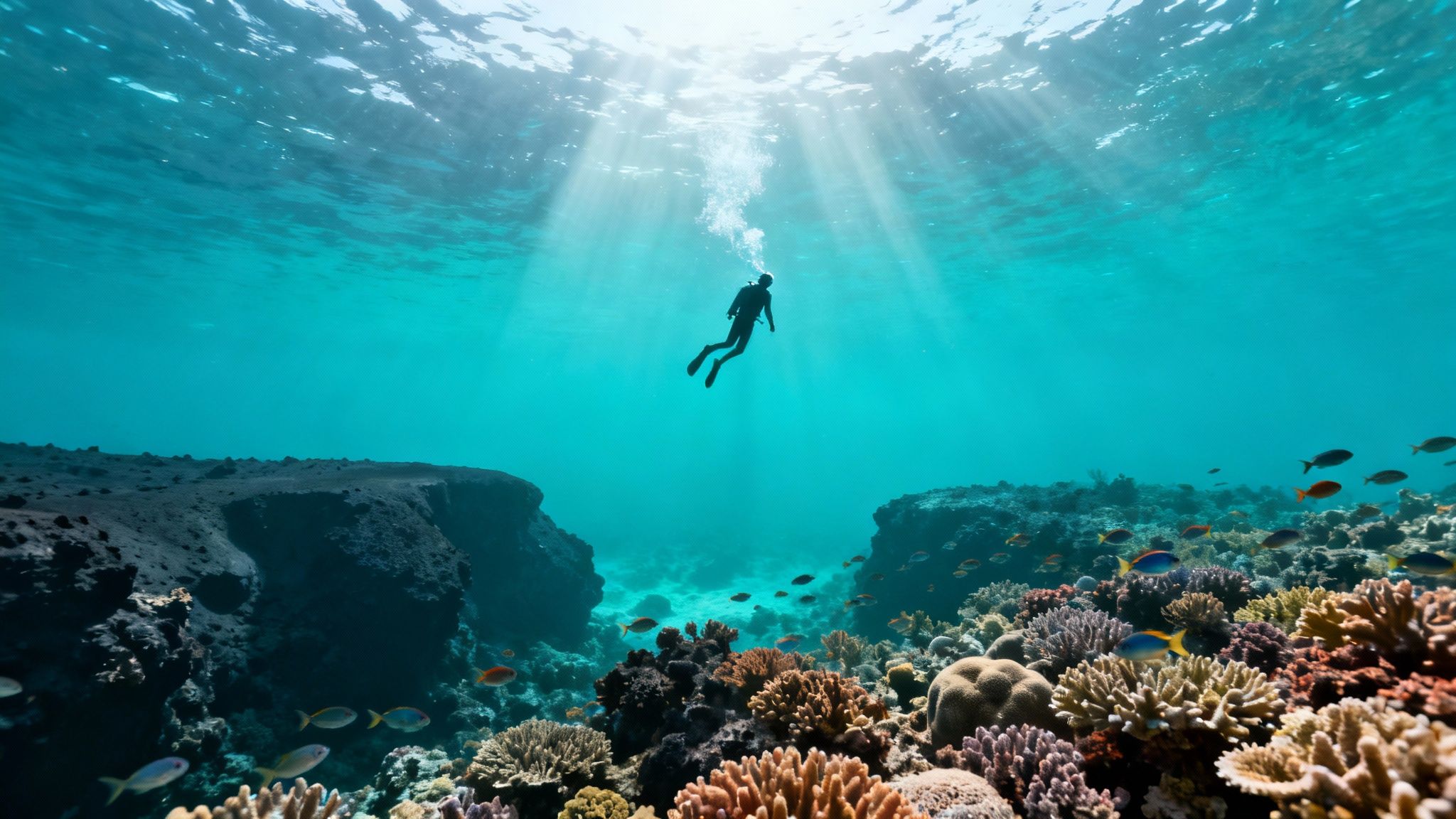
The Big Island isn't just another pretty spot to dive; it’s a premier destination forged by the raw power of volcanoes. The Kona coast, on the island's western side, is naturally protected from the strong trade winds by the sheer size of mountains like Mauna Loa and Hualalai. This massive natural shield results in incredibly calm, clear ocean conditions, making for spectacular diving nearly every single day.
It's these calm waters that allow for such stunning biodiversity to thrive. The underwater world here is a dramatic mix of lava tubes, swim-through arches, and colossal coral structures that act as high-rise apartments for a dazzling array of marine life. From tiny, vibrant nudibranchs to ancient-looking sea turtles, the reefs are always buzzing with activity.
Unique Underwater Encounters
What really makes the Big Island a legend among divers are its signature experiences. It’s home to the world-famous Manta Ray Night Dive, an unbelievable underwater ballet where these gentle giants gracefully swoop and feed just inches above your head. Then there's the Kona Blackwater Dive, a surreal drift in the deep, dark open ocean to see the bizarre and beautiful creatures that rise from the abyss at night.
Experiences like these are why the Big Island stands out so much, even among the other Hawaiian islands. It simply offers more varied and rewarding diving than Maui or Oahu, all thanks to its vast volcanic coastline and the nutrient-rich waters that surround it. We’re constantly spotting juvenile frogfish, massive schools of yellow tang, and even playful spinner dolphins on our dives. You can learn more about what makes this place so special in our guide on the top reasons to scuba dive in Kona.
To give you a quick snapshot of what to expect, here’s a look at the highlights.
Big Island Diving At A Glance
| Feature | Description |
|---|---|
| Water Temperature | A comfortable 75-80°F (24-27°C) year-round. |
| Visibility | Excellent, often exceeding 100 feet (30 meters). |
| Key Attractions | Manta Ray Night Dive, Blackwater Dives, lava tubes, and coral reefs. |
| Marine Life | Manta rays, sea turtles, dolphins, sharks, and over 20% endemic fish species. |
| Best Time to Dive | Year-round, with the calmest conditions from May to October. |
This unique combination of calm seas, volcanic formations, and unforgettable signature dives makes the Big Island an incredible underwater playground for everyone, from brand-new divers to seasoned pros looking for their next big thrill.
The Unforgettable Manta Ray Night Dive
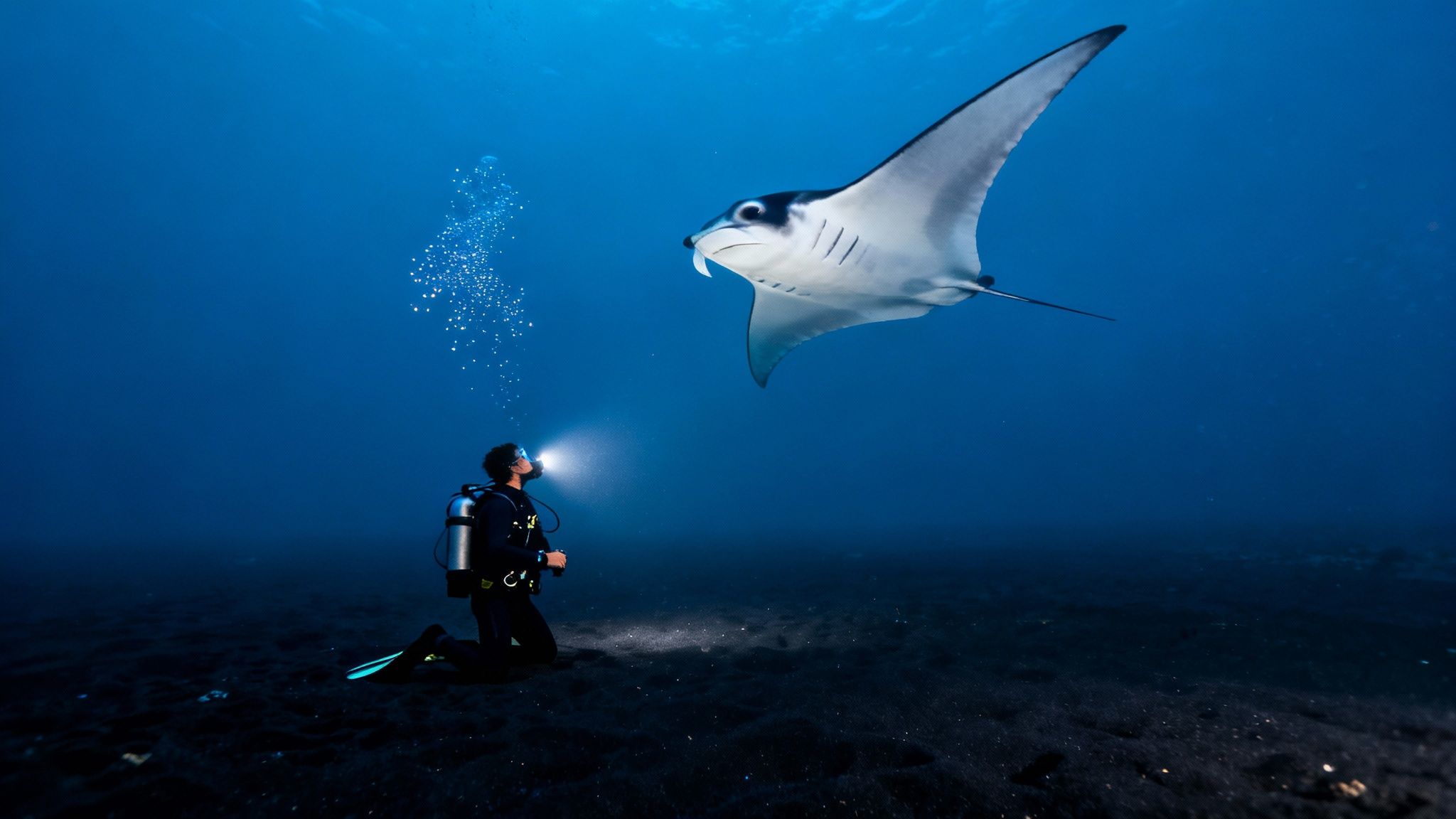
If you ask any diver about their most incredible experiences, the world-famous Manta Ray Night Dive on the Big Island is almost always at the top of the list. This isn't just another dive. It’s an otherworldly, breathtaking underwater ballet that you have to see to believe.
Picture this: you descend into the warm Pacific as the last light of day disappears. You and your group settle on the sandy ocean floor, switch on your dive lights, and point the beams straight up. Then the magic begins.
Giant manta rays, drawn by the plankton that gather in your lights, emerge from the dark. They swoop and glide, performing graceful barrel rolls just inches above you. It's a silent, hypnotic spectacle as these gentle giants, some with wingspans stretching up to 16 feet, filter their dinner from the water. Even veteran divers are often left speechless.
A Reliable Natural Wonder
You might wonder how such an amazing encounter can be so reliable. The secret is surprisingly simple. Years ago, a hotel discovered that its floodlights attracted plankton, which in turn brought in the mantas. Dive operators learned they could recreate this "dinner bell" effect at specific sites, establishing a consistent and sustainable feeding opportunity for the rays.
This isn't a hit-or-miss thing. The mantas show up almost every night. For example, recent reports from a local operator showed sightings ranging from 0 to 14 mantas over a three-week period, with many nights having more than ten individuals. It’s one of the most dependable wildlife encounters on the planet.
For us, it’s a mind-blowing spectacle. For the mantas, it’s just dinnertime. We simply get a front-row seat to the show. The experience is incredible whether you dive or snorkel. If you're weighing your options, our guide on the manta ray snorkel experience in Kona can help you decide.
Booking Your Manta Ray Dive
To witness this for yourself, it’s crucial to go with a top-notch, experienced operator. A company like Kona Honu Divers has perfected the experience, ensuring everything is safe and respectful for both the divers and the mantas. Their guides know these animals and are committed to conservation, which makes all the difference.
You can check out their highly-rated manta ray dive tours and read what other divers have said about this incredible adventure.
This is an incredibly popular dive, and spots fill up fast. Be sure to book weeks ahead of your trip to guarantee your place for this magical Kona experience.
Exploring The Best Kona Coast Dive Sites
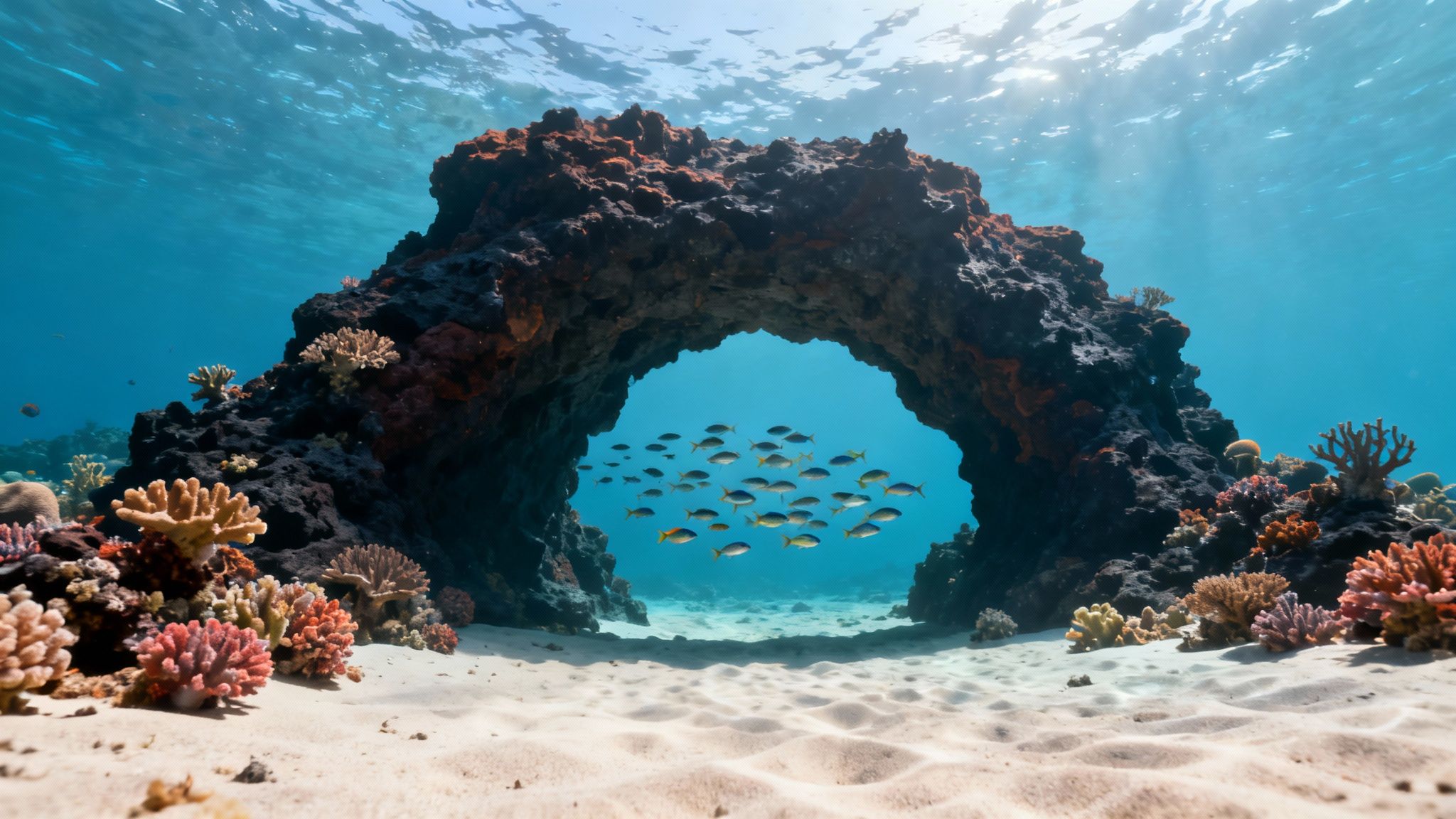
The Manta Ray Night Dive gets all the headlines, and for good reason—it's unforgettable. But that's just scratching the surface of what scuba diving on the Big Island of Hawaii has to offer. The Kona coast is absolutely packed with incredible dive sites, each with its own vibe and hidden secrets just waiting to be discovered.
Most of these world-class spots are just a quick boat ride from Kona, which makes them perfect for a morning or afternoon adventure. The island's volcanic past has left behind an underwater masterpiece. We're talking lava tubes, dramatic arches, and winding caverns that are now home to some of the most vibrant marine life you'll ever see.
Jumping between these different locations is the best way to really get a feel for the sheer variety of life here. You might spend one dive exploring an ancient lava formation and the next drifting over a pristine coral garden, seeing completely different critters at each spot.
Must-See Kona Dive Locations
To give you a taste of what’s out there, here are a few of our favorite, can't-miss dive sites along the Kona coast. Each one offers something truly unique.
- Kealakekua Bay: This isn't just a dive site; it's a protected marine sanctuary, and you can feel the difference the moment you drop in. Because fishing is completely off-limits, the ecosystem is thriving. The water here is calm and often crystal clear, with visibility that can easily top 100 feet. It’s the perfect window into a world of pristine coral and an unbelievable amount of fish. It's a prime example of why Big Island scuba diving is world-class.
- Crescent Beach (Pawai Bay): If you love dramatic underwater landscapes, this is your spot. It's famous for its huge lava arches and fun swim-throughs that make you feel like a true explorer. Keep an eye out for green sea turtles napping in small caverns and white-tip reef sharks cruising over the sand.
- Golden Arches: Just like the name implies, this site features a massive, stunning lava arch that’s just begging to be photographed. It’s also a gathering spot for huge schools of reef fish, especially milletseed butterflyfish and yellow tangs. Swimming through them is like being in the middle of a swirling tornado of color.
What You Can Expect To See
The marine life you'll meet is just as diverse as the dive sites themselves. Turtles and reef sharks are pretty common, but the real fun is spotting the masters of camouflage. It's not unusual to find a shy octopus tucked into a rocky crevice or a frogfish pretending to be a sponge.
You’ll also see eels of every variety, from the beautifully patterned zebra moray to the giant yellowmargin moray, peeking out from their rocky homes. For macro photographers, these sites are a dream come true.
The real magic of diving the Kona coast is its unpredictability. One moment you're watching a honu (turtle) glide by, and the next you might be surprised by a pod of spinner dolphins cruising past in the blue.
Whether you're a brand-new diver looking for a calm, beautiful reef or a seasoned pro eager to explore intricate lava tubes, Kona has a site that will blow you away. The key is going with a guide who knows these waters like the back of their hand. An experienced crew, like ours at Kona Honu Divers, can get you to the absolute best spots based on the day’s conditions and what you’re hoping to see.
Ready to see these incredible underwater landscapes for yourself? We offer a variety of diving tours designed for every skill level.
Booking a trip is the first step. The rich, diverse world just beneath the waves is waiting for you.
Adventures For Experienced Divers
Look, the sun-drenched reefs along the Kona coast are world-class, no question. But for some of us, there's a pull toward something… different. If you're an experienced diver looking for a real challenge that goes beyond the usual reef tour, the Big Island delivers in a big way.
We're talking about dives that test your skills in deeper, wilder water. It’s less about gently finning over coral gardens and more about embracing the raw, untamed side of scuba diving on the Big Island of Hawaii. Think remote sites, stronger currents, and deep volcanic ledges where you're more likely to run into the big stuff.
The Otherworldly Kona Blackwater Dive
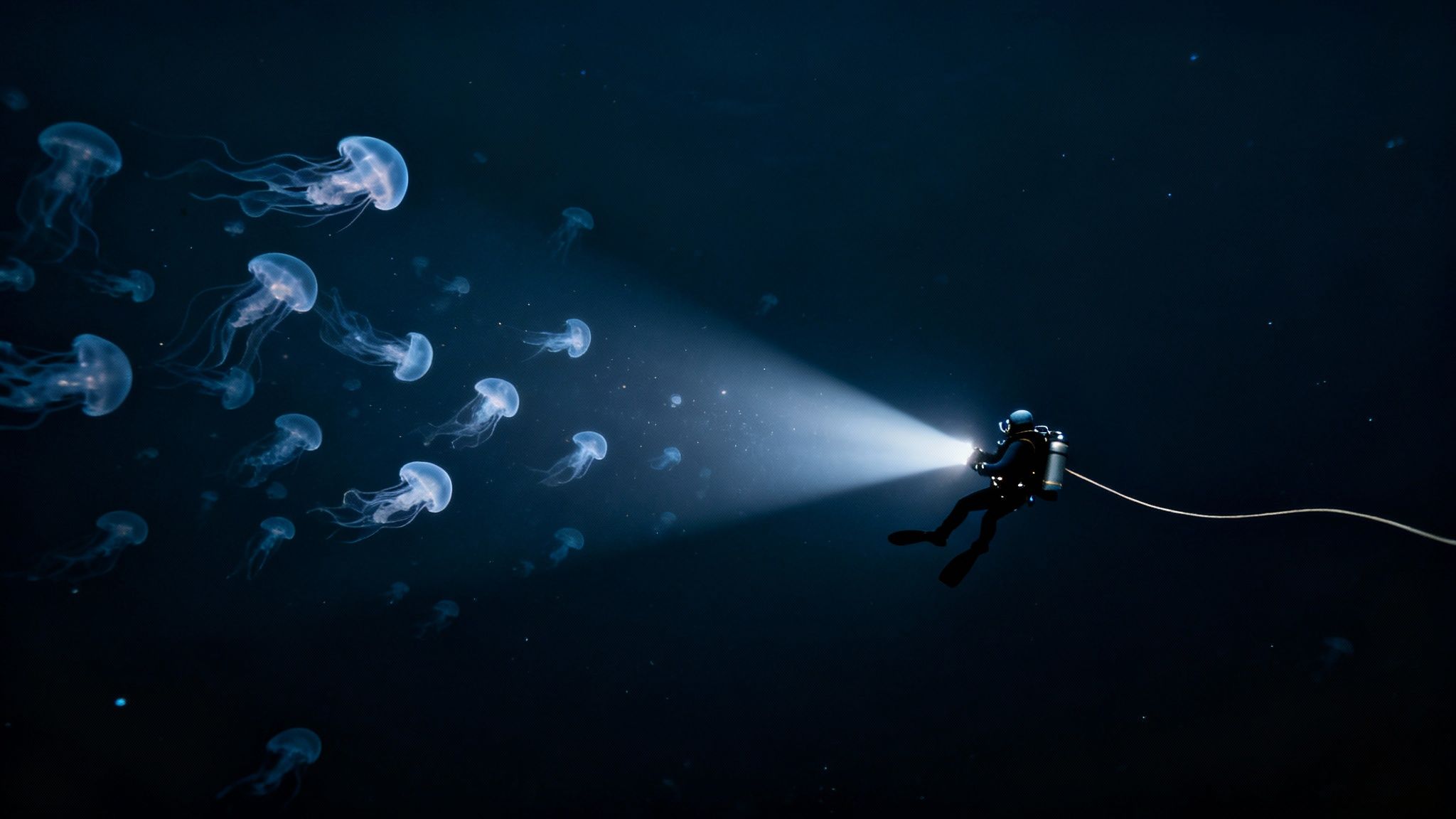
Picture this: you're suspended in pure darkness, miles from shore, with thousands of feet of inky black ocean beneath you. You’re tethered to the boat, a tiny beacon in a vast, alien world. That's the Kona Blackwater Dive, and honestly, it’s one of the most mind-bending experiences you can have underwater.
Every single night, the largest migration on Earth happens when countless strange and wonderful creatures rise from the abyss to feed near the surface. We hang a set of powerful lights to draw them in, and what you see is straight out of science fiction—translucent squid, larval fish that look nothing like their adult forms, and jellies that pulse with their own internal light.
It’s completely humbling and utterly mesmerizing. This isn't just another dive; it's a front-row seat to a world that most people don't even know exists. If you’re intrigued, you can see all the details on our Blackwater Dive tour.
Exploring Deeper and More Remote Sites
Beyond the blackwater trip, advanced diving here means getting away from the crowds and pushing the envelope. We head out to sites that are more exposed and have conditions that keep the novice divers away.
This is where you find the more dramatic underwater landscapes and, often, the bigger animals. In these challenging environments, your chances of seeing incredible marine life go way up.
- Schools of Pelagic Fish: Huge schools of jacks and trevally are a common sight, swirling around the deep pinnacles.
- Larger Shark Species: You'll see reef sharks everywhere, but on these dives, you might just get a visit from a Galapagos or even a tiger shark.
- Unique Topography: We explore stunning underwater cliffs, arches, and lava formations that you simply can't get to on a standard charter.
These dives aren't for everyone. They demand rock-solid buoyancy, confidence in changing conditions, and a true spirit of adventure. The payoff? An unforgettable glimpse into the raw power and beauty of the Pacific.
For certified divers who are ready to put their skills to the test, our premium advanced dive tours are designed to deliver these exact kinds of thrilling, next-level encounters.
How To Plan Your Big Island Dive Trip
Alright, let's talk logistics. Planning a dive trip to the Big Island is pretty straightforward, but a little inside knowledge goes a long way. Getting the details sorted out ahead of time means less stress and more time enjoying the incredible underwater world.
One of the absolute best things about diving off the Kona coast is how consistent the conditions are. The water temperature is fantastic year-round, typically hovering between a comfortable 75°F (24°C) in the winter and a warm 80°F (27°C) in the summer. Seriously, you can't pick a bad time to dive here.
That said, there are some subtle seasonal shifts to keep in mind. The summer months, roughly May through October, generally bring the flattest, calmest seas and lots of sunshine. Winter can stir up larger swells, particularly on the northern shores, but the Kona coast's geography keeps it wonderfully sheltered, making it a reliable, year-round diving destination.
When To Visit And What To Pack
The best time to visit might just depend on what you're hoping to see. While our resident marine life is here all year, the humpback whale season runs from December to April. There’s nothing quite like hearing their haunting songs reverberate through the water while you’re on a dive—it's an experience you'll never forget.
So you've picked your dates. Now, what to throw in your bag? Think layers and versatility.
- Wetsuit: For most people, a 3mm full wetsuit is the sweet spot for Kona's warm water. If you're someone who gets cold easily, or you're planning on multiple dives in one day (especially the Manta Ray Night Dive), a 5mm wetsuit is a smart choice for staying toasty.
- Gear Choice: You’ve got two options: bring your own gear or rent from a reputable shop like Kona Honu Divers. Renting is a fantastic way to avoid extra baggage fees and travel light, and we have top-notch equipment ready for you.
- The Essentials: Beyond your dive gear, be sure to pack reef-safe sunscreen (this is a must!), a reusable water bottle to stay hydrated, a good hat, sunglasses, and a light jacket for the boat ride back after a sunset or night dive.
Big Island Diving Conditions By Season
To help you visualize the year, here’s a quick breakdown of what you can generally expect from the diving conditions on the Big Island.
| Season | Water Temperature | Visibility | Typical Marine Life |
|---|---|---|---|
| Winter (Dec-Mar) | 75-77°F (24-25°C) | 60-100+ ft | Humpback whales (songs are common!), manta rays, reef sharks, dolphins. |
| Spring (Apr-Jun) | 76-78°F (24-26°C) | 80-120+ ft | Excellent visibility, tiger sharks may be more active, manta rays, spinner dolphins. |
| Summer (Jul-Sep) | 78-80°F (26-27°C) | 80-120+ ft | Calmest seas, warmest water, whale sharks (occasional), manta rays, turtles. |
| Fall (Oct-Nov) | 77-79°F (25-26°C) | 70-100+ ft | Transition season, great all-around conditions, manta rays, eagle rays. |
As you can see, there's truly no "off-season" for diving in Kona. Each time of year offers something unique, but the incredible marine life and comfortable conditions are a constant.
Getting Here And Where To Stay
The travel side of things is a breeze. Your destination airport is Ellison Onizuka Kona International Airport (KOA). It’s conveniently located just a quick drive from Kailua-Kona, the heart of the diving community and where most operators are based.
When it comes to finding a place to stay, I’d recommend setting up your home base in or near Kailua-Kona. This gives you super easy access to the dive boat harbor, plus all the great restaurants and shops. You'll find everything from full-scale resorts to cozy vacation rentals, so you can pick what best fits your style.
Nailing down these logistics early on means you can hit the ground running and focus on what you came for: the dive of a lifetime.
Choosing The Right Kona Dive Operator
Let’s be honest: the dive shop you choose can make or break your entire trip. A truly great operator does so much more than just ferry you out to a dive site. They’re the ones who set the tone for the whole experience, ensuring you're safe, comfortable, and plugged into the pure adventure of it all.
When you're looking around, you'll want to zero in on a few key things. Look for an impeccable safety record, of course. But also check for small group sizes—that's how you get personalized attention—and guides who genuinely know the local reefs like the back of their hand.
Why Kona Honu Divers Stands Out
At Kona Honu Divers, we're obsessed with getting those details right. Our whole philosophy is built on three pillars: uncompromising safety, a deep-seated respect for the ocean, and giving our guests an unforgettable experience. Our guides aren't just certified pros; they are passionate storytellers and stewards of the sea, excited to show you what makes Kona's underwater world so special.
We genuinely believe it's the little things that add up to a big adventure. For a more detailed breakdown of what to look for, we put together a guide on how to choose a Kona dive shop.
But don't just take our word for it. See what other divers are saying about their time with our crew.
When you find the right fit, you can book your dives with total peace of mind, knowing you're in good hands. Ready to see the best of Kona with a crew that’s as excited as you are?
Your Kona Diving Questions Answered
Let's tackle some of the most common questions we hear from divers planning their trip. Getting these details sorted out is the final step before you can look forward to an incredible underwater adventure on the Big Island.
Do I Need to Be an Advanced Diver?
Absolutely not! While the Big Island certainly has some thrilling dive sites for the seasoned pros, the Kona coast is famous for its calm, protected waters that are perfect for newcomers.
We run introductory dives and full certification courses all the time. So whether it's your first time breathing underwater or you're an old hand, there's a dive here for you.
What Wetsuit Should I Pack for the Water Temperature?
The water here is beautiful year-round. You can expect it to hover around a comfortable 75°F (24°C) in the winter and warm up to a balmy 80°F (27°C) in the summer.
For most people, a standard 3mm full wetsuit is perfect for daytime dives. That said, if you know you get chilly or you're signing up for a night dive, you'll be much happier in a 5mm suit. Staying warm means staying comfortable, which makes for a better dive every time.
Is It Common to See Sharks While Diving?
Yes, but it's not what you might see in the movies! The sharks we encounter are almost always harmless reef species.
It's pretty common to spot whitetip reef sharks just chilling out on the sandy bottom during the day. On very rare occasions, divers in deeper waters might get a lucky glimpse of a tiger or Galapagos shark, which is a real treat. These sightings are not a typical part of our regular reef tours.
What's the Best Way to Book a Dive Tour?
The simplest and most reliable way is to book directly through a dive shop's website, like ours at Kona Honu Divers. This way, you're dealing straight with the source, which makes communication easy and gives you the best shot at securing a spot on the trips you really want.
A quick heads-up: it's a really good idea to book your dives well in advance. Our most popular trips, especially the Manta Ray Night Dive, can be fully booked weeks or even months out, particularly during busy travel seasons.
A little planning goes a long way in making sure you don’t miss out on the best underwater experiences the Big Island has to offer.