
Picture this: you're descending into a deep, sapphire-blue world, drifting past ancient lava tubes that have become bustling neighborhoods for vibrant marine life. This is what it's really like to scuba dive off the Big Island. The island's volcanic heart has shaped an incredible underwater landscape of arches, caves, and pristine reefs, especially along the sheltered Kona coast. It’s a dive experience unlike any other.
Why the Big Island Offers World-Class Diving
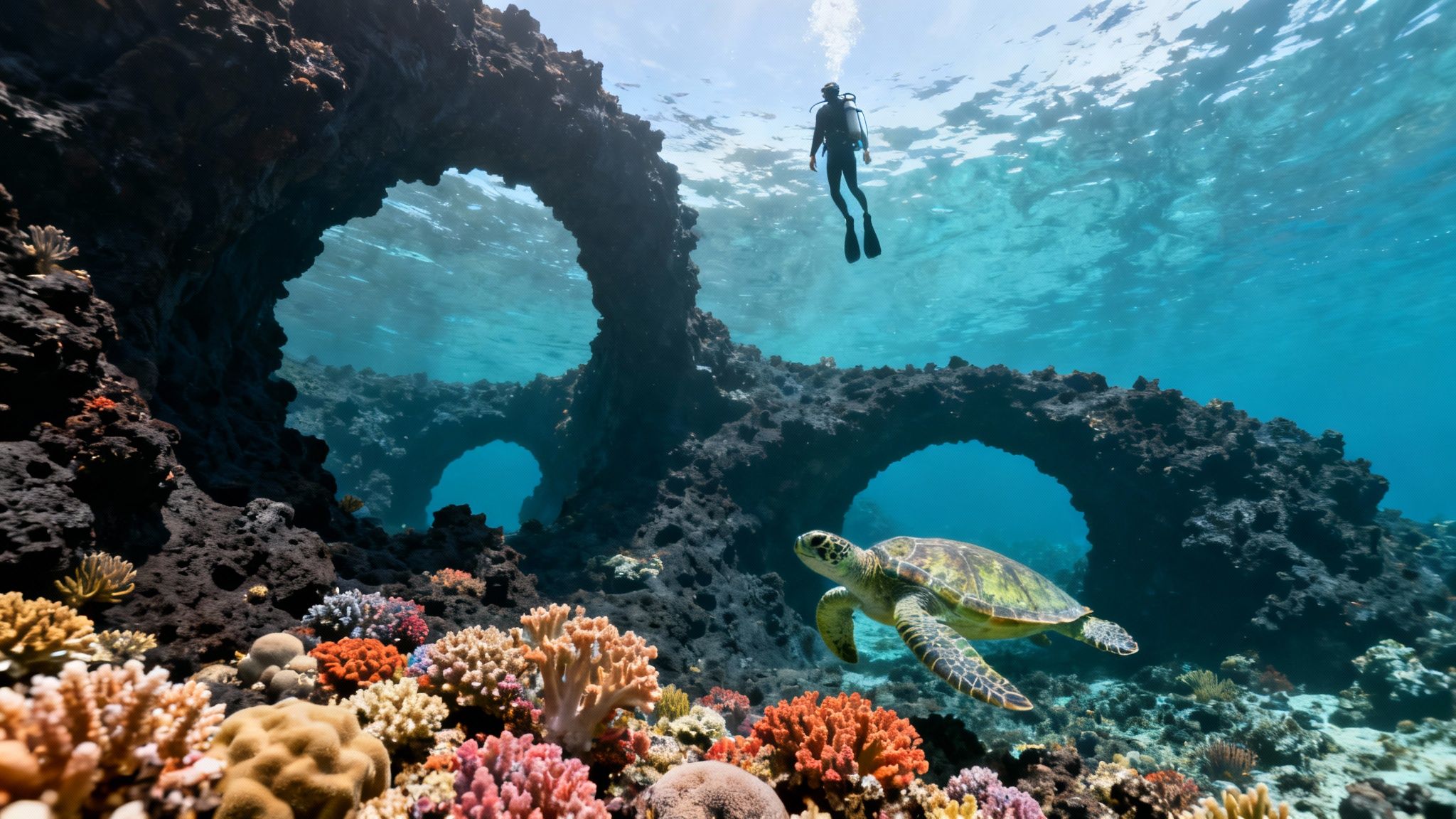
Unlike many tropical spots, the Big Island’s underwater world is a direct result of its fiery volcanic geology. The colossal shields of Mauna Loa and Hualalai volcanoes act as a natural barrier, protecting the Kona coast from the powerful trade winds. This lucky geography creates exceptionally calm and clear water, making for stunningly beautiful and comfortable dives any time of year.
This unique environment has allowed a breathtakingly diverse ecosystem to thrive. The old lava flows provide the perfect foundation for intricate coral gardens, which in turn support a kaleidoscope of colorful reef fish, curious eels, and camouflaged octopuses. It’s a world built on volcanic rock and brought to life by the Pacific.
An Underwater Paradise Awaits
Diving here is about more than just pretty scenery; it’s about unforgettable marine encounters. The island is a true sanctuary for the iconic species that make Hawaiian diving so legendary.
- Hawaiian Green Sea Turtles: You'll see Honu, as they're known locally, on almost every dive. They glide gracefully through the water or rest peacefully on the reef, completely unbothered by respectful divers.
- Astounding Biodiversity: The sheer variety of life is incredible, from huge schools of brilliant yellow tang to the weird and wonderful frogfish hiding in plain sight. Every lava tube and archway creates a complex habitat for countless creatures.
- The World-Famous Manta Ray Night Dive: The Big Island is globally renowned for its manta ray night dive. It's a genuine bucket-list experience where dozens of these gentle giants swoop and barrel roll through the beams of dive lights to feed on plankton.
To give you a clearer picture of what makes the Big Island such a special place to dive, here's a quick summary.
Why Choose the Big Island for Your Next Dive Adventure
| Feature | Why It Matters for Divers |
|---|---|
| Volcanic Topography | Creates a dramatic underwater world of lava tubes, arches, and caves that are thrilling to explore. |
| Protected Kona Coast | Giant volcanoes block trade winds, resulting in calm, clear waters perfect for diving year-round. |
| Exceptional Visibility | Visibility often exceeds 100 feet, allowing you to fully appreciate the stunning underwater landscapes. |
| Abundant Marine Life | Healthy coral reefs support a massive diversity of fish, turtles (Honu), eels, and other fascinating creatures. |
| Iconic Manta Ray Dive | Home to one of the most acclaimed and reliable manta ray night dives on the planet—a truly unforgettable experience. |
| Thriving Dive Community | Over 50 dive shops support roughly 100,000 certified dives annually, offering expertise for divers of all levels. |
In short, the Big Island delivers a complete package that few other destinations can match.
The Kona coast in particular is celebrated for its clarity, and you can really explore the unique features of Kona diving to understand what makes its underwater environment so special. When you combine the protected waters, volcanic formations, and prolific marine life, you get an adventure you simply won't find anywhere else.
Diving Into the Best Spots on the Kona Coast
The Kona coast is absolutely packed with world-class dive sites, and each one gives you a completely different peek into Hawaii's underwater world. Thanks to the island's volcanic past, the seafloor is a playground of dramatic lava tubes, massive archways, and vibrant coral reefs. It honestly feels like a new adventure every time you drop below the surface.
One of the best parts about diving here is the sheer variety. It doesn't matter if you're blowing your first bubbles or have hundreds of dives logged; there's a perfect spot for you. One day you might be drifting through calm coral gardens teeming with reef fish, and the next you're exploring a volcanic drop-off, keeping an eye out for bigger creatures cruising by in the deep blue.
And the water? It's unreal. Visibility often pushes past 100 feet, so you won't miss a thing. This is what makes scuba diving Big Island Hawaii so unforgettable.
Two Step (Honaunau Bay)
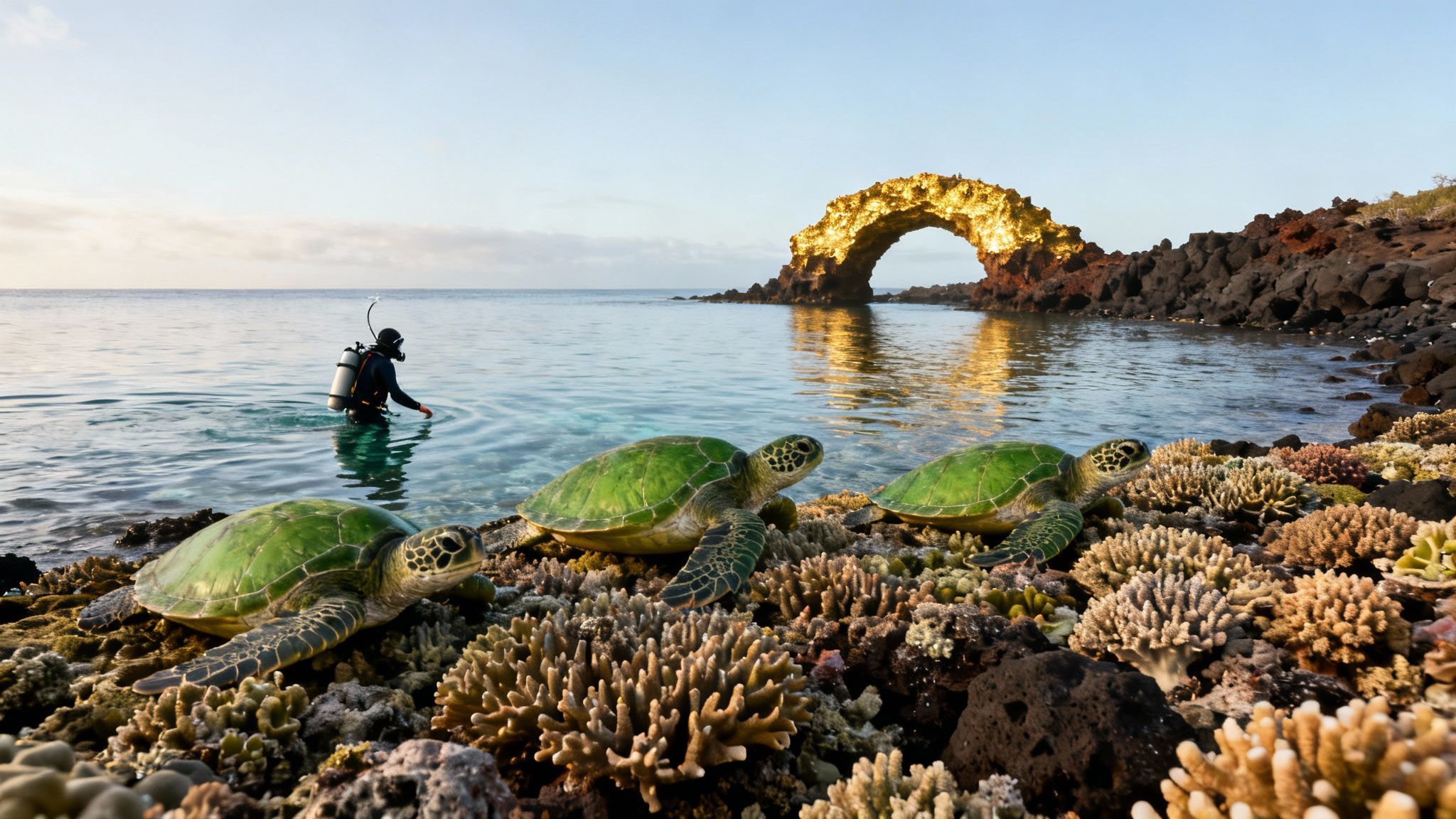
If you’re looking for an incredibly easy shore dive, this is it. "Two Step" gets its name from two perfectly placed lava rock "steps" that make getting into the water a breeze. It’s a fantastic spot for divers of all levels, but it’s most famous for one thing: getting to see Hawaiian green sea turtles, or Honu, up close.
The dive itself is fairly shallow, usually between 20 and 50 feet, which is perfect for a long, relaxed exploration. Since the bay is a protected marine life conservation district, the fish are plentiful and pretty comfortable around respectful divers. Keep your eyes peeled for spinner dolphins, as they often come into the bay to rest during the day.
Golden Arches
For anyone who loves dramatic underwater landscapes, "Golden Arches" is an absolute must. This is a boat dive, and the main attraction is a breathtaking lava archway covered in brilliant gold and yellow corals. Swimming through it while the sunlight streams down from above is a moment you—and your camera—will love.
As you navigate the site, you'll almost certainly be greeted by huge schools of bright yellow tangs and curious butterflyfish. It's also common to find a whitetip reef shark chilling under a ledge. The whole area is a maze of lava tubes and ridges, creating tons of little hiding spots for marine life. If you want a deeper dive into what makes this place so unique, you can learn more about the Big Island diving tours and its incredible geology.
Kona’s dive sites aren’t just spots on a map; they're living, breathing ecosystems. Every lava tube and coral head tells a story of the island's fiery creation and vibrant life, giving you a powerful connection to the natural world.
The diversity of what you can see underwater in Kona is truly special. Planning your trip is the first step, but the best way to safely hit the most spectacular spots is by booking a guided tour. Reputable operators provide all the gear you need and have the local knowledge to make your scuba diving Big Island Hawaii trip completely seamless.
You can explore a variety of guided diving tours along the Kona coast that cater to all skill levels.
The Unforgettable Kona Manta Ray Night Dive
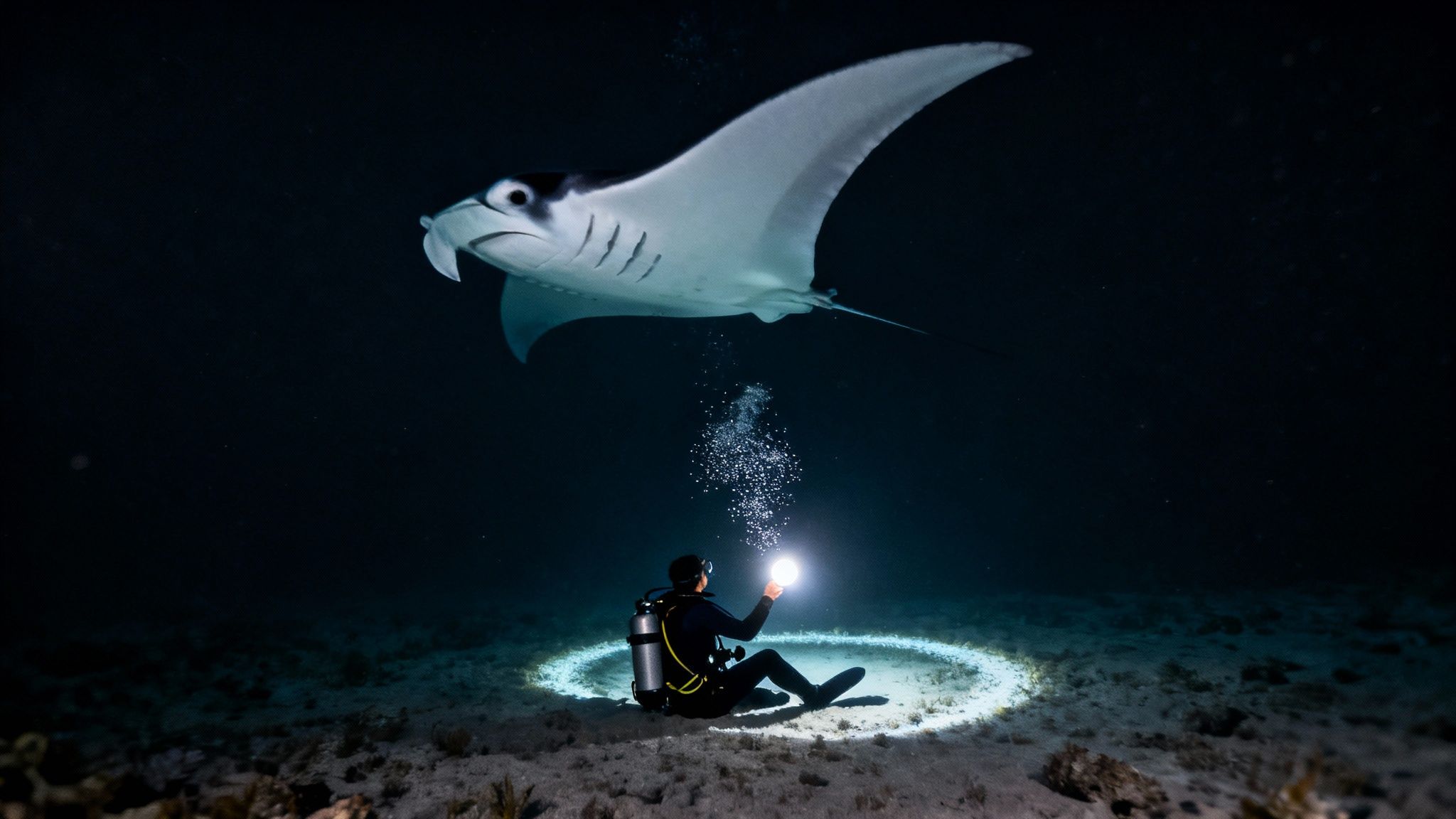
Let's be clear: there are very few underwater experiences on Earth that can hold a candle to the Kona Manta Ray Night Dive. This world-famous spectacle is more than just a dive—it's a front-row seat to one of nature's most incredible ballets. Frankly, it's a must-do for anyone serious about scuba diving Big Island Hawaii.
The concept is beautifully simple. Dive operators set up powerful, eco-friendly lights on the ocean floor. These lights act like a massive bug zapper for plankton, drawing in clouds of the manta rays' favorite meal. Once the sun dips below the horizon, the gentle giants arrive for their nightly feast, some with wingspans stretching up to 16 feet.
Picture this: you're kneeling on the sandy bottom, and these majestic creatures are gliding, swooping, and barrel-rolling just inches over your head. It’s a humbling, awe-inspiring, and profoundly moving experience that plugs you directly into the magic of the ocean.
Why Garden Eel Cove Is The Premier Choice
While there are a couple of spots to do the manta night dive, one place consistently delivers the best experience: Garden Eel Cove. Known to locals as "Manta Heaven," it's widely considered the top choice for a few very good reasons.
- Protected Location: Garden Eel Cove is tucked into a naturally sheltered bay. This means calmer waters, making the whole experience safer and much more pleasant, especially if you’re prone to seasickness.
- Better Viewing Area: The seafloor here is shaped like a natural amphitheater. This setup allows divers to settle into a designated spot without kicking up sand or disturbing the environment, giving everyone an unobstructed view of the show.
- Healthier Reefs: The reefs surrounding Garden Eel Cove are vibrant and full of life. A healthy ecosystem means a more consistent plankton supply, which in turn leads to more reliable manta ray sightings night after night.
This isn't just about seeing mantas; it's about seeing them in a thriving, natural environment. The trifecta of calm water, great visibility, and a healthy reef makes Garden Eel Cove the most dependable stage for this breathtaking performance.
The whole manta dive experience is truly one-of-a-kind. You can get the full rundown in our guide that answers the question, "What is the Manta Ray Night Dive?"
Choosing the right operator is crucial for enjoying this adventure safely and responsibly. You need a team that knows the dive site inside and out and, more importantly, prioritizes the well-being of the mantas. The best Kona manta ray dive tours deliver a seamless and unforgettable night from start to finish.
Advanced Diving Adventures for Thrill-Seekers
So, you’ve logged your dives and you're comfortable in the water. You're looking for something that goes beyond the stunning reefs and gets your pulse racing. For certified divers with a real taste for adventure, the Big Island delivers. If you’re ready to push your skills, Kona offers some truly unique dives that reward you with sights most people will only ever see in documentaries.
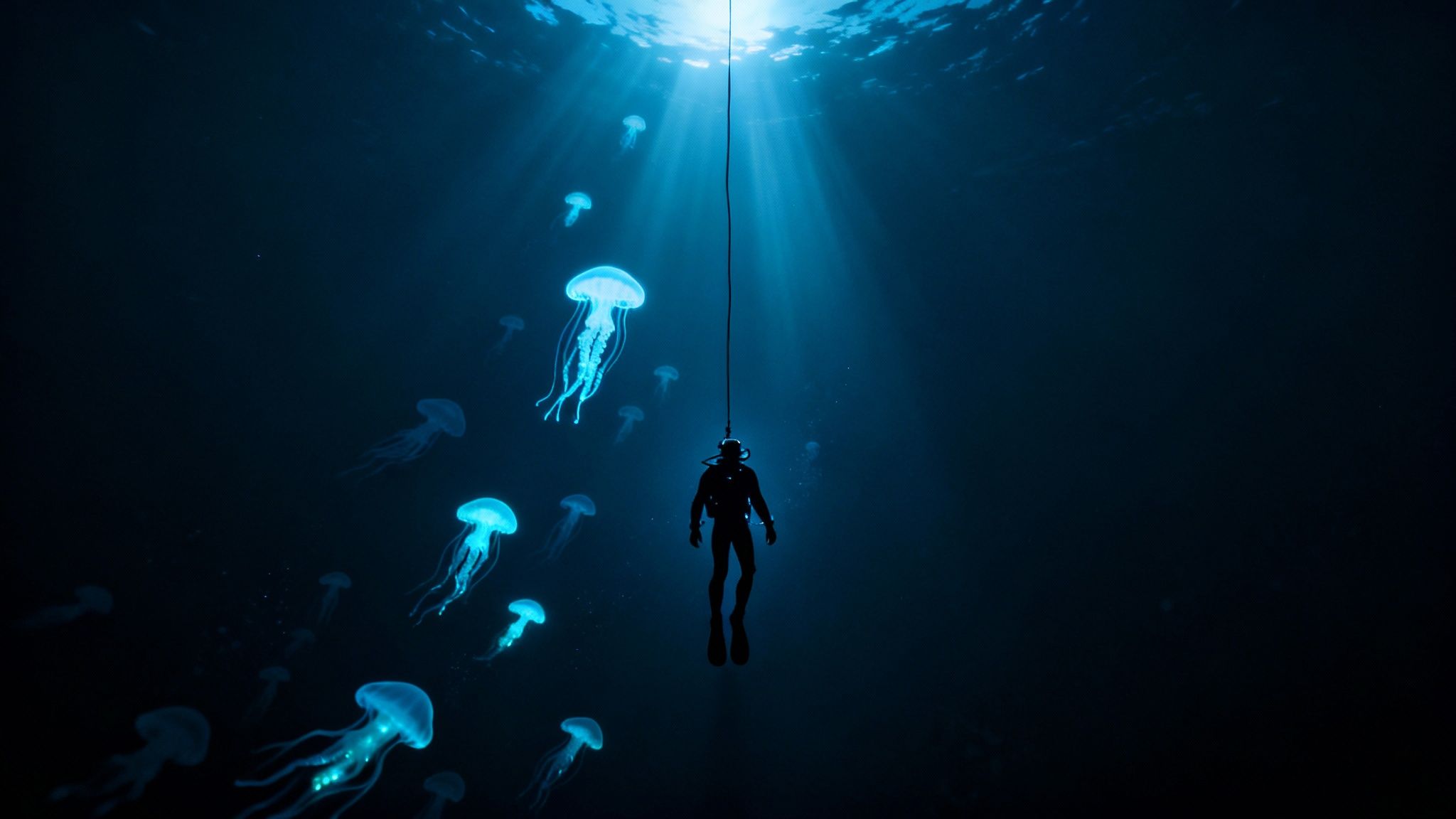
Without a doubt, the pinnacle of this is the Kona Blackwater Dive. Let's be clear: this is not your average night dive. You’ll head miles offshore, over water thousands of feet deep, and descend into the abyss tethered to a boat. You’re literally floating in the dark, suspended over nothing, waiting for the ocean’s secrets to come to you.
It's here that you witness the planet's largest daily migration, as bizarre and often bioluminescent creatures rise from the depths to feed. Think glowing, see-through squids, alien-like larval fish, and shimmering jellies. It's a surreal experience that feels less like swimming and more like floating through deep space. It’s the ultimate advanced scuba diving Big Island Hawaii experience.
Beyond the Blackwater Abyss
While the blackwater dive is a true bucket-list item, it’s not the only game in town for experienced divers. The Kona coast has plenty of other ways to challenge yourself and explore the island's wilder side.
- Intricate Lava Tube Systems: Ready to thread the needle? Navigating ancient volcanic tunnels is a true test of buoyancy and awareness. The payoff is discovering hidden caverns and the unique critters that call these dark mazes home.
- Deep Underwater Arches: For those comfortable with deeper profiles, the Big Island has massive lava arches that form dramatic swim-throughs. These deep structures are often highways for larger pelagic species cruising the open blue.
- Thrilling Drift Dives: Sometimes, you just have to go with the flow. Letting the current carry you along volcanic walls is an incredible feeling. Drift dives let you cover a lot of ground and increase your odds of a chance encounter with sharks, rays, or even migrating humpbacks in season.
These advanced dives are more than just a technical challenge. They’re a way to connect with the raw, untamed power of the Big Island’s volcanic heart. The feeling you get after navigating a complex lava tube or witnessing the deep ocean come alive is something you’ll never forget.
These adventures require a solid skill set and are absolutely best done with professional guides who live and breathe these waters. If you have the training and the nerve, these are the dives that make for lifelong stories. Kona Honu Divers runs the legendary Kona Blackwater Dive and also offers dedicated advanced dive trips for certified divers looking for that next level of excitement.
How to Choose the Best Dive Operator in Kona
Let's be honest: the dive operator you choose can make or break your trip. A great shop does more than just ferry you to a dive site. They're your guides, your safety net, and the team that can turn a good dive into an absolutely unforgettable one.
When you're looking at different options, it’s tempting to just sort by price, but that’s rarely the best approach. Think of it as an investment in a safe, high-quality, and personal experience. A few key details separate the truly great operators from the rest of the pack.
What Makes a Dive Shop Stand Out?
When you start digging into the local operators, keep these three things at the top of your list. They’re the real indicators of a professional and diver-focused business.
- A Rock-Solid Safety Record: This is the absolute priority. You want to see experienced, certified divemasters and instructors leading the charge. A culture of safety isn't just about having an oxygen kit on board—it’s about thorough pre-dive briefings, attentive guides, and a clear sense of professionalism from start to finish.
- Comfortable, Well-Kept Boats: A good chunk of your day is spent on the boat, not just underwater. A spacious vessel with easy entry and exit points, plenty of shade, and all the right safety gear makes a world of difference. It allows you to relax and actually enjoy your surface intervals.
- Small Group Sizes: This is a total game-changer. Diving in a small group means you get more one-on-one attention from your guide. It also means less silt getting kicked up, less crowding around a cool turtle or manta ray, and a much more relaxed, personal encounter with the underwater world.
Our Top Pick: Kona Honu Divers
One company that consistently nails all these points is Kona Honu Divers. We’ve seen a lot of operations, and their commitment to a top-tier experience is obvious in everything they do. Their guides aren't just experts in navigation; they're passionate about marine life and eager to share what they know, which adds so much depth to every dive.
They run custom-built dive boats designed specifically for diver comfort, making the ride out to Kona's best sites a breeze. But the real clincher is their dedication to small groups. This ensures everyone, from a newly certified diver to a seasoned pro, gets a more personal and enjoyable tour.
But don't just take our word for it. The best way to get a feel for a company is to see what other divers are saying. Below are live, unfiltered Google Reviews for Kona Honu Divers, so you can see for yourself.
Essential Ocean Safety for Hawaii Divers
The ocean surrounding Hawaii is a powerful, dynamic force. It demands respect and preparation. Those same volcanic forces that created the stunning underwater landscapes also cook up some pretty unique diving conditions, and every diver needs to be on their A-game. Honestly, being a smart, prepared diver is what separates a thrilling adventure from a bad day.
This all comes down to committing to a safety-first mindset on every single dive. Always run through your pre-dive gear checks, listen intently to your divemaster's briefing (they know these sites like the back of their hand), and never, ever push beyond your training or comfort level. Conditions around the Big Island can shift in a heartbeat, so having a solid grasp of local currents and potential surge is non-negotiable, especially when you're near those sharp volcanic rock formations.
Understanding the Risks
Let's be clear: scuba diving is a very safe activity, statistically speaking. But your best tool out here is awareness. The rigorous training and certification process we all go through is there for a reason—it builds the competence and confidence needed to handle yourself underwater, and the safety data reflects that.
A fascinating study looked at water-related incidents in Hawaii from 2009 to 2018. It found 206 snorkeling-related fatalities but only 28 scuba diving fatalities over that entire period. That huge difference really speaks to the value of the structured education divers receive. You can dig deeper into these ocean safety statistics in Hawaii on divernet.com.
Dive Prepared and Stay Aware
Your safety plan starts long before you hit the water and ends long after you're back on the boat. Stay hydrated, protect yourself from that intense Hawaiian sun, and always know your personal limits.
- Buddy System: It's the golden rule for a reason. Always dive with a buddy and keep that communication strong throughout the entire dive.
- Know the Site: The pre-dive briefing isn't just for show. Pay close attention to the details about the site’s layout, potential currents, and what marine life you might encounter.
- Emergency Preparedness: Have a plan. While treatments like hyperbaric oxygen therapy are vital for serious issues like decompression sickness, it’s also smart for divers to understand the potential risks associated with hyperbaric oxygen therapy.
Being a safe diver isn't about being fearless; it's about channeling a deep respect for the ocean into smart, calculated decisions. Your certification card is a license to keep learning, and every dive is a chance to sharpen your skills and awareness.
When you follow these guidelines and choose a professional, safety-focused dive operator, you can confidently explore the mind-blowing underwater world of scuba diving Big Island Hawaii. This approach ensures your memories are filled with the magic of the ocean, not preventable mistakes.
Your Big Island Scuba Questions Answered
Alright, let's tackle some of the most common questions we hear from divers planning a trip to the Big Island. Think of this as a quick-start guide to get you prepped and ready for an incredible underwater adventure. We'll cover everything from the best season to visit to what gear you should throw in your bag.
When Is the Best Time of Year to Scuba Dive on the Big Island?
Honestly, there's never really a bad time to dive here, but if you're looking for the absolute best conditions, aim for April to October. During these months, the famous Kona coast is at its calmest, and the water is a balmy 80°F / 27°C.
This is also when you'll get that legendary Kona visibility, often stretching out well over 100 feet. While the winter months can bring bigger ocean swells, the diving is still fantastic. Plus, the world-famous manta ray dives are spectacular year-round, so you can't lose.
Do I Need to Be Certified to Go Scuba Diving?
Yes, to head out on a boat and explore the premier dive sites, you absolutely need to be a certified diver. This isn't just a rule; it's a critical safety standard that ensures everyone in the water has the proper training to dive responsibly.
But what if you're not certified? No problem. You can still get a taste of the action with a Discover Scuba Diving (DSD) experience. A good dive shop will have an instructor teach you the fundamentals in a safe, controlled setting before taking you on a guided, shallow dive. It’s the perfect way to see if diving is for you.
The Big Island is a fantastic place to get certified or advance your skills. The calm, clear conditions of the Kona coast create an ideal learning environment for new divers.
What Marine Life Can I Expect to See in Kona?
Kona is bursting with life, and you never know what you'll encounter on a dive. You’re almost guaranteed to spot Hawaiian Green Sea Turtles (Honu) on every outing, along with plenty of eels, octopuses, and a whole spectrum of colorful reef fish.
From the boat, it’s common to see pods of spinner dolphins playing in the bays. Look under the lava rock ledges, and you'll often find whitetip reef sharks taking a nap. Of course, the real stars are the majestic manta rays on the night dive, but if you’re really lucky, you might even cross paths with a tiger shark or a gentle whale shark passing through.
What Should I Pack for a Big Island Dive Trip?
A little smart packing goes a long way in making your trip smooth and comfortable. Here’s what I always tell people to bring:
- Certification Card & Logbook: Don't leave home without them! These are essential for any certified diver.
- Exposure Protection: A 3mm wetsuit is the sweet spot for Kona's warm water. It keeps you comfortable without being too bulky.
- Personal Gear: If you love your own mask, fins, BCD, and regulator, definitely bring them. If not, don't worry—high-quality rental gear is easy to find.
- Ocean-Friendly Essentials: Please pack reef-safe sunscreen to help protect our delicate corals. A reusable water bottle, sunglasses, and a good hat are also must-haves.
- Post-Dive Comfort: I always recommend a light jacket or windbreaker. It feels great on those breezy boat rides back to the harbor.
With these tips in your back pocket, you're all set for an unforgettable scuba diving Big Island Hawaii experience.
For an incredible adventure exploring Kona's underwater world, book your trip with Kona Honu Divers. Their expert team, comfortable boats, and commitment to small groups ensure a safe and personal diving experience you'll remember for a lifetime. Explore all their Big Island diving tours to find your perfect dive.