
Picture this: you descend into the warm, turquoise waters off the Kona coast, sunlight filtering down through the surface. Below you, ancient lava tubes have created a dramatic underwater playground of canyons, arches, and caves, all teeming with life. That’s the magic of scuba diving on the Big Island of Hawaii—it’s an adventure shaped by volcanic fire and the deep blue sea.
Discovering Hawaii’s Premier Underwater Paradise

The Big Island isn’t just another pretty place to dive; it’s a world-class destination forged by geology. The massive volcanoes of Mauna Loa and Hualalai act as a natural shield for the western Kona coast, creating a protected 'lee side' with incredibly calm and clear waters nearly all year long. This gift from Mother Nature means visibility often stretches beyond 100 feet, creating perfect conditions for everyone from novice divers to seasoned pros.
That volcanic legacy doesn't stop at the shoreline. It dives right in with you, creating a submerged landscape unlike anywhere else on Earth. You'll find yourself exploring intricate arches, mysterious caves, and towering pinnacles, all sculpted by ancient lava flows. Over centuries, these unique structures have transformed into vibrant, bustling habitats for a staggering array of marine life—including many species you won't find anywhere else.
What Awaits Beneath the Surface
Every dive off the Kona coast feels like a completely new adventure. The underwater terrain is just as varied as the island itself, offering something for every diver’s wish list.
Here are just a few things you can look forward to:
- Volcanic Formations: Get ready to navigate through incredible lava tubes and swim-throughs, tangible reminders of the island's fiery birth.
- Vibrant Coral Reefs: The reefs here are healthy and bursting with color, home to a true kaleidoscope of tropical fish.
- Unique Marine Life: You’ll have a great chance of meeting Hawaiian green sea turtles (honu), spotting pods of playful spinner dolphins, and discovering a huge variety of endemic fish that make every dive special.
Of course, no trip here is complete without experiencing the world-famous Manta Ray Night Dive. It’s a breathtaking spectacle where you get to watch majestic manta rays glide and dance as they feed on plankton drawn to underwater lights. It’s an encounter you’ll never forget. From thrilling night dives to peaceful reef explorations, the possibilities are endless. A great starting point is exploring the different diving tours to see what sparks your interest.
To give you a quick snapshot of what to expect, here’s a look at the key details for planning your trip.
Big Island Scuba Diving at a Glance
This table provides a quick summary of the essential information for divers planning their underwater adventure in Hawaii.
| Attribute | Details |
|---|---|
| Primary Dive Area | Kona Coast (Leeward/West Side) |
| Water Visibility | Consistently exceeds 100 feet (30 meters) |
| Average Water Temperature | 75-82°F (24-28°C) year-round |
| Signature Dives | Manta Ray Night Dive, Blackwater Dives, Lava Tubes |
| Best Time for Calm Seas | Year-round, with the calmest conditions typically from August to October |
With its unique geology and incredible marine encounters, the Big Island truly offers a world of underwater discovery.
Why Kona Is the Heart of Big Island Diving
When you hear divers talking about the Big Island, one name always comes up: Kona. And for good reason. The Kona coast is, without a doubt, the center of the universe for scuba diving on the Big Island Hawaii. This isn't just a happy accident; it's the result of a perfect storm of geography and a well-developed diving community.
The real secret to Kona's magic is the sheer size of the volcanoes, Mauna Loa and Hualalai. These giants act like a massive wall, blocking the powerful trade winds that blow across the rest of the Pacific. This creates a huge leeward side where the ocean is almost always calm and predictable, no matter the time of year. What you get is an underwater world with fantastic conditions, making nearly every dive safe, easy, and absolutely beautiful.
The Kona Advantage: Calm Waters and Clear Views
Because of this natural shield, the Kona coast can look like a glassy lake even when other parts of the island are getting battered by rough seas. This incredible tranquility is a huge part of what makes the area such a world-class diving destination.
When you don't have strong winds stirring everything up, the sediment stays put on the ocean floor. This is why Kona is famous for its legendary water clarity. It's not uncommon for visibility to be well over 100 feet, which means you can take in the full scale of the dramatic lava formations and thriving coral reefs. Conditions like these are what allow dive operators like us at Kona Honu Divers to run incredible trips every single day.
It's no surprise that people noticed. The first dive shops popped up here back in the early 1980s, and the industry has been booming ever since. Today, you’ll find over 50 dive shops and charters on the Big Island, catering to about 150,000 divers every year. That's what cements this place as a premier spot on the global diving map.
A Hub for Underwater Exploration
Those calm, clear waters didn't just attract divers; they helped build a strong, professional diving community. The sheltered harbors and easily accessible coastline made it the perfect place for dive operators to set up shop and run daily tours to dozens of incredible sites. For visiting divers, this means getting in the water is incredibly simple and convenient.
Kona is the ideal starting point for any underwater adventure you can dream up. Want to explore shallow reefs swarming with fish you can't find anywhere else on earth? Navigate through ancient lava tubes? Or maybe experience the world-famous manta ray night dive? It all starts here.
To learn more about what makes diving here so special, check out our guide on what is unique about diving in Kona.
In the end, it’s that one-two punch of natural protection from the volcanoes and a fantastic support system for divers that makes Kona the true heart of Big Island diving. It's the perfect base for your expedition, promising amazing conditions and adventures you'll never forget.
Experiencing the Legendary Manta Ray Night Dive
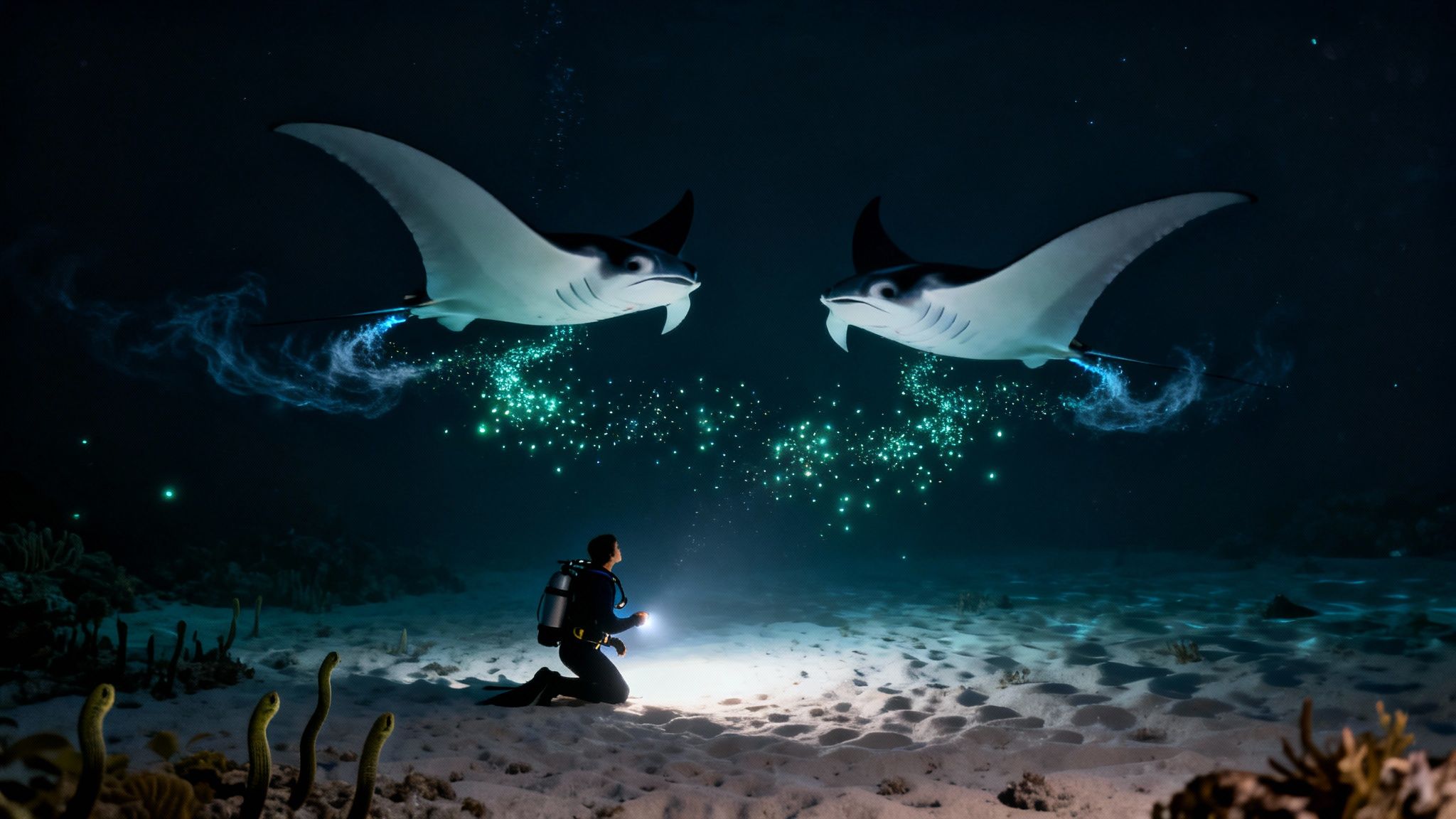
Out of all the incredible experiences scuba diving on the Big Island Hawaii offers, one truly stands alone: the manta ray night dive. This isn't just another dip in the ocean. It's an otherworldly underwater ballet, an encounter so profound it consistently ranks among the best dives on the planet. Just after sunset, you'll descend into the dark, warm water, find your spot on the sandy bottom, and simply wait for the show to begin.
The whole setup is brilliantly simple. We place powerful, specially designed lights on the seafloor that shine up toward the surface. Like moths to a flame, this light attracts massive clouds of plankton, the manta rays' favorite meal.
Before long, the stars of the show make their entrance. Drawn in by the all-you-can-eat buffet, giant manta rays—some with wingspans stretching over 15 feet—emerge from the blackness. They glide, swoop, and perform graceful barrel rolls just inches above your head, their huge mouths open to filter the feast from the water. It’s a silent, hypnotic performance that feels both surreal and deeply personal.
Why Garden Eel Cove Is the Premier Choice
While a couple of locations host this dive, one site consistently delivers a superior experience: Garden Eel Cove. The spot is naturally sheltered by the coastline, which means the water is almost always calmer and more predictable. That translates to a more comfortable and safer dive for everyone.
But the advantages don't stop with calm seas. Garden Eel Cove has a large, sandy "campfire" area where divers can gather. This designated viewing zone is superior because it makes all the difference:
- Optimal Viewing: Sitting on the bottom and looking up gives you a front-row seat to the mantas' incredible acrobatics in a better, more open viewing area.
- Manta Safety: It keeps divers stationary and clear of the mantas' flight path, letting them feed naturally and without being disturbed.
- Environmental Protection: The sandy bottom ensures no one accidentally damages the better, healthier coral reefs that surround the area.
This carefully managed interaction keeps the dive sustainable and minimally invasive, protecting these majestic creatures for years to come. To get a better sense of the experience, you can explore what the manta ray night dive is all about.
The Big Island’s manta ray night dive is a powerful reminder of the ocean's magic. It’s an encounter built on a foundation of mutual respect, where we are invited into their world to witness a natural spectacle without interference.
A Consistently Magical Encounter
This now-famous dive really took off in the early 1990s as operators figured out how to create these consistent, respectful encounters. Today, it’s a truly world-class attraction. On average, the mantas show up on 85-90% of nights. It’s not uncommon for dive logs to report gatherings of 12 to over 30 individuals on a single dive, giving you an incredibly reliable chance to witness the phenomenon.
This dive is so much more than an adventure; it’s a chance to connect with one of the ocean's most intelligent and gentle giants. If you're ready to experience this unforgettable underwater ballet for yourself on one of our manta ray dive tours, the Kona coast is waiting.
Exploring Top Dive Sites and Unique Marine Life
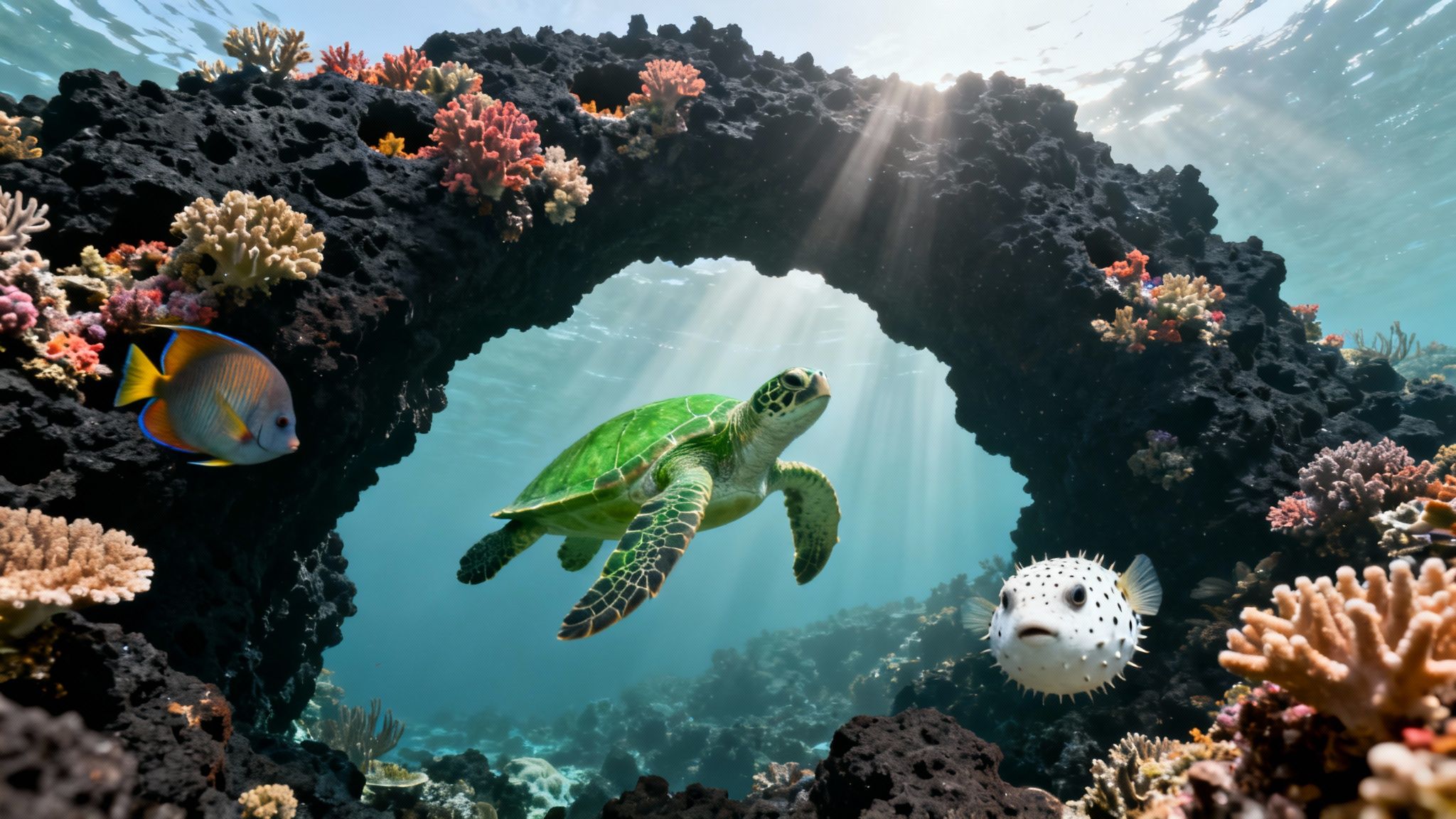
Sure, the manta ray night dive is an absolute showstopper, but it’s really just the opening act. The real story of scuba diving on the Big Island Hawaii unfolds along the Kona coast, a coastline dotted with dive sites that are a direct result of the island’s fiery, volcanic birth.
What you see on land—the stark, beautiful lava fields—continues right into the ocean. Underwater, these ancient lava flows have created a diver's dream playground. You’ll be navigating through massive arches, swimming down lava tubes that feel like sunken cathedrals, and exploring pinnacles that shoot up from the seafloor. This dramatic geology isn’t just for show; it’s the framework for a complex, thriving ecosystem that supports an unbelievable amount of life.
A World of Endemic Species
One of the things that makes Kona diving so special is the sheer variety of critters you'll meet. The Big Island boasts the richest marine biodiversity in the entire Hawaiian archipelago, with somewhere around 1,100 fish species calling these waters home.
Even better, about 129 of those species are endemic, which is a fancy way of saying you won’t find them anywhere else on the planet. This means every single dive gives you a chance to see something you truly can't see anywhere else. To get a better sense of what's out there, you can learn more about the Big Island's unique underwater landscapes.
Keep an eye out for a few of these local celebrities:
- Potter's Angelfish: A brilliant orange and blue fish that flits through the reef like a tiny jewel.
- Hawaiian Whitespotted Puffer: A goofy-looking, almost cartoonish fish you'll often find peeking out from a crevice.
- Hawaiian Cleaner Wrasse: These little guys are the busy-bodies of the reef, running "cleaning stations" for bigger fish.
The real magic of diving here is that you become part of the ecosystem. It's not just about what you see, but about observing the intricate relationships between the creatures and their volcanic home—a living, breathing underwater world.
Frequent Encounters with Iconic Marine Life
Beyond the rare fish you can only find here, the Kona coast is teeming with the big-name marine animals everyone hopes to see. An encounter with a Hawaiian green sea turtle, or honu, is practically a given. You'll often spot them napping on the reef, munching on algae, or just gracefully gliding past, completely unbothered by respectful divers.
If you peek into the reef’s nooks and crannies, you’re almost guaranteed to find a moray eel staring back at you. We've got all kinds, from the striking yellow-margin moray to the beautifully patterned zebra moray. And the fun doesn't just happen underwater. On the boat ride out to the sites, it's pretty common for a pod of spinner dolphins to show up and put on a show, leaping and spinning right alongside you.
From the tiniest nudibranch to the biggest turtle, the biodiversity is simply staggering. The best way to experience it all is by checking out the different diving tours available. Each trip is designed to show you a different side of this incredible underwater paradise. Every time you drop below the surface here, you’re in for a brand new adventure.
Advanced Dives for the Thrill-Seeking Explorer

If you've logged countless hours exploring reefs and wrecks, you might be looking for the next frontier. The Big Island has you covered. When you're ready to push past the beautiful coastal sites, Kona delivers experiences that are truly out of this world.
The undisputed crown jewel of advanced scuba diving on the Big Island Hawaii has to be the Kona Blackwater Dive. Forget everything you know about night diving. Here, you’re not exploring a reef; you're drifting tethered in the deep, dark open ocean, with thousands of feet of water beneath you. People often say it feels like floating in outer space.
Powerful lights hang from the tether, acting like a beacon in the abyss. This light attracts an unbelievable parade of bizarre and beautiful creatures on their nightly vertical migration from the deep. You’ll get to witness life forms rarely, if ever, seen by human eyes.
Journey Into the Abyss
Picture it: you're suspended in pure blackness, surrounded by tiny, alien-like organisms glowing with their own bioluminescence. You might see larval fish that look nothing like their adult selves, strange jellies pulsing with internal light, or translucent squid flashing mesmerizing patterns. It’s a profoundly humbling and surreal encounter with the ocean's deepest secrets.
This dive is no joke, though. It demands a high level of comfort in the water, rock-solid buoyancy control, and a genuinely adventurous spirit. For those up to the challenge, a guided Kona Blackwater Dive tour is an unforgettable journey into one of our planet's last great wildernesses.
The Blackwater Dive isn't about seeing big animals. It's about discovering an entirely new universe of small, strange, and wonderful life. It's a dive that completely changes your perspective on what the ocean holds.
Pushing the Boundaries Further
Beyond the blackwater experience, Kona offers plenty of other ways for seasoned divers to test their skills. Dedicated charters can take you to more remote and demanding sites where the reward is well worth the effort. These more experienced diving opportunities allow you to see a different side of Kona's underwater world.
These kinds of trips often feature:
- Deeper Profiles: Dropping down to explore ledges and pinnacles that start well below recreational limits.
- Stronger Currents: Riding the "blue water express" along walls and channels where sharks, jacks, and other pelagics love to hunt.
- More Remote Locations: Getting away from the crowds to sites that see fewer divers and boast absolutely pristine conditions.
When you're pushing your limits like this, it's a good idea to have specialized travel insurance for adventure sports that covers scuba diving. That peace of mind lets you focus on the incredible experience. For certified divers eager to see these more demanding environments, specialized advanced dive tours offer the expert guidance and support you need to do it safely. If you’re ready to see what lies beyond the reef, the deep blue of Kona is waiting.
Planning Your Big Island Diving Adventure
So, you’re ready to turn that dream of scuba diving Big Island Hawaii into a reality? Awesome. Getting everything lined up is actually simpler than you might think, and a little planning goes a long way toward making sure your trip is smooth, safe, and absolutely unforgettable. Let’s walk through what you need to know.
One of the truly great things about diving in Kona is that it’s fantastic all year. The water is always a balmy 75-82°F (24-28°C), so you can leave your drysuit at home. That said, if you’re chasing those perfect, glassy surface conditions and gin-clear water, the sweet spot is often late summer and early fall—think August through October.
Certifications and Protecting Our Reefs
Before you jump in, you’ll need to have your dive certifications sorted. For most of our standard boat charters, you'll need to be at least an Open Water Certified Diver. If you've got your sights set on something a bit more adventurous, like the world-famous Kona Blackwater Dive or other deep charters, you’ll need your Advanced Open Water certification. Don't forget to have your cert card ready when you check in!
Being a certified diver is just the first step. When we enter the water here, we're guests in a vibrant, but fragile, world. It's on all of us to protect the incredible coral reefs we've come to see. A few simple habits make a world of difference:
- Use Reef-Safe Sunscreen: Many common sunscreens contain chemicals like oxybenzone that are poison to coral. Make sure you're using a mineral-based, reef-safe formula.
- Perfect Your Buoyancy: This is the golden rule of reef etiquette. The goal is to be a silent observer, floating effortlessly above the reef without ever making contact. Practice makes perfect!
- Leave No Trace: You’ve heard it before: "take only pictures, leave only bubbles." This is non-negotiable. Resist the urge to pick up a shell or a piece of coral—they are all part of the ecosystem.
Choosing an Operator and Packing Essentials
Picking the right dive operator is probably the most important decision you'll make. You want a crew with a stellar safety record, knowledgeable guides who are passionate about marine life, and a real commitment to conservation. It's always a good idea to read recent reviews and see what other divers are saying. Here at Kona Honu Divers, our entire team is focused on giving you a world-class, safe, and memorable time on the water.
Once you're booked, it’s time to think about packing. We’ll provide the heavy stuff like tanks and weights, but you’ll want to have a few key items in your dive bag.
Pro Tip: Toss a light jacket or sweatshirt in your bag for the boat ride home. Even after a warm, sunny day, you can get a bit chilly once you’re out of the water, especially after a night dive.
Don't forget the essentials: your certification card, logbook, a reusable water bottle, and a towel. If you're bringing your own gear, make sure it's all packed and ready. Wondering about the budget for your trip? We created a handy breakdown of how expensive scuba diving in Hawaii can be to help you plan. A little prep work now means you can relax and soak in every moment once you're here.
Got Questions About Kona Scuba Diving? We’ve Got Answers.
Planning a dive trip to the Big Island always brings up a few questions. To help you get your fins in a row, we've put together some answers to the things we're asked most often. Getting this sorted out now means you can just relax and look forward to the adventure ahead.
Do I Need to Be Certified to Dive in Kona?
This is probably the number one question we hear, and the answer is: not necessarily! If you've never dived before but want to see what all the fuss is about, you can join a "Discover Scuba Diving" experience. It’s a supervised, shallow-water dive with a certified instructor that gives you a safe and amazing first taste of breathing underwater.
That said, if you have your heart set on exploring Kona's famous deeper reefs or joining truly unique charters like the Manta Ray Night Dive or a Blackwater Dive, you’ll need at least an Open Water Diver certification.
When’s the Best Time to Visit?
Honestly, there’s no bad time. Thanks to our location on the leeward side of the island, Kona is a fantastic year-round dive destination. The water is always inviting, hovering between a comfortable 75-82°F (24-28°C).
But if you're looking for the absolute best conditions, many seasoned divers aim for late summer and early fall. From about August to October, the seas are often glassy-calm, and the underwater visibility can be absolutely spectacular.
How Safe Is the Manta Ray Night Dive?
It’s completely understandable to have questions about diving in the dark with giant sea creatures! With a professional crew like ours at Kona Honu Divers, the Manta Ray Night Dive is very safe. We run a tight ship with strict safety protocols, starting with a thorough briefing before we even get in the water.
Once underwater, we have designated spots for divers to settle on the seafloor. The mantas themselves are gentle giants—they're just there for the plankton and are completely unbothered by our presence. The most important safety factor is your own comfort level at night and listening carefully to your divemaster.
What Should I Pack for the Boat?
A little preparation goes a long way in making a great dive day even better. Besides your C-card and any personal gear you’re bringing, there are a few things you'll be glad you packed.
Here’s our short list of must-haves:
- Reef-Safe Sunscreen: Protect your skin and our precious coral reefs at the same time.
- Towel & Hat: A simple creature comfort for staying dry and shaded between dives.
- Reusable Water Bottle: Staying hydrated is key. We have water, but bringing your own helps cut down on plastic.
- A Light Jacket: It can get surprisingly cool on the boat ride home, especially after the sun goes down on a night dive.
With these details covered, you’re all set. The incredible underwater world of the Kona coast is waiting.
Ready to dive into the crystal-clear waters of Kona? At Kona Honu Divers, we offer a range of world-class tours for every skill level, from the magical Manta Ray Night Dive to thrilling advanced charters. Book your unforgettable diving tour today and discover the best of Big Island scuba diving with our expert crew.