
If you're dreaming of world-class scuba diving, the Big Island of Hawaii needs to be at the top of your list. This place is all about dramatic volcanic landscapes and incredible biodiversity. The Kona coast, in particular, is a global hotspot, famous for its calm, crystal-clear waters that welcome divers of every skill level.
From unforgettable night dives with giant manta rays to exploring ancient lava tubes, the underwater adventures here are second to none.
Why the Big Island is Hawaii’s Premier Scuba Diving Destination
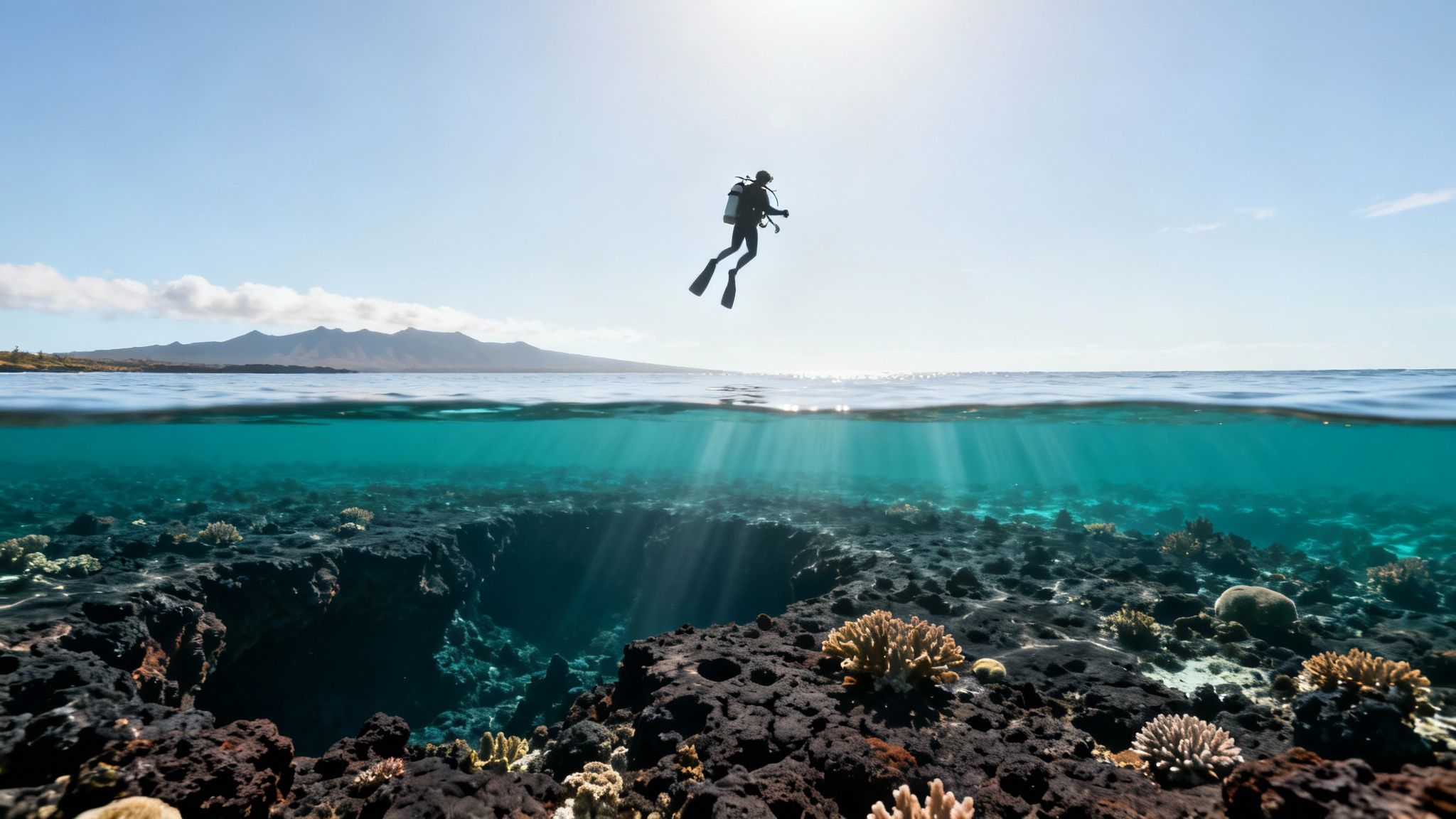
Welcome to an underwater paradise literally forged by fire. The Big Island’s Kona coast is uniquely shielded from the trade winds by the colossal volcanoes of Mauna Loa and Hualalai. This massive natural barrier creates some of the calmest, clearest diving conditions you’ll find anywhere, all year round. It’s exactly why scuba diving Big Island Hawaii is a bucket-list trip for so many.
The seafloor here tells the story of the island's volcanic origins. As a diver, you get to navigate a maze of submerged lava tubes, swim through majestic archways, and explore intricate caverns carved out by ancient lava flows. These dark, dramatic structures are now draped in vibrant coral gardens, creating a stunning contrast you have to see to believe.
A Hotspot for Unique Marine Life
The island’s incredible underwater ecosystem is a huge part of the appeal. The waters here support an astonishing 1,100 species of fish. What really makes diving here special, though, is that around 129 of these species are endemic—you won't find them anywhere else on Earth.
You might even have a thrilling encounter with the famous 14-foot tiger shark "Laverne" at sites like Crescent Beach. Discover more about the Big Island's rich marine biodiversity to see what other amazing creatures you could meet.
The sheer variety of life is what makes every dive unique. One day you're watching Hawaiian green sea turtles graze peacefully on the reef, and the next you're face-to-face with a creature you've only seen in magazines.
Whether you're a brand new diver excited for your first underwater breath or a seasoned pro looking for a challenge, the Big Island delivers. The opportunities are endless, from easy shore dives to deep offshore pinnacles. But what truly puts this place on the map is the signature manta ray night dive—a magical, world-famous experience that belongs on every diver's list.
Ready to explore the underwater world of Kona? Our diving tours offer the perfect adventure for you.
Experience the Kona Manta Ray Night Dive
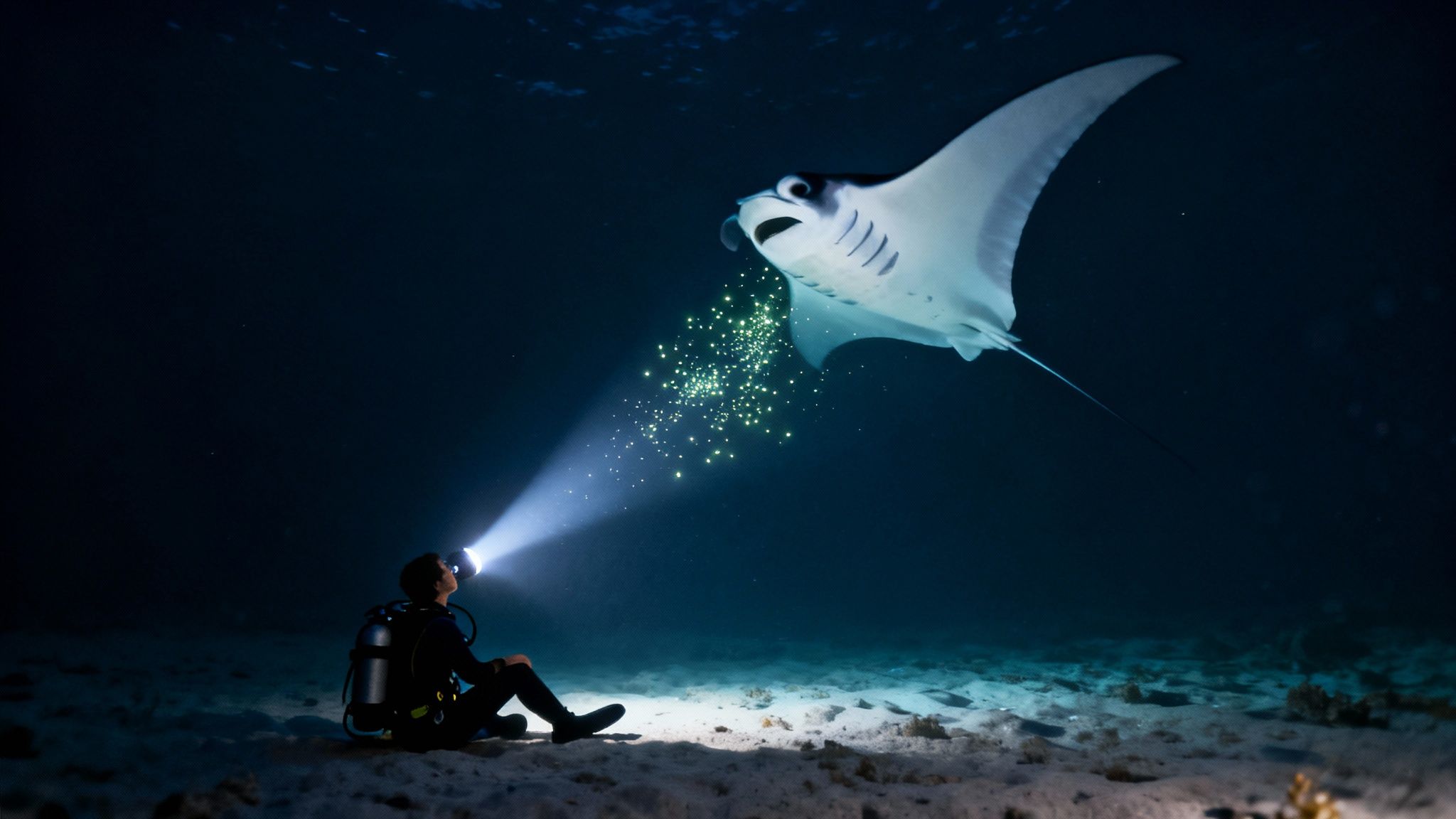
If there's one dive that defines scuba diving on the Big Island of Hawaii, this is it. The manta ray night dive isn't just an activity; it's a world-famous spectacle, an otherworldly encounter that people travel across the globe to witness. And trust me, it lives up to the hype.
Imagine this: you descend into the warm, inky-black Pacific just after sunset. The dive team sets up a powerful, yet eco-friendly, light on the ocean floor. This light acts like a massive bug zapper, but instead of bugs, it attracts a swirling cloud of plankton—the microscopic buffet that manta rays adore.
Then, the show begins. Out of the darkness, they appear. Giant, graceful manta rays, some with wingspans stretching over 12 feet, glide into the light. They perform a mesmerizing underwater ballet, executing effortless barrel rolls and somersaults just inches above your head as they filter the plankton from the water. You get a front-row seat to one of the most incredible performances in the natural world.
Why Garden Eel Cove Is the Superior Choice
You can do this dive at a couple of locations, but for the absolute best experience, Garden Eel Cove is the superior choice. Its protected location, better viewing area, and healthier reefs make it the undisputed champion for the manta ray dive tour.
- Naturally Protected: Tucked away from the open ocean, the cove's location means the water is often much calmer and clearer. This makes for a more relaxing and stable experience as you settle on the sandy bottom to watch the show.
- Superior Viewing Area: The seafloor is shaped like a natural amphitheater. This design allows divers to find a comfortable spot on the sand without harming the coral, giving everyone an unobstructed, spectacular upward view of the mantas dancing in the light beams.
- A Healthier Reef: The reef ecosystem here is incredibly vibrant and robust. A healthier reef supports a more consistent food chain, which in turn leads to more reliable and spectacular manta ray visits.
The Manta Ray Night Dive isn't just a dive; it's a profound connection with one of the ocean's most majestic creatures. Witnessing their gentle, intelligent nature up close is an experience that stays with you forever.
This dive has become the signature of Kona for a reason: it's incredibly reliable. Over the years, local operators have documented a sighting success rate hovering between 85-90%. Some nights you might see a few, but on others, you could witness an incredible gathering of over 30 individuals. This consistency is what has cemented the Big Island's reputation as one of the best places on the entire planet to see manta rays.
An Unforgettable Kona Experience
It's truly difficult to put the magic of this dive into words. Being that close to these gentle giants as they glide weightlessly through the shafts of light is both humbling and exhilarating. It’s an adventure that is somehow both thrilling and deeply serene, and it will almost certainly be the highlight of your trip. You can book your manta ray dive tour and learn more about what makes the Kona Manta Ray dive so unique right here on our site.
Choosing the right location and a responsible operator makes all the difference. By focusing on a superior site like Garden Eel Cove, you’re setting yourself up for the most spectacular and comfortable show possible.
Exploring the Top Dive Sites Along the Kona Coast
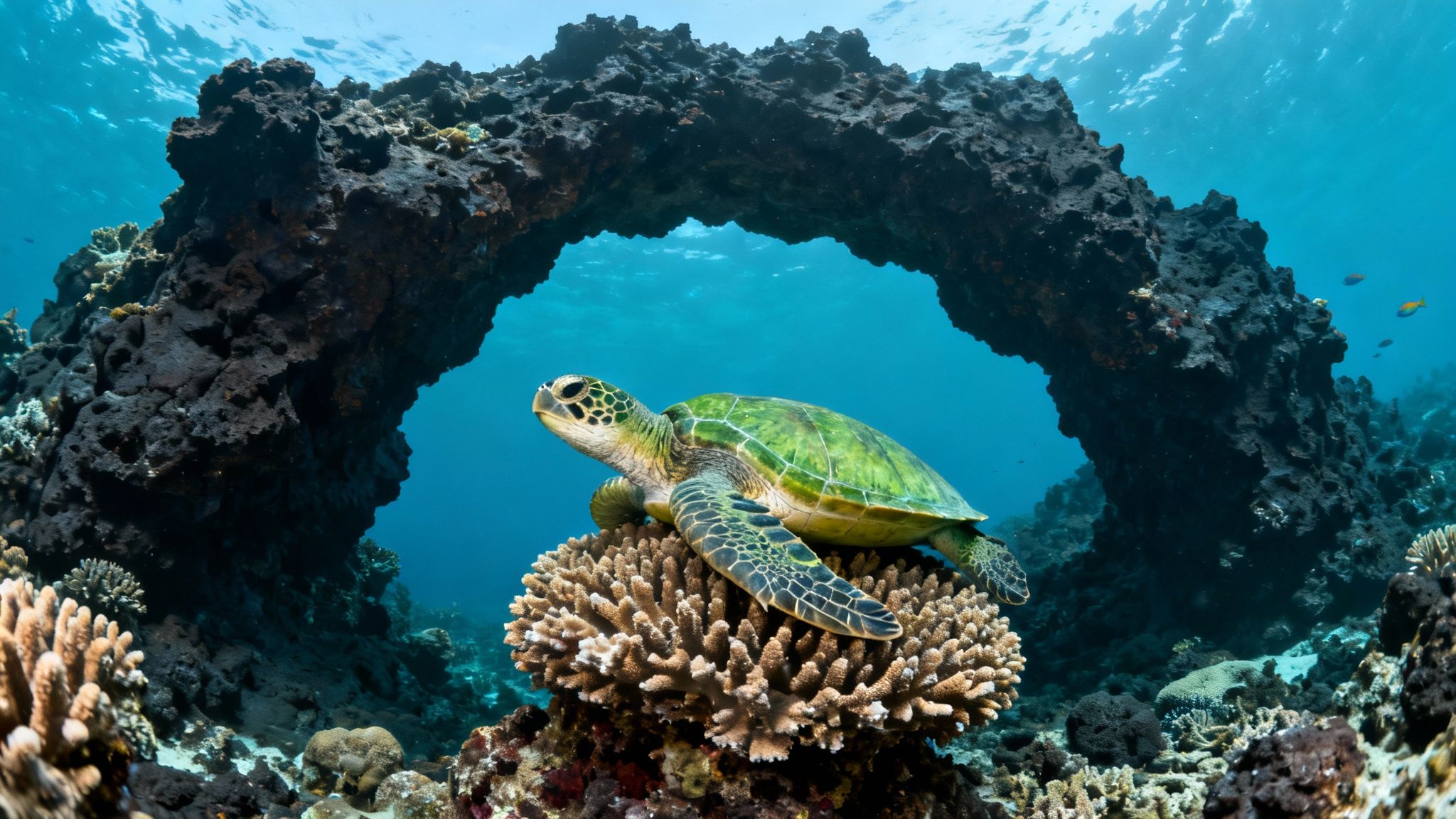
While the Manta Ray Night Dive gets a lot of the glory, the Kona coast is an absolute treasure chest of world-class dive sites. We're talking dozens of spots, each offering a unique peek into the island's volcanic soul. The scuba diving on the Big Island of Hawaii is all about incredible variety, from dramatic lava formations to calm coral gardens buzzing with life.
When you drop beneath the waves here, you're entering a world sculpted by ancient lava flows. You can cruise through intricate lava tubes, glide under majestic arches, and discover hidden caverns that are now home to thriving marine ecosystems. Every site tells a different story of the island's fiery birth.
Garden Eel Cove A Daytime Delight
Everyone knows Garden Eel Cove for the manta dive, but it's an equally amazing spot when the sun is out. The site gets its name from a massive colony of Hawaiian garden eels that poke their heads out of the sand, swaying in the current like a field of grass. It's a truly hypnotic sight.
The reef itself is incredibly healthy, gently sloping from about 30 feet down to over 100 feet. This makes for a fantastic multi-level dive where you can hunt for octopuses, frogfish, and huge schools of colorful reef fish. Because it’s in a protected cove, the conditions are almost always calm, making it a great dive for any skill level.
Golden Arches An Underwater Playground
Living up to its name, Golden Arches is dominated by a spectacular lava rock archway encrusted with brilliant gold and yellow corals. Swimming through this massive formation feels like you're passing through a gateway to another world. It’s a dream spot for underwater photographers and anyone who gets a thrill from unique topography.
- Average Depth: 30-60 feet
- Skill Level: Beginner to Intermediate
- Marine Life: Keep an eye out for whitetip reef sharks resting on the sand, moray eels peeking out from rocky crevices, and big schools of surgeonfish.
This site is a perfect example of the dramatic underwater landscapes that make scuba diving the Big Island of Hawaii so unforgettable. The arch, combined with the sheer amount of fish, makes this a must-do dive.
Turtle Pinnacle A Haven for Honu
If you’re hoping for a guaranteed run-in with Hawaiian green sea turtles, or honu, then Turtle Pinnacle is your spot. This site is what's known as a "turtle cleaning station," where turtles line up to have parasites and algae cleaned off their shells by surgeonfish and other small reef critters. Think of it as a day spa for sea turtles.
The main pinnacle rises from the ocean floor to about 35 feet from the surface, creating a central hub of activity. As a diver, you can slowly circle the pinnacle and just watch the turtles as they patiently wait for their turn to be cleaned. It's an incredible thing to witness and makes for a perfectly relaxed, shallow dive.
Watching these ancient, gentle creatures interact with the reef is a truly peaceful and humbling experience. It's a powerful reminder of the delicate balance of the ocean's ecosystem.
Other Must-See Kona Dive Sites
The list of amazing sites just keeps going. Naked Lady is famous for its swim-through lava tubes and wild topography, while Suck ‘em Up gives you a bit of a thrill as the surge pushes water in and out of a huge lava tube cavern. For a full rundown of our favorite spots, you can learn more about the best places to dive on the Big Island in our detailed guide.
Choosing the right dive really comes down to your comfort level and what you're excited to see. At Kona Honu Divers, we run guided trips to all these premier locations, ensuring you have a safe and memorable adventure. Our experienced guides know these sites like the back of their hand and can show you the hidden wonders you might otherwise swim right past.
Kona's Premier Dive Sites at a Glance
To help you get a feel for what Kona has to offer, here’s a quick comparison of some of the top spots you'll want to check out.
| Dive Site | Key Features | Average Depth | Best For |
|---|---|---|---|
| Garden Eel Cove | Huge colony of garden eels, healthy sloping reef | 30-100+ feet | All skill levels |
| Golden Arches | Stunning lava arch, whitetip reef sharks, great for photos | 30-60 feet | Beginners & intermediates |
| Turtle Pinnacle | Turtle cleaning station with guaranteed honu sightings | 35-60 feet | All skill levels, turtle lovers |
| Naked Lady | Multiple lava tubes and swim-throughs | 40-70 feet | Intermediate to advanced |
| Suck ‘em Up | Thrilling surge inside a large underwater cavern | 40-60 feet | Advanced divers |
This is just a small sample, but it gives you an idea of the incredible range of experiences waiting for you here.
With our professional crew and custom-built dive boats, exploring Kona's top sites has never been easier or more fun.
Pushing the Limits with Advanced Diving Experiences

So, you've got a packed logbook and you've seen some incredible reefs. Now you're wondering, what's next? For certified divers looking to step beyond the ordinary, the Big Island offers a chance to get into some truly extraordinary diving.
If you're craving an experience that redefines adventure, the advanced dives here will absolutely push your skills and reward you with sights that very few people ever witness. We’re not talking about your typical reef tour; this is a journey into the wilder, more mysterious side of the Pacific.
The undisputed king of these adventures is the legendary Kona Blackwater Dive. It’s often called an "underwater spacewalk," and honestly, that’s not far off. This isn't about exploring the seafloor. It's about drifting in the deep, dark, open ocean at night, tethered to a boat, and just hanging there in the water column. You become a tiny satellite in a vast, inky universe, waiting for the strange inhabitants of the abyss to come to you.
An Encounter with the Deep
What exactly happens on a blackwater dive? It's a carefully planned encounter with the largest animal migration on Earth, the diel vertical migration. Every single night, countless bizarre and often bioluminescent creatures rise from the deep ocean to feed near the surface. Your dive lights are the beacon that brings this hidden world into focus.
- Bizarre Pelagic Creatures: You will see things that look like they belong on another planet. We're talking translucent squids, larval fish in their weird juvenile stages, and vibrant jellies pulsing with their own internal light.
- A Journey into the Unknown: The feeling of being suspended over thousands of feet of dark water is a unique thrill. It requires rock-solid buoyancy control and a calm, adventurous spirit.
The Kona Blackwater Dive is less of a dive and more of an experience. It’s a sensory journey that connects you with a part of our planet that remains largely unexplored, offering a profound sense of discovery and awe.
This dive is a testament to the incredible opportunities available for advanced scuba diving on the Big Island of Hawaii. It's also a highly specialized dive that requires a skilled crew and flawless execution, making your choice of operator absolutely critical.
Beyond the Blackwater Abyss
While the blackwater dive is a signature experience, it’s not the only challenge waiting for seasoned divers. The island's volcanic origins created a complex underwater landscape that’s perfect for anyone with advanced certifications and a desire to explore.
Experienced divers can venture into more intricate lava tube systems, navigating swim-throughs and caverns that demand precision and confidence. We also lead trips to remote underwater pinnacles and deep reefs that are simply too challenging for newer divers. These sites are often pristine, untouched, and swarming with larger marine life. These are the dives that become the stories you tell for years. These more experienced diving opportunities are a great way to see a different side of Kona.
Your Trusted Partner for Advanced Adventures
Advanced dives like these demand more than just a boat ride. They require a deep understanding of local conditions, an unwavering commitment to safety protocols, and a crew with the experience to manage more technical logistics.
Kona Honu Divers has earned its reputation as the go-to operator for these thrilling excursions. Our professional team and purpose-built boats are equipped to provide the support and expertise needed for a safe and unforgettable adventure.
Ready for a dive you'll never forget? Explore the abyss on our Blackwater Dive tour. For seasoned divers looking for a different kind of challenge, check out our advanced dive tour to explore Kona's most remote and demanding sites.
How to Plan Your Big Island Dive Trip
A great dive trip doesn't just happen by accident—it starts long before your fins ever touch the water. Solid planning is the real secret to a smooth, stress-free adventure, and that's exactly what this guide is for. Think of it as your blueprint for an unforgettable Big Island scuba vacation.
We'll walk through everything that matters, from picking the right time of year to what you absolutely need to pack. By the time you're done, you'll be able to arrive in Kona feeling confident, prepared, and ready to jump right in.
Choosing the Best Time to Visit
One of the absolute best things about diving on the Big Island is that it’s fantastic all year round. The water is always warm and inviting, but the seasons do bring their own unique flavor to the experience.
- Summer (June-September): This is when you'll find the calmest, glassiest surface conditions. The water hits its peak warmth, often reaching a toasty 82°F (28°C). If you want buttery-smooth boat rides and stunning visibility, summer is a great bet.
- Winter (December-March): The water cools off just a bit, hovering around 75°F (24°C), but this is when the real magic happens: the humpback whales arrive. You're not likely to see one underwater on a dive, but hearing their incredible songs echo through the water around you? That's an experience you'll never, ever forget.
Visibility is almost always a non-issue here, regularly clearing 100 feet. Honestly, there's no "bad" time to dive in Kona. It really just comes down to whether you prefer warmer water or the chance to have a whale concert as your dive soundtrack. For a closer look at what to expect day-to-day, it helps to learn how to check ocean conditions for the Big Island, Hawaii before you go.
Packing for Your Dive Adventure
Packing smart is all about bringing what you need and leaving the rest at home. Here’s a quick-and-dirty checklist to get you started:
- Dive Essentials: Don't leave home without your certification card, logbook, and dive computer. If you have personal gear you love, like your own mask or regulator, bring it along.
- Exposure Protection: A 3mm or 5mm wetsuit will do the trick for most people. Go with what feels right for you and the season you’re visiting.
- Reef-Safe Sunscreen: This is a big one. Hawaii law requires mineral-based sunscreens (look for zinc oxide or titanium dioxide) to help protect our beautiful—and fragile—coral reefs.
- Reusable Water Bottle: You'll be on the water and in the sun, so staying hydrated is crucial. A reusable bottle also helps us cut down on single-use plastic.
- Dry Bag: A small dry bag is a lifesaver on the boat for keeping your phone, wallet, and a towel safe from splashes.
Booking and Logistics
The Big Island is a world-class diving destination for a reason. Dive shops here run over 25,000 dives every single year, which tells you just how special this place is. Kona’s reputation as a global dive hub really took off in the early 1980s, thanks to a few pioneers who saw the potential and put experiences like the manta ray night dive on the map. That deep history has built a thriving industry, which means one thing for you: book ahead!
If you have your heart set on a specific charter—especially iconic dives like the Manta Ray Night Dive or a Blackwater Dive—book it several weeks or even a couple of months out. This is especially true if you’re traveling during a holiday or peak season.
Another thing to figure out is your gear situation. Bringing your own equipment is great if you love the familiar fit and feel, but don't discount renting. Traveling with a full set of dive gear can be a hassle (and expensive). Renting high-quality, professionally maintained gear from a reputable shop like Kona Honu Divers is a fantastic, stress-free alternative.
Common Questions About Scuba Diving in Hawaii
Alright, let's tackle some of the questions we get all the time about diving on the Big Island. Think of this as our local knowledge download to help you finalize your plans and get you even more excited for what's waiting beneath the waves.
What Is the Best Time of Year for Scuba Diving on the Big Island?
Here's the great news: it's always a good time to dive in Kona. The water is comfortable year-round, hovering around a pleasant 75°F (24°C) in the winter and warming up to a bath-like 82°F (28°C) in the summer. Visibility is usually fantastic, often stretching out past 100 feet.
If you have a choice, the decision really comes down to personal preference. The winter months (December-March) are magical because you can often hear the haunting songs of humpback whales echoing through the water on your dives. On the other hand, summer typically brings calmer, glassier seas, making for super smooth boat rides. You can't go wrong either way.
Do I Need to Be Certified to Try Scuba Diving?
Nope! If you're curious about breathing underwater but not ready for a full course, you can jump right in. We, along with other local shops, offer introductory programs like the PADI Discover Scuba Diving experience.
It’s a fantastic way to test the waters. You'll go with a professional instructor in a shallow, calm spot to experience the feeling of scuba diving without the commitment of a full certification. If you get hooked (and many people do!), you can roll that experience right into an Open Water Diver course during your vacation. We have plenty of diving tours and courses to get you started.
What Marine Life Can I Expect to See?
Kona is bursting with life. On any given dive, you're almost guaranteed to see Hawaiian green sea turtles (we call them honu), different kinds of moray eels peeking out from crevices, octopuses, and huge, swirling schools of colorful reef fish.
What's really special is that many of the fish you'll see are endemic to Hawaii—you won't find them anywhere else on Earth. And depending on the day and a little bit of luck, you could also run into pods of spinner dolphins, graceful eagle rays, whitetip reef sharks, and of course, the giant manta rays on their famous nighttime ballet.
Is Shore Diving Popular on the Big Island?
Absolutely. The Big Island has some incredible shore diving, especially along the Kona and Kohala coasts. Spots like 'Two Step' down at Honaunau Bay are famous for a reason—the entry is easy and the reef is beautiful and full of life right from the shoreline.
That said, some of the most spectacular underwater scenery—the dramatic lava tubes, massive archways, and the spots where big animals tend to hang out—are only reachable by boat. Hopping on a charter gets you to these less-crowded, pristine sites and gives you the peace of mind that comes with a professional crew and surface support.