
Scuba diving on the Big Island is an experience that stays with you. It’s a place where the deep blue ocean meets the raw power of volcanic landscapes, creating an underwater world that feels truly otherworldly. The Kona coast, in particular, is a diver's dream, with some of the clearest and calmest water you’ll find anywhere on the planet.
Why The Big Island Is A World-Class Diving Destination
Picture this: you descend into a sunlit ocean, and below you aren’t just reefs, but ancient lava tubes, dramatic archways, and massive underwater structures sculpted by volcanoes. That’s the magic of diving here. The island’s fiery origins have created a sub-aquatic playground that’s completely different from anywhere else.
Instead of endless sandy bottoms, the Kona coast is built on a foundation of hardened lava rock. This rugged terrain is the perfect canvas for coral gardens to take hold, forming intricate, complex habitats that are absolutely packed with marine life. You’re not just floating over a reef; you're exploring a submerged volcanic wonderland.
What Makes Kona Diving So Special
We have the island’s massive volcanoes, Mauna Loa and Hualalai, to thank for our amazing dive conditions. They act as a natural shield, protecting the Kona coast from the gusty trade winds that hit other parts of Hawaii. The result? Consistently calm seas and incredible clarity, with visibility often reaching an unbelievable 100 feet or more.
These perfect conditions are fantastic for new divers who are just getting comfortable, but they’re also a huge bonus for seasoned pros who want to spot every little creature hiding in the reef.
And what a reef it is! The coastline is bursting with life. On any given dive, you’re likely to see:
- Hawaiian Green Sea Turtles: We call them honu, and you’ll see these graceful giants everywhere, whether they're cruising by in the blue or taking a nap on the reef.
- Vibrant Reef Fish: The lava rock is home to a kaleidoscope of color, from butterflyfish and parrotfish to our quirky state fish, the Humuhumunukunukuāpuaʻa.
- Unique Encounters: Keep your eyes peeled for pods of spinner dolphins, majestic eagle rays, and, of course, the gentle giants of the world-famous manta ray night dive.
The one-two punch of volcanic topography and protected waters creates a diving experience that is as breathtaking as it is full of life. It’s the kind of place where every single dive holds a new surprise.
Getting the most out of this aquatic paradise means diving with people who know it best. Here at Kona Honu Divers, our crew has spent years exploring these waters. We’re passionate about sharing incredible underwater adventures while protecting the fragile ecosystem we're lucky to call our office.
We'd love for you to explore the best of the Big Island with us. Take a look at our guided diving tours and find the perfect trip for your next adventure.
When To Plan Your Big Island Dive Adventure
"So, when's the best time to come diving?" It’s the first question on every diver's mind, and the simple truth about the Big Island is—there’s no bad time. The Kona coast is one of those rare gems in the diving world where the underwater show is spectacular 365 days a year.
Our secret lies in the island's geography. The massive volcanoes shield the Kona side from the prevailing trade winds, creating a calm, protected coastline that's perfect for diving almost every single day. Water temperatures stay in a wonderfully comfortable range, from a cool 75°F (24°C) in the winter to a warm 80°F (27°C) in the summer. Forget the drysuit! And the visibility? It's consistently incredible, often stretching well beyond 100 feet. While the seas tend to be flattest from April to October, you can always count on finding great conditions. For a deeper dive into Hawaii's amazing climate, check out PADI's guide to diving in Hawaii.
Summer Diving: The Calm Season
From May through September, the Kona coast truly lives up to its reputation for glassy, calm water. The boat rides are smooth, the surface intervals are pure relaxation, and the conditions are about as perfect as you can imagine.
The water hits its peak warmth, hovering around 80°F, making it ideal for those who prefer minimal gear. Many of our divers are perfectly happy in just a rash guard, though a thin 1.5mm or 2mm shorty is a great choice if you tend to get a little chilly. It’s an absolutely fantastic time for brand-new divers or anyone who appreciates a serene, lake-like ocean surface.
Winter Diving: The Season Of Whales
Come winter, from December to March, the vibe completely changes, but in the most magical way possible. The surface might have a bit more texture, but what’s happening beneath the waves is simply breathtaking. This is whale season.
Humpback whales make their epic journey to our warm waters to mate and give birth, and their songs become the soundtrack to every dive. You feel it as much as you hear it—a deep, resonant vibration that fills the water and your soul. While spotting one underwater is the holy grail of encounters, hearing them is practically a guarantee.
The water cools down just a bit to around 75°F, so a 3mm full wetsuit is your best friend for staying comfortable. There's nothing quite like being serenaded by whales, and that unforgettable experience is why so many divers choose to visit us year after year during the winter months.
No matter when you visit, the key to a great dive is understanding the daily conditions. For real-time updates and forecasts, check out our guide on how to check ocean conditions for the Big Island, Hawaii.
To help you plan, here’s a quick snapshot of what to expect throughout the year.
Big Island Diving Conditions Throughout The Year
This table is a great starting point for figuring out what the environment will be like and what kind of exposure protection you'll want to pack for your trip.
| Season | Average Water Temp | Typical Visibility | Marine Life Highlights |
|---|---|---|---|
| Summer (May – Sep) | 78°F – 80°F (26-27°C) | 100+ feet | Calm seas, abundant reef fish, turtles, and manta rays. |
| Winter (Dec – Mar) | 75°F – 77°F (24-25°C) | 80 – 100+ feet | Humpback whale songs, turtles, eagle rays, and reef sharks. |
Ultimately, whether you're drawn by the glassy calm of summer or the awe-inspiring whale songs of winter, the Big Island is always ready to deliver an incredible dive.
The Can’t-Miss Dive Sites on The Big Island
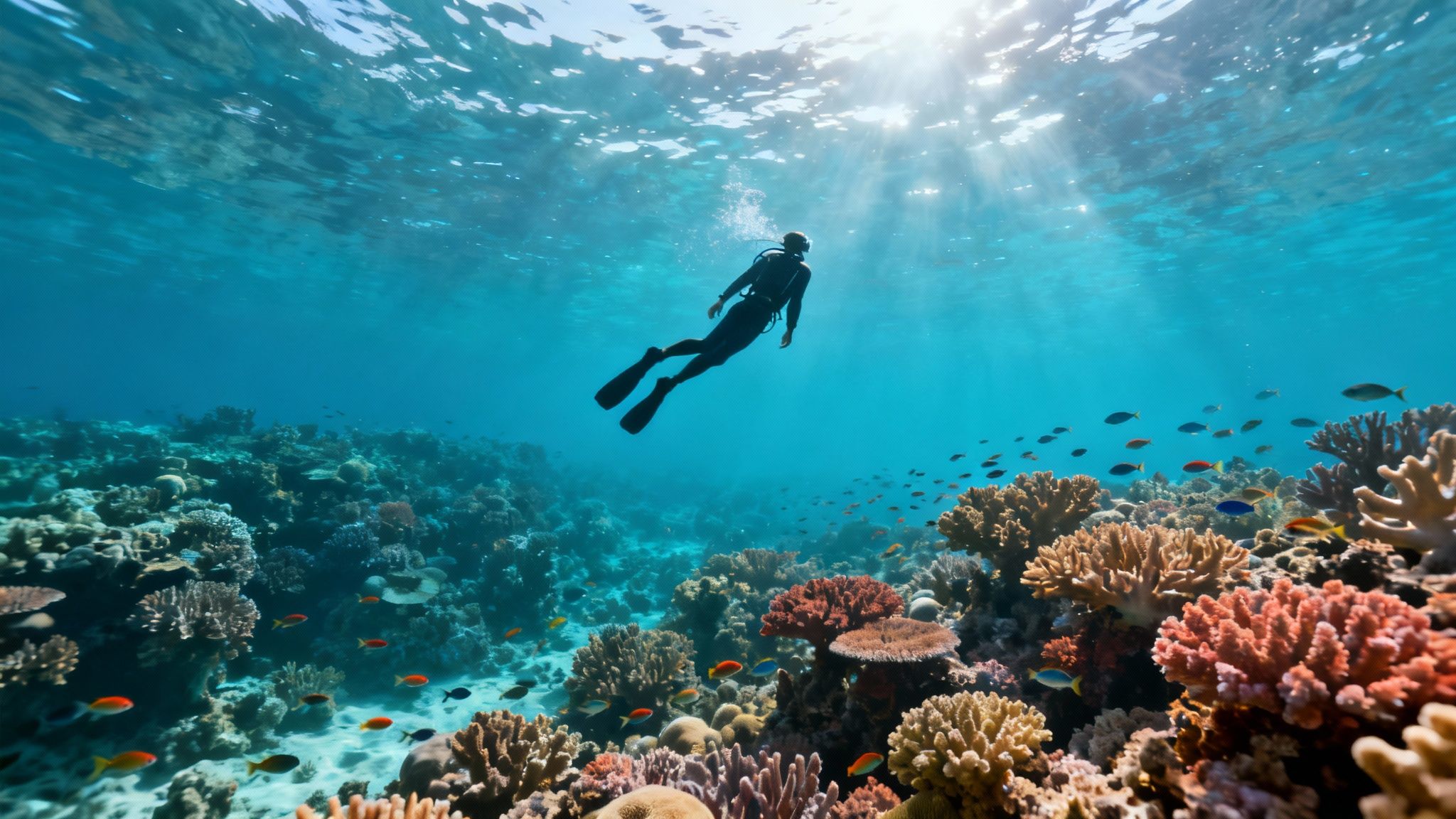
The Big Island is an absolute treasure chest of world-class dive sites, each one a unique window into Hawaii's incredible underwater world. The Kona coast, in particular, is studded with spots that aren't just beautiful but are bursting with life and mind-blowing geology. Forget generic reef dives; here, you're exploring submerged volcanic coastlines where every lava tube and coral garden has a story.
These sites are so much more than dots on a map—they're living, breathing ecosystems. Knowing what makes each one tick is the secret to planning a truly unforgettable scuba trip on the Big Island.
Kealakekua Bay: A Protected Paradise
Home to the iconic Captain Cook Monument, Kealakekua Bay is arguably the crown jewel of Kona diving. As a protected Marine Life Conservation District, it’s a thriving sanctuary where fish populations have exploded into a bustling underwater city. The bay is also perfectly sheltered from open ocean swells, which means calm, pool-like conditions that are perfect for divers of every skill level.
The Big Island's reputation for amazing scuba diving comes down to its unique volcanic topography and the calm, protected waters of the leeward Kona coast. Places like Kealakekua Bay boast crystal-clear visibility that often pushes past 100 feet, giving you an unparalleled view of the vibrant coral and marine life. Because it's a protected sanctuary where fishing is banned, the ecosystem is just booming with colorful reef fish and frequent visits from turtles and even manta rays. You can learn more about the Big Island’s premier diving reputation and see what makes this place so special.
Descending into Kealakekua Bay feels like you're flying. The sheer drop-offs and incredible clarity create a sensation of floating in an endless blue expanse, surrounded by massive schools of fish.
The reef here starts on a gentle slope before plunging into the deep, offering a wildly diverse landscape to explore. You’ll find yourself navigating around massive coral heads and peering into crevices where eels and octopuses love to hide. For many, the real highlight is the sheer density of life—and don't be surprised if you get a visit from the spinner dolphins that often come to the bay to rest.
Puʻuhonua O Hōnaunau (Two Step): The Easy Entry Gem
Affectionately known as "Two Step" for its perfect natural lava rock entry, this site is a shore diver’s dream. It offers some of the easiest ocean access on the entire island, plopping you right into a vibrant reef that’s buzzing with activity. Being right next to a National Historical Park gives the area a profound sense of place, both above and below the water.
This spot is fantastic for both divers and snorkelers. It has a shallow reef table that's the perfect place to watch Hawaiian green sea turtles, or honu, grazing on algae. For divers, the outer edges of the reef drop down to about 40-60 feet, offering plenty more to explore.
- Marine Life: You're pretty much guaranteed to see turtles, eels, and a stunning variety of reef fish. The coral formations here are super intricate, providing homes for countless smaller critters.
- Skill Level: It’s ideal for beginners thanks to the calm conditions and easy entry, but there’s still plenty to keep experienced divers fascinated.
- Best For: Shore divers, underwater photographers, and anyone looking for a relaxed dive with a surefire turtle sighting.
Garden Eel Cove: The Manta Ray Hotspot
By day, Garden Eel Cove is a beautiful dive site, named for the cool colonies of garden eels that poke their heads out of the sandy bottom like periscopes. The reef is healthy and vibrant, with fun swim-throughs and lava formations that make for a great dive.
But when the sun goes down, this site completely transforms. Garden Eel Cove is one of the world's premier locations for the famous manta ray night dive. Its unique topography creates the perfect natural amphitheater for this unbelievable spectacle. We'll get into the manta dive in more detail later, but its daytime personality is just as captivating. It offers a classic Kona diving experience with pristine coral and tons of fish, making it a must-visit any time of day.
The Unforgettable Kona Manta Ray Night Dive
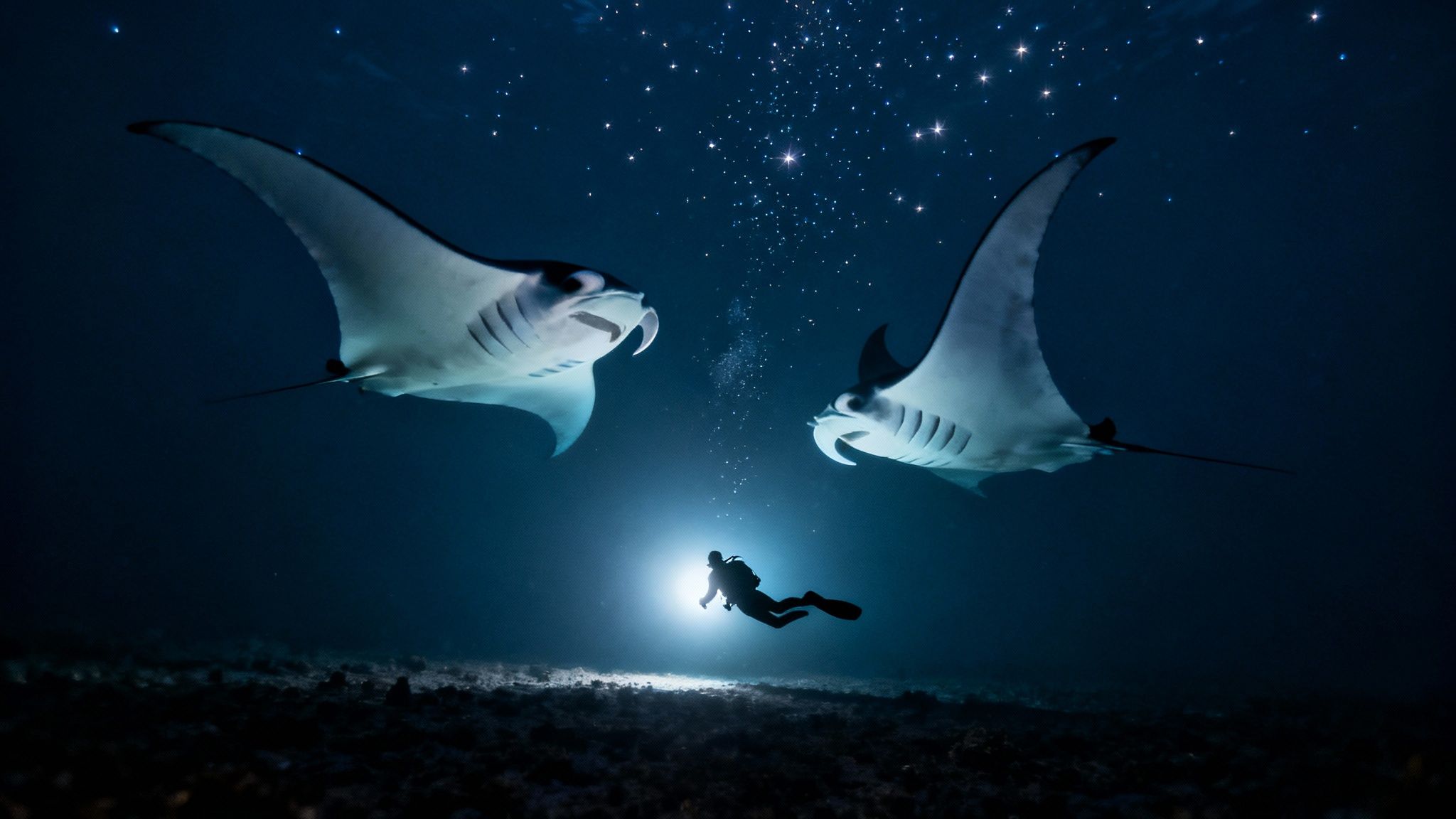
Some dives just stick with you. They’re the ones you talk about for years, the moments that completely change how you see the ocean. The manta ray night dive off the Kona coast is one of those experiences. This isn’t just another logbook entry; it’s a front-row seat to a surreal, breathtaking ballet starring some of the most majestic creatures on the planet.
So, how does it all work? It’s a brilliant mix of nature and a little human ingenuity. As the sun sets, we head out to a special spot and set up powerful lights on the ocean floor. These beams act like a massive bug zapper, but instead of bugs, they attract billions of tiny plankton—a manta ray’s favorite meal.
This light-fueled plankton bloom creates a buffet that no manta can resist. Before you know it, the gentle giants start to arrive, gliding out of the darkness. One by one, they swoop into the light, their enormous wingspans—sometimes reaching up to 16 feet—casting huge, dancing shadows below.
An Underwater Ballet Like No Other
As a diver, your job is simple: get comfortable on the sandy bottom and enjoy the show. You become part of the audience for an incredible performance as mantas barrel-roll and glide just inches over your head. With their giant mouths wide open, they filter the plankton-rich water in a graceful, acrobatic feeding frenzy that is both massive in scale and deeply personal.
It's an overwhelming feeling of awe. You're watching these massive animals move with such impossible gentleness and precision. The whole experience is quiet, humbling, and absolutely unforgettable—a silent underwater theater where you have the best seat in the house.
The Big Island’s manta dive is world-famous for a reason. It’s one of the most reliable and awe-inspiring underwater encounters you can have anywhere. The consistency of seeing these animals up close is what sets Kona apart. It's not uncommon for divers to see between 5 to 14 mantas on a single trip, cementing Kona's reputation as the undisputed best place in the world to dive with manta rays.
Choosing a Responsible Manta Experience
With this dive's popularity, choosing the right operator is everything. A responsible dive company puts the mantas' well-being first, period. This means following strict guidelines to ensure the encounter is safe and doesn't disturb the animals, like proper diver placement, controlled lighting, and a firm no-touching policy that protects the mantas' delicate outer layer.
At Kona Honu Divers, we're all about providing ethical and mind-blowing manta ray experiences. Our crew isn't just there to give you a great dive; we're deeply committed to protecting these magnificent creatures. We run our tours with the utmost respect for the marine environment, ensuring this magical encounter can continue for generations to come.
The grace and beauty of the Kona manta ray is something every diver should experience. You can learn even more about these incredible animals in our guide to the Kona Manta Ray.
Advanced Diving Adventures Beyond The Reef
For certified divers who've seen their share of reefs and are hungry for something more, scuba diving Big Island Hawaii has some truly next-level experiences. We're talking about the kind of dives that get your heart pumping and require a solid set of skills. These are the adventures that let you see a side of the ocean most people don't even know exists. These advanced diving opportunities are perfect for experienced divers.
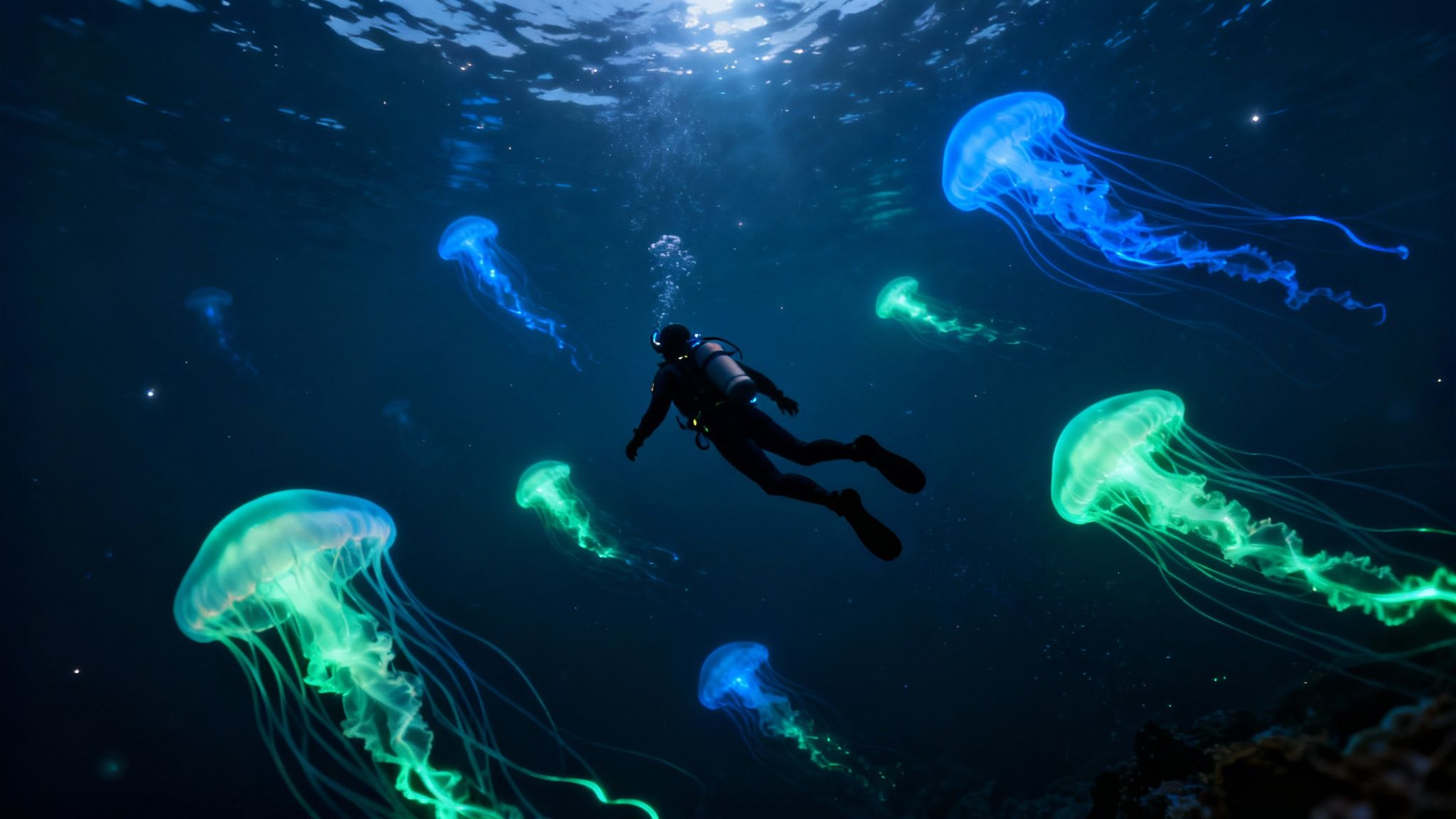
The absolute pinnacle of advanced diving here in Kona is, without a doubt, the Blackwater Dive. Forget everything you know about night diving on a reef. This is a whole different world. We take you miles offshore, suspend a downline over thousands of feet of pitch-black ocean, and you simply drift in the abyss at about 50 feet.
What happens next is something you have to see to believe.
The Kona Blackwater Dive: An Alien World
As you hang there in the darkness, the largest migration on Earth begins to happen right in front of your eyes. Tiny, bizarre, and often bioluminescent creatures rise from the depths to feed near the surface. You’ll be face-to-face with organisms that look like they're straight out of a sci-fi movie—glowing jellies, translucent larval fish, and pulsating chains of siphonophores.
Divers often say it feels more like floating in outer space than in the ocean, and they're not wrong. The sensation of being suspended in that vast, inky blackness while this glittering parade of life drifts by is humbling, exhilarating, and completely unforgettable. It's a genuine encounter with the deep ocean that's truly unique to Kona.
The Blackwater Dive is a true pelagic drift, a journey into a mysterious ecosystem that comes alive only after the sun goes down. It’s a must-do for any experienced diver seeking the ultimate thrill.
Ready to see what rises from the deep? The Kona Blackwater Night Dive is an adventure you will talk about for the rest of your life.
Lava Tubes And Thrilling Drift Dives
The blackwater experience isn't the only advanced adventure on tap. The Big Island's volcanic origins have created an underwater playground filled with incredible structures just waiting to be explored by seasoned divers.
Here’s a taste of what you can experience:
- Lava Tube Navigation: Picture yourself swimming through massive, cathedral-like caverns and weaving through tunnels carved by ancient lava. Pulling this off requires sharp buoyancy control and total awareness, especially in an overhead environment.
- Deep Ledges and Walls: The coastline features some dramatic drop-offs where the reef just plummets into the deep blue. These walls are magnets for bigger pelagic species and are home to unique coral formations you won't find in the shallows.
- Thrilling Drift Dives: Sometimes, you just have to go with the flow. We'll drop you in where the current is running, and you can simply fly, effortlessly, along vibrant reefs and underwater cliffs, covering way more ground than you could on a normal dive.
These dives are more demanding, plain and simple. They can involve greater depths, strong currents, and tricky navigation. That's why we reserve them for divers with an advanced certification and the logbook to back it up.
If you’re ready to push your limits and explore the wilder side of Kona, our Premium Advanced 2-Tank Trip is built just for you.
How To Choose The Right Kona Dive Operator
Picking the right crew to take you scuba diving on the Big Island is every bit as important as choosing the dive site itself. A fantastic dive operator can turn a good dive into an unforgettable one, while a bad one… well, let's just say it can ruin your day.
The right company isn't just about having a boat that floats. You're looking for a partner in your adventure. It all starts with a few absolute must-haves: impeccable safety standards, well-maintained boats and gear, and a commitment to small dive groups. Trust me, a crowded boat with a rushed guide is no one's idea of a good time.
Why Kona Honu Divers Is A Top Choice
When you start checking those boxes, you'll find Kona Honu Divers comes up again and again. We’ve built our reputation on a perfect safety record and a crew that brings a combined 200+ years of diving experience to the table. You're not just a customer; you're diving with seasoned professionals who live and breathe this stuff.
Our custom-built boats, like the Honu One, are designed specifically for diver comfort. We believe that small groups lead to bigger adventures, period. Keeping things intimate means our guides can give you personal attention, point out that camouflaged octopus you would have missed, and make sure everyone in the water is safe and having a blast. It’s why so many divers come back to us year after year.
If you want to dig deeper into what separates the great from the good, check out our guide on how to choose a Kona dive shop.
Other Respected Kona Dive Shops
While we'd love to take everyone diving, we're also big believers in the local dive community. The Kona coast is lucky to have several top-notch companies that share our commitment to safety, quality, and protecting our amazing underwater ecosystem.
Here are a couple of other great operators you can feel confident diving with:
- Jack's Diving Locker: A true Kona institution. They've been around for a long time and are highly respected for their thorough training and wide range of dive charters.
- Big Island Divers: Another excellent, highly-rated shop with a fantastic reputation. They run a great operation and offer all the classic Kona dives, including the world-famous manta ray night dive.
At the end of the day, who you dive with will truly define your Big Island underwater experience. Do a little homework, prioritize safety and small groups, and you'll set yourself up for an incredible adventure you’ll be talking about for years.
Common Questions About Scuba Diving The Big Island
Alright, let's wrap things up by answering some of the most common questions we hear from divers planning a trip to the Big Island. Getting these details sorted out beforehand will help you feel prepared and ready to have an incredible time in Kona's underwater world.
Do I Need To Be Certified To Scuba Dive In Hawaii?
Yes, if you want to join one of our regular boat dives, you'll need to show a valid scuba certification from a recognized agency.
But if you're not certified, don't worry—you can still get in the water! The perfect way to start is with a Discover Scuba Diving experience. Reputable shops like Kona Honu Divers offer these introductory courses where an instructor guides you through every step in a calm, shallow, and safe environment. It’s all the magic of breathing underwater without the commitment of a full course. And of course, non-divers are always welcome to join most trips as snorkelers!
What Marine Life Can I Expect To See On The Big Island?
The Kona coast is just bursting with life. On any given dive, you're almost guaranteed to run into Hawaiian green sea turtles, which we lovingly call honu. The reefs themselves are a vibrant explosion of color, home to countless butterflyfish, parrotfish, moray eels, and clever octopuses.
Above the water, it's incredibly common to see pods of playful spinner dolphins cruising by the boat. Below, keep your eyes peeled for graceful eagle rays gliding past or whitetip reef sharks resting on the sandy bottom. And for a truly special treat, if you’re diving in the winter (December-March), you can often hear the haunting songs of humpback whales—a sound that literally vibrates through your chest.
Is Shore Diving A Good Option On The Big Island?
Absolutely! The Big Island is famous for having some of the best and most accessible shore diving in all of Hawaii. The Kona side has tons of spots where you can just walk right into the ocean and be on a beautiful reef in a matter of minutes.
A classic example is Puʻuhonua O Hōnaunau, better known as "Two Step," which is a local favorite for its easy entry and ridiculously dense marine life. While boat dives get you to more remote and dramatic locations, shore diving is a fantastic, flexible option for certified divers who are comfortable with their navigation.
What Should I Pack For My Big Island Diving Trip?
First things first: don't forget your certification card and logbook! Beyond that, a few key items will make your trip much more comfortable.
- Reef-safe sunscreen is a must to protect our coral.
- Bring a reusable water bottle, a good hat, and polarized sunglasses for your time on the boat.
- A 3mm full wetsuit works great for most people year-round. You might want a 5mm if you get cold easily in the winter, or just a rash guard in the summer heat.
- Bringing your own mask for a perfect, leak-free fit is always a smart move.
- A dive computer you're familiar with is highly recommended for safety and convenience.
- And of course, an underwater camera to capture all the amazing things you're about to see!
Ready to see why scuba diving Big Island Hawaii is a bucket-list experience? The expert crew at Kona Honu Divers is excited to show you the best our coast has to offer. From the world-famous Manta Ray Night Dive to our vibrant daytime reefs, we have the perfect underwater adventure waiting for you.