
Picture this: you're weightless, descending into brilliant blue water. Ancient volcanic archways loom below, teeming with a whirlwind of colorful fish you can’t find anywhere else on the planet. This is scuba diving on the Big Island of Hawaii—an experience that consistently tops divers' lists worldwide. The island's one-of-a-kind geology and protected waters have created a true underwater paradise, offering everything from face-to-face encounters with gentle giants to thrilling explorations of submerged lava tubes.
Why the Big Island Is a World-Class Diving Destination
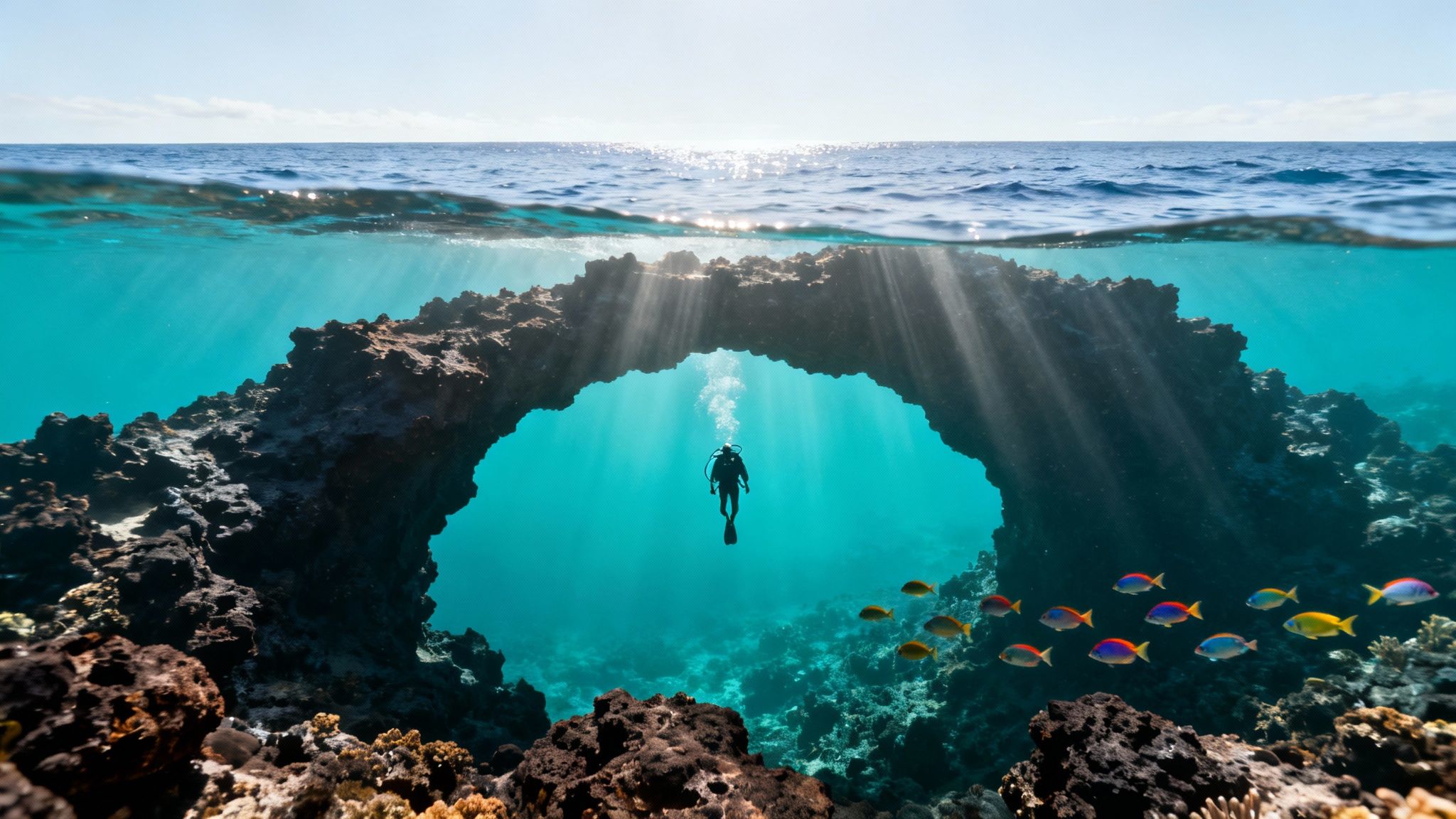
The Big Island isn't just another pretty spot to dive; it’s a premier, year-round playground forged by the raw power of volcanoes. The real secret to its magic is the Kona coast, the island’s leeward (western) side. Here, the colossal volcanoes of Mauna Loa and Hualalai act as a natural shield, blocking the prevailing trade winds.
This geological fortress results in exceptionally calm and clear waters, making for unbelievably good diving conditions almost every single day. Forget about fighting strong currents or choppy waves. Kona’s gentle seas mean you can relax and focus entirely on the spectacular world below, making scuba diving on the Big Island perfect for everyone from fresh-faced beginners to seasoned pros.
A Geologically Unique Underwater Landscape
The island’s volcanic birth has sculpted an underwater world that is nothing short of breathtaking. Unlike the typical reef systems you might see elsewhere, the seafloor here is a dramatic masterpiece of lava tubes, massive archways, submerged craters, and intricate caverns.
This isn't just for show; this unique environment provides a stunning backdrop for every dive and creates perfect habitats for an incredible array of marine life. Divers come from all over the world to see it. You can explore caves where whitetip reef sharks rest during the day or drift along dramatic walls and pinnacles. The Big Island is home to around 1,100 marine species, with 129 of them being endemic—found only here—making it one of Hawaii’s richest biodiversity hotspots. You can learn more about these incredible ecosystems in this ultimate guide to Big Island scuba diving.
Iconic Dives and Thriving Marine Sanctuaries
Beyond the calm water and striking geology, the Big Island is famous for some truly bucket-list dives. It’s home to the world-renowned Manta Ray Night Dive, an awe-inspiring spectacle where you can watch dozens of giant manta rays gracefully somersault through the water, feeding just inches from your face. It’s less of a dive and more of a magical, underwater ballet.
The island also has several protected marine life conservation districts, like the famous Kealakekua Bay, which are thriving sanctuaries for coral and fish. These protected zones offer some of the most pristine conditions you’ll ever experience, with visibility often exceeding 100 feet. Diving here feels like swimming in a perfectly kept, giant aquarium.
To give you a quick snapshot, here’s what makes diving here so special.
Big Island Diving Highlights at a Glance
| Feature | Description | Best For |
|---|---|---|
| Calm Conditions | The Kona coast is sheltered by massive volcanoes, resulting in calm, clear water year-round. | Divers of all levels, underwater photographers, and those prone to seasickness. |
| Volcanic Topography | Explore underwater lava tubes, arches, craters, and caverns created by volcanic activity. | Adventurous divers, cave/cavern certified divers, and anyone seeking unique underwater scenery. |
| Rich Biodiversity | Home to around 1,100 marine species, with 129 found nowhere else on Earth. | Marine life enthusiasts, photographers, and anyone hoping to see rare and unique creatures. |
| Manta Ray Night Dive | A world-famous dive where giant manta rays feed on plankton attracted by underwater lights. | A once-in-a-lifetime experience for certified divers seeking an unforgettable encounter. |
| Pristine Reefs | Protected marine sanctuaries like Kealakekua Bay boast healthy corals and abundant fish life. | Snorkelers and divers looking for vibrant, healthy reef ecosystems with incredible visibility. |
Whether you're a new diver looking for beautiful, easy-going reefs or an experienced explorer hunting for your next great adventure, the Big Island delivers. The sheer variety and quality of the diving here are simply unmatched. For a closer look at what’s waiting for you, check out our full range of diving tours.
Must-Visit Dive Sites on the Big Island
The Big Island's underwater world is a sprawling map of iconic landmarks and hidden gems. Every site has its own personality, from tranquil coral gardens to dramatic, black-rock volcanic formations. Planning your trip really comes down to deciding which chapter of this incredible story you want to experience first.
For most divers, that story begins after sunset with one of the most famous night dives on the planet. Let's dive into the spots that put the Big Island on every scuba enthusiast's bucket list.
The Legendary Manta Ray Night Dive
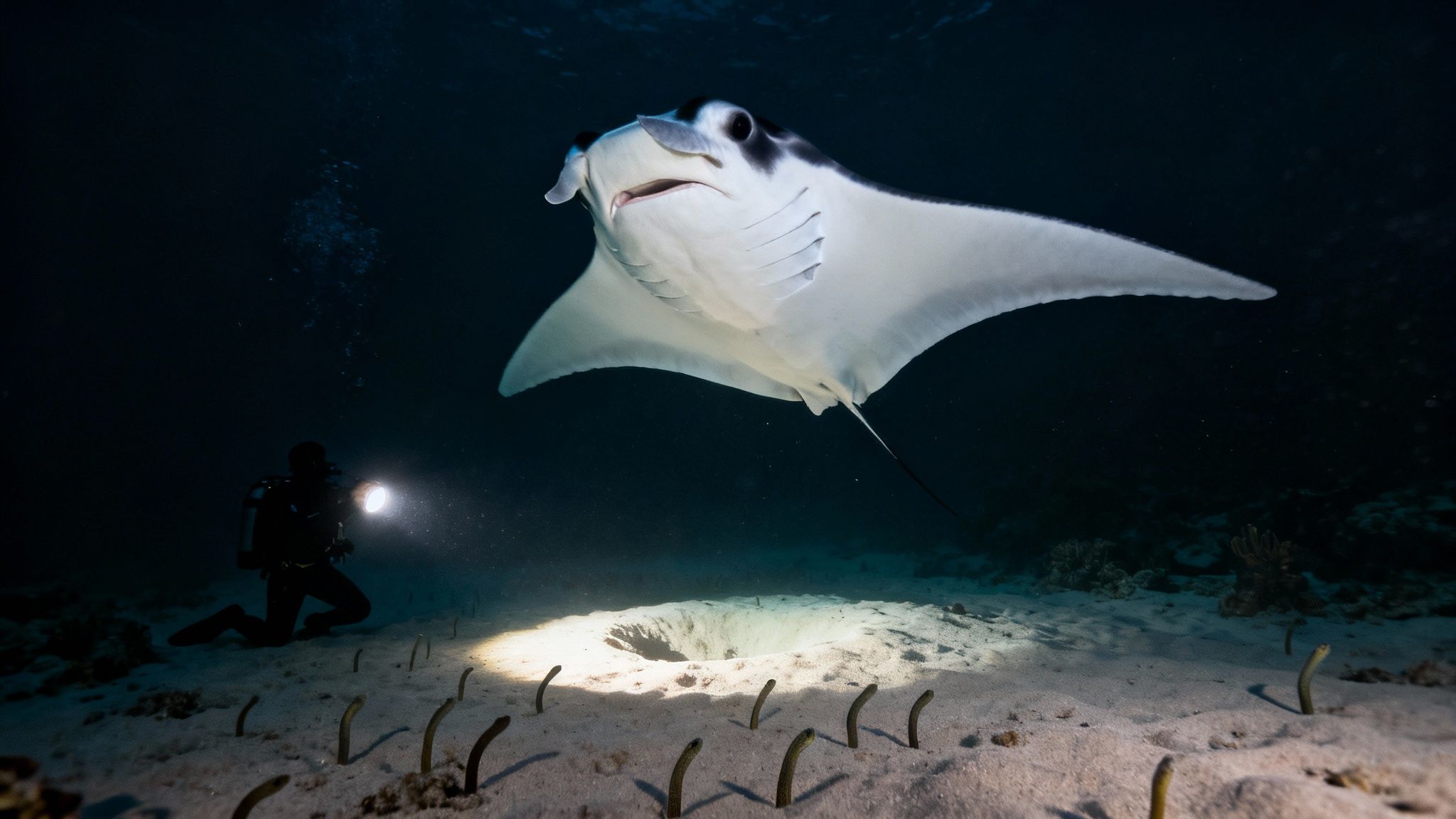
You can't talk about diving on the Big Island without starting here. The Manta Ray Night Dive is consistently ranked as one of the best in the world, and it absolutely lives up to the hype. Imagine kneeling on the sandy ocean floor as majestic manta rays, with wingspans reaching up to 15 feet, somersault just inches above your head. It’s breathtaking.
While there are a few spots to do this, experienced operators will tell you that Garden Eel Cove is the superior choice.
- Protected Location: It’s tucked inside a calm bay, shielded from the open ocean swells. This makes for a much more comfortable and reliable dive, any time of year.
- Better Viewing Area: The site has a natural amphitheater layout. You can settle into a designated sandy patch for a front-row, unobstructed view of the action above.
- Better Reefs: The surrounding coral is vibrant and teeming with life. That means the twilight dive you do before the main event is just as spectacular.
This whole encounter is a carefully orchestrated ballet. Powerful lights are set up on the seafloor to attract clouds of plankton, the mantas' favorite food. The result is a mesmerizing spectacle that you simply have to see to believe.
Kealakekua Bay: A Pristine Marine Sanctuary
Another crown jewel of the Kona coast is Kealakekua Bay, home to the famous Captain Cook Monument. This isn't just a beautiful dive; it’s a living testament to the power of conservation. As a federally protected marine sanctuary, it’s a place of incredible ecological richness.
Because fishing is restricted and strong conservation efforts are in place, the water clarity is just phenomenal—often clearing 100 feet. You're exploring vibrant, untouched coral reefs in crystal-clear water. For more on this, check out our piece on the benefits of protected marine areas on konahonudivers.com.
Dropping into Kealakekua Bay feels like descending into a perfectly kept aquarium. The visibility is mind-blowing, and the sheer density of fish is off the charts. It's a photographer's dream and a must-do for anyone who appreciates a truly pristine reef.
The bay is swarming with huge schools of yellow tang, and spinner dolphins are almost always seen playing nearby. Because access is limited, a boat tour is really the only way to experience its underwater splendor.
Exploring Lava Tubes and Turtle Hangouts
Beyond the two headliners, the Kona coastline is packed with dozens of other world-class sites, each with its own unique adventure. The island's volcanic origins created a dramatic underwater landscape that’s perfect for exploring.
You'll find incredible lava tubes and archways you can actually swim through. These formations often become a refuge for resting whitetip reef sharks, huge schools of soldierfish, and hidden critters like moray eels. Sites like Turtle Pinnacle and Golden Arches are famous for these features.
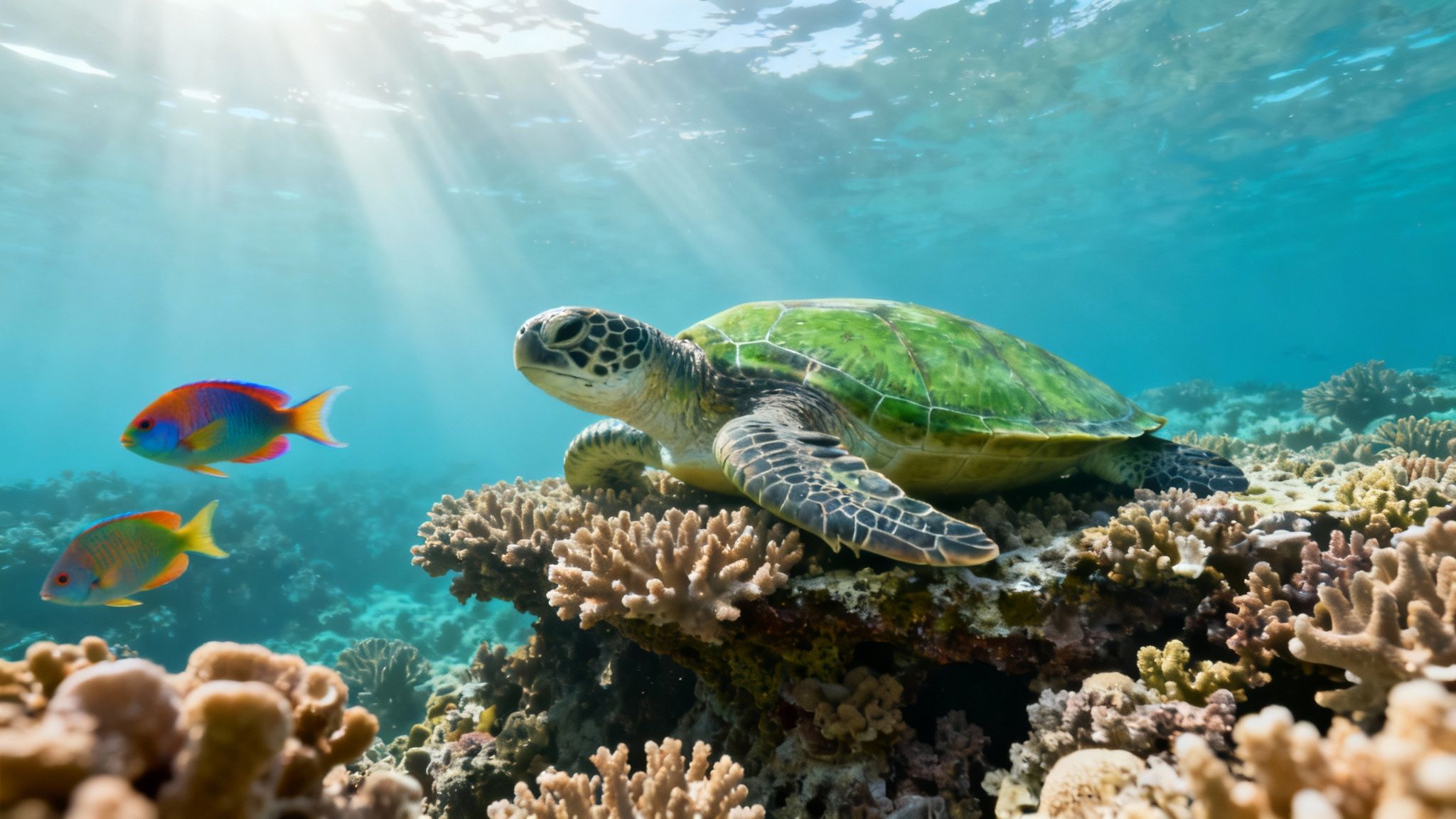
And yes, as the name suggests, Turtle Pinnacle is one of the most reliable places to hang out with Hawaiian green sea turtles (honu). They use the reef as a "cleaning station," where smaller fish nibble algae and parasites right off their shells. It's totally normal to see several turtles on a single dive here. Our guide on where to find the best place to dive on the Big Island goes into more detail on these amazing locations.
Finding the Right Dive Operator in Kona
Let’s be honest, who you dive with can make or break your entire trip. The right company doesn't just ferry you out to a reef; they shape your whole experience. A great crew, with their passion for the ocean and deep local knowledge, is the difference between a pretty good dive and a truly unforgettable one.
When you're looking for a dive operator, there are a few things that should be absolutely non-negotiable. First and foremost, check their safety record. Look for PADI-certified professionals and boats that are clearly well-cared-for and built for diving. You also want a crew that acts as a guardian of the reef, not just a tour guide, showing a real commitment to marine conservation.
What to Look for in a Kona Dive Company
The real magic is often in the details. Small group sizes are a huge deal. They mean you get more personalized attention and a safer, more relaxed dive, instead of feeling like just another set of fins in the water.
Experienced local guides are worth their weight in gold. They know these sites like the back of their hand and can point out that elusive frogfish or octopus you'd swim right past. They're also pros at reading the day's conditions and tailoring the dive to the group's comfort and skill level.
Kona Honu Divers is a great example of an operator that gets it right. They really focus on small groups and have a team of guides who live and breathe Kona diving. Their whole reputation is built on making sure divers have an incredible time while respecting the underwater world. For a deeper dive, check out our full guide on how to choose a Kona dive shop.
But you don’t have to take our word for it—see what other divers are saying.
Making Your Booking Simple
A top-notch operator also makes the booking process a breeze. Their website should be clear and easy to navigate, showing you exactly what trips they offer, what's included, and what you might see.
This screenshot from our diving tours page gives you an idea of how simple it should be to browse everything from the world-famous Manta Ray Night Dive to more advanced charters.
When all the options are laid out like this, it’s easy to pick the adventure that’s the perfect match for your certification level and interests.
Finding the right operator is the key to ensuring your Big Island scuba diving experience is safe, exciting, and memorable. When you're ready to jump in, exploring the available diving tours is the perfect next step.
Diving Adventures for Every Skill Level
One of the greatest things about scuba diving Big Island Hawaii is that it truly welcomes everyone. It doesn’t matter if you’re dreaming of your first underwater breath or you're a seasoned pro with hundreds of dives logged—the Kona coast has an adventure with your name on it. The calm, protected waters here create a safe and inviting environment for divers of all stripes.
This isn't one of those places where beginners are stuck on a single, boring reef. The island’s gentle conditions mean many of the most stunning dive sites are accessible to almost everyone, making it the perfect place to learn, build confidence, and fall in love with the ocean.
Perfect Conditions for Beginners
For anyone new to the underwater world, Kona is like a giant, natural swimming pool. Many of our dive sites are tucked into calm, shallow bays with virtually no current. These are aquarium-like conditions, perfect for introductory experiences like the PADI Discover Scuba Diving program or for getting your full open water certification.
Imagine learning to clear your mask while a Hawaiian green sea turtle glides past you in the distance. That's the kind of magic that gets people hooked on diving for life. The fantastic visibility, often stretching 80-100 feet, helps new divers feel comfortable and in control as they master their skills.
Exciting Challenges for Intermediate Divers
Once you've got your sea legs—or fins, rather—the Big Island opens up a whole new realm of exploration. The volcanic topography has created a sub-aquatic playground of incredible structures that offer a fun challenge without ever feeling intimidating.
Intermediate divers can look forward to exploring:
- Dramatic Wall Dives: Drift along vertical drop-offs blanketed in colorful corals and sponges, keeping an eye out for moray eels and octopuses tucked into the crevices.
- Swim-Throughs and Arches: Navigate ancient lava formations, like the famous "Golden Arches," where schools of fish often gather in the filtered sunlight.
- Unique Topography: Discover submerged craters and pinnacles that rise from the seafloor, each one its own thriving little ecosystem.
These dives are a fantastic way to sharpen your skills, perfect your buoyancy control, and truly experience the three-dimensional freedom that makes scuba so amazing. They serve up just the right amount of adventure while staying well within safe recreational limits.
No matter your skill level, remembering and applying essential safety precautions for adventure activities is what ensures a great time. Always pay close attention to your dive briefing and follow your guide's lead.
The Ultimate Adventures for Advanced Divers
For experienced divers chasing a genuine thrill, the Big Island delivers some of the most unique and unforgettable dives on the planet. These are the ones you'll be telling stories about for years to come.
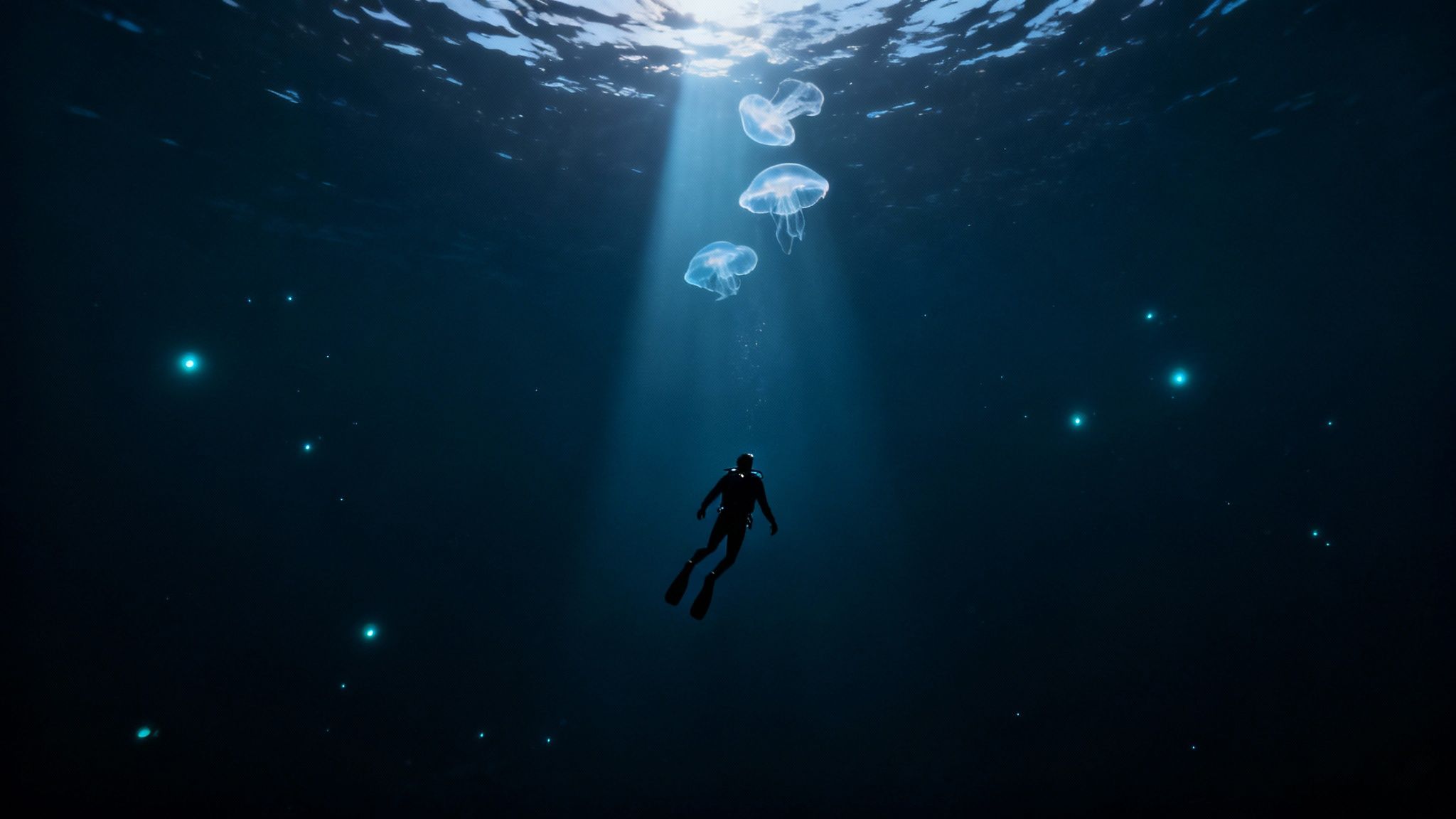
The undisputed champion of advanced diving in Kona is the Blackwater Dive. This is not your typical reef dive. You'll be tethered to the boat, floating in the deep, dark ocean miles from shore, as surreal, bioluminescent creatures rise from the abyss. It’s like a pelagic magic carpet ride through outer space, where you’ll meet bizarre and beautiful organisms few people ever get to see. You can book this once-in-a-lifetime experience on our Blackwater Dive tour page.
Beyond the blackwater, there are plenty of other opportunities to push your limits. We have deeper reefs, more complex lava tube systems, and specialized charters that offer fresh challenges. Our advanced dive tours are designed specifically for seasoned divers who want to explore the Kona coast's more remote and demanding sites.
From your very first breath to your most thrilling deep-water encounter, the Big Island has a dive that perfectly matches your skill and ambition.
Meet the Locals: The Marine Life of the Big Island
Dropping below the surface on the Kona coast feels like stepping into a completely different world. It’s a bustling underwater city, and the sheer number of critters you’ll meet is what makes every single dive out here special. What I love about scuba diving on the Big Island of Hawaii is that you get the whole package—from true ocean giants to the tiniest, most colorful fish you can imagine.
Of course, the headliners are the incredible reef manta rays. Seeing these gentle giants, with wingspans that can stretch over 12 feet, perform their famous nighttime feeding dance is something you will never, ever forget. Because they don’t migrate, you have a chance to see them any time of year. It’s absolutely surreal to watch them barrel roll through the illuminated water, scooping up plankton just feet away from you.
Gentle Giants and Ancient Mariners
While the mantas get top billing, they’re far from the only big-ticket animals you’ll find. The Hawaiian green sea turtle, or honu as they’re known locally, are everywhere. You’ll spot them cruising gracefully over the reef or taking a nap under a ledge. It’s always a treat to stumble upon a "cleaning station," where tiny fish gather to nibble algae right off their shells.
And always remember to look out into the deep blue. You never know when a pod of spinner dolphins will cruise by. These guys are the acrobats of the sea, famous for their breathtaking leaps and spins. Hearing their clicks and whistles echoing through the water is pure magic.
The Reef's Colorful Residents
The big animals are amazing, but don't forget to look closer at the reefs themselves. The volcanic ledges and coral gardens are packed with life. It's common to find whitetip reef sharks snoozing in sandy patches during the day. They're typically shy and watching them glide effortlessly over the reef is a real highlight.
The fish life is a literal rainbow, and what makes it extra special is that so many species are endemic—they can only be found here in Hawaii.
- Milletseed Butterflyfish: You'll often see these bright yellow fish in huge, shimmering schools that look like clouds of confetti.
- Yellow Tang: These guys are impossible to miss. Their electric yellow bodies add a splash of sunshine to every dive site.
- Parrotfish: Listen closely! You can often hear the distinct crunch of parrotfish chomping on coral before you even spot them.
- Moorish Idol: With their bold stripes and long, elegant dorsal fin, these fish are the supermodels of the reef.
Every time I dive on the Kona coast, I'm struck by how vibrant and healthy the ecosystem is. The biodiversity here is a living, breathing reminder of why we need to protect these amazing waters for the divers who will come after us.
From the smallest shrimp tucked into a coral head to the massive manta rays that own the night, the marine life is what makes diving the Big Island an unforgettable adventure. Get your camera ready—the locals can't wait to meet you.
How to Plan Your Big Island Dive Trip
Alright, let's talk about the fun part: planning your actual trip. The good news is that planning for scuba diving on the Big Island of Hawaii is pretty simple, mainly because the conditions here are incredibly consistent.
The Kona coast is shielded from the gusty trade winds by the island's colossal volcanoes, Mauna Loa and Mauna Kea. This natural barrier creates a paradise for divers, with calm, clear waters year-round. You can expect water temperatures to hover comfortably between 75-80°F (24-27°C), making almost any day a perfect day to get in the water. For a deeper dive into the specifics, check out the great overview of diving conditions in Hawaii on PADI.com.
While you really can't go wrong any time of year, some seasons offer a little something extra. If you visit in the winter (think December through March), you might just get to hear the haunting songs of migrating humpback whales echoing underwater during your dive—it's an unforgettable experience. Summer, on the other hand, often brings seas so calm they look like glass, which makes for exceptionally smooth boat rides out to the dive sites.
Getting Here and Getting Around
To make your life as easy as possible, focus your plans on the Kona side of the island. Flying directly into Kona International Airport (KOA) is the way to go. It drops you right into the heart of the action, just a short drive from the best dive shops and places to stay.
Speaking of which, you'll want to stay on the Kona coast. This is where nearly all the dive charters depart from, so you'll have a quick and easy commute to the harbor each morning. We've actually put together a whole guide on this, which you can read here: best places for divers to stay on the Big Island.
Pro Tip: I can't stress this enough—rent a car. It gives you the freedom to explore everything else this incredible island has to offer on your non-diving days. You can drive from the volcanic landscapes of Hawaii Volcanoes National Park to the lush rainforests on the Hilo side.
To get your trip planning started, looking up car rental locations ahead of time will help you hit the ground running as soon as you land.
What to Pack vs. What to Rent
Every dive traveler knows the struggle of balancing what to pack. Here’s a quick breakdown to keep it simple:
- Bring These: Definitely pack your personal gear. This means your certification card, logbook, dive computer, and your favorite mask. These items are all about personal fit and comfort. And please, don't forget reef-safe sunscreen to protect our fragile coral ecosystems!
- Rent These: Leave the heavy stuff at home. Quality dive shops like ours have a full inventory of modern, well-maintained BCDs, regulators, tanks, and weights. This saves you a ton of hassle and airline baggage fees. You can also easily rent a wetsuit; a 3mm is usually perfect, but a 5mm is available if you tend to get chilly.
Once you have these logistics sorted out, you can get back to focusing on the real reason you're coming: the spectacular underwater world that's waiting for you here in Kona.
Your Big Island Diving Questions, Answered
Still have a few questions before you book your flight? No problem. Here are some of the most common things people ask when planning a dive trip to the Big Island.
What’s the Best Time of Year to Dive?
Honestly, there’s no bad time to dive here. The Kona coast is wonderfully protected, giving us calm, clear water pretty much year-round. You can expect water temperatures to hover between a comfortable 75-80°F (24-27°C) no matter when you visit.
That said, there are some subtle seasonal perks. If you dive in the winter (roughly December through March), you’ll likely hear the incredible songs of humpback whales echoing underwater during your safety stop. Summer often brings even flatter, glassier seas, which is always a bonus.
Do I Need to Be an Experienced Diver?
Absolutely not! The Big Island is one of the best places on earth to learn to dive or to get back in the water after a break. Many of the best spots along the Kona coast are in sheltered bays without any real current to speak of, making them perfect for your first breaths underwater.
If you're completely new, fantastic operators like Kona Honu Divers offer introductory "Try Scuba" experiences. And for the seasoned pros? There's plenty to keep you busy, from deep volcanic ledges and lava tubes to the truly unique challenge of a Blackwater Dive.
Is the Manta Ray Night Dive a Sure Thing?
When it comes to wildlife, nothing is ever 100% guaranteed. But the Kona Manta Ray Night Dive is about as close as you can get. The success rate is incredibly high—we're talking over 90% on most nights.
These dive sites have been carefully managed for decades, and the local mantas know exactly where to show up for an easy meal when the dive lights turn on. It’s earned its reputation as one of the most reliable big animal encounters in the entire world.
What Should I Pack for My Dive Trip?
Beyond the obvious swimsuits and aloha shirts, here are the essentials:
- Dive Essentials: Definitely bring your certification card and logbook.
- Exposure Suit: Most people are perfectly happy in a 3mm or 5mm wetsuit. You can bring your own or easily rent one here.
- Gear: All the heavy stuff—BCD, regulators, tanks, and weights—is available for rent from any reputable shop.
- Island Life: Don't forget reef-safe sunscreen (this is crucial for protecting our corals!), a good hat, sunglasses, and a reusable water bottle to stay hydrated.
Ready to see it all for yourself? The crew at Kona Honu Divers lives and breathes these waters, and they're ready to show you the absolute best diving the Big Island has to offer. Check out all their incredible diving tours and book an adventure you'll never forget.