
When you think of scuba diving in Hawaii, the Big Island should be the first place that comes to mind. It's a truly world-class destination, defined by water so clear it feels like you're flying, dramatic underwater landscapes carved by volcanoes, and an absolutely staggering amount of marine life.
The Kona coast, in particular, is the star of the show. Its calm, sheltered waters open up a gateway to some of the most iconic dive sites in the world, perfect for divers of every stripe, from fresh-faced beginners to seasoned pros. Honestly, it's hard to argue it isn't the best diving in the entire Hawaiian archipelago.
Exploring Hawaii’s Premier Underwater Paradise
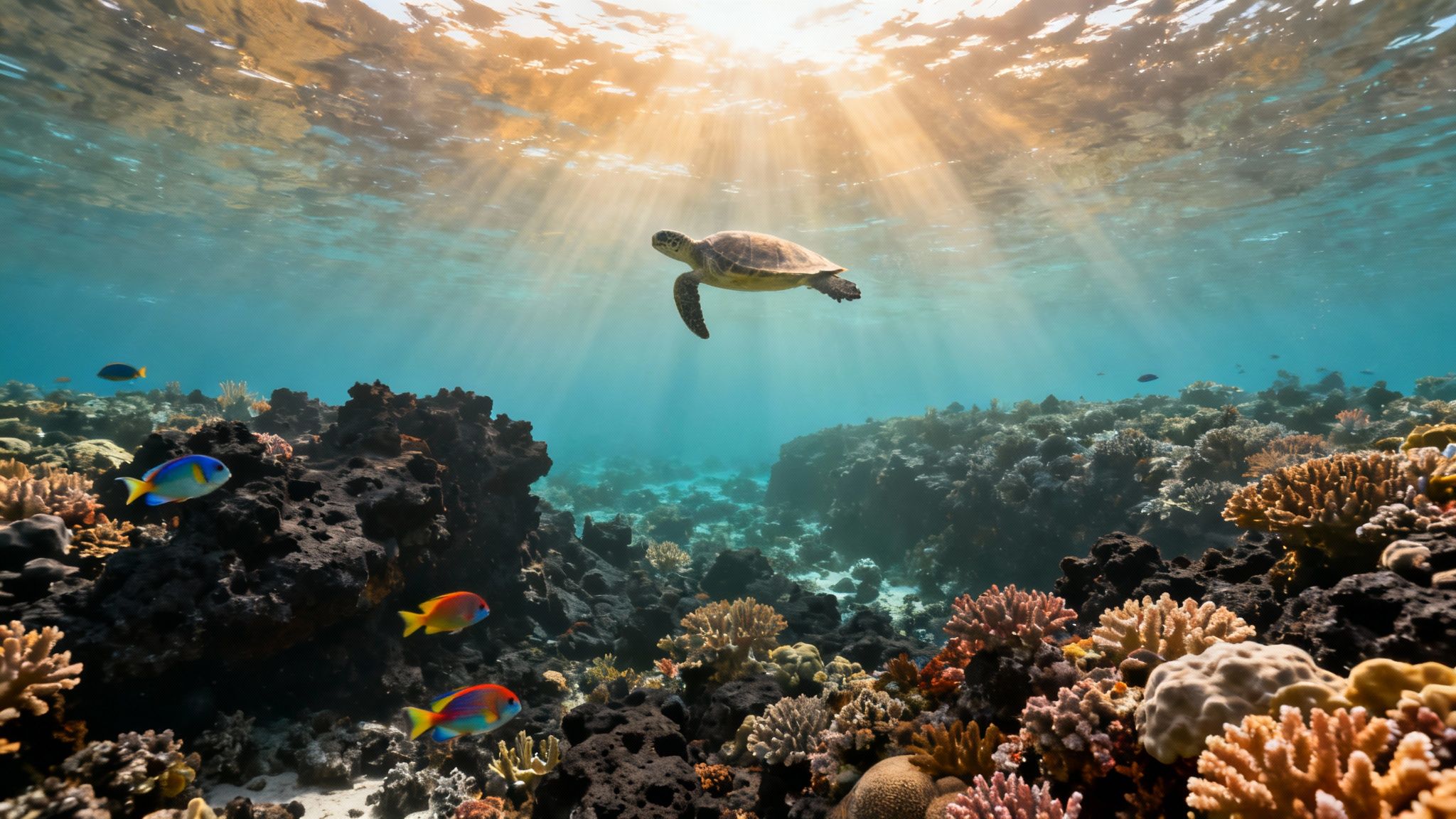
Welcome to your complete guide to scuba diving Big Island Hawaii—an underwater kingdom born from volcanic fire and bursting with life. Divers from all over the planet flock to the Kona coast, drawn by its incredible mix of accessibility, sheer beauty, and pure adventure.
So, what makes the Big Island so different from the others? It's the one-two punch of mind-boggling biodiversity and unique underwater terrain. This guide will walk you through everything, from the warm, gin-clear water to unforgettable bucket-list dives like the world-famous Manta Ray Night Dive.
What Makes Big Island Diving Special
The Big Island isn't just another pretty spot; it's the most biodiverse island in Hawaii for scuba diving. We're talking an estimated 1,100 species of fish, and get this—129 of them are found nowhere else on Earth.
This explosion of life is all thanks to the island's volcanic roots. Over millennia, lava flows have created a spectacular underwater playground of lava tubes, dramatic arches, and healthy coral reefs. These structures are the perfect homes for everything from the tiniest endemic critters to huge pelagic visitors passing through. To get a deeper look at the island's unique ecosystem, check out this ultimate guide to Hawaii diving.
Best of all, you can expect fantastic conditions pretty much any time you visit.
The water stays in that perfect sweet spot of 75–80°F (24–27°C) all year, peaking in September. For most people, a simple 1mm to 3mm wetsuit is all you'll ever need to stay comfortable.
To give you a quick snapshot, here's what to expect from your Big Island dive adventure.
Big Island Diving At A Glance
| Aspect | Details |
|---|---|
| Water Temperature | 75–80°F (24–27°C) year-round |
| Visibility | Excellent, often exceeding 100 feet (30m) |
| Top Dive Type | Manta Ray Night Dive (a must-do!) |
| Marine Life | Manta rays, dolphins, turtles, sharks, endemic fish |
| Wetsuit Needed | 1mm to 3mm is usually sufficient |
| Best Season | Year-round, but summer has the calmest seas |
As you can see, the conditions are just about perfect for planning a trip any time you can get away.
Your Adventure with Kona Honu Divers
This guide is here to get you prepped and excited for an adventure you won't forget. We'll cover the can't-miss dive sites and the amazing marine life encounters waiting for you. But a great trip starts with a great dive operator, which is why choosing a top-tier PADI 5-star outfit like Kona Honu Divers is so important.
With their expert local guides and a solid commitment to keeping groups small, you're guaranteed a more personal and rewarding experience. Whether you've logged a thousand dives or are just getting your fins wet, Kona Honu Divers has exceptional diving tours on the Big Island that fit every skill level.
Ready to jump in? Let's explore the magic waiting just beneath the waves.
Why Kona Is The Heart Of Big Island Diving
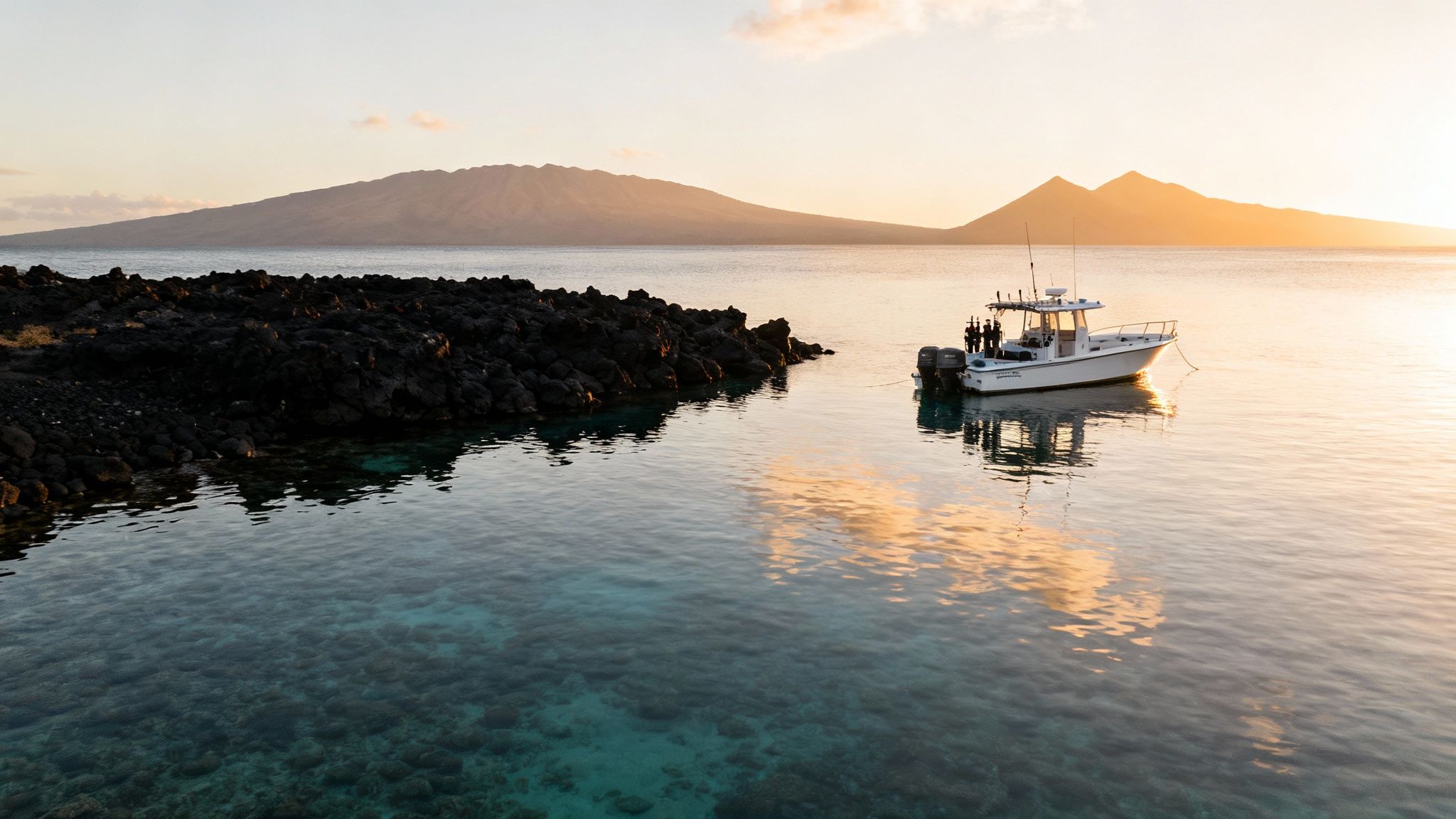
When you ask experienced divers about the scuba diving Big Island Hawaii, one name comes up again and again: Kona. It’s not just another spot on the map; it’s the undisputed heart of the action. What makes this stretch of coastline so special is a perfect storm of natural protection, wild underwater landscapes, and easy access that you just won’t find anywhere else in the islands.
The real secret to Kona's incredible diving conditions is its geography. The coast is tucked in the shadow of two massive shield volcanoes, Mauna Loa and Hualalai. Picture them as giant bodyguards, shielding the coastline from the powerful northeasterly trade winds that can stir up the ocean on other parts of the Big Island.
Because of this geological shield, the Kona coast has a huge leeward side where the water stays remarkably calm and predictable nearly year-round. This consistency makes it the ideal home base for any diver, whether you’re just getting your fins wet for the first time or you’re a seasoned pro searching for your next big adventure.
The Kona Advantage: Calm Waters and Crystal Clarity
So, what does all that natural protection get you? For starters, water that isn't just calm, but stunningly clear. It's not uncommon for visibility on the Kona coast to push past 100 feet (30 meters), giving you that incredible feeling of floating in an endless blue expanse. The clear water lets sunlight pour in, lighting up the vibrant coral gardens and dramatic volcanic features below.
And speaking of features, the underwater world here is a direct result of the island’s fiery birth. As a diver, you get to explore a surreal seascape sculpted by ancient lava flows. You'll find:
- Intricate Lava Tubes: Imagine swimming through the very same tunnels where molten rock once carved its way to the sea.
- Dramatic Arches and Pinnacles: These breathtaking underwater structures are magnets for marine life.
- Vast Canyons and Ledges: Get lost exploring complex formations that are home to countless ocean critters.
This volcanic terrain provides the perfect foundation for healthy, thriving coral reefs, which in turn draw in an amazing amount of fish and other marine animals.
Kona's unique combination of calm seas, stunning visibility, and captivating volcanic seascapes makes it the ultimate playground for underwater exploration. Every dive reveals a new facet of the island's raw, natural beauty.
If you want to dig deeper, you can find out more about what makes a dive in Kona truly the best and why so many of its sites are considered world-class.
Convenience Meets World-Class Diving
Beyond the incredible conditions, another huge part of Kona’s appeal is just how easy it is to get to the good stuff. Many of the most famous dive sites are just a quick, comfortable boat trip from Honokohau Harbor. That means less time getting there and more time actually in the water.
This is where expert operators like Kona Honu Divers really shine. They've perfected the art of showing divers this aquatic wonderland while putting the health of the marine environment first. Their eco-conscious diving tours and experienced guides are all about bringing you face-to-face with Kona's magic, safely and personally.
Choosing Kona as your dive base is simply setting yourself up for an amazing trip. You get the absolute best conditions, the most fascinating underwater scenery, and a hassle-free way to experience it all. It’s the perfect launchpad for the dive trip of a lifetime.
Experiencing The World Famous Manta Ray Night Dive
No guide to scuba diving the Big Island would be complete without talking about its most legendary experience: the Manta Ray Night Dive. This isn't just another entry in your logbook. It’s a world-famous spectacle that feels like you’ve dropped right into a nature documentary, creating a memory that will stick with you forever.
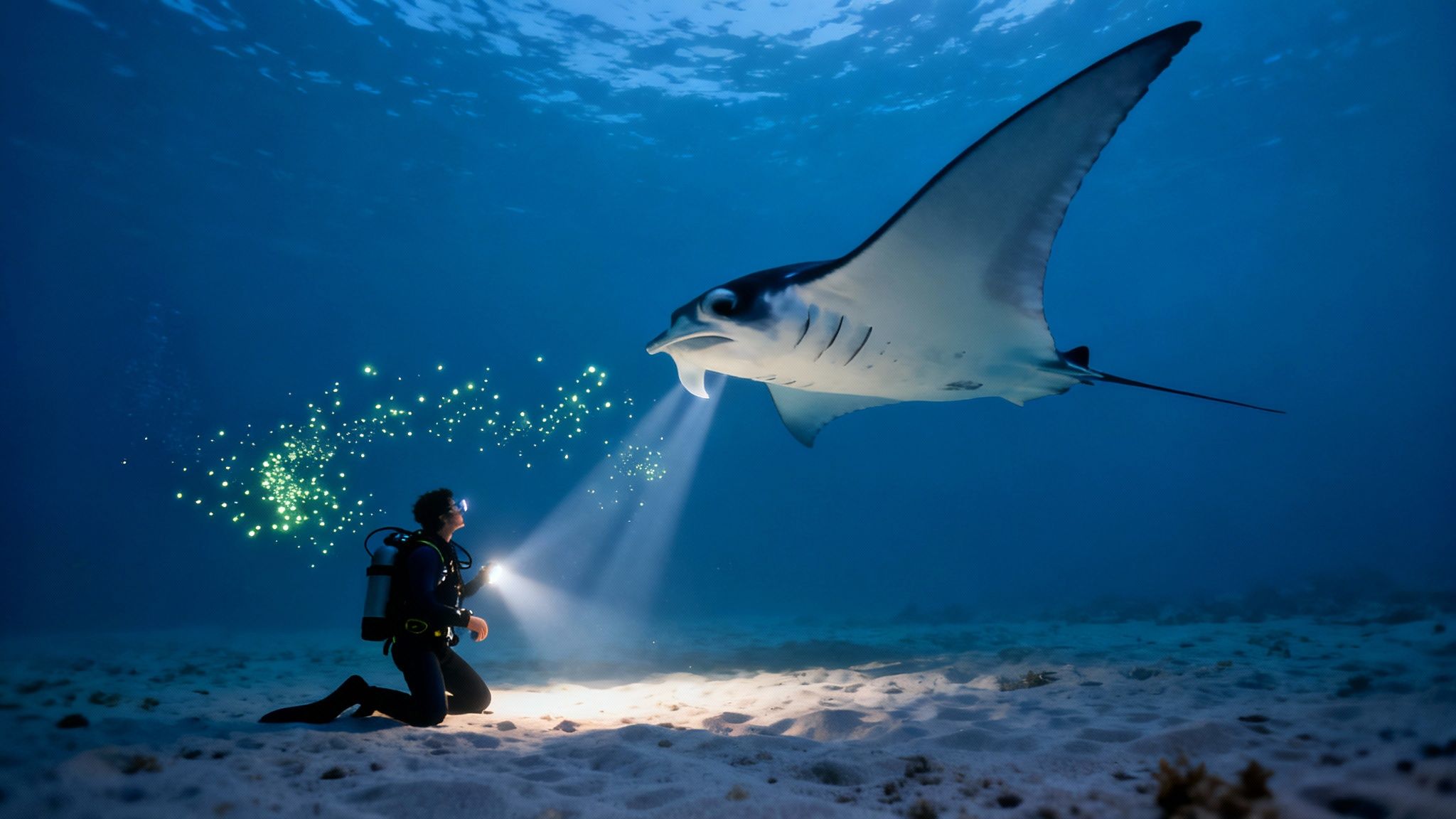
The science behind this underwater ballet is pure genius. Powerful, eco-friendly lights are placed on the ocean floor, creating beams that shoot up toward the surface. These lights attract huge clouds of plankton—the manta rays' favorite meal—essentially ringing a dinner bell that draws them in from all around.
As a diver, you get a front-row seat to the feast. You'll settle onto a sandy patch about 35 feet down and simply watch the magic happen above you.
An Unforgettable Underwater Ballet
Picture this: you're kneeling on the ocean floor as the last light of day disappears. Your dive light points up, joining a cluster of others to create a bright stage in the dark water. Then, a shadow emerges from the blackness. A massive, graceful shape glides effortlessly into the light.
Soon, another follows, and then another. These gentle giants, with wingspans that can reach a staggering 16 feet, perform an aquatic dance just inches from your head. They swoop, somersault, and barrel-roll through the light, their huge mouths open to filter the plankton-rich water. It's an immersive, humbling, and completely mesmerizing show.
This isn’t a hit-or-miss dive, either. Kona is one of the few places on Earth where manta encounters are incredibly reliable. Local operators report that mantas are seen on 85–90% of these night dives, and it’s not uncommon for groups of 14 or more to show up. The main site, nicknamed "Manta Village," brings in divers from all over the world who consistently call it a once-in-a-lifetime event.
The Manta Ray Night Dive isn't about chasing wildlife; it's about setting the stage and letting nature's most graceful acrobats come to you. The feeling of a massive manta gliding so close you can see every detail is simply indescribable.
Best Practices for a Respectful Encounter
This incredible interaction only works because of responsible tourism. These are wild animals, and their well-being is the number one priority. To make sure they stay safe and keep coming back, all divers have to follow a few simple rules.
- Observe Only, Never Touch: Manta rays have a protective mucus layer on their skin. Touching them can damage it, leaving them open to infection.
- Stay on the Bottom: Your job is to stay on the sand. This keeps the water column clear for the mantas to swim, feed, and maneuver without any obstacles.
- Watch Your Bubbles: Try not to exhale directly into a manta's path. A good diver will position themselves so their bubbles drift away from the action.
Choosing a reputable, Green List-approved operator like Kona Honu Divers is key. They're committed to these conservation standards, which means your dive has a positive impact. To get a better sense of the experience, check out our complete guide on what the Manta Ray Night Dive is all about.
Joining a manta ray dive tour with a trusted company ensures you not only get the best seat in the house but also help protect these magnificent creatures for generations to come.
Discovering The Top Big Island Dive Sites
While the Manta Ray Night Dive gets a lot of the glory, the Kona coast is absolutely packed with world-class locations that make scuba diving Big Island Hawaii an unforgettable experience. There’s a whole underwater world out there, from calm coral gardens tucked away in protected bays to exhilarating drift dives for the more seasoned diver.
The sheer variety of the underwater landscape is what keeps divers coming back. Seriously, you could dive here for a week straight and feel like you're on a different planet each day. One morning you might be exploring ancient lava tubes, and the next you're watching a turtle cleaning station in action. This is what truly sets Kona apart.
Kealakekua Bay A Protected Paradise
If you're making a list, Kealakekua Bay needs to be right at the top. This isn't just another dive site; it's a protected marine sanctuary that shows you what the Big Island's ecosystem looks like in its purest form. It’s been a conservation district since 1969, which means no fishing and very little boat traffic have been allowed to disturb its incredible coral gardens.
Because it's so well-protected, the reef is bursting with life and color. You’ll see species of fish here that are tough to find anywhere else. The visibility is often jaw-droppingly clear, sometimes pushing past 100 feet, making it feel like you’re swimming in a giant, natural aquarium. Access is limited to permitted boats or kayaks, keeping the bay peaceful for its marine residents. You can learn more about the Big Island’s premier dive sites and see what makes each one so special.
Turtle Pinnacle The Honu Gathering Place
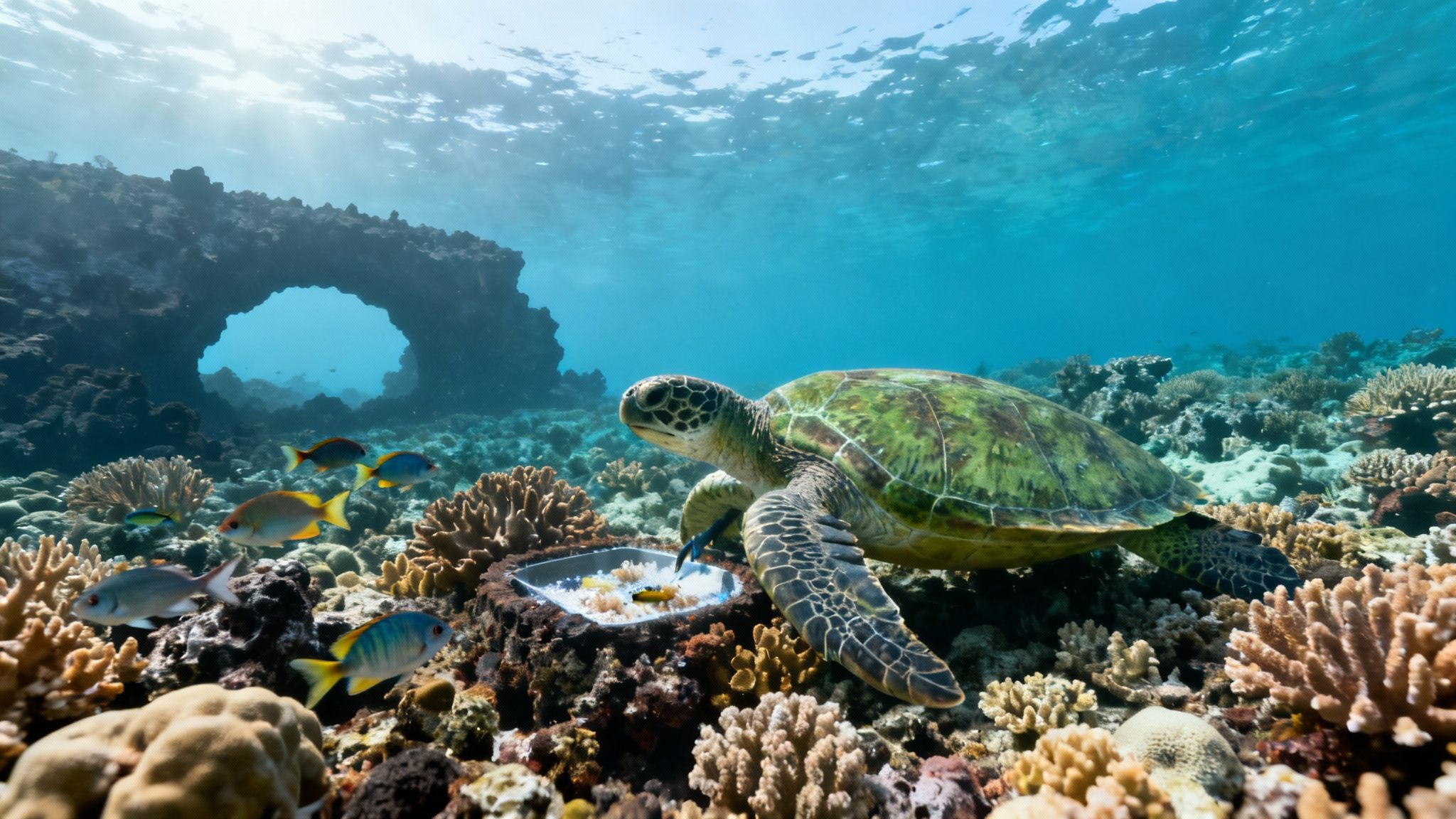
Another spot you absolutely can't miss is Turtle Pinnacle. It lives up to its name and then some. This submerged pinnacle is a natural "cleaning station" for Hawaiian Green Sea Turtles, or Honu as they're known locally. Divers get to witness a truly amazing sight: these ancient, graceful creatures queue up while surgeonfish nibble away algae and parasites from their shells.
It's a perfect example of underwater teamwork and makes for some of the best photo opportunities on the island. The top of the pinnacle comes up to about 35 feet below the surface, so it's a great dive for nearly every certification level. There's nothing quite like seeing a half-dozen turtles gliding around you.
Crescent Beach And The Blackwater Dive
For divers who love dramatic underwater scenery, Crescent Beach (also called Pu'u Ohau) is a must. The site was formed by a collapsed lava tube, leaving behind a breathtaking archway, caverns, and swim-throughs to explore. The way the sunlight plays through the underwater arches is just magical.
But if you're looking for a real adventure, nothing tops the Kona Blackwater Dive. Forget the reef—this is a journey into the deep. At night, you'll drift tethered to the boat over thousands of feet of open ocean. You're there to witness the largest migration on Earth as bizarre, bioluminescent creatures rise from the depths. It's like something out of a sci-fi film. This is an incredible, one-of-a-kind experience for divers who are comfortable in the water. If you're ready for it, you can book a Kona Blackwater Dive tour and see the mysteries of the deep firsthand.
Exploring the diverse dive sites of the Big Island is like reading different chapters of a captivating story. Each location, from the calm serenity of Kealakekua Bay to the otherworldly darkness of the blackwater dive, reveals a new and exciting part of Hawaii's underwater world.
To give you a clearer picture of what to expect, here's a quick comparison of some of the top spots.
Comparison Of Top Big Island Dive Sites
| Dive Site | Key Features | Common Marine Life | Skill Level |
|---|---|---|---|
| Kealakekua Bay | Protected marine sanctuary, pristine coral gardens, excellent visibility | Spinner dolphins, colorful reef fish, eels | Beginner to Intermediate |
| Turtle Pinnacle | Famous turtle cleaning station, underwater pinnacle structure | Hawaiian green sea turtles, surgeonfish, butterflyfish | Beginner to Intermediate |
| Crescent Beach | Lava tube formations, arches, swim-throughs | Whitetip reef sharks, eels, frogfish | Intermediate |
| Kona Blackwater | Open ocean night dive over deep water, bioluminescence | Pelagic jellies, squid, rare larval creatures | Advanced |
This is just a taste of what Kona has to offer. For divers with the training to handle more challenging conditions, there are even more adventures waiting. Specialized advanced dive tours can take you to deeper sites or those with stronger currents, showing you a side of Kona most people never get to see. With Kona Honu Divers, you can find the perfect dive for your skill level.
Choosing Your Guide To The Underwater World
Let's be honest, the quality of your scuba diving Big Island Hawaii adventure doesn't just come down to the reef itself. It really hinges on who you have guiding you. Picking the right dive operator is probably the most important decision you'll make for your trip, because it impacts everything from your safety to how deeply you connect with the incredible marine world here.
A great dive shop does so much more than just drive a boat. They're your translators for the ocean, your safety net, and passionate stewards of the very reefs you're here to see. The best ones turn a good dive into a story you'll tell for years, which is why putting a little thought into your choice pays off big time.
The PADI 5-Star Difference
When you're looking at dive shops, you might see the PADI 5-Star Instructor Development Center (IDC) designation. This isn't just a fancy sticker. Think of it as a seal of excellence that shows a deep commitment to top-tier dive education, uncompromising safety, and fantastic customer service.
PADI, the biggest name in scuba training, only gives this rating to centers that go above and beyond, offering the full spectrum of courses from your very first bubbles to training the next generation of dive instructors. Kona Honu Divers is proud to have earned this rating, so when you dive with us, you know you're with a team that's at the top of its game in both training and safety.
Why Kona Honu Divers Stands Out
Credentials are one thing, but the real magic is in the experience. Kona Honu Divers has earned its top-rated reputation by focusing on one simple idea: small groups and personal attention. We don't run crowded "cattle boats." Our trips feel more like a private charter with a group of friends.
This philosophy makes a huge difference in your day:
- More Personal Attention: With fewer divers for every guide, you get the help you need. Whether you're fine-tuning your buoyancy or just curious about a weird-looking fish, your guide is right there for you.
- A Relaxed Pace: Small groups mean no one is ever rushed. You get to truly soak in the sights and explore the dive site properly, without feeling like you're on a timer.
- Real Local Knowledge: Our guides live and breathe these waters. They know the reefs like their own backyard—from the secret octopus dens and favorite turtle cleaning stations to the most breathtaking underwater lava tubes.
We're obsessed with the details, from our custom-built dive boats designed for comfort to our meticulously maintained rental gear. It's all about making your adventure as safe and seamless as possible. If you're still weighing your options, check out our guide on how to choose a Kona dive shop for more tips on what makes a great operator.
A Commitment to Conservation
When you love the ocean this much, you feel a deep responsibility to protect it. Kona Honu Divers is a leader in marine conservation, especially when it comes to our world-famous Manta Ray Night Dive. We strictly follow the Manta Ray Green List standards, which are all about ensuring our interactions with these magnificent animals are sustainable and respectful.
Choosing an operator that puts conservation first means your dive actively helps the very ecosystem you've traveled so far to see. It ensures that this same sense of wonder will be here for divers generations from now.
This commitment means your adventure has a positive impact. You're supporting a local business that works hard to protect Kona's underwater beauty for the long haul. When you dive with Kona Honu Divers, you're more than just a tourist—you're a partner in conservation.
Your Big Island Diving Adventure Awaits
We've covered a lot of ground—or rather, a lot of ocean. You've seen what makes the Kona coast a truly world-class destination for scuba diving on the Big Island of Hawaii. We've talked about the famously calm, clear water, the incredible variety of marine life, and of course, the absolute must-do Manta Ray Night Dive.
Now, it's time to stop dreaming and start diving.
Choosing the right guide for your adventure is everything. With a trusted, safe, and environmentally-minded operator like Kona Honu Divers, you're not just booking a dive; you're ensuring the experience is as incredible as the underwater world itself. Our PADI 5-star rating and commitment to small groups mean you'll get the personal attention and safety you deserve, every single time.
Your Underwater Journey Starts Here
Those vibrant reefs, ancient lava tubes, and graceful sea creatures are out there waiting. Are you picturing yourself swimming alongside gentle giants on our legendary manta ray dive? Or maybe you're imagining a relaxed morning exploring pristine coral gardens on one of our daily diving tours. Whatever your perfect underwater day looks like, we can make it happen.
Don't just read about the magic of Kona—come and feel it for yourself. Our expert local guides live and breathe these waters, and there's nothing they love more than showing you the secrets of the reef. We're here to help you create memories that will stick with you long after you've dried off.
An adventure here is more than just a dive; it's a chance to connect with one of the most unique marine ecosystems on the planet. The first step to an unforgettable journey is choosing a dedicated and professional team to explore it with.
Kona's underwater world is calling your name. Take the plunge and book your adventure today. But don't just take our word for it—see what fellow divers are saying about their experiences with us.
Your Big Island Diving Questions, Answered
It's only natural to have a few questions when you're planning a dive trip to a new place. To help you get ready for your adventure on the Kona coast, we've pulled together some insider answers to the things divers ask us most.
What’s The Best Time Of Year To Dive In Kona?
Honestly, there’s never a bad time to dive here. The massive volcanoes on the Big Island act as a natural shield against the trade winds, keeping the Kona side of the island calm and clear pretty much year-round. It's a diver's dream.
Water temps are always comfortable, hovering around 75°F (24°C) in the winter and getting up to a toasty 80°F (27°C) by the end of summer. If you want a truly unique experience, come between December and March—that's when you can often hear the haunting songs of humpback whales during your dive. But if you're after the warmest water and glassiest seas, summer is your best bet.
Do I Need A Dive Certification To Try Scuba In Hawaii?
Not at all! You don't need to be certified to get your first taste of the underwater world. We run a program called the "Discover Scuba Dive," which is specifically designed for complete beginners who want to see what all the fuss is about.
As a PADI 5-star center, we make sure you're safe and comfortable. The experience starts with a clear safety briefing, followed by some skill practice in the water with one of our instructors. Then, we'll guide you on a real dive in a shallow, protected spot. It’s the perfect, no-pressure way to try diving. Of course, if you get hooked and want to dive deeper or with just a buddy, you'll need to complete your Open Water Diver certification.
What Kind Of Marine Life Will I Actually See?
The Big Island’s reefs are buzzing with life. On any given dive, you're almost guaranteed to see our famous Hawaiian Green Sea Turtles (Honu), massive schools of bright yellow tangs, and quirky parrotfish chomping on coral. Keep an eye out for moray eels peeking from crevices, clever octopuses, and graceful eagle rays gliding by. It’s also super common to see pods of acrobatic spinner dolphins from the boat on the way to the dive site.
And let's not forget the main event for many—the Manta Ray Night Dive. It's an almost certain encounter with these gentle giants. For those with a bit of extra luck, you might even spot bigger animals like tiger sharks, whale sharks, or pilot whales out in the blue.
What Should I Pack For My Dive Trip?
Getting your bag ready is pretty simple. The absolute must-haves are your certification card and logbook. While we have top-notch rental gear, a lot of divers prefer bringing their own mask and dive computer since they know it fits perfectly.
Besides your dive gear, here are a few other things you won't want to forget:
- Reef-safe sunscreen: This is crucial for protecting our fragile coral.
- A reusable water bottle to stay hydrated on the boat.
- A good hat and polarized sunglasses for the sunny surface intervals.
- A light jacket or hoodie to throw on after a dive when you might feel a chill.
- And definitely an underwater camera—you’re going to want proof of what you saw!
Ready to dive into the best that the Big Island has to offer? The crew here at Kona Honu Divers is excited to show you our incredible underwater world. Take a look at our full range of diving tours and book your adventure today!