
Staring into the deep blue off the Kona coast feels like looking into another world—one carved by volcanoes and brought to life by vibrant coral reefs. Scuba diving Big Island Hawaii offers some of the most unique underwater experiences on the planet, from otherworldly lava tubes and ancient arches to encounters with majestic manta rays. This is where geology and marine biology collide in the most spectacular way.
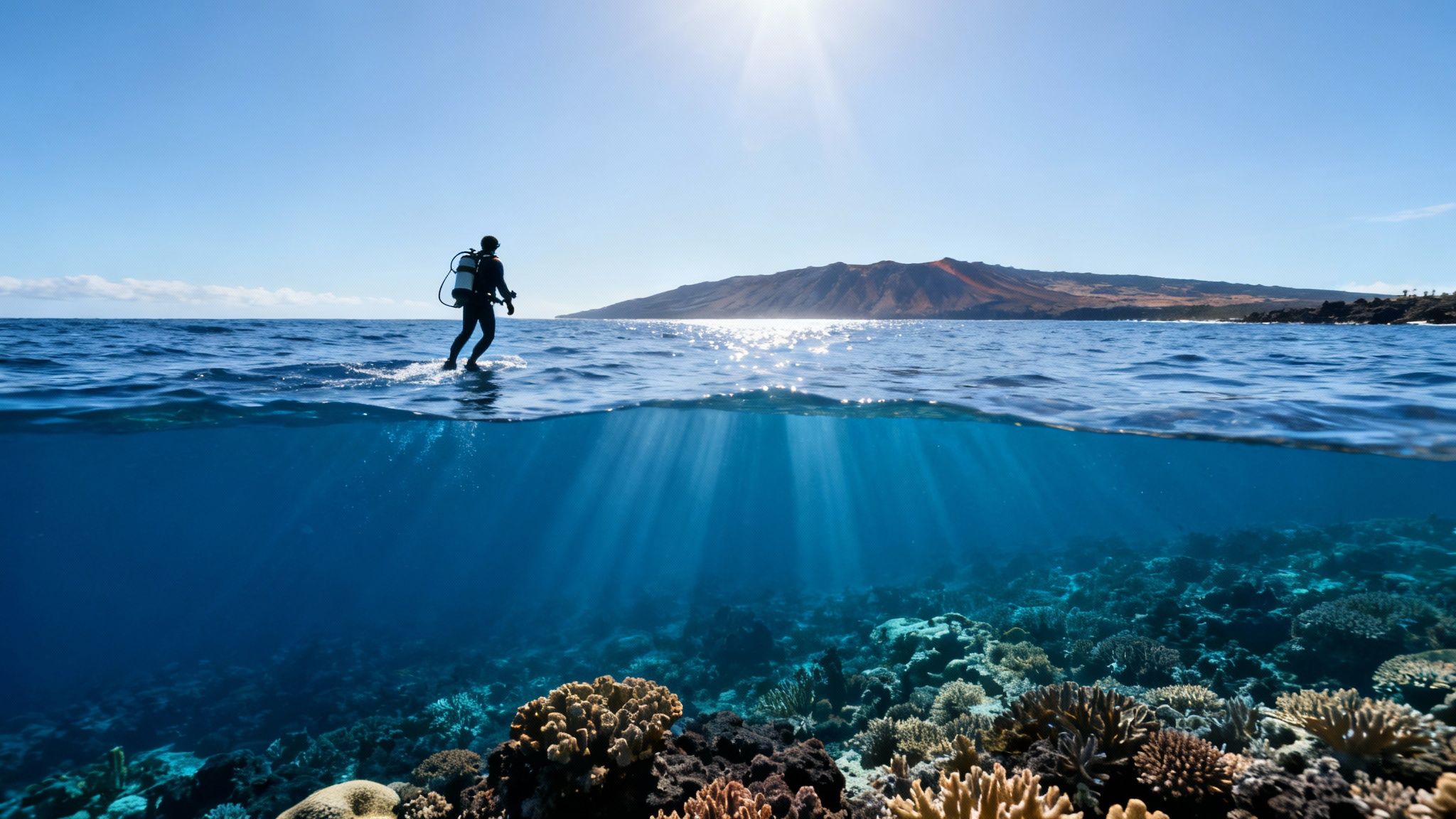
Your Ultimate Guide to Diving the Big Island
If you’re looking to explore that incredible underwater world, you've come to the right place. We're going to skip the generic lists and dive deep into what makes this island a truly world-class diving destination.
Whether you're an experienced diver looking for your next big adventure or you're just starting to get your fins wet, the Big Island has something extraordinary waiting for you. The Kona coast, in particular, is a diver's paradise. It's perfectly shielded from the big ocean swells, which means the water here is remarkably calm and clear almost all year long.
What Makes Diving Here So Special?
Planning a trip can feel like a lot, but don't worry, we've broken it all down for you. This guide covers everything you need to know.
Here’s a taste of what we'll explore together:
- Unique Volcanic Landscapes: We'll show you how ancient lava flows sculpted a playground of underwater arches, craters, and lava tubes that you just won't find anywhere else.
- The Big Two: Manta & Blackwater Dives: You'll learn all about the world-famous Manta Ray Night Dive and the mysterious Kona Blackwater Dive—two absolute bucket-list experiences that define diving in Hawaii.
- Kona's Top Dive Sites: We’ll point you to the must-see spots, from easy-going reefs perfect for beginners to more advanced sites that will challenge seasoned pros.
- Practical Trip Planning: Get our best insider advice on when to visit, what incredible marine life you can expect to see, and how to pick the perfect dive shop for your trip.
Here at Kona Honu Divers, we've built our reputation on three things: safety, small group sizes, and a genuine respect for the ocean. Our crew lives and breathes this stuff, and we're dedicated to giving you a personal and unforgettable experience.
We're just really passionate about sharing the magic of Kona's underwater world. With decades of combined experience, our team is here to make sure every single dive is safe, fun, and something you'll talk about for years. Ready to see what we're all about? Check out our acclaimed diving tours.
Alright, let's gear up and get into what makes scuba diving the Big Island an adventure you'll never forget.
What Makes Big Island Diving So Unique
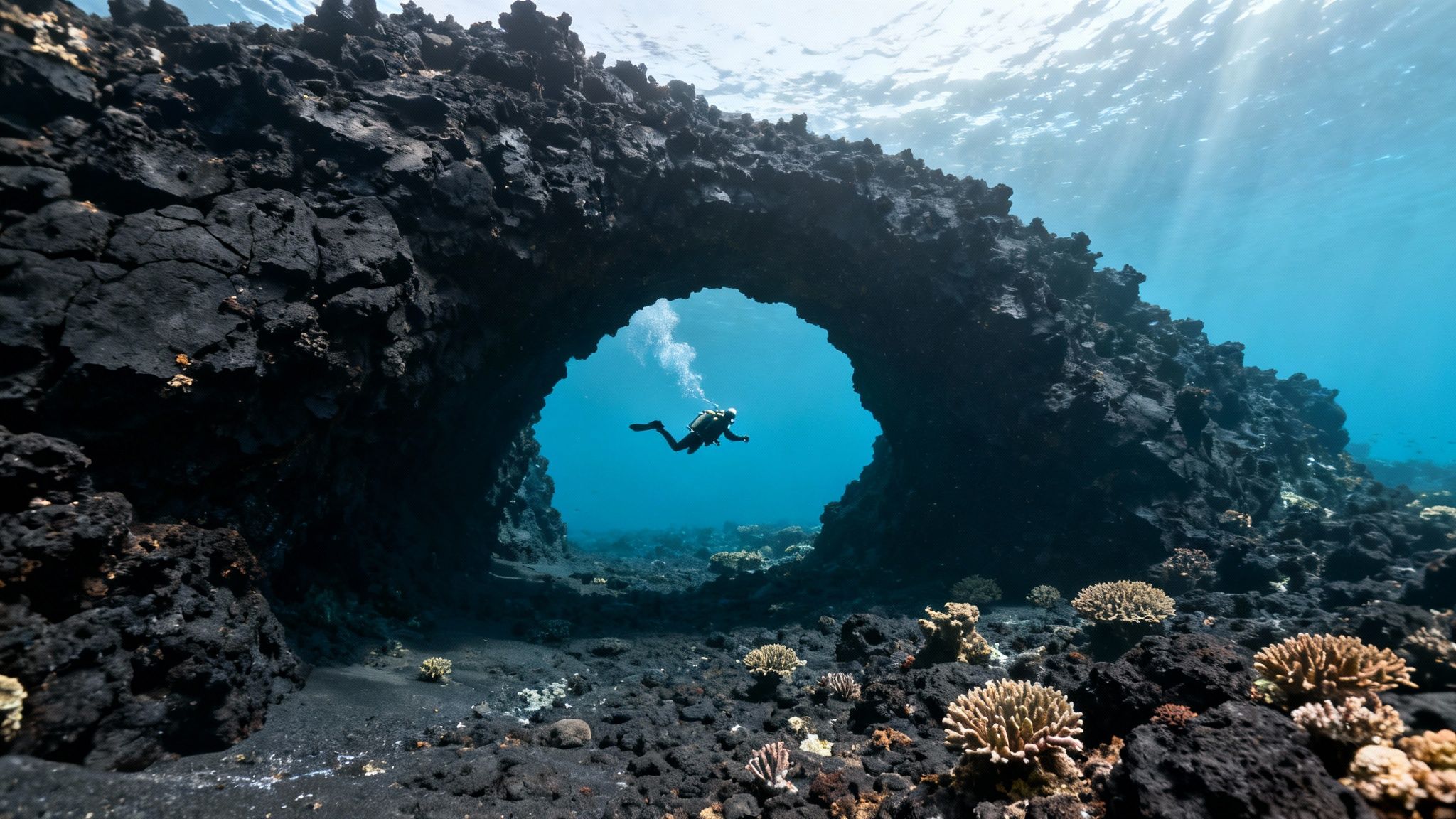
Ever wondered what it’s like to swim through an ancient volcanic tunnel? The Big Island’s underwater world is a direct reflection of its fiery past, creating a dramatic landscape of lava tubes, submerged craters, and towering pinnacles that you just won’t find anywhere else. This isn’t your typical reef dive; it’s an exploration of a geological wonderland pulled straight from a fantasy novel.
When you’re scuba diving Big Island Hawaii, you're literally navigating a world sculpted by molten rock. The formations are absolutely breathtaking, from massive archways you can swim through to intricate caverns that have become a sanctuary for all sorts of marine life.
But it’s not just about the incredible geology. The Kona coast, on the island’s western side, is naturally shielded from powerful ocean swells by the sheer size of its volcanoes. This protection creates exceptionally calm and clear conditions, making it a diver's paradise.
Pristine Conditions and Unbeatable Visibility
Picture this: you descend into the deep blue and see the reef stretching out before you with perfect clarity. That's just a typical day of diving here. Visibility often pushes past 100 feet, creating an almost weightless feeling of flying through an endless aquatic space.
These pristine conditions allow sunlight to pierce deep into the water column, lighting up the vibrant, almost fluorescent colors of the coral and the fish that call it home. This protected environment is also why the coral reef systems are so healthy. Without the constant assault of strong currents and waves, delicate coral structures can flourish, building complex habitats that are absolutely teeming with life.
It's no accident the Big Island has become a world-class scuba destination. The leeward west coast is famous for its incredible variety of dive sites, from lava tube caverns and coral gardens to dramatic pinnacles and tunnels. Protected marine sanctuaries like Kealakekua Bay, where fishing is off-limits, ensure the coral stays vibrant and the visibility remains exceptional. You can learn more about what makes this one of the planet's top-tier global diving destinations here.
A Year-Round Tropical Paradise
While many diving hot spots have distinct on and off-seasons, the Big Island offers fantastic conditions pretty much all year long. The water temperature is consistently warm and inviting, usually hovering between a comfortable 75-80°F (24-27°C). This means you can plan your underwater adventure for any month without having to worry about packing a thicker wetsuit.
This combination of factors is the perfect recipe for a world-class dive destination:
- Unique Volcanic Topography: You get to explore lava tubes, arches, and craters forged by ancient lava flows.
- Exceptional Clarity: Enjoy visibility that frequently exceeds 100 feet, offering stunning panoramic views of the entire reef.
- Sheltered Waters: The Kona coast's calm conditions make for relaxed, enjoyable dives perfect for every skill level.
- Vibrant Ecosystems: Healthy coral reefs support a dense and diverse population of marine life, from tiny tropical fish to large open-ocean species.
It’s this powerful blend of dramatic geology, pristine conditions, and abundant marine life that truly sets Big Island diving apart from anywhere else on Earth.
Whether you're exploring a shallow, sunlit reef or venturing into the deep blue, the island offers an experience that is both thrilling and profoundly serene. It’s this unique environment that keeps divers coming back year after year.
Exploring the Top Dive Sites on the Kona Coast
So, where should you actually get in the water? The Kona coast is lined with world-class dive sites, and each one has its own vibe and offers a completely different underwater adventure. This is where the Big Island's volcanic history smashes right into a thriving marine ecosystem, creating an incredible playground for divers of all stripes.
You can find everything from dramatic lava tubes and arches to peaceful, shallow coral gardens. The best part? The water here is known for being incredibly clear and calm, which makes scuba diving Big Island Hawaii a beautiful and accessible experience for just about everyone.
Let’s dive into a few of the must-see spots that put Kona on the map.
Crescent Bay (Kealakekua Bay)
Ask any local diver for a top-tier site, and they’ll probably point you to Kealakekua Bay, or Crescent Bay. It’s a protected marine sanctuary, and you can tell—the place is absolutely teeming with life.
The underwater landscape here is stunning, full of lava arches and cool caverns where you’ll often find spotted eagle rays just gliding by. Since it’s a Marine Life Conservation District, the fish are plentiful and not shy at all, which means you get some amazing up-close photo ops. The coral gardens are some of the healthiest you’ll see, making it a perfect spot for your first or fiftieth dive.
Turtle Pinnacle
If you want a near-guaranteed sighting of Hawaiian green sea turtles (the beloved honu), Turtle Pinnacle is the place to be. This spot is a natural “cleaning station,” a unique underwater day spa where turtles line up to let reef fish nibble the algae off their shells.
It's an incredible thing to witness. You can just hover a respectful distance away and watch the whole process unfold. It’s not just about the turtles, either. Keep an eye out for moray eels poking their heads out of crevices, octopus, and huge schools of bright yellow tangs. It’s a fairly shallow dive, so it’s great for divers of any certification level.
Au Au Crater
Looking for something a bit more advanced? For divers with solid skills and a taste for adventure, a site like Au Au Crater delivers. It’s a submerged volcanic crater that feels like an underwater maze, with a network of swim-throughs, arches, and ledges to explore. For more experienced diving opportunities, check out our advanced dive tour page.
This kind of structure attracts a huge variety of marine life, and you might even get a visit from larger pelagic species coming in from the deep blue. Because of the depth and potential overhead environments, you’ll need spot-on buoyancy control and to be comfortable in more challenging conditions.
Choosing the right site always comes down to your experience, what you’re hoping to see, and the ocean conditions on that particular day. The key is to go with a solid, reputable dive operator who knows these sites like the back of their hand.
With so many amazing spots, figuring out where to start can be the hardest part. For a deeper look, check out our guide on finding the best dive in Kona for what you're into.
Top Big Island Dive Sites at a Glance
To make it a little easier to plan your trip, here’s a quick rundown of our favorite spots along the Kona Coast. This table breaks down what makes each site special.
| Dive Site | Key Feature | Max Depth | Common Marine Life | Best For |
|---|---|---|---|---|
| Crescent Bay | Healthy coral, lava arches | 70 ft | Spinner dolphins, eagle rays, colorful reef fish | All Levels |
| Turtle Pinnacle | Turtle cleaning station | 60 ft | Hawaiian green sea turtles, eels, octopus | All Levels |
| Au Au Crater | Submerged volcanic crater | 80 ft | Whitetip reef sharks, large jacks, unique topography | Advanced Divers |
| Manta Heaven | Manta ray feeding site | 40 ft | Manta rays, garden eels, frogfish | Night Divers |
Think of each dive site as a different window into the underwater world created by Hawaii's fiery past. Whether you're floating alongside a graceful turtle or navigating a cavern carved by ancient lava, diving the Kona coast is an adventure you won't forget.
The World-Famous Manta Ray Night Dive
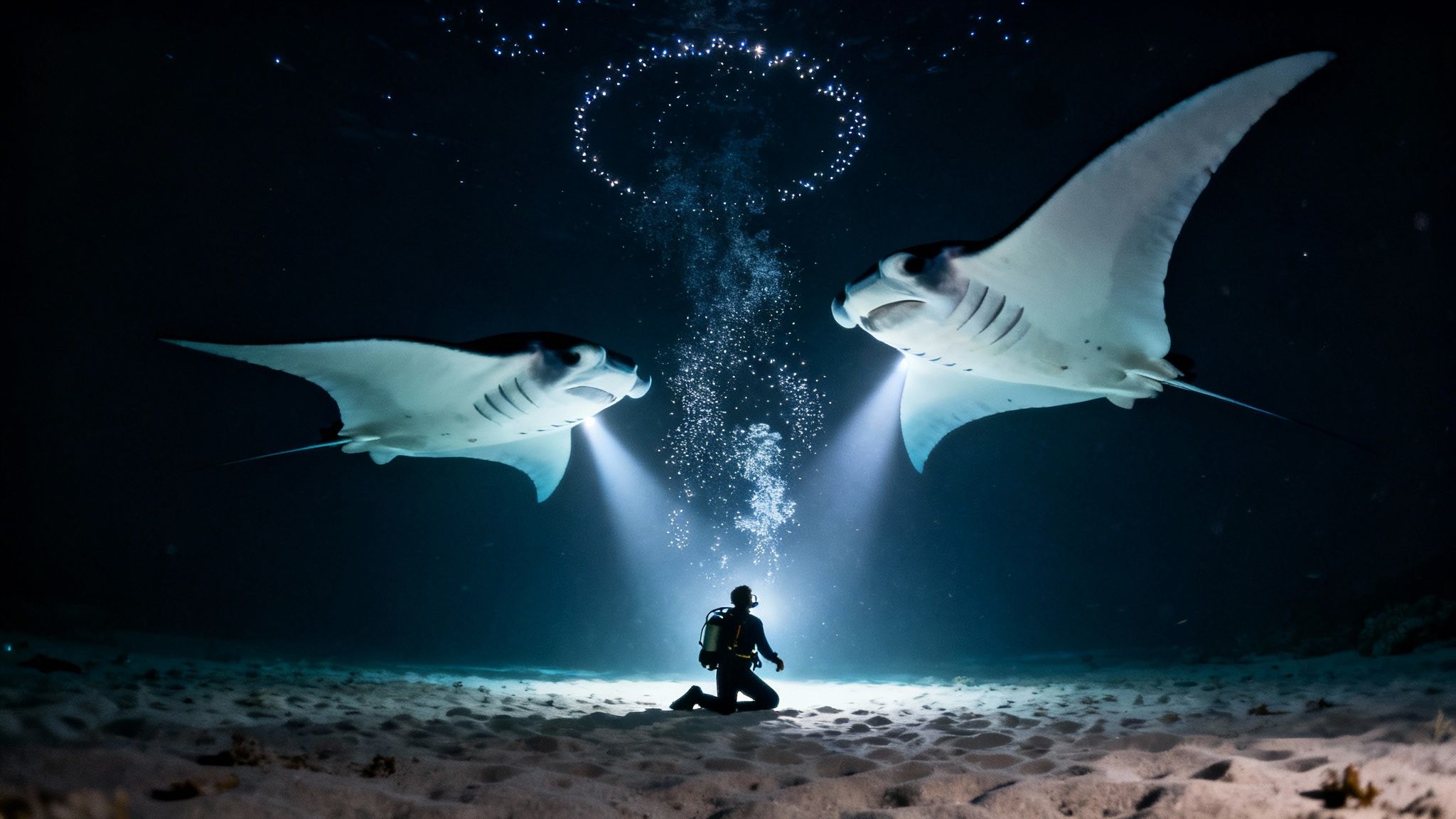
Picture this: you’re kneeling on the ocean floor, surrounded by the quiet dark of the sea. Suddenly, a giant, shadowy figure swoops in, performing a graceful barrel roll just inches above your head. This isn't a scene from a movie—it's the legendary Manta Ray Night Dive, an experience that puts scuba diving on the Big Island on every diver's must-do list.
The whole encounter is powered by a brilliantly simple concept. We set up powerful, upward-facing lights on the seabed. These light beams act like a massive bug zapper for the ocean, attracting clouds of plankton, which just so happens to be the manta rays' favorite meal.
What follows is an underwater ballet. The mantas glide in, mouths agape, dancing through the light beams to feast. And the best part? This isn't a lucky, once-in-a-lifetime sighting. The Kona coast has several established "manta sites," making this breathtaking spectacle incredibly reliable.
What to Expect on Your Dive
Your trip usually kicks off just before sunset. You’ll get a thorough briefing and then head into the water for your first dive while there's still daylight. This gives you a chance to get comfortable with the site and see the reef before the main event.
Once back on the boat, you’ll watch the sun dip below the horizon before gearing up for the night dive. Descending in the dark, you'll be led to a spot often called the "campfire," where the underwater lights create a stage. You and the other divers find a spot on the sand, point your own dive lights up, and wait for the show to begin.
And you rarely have to wait long. One manta ray appears, then two, then more. They swoop and glide, performing effortless loops right over your head. It’s a profoundly peaceful and humbling experience to be so close to these gentle giants, some with wingspans stretching over 12 feet.
How to Behave Around Manta Rays
To keep this interaction safe for both the mantas and the divers, everyone follows a strict set of rules. These aren't just suggestions; they are vital for protecting these animals and ensuring this incredible dive can continue for generations to come.
- Look, Don’t Touch: Manta rays are covered in a protective mucus layer. Touching them can rub it off, leaving them vulnerable to skin infections.
- Stay on the Seabed: We all stay on the sandy bottom. This keeps the water column clear, giving the mantas plenty of room to maneuver and feed without obstacles.
- Lights Point Up: Always aim your dive light toward the surface. This concentrates the plankton in one area, drawing the mantas right to our viewing spot.
- Mind Your Bubbles: Try to time your breathing so you don't exhale directly into a manta's face. It doesn't hurt them, but it can startle them and interrupt their graceful feeding.
By following these simple guidelines, we ensure the encounter is respectful and sustainable. For an even deeper dive into this incredible experience, check out our guide on what the manta ray night dive is all about.
Beyond the Mantas: Kona’s Other Unique Dives
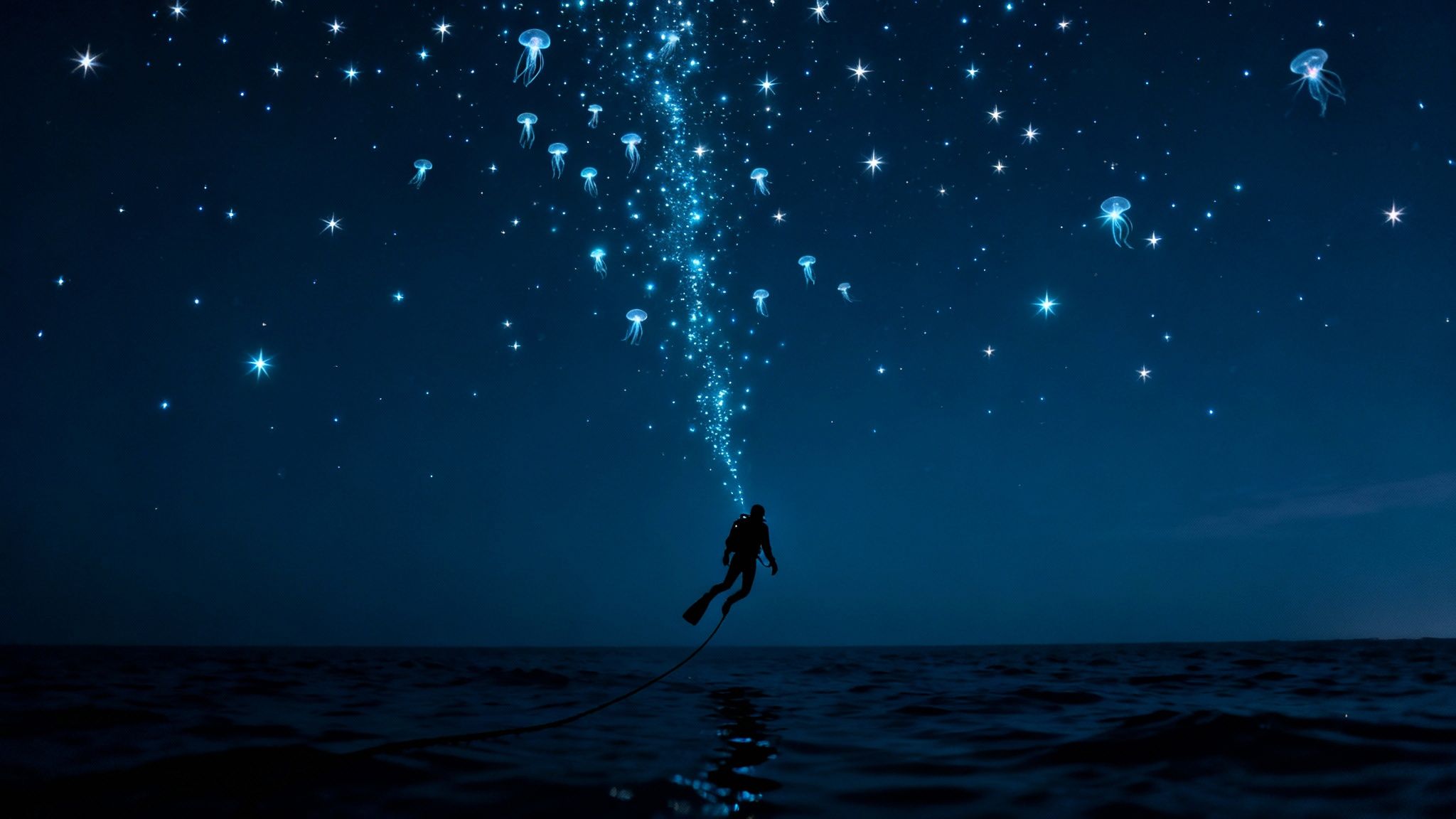
Sure, the manta rays get all the attention, and for good reason. But once you've seen their incredible ballet, you'll find that the Kona coast has even more secrets hidden in its deep blue waters. For the truly adventurous, there's a dive here that feels less like exploring the ocean and more like floating through outer space.
This is the world of the Kona Blackwater Dive, a profoundly unique experience that makes scuba diving Big Island Hawaii an unforgettable adventure.
Imagine this: you're not on a reef. In fact, there's no bottom in sight—just thousands of feet of inky black water below you. You’re tethered to the boat, drifting in the open ocean at night with only the beam of your dive light cutting through the darkness.
Out of that darkness comes a constant parade of life. You're witnessing the largest migration on planet Earth, as countless strange and wonderful creatures rise from the crushing depths to feed near the surface. Many of these organisms are in their larval stages, looking nothing like their adult selves and spending their entire lives in this open-ocean, or pelagic, zone.
A Trip into the Abyss
The whole thing is completely surreal. You're just suspended in blackness as otherworldly, often bioluminescent, life forms drift past your mask. We're talking about creatures you will simply never see on a coral reef—things like translucent larval fish, shimmering comb jellies, and squids that look like they were designed for a sci-fi movie.
This dive isn't about spotting the big stuff. It’s about appreciating the tiny, the weird, and the utterly captivating organisms that are the very building blocks of the ocean's food web.
I've heard the Kona Blackwater Dive described as an "out-of-body experience" more times than I can count. Floating in that vast, dark expanse while these incredible creatures materialize from the void is both humbling and mesmerizing. It's a dive few people ever get to try.
As you can imagine, this isn't a beginner dive. You need to be an experienced diver with rock-solid buoyancy control and a calm comfort with diving in the dark. If you're ready for an adventure that is truly one-of-a-kind, you can check out the Kona Blackwater Dive tour and see what's waiting for you in the deep.
The Freedom of Shore Diving
On the other end of the spectrum, for divers who crave a bit more independence, the Big Island has some fantastic shore diving. While boats get you to more remote and often deeper sites, shore diving lets you call the shots and explore at your own pace.
A spot like Kahalu'u Beach Park, which is often called a "snorkeling school," can be perfect for a relaxed, shallow dive to test out new gear or just brush up on your skills. It can get busy, so my advice is to go early. An early morning entry often means fewer crowds, calmer water, and plenty of fish life. Just be sure to plan your entry and exit points carefully and, of course, always dive with a buddy.
Whether you’re drifting through the cosmos on a blackwater dive or kicking along a shallow reef right from the beach, the Big Island delivers a stunning variety of underwater adventures that go far beyond the expected.
How to Choose the Right Dive Operator
Your dive operator can literally make or break your entire trip when you go **scuba diving on the Big Island of Hawaii**. Think about it: a great shop means safe, comfortable boats, expert guides who know all the secret spots, and an atmosphere that’s both fun and respectful of the ocean. A subpar one? Well, that can mean crowded boats, rushed dives, and just a stressful time when you’re supposed to be relaxing.
Choosing the right operator isn't about finding the rock-bottom price; it's an investment in your safety and enjoyment. You're putting your life in their hands, so a little homework upfront really pays off.
The good news is that the Kona coast is home to some genuinely world-class dive companies. Operators like Kona Honu Divers and Jack's Diving Locker have earned their stellar reputations over years of consistently amazing divers.
Your Pre-Booking Checklist
Before you hit that “book now” button, it pays to run through a quick mental checklist. Consider it vetting your underwater adventure guides.
Here are a few things that should be non-negotiable:
- Safety Record and Certifications: Look for a PADI 5-Star Instructor Development Center (IDC). This isn't just a fancy title; it's a high-level rating that signals a serious commitment to professional training and safety.
- Small Group Sizes: This is huge. Smaller groups mean more personal attention from your divemaster, a less crowded boat, and a much more intimate, relaxed experience underwater.
- Boat Quality and Comfort: Let's be honest, you'll be spending a fair bit of time on the boat. Check out photos of their vessels. Are they custom-built for diving? Do they look spacious, clean, and well-maintained?
- Stellar Customer Reviews: There's nowhere to hide from bad service these days. Dig into recent reviews on sites like Google to see what real customers are actually saying about their experiences.
Speaking of reviews, here's a live look at what divers are saying about their recent trips with us.
Getting Certified on the Island
If you’re not a certified diver yet, you couldn’t pick a better place to learn. The calm, clear waters of the Kona coast are the perfect natural classroom. Most top-tier shops offer everything you need to get started.
You can dip your toes in with a Discover Scuba Diving program. It's a fantastic one-day experience that gets you in the water under the direct supervision of an instructor—no certification needed. If you get hooked (and you probably will), you can roll right into your full PADI Open Water certification. For those curious about the business side of things, understanding the specialty recreation and marine industry offers great context for what makes these operations tick.
The best dive operators aren't just tour guides; they are passionate educators who want to share their love for the ocean. They prioritize marine conservation and ensure every dive is conducted with respect for the delicate reef ecosystem.
Picking the right operator is hands-down the most important decision for your dive trip. For a much deeper dive, check out how to choose a Kona dive shop in our guide. Making an informed choice is what separates a good trip from the awe-inspiring adventure you’re dreaming of.
Your Hawaii Diving Questions, Answered
Planning a dive trip to the Big Island for the first time? You’ve probably got a few questions. We get it. To make sure you feel totally confident before you even pack your bags, we’ve put together answers to the queries we hear most often.
Think of this as your pre-trip briefing. Getting these details ironed out now will make the whole process—from booking to your first giant stride—a breeze.
When Is the Best Time of Year to Dive?
One of the absolute best things about diving on the Kona coast is that it’s fantastic all year long. Seriously. The water stays in a beautifully consistent range of **75-80°F (24-27°C)**, so you can definitely leave that thick wetsuit or dry suit at home.
If you're looking for the calmest, glassiest conditions, the summer months (May to October) are prime time. But don't count out the winter! From November to April, the swells might be a bit bigger, but the Kona side of the island is so well-protected that the diving stays great. Plus, winter brings a truly unforgettable bonus: it's humpback whale season. There is nothing—and I mean nothing—like hearing their songs echo through the water while you're on a dive.
Do I Need to Be Certified to Dive in Hawaii?
Nope, not at all! If you’ve never been diving before but want to see what all the fuss is about, you’re in the right place. Most local dive shops, ourselves included, offer a “Discover Scuba Diving” experience.
It’s a fantastic, no-pressure introduction. You’ll get a quick, straightforward lesson on the basics of safety and how the gear works from a certified instructor. Then, you'll head out for a shallow dive under their direct supervision. It's the perfect way to get your fins wet and see the reefs without committing to a full certification course.
What Marine Life Can I See?
The Big Island is teeming with incredible marine life, and it goes way beyond our world-famous manta rays. On a typical dive, you’re almost guaranteed to spot Hawaiian green sea turtles (*honu*) munching on algae, different kinds of moray eels peeking out from their rocky homes, and super-smart octopuses changing color right before your eyes.
You'll also be swimming through clouds of colorful reef fish like parrotfish, butterflyfish, and Moorish idols. Keep an eye on the sandy patches, and you’ll often find whitetip reef sharks taking a nap. Look out in the blue, and you might see majestic spotted eagle rays cruise by. And if you're really lucky, a pod of acrobatic spinner dolphins might even escort the boat. For a truly unique adventure, the Kona Blackwater Dive shows you a bizarre and beautiful world of deep-water creatures that only come up at night.
Alright, now that you have the inside scoop, you're ready to start planning an unforgettable diving tour. Here at Kona Honu Divers, sharing Hawaii's underwater world with people is what we live for. Check out our full lineup of award-winning diving tours, and let’s go make some bubbles together.