
When people talk about world-class scuba diving, the Big Island of Hawaii should be at the top of their list. Its underwater world, carved by ancient lava flows, is a breathtaking playground of dramatic lava tubes, massive archways, and some of the most vibrant coral reefs you'll ever see. Diving here isn't just a sport; it's an adventure into a completely different kind of landscape.
Why the Big Island is a Premier Diving Destination
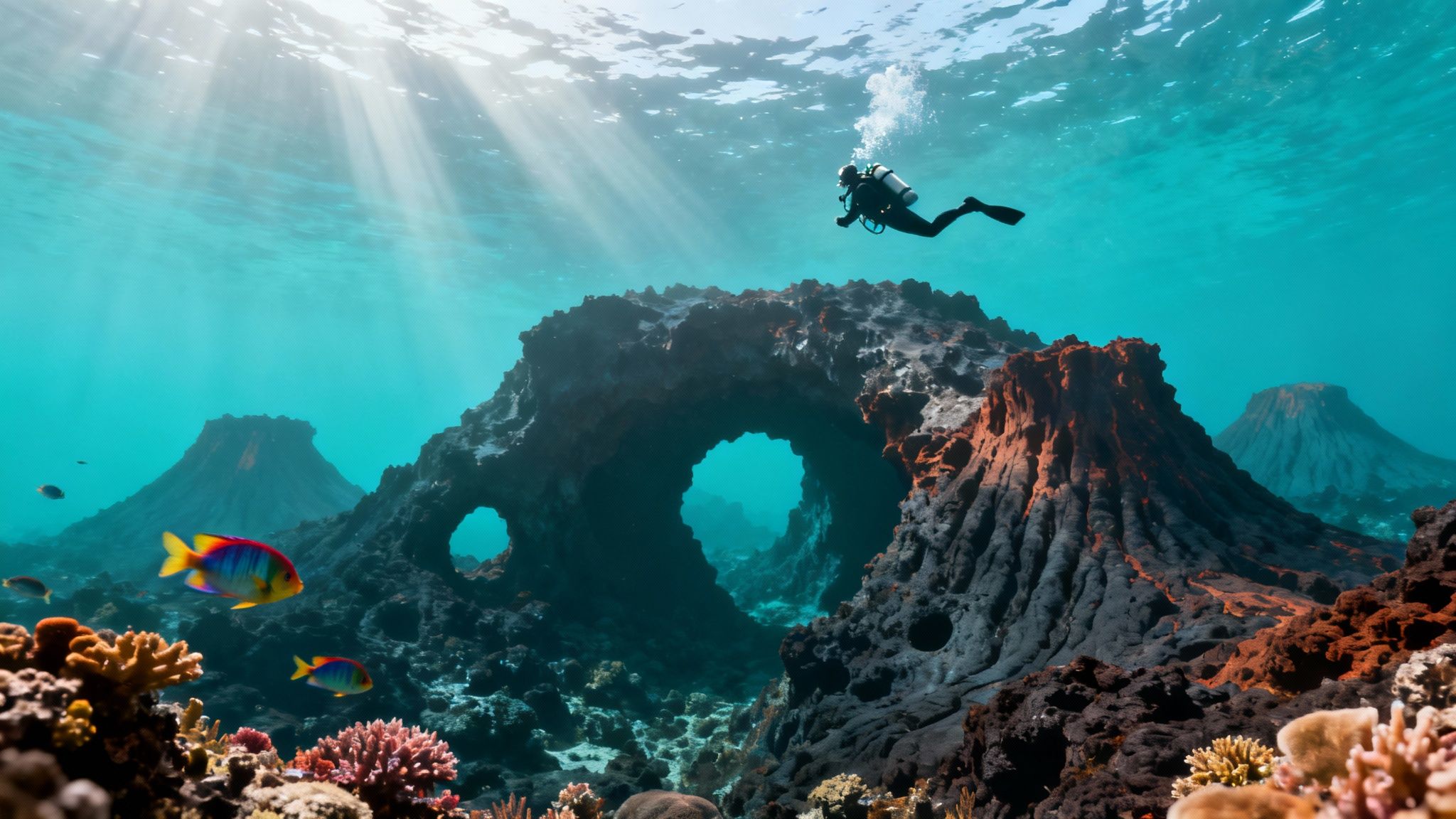
The secret to the Big Island's magic lies in its volcanic heart. Forget flat, sandy bottoms; the Kona coast offers a dynamic tapestry of submerged lava formations. These aren't just rocks—they’re intricate structures full of swim-throughs, caverns, and ledges that have become bustling neighborhoods for all sorts of marine creatures.
This unique underwater topography is exactly why the island is a global hotspot for diving. It's not a secret, either—over 200,000 scuba dives happen here every year, supported by a fantastic community of professional dive shops. The volcanic structures aren't just for show; they create the perfect foundation for some of the healthiest coral reefs in all of Hawaii, a fact you can dive deeper into through in-depth industry blogs.
Unbeatable Diving Conditions
One of the best parts about planning a dive trip here is how predictable and amazing the conditions are. The island’s Kona coast sits on the leeward side, meaning it's sheltered from the strong trade winds that can stir up other coastlines. The result? Exceptionally calm, clear water pretty much year-round.
This creates an underwater playground where visibility often soars past 100 feet. You're not just looking at the reef; you're immersed in it, able to spot tiny critters hiding in crevices and see larger animals approaching from far away.
The water temperature is another huge plus. It stays in that perfect "just right" range all year, hovering around 75°F (24°C) in the winter and warming up to a balmy 80°F (27°C) in the summer. You can book a trip for January or July and know you'll be diving in comfort.
To give you a better idea, here's a quick look at what to expect throughout the year.
Big Island Diving Conditions At A Glance
| Season | Water Temperature | Visibility | Key Marine Life Sightings |
|---|---|---|---|
| Winter (Dec-Mar) | 75-77°F (24-25°C) | 80-100+ ft | Humpback whales (offshore songs), manta rays, turtles |
| Spring (Apr-Jun) | 76-78°F (24-26°C) | 100+ ft | Reef sharks, spinner dolphins, vibrant reef fish |
| Summer (Jul-Sep) | 78-80°F (26-27°C) | 100+ ft | Manta rays, eagle rays, large schools of fish |
| Fall (Oct-Nov) | 77-79°F (25-26°C) | 80-100+ ft | Turtles, eels, occasional tiger shark sightings |
As you can see, there's really no bad time to jump in the water here.
A Sanctuary for Unique Marine Life
Thanks to its remote location in the middle of the Pacific, the Big Island is a cradle of evolution. A huge percentage of the reef fish you’ll see are endemic, meaning this is the only place on the entire planet you can find them. It makes every dive feel like a treasure hunt.
You’ll be sharing the water with an incredible cast of characters, including:
- Green Sea Turtles (Honu): Seeing these gentle giants resting on the reef or gliding effortlessly past you is a quintessential Hawaiian experience.
- Colorful Reef Fish: The dark lava rock provides a stunning backdrop for vibrant schools of yellow tang, butterflyfish, and parrotfish. It's a living kaleidoscope.
- Majestic Megafauna: Encounters with playful spinner dolphins, sleek reef sharks, and the world-famous manta rays are what make Kona diving tours truly unforgettable.
It’s this powerful combination of dramatic volcanic scenery, near-perfect conditions, and a one-of-a-kind marine ecosystem that cements the Big Island's reputation as a destination every diver needs to experience.
The World-Famous Manta Ray Night Dive Experience
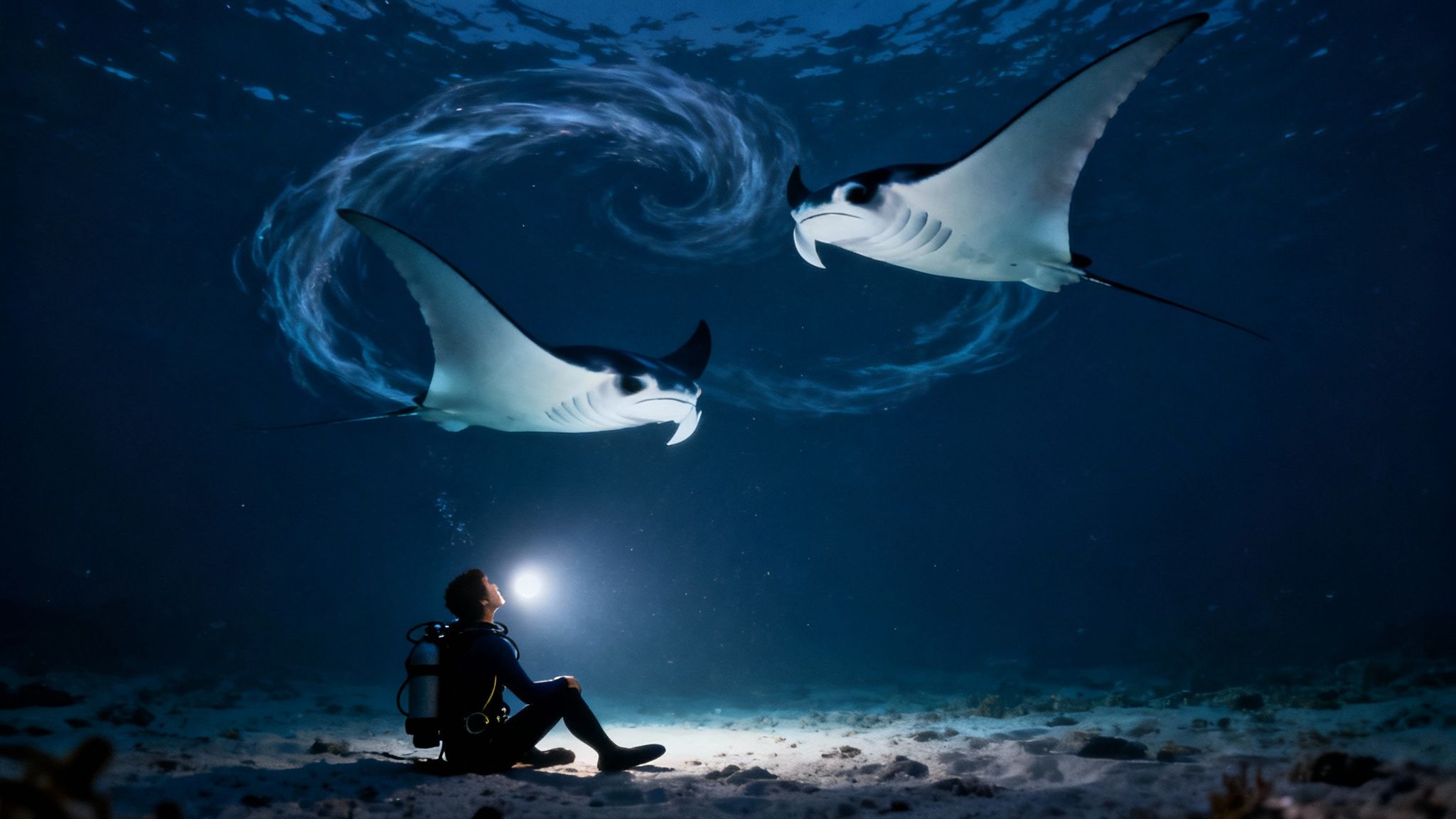
When people talk about scuba diving on the Big Island of Hawaii, one dive inevitably comes up—the manta ray night dive. It’s more than just a dive; it’s a genuine spectacle and something you’ll be talking about for the rest of your life.
Picture this: you descend into the warm, dark Pacific, the only light coming from the beams of your dive torches. You and your group settle on the ocean floor, forming a circle and pointing your lights straight up. This creates a massive column of light, and that’s where the magic begins. The light attracts swarms of microscopic plankton, which happens to be the mantas' favorite meal.
Essentially, you’re setting up an all-you-can-eat buffet. Then, they arrive. Massive, gentle shadows emerge from the blackness, gliding into the light on wingspans that can stretch over 12 feet. They put on a silent, hypnotic ballet, swooping and barrel-rolling just inches above your head to gulp down the plankton. It's a surreal and powerful experience that has rightfully put Kona on the map as a world-class diving destination.
What Makes This Dive So Unique
You can see mantas in other parts of the world, but it’s usually at a "cleaning station" where they’re just getting parasites picked off by smaller fish. The Kona experience is completely different because it's a feeding event—and that’s far more dynamic. The mantas aren't just passing through; they are actively interacting with the scene the divers create.
What’s even better is how reliable this dive is. At one of the most famous sites, Manta Village, dive operators report seeing mantas on roughly 85–90% of their trips. During the busy season, it's pretty much a nightly guarantee, with groups often seeing anywhere from a handful of rays to a whole squadron of them. If you're curious, many local shops keep a log of nightly sightings. You can even check out the manta ray logs to see what the activity has been like recently.
The experience is often described as watching a stealth bomber gracefully dance through the water. It’s impossible to convey the feeling of watching these massive fish maneuver with such precision and grace right before your eyes.
How to Have the Best and Safest Manta Encounter
This isn't just about showing up; it's about respecting the animals and the environment. A good dive operator will give you a thorough briefing, but the core rules are simple and designed to keep both you and the mantas safe.
- Observe, Don't Touch: This is the golden rule. Manta rays have a delicate mucus coating on their skin that protects them from infection. Touching them can strip this layer off and cause serious harm.
- Stay on the Bottom: Your guide will have you kneel or lie on the sandy bottom. This keeps the water column clear for the mantas to do their thing without bumping into anyone.
- Point Your Light Up: Keep your torch beam aimed toward the surface. This draws the plankton up and away from the divers, creating the feeding zone high above you.
- Nail Your Buoyancy: Good buoyancy control is crucial. You need to stay put without stirring up the sand or accidentally floating up into the mantas' flight path.
Choosing the Right Operator for a Memorable Dive
Who you dive with really matters on this trip. A top-notch operator like Kona Honu Divers doesn't just get you in the water; they focus on safety, ethical practices, and the well-being of the mantas. They give detailed briefings, keep group sizes manageable, and have experienced guides who know the site and the animals' behavior inside and out.
Their manta ray dive tour is specifically designed to give you a front-row seat to the show. By championing small groups and responsible interactions, they deliver an unforgettable night while helping to protect this incredible natural wonder for generations to come.
Exploring the Best Dive Sites on the Kona Coast
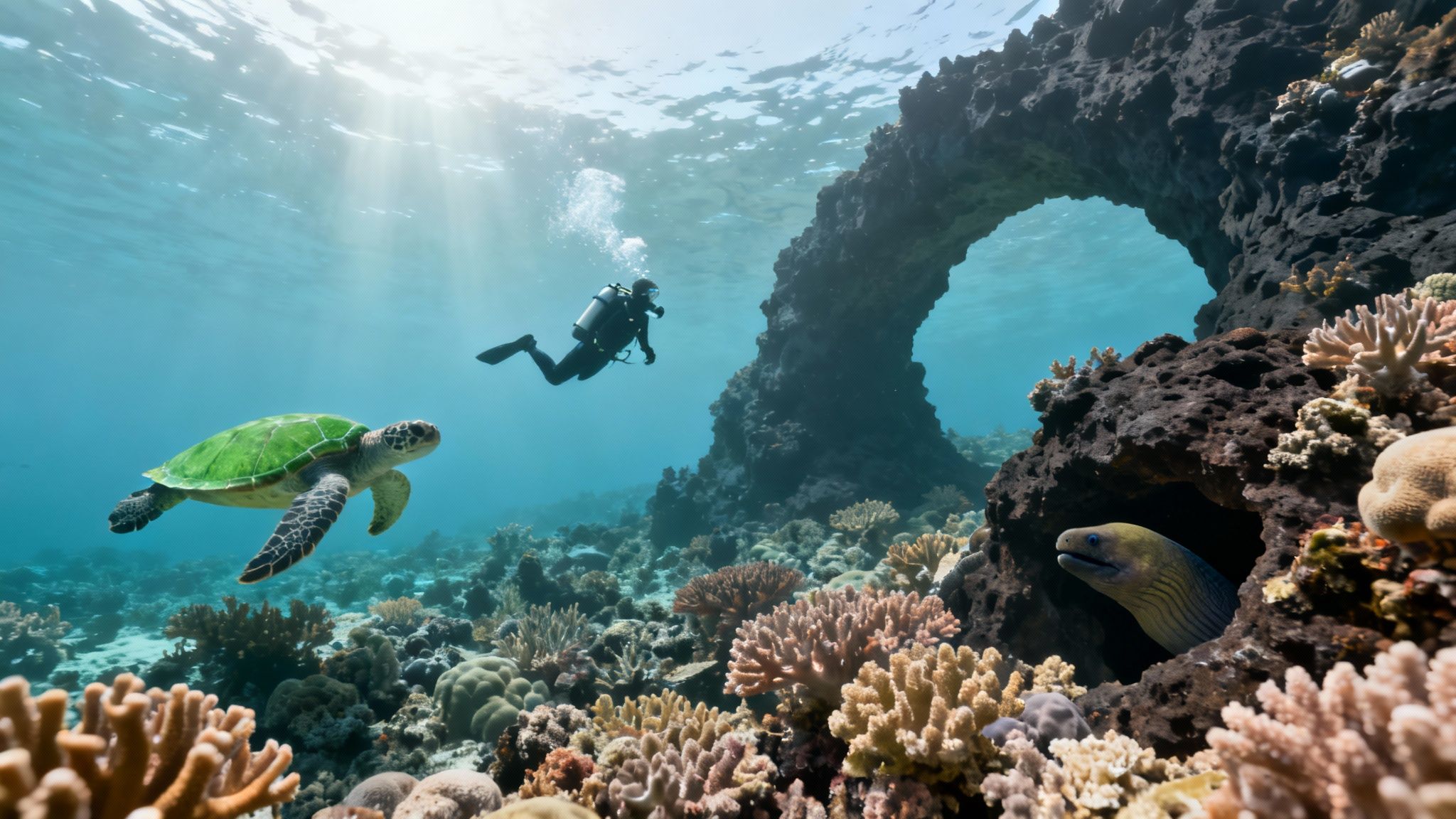
Look, the manta ray night dive is an absolute showstopper, and for good reason. But it's just one piece of the incredible puzzle that is scuba diving on the Big Island of Hawaii. The Kona coast is stacked with dozens of world-class dive sites, each offering a totally different glimpse into the island's fiery volcanic past and its vibrant marine life today.
Once you venture beyond the mantas, you start to see the real depth of what Kona has to offer. The leeward side of the island is blessed with calm, clear waters, giving you a front-row seat to dramatic underwater landscapes and an explosion of life. Every reef tells its own story, carved from ancient lava and painted with a kaleidoscope of colorful fish.
Choosing the right dive charter is your key to unlocking this underwater playground. With a professional guide showing you the way, you can safely explore these amazing environments and uncover the hidden spots that make Kona a top-tier diving destination.
Kealakekua Bay: A Protected Paradise
Kealakekua Bay isn't just another dive site; it's a sanctuary. This is where Captain James Cook first landed in Hawaii, and today it’s a protected Marine Life Conservation District. That protection means the underwater ecosystem has been allowed to flourish, making it one of the most pristine and healthy reef systems in the entire state.
The corals here are ridiculously healthy, creating a busy, vibrant home for an unbelievable amount of marine life. You can expect to swim through massive schools of yellow tang, see ornate butterflyfish flitting about, and watch curious parrotfish munching on the reef. The water is typically calm and protected, making it a fantastic spot for divers of all levels, with most of the action happening between 30 and 80 feet.
What really sets this place apart is the sheer biodiversity. The bay is home to over 400 species of fish and 100 types of algae. Even more amazing, about 25% of the reef fish you’ll see are endemic—meaning you can’t find them anywhere else on the planet. It’s common to run into green sea turtles, reef sharks, and spinner dolphins. If you’re here in the winter, you can often hear the haunting songs of humpback whales echoing through the water on your dive.
Puʻuhonua O Hōnaunau: The Famous "Two Step"
Almost every diver on the island knows "Two Step." It gets its nickname from the easy, two-step entry point on the lava rock, making it one of the most popular and accessible shore dives on the Big Island. Located right next to a National Historical Park, it’s a favorite for divers and snorkelers alike thanks to its calm conditions and jam-packed reef.
The underwater terrain is a classic Kona mix of beautiful coral gardens, cool lava rock formations, and sandy patches. You can explore little caverns and swim-throughs where moray eels and octopuses love to hang out. The shallow reef is just teeming with life, making it a perfect spot for photographers who want to take their time and get that perfect shot.
What you'll see at Two Step:
- Turtles, guaranteed. You’ll almost always find green sea turtles, or honu, grazing on algae or just chilling out on the reef.
- Playful dolphins. Pods of spinner dolphins often cruise into the bay in the mornings to rest and play, which is a truly magical sight.
- Tons of fish. Expect to see everything from triggerfish and wrasses to huge schools of surgeonfish.
Golden Arches: A Photographer's Dream
If you're into dramatic underwater topography, Golden Arches is a site you absolutely can't miss. It's named for its magnificent lava archways, and swimming through these massive, ancient formations feels like you're exploring a sunken cathedral. It's an unforgettable experience.
The arches themselves are crusted with colorful sponges and corals. When the sunlight streams through the openings, it creates these incredible light beams that make for stunning photos. The site is also a great place to spot unique critters like frogfish, scorpionfish, and the elusive longnose hawkfish hiding out in the black coral bushes.
This site is a powerful reminder that you're diving on the slopes of one of the largest mountains on Earth. You can see the island's volcanic origins everywhere, where fiery creation meets the tranquil sea.
Golden Arches is just one of many sites that show off the island's one-of-a-kind geology. If you're fascinated by these kinds of dramatic landscapes, it’s worth learning more about the top reasons to dive the Big Island, where volcanic features are the star of the show. From pristine bays to dramatic arches, the Kona coast has an adventure waiting for every diver.
Advanced and Unique Night Diving Adventures
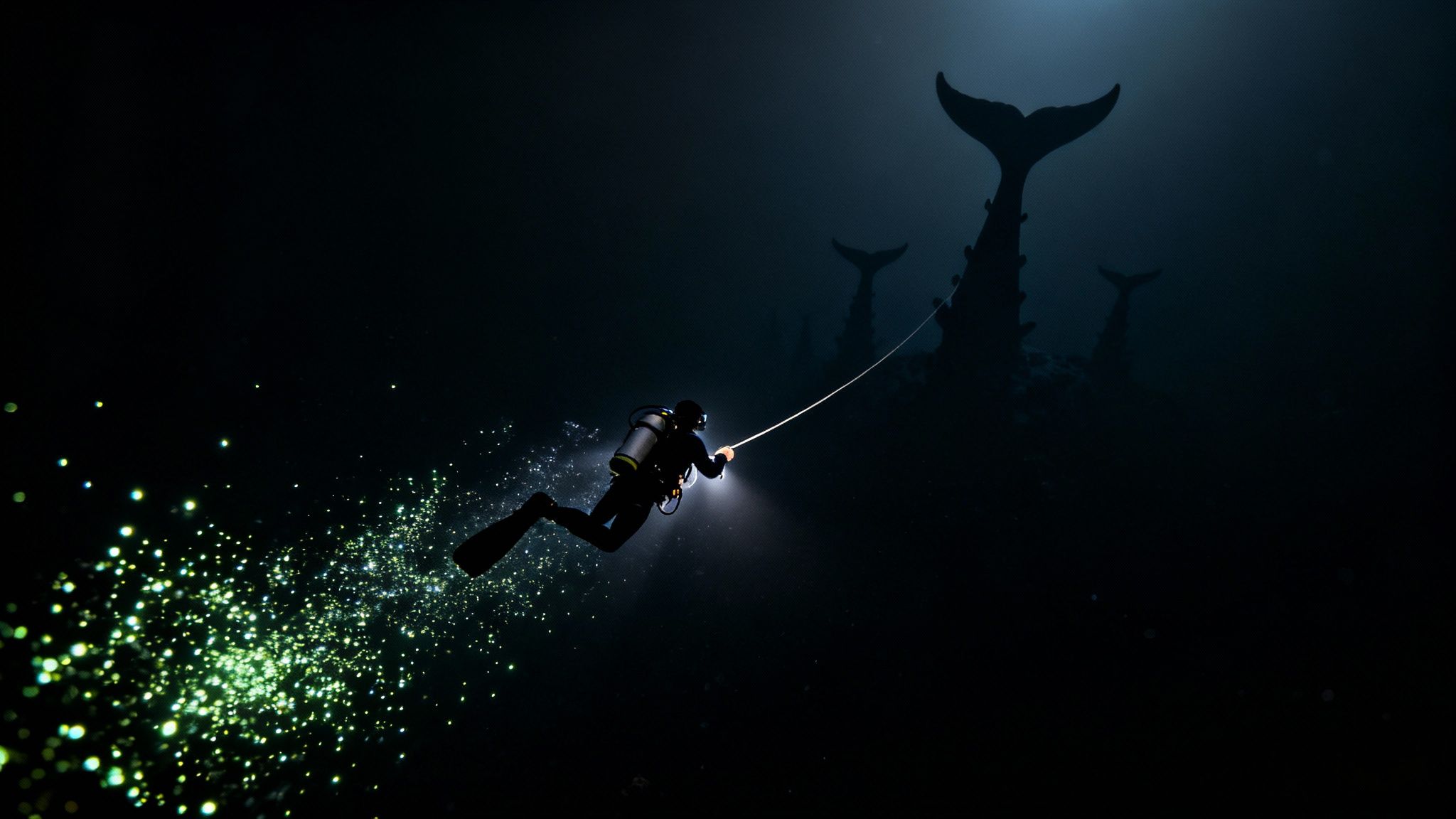
Sure, the manta ray dive is an absolute must-do, a true spectacle you’ll never forget. But for experienced divers, that's just scratching the surface of what scuba diving Big Island Hawaii has to offer after dark. If you're looking for a challenge that feels like you're exploring another planet, the world-renowned Kona Blackwater Dive is it. It’s a surreal, almost psychedelic experience that many of us consider the pinnacle of night diving.
Picture this: you're miles from shore, suspended in the pitch-black open ocean with thousands of feet of water beneath you. Tethered to the boat, you're essentially an astronaut drifting through inner space, watching as a parade of bizarre and beautiful creatures rises from the abyss. This is no reef dive; you're witnessing the planet's largest daily migration, live and in person.
Every night, under the cover of darkness, countless deep-water organisms journey toward the surface to feed. Many are bioluminescent, creating their own light in the inky blackness. The result is a mesmerizing light show put on by tiny, alien-like life forms you simply won't see anywhere else.
The Kona Blackwater Dive Experience
The Kona Blackwater Dive is a highly specialized adventure that demands skill, confidence, and a calm mind. You’ll drift with the current, attached by a line to a float system on the surface which keeps you connected to the boat and your group. Bright lights are lowered into the water, acting like a beacon to attract these deep-sea travelers and draw them into view.
You’ll see things that look like they came straight out of a science fiction movie:
- Larval Fish and Eels: The transparent, ribbon-like early life stages of creatures that will one day live on the reef.
- Bioluminescent Jellies: Pulsating jellies and ctenophores that glitter and flash with their own living light.
- Cephalopods: Tiny, iridescent squid and octopuses actively hunting in the dark.
- Pteropods: Delicate "sea butterflies" that flap their wing-like feet to gracefully move through the water.
Because you're in the open ocean in complete darkness with deep water below, this dive is strictly for experienced divers. Rock-solid buoyancy control and being comfortable in the dark are non-negotiable for a safe and mind-blowing trip.
Pushing Your Limits with Advanced Dive Tours
Beyond the blackwater experience, the Big Island is a playground for seasoned divers ready to explore more challenging environments. The dramatic volcanic topography of the Kona coast has created deep walls, ancient lava tubes, and towering pinnacles—all perfect for divers with advanced certifications who want to explore greater depths and more dynamic conditions.
An advanced dive isn't just about going deeper; it’s about refining your skills to safely navigate more complex underwater landscapes. It’s about understanding currents, managing your gas supply with precision, and having the confidence to explore sites that are off the beaten path.
Shops like Kona Honu Divers run a dedicated advanced dive tour specifically for divers who are ready for that next level. These trips head to sites with deeper profiles and more intricate structures, providing a serious thrill for those who have already mastered the fundamentals. Joining an advanced trip also means you’re diving with others of a similar skill level, led by a guide who knows how to safely introduce you to the island's more demanding—and rewarding—underwater sites.
How to Plan Your Big Island Dive Trip
A truly epic scuba diving trip to the Big Island doesn’t just happen; it starts long before your fins ever touch the water. A little bit of thoughtful planning is what separates a good vacation from an absolutely unforgettable one. It’s all about figuring out the best time to visit, what you need to pack, and how to structure your dives to squeeze every drop of adventure out of this volcanic paradise.
The Big Island is a fantastic year-round diving destination, but the seasons do bring subtle differences. If you come during the summer (roughly June to September), you’ll usually find the calmest seas and the warmest water, often getting up to a toasty 80°F. It’s pure bliss.
But winter (December to March) has its own special kind of magic—it's humpback whale season. While actually seeing a whale underwater is the scuba equivalent of winning the lottery, hearing their haunting songs echo through the water during a dive is an experience that will stay with you forever. It’s powerful, humbling, and uniquely Hawaiian.
Boat Dives vs. Shore Dives
One of the best things about diving here is the sheer variety. You have world-class options whether you’re jumping off a boat or wading in from the beach, and each offers a totally different vibe.
Shore diving, especially at legendary spots like "Two Step," gives you incredible freedom. You're on your own schedule. Feel like an afternoon dip? Just gear up and walk right into a vibrant aquarium. It’s that easy.
But to really see what the Big Island has to offer, you need to get on a boat. A boat charter is your ticket to the most dramatic and remote sites—pristine coral gardens, deep volcanic walls, and hidden lava tubes you simply can't reach from the shore. This is how you access the island's most spectacular underwater scenery. Of course, boat logistics make it important to stay nearby, so check out our guide on the best places for divers to stay on the Big Island to make your mornings easier.
What to Pack for Your Underwater Adventure
Knowing what to bring makes all the difference in your comfort and preparedness. While you can always rent excellent gear, there’s nothing like the familiar fit of your own equipment. For Hawaiian waters, a 3mm full wetsuit is usually the sweet spot for most people. If you know you run cold or you're planning on doing multiple night dives (and you should!), you might be happier in a 5mm.
To make sure you don't forget anything important, here's a handy checklist to get you started.
Big Island Dive Trip Packing Checklist
Packing the right gear ensures you’re ready for anything the Pacific throws your way, from sunny boat rides to mesmerizing night dives.
| Category | Essential Items | Optional/Recommended Items |
|---|---|---|
| Dive Gear | Mask, snorkel, fins, BCD, regulators, dive computer. | Dive light (even for day dives), safety sausage (SMB), underwater camera. |
| Exposure | 3mm or 5mm full wetsuit, dive booties. | Hood or hooded vest for extra warmth, rash guard for sun protection. |
| Apparel | Swimsuits, t-shirts, shorts, light jacket for boat rides. | A warm hat for after dives, sandals, a nice outfit for dinner. |
| Personal | Reef-safe sunscreen, sunglasses, hat, reusable water bottle. | After-sun lotion, motion sickness medication, dry bag for electronics. |
| Documents | Diver certification card, logbook, passport/ID, travel insurance. | A good book for surface intervals, a waterproof phone case. |
This list should cover just about everything you need for a comfortable and well-equipped dive trip.
Pro Tip: Booking your dives well in advance is the single most important thing you can do. The best boats, especially for the world-famous manta ray night dive, fill up weeks, sometimes even months, ahead of time.
Locking in your spot early means you won't get left on the dock. Highly-regarded operators like Kona Honu Divers are known for their incredible service and small, personal groups, which is why their trips are always in high demand. A little bit of forward-thinking guarantees you a spot on the boat and sets the stage for a safe, amazing, and truly memorable underwater journey.
Choosing the Right Dive Operator in Kona
Let’s be honest: the dive sites themselves are only half the equation when you’re scuba diving on the Big Island of Hawaii. Who you dive with makes all the difference. The right dive operator can take a good day of diving and make it absolutely unforgettable, while the wrong one can leave you feeling like just another number on a crowded boat.
Think of your dive operator as your underwater concierge. They’re your guide, your safety team, and your ticket to experiencing the absolute best of what Kona has to offer.
A top-notch operation puts safety above all else—no exceptions. This isn’t just about having the right gear on board; it’s about a culture of safety. You'll see it in their well-maintained, comfortable boats and hear it in the clear, detailed dive briefings they give before you even think about getting in the water. When you feel completely secure, you can truly relax and just soak in the magic unfolding around you.
What to Look for in a Kona Dive Shop
Beyond safety, the real standouts are the shops whose passion for the ocean is contagious. Their dive guides do more than just point at a passing turtle; they’re marine life experts who can share fascinating details about fish behavior, the health of the coral reefs, and the volcanic geology that shaped the very sites you’re exploring.
Here are a few things that separate the great from the good:
- Small Group Sizes: This is a big one. Smaller groups mean more personalized attention from your guide and a much more peaceful, intimate encounter with the marine life. No one wants to fight a crowd for a glimpse of an octopus.
- Experienced Crew: Look for a team that knows these waters like the back of their hand. They understand the local currents, know the secret spots, and can get you to the right place at the right time.
- Commitment to Conservation: The best operators are guardians of the reef. Many, like us at Kona Honu Divers, hold a PADI Green Star Award. This isn't just a plaque on the wall; it's a sign of a deep commitment to diving in a way that protects our ocean for years to come.
The Kona Honu Divers Difference
This is where we really set the bar. The entire Kona Honu Divers experience is built from the ground up to be safe, personal, and something you'll talk about for years. Our professional crew is known for their expertise, but also for a genuine focus on service that makes every single diver feel welcome and well-cared-for.
We insist on small groups for all our Kona diving tours. It just creates a better, more personal vibe on the boat and under the water. This approach not only improves your experience but also helps minimize our footprint on the delicate marine ecosystems we love.
Our reputation is everything to us, and it’s one built on trust, safety, and a true passion for sharing Kona's underwater world. If you're doing your homework, check out our guide to the top-rated Kona dive shops to see how different operators compare.
Your Big Island Diving Questions Answered
As we wrap up our guide to scuba diving Big Island Hawaii, let's tackle some of the questions we hear most often from divers. Getting these details sorted out ahead of time is one of the best ways to make sure your underwater adventure is a smooth one.
Do I Need to Be Certified to Try Scuba Diving?
Nope, you don't! While you'll need a certification for our regular diving tours, you can absolutely get a taste of the underwater world without it.
We offer a "Discover Scuba Diving" experience, which is the perfect way to test the waters. You'll learn the essential skills from an instructor in a controlled setting before heading out for a real, shallow ocean dive with them right by your side.
What Thickness of Wetsuit Should I Wear in Hawaii?
The water here stays pretty comfortable year-round, hovering between 75°F (24°C) and 80°F (27°C). For most people, a 3mm full wetsuit is the sweet spot—it keeps you warm without feeling bulky.
If you know you get chilly easily or plan on doing multiple dives in one day (especially the manta ray night dive!), you might appreciate the extra warmth of a 5mm wetsuit. Don't worry about packing your own if you don't have one; quality rental gear is always available.
Is It Better to Do Boat Dives or Shore Dives?
That's a great question, and honestly, the Big Island is fantastic for both. The best choice really just depends on what you're looking for.
- Shore Diving: Sites like the famous 'Two Step' are incredibly convenient. You can dive on your own schedule and find plenty of amazing marine life just a short swim from the entry point.
- Boat Diving: This is how you get to the more remote, dramatic dive sites. Think stunning lava tube swim-throughs and a much better chance of spotting bigger animals like sharks and rays.
For the full Big Island experience, we always recommend doing a mix of both. You'll get to see the sheer diversity the Kona coast has to offer.
When Is the Best Time to Hear Whales Underwater?
If you want to hear the haunting, beautiful songs of humpback whales, plan your trip between December and March. During these winter months, their calls often provide a resonating, otherworldly soundtrack to your dive—it’s something you’ll never forget.
While actually seeing a whale underwater is incredibly rare and a matter of pure luck, the boat rides to and from the dive sites often turn into impromptu whale-watching tours!
Ready to jump into Kona's crystal-clear waters? The experienced crew at Kona Honu Divers is excited to show you the very best of the Big Island's underwater world, from gentle reef drifts to the world-famous manta ray night dive.