
Picture this: you're weightlessly descending into warm, turquoise water, the sunlight filtering down around you. You glide past dramatic volcanic arches and over vibrant coral reefs, watching a world teeming with life unfold. This is what it's like to scuba dive on the Big Island of Hawaii—a truly world-class destination that delivers one unforgettable underwater adventure after another. From exploring unique lava tube formations to swimming alongside graceful green sea turtles, the island is everything a diver could dream of.
Why Is the Big Island a Premier Scuba Diving Destination?
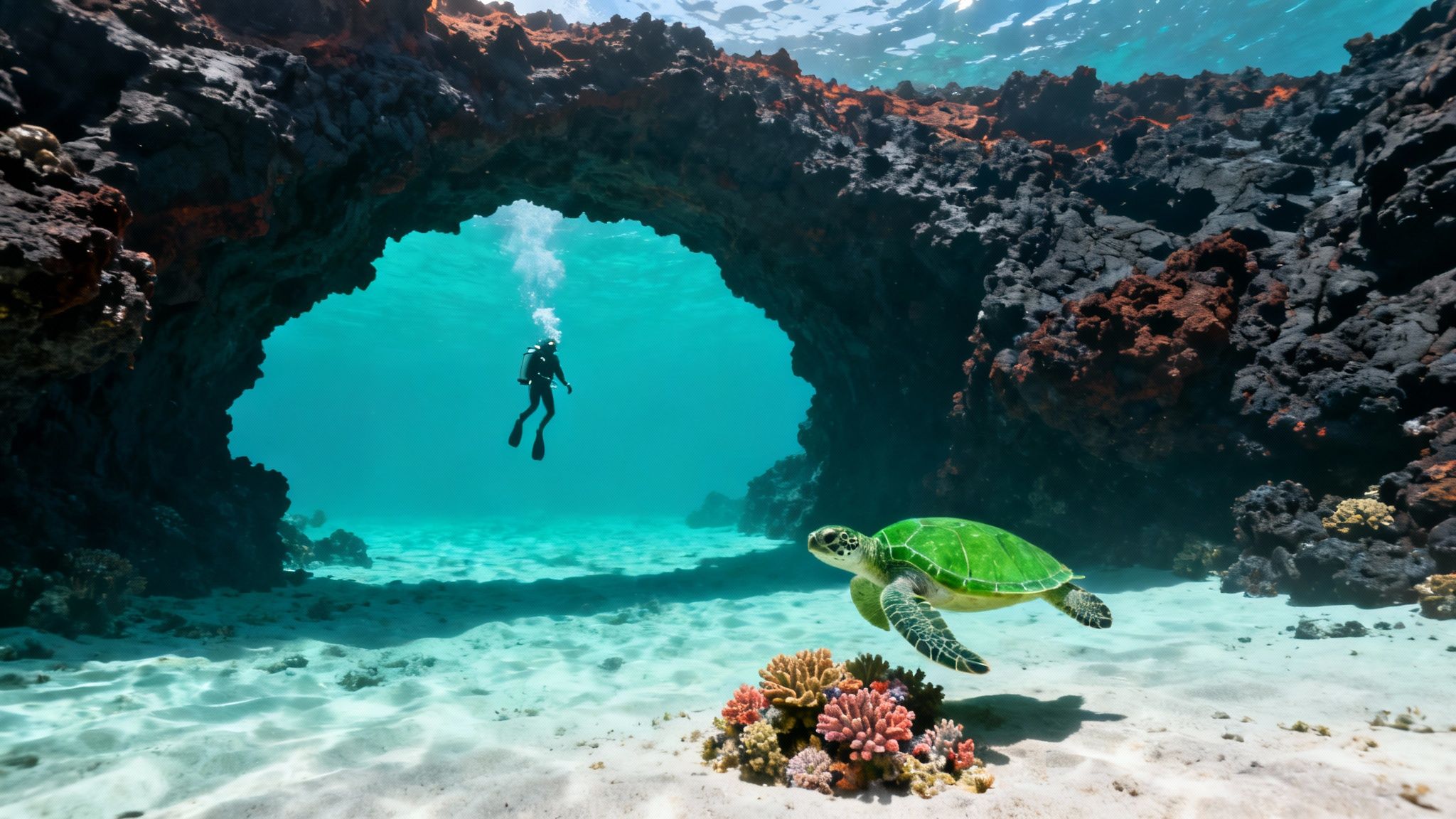
The Big Island’s underwater world is every bit as dramatic and diverse as the fiery volcanoes and lush rainforests on land. Thanks to its volcanic origins, the coastline is a maze of incredible structures you just won't find anywhere else. Think sprawling lava tubes, submerged craters, and breathtaking underwater archways, all creating a complex and beautiful habitat for an insane amount of marine life.
What really makes the Big Island a diver's paradise is the Kona coast. Tucked away on the leeward (sheltered) side of the island, Kona is protected from the strong trade winds, which means the water is exceptionally calm and clear almost all year round. These are the kind of ideal diving tours conditions we all hope for, with visibility often reaching and even exceeding 100 feet.
Unique Marine Encounters
The sheer biodiversity here is staggering. On any given dive, you might see playful spinner dolphins, majestic green sea turtles, and countless species of colorful reef fish—many of which are endemic, meaning they can only be found in Hawaii. Diving here isn’t just about looking at fish; it’s about immersing yourself in a vibrant, thriving ecosystem.
Of course, the most iconic experience is the world-famous Manta Ray Night Dive. The Big Island is one of the only places on Earth where you can reliably get up close and personal with these gentle giants. Local operators report manta ray sightings on 85-90% of these dives, and it’s not uncommon to see up to 14 mantas at once, gracefully gliding through the beams of light to feed on plankton. It's an absolutely mesmerizing spectacle that has put the Big Island on every serious diver's bucket list.
Ready to dive in? This guide will walk you through everything you need to know, from can't-miss dive sites to how a top-tier operator like Kona Honu Divers can make your underwater adventure a reality. For a deeper look into the island's underwater appeal, check out more on the spectacular Big Island scuba diving scene.
To see what kind of adventures are waiting for you, explore the full range of Kona diving tours and start planning your trip today.
Exploring the Top Big Island Dive Sites
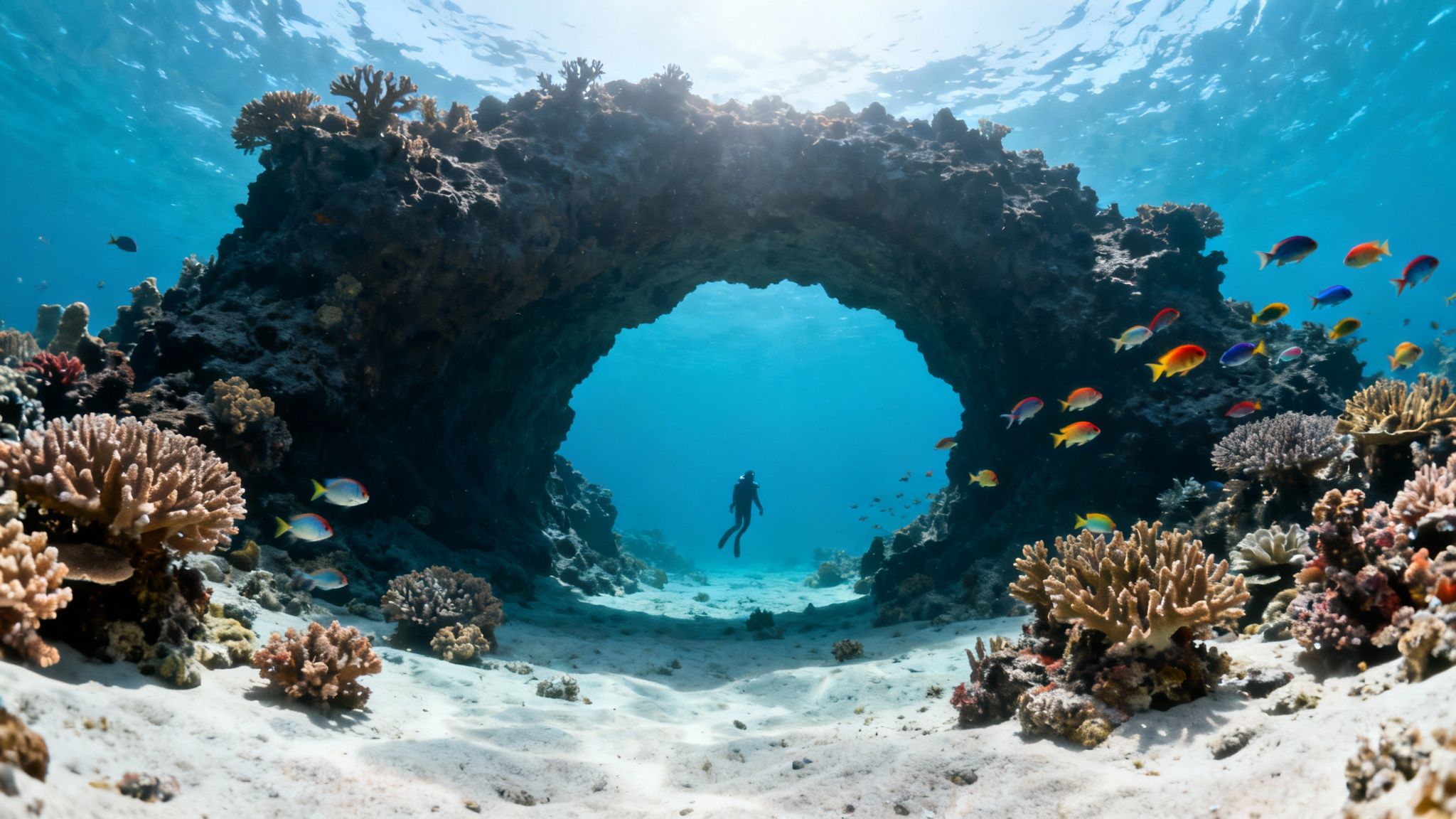
The Kona coast is a diver's dream, a literal treasure map of world-class dive sites. Each one offers a unique glimpse into the island's incredible underwater world. The Big Island's volcanic past is responsible for this, having sculpted an amazing submarine landscape full of intricate lava tubes, dramatic arches, serene coral gardens, and steep drop-offs. It's this geological diversity that makes scuba diving Big Island Hawaii an experience unlike any other.
Whether you just got your certification or have logged hundreds of dives, there's always a new adventure waiting for you here. From shallow reefs packed with endemic fish to deeper waters where the big pelagic species roam, half the fun is just planning your next dive.
Let's take a look at some of the legendary spots that put Kona on the map.
Manta Heaven (Garden Eel Cove)
During the day, this site is aptly named Garden Eel Cove, thanks to the colonies of shy eels that pop their heads out of the sand. But once the sun goes down, it transforms into Manta Heaven, one of the most reliable places on the entire planet for the famous Manta Ray Night Dive. It’s a relatively shallow dive, with an average depth of 30-40 feet, making it accessible for most certified divers.
The experience is nothing short of breathtaking. We set up powerful lights on the ocean floor, which attract a thick cloud of plankton. This floating buffet, in turn, draws in the majestic reef mantas. You simply kneel on the bottom and watch as these gentle giants, with wingspans reaching up to 16 feet, glide, barrel-roll, and dance just inches above you. With a sighting success rate that often tops 90%, this is a true bucket-list dive.
Golden Arches
If you want to see Hawaii's volcanic architecture at its finest, Golden Arches is the place to be. It’s a huge favorite among photographers for good reason. Just north of Kona, this site is famous for a series of magnificent lava rock arches that create incredible swim-throughs. The largest arch is covered in brilliant golden and orange cup corals, which is how the site got its name.
The topography is really dynamic, with depths running from 25 to 60 feet. As you navigate through the arches and canyons, you’ll find all sorts of marine life taking shelter in the nooks and crannies.
- Marine Life to Expect: Keep an eye out for big schools of lemon butterflyfish, moray eels peeking out from their homes, and maybe even a whitetip reef shark resting on the sand.
- Skill Level: Thanks to its moderate depth and usually calm conditions, this spot is great for divers of all skill levels.
The way the sunlight filters through the arches creates this surreal, cathedral-like atmosphere. Every turn reveals a new, stunning picture. It’s a perfect example of how the island's volcanic origins have created truly one-of-a-kind underwater environments.
Turtle Pinnacle
As you might guess from the name, Turtle Pinnacle is one of the best spots on the island to hang out with the beloved Hawaiian green sea turtle, or honu. The site is made up of several underwater pinnacles that rise from a depth of about 60 feet to within 20 feet of the surface. These pinnacles act as "cleaning stations," where turtles line up to let surgeonfish pick off algae and parasites.
Diving here feels like visiting a busy underwater metropolis. The pinnacles are covered in healthy coral and are home to a crazy density of reef fish. You can almost always count on seeing turtles resting on the reef, gliding gracefully through the water, or patiently waiting their turn for a cleaning. This reliable turtle action makes it a fantastic dive for everyone.
Top Big Island Dive Sites at a Glance
With so many amazing options, choosing where to dive can be the hardest part! To help you out, here’s a quick rundown of some of the top spots on the Kona coast.
| Dive Site | Average Depth | Key Feature | Best For |
|---|---|---|---|
| Manta Heaven | 30-40 ft | Nighttime manta ray encounters | Once-in-a-lifetime experiences |
| Golden Arches | 25-60 ft | Stunning lava rock arches & swim-throughs | Underwater photography and exploration |
| Turtle Pinnacle | 20-60 ft | Reliable green sea turtle sightings | Marine life enthusiasts of all skill levels |
| Kailua Pier | 15-40 ft | Excellent macro life & easy shore access | Muck diving, night diving, and beginners |
This table just scratches the surface, but it gives you an idea of the variety available. No matter which site you're headed to, diving with a professional, reputable operator is the key to a safe and amazing trip.
At Kona Honu Divers, we know these sites like the back of our hand. Our experienced crew can guide you to the best spots based on the day's conditions and help you get the most out of every single dive. Check out our complete list of guided diving tours to find the perfect adventure for you.
The Unforgettable Manta Ray Night Dive
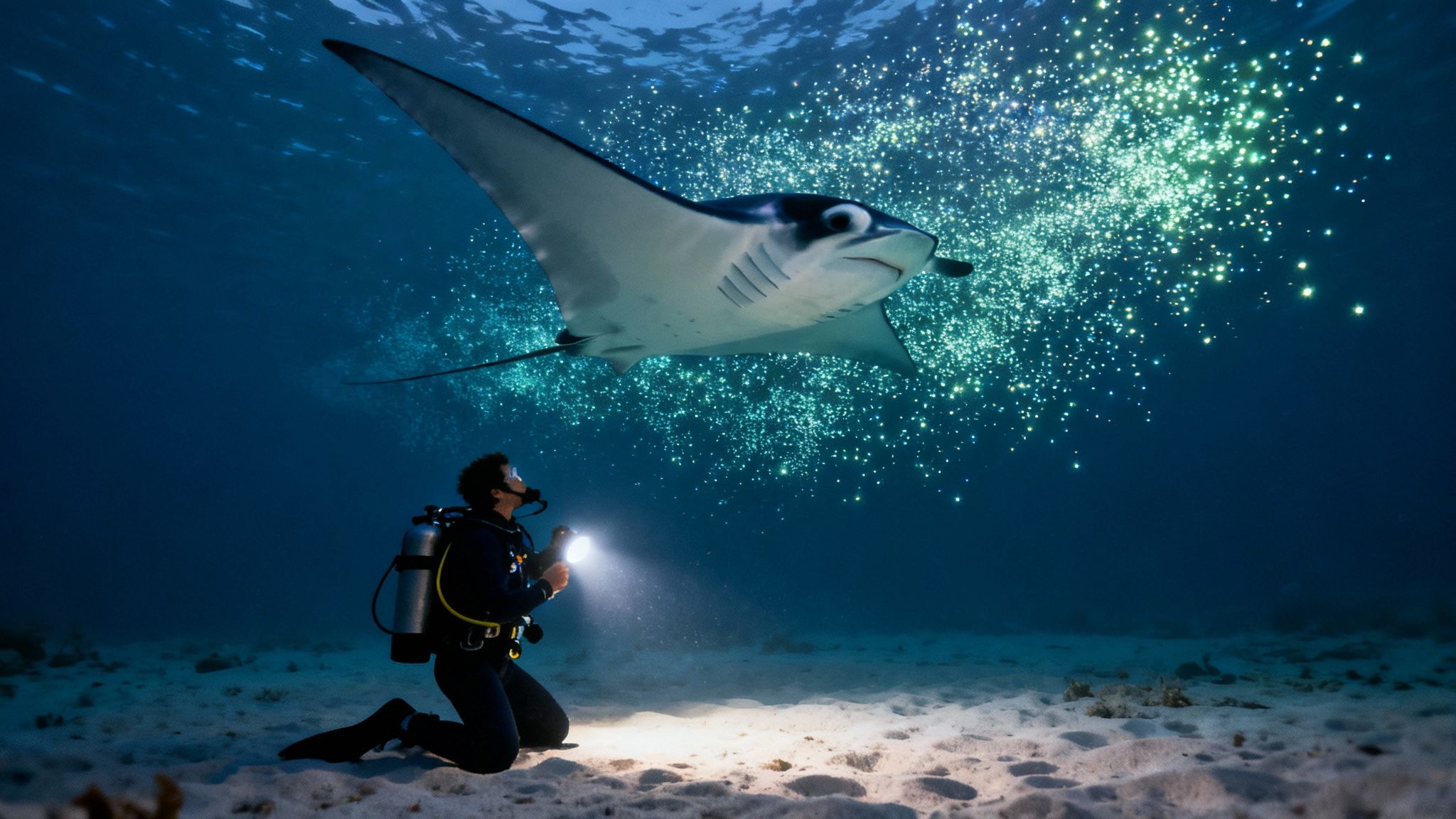
Picture this: you're kneeling on the sandy ocean floor, long after the sun has dipped below the horizon. The underwater world is quiet. Your dive lights, and those of your group, shoot beams up into the darkness, creating a brightly lit stage in the middle of the ocean.
Then, out of the black, a massive shadow emerges. It’s a majestic manta ray, gliding effortlessly into the light with a wingspan that can reach up to 16 feet. This isn't just another dive; it's the world-famous Manta Ray Night Dive, and it's an experience that truly defines scuba diving on the Big Island of Hawaii.
This dive is consistently ranked as one of the best on the planet, but it feels less like a dive and more like an underwater ballet. The mantas aren't there for us. They’re filter feeders, and they're drawn to the massive buffet of plankton that gathers in our powerful lights.
You and your fellow divers have front-row seats to an incredible spectacle. These gentle giants perform graceful barrel rolls and somersaults, sometimes just inches above your head. It’s an intimate, peaceful, and totally awe-inspiring encounter that you’ll be talking about for years to come.
What to Expect During the Dive
The whole operation is carefully choreographed to be safe for everyone—divers and mantas alike. Your evening will start with a boat ride out to one of the designated manta sites, like Manta Heaven or Manta Village, just as the sun sets over the Pacific.
Pay close attention during the dive briefing. This is where your guides will lay out the plan and, more importantly, the rules of engagement. The number one rule is passive observation. We are simply guests in their dining room, and we need to act like it.
Here’s a quick rundown of how the dive typically unfolds:
- Descent and Setup: Once in the water, you'll descend to a sandy bottom, usually around 30-40 feet deep. Your group will get settled in a semi-circle, often around a central light box affectionately called "the campfire."
- The Main Event: Switch on your dive light and point it straight up. This adds to the "plankton buffet." All that's left to do is wait and watch as the mantas arrive to feed, swooping and gliding through the light beams.
- Duration: You can expect to be on the bottom for about 30-45 minutes, completely mesmerized by the show.
It’s a simple, stationary dive that’s perfect for most certified divers, but the emotional impact is anything but simple. To get an even better feel for the experience, check out our detailed guide on what the Manta Ray Night Dive is all about.
"Diving with mantas is one of the most satisfying things a person can do in the water. It’s impossible to describe the feeling of watching a massive fish the shape of a stealth bomber coming into vision."
This quote from one of our seasoned instructors really hits the nail on the head. It's a surreal and humbling moment to be so close to such large, graceful animals in their own world.
A Safe and Eco-Friendly Encounter
The long-term success of this amazing dive hinges on one thing: responsible tourism. The mantas that show up every night are local residents, and protecting them is the absolute top priority for any reputable dive operator.
We have strict guidelines in place to make sure the mantas stay safe and healthy. The most important rule of all is to never touch a manta ray. Their bodies are covered in a protective mucous layer that acts as a shield against infection. Touching them can rub this layer off, leaving them vulnerable to disease.
A few other key rules to follow:
- Stay on the bottom: We ask all divers to remain on the sand. This keeps the water column clear for the mantas to maneuver safely.
- Mind your bubbles: A simple tilt of your head can direct your exhaled bubbles away from the mantas so they don't get a face full of them.
- No chasing or riding: This is a passive observation dive. Let the mantas come to you; trust us, they will.
By following these simple rules, we can ensure this incredible interaction continues for generations of divers and mantas to come. Here at Kona Honu Divers, we are 100% committed to these principles, providing a safe and respectful experience on every single trip.
Advanced Diving and Blackwater Adventures
Sure, the colorful reefs are spectacular, and the manta rays are unforgettable. But for some divers, the real magic happens when you push past the typical tour and into something truly wild. That’s where scuba diving on the Big Island of Hawaii really shines, offering adrenaline-fueled adventures that are a world away from a simple reef dive. If you’re a certified diver looking for a genuine challenge, the island’s deep waters and dramatic volcanic landscapes are your playground.
These advanced dives aren't just about logging a deeper depth; they're about seeing the ocean from a completely new perspective. Think about navigating a maze of ancient lava tubes, finning through massive underwater arches, or heading into the blue to find larger pelagic species like sharks and rays. These dives demand a higher level of skill and confidence, but the reward is an experience—and a story—that will stick with you forever.
The Kona Blackwater Dive: An Otherworldly Experience
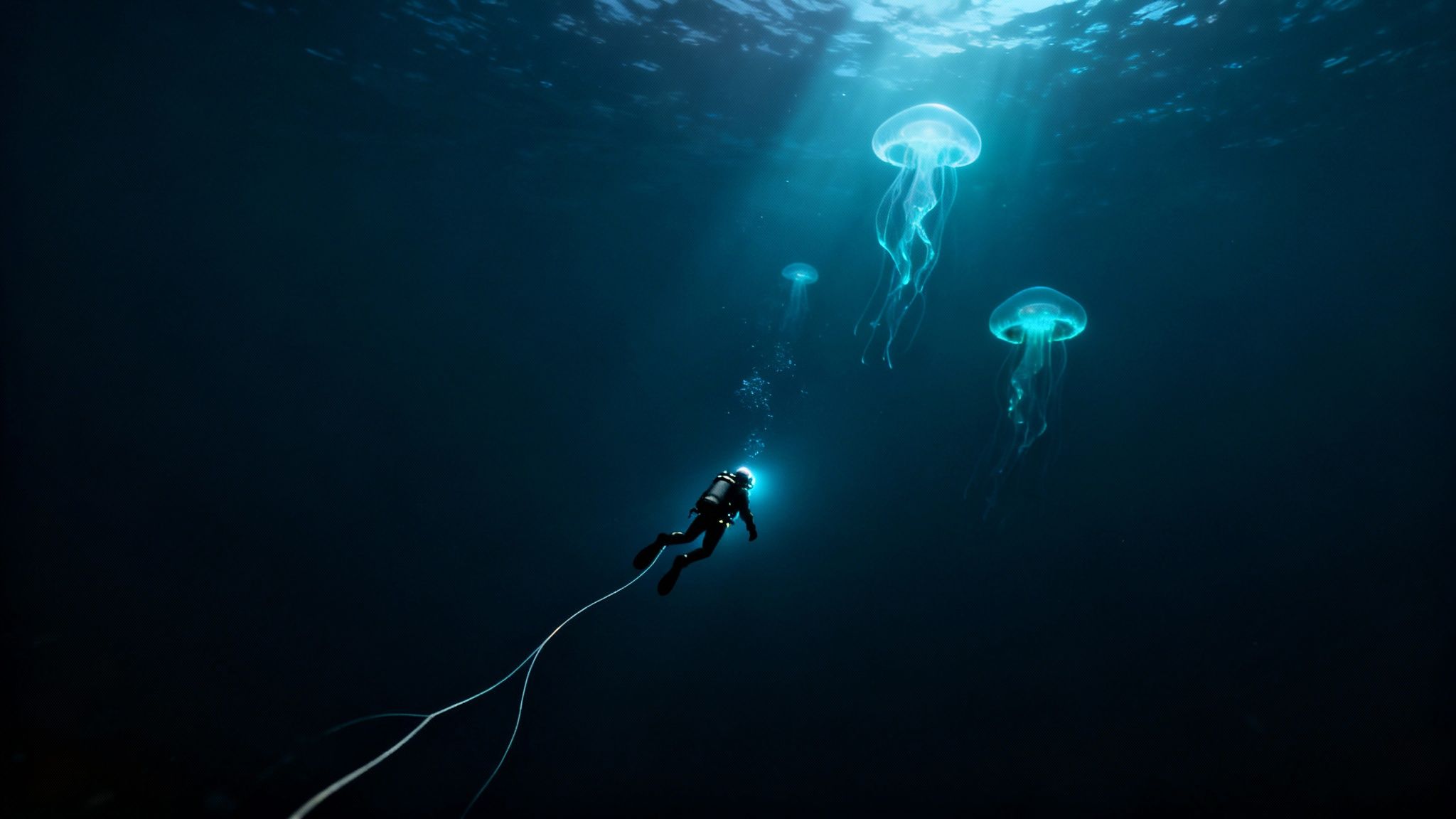
Of all the incredible advanced dives here, one stands out as utterly unique: the world-famous Blackwater Dive. People often call it a spacewalk in the open ocean, and honestly, that’s not far off. This isn’t a reef dive. It isn't a bottom dive. It's a drift dive miles from shore, suspended over thousands of feet of inky black water.
The concept is both brilliantly simple and a little mind-bending. You’re tethered to a boat that drifts with the current, and you descend to about 50 feet to just… float. You are hanging in the void, with nothing but the beam of your light cutting through the darkness. But you're not alone.
Every single night, the largest animal migration on Earth takes place as countless bizarre, alien-like creatures rise from the abyss to feed near the surface. You're right there in the middle of it, a spectator to a glowing, otherworldly parade of life that few humans ever get to see.
This is not a dive for the faint of heart; it requires rock-solid buoyancy control and a very calm mindset. But for divers who are up for it, it’s a chance to witness some of the strangest and most beautiful life forms on our planet.
What Do You Need for These Advanced Dives?
Jumping into an advanced or blackwater dive requires more than just your basic Open Water card. Safety is everything, and we need to know you have the skills to handle more demanding conditions.
Here’s what you’ll generally need:
- Advanced Open Water Certification: This is the usual starting point. It shows you have training for deeper dives, night diving, and navigating more complex environments.
- Recent Dive Experience: You need to have been diving recently, typically within the last six months. Sharp skills are a must.
- Excellent Buoyancy Control: This one is non-negotiable. It’s critical for hovering in mid-water during a blackwater dive and for protecting delicate lava tube formations.
- Comfort and Confidence: Advanced dives can bring stronger currents, deeper water, and changing visibility. A calm head is your most important piece of gear for staying safe and enjoying the dive.
If you're an experienced diver looking for your next great underwater adventure, the Big Island is ready for you. From exploring ancient volcanic tunnels to floating with glowing creatures from the deep, these dives are the pinnacle of Kona diving. Our expert guides at Kona Honu Divers specialize in leading safe, professional, and absolutely thrilling advanced trips you’ll be talking about for years to come.
How to Choose the Right Dive Operator
Picking the right dive shop for your adventure is probably the single most important decision you'll make for your scuba diving Big Island Hawaii trip. A great operator doesn't just ferry you to a dive site—they shape the entire experience with their expertise, safety-first attitude, and a real passion for the ocean. On the flip side, a subpar one can quickly turn a dream dive into a stressful mess.
Think of your dive operator as your captain, guide, and guardian all rolled into one. They’re responsible for everything from the quality of the air in your tank to navigating the boat through tricky conditions. The best companies insist on small group sizes, hire experienced guides who know every coral head and fish by name, and keep their boats and gear in pristine condition. That commitment is what separates an average dive from an unforgettable one.
Key Factors to Consider
When you start looking at dive shops in Kona, the number of options can feel a bit overwhelming. To cut through the noise, just focus on a few critical things that tell you you're dealing with a professional, top-notch operation.
- Safety Record and Certifications: Keep an eye out for PADI 5-Star Dive Centers or Instructor Development Centers (IDCs). This isn't just a fancy plaque on the wall; it’s a sign that they are held to the highest standards for diver training and safety. A solid safety record is non-negotiable.
- Guide Experience and Group Size: Ask about the folks who will actually be leading your dive. Local knowledge is what turns a good dive into a great one, helping you spot that elusive octopus or navigate a lava tube with confidence. Smaller groups are always better—you get more personal attention and a much more relaxed dive.
- Boat and Equipment Quality: A well-kept boat with all the necessary safety gear (like oxygen and first aid kits) is a must. The rental equipment should be modern and look like it’s been cared for. Good shops are proud of their gear and happy to show it off.
- Customer Reviews: Don't just take the shop's word for it. Hop on Google or TripAdvisor and read what recent customers have to say. This is where you get the real, unfiltered story.
Nailing down these factors will help you narrow your list in no time. For a deeper dive, check out our guide on how to choose a Kona dive shop for more tips and questions to ask.
Spotlight on Kona’s Respected Operators
Kona is lucky to have several incredible dive companies with stellar reputations. Here at Kona Honu Divers, we pour everything into our experienced crew, our custom-built dive boats, and our mission to deliver safe and unforgettable diving tours. Our focus on small groups means every single diver gets the attention they need to have a fantastic time.
Another pillar of the local dive scene is Jack's Diving Locker. They’ve been here since 1981 and have grown into a PADI 5-Star IDC institution on the Big Island. With over four decades of experience, they've certified thousands of divers and have played a huge role in setting the high bar for safety and education in our community. Their fleet is a common sight at top dive sites, especially those known for lava tubes and big pelagic animal sightings.
Choosing an operator is really about finding the right fit for your personality and dive style. Whether you care most about a specific type of dive or the amenities on the boat, the best choice is the one that makes you feel confident and excited to jump in.
At the end of the day, putting a little time into your research pays off big. A truly great dive operator doesn't just provide a service—they share their love for the ocean and make sure your underwater adventure is everything you hoped it would be.
Planning Your Perfect Big Island Dive Trip
Now that you're dreaming of the incredible dives awaiting you, let's get into the nitty-gritty of planning a smooth and unforgettable trip. A little prep work on the front end means that once you land, your biggest decision will be which amazing dive site to hit first. Thinking about the best time to visit, what to pack, and keeping safety top of mind will set you up for success.
Hawaii’s climate is a diver’s dream, making it a fantastic year-round destination. That said, there are some subtle differences between the seasons worth knowing about.
- Summer (May to September): This is when you'll find the calmest seas and warmest water, typically hovering around a blissful 80°F (27°C). The warmer water often brings plankton blooms, which is great news for us—it dramatically increases your chances of a mind-blowing manta ray encounter!
- Winter (October to April): The water might dip a bit to about 76°F (24°C), but the visibility is still crystal clear. The real magic of winter diving? It's whale season. There's nothing quite like hearing the haunting songs of humpback whales echoing through the water during your safety stop.
Your Essential Packing Checklist
Figuring out what to pack versus what to rent can save you a headache (and some serious baggage fees). While we've got top-notch rental gear ready for you at Kona Honu Divers, there’s nothing like the comfort and fit of your own equipment.
If you're bringing your own gear, here are the personal items I’d never leave behind:
- Dive Computer: This is non-negotiable. It’s your most important piece of safety gear for tracking depth, time, and no-decompression limits.
- Mask and Snorkel: A mask that fits your face perfectly is the difference between an amazing dive and a frustrating one. No leaks, no fog—just pure, unobstructed views.
- Wetsuit: For the Big Island, a 3mm or 5mm full wetsuit is the sweet spot. It’ll keep you comfortable and protected from the sun and any accidental bumps against the reef.
- Certification Cards and Logbook: You earned them, so don't forget them! You'll need proof of certification to dive, and you’ll definitely want to log all the incredible things you see.
Planning a dive trip also means preparing for the unexpected. While diving is a safe sport with proper training, having the right coverage provides peace of mind, letting you fully enjoy your underwater explorations without worry.
Especially for a trip packed with this much adventure, it’s a smart move to look into travel insurance for adventure travel. It gives you an extra layer of protection specifically for activities like scuba diving.
Prioritizing Safety on Every Dive
At the end of the day, safety is what makes every dive a great one. Always, always respect your "no-fly" time after your last dive. This is the crucial surface interval—usually 12 to 18 hours—that allows your body to safely off-gas any residual nitrogen. Your dive computer will give you the specific guidance you need.
It's also essential to be aware of the local conditions. The Kona coast is famous for its protected, placid waters, but the ocean is still the ocean. Always listen carefully to your divemaster's briefing; they'll clue you in on any currents or unique features of the site. Following these simple rules is the key to a safe, fun, and absolutely epic diving vacation.
Your Big Island Diving Questions, Answered
Alright, let's wrap this up by tackling some of the questions we hear all the time from divers getting ready for their trip. Think of this as a quick chat to clear up those last-minute details before you hit the water.
What Certification Level Do I Need to Dive in Hawaii?
Good news—there’s something for everyone here. If you’ve never even tried scuba, we can get you in the water with an introductory dive, no certification needed. For most of the stunning reef sites, a standard Open Water certification is all it takes.
Of course, if you're itching to explore a little deeper, like navigating the ancient lava tubes or taking the plunge on our legendary Blackwater Dive, you'll need your Advanced Open Water ticket. Just be sure to check the prerequisites for any specific charter you're interested in.
Is the Kona or Hilo Side Better for Diving?
Hands down, it's the Kona side. It’s not even a close competition. Being on the western, leeward coast means Kona is protected from the prevailing trade winds.
What does that mean for you? Calm, flat seas and incredibly clear water pretty much year-round. It's why all the world-famous dive sites are right here on our doorstep.
When Is the Best Time to See Manta Rays?
You can have an amazing Manta Ray Night Dive literally any night of the year—our success rate is incredibly high.
That said, many divers prefer the summer months when the ocean surface tends to be at its glassiest. This is also when the plankton, the mantas' favorite meal, is often thickest, which can sometimes draw in even bigger crowds of these gentle giants.
Can I Rent All My Scuba Gear There?
Absolutely. We, and any reputable operator on the island, have full sets of quality rental gear ready to go. From BCDs and regulators to fins and masks, you can get everything you need right here. It definitely beats lugging all that heavy equipment through the airport.
The one thing I always suggest, though? If you own a dive computer, bring it. It's always nice to dive with a piece of gear you know inside and out.
Ready to see Kona’s underwater world for yourself? Here at Kona Honu Divers, we live and breathe this stuff. Our crew is passionate about showing you the magic of Hawaii's reefs, and our commitment to small groups on top-notch boats means you'll have a safe, personal, and unforgettable experience.