
Imagine slipping beneath the surface into crystal-clear water, where ancient lava flows have sculpted an underwater world of dramatic caverns, arches, and reefs teeming with life. That's the heart of scuba diving on the Big Island of Hawaii, an experience shaped by the island's raw volcanic geology and incredible marine biodiversity. The Kona coast, in particular, delivers some of the most consistent and breathtaking underwater encounters you can find anywhere on the planet.
Why the Big Island Is a Diver’s Paradise
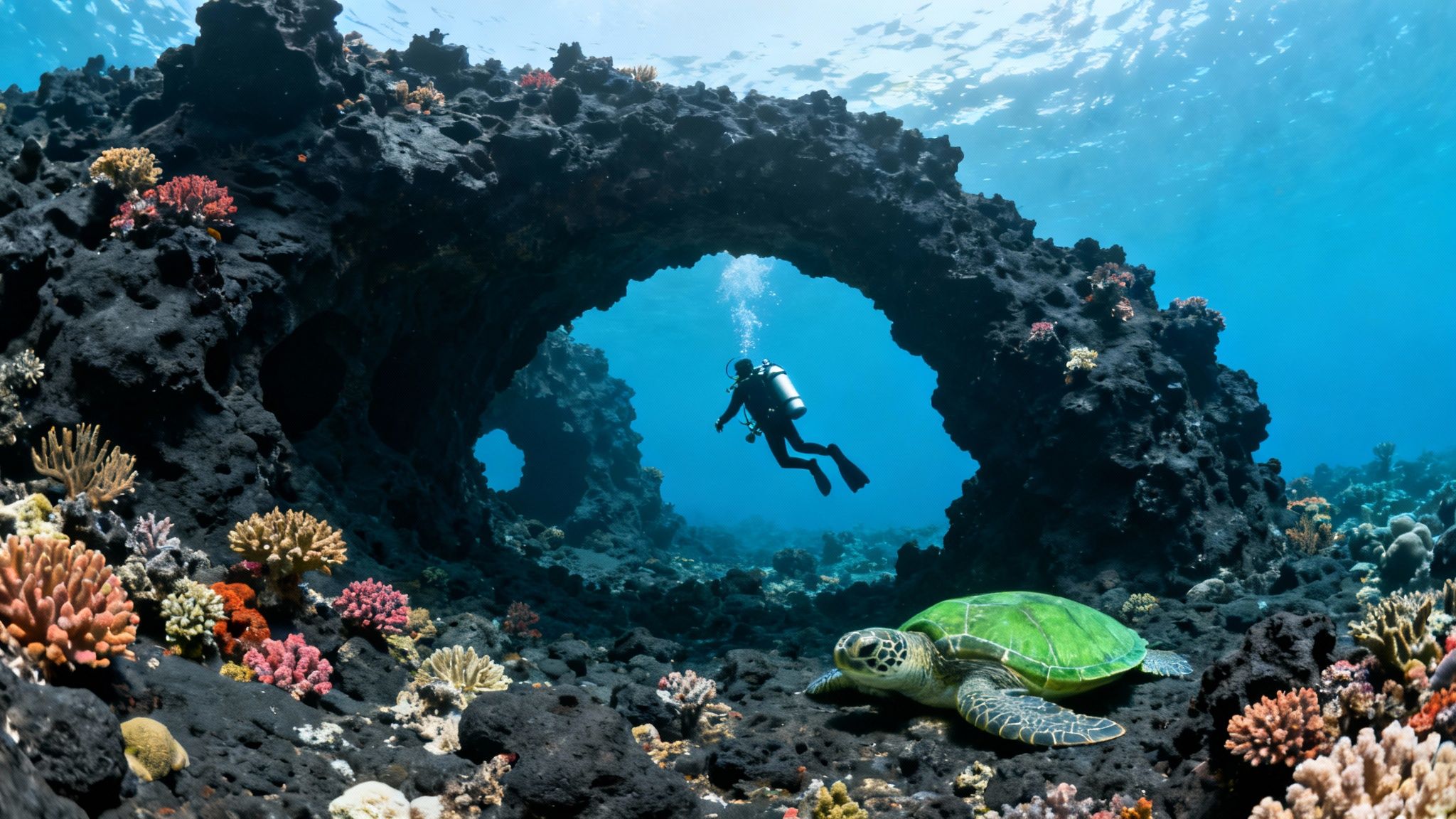
The Big Island isn't just another spot on the map for divers; it’s a premier destination forged by fire and cooled by the sea. The island's active volcanoes have created an underwater landscape that's truly one-of-a-kind. As a diver here, you get to explore intricate lava tubes, swim through massive archways, and glide over vast reefs formed by ancient magma flows.
What really sets the Kona coast apart is its geography. The massive volcanoes of Mauna Loa and Hualalai act as a natural shield, protecting the coastline from the open ocean swells that can affect other islands. The result? Consistently calm, clear water with visibility that often pushes past 100 feet, making it perfect for diving almost any day of the year.
A Sanctuary for Unique Marine Life
The waters here are a haven for countless species, many of which are endemic to Hawaii—meaning you won't find them anywhere else on Earth. It's almost guaranteed you'll have an encounter with a Hawaiian green sea turtle, or honu, as they gracefully cruise the reefs or relax at underwater "cleaning stations."
Beyond the turtles, the reefs are a vibrant metropolis of marine activity:
- Colorful Reef Fish: Get ready for dazzling schools of yellow tang, elegant ornate butterflyfish, and the unmistakable Moorish idol painting the reef with color.
- Masters of Disguise: If you've got a sharp eye, you might spot some of the reef's more elusive residents, like a frogfish camouflaged perfectly against a sponge or an octopus tucked cleverly into a rocky crevice.
- Gentle Giants: Of course, the Big Island is world-famous for its resident population of majestic manta rays. This is one of the most reliable places on Earth to dive with these incredible animals.
The table below breaks down exactly what makes the Big Island such a magnet for divers from all over the world.
| Why Choose the Big Island for Your Next Scuba Adventure |
| :— | :— |
| Feature | Why It's Special on the Big Island |
| Unique Volcanic Topography | Explore underwater lava tubes, arches, and craters you won't find elsewhere. |
| Protected Kona Coast | The massive volcanoes create calm, clear conditions year-round. |
| Incredible Visibility | Visibility often exceeds 100 feet, making for stunning underwater photography. |
| High Marine Biodiversity | Home to countless endemic species and famous for turtles, dolphins, and whales. |
| World-Famous Manta Ray Dives | Offers the most reliable and spectacular manta ray night dive experience globally. |
| Year-Round Diving Season | Consistent conditions mean you can plan a dive trip any time of the year. |
In short, the combination of unique geology, protected waters, and amazing wildlife makes every dive here unforgettable.
The Heart of Hawaiian Diving
Scuba diving isn't just a hobby here; it’s a cornerstone of the Big Island's identity. Experts consistently rank it as Hawaii’s absolute best destination for underwater adventures. While the state as a whole sees over 1.5 million scuba dives every year, the Big Island truly shines with its variety of specialty dives—most notably, the legendary manta ray night dive.
For anyone ready to jump in and see it for themselves, Kona Honu Divers offers diving tours led by local experts who live and breathe these waters. Their focus is always on safety, education, and respecting the marine environment, ensuring every trip is a fantastic and memorable adventure.
Ultimately, it’s the powerful mix of volcanic landscapes, calm conditions, and vibrant sea life that puts this island in a class of its own. To learn more, check out our guide on what makes the Big Island so good for scuba diving.
Experiencing the World-Famous Manta Ray Night Dive
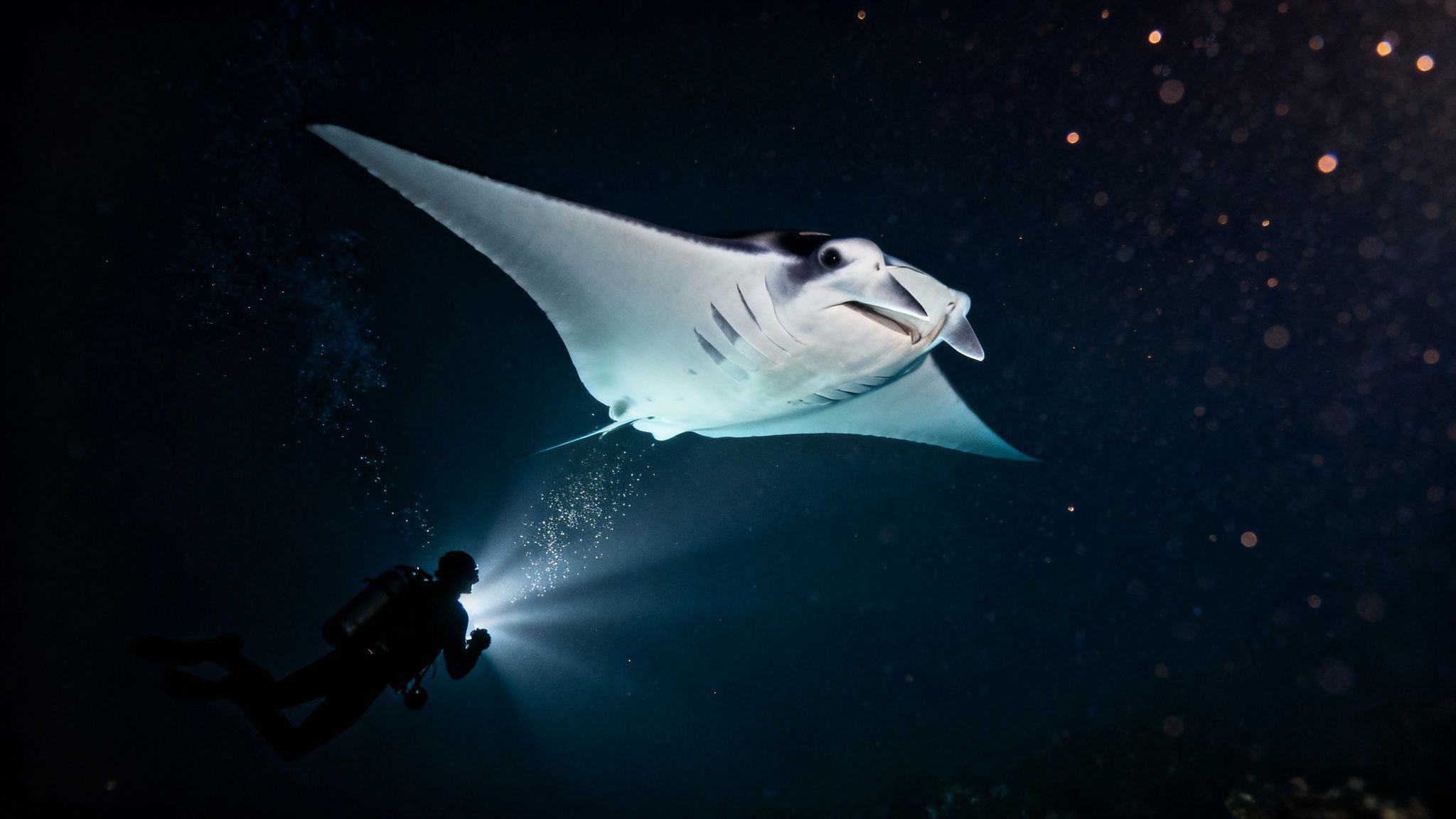
Forget everything you think you know about night diving. The Kona manta ray dive isn't just a dive; it's an underwater ballet, a choreographed spectacle that has rightfully earned its spot on every diver's bucket list. This is the signature experience for anyone scuba diving on the Big Island, and for good reason.
The whole thing works on a beautifully simple premise: light attracts plankton, and mantas love to eat plankton. Local dive operators have perfected this into an art form. After the sun dips below the horizon, powerful, eco-friendly lights are placed on the ocean floor, shooting beams up toward the surface like spotlights calling out to the stars of the show.
Almost instantly, the water fills with a shimmering cloud of microscopic plankton, drawn to the light. It's an all-you-can-eat buffet, and the guests are about to arrive.
An Acrobatic Feeding Frenzy
Out of the inky blackness, a shadow emerges. Then another, and another. These are Kona's resident reef manta rays, majestic creatures with wingspans that can stretch up to an incredible 16 feet. They glide into the columns of light, ready for dinner.
This is when the real magic happens. The mantas perform a mesmerizing dance, executing graceful barrel rolls and looping swoops through the light, their cavernous mouths open to filter the plankton from the water. As a diver, your job is simple: kneel on the sandy bottom and watch the show unfold above you.
It's a feeling that’s hard to put into words. You're just there, mesmerized, as these huge, silent creatures, shaped like stealth bombers, glide inches from your head. It’s one of those rare moments of pure, unfiltered connection with the ocean’s most graceful giants.
The only sounds are the rhythmic hiss of your regulator and the occasional muffled gasp from your dive buddies as a manta makes a particularly close pass. This is an experience that stays with you long after you surface.
Why This Encounter Is So Reliable
Unlike many wildlife encounters, the Big Island’s manta ray night dive is one of the most dependable in the world. These aren't migratory animals just passing through; they're locals who have figured out that the bright lights mean an easy meal.
This learned behavior has made Kona a global hotspot for seeing these gentle giants up close. How reliable is it? Most operators report seeing mantas on 85–90% of their trips. It’s not uncommon for divers to see multiple mantas on a single dive, with some lucky nights drawing in more than a dozen.
Of course, choosing the right operator is key. A responsible company like Kona Honu Divers follows strict guidelines to keep the mantas safe and comfortable. This means:
- Hands Off: You'll be reminded never to touch a manta. Touching them can remove their protective mucus coating, leaving them vulnerable to infection.
- Keep Your Place: Divers stay on the bottom, giving the mantas the entire water column to maneuver without obstacles.
- Smart Lighting: The lights are always aimed up to attract plankton without shining directly into the mantas' eyes.
While this guide is all about the scuba experience, snorkelers can also get in on the action. For more on that, the Ultimate Guide to the Kona Manta Ray Night Snorkel offers some great tips.
Ready to see it for yourself? No trip focused on scuba diving Big Island Hawaii is complete without this unforgettable night. You can book your spot on a manta ray dive tour and get ready for an experience you'll be talking about for years to come.
Exploring Top Dive Sites Beyond the Mantas
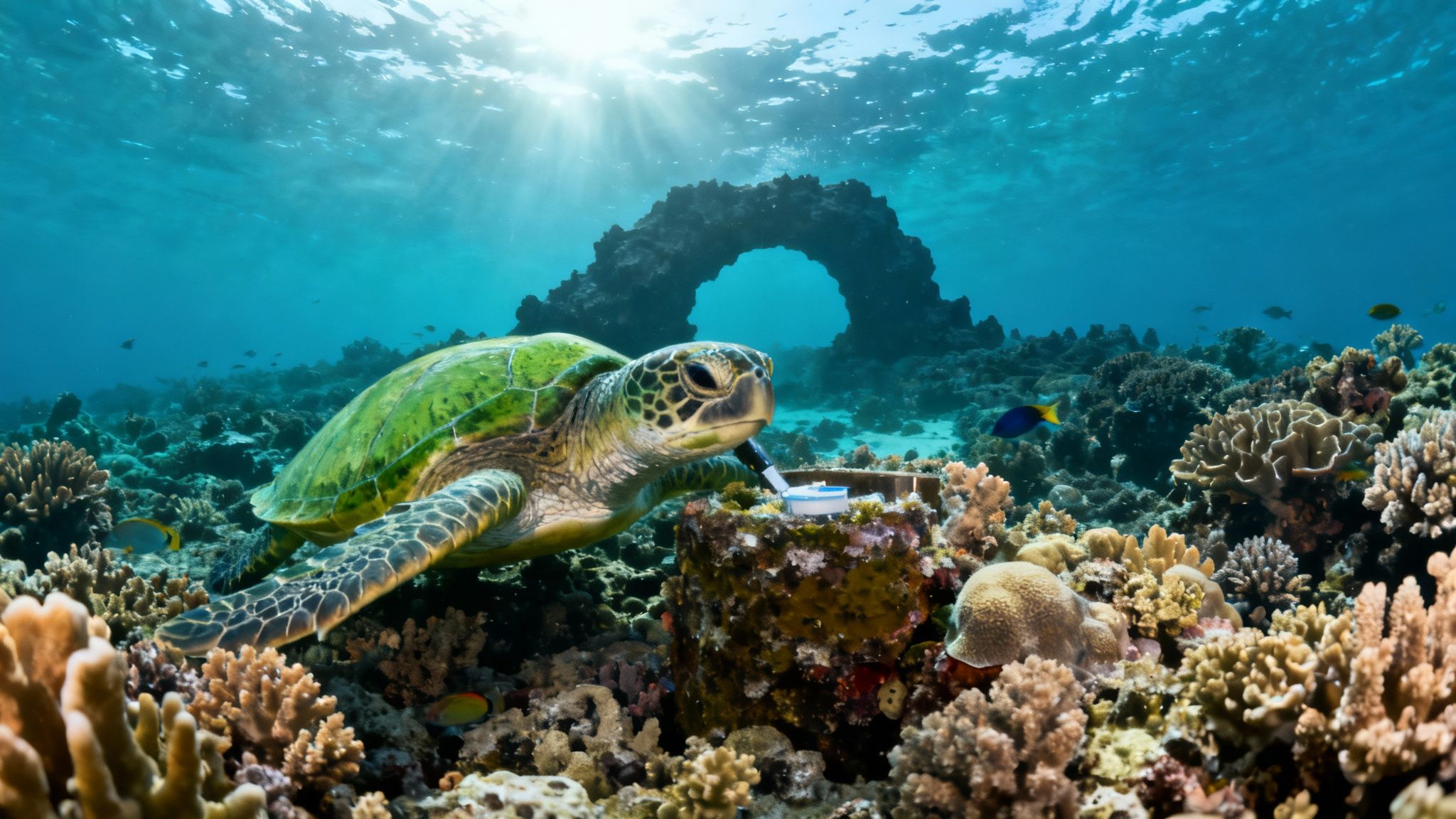
While the manta ray night dive is an absolute showstopper, it's just the first act of the Big Island's incredible underwater performance. The Kona coast is literally lined with dozens of world-class dive sites, each one a unique adventure shaped by volcanic fire and a thriving ocean. Once you start exploring beyond the mantas, you discover a mind-boggling level of diversity. It’s what makes scuba diving on the Big Island of Hawaii feel like a brand-new experience every time you drop in.
From the tranquil, protected coral gardens of historic bays to the dramatic underwater cathedrals carved by ancient lava flows, there’s a dive here for everyone. These spots reveal the full spectrum of Kona's magic and prove that the adventure is just getting started.
Kealakekua Bay: A Protected Paradise
Kealakekua Bay, where the Captain Cook Monument stands, is far more than a historical landmark—it's a designated Marine Life Conservation District. That special status means the underwater world here is about as pristine as it gets, and it’s absolutely bursting with life. The moment you slip beneath the surface, you’re met with some of the healthiest and most vibrant coral gardens in all of Hawaii.
Because it's a protected area, the marine life has been allowed to flourish completely undisturbed. Statistically, Kealakekua Bay is one of the most biodiverse dive sites in Hawaii. Visibility often pushes past 100 feet, revealing sprawling coral formations that are home to hundreds of fish species. The fishing ban has preserved the reefs to a stunning degree; the amount of live coral cover here rivals what you'd see on a remote Pacific atoll. It's a complex, thriving city for everything from butterflyfish to the rare Bandit Angelfish. You can discover more about the Big Island’s premier dive spots and what makes each one so special.
Here’s a taste of what to expect:
- Massive Coral Formations: You’ll see huge, intricate coral heads and delicate finger corals creating a dense, busy metropolis for the local reef residents.
- Abundant Fish Life: Prepare for enormous schools of yellow tang, spinner dolphins playing near the boat, and countless other species that call this sanctuary home.
- Calm, Clear Conditions: The bay is naturally sheltered from the open ocean, which means the water is usually calm and crystal-clear—perfect for divers and underwater photographers.
Golden Arches and Lava Tube Adventures
If you’re the kind of diver who gets excited about unique underwater landscapes, then sites like Golden Arches are non-negotiable. This spot is a perfect example of how volcanic activity sculpted Kona's coastline, both above and below the water. The main event is a massive lava archway that’s big enough for divers to swim through with ease, making for an unforgettable photo op.
But it’s not just about the cool geology. These lava structures have become bustling habitats. The arches and nearby lava tubes are popular hangout spots for resting white-tip reef sharks, shy frogfish, and Hawaiian green sea turtles getting a quick polish at a cleaning station. Gliding through these formations honestly feels like you’re exploring an ancient, submerged cathedral.
Diving through a lava tube for the first time is a surreal experience. The way the light filters in from the openings, illuminating the textures of the rock and the critters hiding in the crevices, connects you directly to the island's volcanic origins.
Uncovering Hidden Gems and Elusive Creatures
Beyond the famous sites, the Kona coast is packed with hidden gems where a bit of patience can lead to encounters with the ocean’s most fascinating critters. Certain spots known for their rubble and sand patches are the perfect hunting grounds for the masters of camouflage.
Here, a sharp eye can spot a perfectly disguised frogfish waiting for its next meal or an octopus shifting its color and texture to melt right into the background. These dives become a rewarding challenge, turning every section of the reef into a live-action treasure hunt. Each location offers another piece of the puzzle, showing exactly why scuba diving Big Island Hawaii is an adventure that never gets old.
Whether you're drifting over pristine reefs or navigating dramatic lava tubes, your next amazing discovery is always just around the corner. Discover these incredible underwater worlds for yourself by exploring our range of guided diving tours along the Kona coast.
Advanced Dives for the Ultimate Thrill
So, you’ve got a logbook full of beautiful reef dives and cool wreck explorations? If you’re an experienced diver looking for something that truly pushes the envelope, the Big Island is ready for you. The same volcanic forces that shaped the stunning shallow reefs have also created a deeper, more demanding underwater world just waiting to be explored.
These advanced dives aren’t your average tour. They’re for divers who have their buoyancy dialed in and are ready for a real challenge. We're talking about venturing beyond the sunlit coral gardens into a realm that requires more skill, a steady hand, and a calm mind. This is where you get to see things that very few people ever will. It's the next evolution of scuba diving on the Big Island of Hawaii.
The Kona Blackwater Dive: A Journey into the Abyss
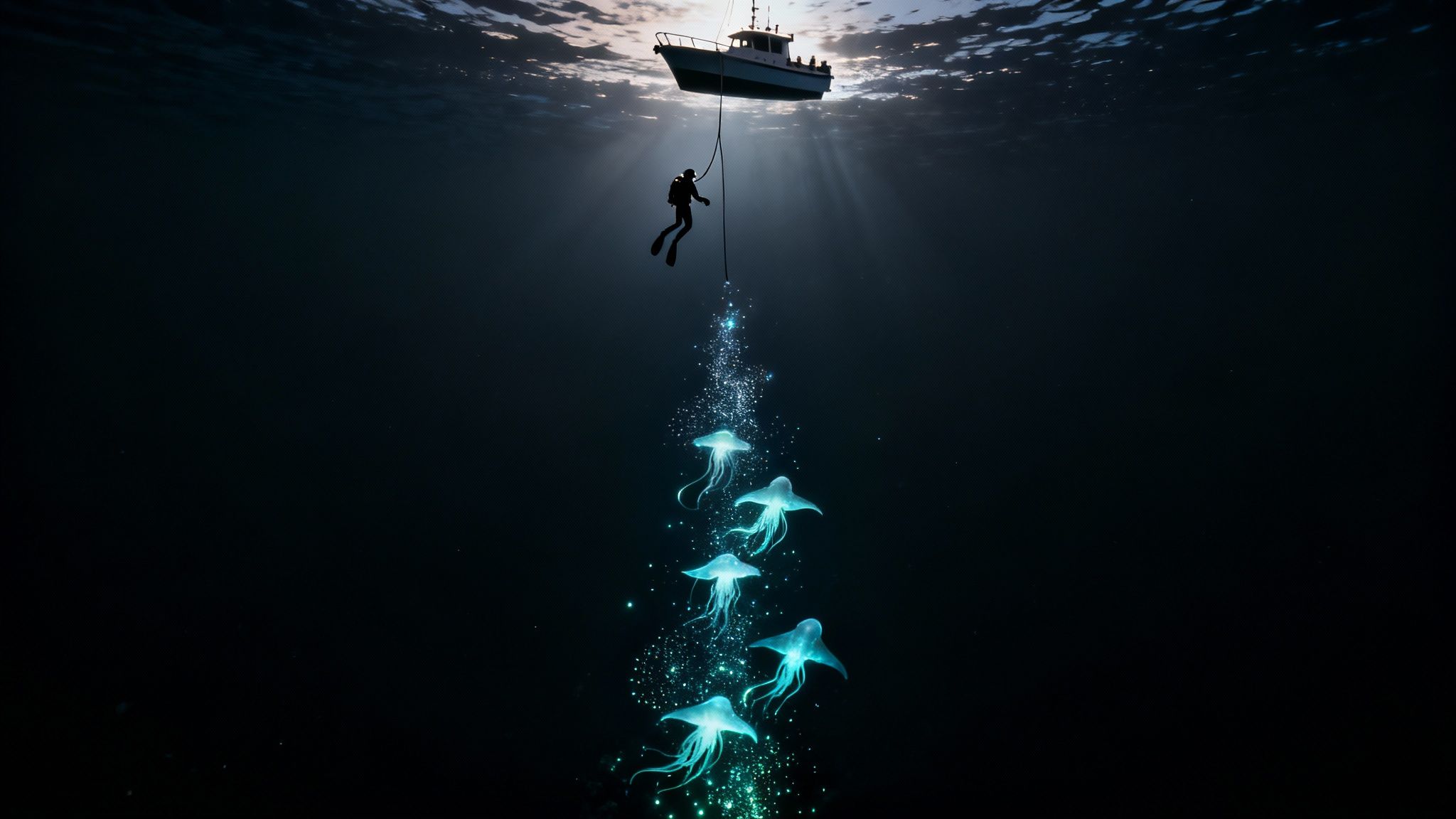
Picture this: you’re floating in the deep, dark blue of the open ocean. You're miles from shore, with thousands of feet of water beneath you, connected to the world only by a tether to the boat. This isn't just a night dive—it's the legendary Kona Blackwater Dive, an experience some people call "Pelagic Magic."
The idea behind it is mind-blowing. Every single night, one of the planet's largest migrations takes place as countless tiny, strange creatures rise from the depths to feed near the surface. On a blackwater dive, you get to hang out right in the middle of their commute.
You are suspended in another dimension, watching life forms that look like they belong on another planet drift past your light. It's a humbling, surreal, and utterly mesmerizing encounter with the planet's hidden biodiversity.
You’ll see things that look like they were pulled from a sci-fi movie—bizarre, often see-through, and glowing organisms that live their whole lives in the crushing pressure of the deep. It’s an otherworldly parade of larval fish, alien-like squid, and pulsating jellies. This isn’t just a dive; it's a front-row seat to one of Earth's last unexplored frontiers. If you think you're ready for an adventure that’s truly out of this world, you can learn more about the Kona Blackwater Dive tour.
Deeper Reefs and Advanced Topography
If you prefer to have the seafloor within view, don't worry—the Big Island has plenty of advanced sites that reward extra experience. The island's volcanic past has left behind an incredible underwater landscape full of deep canyons, sheer walls that drop into the blue, and intricate lava tube systems. These are playgrounds for divers with rock-solid buoyancy control and a comfort with going deeper.
Diving these more challenging sites comes with some incredible payoffs:
- Encounters with Pelagic Species: Deeper water is often a highway for the big stuff. It’s not unusual to see big schools of jacks, cruising barracuda, and even the occasional shark patrolling the reef's edge.
- Pristine Coral Formations: Since fewer divers make it down to these depths, the coral formations are often untouched, growing into massive, complex structures over the years.
- Technical Challenges: Simply navigating the swim-throughs and exploring these deep formations is a thrill in itself, making the dive as rewarding as the marine life you encounter.
These trips are designed for divers who are confident in their skills and want to see what lies beyond the typical reef tour. Kona Honu Divers runs a variety of advanced dive trips for experienced divers looking for that next level of adventure. Whether you're drifting in the deep abyss or weaving through ancient lava tubes, Kona is the ultimate playground.
Planning Your Big Island Dive Trip
Alright, you're officially dreaming of manta rays and lava tubes. Let's shift from the "what" to the "how" and talk logistics for your scuba diving Big Island Hawaii adventure. A little planning goes a long way, and honestly, it’s the key to making sure your trip is smooth, safe, and utterly unforgettable.
The best part? Kona’s underwater world is open for business year-round. Thanks to the massive volcanoes acting as a natural shield from the trade winds, the Kona coast enjoys remarkably stable and dive-friendly conditions. We're talking water temperatures that hover between a comfortable 75°F (24°C) in the winter and a blissful 80°F (27°C) in the summer. Visibility is another major selling point—it’s not uncommon to have more than 100 feet of crystal-clear water around you.
Best Times to Visit
While you really can't go wrong any time of year, certain seasons do have their unique charms.
If you’re after glassy, calm seas, the summer months (May through September) are your best bet. The boat rides are smooth, and the surface conditions are often serene, which is a huge plus for anyone prone to seasickness. It's just a fantastic time for a relaxed dive vacation.
But then there's winter. From December to March, the magic of humpback whale season arrives. You might not see one on your dive, but you will almost certainly hear them. The experience of their haunting, powerful songs vibrating through your chest underwater is something that will stay with you forever. The surface can be a little more active, but we're experts at tucking into protected coves for a great dive.
For a day-to-day look at what the ocean is doing, our guide on how to check ocean conditions for the Big Island is an invaluable tool.
To make things even easier, here's a quick cheat sheet to help you decide when to book your trip.
Big Island Diving Conditions by Season
| Season | Avg. Water Temp | Visibility | Key Marine Life Sightings |
|---|---|---|---|
| Winter (Dec-Mar) | 75-77°F (24-25°C) | 80-120 ft | Humpback whale songs, turtles, manta rays |
| Spring (Apr-Jun) | 76-78°F (24-26°C) | 100-150 ft | Manta rays, dolphins, abundant reef fish |
| Summer (Jul-Sep) | 78-80°F (26-27°C) | 100-150 ft | Calmest seas, manta rays, pilot whales |
| Fall (Oct-Nov) | 77-79°F (25-26°C) | 80-120 ft | Manta rays, turtles, occasional whale sharks |
This table gives you a snapshot of the highlights, but remember, the ocean is full of surprises, and incredible encounters happen every single day of the year here in Kona.
What to Pack for Your Dive Trip
Getting your packing right is all about comfort. While we have excellent, top-of-the-line rental gear at Kona Honu Divers, there's nothing quite like using your own equipment.
Here's a straightforward checklist of the essentials:
- Wetsuit: A 3mm wetsuit is the go-to for most of the year. If you run cold, consider bringing a 5mm or at least a hood and vest, especially for those amazing night dives.
- Mask, Snorkel, and Fins: Gear that fits you perfectly is a game-changer. No leaks, no blisters—just pure diving enjoyment.
- Dive Computer: This is non-negotiable. Every certified diver needs one for safety.
- Reef-Safe Sunscreen: This is a big one. Standard sunscreens contain chemicals like oxybenzone that are devastating to our coral reefs. Please help us protect our underwater home by using only mineral-based sunscreens (look for zinc oxide or titanium dioxide).
- Logbook and Certification Card: Don't forget them! You'll need to show your cert card, and you'll definitely want to log the incredible dives you're about to have.
Beyond the dive bag, a reusable water bottle is a must for staying hydrated, and a light jacket or sweatshirt feels amazing on the boat ride back after the sun goes down.
As with any ocean activity, it's also smart to be aware of potential waterborne health risks before you travel. With these tips and your bags packed, you're well on your way to an epic Big Island dive trip.
Choosing the Right Dive Operator in Kona
Let's be honest, the dive operator you choose can make or break your entire trip. They're more than just a taxi to the reef; a great crew acts as your guide, your safety team, and your window into the hidden wonders of Kona's underwater world. The right shop will elevate a good dive into a truly unforgettable experience.
So, how do you pick the right one? It comes down to a few key things that the best operators all have in common. These aren't just nice-to-haves—they're what ensure your dive is safe, fun, and respectful of the incredible marine life you came to see.
What to Look for in a Top-Tier Dive Company
When you're doing your research, zero in on these four things:
- Small Group Sizes: This one is huge. Smaller groups mean more personalized attention from your guide, a more relaxed vibe on the boat, and less chance of spooking that shy octopus you've been hoping to spot. It's just a better, safer experience all around.
- A Serious Approach to Safety: Safety is everything. You want to see a well-maintained boat, quality rental gear, and a full emergency oxygen setup. Pay attention to the dive briefings—are they clear, thorough, and specific to the site? That's a great sign.
- Experienced Local Guides: There is simply no substitute for local knowledge. A guide who has been diving Kona for years knows exactly where to find that hidden lava tube or the camouflaged frogfish. Their passion for the local reefs is contagious and makes the dive so much richer.
- A Commitment to Conservation: The best operators are guardians of the ocean. They actively protect the reefs by teaching divers how to interact responsibly with wildlife and following strict eco-friendly practices. They're in it for the long haul, ensuring these dive sites stay pristine for years to come.
Why Kona Honu Divers Stands Out
This is where Kona Honu Divers really nails it. Time and again, divers rave about their experience because the team excels in all these areas. They’ve built a reputation for being professional, passionate, and deeply committed to the ocean.
But you don't have to take our word for it. The best proof comes from other divers who have been out on the boat.
Ultimately, your choice of operator matters. If you want to see how different local outfits compare, check out our breakdown of the top Kona diving companies.
Ready to experience the absolute best of scuba diving the Big Island with a crew you can trust?
Frequently Asked Questions About Scuba Diving in Hawaii
It's totally normal to have a few last-minute questions before you jump in the water, no matter how much you've planned. Here are some of the most common things people ask us about scuba diving on the Big Island.
Do I Need to Be Certified to Scuba Dive on the Big Island?
For our certified boat dives, like the famous manta ray night dive or our reef tours, you’ll definitely need an Open Water Diver certification (or an equivalent from an agency like SSI).
But if you're not certified yet and just want to see what it's all about, don't worry! We offer Discover Scuba Diving programs. Think of it as a test drive for diving—you'll get to experience the underwater world with a professional instructor right by your side in a safe, shallow spot.
What Is the Best Time of Year to Scuba Dive in Kona?
Honestly, there's no bad time to dive in Kona. The water is always warm and inviting, hovering between a comfortable 75°F in the winter and a balmy 80°F in the summer.
The summer months, from May to September, usually bring the flattest, calmest seas, making for super smooth boat rides. But winter, from December to March, has its own magic—it's humpback whale season. There's nothing quite like hearing their songs echo through the water while you're on a dive.
What Marine Life Can I Expect to See Besides Manta Rays?
Oh, the reefs here are absolutely buzzing with life! On almost any dive, you're practically guaranteed to see Hawaiian green sea turtles (honu) munching on algae, and we often spot pods of spinner dolphins from the boat. The reefs are also home to a kaleidoscope of endemic fish, like butterflyfish, angelfish, and triggerfish.
Keep an eye out for eels peeking from crevices, a cleverly camouflaged octopus, or even white-tip reef sharks napping on the sand. And if you're up for a truly unique adventure like our Kona Blackwater Dive, you’ll see bizarre and beautiful bioluminescent creatures that come up from the deep—it's like diving in outer space.
I Haven't Dived in a Few Years. Do I Need a Refresher Course?
Your safety is our number one priority. If it's been a year or two since your last dive, we strongly recommend a quick refresher course. It’s not about being rusty; it’s about being confident.
A refresher gets you reacquainted with your gear, helps you dial in your buoyancy, and runs through key safety skills. It makes all the difference, ensuring your dives are not just safe, but way more fun. The best thing to do is give us a heads-up when you book so we can figure out the best plan for you.
Ready to see what all the fuss is about? At Kona Honu Divers, we live and breathe diving, and we can't wait to share our incredible underwater world with you. Check out all of our Big Island diving tours and book an adventure you’ll never forget.