
Picture this: you're descending into warm, impossibly clear turquoise water. The wind is gone, the surface is calm, and all around you, ancient lava formations create a thriving underwater city. This isn't just a fantasy; it's the reality of scuba on the Big Island of Hawaii, and it’s why the Kona coast is firmly on the map as one of the world's best diving destinations.
It’s more than just another great spot in Hawaii—it’s a true bucket-list location for divers of all stripes.
Why Kona Is a World-Class Diving Destination
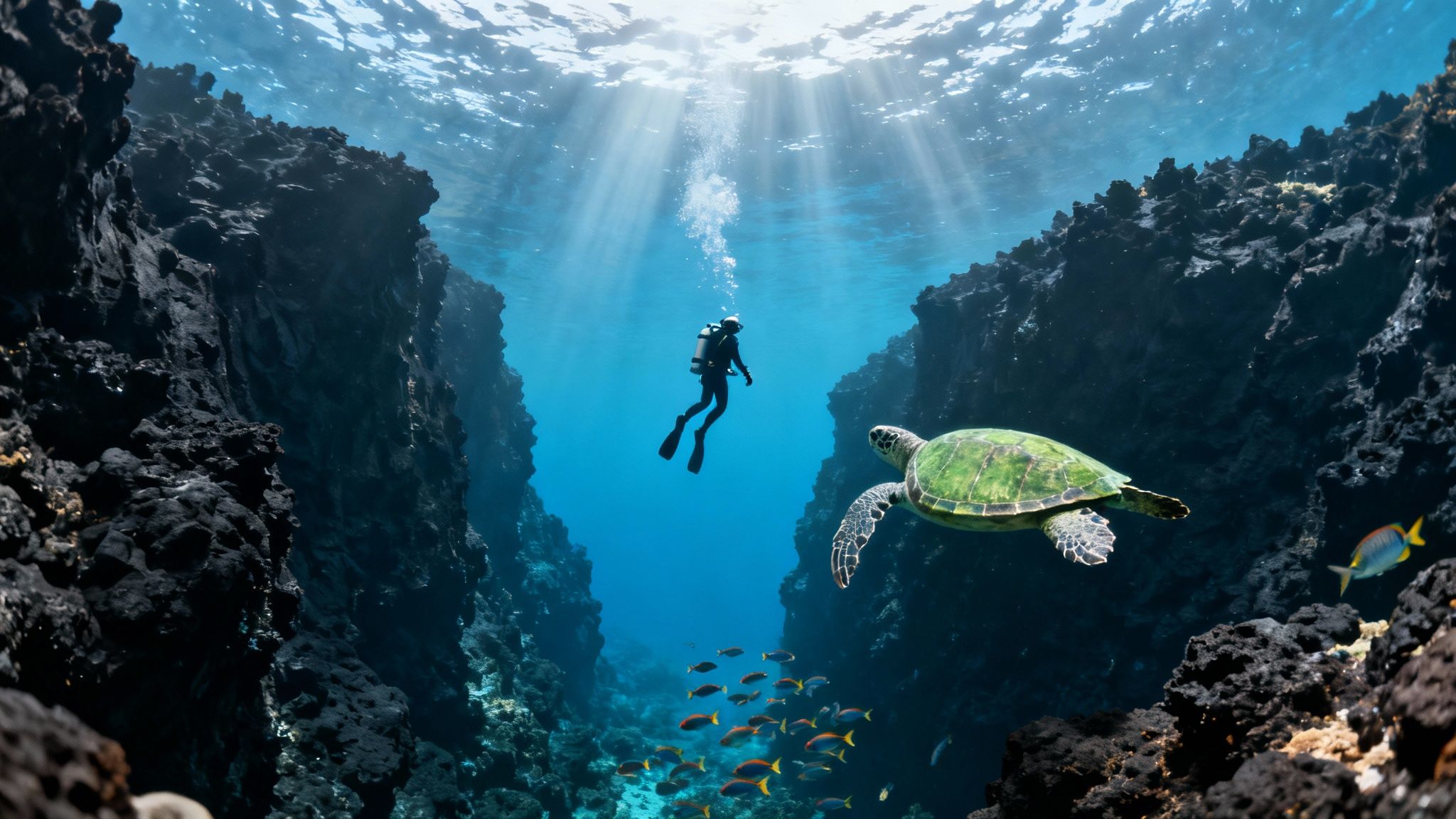
The secret to Kona's incredible diving is all about geology. The colossal volcanoes of Mauna Loa and Hualālai create a massive natural shield, protecting the entire western coastline from the blustery trade winds. The result? Consistently calm, clear, and comfortable conditions nearly every day of the year, making it an ideal underwater playground.
Visibility here frequently pushes past 100 feet, revealing a dramatic underwater landscape carved out by millennia of volcanic activity. On any given dive, you might find yourself navigating through ancient lava tubes, swimming under massive archways, or drifting along stunning drop-offs. These volcanic structures have become the foundation for some of the most vibrant and healthy coral reefs in the Pacific.
You can dive deeper into what makes the seascape here so special by reading about Kona's unique diving environment.
A Sanctuary for Abundant Marine Life
Kona’s sheltered waters have become a haven for an incredible diversity of marine life. It’s almost a guarantee that you'll see Hawaiian green sea turtles (honu) gliding gracefully past or napping on the reef. The ecosystem here is buzzing with a dizzying array of tropical fish, from bright yellow tangs to the ornate butterflyfish.
But the adventure doesn't stop with the smaller reef dwellers. It’s common for our divers to spot:
- Spinner Dolphins: We often see them putting on an acrobatic show in our boat's wake.
- Eagle Rays: These elegant creatures are a frequent sight, soaring effortlessly through the water.
- Reef Sharks: Whitetip reef sharks are commonly found relaxing on sandy patches or under ledges.
- Humpback Whales: From December to March, you can often hear their haunting songs underwater—an unforgettable soundtrack to your dive.
Epic Dives for Every Adventurer
What really puts Kona in a league of its own are its signature dives. The world-famous Manta Ray Night Dive is a surreal, underwater ballet where gentle giants with wingspans up to 16 feet glide just inches above you. It’s an experience so profound, it brings divers back year after year.
For those craving a different kind of thrill, the Kona Blackwater Dive is a trip into the deep open ocean. You’ll hang suspended in the darkness, witnessing the planet’s largest nightly migration as bizarre and beautiful bioluminescent creatures rise from the abyss. It’s the closest you can get to diving in outer space.
Whether you're taking your very first breath underwater or are a seasoned pro with thousands of dives, Kona has something incredible to offer. Here at Kona Honu Divers, we’re passionate about sharing this underwater paradise. Our experienced crew and top-rated diving tours are all about providing the safest and most memorable scuba Big Island Hawaii adventure you can have.
Exploring the Big Island’s Top Dive Sites
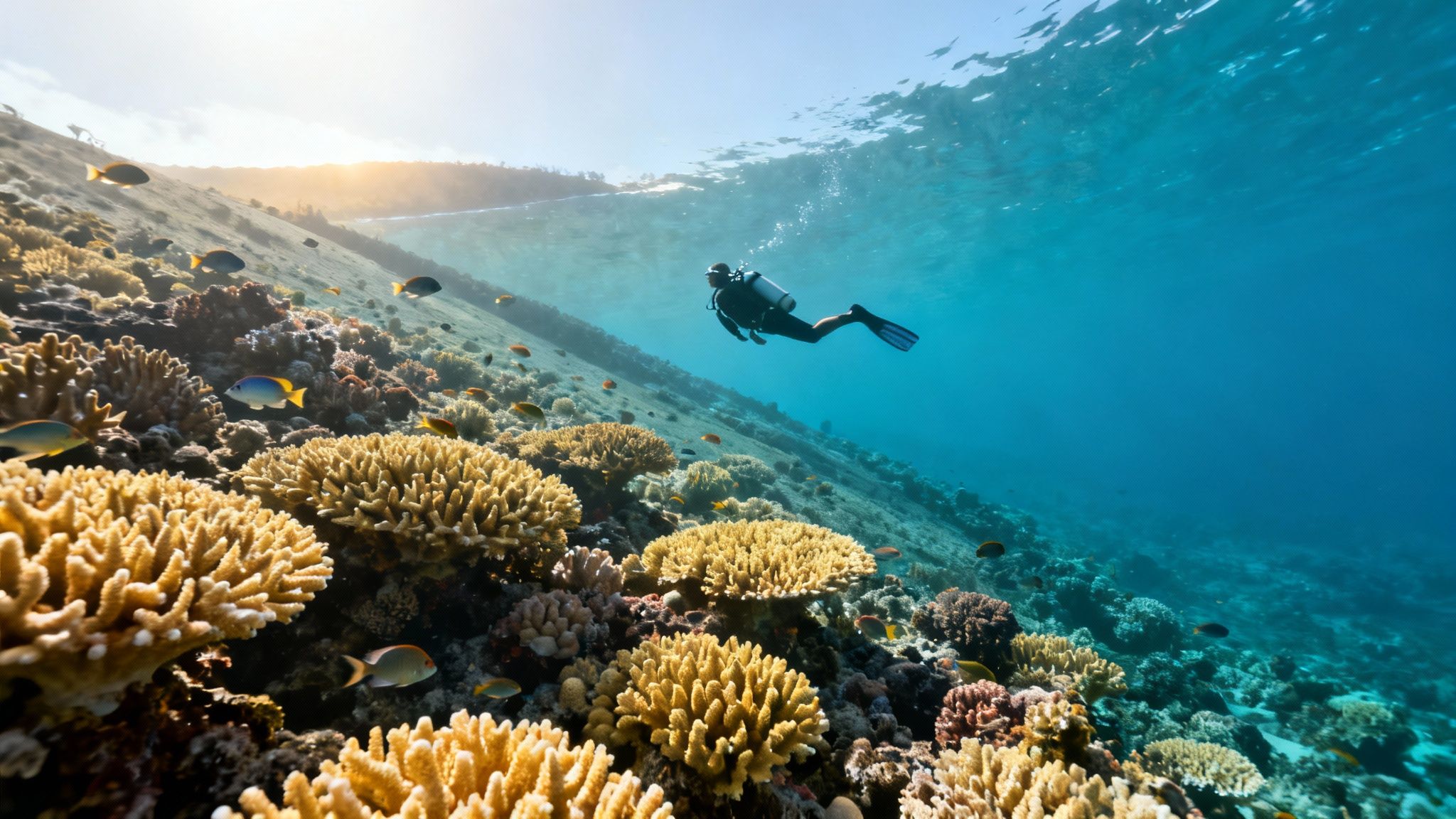
Alright, let's gear up and dive into some of Kona's most legendary underwater landmarks. The Big Island's western coast is like a treasure map for divers, and each spot on that map opens up a completely unique part of the marine world that makes scuba diving on the Big Island of Hawaii so incredible.
This isn't just a simple list. Think of it as a guided tour through the diverse ecosystems that have turned this island into a diver's paradise. We'll hit the must-see spots for beginners and then venture into territory that will put a smile on the face of even the most experienced divers.
Kealakekua Bay: A Protected Marine Sanctuary
First stop: the famous Kealakekua Bay. This place is special, packed with both rich Hawaiian history and mind-blowing biodiversity. It's a protected Marine Life Conservation District, which basically means it's a sanctuary where the coral gardens are pristine and the fish are fearless.
The clarity here can be absolutely breathtaking, with visibility often pushing past 100 feet. You’ll descend into calm, crystal-clear water over a gently sloping reef that’s a playground for everything from playful spinner dolphins to tiny, vibrant nudibranchs. Because access is almost entirely by boat, the bay remains in incredible condition. It feels less like a dive and more like floating through a massive, perfectly kept aquarium.
Puako Reef: Labyrinth of Coral Life
If you love the freedom of shore diving, you have to check out Puako Reef on the Kohala Coast. This spot is a local favorite for a reason—it offers super easy entry and a sprawling reef system that you could spend a lifetime exploring.
The underwater landscape here is a maze of coral canyons, archways, and fun swim-throughs, all buzzing with activity. It’s the kind of place where you’ll find Hawaiian green sea turtles napping on the reef, moray eels poking their heads out of crevices, and huge schools of colorful fish drifting by.
What’s great about Puako is that you can dive it again and again and always find a new path or see something different. Its easy access and rich marine life make it a must-do. To get a better sense of the sheer variety of underwater terrain we have, take a look at our detailed guide to other Big Island scuba diving sites.
Adventure Dives: Lava Tubes and Pinnacles
Craving something with a bit more edge? The Kona coast was forged by volcanoes, and that dramatic geology continues right on into the ocean, creating thrilling dive sites through ancient lava tubes and alongside massive underwater pinnacles.
Swimming through a lava tube is an otherworldly experience. It’s like exploring a submerged cave where sunlight filters through cracks in the ceiling, lighting your way. These formations are often home to unique critters, like reclusive crustaceans and the occasional whitetip reef shark resting on the sandy bottom.
Offshore, volcanic pinnacles shoot up from the seafloor, acting as magnets for bigger pelagic species. It’s common to see huge schools of jacks, barracuda, and even majestic eagle rays circling these formations. These deeper, more complex dives are perfect for certified divers looking for a genuine adventure.
The Unforgettable Manta Ray Night Dive
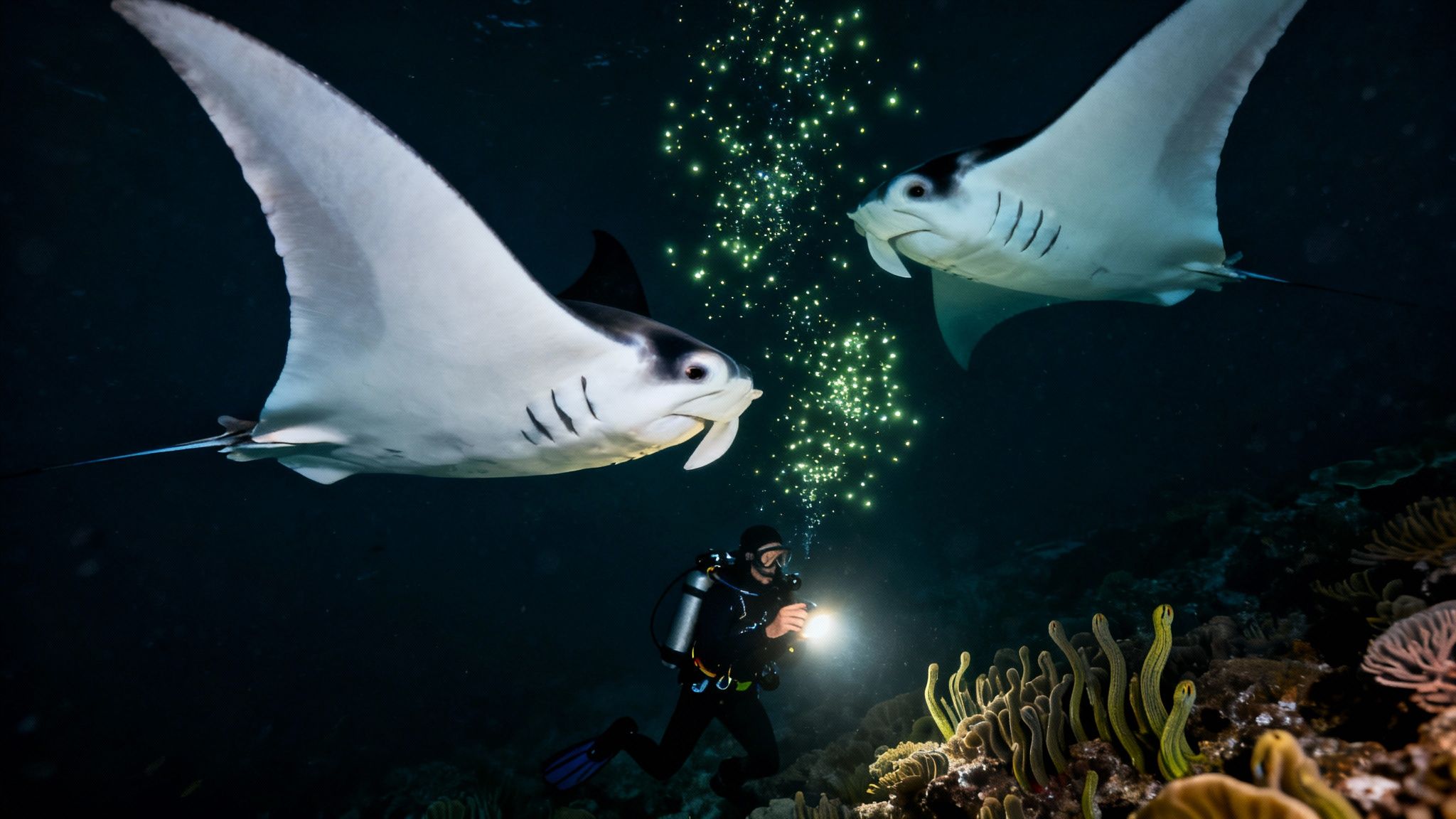
There are some dives you remember for a while, and then there are the ones that change you forever. The Manta Ray Night Dive in Kona is firmly in that second category. It’s less of a dive and more of an underwater ballet, putting you front and center for one of the planet’s most incredible spectacles. Honestly, it’s the pinnacle experience when you scuba Big Island Hawaii.
The whole thing works because of a beautifully simple idea. As the sun goes down, dive operators set up a "light bowl" on the ocean floor. They point powerful lights straight up, creating a massive, glowing column of water. This beam instantly attracts a thick soup of plankton—the manta rays' favorite food. Before you know it, the gentle giants start showing up for their nightly buffet.
You’ll descend into the dark, find your spot on the sandy bottom, get comfortable, and just look up. What happens next is pure magic. These majestic animals, with wingspans reaching up to 16 feet, start gliding, looping, and somersaulting just inches over your head. It’s an experience that’s impossible to describe fully, but one you will never, ever forget.
Where to Go: Why Garden Eel Cove is the Gold Standard
While there are a couple of spots to do this dive, one place consistently delivers a superior experience: Garden Eel Cove, affectionately known as Manta Heaven. Its protected location and ideal underwater geography make it the gold standard for this world-famous encounter.
The cove is naturally shielded from the open ocean swell, which means calmer water and better visibility. This makes a huge difference—you can relax and just soak in the show without fighting currents or surge.
The layout of Garden Eel Cove is also perfect for this dive, creating a natural amphitheater with a superior viewing area. The "campfire" setup, where everyone gathers in a circle on the sand, is safer, more organized, and gives everyone a fantastic view. On top of that, the reefs here are healthier, supporting the rich ecosystem that keeps the mantas coming back night after night.
To give you a clearer picture, here’s a quick comparison of the two main sites. It’s pretty obvious why we almost always head to Garden Eel Cove.
Comparing Manta Ray Dive Locations in Kona
| Feature | Garden Eel Cove (Superior Choice) | Manta Village (Alternative Site) |
|---|---|---|
| Location | North of Kailua-Kona, near the airport | South of Kailua-Kona, near the Sheraton Hotel |
| Conditions | Sheltered cove, generally calm, better reefs | Exposed to open ocean, prone to swell and surge |
| Dive Setup | Organized "campfire" on a sandy bottom, better viewing area | Less structured, often a "rock-holding" dive |
| Reliability | Extremely consistent manta sightings | Sightings can be less predictable |
| Comfort | More relaxed and stable for divers | Can be challenging in rough conditions |
Ultimately, while you might see mantas at Manta Village, Garden Eel Cove consistently provides a safer, more comfortable, and more spectacular encounter.
A Truly World-Class and Reliable Encounter
The sheer consistency of the sightings is what has made Kona's manta dive legendary. Local operators report incredible success rates, with mantas showing up on the vast majority of trips. It's not uncommon for dive logs to show nights with over 20 different mantas swirling in a graceful vortex of feeding. For more information, you can explore the details of the Manta Ray Night Dive in Hawaii.
Here at Kona Honu Divers, we have this experience down to a science, prioritizing both your safety and the well-being of these amazing animals. Our top-rated manta ray dive tour is designed to give you the absolute best seat in the house while treating the mantas with the respect they deserve.
But don’t just take our word for it—see what other divers have said about their experience with us.
Ready to book this bucket-list adventure for yourself?
Diving into Advanced and Unique Adventures
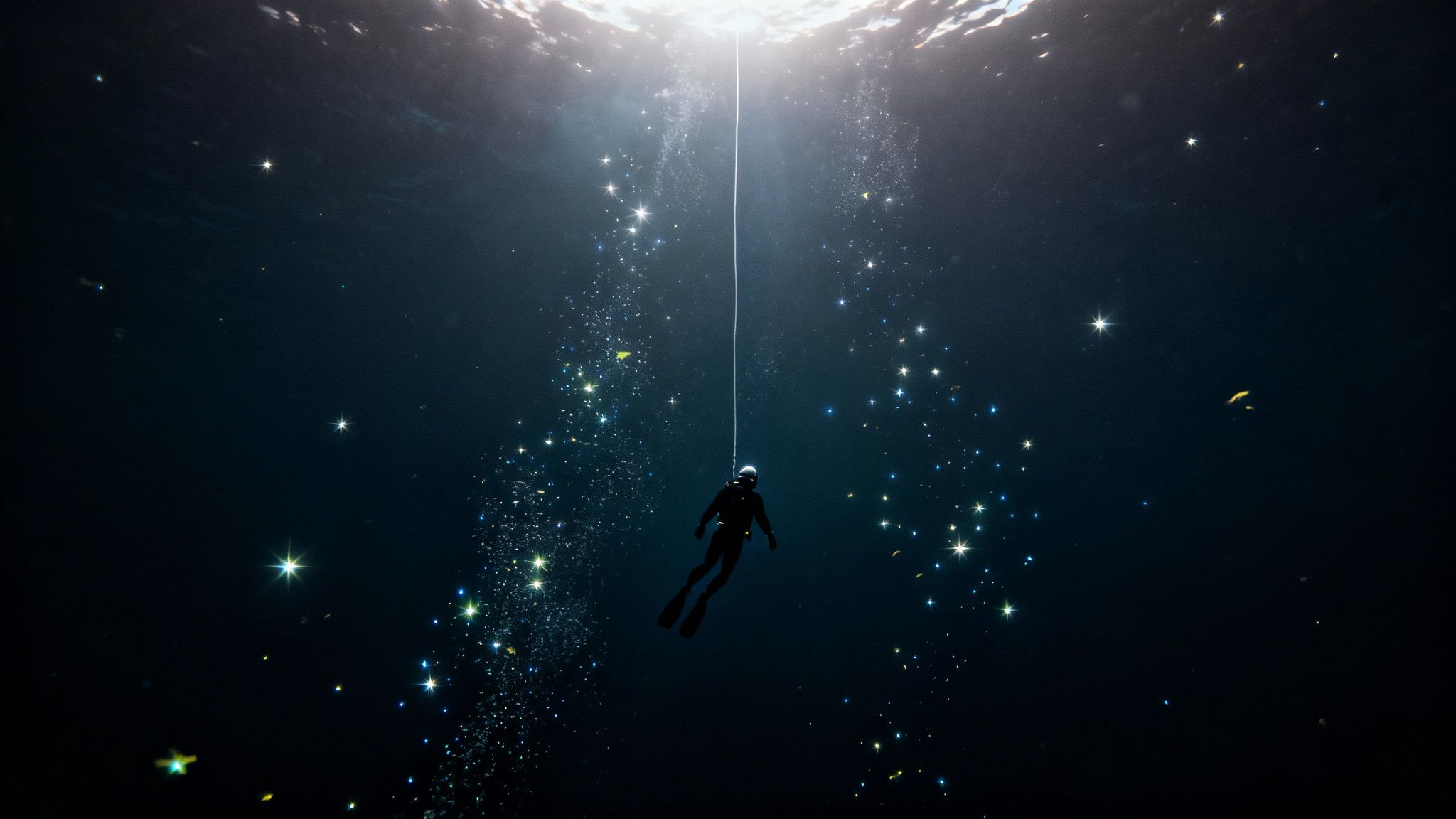
Ready to push past the usual reef tour and see what really makes the Big Island a world-class dive destination? For divers with solid skills and an adventurous spirit, the island offers experiences that you’ll be talking about for years. These are the dives that truly define what scuba Big Island Hawaii is all about for serious underwater explorers.
The manta ray night dive is incredible, no doubt. But there’s an even more surreal, almost alien, experience waiting for you in the deep, dark waters off the Kona coast—a dive that will completely change how you see the ocean.
The Kona Blackwater Dive: An Otherworldly Journey
Picture this: you're floating in the vast, inky blackness of the open ocean, miles from shore. Safely tethered to the boat and suspended in the middle of the water column, you get a front-row seat to the largest migration on Earth, which happens every single night. This is the famous Kona Blackwater Dive.
As the sun sets, a mind-boggling parade of bizarre, beautiful, and often bioluminescent creatures rises from the crushing depths to feed near the surface. You'll come face-to-face with life forms that look like they're straight out of a sci-fi movie—shimmering gelatinous squids, pulsating comb jellies, and nearly transparent larval fish.
It’s a photographer’s dream and a marine biology enthusiast’s fantasy. This isn't just a dive; it’s like being an astronaut floating through a living galaxy.
Because this dive happens at night in the deep open ocean, it’s strictly for experienced divers. You absolutely need to be comfortable in the dark and have your buoyancy control dialed in. It is, without a doubt, a once-in-a-lifetime adventure. You can get all the details on this unique trip from the pioneers at Kona Honu Divers' Blackwater Dive tour.
Beyond Blackwater: Exploring Kona’s Wild Side
Advanced diving in Kona doesn't stop with the blackwater experience. The island’s raw, volcanic geology has created an underwater playground filled with thrilling environments perfect for divers looking to go deeper and get off the beaten path. These aren't your average dives; they're expeditions into the wild heart of Hawaii's ocean.
Specialized charters can take you to rugged, remote coastlines and deep underwater pinnacles that act as magnets for bigger marine life. These sites are often more exposed to the open ocean and can have strong currents, so they demand a higher level of skill and confidence.
The payoff is huge. Advanced trips often target specific encounters depending on the season, such as:
- Deep Pinnacles and Ledges: You'll explore dramatic underwater structures where you might find schools of hammerheads or even oceanic whitetip sharks cruising by.
- Remote Coastlines: Get a chance to dive pristine, untouched reef systems where the marine life is abundant and less accustomed to seeing people.
- Seasonal Migrations: During the winter months (December – March), charters often head to spots where you can actually hear the powerful songs of migrating humpback whales echoing through the water—an unforgettable experience.
These trips are built for divers who are ready for a challenge and want to see a side of Kona that most people never will. If you’re ready to take the next step, check out this full list of premium advanced tours.
How to Plan Your Perfect Big Island Scuba Trip
Okay, we've covered the incredible underwater world of the Big Island. Now, let’s get down to the brass tacks: planning the trip itself. A little bit of smart preparation is what turns a good dive trip into an unforgettable one, making sure your time in the water is as smooth and amazing as possible.
The first thing everyone asks is, "When's the best time to go?" Honestly, the beauty of Kona is that you can dive here practically any day of the year. The island's massive volcanoes act as a natural shield for the leeward coast, keeping the waters remarkably calm and clear. Water temperatures are a dream, consistently sitting between 75-80°F (24-27°C).
But if you want a truly magical experience? Plan your trip between December and March. That's when the humpback whales are in town, and there's nothing quite like hearing their haunting songs echo through the water while you're on a dive.
Choosing the Right Dive Operator
This is, without a doubt, the most important decision you'll make for your entire trip. A truly great dive operator does more than just drive the boat. They are your guides, your safety net, and the key to a phenomenal experience. You want to look for that perfect mix of an ironclad safety record, comfortable boats, a genuinely experienced crew, and gear that's in top-notch shape.
This is exactly where a shop like Kona Honu Divers shines. Their crew has a mind-blowing 200+ years of combined experience—that’s a level of expertise you just can't fake. Their boats are built for divers, with plenty of space and even hot showers, which feel like pure luxury after a couple of hours in the ocean. You don't have to take my word for it; thousands of five-star reviews tell the same story.
Preparing for Your Dives
Getting ready isn't just about booking your flights. If it’s been a year or more since your last dive, do yourself a huge favor and sign up for a refresher course. It’s the smart, responsible thing to do. It polishes up your skills, gets you comfortable with the gear again, and ensures you can relax and actually enjoy that first giant stride back into the ocean. Kona Honu Divers offers everything from refreshers to full certifications to get you adventure-ready.
The Big Island is a major player in the global scuba scene, which is on track to be an USD 18.5 billion industry by 2035. It's world-class operators that are driving that growth, offering incredible trips like the 2-tank morning dives that explore reefs packed with turtles and fish in crystal-clear water. You can read more about what makes Big Island diving apart from the rest.
Pro Tip: Remember to sort out your accommodations and ground transport well in advance. Last-minute planning adds stress and costs. If you're trying to keep the budget in check, you can even check out a guide to finding all-inclusive resort discounts to see if that fits your travel style.
Gear, Rentals, and a Major Perk
One of the biggest reliefs of diving with a top-tier operator is knowing you don't have to worry about the rental gear. Kona Honu Divers keeps all their equipment proactively serviced and in excellent condition. This isn't just convenient; it's a huge component of safety and peace of mind.
They also offer a game-changing perk for certified divers: free Nitrox. Diving with Enriched Air Nitrox can extend your bottom time and shorten your surface intervals, which simply means you get more quality time exploring the reef on every single dive. It's a huge value-add and a clear sign that an operator is focused on giving you the best day possible.
Whether this is your first time diving in Hawaii or your tenth, a little focus on these planning details will pay off big time. By choosing a reputable operator, you aren't just booking a boat spot—you're investing in a safe, comfortable, and truly epic underwater adventure.
Ready to book your perfect dive trip?
Your Top Kona Diving Questions Answered
It’s only natural to have a few questions when planning a dive trip to a new place. We get it. To make sure you feel totally prepared before you even pack your bags, we’ve put together answers to the questions we hear most often from our divers, filled with insights straight from our experienced divemasters.
What’s the Best Time of Year to Dive in Kona?
Honestly, any time is a good time! That’s one of the best parts about diving on the Big Island. The massive volcanoes on the island act as a natural shield for the Kona coast, protecting us from the trade winds and keeping the water remarkably calm and clear almost every day of the year.
The water temperature stays in that perfect sweet spot, hovering between 75-80°F (24-27°C) year-round. While you can’t go wrong with any season, there are a couple of things that might sway your decision:
- Winter (December – March): This is humpback whale season. You might get lucky with a surface sighting, but the real magic is hearing their songs underwater. It’s an experience that will stay with you forever.
- Summer (June – August): If you’re looking for glass-calm conditions, this is your time. The seas are typically at their absolute smoothest, making for incredibly easy and relaxing dive days.
Do I Need to Be an Advanced Diver?
Not at all. Kona is fantastic for divers of every skill level, from someone just getting their fins wet to the most seasoned pros. The sheer variety of our underwater terrain means there’s a perfect dive site waiting for you.
We have plenty of gorgeous, shallow reefs full of life that are perfect for beginners and certification dives. For the more experienced crowd, the coast is dotted with dramatic deep pinnacles, ancient lava tubes, and some really fun drift dives. A good operator like Kona Honu Divers will always choose sites based on the comfort and certification of everyone on the boat, so you can be sure you're in the right spot.
A great dive trip isn't about pushing your limits—it's about finding that perfect spot where you feel comfortable, safe, and free to explore the amazing underwater world.
What Kind of Marine Life Will I See?
Get your camera ready, because the marine life here is truly world-class. The healthy reefs and protected waters along the Kona coast have created an incredibly vibrant ecosystem.
On just about any dive, you can expect to see a whole cast of local characters. We’re talking about Hawaiian green sea turtles (honu) cruising by, pods of playful spinner dolphins, moray eels peeking out from their homes, and super-smart octopuses. You'll also be surrounded by huge schools of colorful reef fish—butterflyfish, triggerfish, and wrasses are everywhere.
And then there are the special guests. You might spot majestic eagle rays gliding effortlessly through the blue, whitetip reef sharks resting on the sandy bottom, and, of course, the world-famous manta rays on our iconic night dive. Every time you drop below the surface here, you have a chance for a brand-new, unforgettable encounter.
Ready to experience the best scuba Big Island Hawaii has to offer? The expert crew at Kona Honu Divers is here to guide you on an unforgettable underwater journey. Explore all of our diving tours and book your adventure today.