
If you're wondering where to find the absolute best scuba diving in Hawaii, you've come to the right place. The Big Island consistently tops the list, and for good reason. It offers a kind of underwater adventure that’s literally been shaped by volcanoes, creating a diver's playground unlike any other in the archipelago.
The protected Kona coast is the star of the show, delivering exceptionally clear and calm waters that welcome divers of every skill level.
Why The Big Island Offers Hawaii’s Best Diving
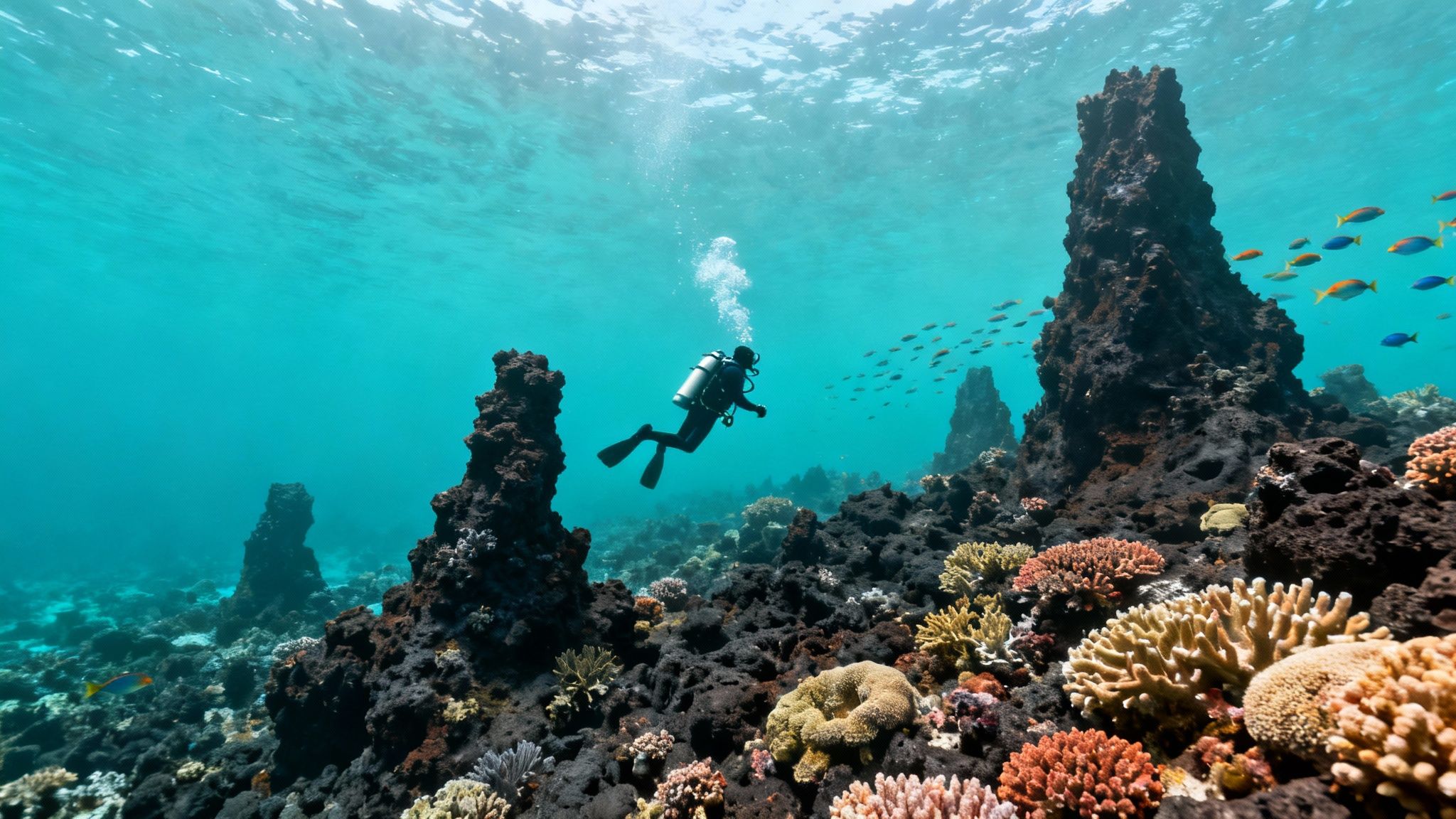
This isn't just another pretty spot to dive. The Big Island is a world-class destination built on the backs of ancient volcanoes. That unique geology has sculpted a spectacular underwater world filled with dramatic lava tubes, massive archways, and intricate pinnacles you just won't find anywhere else. These volcanic structures have since become vibrant, thriving habitats for an incredible diversity of marine life.
What really seals the deal is the water clarity. The Kona coast is shielded from the prevailing trade winds by the sheer mass of Mauna Loa and Hualalai volcanoes. This natural barrier creates consistently calm seas and visibility that often stretches beyond 100 feet, giving you a crystal-clear window into the ocean world.
It's no wonder the Big Island draws around 150,000 dive tourists every year. Together, they log roughly 100,000 certified scuba dives annually, cementing its reputation as a premier global destination.
To help you see why the Big Island stands out, here's a quick look at what makes diving here so special.
Big Island Scuba Diving Highlights At A Glance
| Feature | Description | Best For |
|---|---|---|
| Volcanic Topography | Explore dramatic lava tubes, swim-through arches, and underwater pinnacles formed by ancient lava flows. | Divers seeking unique underwater landscapes and incredible photo opportunities. |
| Exceptional Visibility | Calm, protected waters on the Kona Coast often provide visibility exceeding 100 feet. | All divers, from beginners to seasoned photographers who value clarity. |
| Signature Night Dives | Home to the world-famous Manta Ray Night Dive and the thrilling Pelagic Blackwater Dive. | Adventurous divers looking for once-in-a-lifetime underwater encounters. |
| Rich Marine Life | Thriving coral reefs support a dense population of tropical fish, eels, turtles, and endemic species. | Everyone! It's a vibrant ecosystem with something for every diver to see. |
These highlights are just the beginning of what makes this island a true diver's paradise.
Signature Underwater Experiences
Beyond its stunning reefs, the Big Island is famous for two of the most incredible night dives on the planet.
First, there's the world-renowned manta ray night dive. It’s a surreal, beautiful ballet where massive, gentle giants swoop and feed on plankton, sometimes just inches from your face. It consistently ranks as one of the best dives in the world for a reason.
Then, for the truly adventurous, the Kona blackwater dive takes you into the deep open ocean at night. You'll witness the planet's largest vertical migration as bizarre and beautiful bioluminescent creatures rise from the depths. It’s like diving in outer space.
These one-of-a-kind dives, combined with pristine reefs and perfect conditions, make it easy to see what the hype is all about. It’s a place where every dive promises a new discovery. To get a better sense of what awaits, check out our article on why the Big Island is so good for scuba diving.
Discovering The Top Big Island Dive Sites
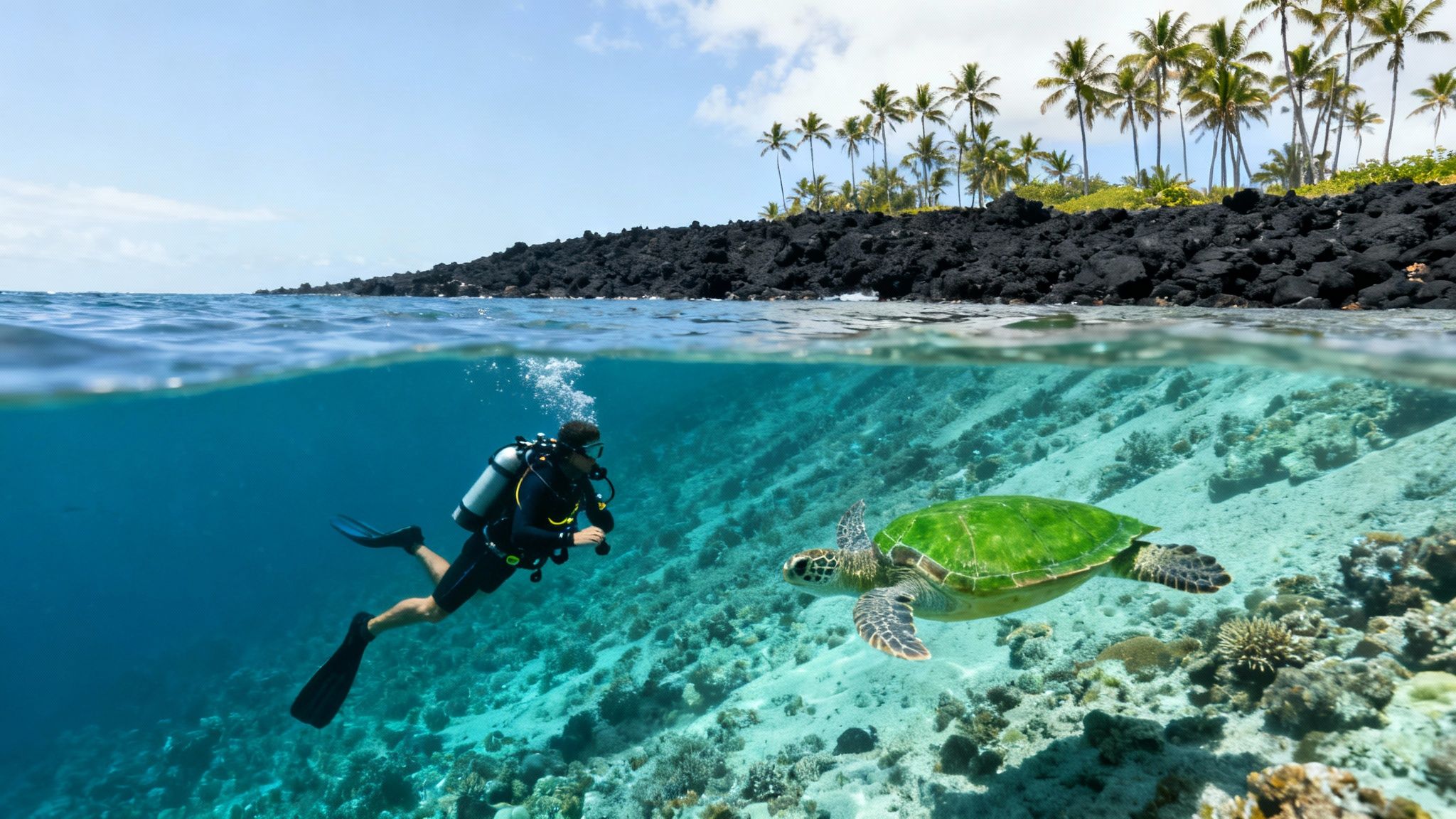
The Kona coast is absolutely packed with world-class dive sites, each offering a unique glimpse into the Big Island’s incredible underwater world. Whether you love the freedom of shore diving or the thrill of a boat trip to a remote reef, there’s something here for everyone.
Honestly, the best way to get the most out of your dives is with a local guide who really knows the lay of the land—or in this case, the reef. They know the currents, where the coolest critters hang out, and all the secret spots. From calm bays buzzing with life to dramatic volcanic ledges that drop into the deep blue, the sheer variety is what makes Kona so special.
Let's talk about some of the must-see locations for your scuba Big Island adventure.
Premier Boat Dive Locations
Heading out on a boat opens up a whole different side of Kona diving. You get access to pristine, less-crowded reefs that are often teeming with a greater diversity of marine life and more dramatic underwater landscapes. It’s a completely different experience from shore diving.
Here are a few of our favorites that you can only get to by boat:
- Golden Arches: Just like the name suggests, this site is famous for its massive lava rock arches. It’s an underwater photographer's dream. You can glide through these ancient formations and often find whitetip reef sharks resting on the sandy bottom or spot huge schools of butterflyfish.
- Turtle Pinnacle: This is a classic "turtle cleaning station." Think of it as a day spa for our local Hawaiian green sea turtles, or honu. They come here to let surgeonfish pick algae and parasites right off their shells. It’s an amazing natural behavior to witness up close.
- Manta Heaven: While this spot (also called Garden Eel Cove) is legendary for its manta ray night dive, it's also a fantastic daytime dive. The reef is beautiful, with a huge colony of garden eels poking out of the sand, plus a good chance of finding an octopus or two hiding among the corals.
Accessible And Rewarding Shore Dives
If you prefer to dive on your own schedule, the Big Island has some of the best and most accessible shore diving in all of Hawaii. Just remember to always check the ocean conditions and have a solid dive plan before you hop in.
One of the most famous shore dives here is Puʻuhonua o Hōnaunau, but everyone just calls it Two Step. It gets its name from the easy entry point—a smooth lava shelf that looks just like two steps leading you right into the ocean. The water is usually crystal clear, the coral is healthy, and pods of spinner dolphins are known to cruise by.
Another great spot, especially for new divers or those wanting a relaxed day, is Kahalu'u Beach Park. It’s a shallow, protected bay that’s full of fish and turtles, making it the perfect place for an easy-going dive or to just brush up on your skills.
Want to see what else is out there? You can check out our more in-depth guide to Big Island scuba diving sites.
From deep volcanic pinnacles to shallow, sunlit reefs, exploring these diverse spots is what makes every scuba Big Island trip one you'll never forget. With dozens of incredible sites to choose from, there’s always a new adventure waiting just below the waves.
Experiencing The Legendary Manta Ray Night Dive
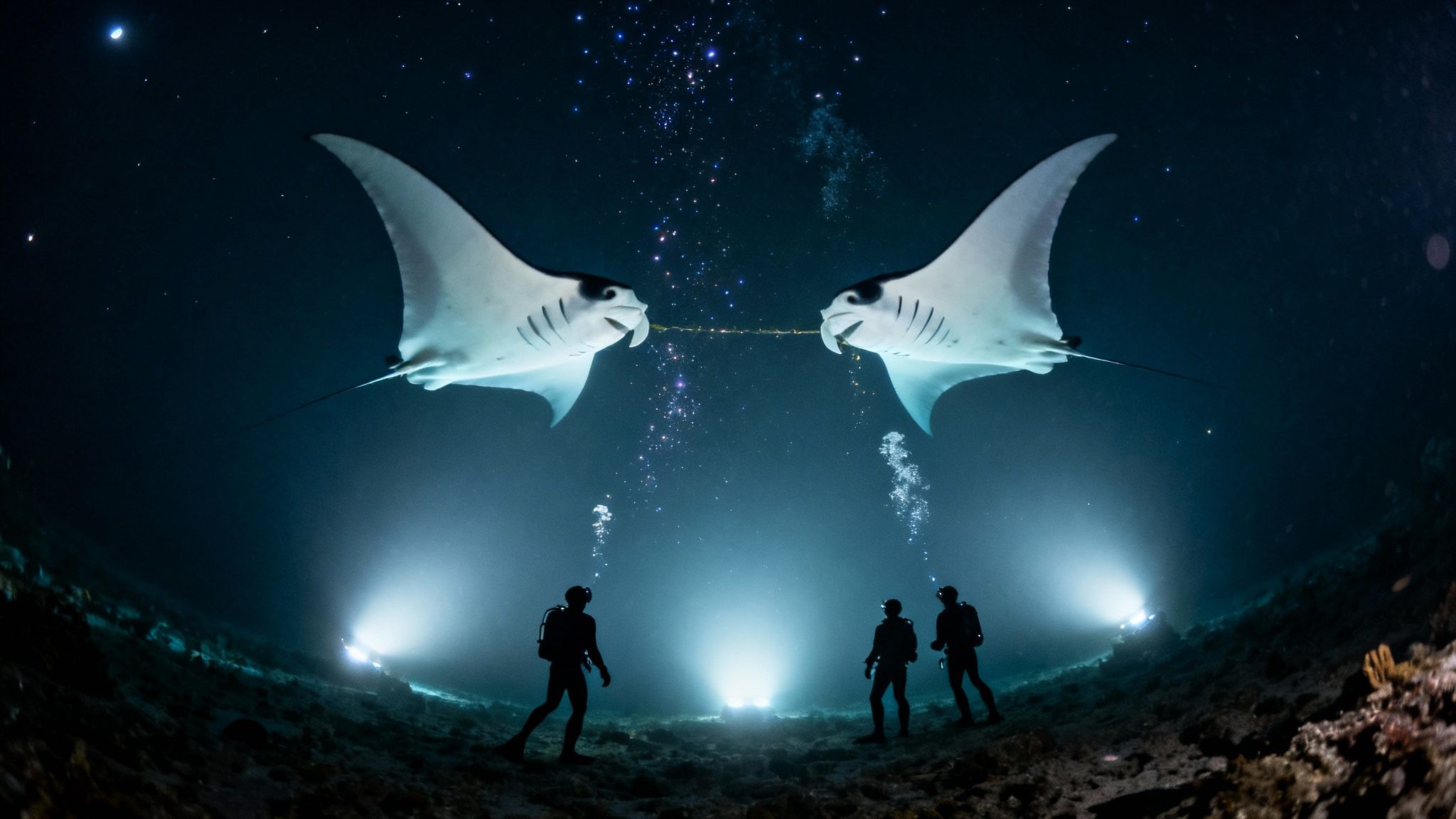
If you ask divers about the one can't-miss experience on the Big Island, the answer is almost always the same: the manta ray night dive. This isn't just another dive on the logbook; it's a world-famous underwater ballet, a truly profound encounter with some of the ocean's most graceful giants. It’s the kind of dive people talk about for the rest of their lives.
The adventure starts with a gorgeous boat ride up the Kona coast as the sun sets, lighting the sky on fire. Once darkness settles in, the crew gets to work, setting up powerful lights on the ocean floor. These lights act like a massive bug zapper in reverse, attracting swarms of tiny plankton and creating a glowing, all-you-can-eat buffet for the local manta rays.
As a diver, your job is simple. You’ll head down to a designated spot on the sand, get comfortable, and just watch the show unfold right above you.
Why Garden Eel Cove Is The Superior Choice
You’ll hear about a couple of different spots for this dive, but there’s a reason Garden Eel Cove (also called Manta Heaven) is considered the premier location. For one, its position offers natural protection from the open ocean swells, which means the water is almost always calmer—a huge plus for a night dive.
The very shape of the seafloor here gives it a massive advantage. The viewing area is like a natural amphitheater, letting divers settle in on the sandy bottom without kicking up silt. This layout gives everyone a front-row seat with an unobstructed view as the mantas swoop and glide overhead.
On top of all that, the reefs at Garden Eel Cove are stunningly healthy and vibrant. This means the twilight dive you do right before the main event is a fantastic experience in its own right. You really get two world-class dives in a single trip.
What To Expect During Your Manta Encounter
Once the lights are on, the magic truly begins. The first manta often appears like a ghost from the dark, swooping gracefully into the beams of light to feed. Before you know it, others join in, performing effortless barrel rolls as they filter plankton from the water. It’s hard to grasp their scale until you’re there—with wingspans that can stretch over 12 feet, their presence is absolutely awe-inspiring.
They glide so close you could touch them (but don't!), their massive forms silhouetted against the bright lights.
It’s an incredible privilege, and it's vital we remember these are wild animals. Operators like us are committed to ensuring the encounter is safe and respectful for both the divers and the mantas.
Never, ever touch a manta ray. Their skin has a protective slime coat, and touching them can strip it away, leaving them vulnerable to nasty infections. The best encounters are passive ones where we observe without interfering.
Choosing the right operator is the single most important decision for this dive. An experienced crew will give you a detailed briefing on proper etiquette to keep everyone—and every manta—safe. They know the site, they know the animals, and they know how to give you the best possible chance for a spectacular encounter. You can learn more about how these incredible manta ray night dives are conducted.
Exploring Advanced and Specialty Dives
Sure, the Big Island's shallow reefs are stunning, but for certified divers craving something truly different, the real adventure begins where the light starts to fade. Advanced and specialty dives here aren't just about going deeper; they're about entering entirely new worlds and witnessing phenomena that most people will never see.
The Kona coast is practically built for these kinds of experiences. Its dramatic volcanic slopes plunge straight down into the deep Pacific, setting the stage for one of the most mind-bending night dives on the planet: the Kona Blackwater Dive.
The Mysterious Kona Blackwater Dive
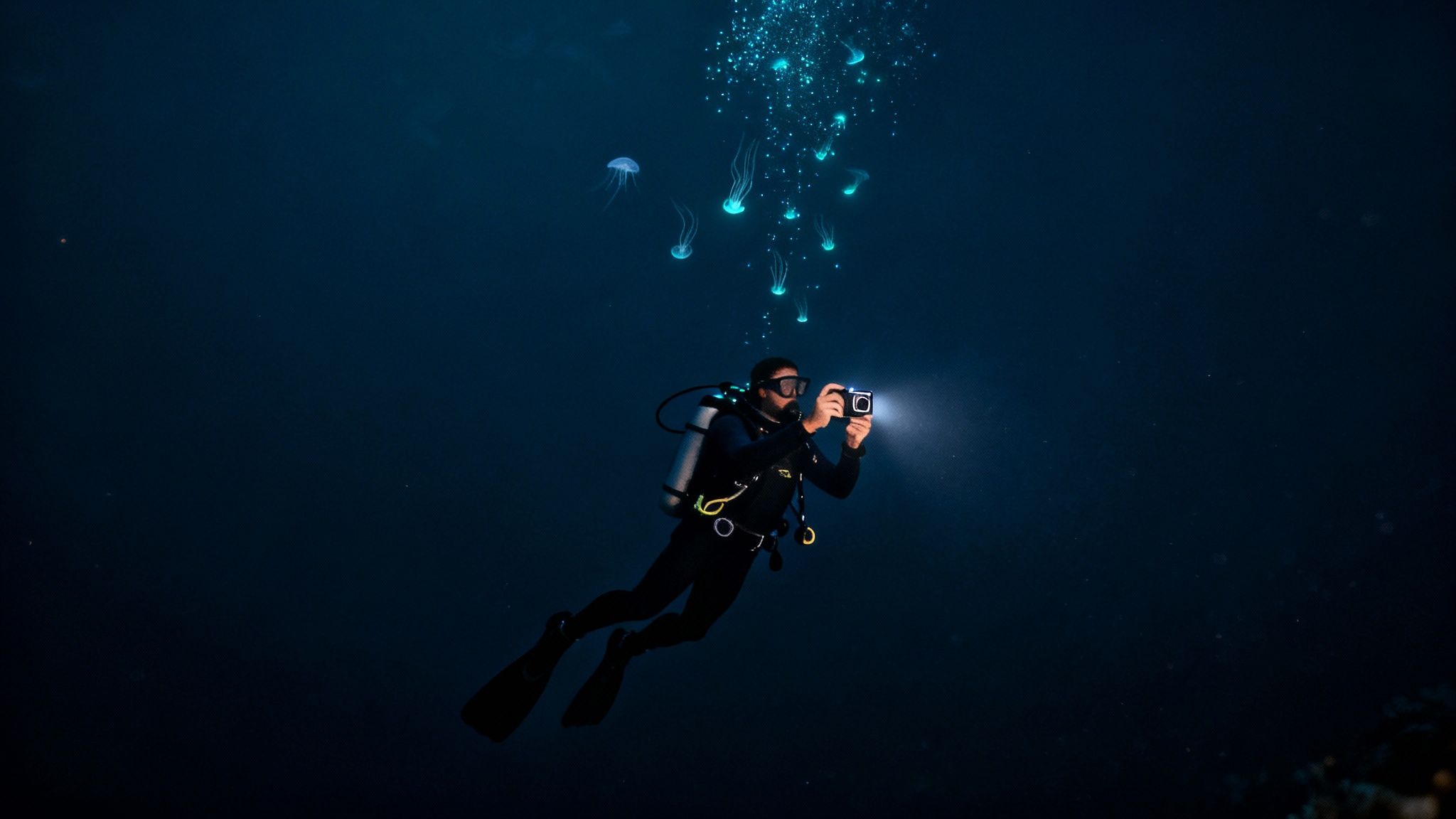
Picture this: you’re floating in absolute blackness, miles from shore, suspended over thousands of feet of open ocean. It's an experience often described as being in outer space, and it's the signature of scuba Big Island. This isn't just a dive; you're intercepting the largest animal migration on Earth, a nightly event where countless deep-sea creatures rise toward the surface to feed.
You're safely tethered to the boat, a floating outpost in an alien world. Your dive light becomes a beacon, illuminating a parade of life that looks like it swam straight out of a sci-fi movie.
What you'll see down there is beyond imagination.
- Alien-like Larval Creatures: You’ll find that many reef fish and critters look completely different in their larval stages—like tiny, translucent aliens.
- Bioluminescent Jellies: Pulsating jellies and ctenophores drift past, their tentacles glowing with a ghostly, otherworldly light.
- Strange Pelagic Life: You might cross paths with deep-water squid, bizarre-looking shrimp, and other organisms that spend their entire lives in the vast open ocean.
This dive is an underwater photographer’s absolute dream. The pitch-black background makes your subjects pop with incredible contrast, creating dramatic images you simply can't get anywhere else. It’s a chance to capture creatures that truly seem to be from another planet.
Because you’re in the open ocean at night, this dive demands a higher level of skill and comfort in the water. But for any experienced diver looking for a genuine thrill, it's an absolute must-do. Kona Honu Divers runs expertly guided Kona Blackwater Dive tours where safety and an unforgettable experience are the top priorities.
Deep Lava Tubes and Advanced Reefs
Beyond the blackwater experience, the Big Island's volcanic origins offer up a playground for advanced divers. The underwater terrain is a labyrinth of ancient lava flows that have formed deep, complex structures just waiting to be explored. These advanced dives take you to deeper reefs, sheer walls, and intricate pinnacles that are off-limits on standard dive trips.
Navigating these deeper sites requires solid experience and excellent buoyancy control. It’s where you'll find the most dramatic underwater landscapes, from massive lava tubes you can swim right through to sheer drop-offs that vanish into the deep blue. These sites often host different marine life than what you’ll find on the shallower reefs.
To get the most out of these incredible formations, diving with Enriched Air Nitrox is a game-changer. Nitrox lets you extend your bottom time by reducing the amount of nitrogen you absorb—a huge plus on deeper dives. At Kona Honu Divers, we want you to have the best dive possible, which is why our premium advanced dive trips include free nitrox for all certified divers.
How To Plan Your Big Island Scuba Trip
So, you’re ready to dive the Big Island. That’s fantastic. A little bit of planning now will pay off big time when you're underwater, making sure your trip is smooth, safe, and absolutely unforgettable. Let's walk through how to put together the perfect dive vacation with us at Kona Honu Divers.
One of the best things about diving in Kona is that there’s really no “off-season.” The coastline is protected from the powerful trade winds by the sheer size of the Mauna Loa and Hualalai volcanoes. This natural barrier gives us incredibly calm seas and great visibility—often 100 feet or more—all year long.
That said, different times of the year have their own unique perks.
- Summer & Fall (June – October): This is when the water gets warmest, usually hitting a comfortable 80-82°F (27-28°C). The ocean is typically flat as glass, which makes it an ideal time for new divers or anyone who just loves calm conditions.
- Winter & Spring (November – May): The water temperature dips a little, averaging 75-78°F (24-26°C), but this is when the magic happens. It’s peak season for humpback whales, and hearing their songs echo through the water while you dive is an experience that will stay with you forever.
Getting Certified Or Brushing Up Your Skills
No matter your experience level, we’ve got you covered. If you’ve always dreamed of exploring the underwater world but have never taken the plunge, the PADI Open Water certification is your first step. It’s a mix of online theory and in-water training that will get you ready to dive safely and confidently.
Already certified but it’s been a while? We get it. A quick refresher course is the perfect way to get back in the groove. You’ll go over the essential safety skills with an instructor, shake off the rust, and build your confidence back up before heading out to the beautiful Kona reefs.
Top-Notch Gear and the Nitrox Advantage
Let’s be honest, nobody enjoys lugging heavy scuba gear on a plane. When you dive with us, you don’t have to. We provide high-quality, meticulously maintained rental equipment for everything you need, from BCDs and regulators to fins and masks. You can relax knowing your gear is in perfect shape for every dive.
Here's a huge perk: we offer free nitrox for all certified divers on our boats. Using Enriched Air Nitrox means you absorb less nitrogen, which allows you to safely extend your bottom time. More time underwater means more time exploring Kona's amazing lava tubes, arches, and reefs. It really makes a difference.
Booking Your Dives Is Simple
Getting your spot on one of our boats is easy, but the key is to book ahead of time. This is especially true if you’re traveling during the holidays or summer months. Our most popular trips, like the world-famous Manta Ray Night Dive, often sell out weeks in advance.
Here’s a quick guide to locking in your adventure:
- See What We Offer: Head over to our diving tours page to check out all the different trips we run. We have everything from classic morning reef dives to advanced blackwater adventures.
- Pick Your Dives: Find the trips that fit your certification level and what you want to see. There’s something for everyone, whether you’re looking for a relaxed two-tank trip or an adrenaline-pumping advanced dive.
- Book Online: Our online system makes it simple to reserve your spot. Once you book, you'll get a confirmation email with all the details for your trip.
When your dive day arrives, all you need to bring is your certification card, a swimsuit, a towel, and some reef-safe sunscreen. We’ll handle the rest. Our goal is to make sure you have a fun, safe, and incredible time exploring Kona's underwater world—an experience our guests often call the highlight of their vacation.
Your Big Island Diving Questions, Answered
No matter how much you plan, there are always a few questions that pop up before a big dive trip. We get it. To make sure you feel totally confident before hitting the water, we've put together answers to the questions we hear most often from divers heading to Kona.
Think of this as a quick chat with your divemaster before you even leave home.
What’s the Minimum Certification I Need to Dive in Kona?
This is easily one of the most common questions we get, and the great news is that Kona is incredibly welcoming to divers of all levels. If you're an Open Water certified diver, you can access the vast majority of our beautiful reef sites. Most of our classic Kona dives happen in that sweet spot between 30 and 60 feet (9-18 meters), where the light is amazing, the coral is bursting with color, and the fish are everywhere.
That said, some of our most unique dives do require a bit more training.
- For the Thrill-Seekers: If you’ve got your eye on exploring deep lava tubes, dropping down dramatic underwater walls, or experiencing the one-of-a-kind Kona Blackwater Dive, you’ll need your Advanced Open Water certification. These dives call for solid buoyancy and a cool head at greater depths.
- Just Starting Out? If you're not certified yet, you couldn't pick a better place to learn. Reputable shops like Kona Honu Divers offer everything from a quick introductory dive to a full PADI Open Water course. You can literally start your diving journey right here in paradise.
Is the Manta Ray Night Dive Actually Safe?
Absolutely. Not only is the manta ray night dive one of the most mesmerizing experiences you'll ever have, but it's also incredibly safe when you go with a professional, seasoned operator. This is one of the most well-managed and regulated dives on the planet, with strict rules in place to keep both the divers and the mantas safe.
The whole dive is designed for passive observation. You'll settle into a stationary spot on the sandy bottom in a well-lit area often called the "campfire." You’re not chasing anything or swimming around—you're just there to watch the show as the mantas glide gracefully overhead.
It’s important to remember that mantas are true gentle giants. Despite their massive size, they're filter feeders with no teeth, stingers, or barbs. They are completely harmless and are only interested in the plankton attracted to the lights, not the divers below.
Every trip starts with a detailed briefing where your guides will cover all the safety procedures and the rules for respectfully interacting with the mantas. It's all about ensuring a magical—and secure—encounter for everyone.
When Is the Best Time of Year to Dive the Big Island?
Here’s one of the best parts about planning a dive trip to Kona: you can do it 365 days a year. The massive volcanoes on the island act as a natural shield, protecting the Kona coast from the trade winds and keeping the ocean conditions remarkably calm almost all the time. It’s not uncommon for visibility to top 100 feet any day of the year.
Still, the seasons do bring their own unique flavor to the diving here:
- Summer & Fall (August to October): This is when you'll find the warmest water, often getting up to a toasty 80°F (27°C). The seas are typically flat as glass, making it a perfect time for any diver, but especially for those who are new to the sport or get chilled easily.
- Winter (December to March): The water might cool down a few degrees, but winter offers something truly special in return: the soundtrack of humpback whales. Hearing their songs echo through the water while you dive is a hauntingly beautiful experience you will never forget. You might see some bigger swells on the surface, but we always know a protected spot to dive.
Honestly, there’s no bad time to dive in Kona. It just comes down to whether you prefer warmer water or the chance to listen to the whales sing.
Ready to see for yourself what makes scuba diving on the Big Island so incredible? At Kona Honu Divers, we're all about making your underwater adventure unforgettable. With our experienced crew, amazing fleet of dive boats, and total commitment to safety and fun, you’re in the best hands. Check out our full lineup of diving tours and book your spot today.