
Picture yourself sinking into perfectly clear, warm water, surrounded by an underwater world sculpted by ancient volcanoes. This isn't just any dive trip; this is the Kona coast of Hawaii's Big Island, a place that serious divers talk about for a reason. From surreal night dives with gentle giants to peaceful explorations of sun-drenched reefs, the Big Island delivers an unforgettable adventure for every diver, no matter their experience level.
Why the Big Island Is a Diver’s Paradise
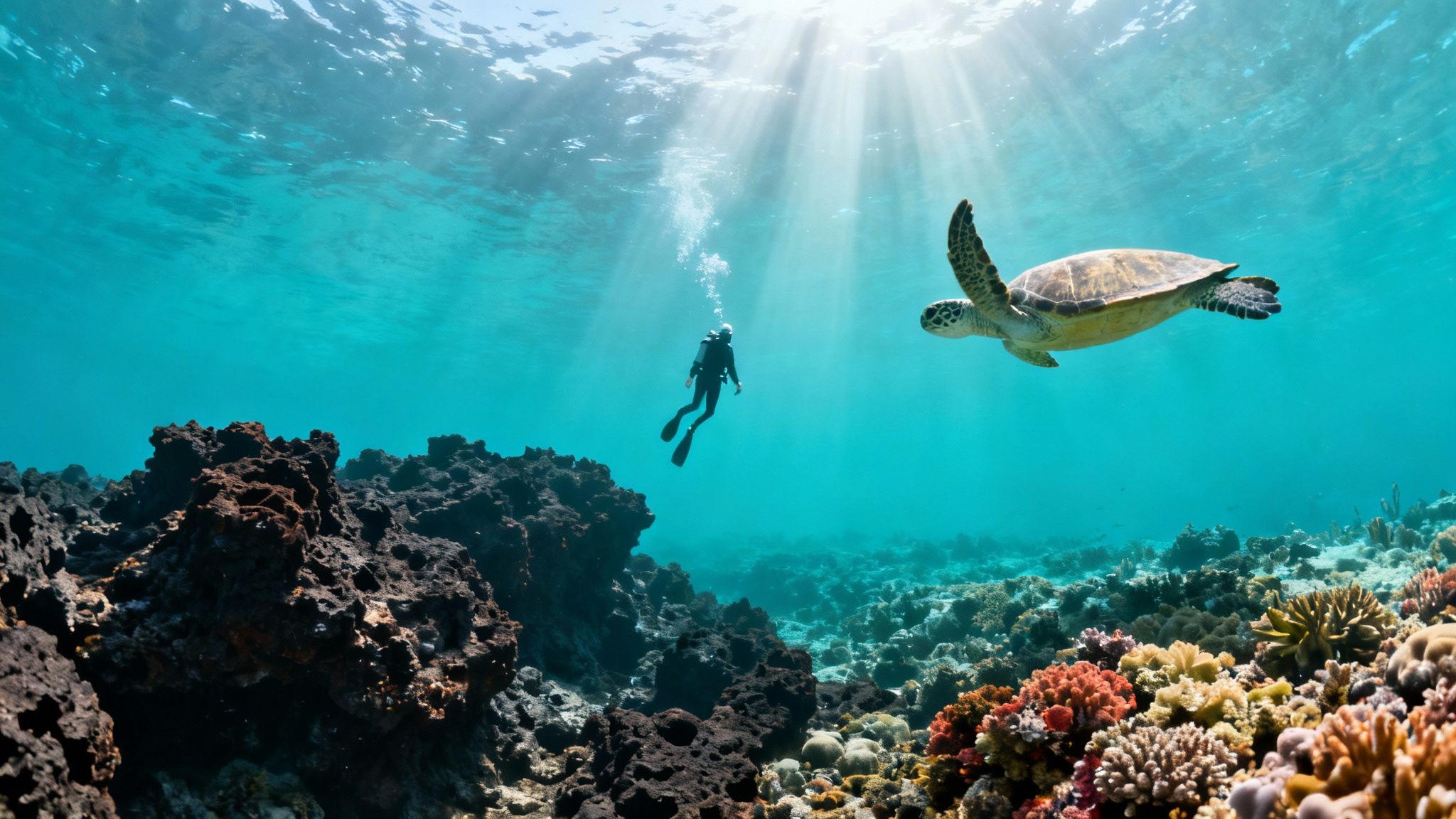
So, what’s the secret? What makes scuba diving on the Big Island so consistently incredible? It really comes down to geology. The island is home to massive volcanoes—Mauna Loa and Hualālai—that act as a natural wall, shielding the Kona coast from the strong trade winds that can churn up the waters elsewhere in Hawaii.
This massive natural shelter gives us unusually calm, almost lake-like conditions nearly all year long. On top of that, the Kona coast has very little freshwater runoff from rivers, which means the water clarity is just phenomenal. It’s not uncommon to have visibility well over 100 feet, creating a crystal-clear window into the world below.
A World of Underwater Wonders
The island’s volcanic past has left behind a dramatic and truly unique underwater landscape. As a diver here, you get to explore ancient lava tubes, swim-throughs, and majestic arches—all frozen in time. These aren't just cool rock formations; they’re the perfect foundation for a dense and brilliantly colored coral reef ecosystem to thrive.
And where there’s healthy coral, there’s an explosion of life. You can expect to see:
- Hawaiian Green Sea Turtles (Honu): We see them all the time, either cruising by gracefully or just chilling out on the reef.
- Spinner Dolphins: It’s a real treat when a pod shows up to play in the boat's wake on the way to the dive site.
- Vibrant Reef Fish: A kaleidoscope of endemic species—fish you simply won’t see anywhere else on Earth.
- Reef Sharks, Moray Eels, and Octopuses: These guys love to hang out in the nooks and crannies of the lava rock formations.
More Than Just a Pretty Reef
Beyond the stunning reefs, the Big Island is home to a couple of dive experiences that are truly world-famous. The Manta Ray Night Dive is a bucket-list spectacle where these gentle giants perform an underwater ballet right in front of your eyes. For the really adventurous, the Kona Blackwater Dive is a mind-bending trip into the deep, dark ocean to see bizarre bioluminescent creatures on their nightly migration from the abyss. Our detailed guide explains more about why the Big Island is so good for scuba diving.
The Big Island is hands-down a scuba diving mecca, especially here on the sheltered Kona coast where conditions are perfect year-round. While the summer months from April to October offer the calmest seas, winter brings its own magic. Starting in November, over 10,000 humpback whales migrate here, and hearing their songs underwater is an experience you will never forget.
Here at Kona Honu Divers, we bring decades of local experience to every trip. We know these waters like the back of our hand, and our goal is to make sure you see the very best of what they have to offer.
Ready to explore this diver's paradise? Check out our full range of diving tours on the Big Island and find the perfect adventure for you.
The World-Famous Kona Manta Ray Night Dive

If you ask any diver what the one, can't-miss experience is for scuba on the Big Island, they'll tell you it's the legendary Manta Ray Night Dive. This isn't just another notch in your logbook; it's a front-row seat to one of nature's most mesmerizing ballets. It's an encounter so profound that people fly from all over the globe just to witness it.
The setup is actually pretty simple. After the sun goes down, powerful lights are set up on the ocean floor, creating what we affectionately call an underwater "campfire." This light attracts a thick, shimmering cloud of plankton—the favorite meal for our local reef mantas.
And then, the magic happens.
Out of the deep blue darkness, giant, graceful manta rays emerge, some with wingspans stretching over 12 feet. They perform these effortless barrel rolls and silent somersaults right over your head, scooping up plankton with their massive mouths. It's a completely silent, awe-inspiring show that feels both incredibly grand and surprisingly intimate.
Why Garden Eel Cove Is The Premier Choice
While you might hear about a couple of spots for this dive, we are firm believers that Garden Eel Cove (also known as Manta Heaven) is the superior choice for the dive tour. Its unique geography gives it natural protection from the open ocean swells, which means calmer and more predictable conditions for us. That makes for a much more comfortable and enjoyable dive, letting you focus on the spectacle without getting tossed around.
Beyond the calm water, the reefs around Garden Eel Cove are simply healthier and more vibrant. The site also has a perfect sandy bottom that forms a natural amphitheater. This allows divers to settle in comfortably without kicking up silt or damaging the environment, giving everyone a safe and unobstructed view of the mantas feeding overhead. You can get a much deeper look into what makes this trip so special in our complete guide to the Manta Ray Night Dive in Hawaii.
The reason this dive has become so popular is its incredible reliability. Here in Kona, we have a resident population of over 150 reef mantas, and they know the dinner bell rings when the lights come on. The dive itself happens at a comfortable 30-60 feet, making it very accessible for most certified divers. It’s no surprise that these encounters attract over 100,000 divers and snorkelers every single year, making it a cornerstone of Hawaii's ocean tourism.
The feeling of a massive manta ray gliding inches above your head is indescribable. It’s a mix of pure awe and a deep connection to the ocean. This dive is consistently rated as one of the best night dives in the world for a very good reason.
To really nail this experience, choosing the right location is everything. Here’s a quick breakdown of the two main manta dive sites to show you why we're so committed to Garden Eel Cove.
Manta Ray Night Dive Locations Compared
When you're deciding where to have this once-in-a-lifetime experience, the specific site matters more than you might think. Factors like ocean conditions, the viewing setup, and even crowd levels can dramatically change your dive.
| Feature | Garden Eel Cove (Recommended) | Manta Village (Alternative) |
|---|---|---|
| Location | North of Kona, near the airport | South of Kona, near Keauhou Bay |
| Conditions | More protected from ocean swells, often calmer | Can be more exposed to southern swells |
| Viewing Area | Ideal sandy bottom for divers to settle | Rocky bottom, can be harder to position |
| Reef Health | Surrounded by vibrant, healthier coral reefs | Good reef, but less extensive than Garden Eel Cove |
| Crowds | Can be busy, but offers more space to spread out | Often very crowded due to proximity to resorts |
At the end of the day, Garden Eel Cove consistently provides a more reliable, comfortable, and visually stunning environment for this absolute bucket-list adventure. It’s the kind of unforgettable encounter that becomes the highlight of any trip for those who scuba on the Big Island.
Exploring Top Kona Dive Sites for Every Level
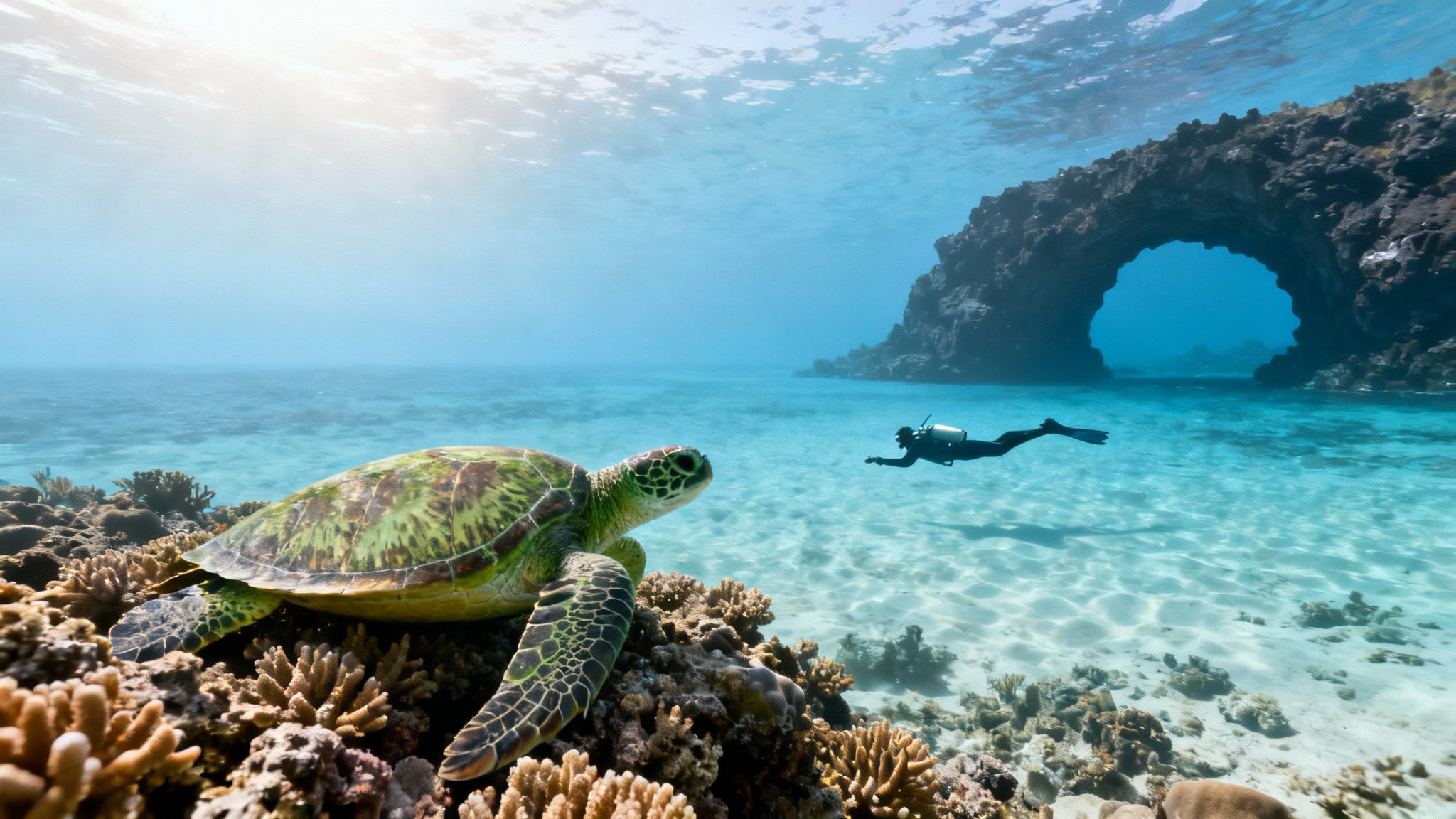
Sure, the Manta Ray Night Dive gets a lot of the spotlight, but that's just the beginning of what the Kona coast has to offer. This place is a diver's paradise, a literal treasure trove of underwater sites for every skill level and interest. The island's volcanic past sculpted an incredible underwater playground, full of everything from gentle, sandy slopes to intricate lava tube mazes and dramatic archways. Exploring this unique landscape is a huge part of the scuba Big Island experience.
So, whether you're about to take your first breaths underwater or you're a seasoned pro with a logbook full of adventures, there's a perfect spot here waiting for you. The key is matching your comfort and skill with what each location demands—and what it rewards you with.
Dive Sites For Beginners
For those just getting their fins wet or divers who just want a beautiful, relaxing dive, the Kona coast is dotted with shallow, protected reefs. These spots are ideal for building confidence while being absolutely surrounded by marine life.
-
Pawai Bay: We often call this place a turtle sanctuary, and for good reason. Pawai Bay is a calm, relatively shallow site that’s perfect for new divers. Its bright coral gardens and lava rock formations are a haven for Hawaiian green sea turtles (honu), schools of vibrant reef fish, and even the occasional eagle ray gliding past. With great visibility and almost no current, it's the perfect place for a stress-free introduction to what makes Kona diving so special.
-
Kailua Bay: Tucked right near town, this spot is incredibly accessible with an easy entry and a gentle, sloping bottom. It’s a fantastic place for a refresher dive or for anyone who loves hunting for the small stuff—think nudibranchs and octopuses tucked away in the coral heads.
These sites offer a safe and stunning environment to get comfortable in the water and truly soak in the amazing biodiversity of Hawaii’s reefs.
"There's nothing quite like seeing a new diver's eyes light up when they encounter their first honu. These beginner-friendly sites aren't just 'easy' dives; they're world-class experiences packed with life."
Intermediate Dive Sites
Once your buoyancy feels second nature and you're ready for a bit more adventure, a whole new world of dive sites opens up. These spots feature more complex terrain and give you a chance to explore the unique geological formations that really define scuba diving on the Big Island.
Sites like Golden Arches and Turtle Pinnacle are where you can navigate through ancient lava tubes and swim-throughs. That feeling of gliding through a massive underwater arch, with shafts of sunlight piercing the blue from above, is something you'll never forget. These sites often have slightly deeper profiles and can sometimes have a mild current, adding a fun and rewarding challenge.
For The Truly Adventurous: The Blackwater Dive
For the experienced diver who's looking for something that pushes the boundaries of exploration, there is nothing else on this planet like the Kona Blackwater Dive. This isn't your typical reef dive; it's a journey into the abyss. You drift in the deep, dark ocean miles from shore, safely tethered to the boat, as the planet's largest migration happens right in front of your dive light.
Every single night, countless strange and beautiful creatures rise from the deep to feed near the surface. You'll see organisms that look like they're straight out of a sci-fi movie:
- Bioluminescent jellyfish pulsating with an otherworldly glow.
- Translucent larval fish in their earliest, most alien-like forms.
- Pteropods, or "sea butterflies," flapping their tiny, delicate wings.
This dive is a sensory experience unlike any other, offering a rare glimpse into a hidden world. It is, without a doubt, the ultimate adventure for experienced divers seeking a truly unique challenge.
Whether you're drawn to the peaceful turtle hangouts or the surreal depths of a blackwater expedition, Kona delivers. You can explore a wide variety of these amazing locations on our many diving tours on the Big Island. If you're craving more challenging topography and deeper profiles, check out our Premium Advanced Dive Tours. And for the bravest among you, the unforgettable Kona Blackwater Dive tour awaits.
Planning Your Big Island Scuba Adventure
Alright, now that you’re picturing yourself gliding through lava tubes and alongside majestic manta rays, let's talk logistics. Nailing down the details is what turns a good dive trip into an incredible one. A little bit of prep work—from picking the right season to knowing your gear options—ensures you can just relax and enjoy the magic when you hit the water.
The Kona coast is a diver's dream, with fantastic conditions pretty much any day of the year. Still, the seasons do bring their own unique flavor to the experience, and the best time for you really just boils down to what you're looking for.
Choosing The Best Time To Dive
Summer, which we generally count from April through October, is famous for its calm, predictable seas. You'll often find the surface as smooth as glass, which makes for easy boat rides and exceptionally peaceful dives. If you're hoping for the most tranquil conditions possible, this is your season.
Winter, from November through March, brings a different kind of magic. While you might get a bit more surface chop from time to time, the underwater world is filled with the incredible songs of humpback whales. They migrate here to breed and give birth, and hearing their calls reverberate through the water on a dive is an experience you will never, ever forget. For a deeper look at the seasonal nuances, check out our guide on the best months to scuba dive in Hawaii.
No matter when you visit, the water temperature stays in a wonderfully consistent sweet spot. You can expect it to hover between a comfortable 75-80°F (24-27°C) all year long.
This consistency makes packing a breeze. For most people, a 3mm wetsuit is perfect for the summer months. In the winter, or if you tend to get chilly on longer dives, a 5mm wetsuit provides that extra bit of welcome warmth. It really just comes down to personal preference.
Certification And Skill Advancement
Ever thought about getting certified or taking your dive skills to the next level? The Big Island is one of the best classrooms on the planet. The calm, clear waters along the Kona coast are the perfect place to build confidence and master new techniques.
- Discover Scuba Diving: If you're a total beginner curious about what it's like to breathe underwater, this one-day experience is for you. You'll be with a certified pro every step of the way on a beautiful, shallow reef.
- Open Water Certification: Ready to get the ticket to dive anywhere in the world? You can do your full certification course right here in paradise. Your training dives will be alongside sea turtles and vibrant reef fish—not in a murky quarry.
- Advanced Courses: Already certified? You can sharpen your abilities with an Advanced Open Water course or grab a specialty certification like Nitrox to safely extend your bottom time and get more out of every dive.
Why Your Dive Operator Matters
This is a big one. Choosing the right dive operator is probably the most critical decision you'll make. The quality of the boat, the crew, and the gear can literally make or break your entire trip. At Kona Honu Divers, we're obsessed with the details because we know they add up to an unforgettable experience.
It’s about the little things that become big things, like offering free Nitrox for certified divers to help you feel less tired and stay down longer. It’s about having meticulously maintained, top-of-the-line rental gear you can actually trust. But most of all, it's about the guides. Our guides have spent years exploring these very reefs. They know the secret spots, understand the animal behaviors, and are dialed in on safety. They’re the ones who will point out a perfectly camouflaged octopus you’d swim right past, turning a simple dive into a true discovery.
How to Dive Safely and Confidently in Kona
Let’s be honest: your safety is the most important thing on any dive. When you're gearing up to explore the incredible underwater world of scuba on the Big Island, that sense of security is what allows you to truly relax and soak in the adventure. Confidence starts with picking the right crew and understanding the safety measures that make Kona's diving so special.
You might have heard some sobering statistics about ocean activities in Hawaii, but it’s crucial to understand that professionally guided scuba diving in Kona has an outstanding safety record. This isn't by chance. It's the direct result of the incredibly high standards and deep commitment to safety you'll find at the best local dive shops. It's a culture of looking out for one another that turns a potentially risky activity into a well-managed and unforgettable experience.
The Pillars of a Safe Dive
A safe dive isn't an accident. It's the outcome of careful planning, crystal-clear communication, and professional oversight from start to finish. Good dive operators build their entire business around this philosophy, making sure every diver—from a first-timer to a seasoned pro—feels comfortable from the moment they step onto the boat.
Here’s what that actually looks like:
- Thorough Dive Briefings: Before you even think about getting wet, your guide will walk you through the entire plan. They'll cover the dive site's layout, the planned depth, what amazing marine life you might see, and all the essential hand signals so everyone is on the same page.
- Comprehensive Gear Checks: A professional crew makes sure every piece of equipment, whether it’s yours or theirs, is in perfect shape. This means regular gear servicing and a final check before you hit the water to catch any little issues on the surface.
- Buddy System Discipline: The buddy system is the heart and soul of safe diving. Your guide will constantly reinforce the importance of staying close to your partner, keeping an eye on each other’s air, and being a reliable teammate throughout the dive.
A Deeper Look at Safety Statistics
Safety is everything in Big Island scuba, and Hawaii's broader drowning statistics really hammer home why professional guidance is so important. Statewide, 187 Hawaii residents drowned in various ocean incidents between 2020 and 2024. The highest rates were found in less structured activities like shore fishing and freediving.
In sharp contrast, the methodical nature of scuba diving slashes these risks. Guided boat dives from Kona, led by certified instructors with decades of combined experience, report virtually zero incidents across thousands of trips. You can learn more about Hawaii's ocean safety statistics from Civil Beat.
Choosing reputable shops ensures these stats stay positive, turning potential peril into unforgettable adventures. It’s the expertise and vigilance of the professionals that make the difference.
This focus on safety doesn't just apply to the divers; it extends to the environment we're so lucky to visit. A huge part of any responsible dive is marine conservation etiquette. This means using reef-safe sunscreen to protect the fragile coral from damaging chemicals and following a strict "no-touch" rule for all marine life. To protect both your skin and the delicate marine ecosystem during your dives, consider consulting a reef-safe sunscreen guide.
Ultimately, diving with a professional guide transforms your adventure into a secure, worry-free experience. It truly reinforces the massive value of exploring the ocean with seasoned experts who put your well-being above all else.
Why Choose Kona Honu Divers
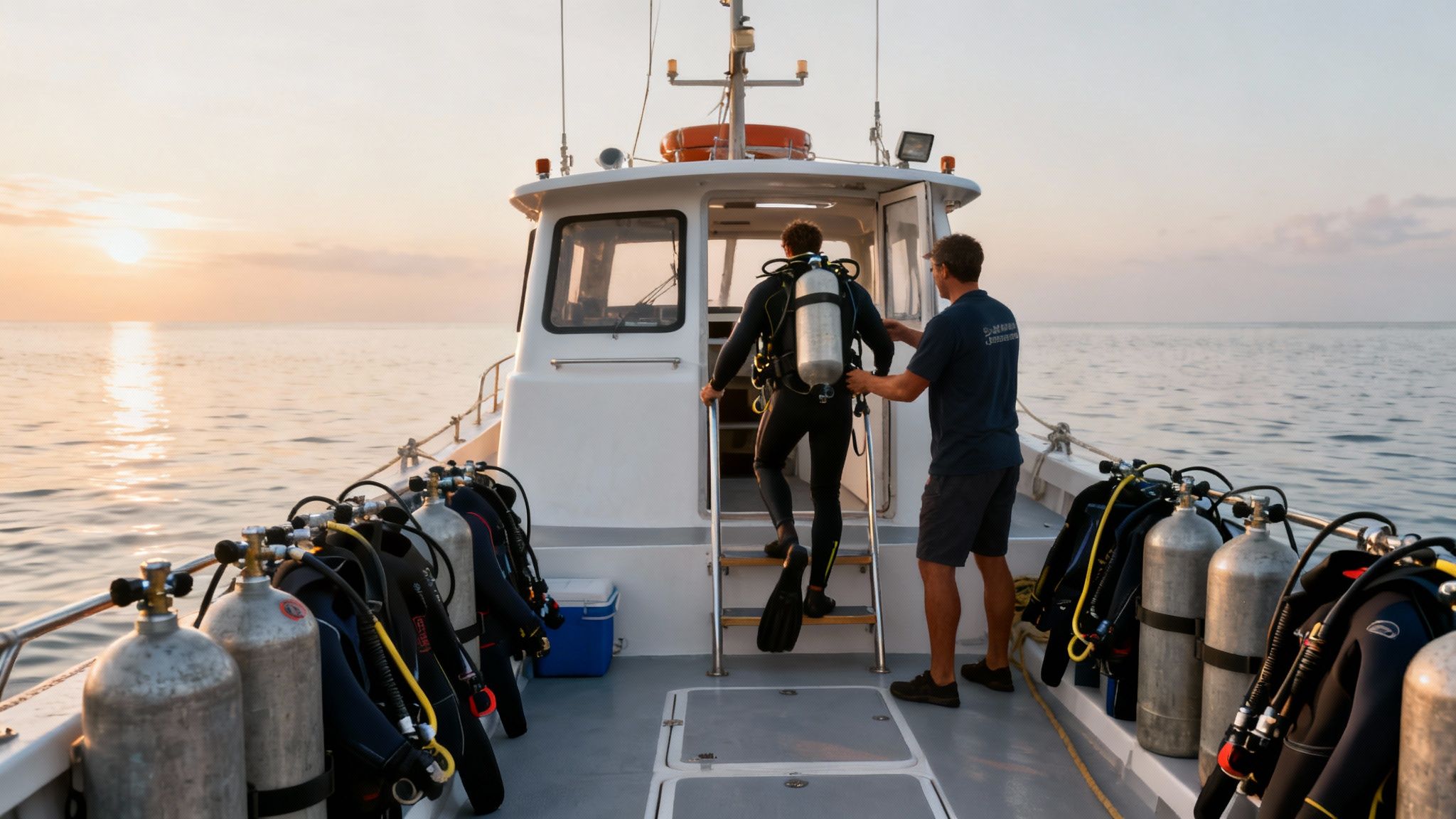
When you're dreaming up your perfect scuba Big Island trip, the single most important call you'll make is choosing your dive operator. It’s what separates a decent dip in the ocean from a truly life-changing experience. That's where we come in—Kona Honu Divers has worked hard to become Kona’s top-rated and most trusted dive company.
We've built our reputation on a simple foundation: real expertise and a deep, genuine love for the ocean. Our crew brings a staggering 200+ years of combined experience to the table. That isn't just a number; it means we know the hidden spots, understand the currents, and can introduce you to marine life in a way that turns a dive into a story you’ll be telling for years.
Your Safety and Comfort Are Everything
From the moment you step on board, your safety and comfort are our top priorities. We run a tight, professional operation where high safety standards are non-negotiable. This means our gear is meticulously maintained, our dive briefings are crystal clear, and our expert crew is always watching out for you.
Our boats are also built for divers, by divers. After surfacing from an incredible dive, there’s nothing quite like a hot freshwater shower on the way back to shore. We make sure our vessels are spacious and comfortable, with plenty of shade and secure spots for your gear, so your entire day is relaxing and hassle-free.
At Kona Honu Divers, we believe a great day of diving starts long before you hit the water. It begins with a friendly crew, reliable gear, and the confidence that you are in the best possible hands.
Small Groups, Big Adventures
We learned a long time ago that big, crowded boats just don't cut it. That's why we keep our groups small. This approach guarantees you get personal attention from our guides, whether you're a brand-new diver needing a little extra support or a seasoned pro looking to find a specific critter. It makes every trip feel less like a tour and more like a private adventure with friends.
From the world-famous Manta Ray Night Dive to our advanced charters and the mind-blowing Kona Blackwater Dive, every trip we run is designed to be a premium experience. Our mission is to share the magic of Kona’s underwater world in the safest, most enjoyable way we know how.
A key reason people choose a top-tier operator like us is our stellar reputation, which underscores the importance of how marine businesses manage their online reputation. But you don’t have to take our word for it—our thousands of five-star reviews from fellow divers say it all.
Come dive with us and find out why we’re the crew so many people trust for their underwater journey. Your unforgettable scuba Big Island experience is waiting.
Your Big Island Scuba Questions, Answered
Planning a dive trip always brings up a few questions. We've been asked just about everything over the years, so we’ve put together some quick answers to the most common queries to help you get your plans dialed in.
What’s The Best Time Of Year To Dive In Kona?
Honestly, there's no bad time to dive here. The Kona coast is beautifully sheltered, giving us great conditions year-round. That said, if you're chasing the absolute flattest seas and crystal-clear visibility, the summer months from April to October are prime time.
But winter has its own magic. Dive with us from November to March, and you'll likely be treated to an incredible underwater concert—the haunting, beautiful songs of migrating humpback whales. It's something you'll never forget.
Do I Need To Be Certified To Try Scuba Diving?
Not at all! If you're curious about breathing underwater but aren't certified, our Discover Scuba Diving experience is made for you. We'll pair you up with an experienced instructor who will guide you on a shallow, vibrant reef for your first-ever dive.
And if you get hooked (which happens a lot!), you can complete your full Open Water certification right here. Trading a classroom for the warm, clear waters of Kona is a pretty amazing way to start your diving journey.
Is The Manta Ray Night Dive Okay For Beginners?
Yes, absolutely. As long as you have your Open Water certification, you're good to go. The manta dive is an incredible experience, but it’s also very controlled and safe.
We take you to a shallow site, usually around 30-40 feet, where you'll settle on the sandy bottom. You don't have to worry about navigating or currents; you just get to relax and watch the show. This setup makes it a fantastic and mesmerizing dive for almost every skill level.
Besides Manta Rays, What Else Can I Expect To See?
Oh, the list is long! The Kona coast is a bustling metropolis of marine life. On any given dive, you have a great chance of spotting:
- Hawaiian green sea turtles (honu) cruising by or napping on the reef.
- Schools of spinner dolphins putting on a show from the boat.
- Reef sharks, moray eels, and clever octopuses peeking out from ancient lava tubes.
- An incredible variety of vibrant reef fish, including the fish with the famously long name—Hawaii's state fish, the Humuhumunukunukuāpuaʻa.