
The PADI Divemaster certification is your first real stride into the world of professional scuba diving. It’s the turning point where you go from being a recreational diver to a true leader—someone who can guide certified divers, assist instructors with their students, and manage the behind-the-scenes logistics that make every dive safe and unforgettable.
What a PADI Divemaster Really Does
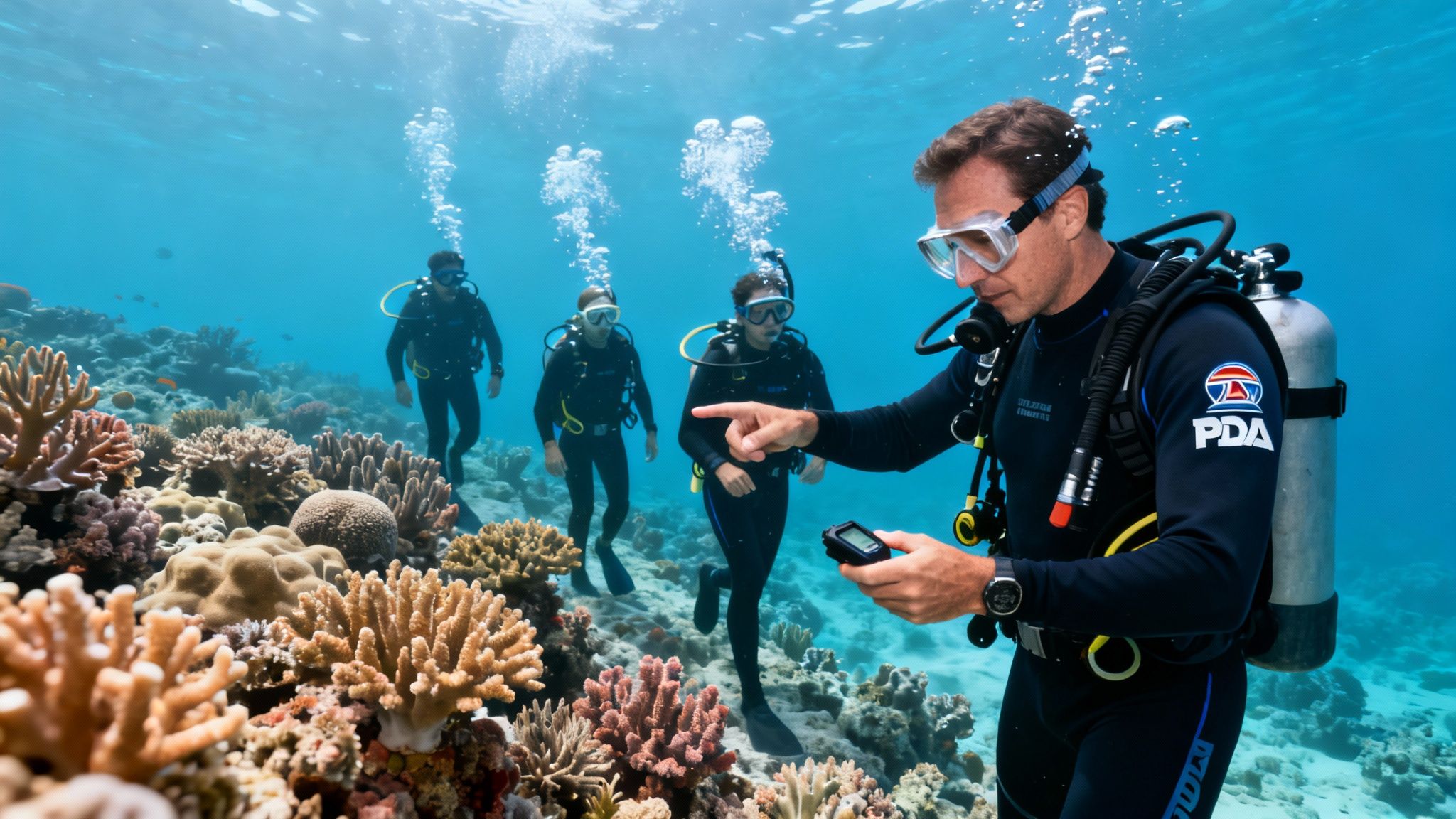
Imagine a seasoned mountain guide leading a trek—that’s the best way to think about a PADI Divemaster. They are the absolute backbone of any dive operation, mixing expert-level dive skills with leadership, mentorship, and a laser focus on safety. This isn't just another certification card; it marks the shift from being a participant on a dive to being the person responsible for it.
The role of a certified Divemaster is anything but static. One day you might be leading a group of divers through Kona's incredible lava tubes and reefs, and the next you could be right alongside a PADI Instructor, helping a new Open Water student finally nail their buoyancy.
Key Roles Of A PADI Divemaster
Being a Divemaster is so much more than just being a great diver. You become a mentor, a safety supervisor, and a logistics coordinator, all in one package. Your training is designed to give you the confidence to handle all of it.
Here’s a snapshot of the primary roles a PADI Divemaster takes on, which are the core of any successful dive operation.
| Role | Description |
|---|---|
| Dive Site Supervisor | Organizes the dive, conducts briefings, manages logistics, and makes sure everyone follows safe diving practices from start to finish. |
| Instructor's Assistant | Acts as an instructor's right hand, helping with in-water skills, supervising students, and reinforcing key learning concepts. |
| Underwater Guide | Leads certified divers on tours, requiring sharp navigation skills, situational awareness, and an eye for spotting amazing marine life. |
| Safety Coordinator | Assesses environmental conditions like currents and visibility to make sound judgments about whether a site is safe and suitable for the group. |
These roles show just how dynamic the job is. A Divemaster has to wear many hats, often on the very same dive.
A Passport To A Global Career
The PADI name carries a ton of weight in the dive industry. Since it started, PADI has certified over 30 million divers, making it the world's largest diver training organization. For you, the Divemaster certification is your entry ticket into this massive professional network, which includes over 6,600 PADI Dive Centers in 184 countries.
When you earn your PADI Divemaster certification, you join a global community of roughly 128,000 PADI professionals, opening up job opportunities all over the world. This global recognition turns your certification into a passport, letting you work in some of the most stunning underwater places on Earth.
A big part of the job involves teaching and guiding, so skills like creating effective educational videos can be surprisingly useful for briefings or reinforcing skills before divers even get wet. It’s this blend of practical, in-water leadership and instructional know-how that defines a true PADI professional.
Meeting the Course Prerequisites
Thinking about going pro? The PADI Divemaster certification is your first big step, but it’s a path you earn, not just buy. The prerequisites aren't just a checklist; they’re designed to make sure you have the right foundation to start thinking and acting like a real dive leader.
First things first, you have to be at least 18 years old. This is a hard-and-fast rule because being a Divemaster means taking on serious responsibilities for other divers’ safety, and that requires a certain level of maturity.
You'll also need a logbook showing a minimum of 40 logged dives to even start the program. This isn't just a random number. It proves you've spent enough time underwater to be truly comfortable with your own skills before you start learning how to guide and manage others. Keep in mind, you'll need 60 logged dives by the time you're certified, so the more dives you have coming in, the better.
Foundational Certifications
The single most important prerequisite is having your PADI Rescue Diver certification. Honestly, this course is a total game-changer. It’s where you stop thinking only about yourself and start focusing on everyone else in the water. You learn to spot problems before they happen and handle emergencies with a calm, methodical approach—the very essence of a dive pro.
You can learn more about how the PADI Rescue Diver course completely shifts your mindset.
Alongside that, you’ll need proof of Emergency First Response (EFR) Primary and Secondary Care training (or a similar CPR and first aid certification) that’s been completed within the last 24 months. Your life-saving skills need to be sharp and up-to-date.
A common misconception is that you need to be a perfect diver to start the course. In reality, the Divemaster program is where you master those skills. The prerequisites are about having the right base to build upon.
Medical Fitness and Dive Experience
Your health is non-negotiable. You must have a medical statement signed by a physician within the last 12 months clearing you for diving. This is a critical safety step that protects you, the dive crew, and the divers you’ll be leading.
Now, about those 40+ dives… quality beats quantity every time. Don’t just show up with a logbook full of identical, easy reef dives. To really set yourself up for success, build a diverse portfolio of experiences:
- Night Dives: Get comfortable in the dark. It sharpens your awareness and navigation like nothing else.
- Deep Dives: Understand what pressure really does and practice the proper protocols for diving deeper.
- Navigation Dives: Get so good with your compass that finding your way back to the boat is second nature.
- Varied Conditions: Dive in current, in lower visibility, and in different water temperatures. Becoming an adaptable diver is key.
This kind of well-rounded experience gives you the real-world context you need to turn textbook knowledge into true leadership ability. It's what will make all the difference on your journey to becoming a PADI Divemaster.
Inside the Divemaster Course Structure
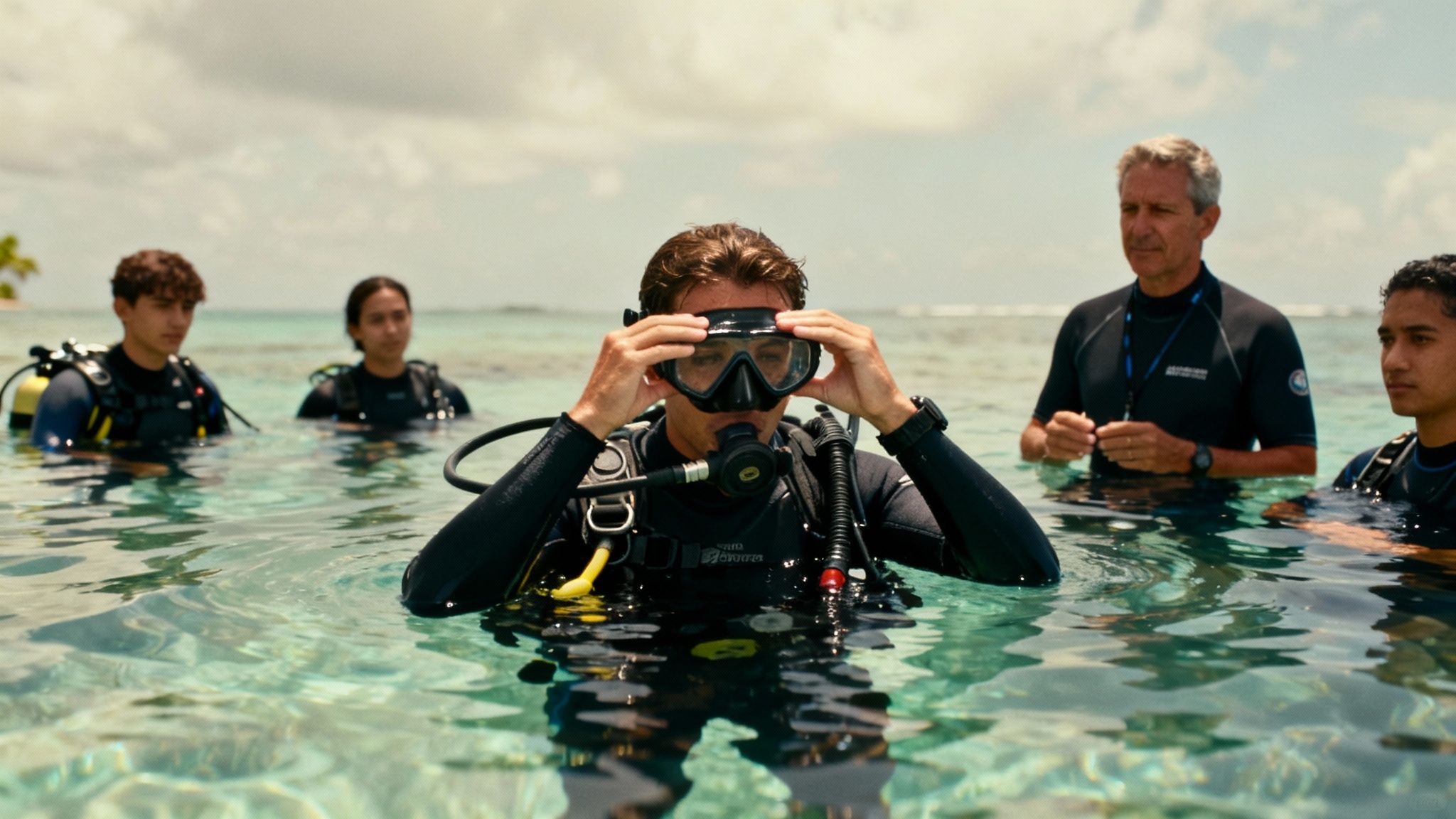
The path to becoming a PADI Divemaster is a serious undertaking, but it’s one of the most rewarding experiences a diver can have. This isn't just another certification card; it's a complete transformation of how you see and interact with the underwater world.
The course is designed around three core areas that work together to shape you into a competent and confident dive leader: Knowledge Development, Waterskills Development, and Practical Application. Think of it as building your expertise from the ground up—first the theory, then the physical mastery, and finally, the real-world leadership experience.
The Three Pillars of Divemaster Training
Every part of the training is there for a reason. It’s a holistic approach that ensures you can not only do the skills but also understand the why behind them and can effectively teach and lead others.
-
Knowledge Development: This is where you go from being a knowledgeable diver to a genuine expert. We’re talking a deep dive into physics, physiology, equipment mechanics, and decompression theory—far beyond anything you’ve touched on before. You'll complete this through PADI eLearning or by working through the Divemaster manuals with your instructor.
-
Waterskills Development: Here, we fine-tune your in-water abilities until they are second nature. This involves a series of stamina exercises and skill circuits designed to make you a model of perfect technique and physical preparedness.
-
Practical Application: This is where the magic happens. You’ll take everything you've learned in the classroom and the pool and apply it in real-world scenarios, like leading actual dives and assisting with PADI courses.
This isn’t about just checking boxes. It’s a proven process for building the confidence, competence, and decision-making skills that define a true dive professional.
Mastering the Knowledge
The "book smarts" portion of your PADI Divemaster certification is intense. You'll cover nine different subjects, digging into everything from dive planning and risk management to the business of diving itself.
The goal is to equip you to handle any question a diver throws your way, whether it's about how a regulator works or why a particular dive profile is safe. This all culminates in the two-part Divemaster Final Exam, which ensures you have the solid foundation of knowledge a PADI pro needs.
Building Your In-Water Prowess
This is where you sharpen your personal diving skills to a razor’s edge. It’s not enough to simply perform a skill; you have to do it with the kind of effortless, exaggerated precision that a new student can easily follow.
This part of your training includes:
- Stamina Exercises: You'll complete four timed challenges: a 400-meter swim, a 15-minute tread, an 800-meter snorkel, and a 100-meter inert diver tow. These aren't just about passing a fitness test; they build the quiet confidence that you can handle physically demanding situations.
- Diver Rescue Assessment: You’ll revisit the skills from your Rescue Diver course and demonstrate your ability to respond to an unresponsive, non-breathing diver at the surface.
- Skill Demonstration Circuit: This is a big one. You'll perform all 24 basic scuba skills from the Open Water Diver course. The standard isn't just "good enough"—it's "demonstration quality." Your technique needs to be slow, clear, and absolutely flawless.
Real-World Practical Application
This is easily the most exciting part of the journey. In the Practical Application phase, you finally get to put on the Divemaster hat and see what the job is really like. You’ll complete a series of workshops and assessments that are pulled directly from the day-to-day life of a dive pro.
Becoming a Divemaster isn't just about passing tests. It's about earning the trust of the divers who will one day follow you. The practical application phase is where that trust is built, one dive briefing and one student interaction at a time.
These real-world experiences include:
- Dive Site Setup and Management: Learning the logistics of running a smooth dive operation, from assessing conditions to managing the dive boat.
- Mapping Project: You'll create a detailed underwater map of a dive site, which sharpens your navigation and observational skills like nothing else.
- Dive Briefing: This is a core skill. You’ll master the art of delivering a clear, engaging, and thorough pre-dive briefing that gets everyone on the same page.
- Assisting Student Divers: You’ll work side-by-side with a PADI Instructor, helping real students during their confined and open water training dives.
- Guiding Certified Divers: This is your chance to lead! You'll guide a group of certified divers on an underwater tour, managing their safety while pointing out all the amazing marine life.
This is the hands-on, in-the-trenches experience that truly solidifies your training and prepares you for your new career.
Your path through the Divemaster program can be structured in different ways, depending on your schedule and how you learn best. Most dive centers, including here at Kona Honu Divers, offer either a more concentrated, course-like structure or a longer, more immersive internship.
Divemaster Training Path Comparison
| Aspect | Intensive Course (4-6 Weeks) | Internship Model (2-6 Months) |
|---|---|---|
| Pace | Fast-paced and structured. | Slower, more flexible pace. |
| Immersion | Focused solely on training. | Deeper immersion into the daily operations of a dive center. |
| Mentorship | Direct and intensive mentorship with a dedicated instructor. | Broader exposure to multiple instructors and dive professionals. |
| Best For | Candidates on a tight schedule or who thrive in a structured class environment. | Those seeking a comprehensive, "behind-the-scenes" experience of the dive industry. |
| Outcome | You'll be certified efficiently and ready to work. | You'll graduate with a richer understanding of the business and a broader network. |
Ultimately, both paths lead to the same PADI certification. The best choice really depends on your personal goals, learning style, and how much time you can dedicate to your training.
Why Train with Kona Honu Divers
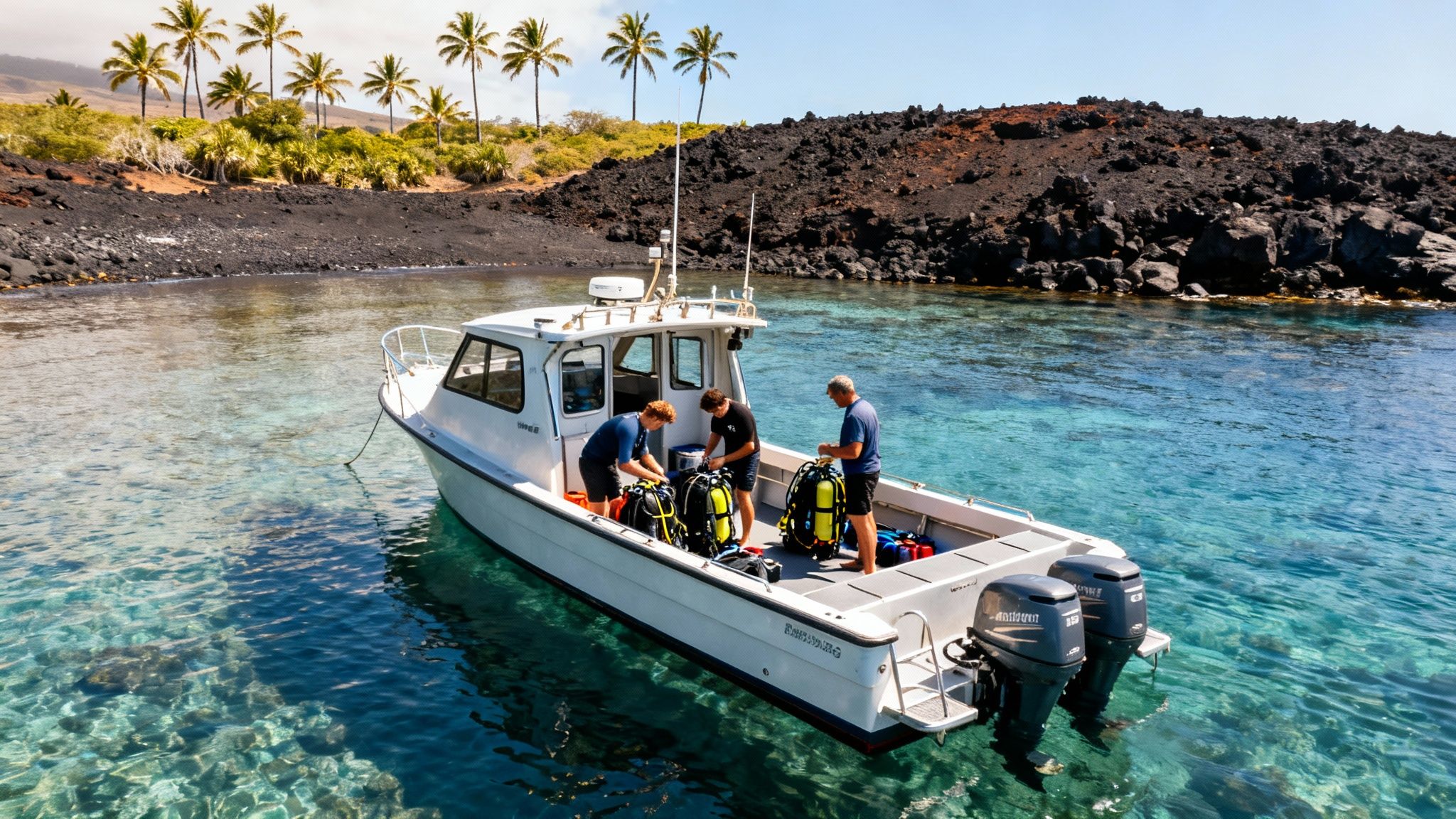
Let's be honest, where you earn your PADI Divemaster certification matters just as much as getting the card itself. It’s the difference between checking boxes in a quiet bay and truly earning your stripes in a dynamic, world-class diving environment. Training with us at Kona Honu Divers isn’t just about passing exams—it's about immersing yourself in one of the planet's most incredible marine ecosystems.
Imagine fine-tuning your navigation skills among ancient lava tubes and vibrant coral reefs. Picture yourself learning to lead divers in the calm, crystal-clear waters of the Kona coast, surrounded by a staggering amount of marine life. Here, you don’t just practice being a dive professional; you live it every single day on the boat.
Real-World Experience on World-Class Dives
As a Divemaster-in-training, your classroom is the Pacific Ocean. You’ll get invaluable, hands-on experience working alongside our crew on our daily dive charters. Forget spending all your time in a pool. You’ll be out on the water, helping real guests, learning the rhythm of a professional dive operation, and seeing what it really takes to manage logistics on a busy vessel.
This is where the theory clicks into place. You’ll get a front-row seat to some of the most sought-after dives on the planet, including:
- The Manta Ray Night Dive: There’s nothing quite like learning to manage a boat full of excited divers and snorkelers on this world-famous night dive. It’s a true test of your crowd-management and briefing skills.
- The Blackwater Dive: This is a bucket-list dive for a reason. You’ll see what goes into the advanced planning and unique skill set required to safely run this highly specialized, one-of-a-kind experience.
- Advanced Dive Profiles: You'll assist on trips to deeper sites, learning how to handle more complex dive plans and confidently guide experienced, certified divers on our advanced dive tours.
This isn't just a course; it's an apprenticeship. You'll learn how to give a briefing that people actually listen to, how to manage divers on a crowded boat, and how to anticipate what your guests need before they even ask.
Mentorship from a World-Class Team
Our instructors bring a staggering 200 years of combined professional diving experience to the table. That’s not just a statistic—it’s a deep well of knowledge, stories, and real-world wisdom you get to tap into every day. You'll be learning from seasoned pros who have worked in every corner of the globe and are genuinely passionate about building the next generation of confident, capable dive leaders.
We’ve built our entire operation around professionalism, safety, and top-tier guest experience. Our comfortable, spacious boats provide the perfect platform for you to focus on your training and transition from a recreational diver to a respected dive professional.
A Strategic Location for Your Career
Think about the big picture. The USA certifies more Open Water divers than any other country, and many of those divers look to destinations like Hawaii for their next adventure. By training here in Kona, you're placing yourself right in the middle of a major hub for dive tourism. You'll be working with the exact type of clients you'll encounter throughout your career.
Completing your PADI Divemaster certification with us means you're not just getting a credential; you're building a professional network and gaining experience on dives that are recognized and respected by operators worldwide. It's a smart, strategic move for your future. Find out more about why you should dive the Big Island of Hawaii with Kona Honu Divers and see how this experience can set you up for success.
Your Career After Certification
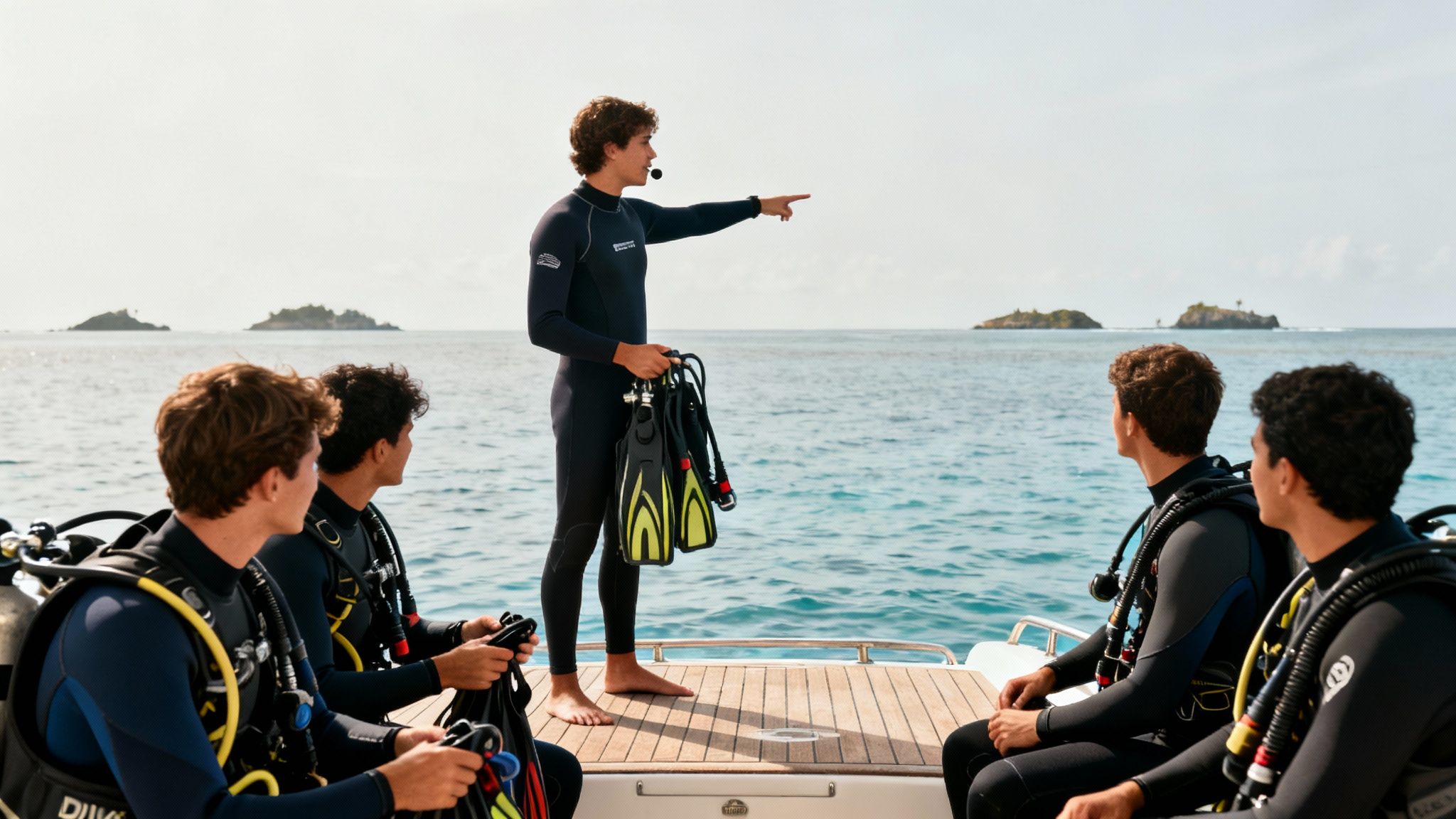
Earning your PADI Divemaster certification is a huge accomplishment, but it's really just the beginning. Think of it as your passport to the professional diving world, the key that lets you trade your desk job for a career in some of the most stunning places on Earth. This is where your passion officially becomes your profession.
For most new Divemasters, the journey starts at a dive center or resort. This is the classic "living the dream" job where you become the face of the operation. You'll be guiding certified divers on underwater tours, helping instructors with their courses, and handling the day-to-day flow of dive trips. One day you might be leading a group through a vibrant coral reef, the next you could be working on a liveaboard boat in some far-flung corner of the globe.
Expanding Your Professional Horizons
While guiding divers is the bread and butter, a Divemaster certification opens doors to so much more. The skills you master during your training—leadership, creative problem-solving, and a deep understanding of dive physics and physiology—are incredibly valuable in more specialized fields.
Many Divemasters build amazing careers by blending their love for diving with other interests. The opportunities are out there if you know where to look:
- Marine Conservation: You could find yourself working with non-profits to restore coral reefs, conduct fish surveys, or run ocean cleanup initiatives.
- Scientific Diving Support: This path involves assisting marine biologists with their underwater research, from managing equipment to collecting specimens.
- Underwater Photography and Videography: If you've got an eye for it, you could lead photo-specific dive trips or become the go-to camera operator for a dive shop.
- Dive Yacht Crew: Imagine combining your dive guiding duties with life at sea as a crew member on a private or charter yacht.
These are just a few examples. Your career can be whatever you want to make it. The trick is to figure out what truly excites you about the underwater world and then chase that.
Standing Out in a Competitive Industry
Let's be real: the dive industry is an amazing field, but it's also competitive. Having your PADI Divemaster certification gets your foot in the door, but to really build a sustainable career, you need to make yourself indispensable. The goal is to become a "diving Swiss army knife."
The most successful Divemasters are the ones who never stop learning. They add skills that make the entire dive operation run smoother, becoming invaluable team members who can wear multiple hats.
Think about developing practical skills that complement your diving expertise:
- Boat Handling: Getting a captain's license or just logging serious time at the helm makes you a huge asset.
- Equipment Maintenance: Becoming a certified service technician for major scuba brands means you can fix gear, not just use it.
- Compressor Operations: Knowing how to safely fill tanks is a surprisingly sought-after skill.
- Multilingual Abilities: Speaking another language or two is a massive advantage, especially in tourist hot spots.
- Retail and Sales Skills: Understanding the business side of things can fast-track you into management roles.
If you're curious about what employers are really looking for, check out some active listings. Exploring scuba diving jobs in Kona gives you a real-world snapshot of the skills in high demand right now.
The industry is also getting younger and more diverse. PADI's own data shows that since 2019, around 77% of all their certifications were earned by people aged 39 or younger. Even more telling, about 40% of new Divemasters are between 20 and 29 years old. This new generation is bringing fresh energy and ideas to dive centers everywhere. You can learn more about diving's demographic trends on PADI's blog.
The Next Step on the Professional Ladder
For many, becoming a Divemaster is a critical stepping stone toward the ultimate goal: becoming a PADI Open Water Scuba Instructor (OWSI). Your Divemaster training sets you up perfectly for this leap. You’ll walk into your Instructor Development Course (IDC) having already mastered dive theory, perfected your demonstration-quality skills, and gained real experience managing students. This gives you a massive head start and the confidence you need to take that final step toward teaching the world to dive.
Your Divemaster Questions, Answered
Deciding to go pro with your PADI Divemaster certification is a huge step, and it's totally normal to have a ton of questions swirling around. What's this really going to cost? Am I fit enough? Can I actually get a job afterward? Let's clear the water on some of the most common things aspiring pros want to know.
This isn't just about passing a course; it's about gearing up for a whole new lifestyle and career. Getting these details sorted out now helps you map out your journey and be ready for the incredible experience ahead.
What’s the Real Cost of the Divemaster Course?
This is usually the first question on everyone's mind, and the answer isn't just a single number. It’s smarter to think of the total investment as a few separate pieces. Breaking it down this way helps you budget properly so there are no surprises down the road.
Here’s a realistic look at where your money goes:
- Course Fee: This is what you pay the dive center—like us here at Kona Honu Divers—for all the hands-on training, one-on-one mentorship, and expert instruction from our PADI Instructor team.
- PADI Materials: You'll need the official PADI Divemaster Crewpak. This is your professional toolkit, packed with all the manuals, slates, and even the PADI Instructor Manual you'll need for your training and your career beyond.
- PADI Application Fee: After you've crushed your training, you'll pay an application fee directly to PADI. This covers your certification processing and your first year of professional membership dues.
- Professional Liability Insurance: This is a big one. As a working dive professional, you must have your own liability insurance. It’s an annual cost and a non-negotiable part of working in the industry.
- Your Own Dive Gear: As a recreational diver, you might have rented gear. As a pro-in-training, you’re expected to own a full set of professional-quality equipment.
Thinking about these costs upfront lets you plan everything out, so you can focus 100% on your training without any financial stress.
How Physically Demanding Is the Training?
Let's be straight: the PADI Divemaster course is meant to be challenging. It's not a boot camp, but it does require a good level of physical fitness. After all, you need to be able to handle your own gear and confidently assist other divers, sometimes in tricky conditions.
The course includes a series of stamina exercises that are all about building your comfort and capability in the water. They aren't there to weed people out; they're there to build your confidence as a leader.
The point of the physical assessments isn’t to turn you into an Olympian. It’s about ensuring every Divemaster has the core strength and endurance to handle any situation calmly and effectively, because safety is always the number one job.
You'll complete a few timed swims and tows without any scuba gear. These include a 400-meter swim, an 800-meter snorkel swim, and a 100-meter inert diver tow (where you bring a buddy in full gear back to safety). You’ll also do a 15-minute tread water exercise. These aren't just hoops to jump through; they build the real-world fitness you'll rely on every single day.
Can I Get a Job Right After I’m Certified?
Great question. Earning your PADI Divemaster certification is your ticket into the industry, but it’s not an automatic job guarantee the day you get your card. Your immediate prospects really depend on how you performed during the course, your attitude, your work ethic, and any other skills you bring to the table.
This is where training at a busy, respected dive shop in a world-class location like Kona gives you a massive leg up. You’re not just learning in a pool; you’re learning in a real, working dive operation. You see the day-to-day flow of a dive boat, learn how to talk to guests, and figure out the logistics behind the scenes. That kind of practical experience makes you way more valuable to an employer than someone who just checked the boxes in a quiet, low-volume setting.
What Dive Gear Do I Absolutely Need to Own?
As a dive professional, owning a complete set of personal scuba equipment is the industry standard. Period. It shows you're serious about your career and, more importantly, it means you are completely familiar and comfortable with the gear that keeps you and your divers safe.
Your kit should be professional-grade and kept in top shape. Here’s the essential checklist:
- Core Life Support: Your own regulator, BCD, and submersible pressure gauge (SPG).
- Exposure Protection: A wetsuit (or suits), boots, and a hood that are right for the local water temps.
- Key Accessories: A modern dive computer, a reliable compass, and your own fins, mask, and snorkel.
- Professional Tools: A dive knife or cutting tool, plus at least two surface signaling devices—think a surface marker buoy (DSMB) with a spool or reel and a whistle or other audible device.
Having your own reliable, well-maintained gear isn't just a requirement; it's a hallmark of a true professional.