
Getting your open water certification in Kona is more than just learning to dive—it's your ticket to exploring a whole new world right below the surface. Think of it as the first, most exciting step in a lifelong adventure, and you get to start it in one of the planet's most incredible underwater playgrounds.
Your Underwater Adventure Starts Here
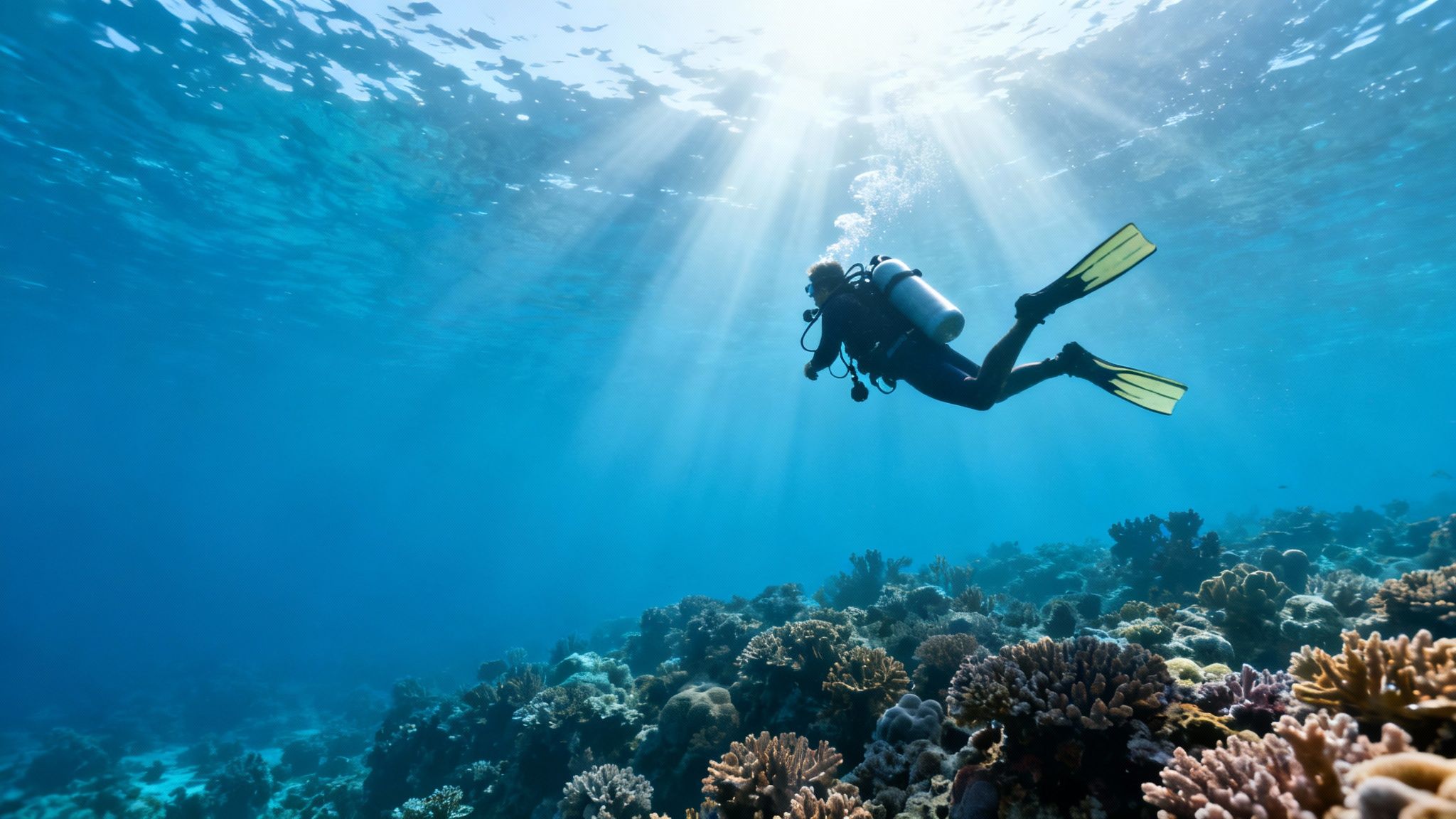
When you decide to get certified, you’re not just learning a new skill; you're joining a massive global community. We train our students through the Professional Association of Diving Instructors (PADI), which is by far the most recognized scuba agency on the planet. They've issued over 28 million certifications since they started back in 1967, so you’ll be in very good company. If you're curious, you can dig into all the numbers on PADI's official report on worldwide statistics.
This guide is designed to walk you through the entire journey, from the online theory you can tackle from your couch to your very first awe-inspiring dives in the Pacific. We'll break down all the requirements and sprinkle in some insider tips from our experienced Kona Honu Divers instructors to make sure you feel confident every step of the way.
What This Guide Covers
Our mission is simple: to make your certification experience safe, straightforward, and absolutely unforgettable. Here’s a quick look at what you can expect as you work toward your certification.
-
The "Book Smarts" (Academics): First, you’ll get all the theory out of the way. PADI’s eLearning lets you master the fundamental principles of scuba diving at your own pace, whenever it’s convenient for you.
-
Pool Time (Confined Water): Next, you'll head to the pool. This is where you’ll get comfortable with the gear and practice all the essential hands-on skills in a calm, controlled environment with your instructor right by your side.
-
The Real Deal (Open Water Dives): This is the part everyone looks forward to! You’ll take everything you learned and apply it in the ocean over four amazing dives. Once you complete these, you'll officially be a certified diver, ready to explore Kona’s world-famous dive sites.
By the time you finish this guide, you’ll have a clear roadmap to becoming a certified diver. The warm, crystal-clear waters of Kona are waiting. Let's dive in.
How Your Scuba Certification Works
So, you’re ready to get your open water certification? Awesome. The whole process is broken down into three main parts, and it’s a system that’s proven to turn absolute beginners into confident, skilled divers. It's a journey that starts on dry land and ends with you exploring the incredible underwater world of Kona.
Let’s break down exactly what you can expect.
Part 1: Your Scuba "Homework" (PADI eLearning)
First things first, you'll tackle the theory. Long gone are the days of sitting in a stuffy classroom for hours on end. PADI’s eLearning platform lets you get all the academic stuff out of the way from your couch, at your own pace.
You’ll learn the fundamental principles behind scuba diving—things like how pressure affects your body, how to plan a dive, and what all that cool gear actually does. By knocking this out before you even arrive in Kona, you can spend your vacation time where you want to be: in the water.
Part 2: Your First Breaths Underwater (Pool Dives)
Once you’ve got the knowledge down, it’s time to get wet. This next phase happens in "confined water," which for us is a calm, clear swimming pool. This is where the magic really starts. It's the first time you'll breathe underwater!
Under the direct supervision of your instructor, you’ll master the essential hands-on skills. We’ll practice everything from clearing a flooded mask (it’s easier than you think!) to achieving that weightless feeling of perfect buoyancy. It's all about building muscle memory and confidence in a controlled environment before heading out into the ocean.
Part 3: The Main Event (Your First 4 Ocean Dives)
This is what it's all about. The final piece of the puzzle is completing four open water dives right here in the Pacific. With your instructor by your side, you'll take all the skills you polished in the pool and apply them in a real-world dive environment.
These aren't just tests; they're your first real underwater adventures. You’ll be navigating, monitoring your depth, and surrounded by the vibrant coral reefs and stunning marine life that make Kona a world-class dive destination.
The entire journey is designed to be progressive, building your confidence every step of the way. To get a feel for our typical schedule and dive sites, you can find all the details on our Kona scuba certification course page.
For a quick overview, here's how the three phases come together.
Open Water Certification Process at a Glance
| Phase | What You Learn | Location |
|---|---|---|
| Knowledge Development | The fundamental principles, safety rules, and equipment knowledge for scuba diving. | At home, online via PADI eLearning |
| Confined Water Dives | Core hands-on skills like mask clearing, buoyancy control, and emergency procedures. | Swimming Pool |
| Open Water Dives | Applying your skills during four real dives, guided by an instructor. | The Pacific Ocean in Kona |
By the time you complete these three phases, you won't just be holding a certification card. You'll have earned it. You'll have the skills and the confidence to start planning your own underwater adventures for years to come.
What To Expect On Your Kona Ocean Dives
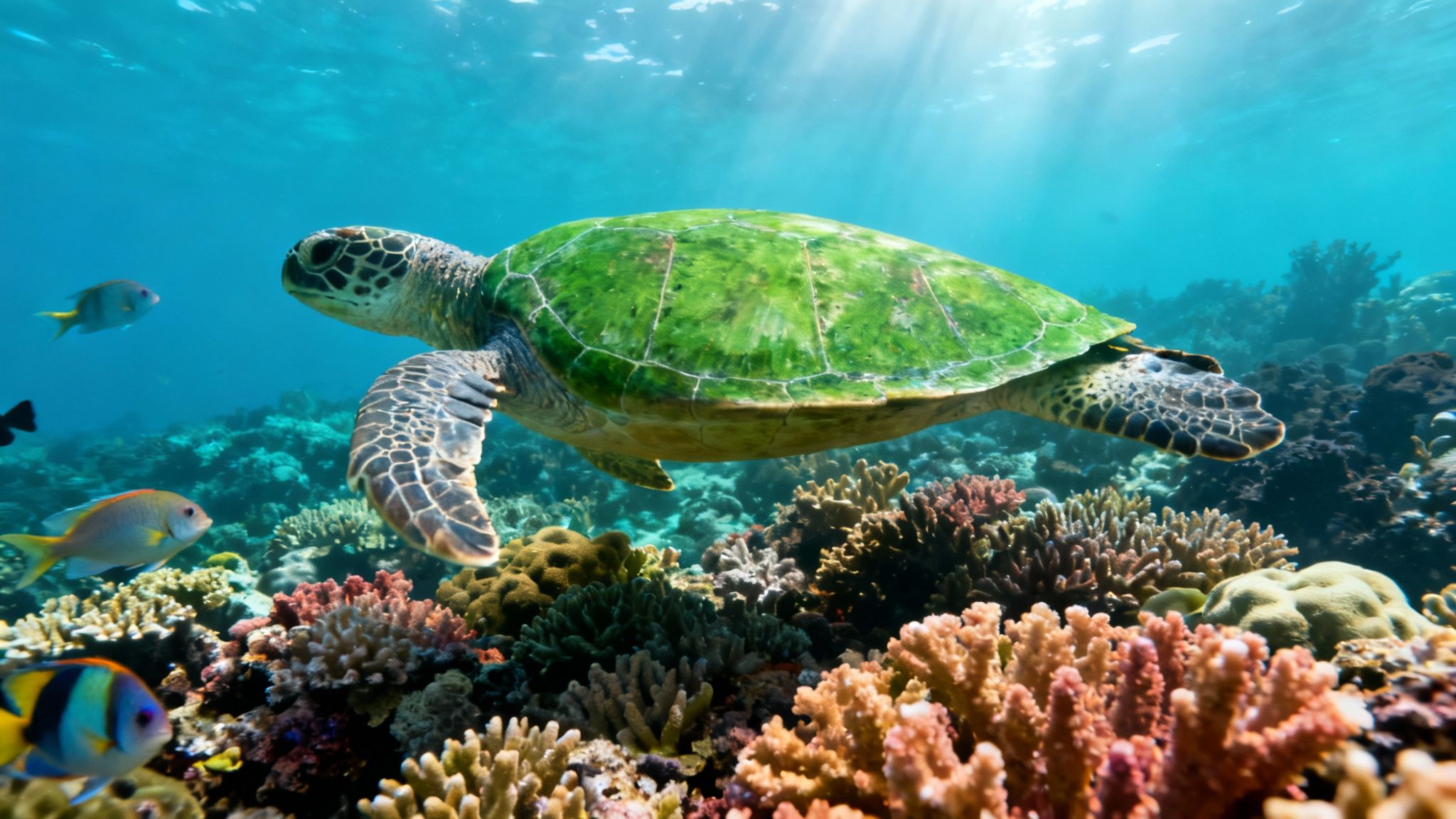
This is it. The moment everything you've learned in the classroom and practiced in the pool clicks into place. Your four ocean dives are where the real adventure begins and you officially leave the swimming pool behind. You're about to experience the genuine thrill of weightlessness in a world teeming with color and life.
Your instructor is with you every step of the way, of course. You'll run through the skills you already know—like managing your buoyancy and using a compass—but this time, you'll be doing it surrounded by the incredible marine ecosystem of the Big Island. It’s the perfect mix of honing your skills and pure, unadulterated exploration.
Putting Your Skills To The Test In The Real World
Each of your four dives is designed to build on the last, steadily growing your confidence and competence. You won't just be going through the motions; you'll be using your new skills with a real purpose.
Imagine practicing your hover, not just a few feet off a pool floor, but over a pristine coral reef. You're holding your position perfectly, protecting the delicate life below you while getting an incredible view of the fish weaving through their natural habitat. That's what this is all about.
The dives start in calm, relatively shallow water, letting you get comfortable before gradually exploring a little deeper. The goal is simple: to make you a self-assured, capable diver who's ready for a lifetime of underwater adventures.
The single best piece of advice for these dives? Relax. Just breathe and enjoy the moment. The more comfortable you get, the better your buoyancy becomes, the less air you'll use, and the more incredible marine life you'll actually see.
The draw of amazing dive environments like Kona is undeniable. In 2023 alone, Florida issued 31,210 new certifications, while California saw 17,058 new divers. These numbers show just how many people are inspired to get certified in world-class locations. You can dive deeper into these scuba certification trends across the USA to see the full picture.
The Kona Honu Divers Difference
Here at Kona Honu Divers, we don't just pick any dive site. We've carefully chosen specific spots that give our students the absolute best conditions for learning. We stick to locations with minimal current, fantastic visibility, and—most importantly—a ton of marine life. We want your first ocean dives to be completely awe-inspiring.
On any given dive, you might find yourself swimming alongside a majestic Hawaiian green sea turtle (honu), spotting a clever octopus camouflaged in the rocks, or being surrounded by a vibrant school of butterflyfish. Watching the local wildlife is a massive part of the experience.
Ultimately, these four dives aren't just a final exam. They're your graduation—the transition from being a student to becoming a certified diver, with a brand-new world of exploration waiting for you.
Breaking Down The Gear and Course Costs

Before you jump in, let's talk about two of the most common questions we get: "What gear do I need?" and "How much does it all cost?" Getting these details sorted out upfront means you can relax and focus on what really matters—the incredible adventure of learning to breathe underwater in Kona.
Any reputable dive shop will provide all the essential life-support equipment for your course. Here at Kona Honu Divers, we set you up with a modern, well-maintained kit that includes your buoyancy control device (BCD), a full regulator setup, a dive computer, weights, and tanks. We've got the big stuff covered.
Your Personal Gear: Why a Good Fit is Non-Negotiable
While we handle the core scuba unit, you'll need to bring your own mask, snorkel, and fins. This isn't just a shop rule; it's a fundamental part of having a good, safe dive. Trust me, nothing ruins the magic of your first dive faster than a leaky mask or fins that are giving you blisters.
Think of your mask as your personal window to the underwater world. A proper fit creates a perfect seal, keeping water out so you have a crystal-clear view of Kona's coral gardens and marine life. We really can't overstate how important this is.
For a more detailed look at picking the right personal items, check out our guide on the gear you will need for your Kona diving adventure.
A Transparent Look at Certification Costs
Budgeting for your open water certification is refreshingly simple. The total investment is broken down into two parts, so you know exactly where your money is going.
-
PADI eLearning Fee: This first part is paid directly to PADI when you register for the online theory portion of the course. It covers your digital learning materials, quizzes, and the final processing of your certification card.
-
In-Water Training Fee: This second part is paid to the dive shop—us! This fee covers all the good stuff: your hands-on instruction, all the confined water (pool) skill sessions, four open water ocean dives from our boat, and the rental of all that major scuba equipment I mentioned earlier.
We set it up this way so there are no surprises or hidden fees for gear rental or boat trips during your training. It’s one clear price for your entire practical experience, designed to make your journey to becoming a certified diver as smooth and enjoyable as possible.
Your Diving Adventures After Certification
Getting your open water certification is a fantastic accomplishment, but it’s not the finish line. It’s the starting gate. With that C-card in hand, you're now officially qualified to dive with a buddy down to 60 feet (18 meters) pretty much anywhere in the world.
Think of it as your passport to a lifetime of underwater adventures, and the best place to get that first stamp is right here with some of the most amazing Kona diving tours you can imagine. Your new cert immediately unlocks the kind of iconic Hawaiian dives that people fly thousands of miles to experience.
Experience Kona's World-Famous Dives
With your new skills, you can finally see firsthand what makes the Big Island a global diving destination. You’re no longer just reading about it; you're qualified to participate in some truly unique natural encounters, like the chance to dive with a Kona Manta Ray.
Here are just a couple of the mind-blowing adventures now open to you:
-
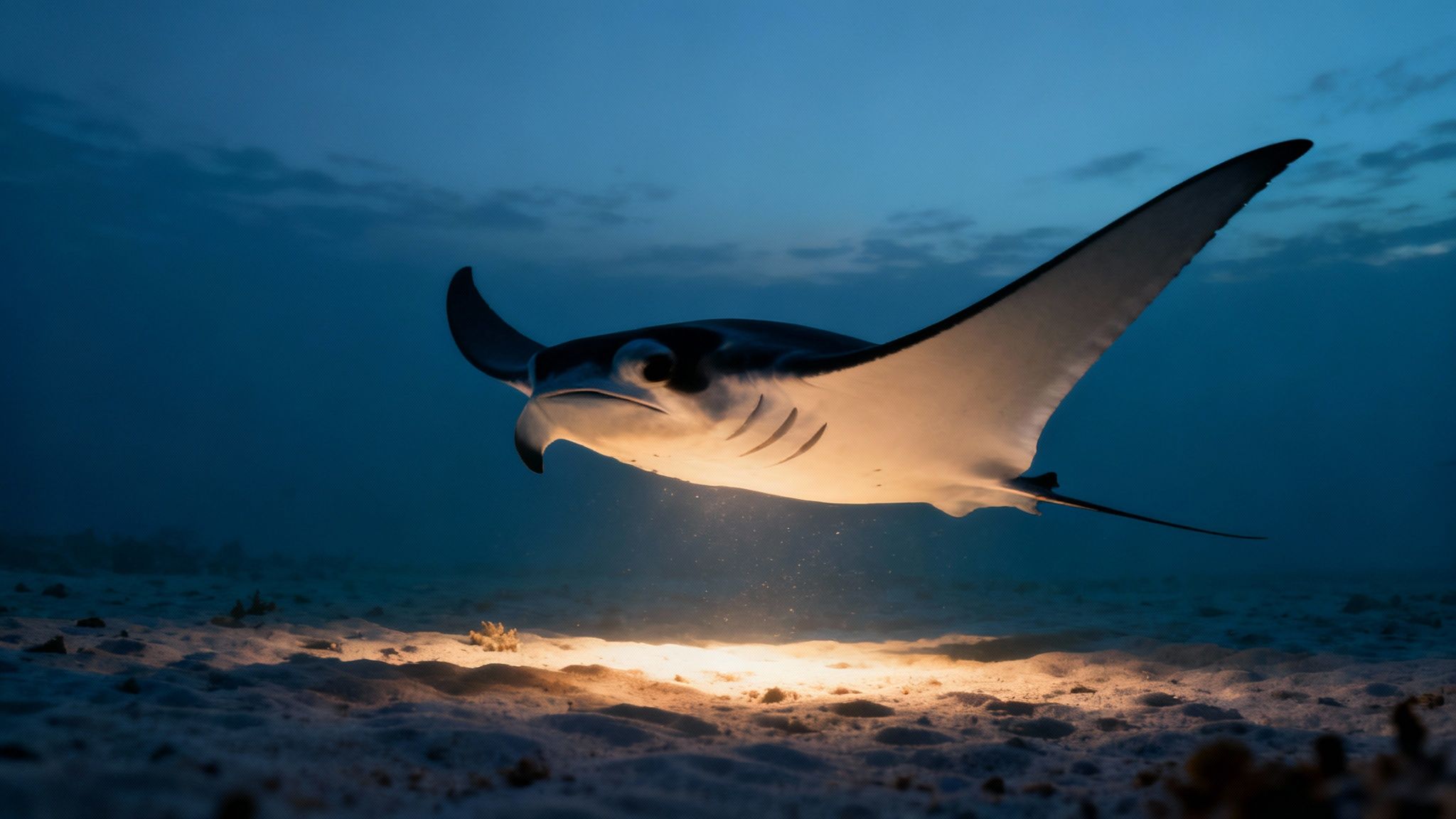
The Manta Ray Night Dive: This is the signature Kona experience. Picture this: you descend after sunset, settle on the seafloor, and watch as massive, graceful manta rays glide and somersault through the beams of underwater lights. Joining a guided Manta Ray Night Dive is like witnessing an underwater ballet—it’s absolutely mesmerizing.
-
The Kona Blackwater Dive: Looking for something completely different? The Kona Blackwater Dive is a one-of-a-kind trip into the deep. You’ll be safely tethered, drifting over thousands of feet of water at night, witnessing a bizarre and beautiful migration of tiny, bioluminescent creatures that come up from the abyss. It’s like floating through outer space.
Your certification is more than a piece of plastic; it's a key. It unlocks doors to experiences that were previously out of reach, transforming how you see the ocean and your place within it.
As you get a few more dives under your belt and your confidence builds, you’ll naturally start wanting to see what else is out there. When that time comes, you can jump on an advanced dive tour to explore deeper sites, check out incredible lava tubes, and continue honing your skills with an expert guide.
Your PADI Open Water certification is a license to keep learning and exploring. It’s the first chapter in your own diving story—a story that can take you to vibrant coral gardens, mysterious shipwrecks, and thrilling deep-water encounters for the rest of your life.
Insider Tips For A Great Certification Experience
We've seen thousands of new divers earn their certification cards, and we've picked up a few things along the way. To help you get the most out of your course, we asked our seasoned instructors for their best advice. A little preparation and the right mindset can make all the difference between just getting certified and truly becoming a confident, lifelong diver.
Set Yourself Up For Success Before You Arrive
Here’s the single best piece of advice we can give you: complete your PADI eLearning before you land in Kona. Seriously. It’s a game-changer.
Think about it—would you rather spend your precious vacation time in a classroom or out on the boat? Getting the bookwork out of the way means you can hit the ground running (or, you know, hit the water swimming). You’ll arrive ready to focus on what really matters: mastering your skills in the beautiful Pacific.
Once you’re here, take a deep breath and trust your instructor. They’ve seen it all, from nervous first-timers to overconfident swimmers, and their number one job is to make you a safe and competent diver. Never, ever be afraid to ask a question. If you’re wondering about something, chances are someone else is, too.
Remember, the most important person on any dive is you. Your body is your best guide. If your ears feel funky, equalize. Then do it again. Stay hydrated, get a good night's sleep, and never, ever force a dive if you're not feeling 100%.
And finally, have fun with it! Scuba diving isn’t a race. It's about slow, deliberate movements and achieving that magical feeling of weightlessness. The skills will come, but the real joy is in the process. Just relax, breathe, and soak in the incredible world you’ve just entered.
Ready to put these tips into practice?
Your Top Open Water Certification Questions, Answered
If you're thinking about getting your open water certification in Kona, you probably have a few questions. We hear them all the time from excited new divers, so let's clear up some of the most common ones right now.
How Long Will This Actually Take?
The PADI eLearning is super flexible—you can knock that out at your own pace before you even get to Kona. Once you're here with us, the hands-on, in-water part of the course usually takes 2 to 3 days.
That time covers everything from your initial pool sessions (we call this confined water training) to the four incredible ocean dives you'll need to complete your certification.
Do I Need to Be an Olympic Swimmer?
Definitely not! You don't need to be a pro swimmer, but you do need to be comfortable and safe in the water. We'll have you complete a basic water skills assessment to make sure.
It involves two simple parts:
- Treading water or floating for 10 minutes without using any flotation devices.
- Swimming 200 meters/yards (or snorkeling 300 meters/yards) without stopping.
Don't sweat it—there's no time limit. This is just to show us you can handle yourself in the water.
What’s the Youngest Age to Get Certified?
Kids as young as 10 years old can get their PADI Junior Open Water Diver certification.
It's a fantastic way for families to explore the ocean together. Just know that divers certified between ages 10 and 14 have some restrictions, like a shallower depth limit and the requirement to always dive with a certified adult. Once they turn 15, their junior certification automatically rolls into the standard open water certification.
Is Kona a Good Place for a Total Beginner?
Kona is more than good—it’s one of the best places on the planet to learn to dive. The conditions here are practically made for beginners. We're talking calm, warm, and stunningly clear water that lets you focus on learning and enjoying the experience.
Every single dive is led by a professional PADI instructor who puts your safety first, so you're always in good hands.
Once you have that certification card in hand, you'll be ready for a lifetime of adventure. It's a good idea to know how long a scuba diving certification lasts and what you can do to keep your dive skills fresh.