
The biggest perks of diving with nitrox are longer bottom times and shorter breaks between dives. When you breathe a gas mix with more oxygen (say, 32% instead of the usual 21%), your body absorbs less nitrogen. This simple change safely extends your no-decompression limits and often helps you feel less wiped out after a day of diving.
What Is Nitrox and Why Do Smart Divers Use It
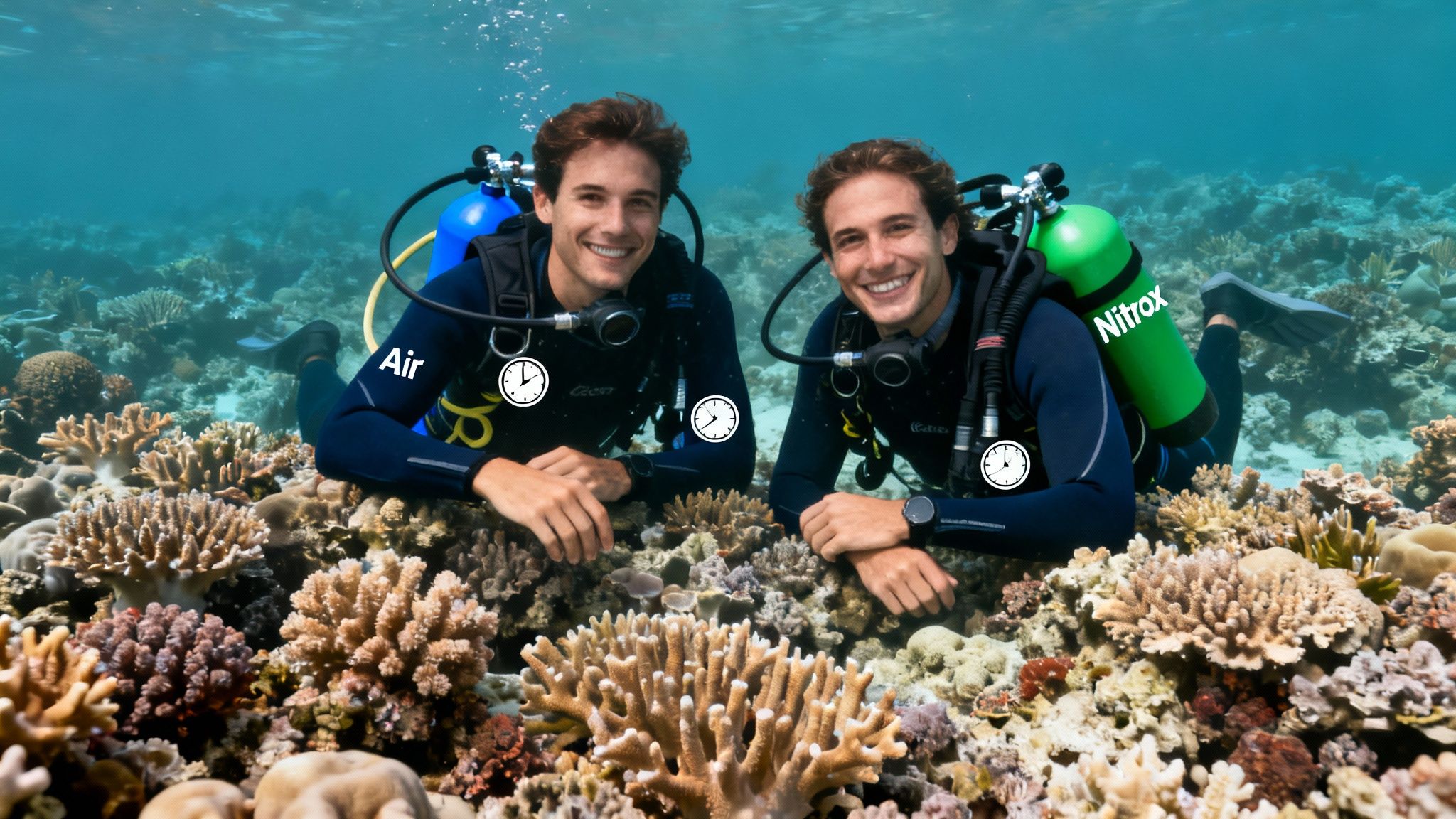
Think of it this way: diving with regular air is like being on a local road with lots of stops. The nitrogen your body absorbs acts like red lights, limiting how long you can stay down. Diving with Enriched Air Nitrox (EANx) is like getting on the freeway—you can go further, for longer.
The Core Concept Explained
A standard scuba tank is filled with the same air we breathe on the surface, which is roughly 21% oxygen and 79% nitrogen. Enriched Air Nitrox, often just called "nitrox," is simply a breathing gas that has a higher oxygen percentage—usually 32% or 36% for recreational divers.
That seemingly small tweak makes a world of difference. When you increase the oxygen, you automatically decrease the nitrogen. Since it’s the buildup of nitrogen in your tissues that dictates your no-decompression limits, breathing less of it means you can safely spend more time at depth.
The bottom line is simple: Less nitrogen absorbed means more time to explore. This is the single most important reason smart divers get certified.
Air vs. Nitrox (EAN32) A Quick Comparison
To see the differences at a glance, here’s a quick breakdown of how standard air stacks up against a common nitrox blend.
| Feature | Standard Air (21% O2) | Nitrox (EAN32 – 32% O2) |
|---|---|---|
| No-Deco Time at 60 ft | 56 minutes | 95 minutes |
| Nitrogen Absorption | Higher rate, leading to shorter bottom times | Lower rate, allowing for significantly longer dives |
| Surface Intervals | Longer waits required to off-gas excess nitrogen | Shorter waits, letting you get back in the water sooner |
| Post-Dive Fatigue | Commonly reported, especially after multiple dives | Many divers report feeling less tired and more alert |
| Depth Limit | Deeper maximum operating depth | Shallower maximum depth due to oxygen toxicity risk |
This table clearly shows why so many divers make the switch, especially when doing multiple dives in a day.
Benefits at a Glance
Switching to nitrox offers some immediate and powerful advantages, especially for anyone looking to maximize their vacation time exploring the incredible reefs here in Kona, Hawaii.
The main benefits of diving with nitrox include:
- Longer Bottom Times: This is the #1 reason people use it. You can safely extend your dive time, especially on repetitive dives in that 40 to 100-foot range where most of the action is.
- Shorter Surface Intervals: Since you've absorbed less nitrogen on your first dive, you can get back in the water for your second or third dive much sooner.
- Reduced Post-Dive Fatigue: It’s a common story: divers often report feeling significantly less tired and more energetic after a full day of diving on nitrox versus air.
- Increased Safety Margin: You can also choose to dive nitrox while following your computer's limits for air. This builds in a huge conservative buffer, adding an extra layer of safety against decompression sickness.
One common misconception is that nitrox is for diving deeper, but that's not the case. It's all about having a better, longer, and more enjoyable experience at popular recreational depths. To learn how to start using it safely, the PADI Enriched Air Diver specialty course is the world's most popular specialty certification for a reason.
The Science Behind Longer Bottom Times
This is where the real magic of nitrox happens. The biggest reason divers get certified for enriched air is to get more time underwater by extending their no-decompression limits (NDLs). We're not talking about just a few extra minutes, either—it can fundamentally change how you plan and enjoy your dives.
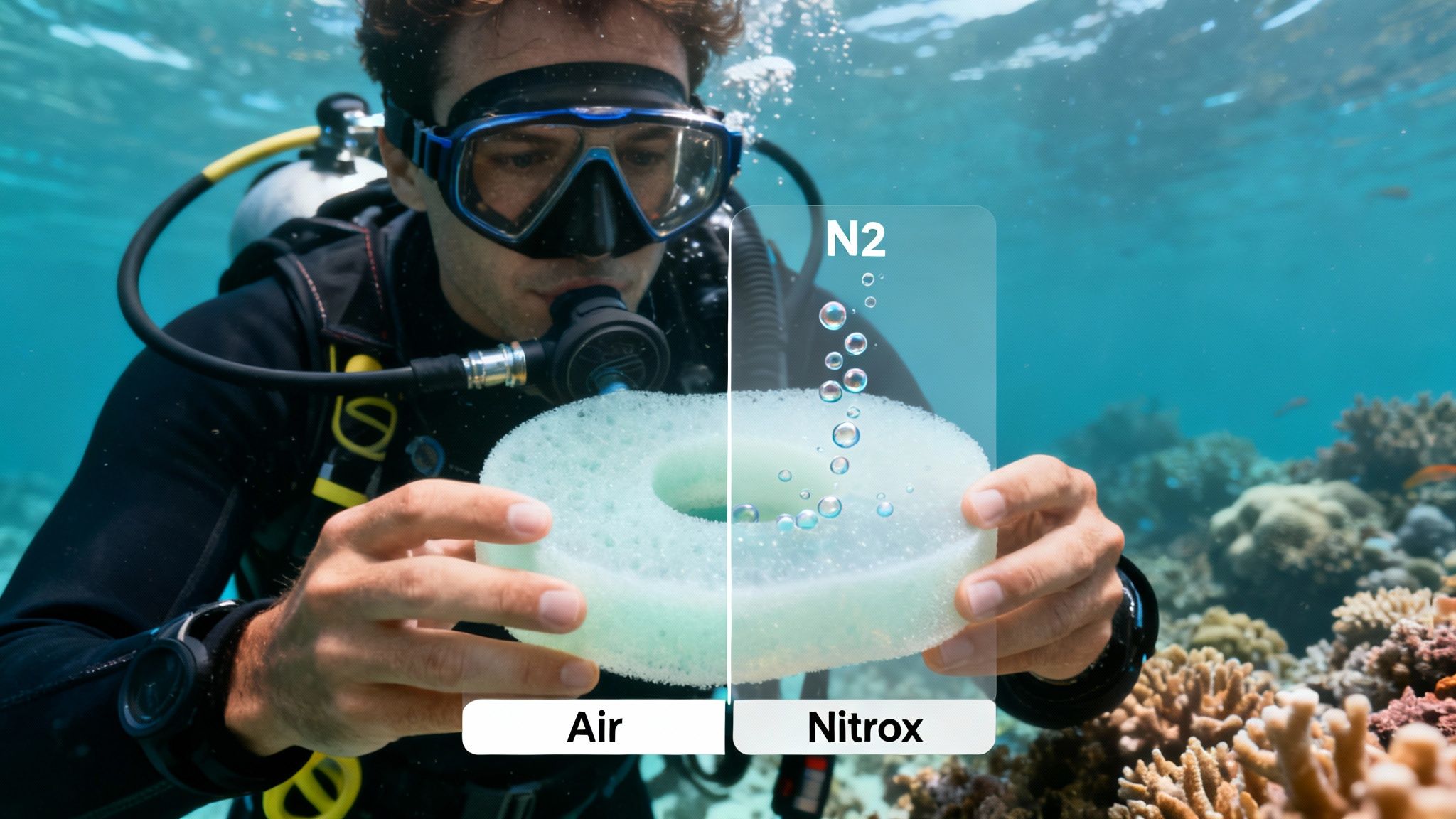
Think of your body like a sponge. When you're breathing standard air, which is about 79% nitrogen, that sponge soaks up nitrogen pretty quickly under pressure. Your NDL is the point where the sponge is getting too full, and you need to start heading up to avoid decompression sickness.
But with nitrox, you're breathing a mix with less nitrogen. Because you're taking in less nitrogen with every breath, your body's "sponge" fills up much, much more slowly. This simple change is the key to longer, more relaxed dives.
A Real-World Comparison
So, what does this look like in practice? The advantage of nitrox really shines in the 40-100 foot depth range, which just so happens to be the sweet spot for many of Kona's best dive sites.
Let's imagine a dive to a beautiful reef at 60 feet. The numbers really tell the story here.
- On Air: Dive tables give you a no-decompression limit of about 60 minutes.
- On Nitrox 32% (EAN32): Your NDL jumps to around 92 minutes.
- On Nitrox 36% (EAN36): That limit stretches to roughly 125 minutes—more than double your time on air!
This isn't just theory. It’s a game-changer that translates directly into more time watching marine life, exploring cool lava tubes, or just soaking in the quiet of the underwater world. You can discover more about these dive time calculations to see how it affects different profiles.
The longer bottom times from nitrox aren't just a luxury. They're a tool that makes every single dive more immersive and complete.
This extra time is incredibly valuable when you're exploring the unique underwater terrain around the Big Island. You don't want to be constantly checking your computer and worrying about a rapidly approaching NDL when you're trying to enjoy a stunning coral garden or ancient lava formation.
Switching to nitrox gives you the gift of time—the most precious thing on any dive. It means more moments with a resting green sea turtle, more time to watch a school of butterflyfish drift by, and a more relaxed, fulfilling experience from the moment you descend to the moment you surface.
Maximize Your Dive Day With Shorter Surface Intervals
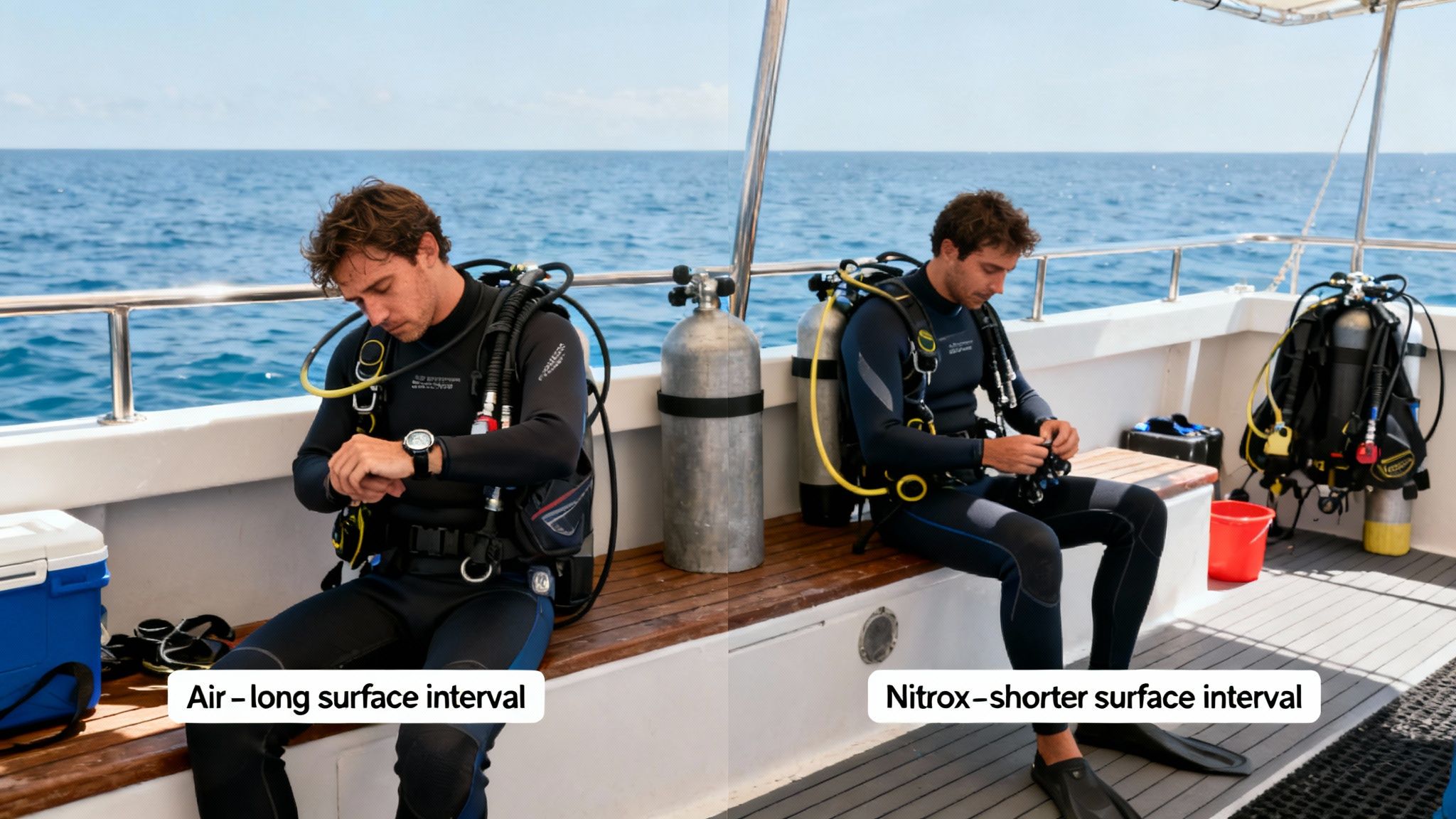
One of the best things about diving with nitrox isn't just about what happens on a single dive—it's how it completely changes your entire day of diving. The real magic happens on those multi-dive trips we love here in Kona. When you use nitrox on your first dive, your body absorbs way less nitrogen compared to someone breathing regular air.
So, what does that mean when you're back on the boat? A lower nitrogen load means your body has much less work to do "off-gassing" during your surface interval. You can get back in the water safely and much, much sooner. Less time waiting around means more time exploring Hawaii's incredible underwater world.
From Theory to Practice on a Two-Tank Dive
Let's walk through a real-world example. Picture a typical two-tank morning dive trip. We have an air diver and a nitrox diver, and they both do the exact same first dive: 45 minutes at 60 feet. After surfacing, they both take a 30-minute break on the boat. This is where their dive days start to look completely different.
The air diver absorbed a lot more nitrogen, so their computer puts a serious limit on their second dive. The nitrox diver? They’ve got a much bigger window to play with.
The difference is staggering. After that first dive to 60 feet for 45 minutes and a 30-minute surface interval, the air diver can only spend 14 minutes at that same depth on their second dive. But the diver on EAN32 can enjoy a full 43 minutes—that’s almost triple the bottom time. If you want to dive deeper into the math, you can read more about these critical calculations for divers and see just how big an impact this makes on a vacation.
This is exactly why nitrox is the standard on liveaboards and the go-to choice for smart vacation divers. It helps make sure your second and third dives of the day are just as awesome and long as your first one.
Get More Out of Every Kona Dive
This advantage translates directly into a better experience here on the Big Island. On our popular diving tours, using nitrox lets you squeeze every last drop of fun and value out of your day. You'll never have to cut a dive short right after you’ve stumbled upon an octopus den or a resting whitetip reef shark.
It gives you the freedom to really soak in each dive site without constantly watching the clock on your computer. Whether you’re exploring pristine reefs in the morning or gearing up for the world-famous manta ray night dive, nitrox gives you the time you need to make every moment count.
Boosting Safety and Reducing Post-Dive Fatigue
Sure, getting more time underwater is great, but some of the most powerful benefits of diving with nitrox kick in once you're back on the boat. At the top of that list is the extra safety buffer it gives you against decompression sickness (DCS). It’s simple, really: since you’re breathing less nitrogen on a nitrox dive, your body absorbs less of it.
Many experienced divers use this to their advantage in a really smart way. They’ll dive with a nitrox tank but keep their dive computer set to standard air. This is a very conservative approach that creates a huge safety margin—your computer thinks you’re absorbing a lot more nitrogen than you actually are.
The End-of-Day Energy Boost
Ask any diver who has done back-to-back dive days on air and then on nitrox, and you’ll likely hear the same thing. One of the most talked-about perks is feeling way less tired at the end of the day. While the science is still being debated, the anecdotal evidence from the global diving community is overwhelming.
This makes a world of difference on a dive trip. Instead of feeling completely wiped out after two or three dives, you actually have the energy to enjoy the rest of your day. You can explore Kona town in the afternoon or head out for a nice dinner without feeling like you need a nap first. It just makes the whole vacation more enjoyable.
Nitrox isn't a replacement for safe diving practices; it's a tool that makes them even more effective. Reducing your nitrogen load gives your body a serious advantage, both in the water and out.
This is exactly why so many training agencies emphasize how safety-focused divers use nitrox. By sticking to their air limits while breathing enriched air, they build in a powerful buffer against DCS and often get the bonus of feeling less drained.
Better Recovery On and Off the Boat
That feeling of having more energy is directly tied to better recovery. When your body is loaded with less nitrogen, it doesn't have to work nearly as hard to off-gas after a dive. This is also the same reason we have to wait a certain amount of time before hopping on a plane—it's all about giving that nitrogen a chance to safely leave your system. You can read more about that in our guide on why you can't fly after diving.
In a way, using nitrox to reduce nitrogen stress is a bit like how other wellness therapies use controlled oxygen. For example, some people explore the health benefits of hyperbaric oxygen therapy to aid recovery. At the end of the day, choosing nitrox is just a smart, simple way to dive more conservatively and feel a whole lot better doing it.
Understanding the Rules of Nitrox Diving
As with any tool, using nitrox correctly means understanding the new set of rules that come with it. It’s a trade-off: in exchange for the benefits of less nitrogen, you take on the responsibility of managing your oxygen exposure.
The single most important concept to grasp is that nitrox is a tool for extending your time, not your depth. In fact, because enriched air has more oxygen, it actually has a shallower maximum depth than regular air. Pushing past that limit increases the partial pressure of oxygen (PPO2) to a dangerous level, creating a risk for oxygen toxicity. This is exactly why proper certification is non-negotiable.
Your Responsibilities as a Nitrox Diver
Getting your Enriched Air Nitrox certification is about much more than just a new C-card. It’s about building the hands-on skills and muscle memory to handle nitrox safely and confidently. Every single time you dive with an enriched air tank, you’re responsible for a simple, mandatory safety check.
Before every nitrox dive, you must personally complete these steps:
- Analyze your tank: You’ll use an oxygen analyzer to confirm the exact O2 percentage in your cylinder. Don't ever take a tag or someone else's word for it—always check it yourself.
- Calculate your Maximum Operating Depth (MOD): Based on the percentage you just analyzed, you'll calculate the absolute deepest you can safely take that specific gas mix. This MOD is your hard limit for the dive.
- Label your cylinder: Once you've analyzed and calculated, you'll fill out a tag with the O2 percentage, the MOD, and your initials, then attach it to your tank.
- Program your computer: The final step is setting your dive computer to match the exact O2 percentage in your tank. This ensures it tracks your oxygen exposure and calculates your no-deco time correctly.
It's this personal responsibility—the act of analyzing, calculating, and logging every tank for yourself—that makes nitrox diving safe. Following these steps every time is what separates a certified diver from someone who just holds the card.
It might sound like a lot, but this process quickly becomes a familiar routine. By mastering these simple rules, you unlock all the incredible nitrox diving benefits and can enjoy your extra time underwater with total peace of mind.
Experience the Nitrox Advantage in Kona
Alright, you've got the theory down. Now it’s time to see what all the fuss is about and actually feel the difference nitrox makes on a dive. This isn't just about numbers on a dive computer; it’s about a tangible change you can feel during your dive and even after you’re back on the boat.
Here at Kona Honu Divers, we’re huge believers in the nitrox diving benefits. So much so, in fact, that we provide it for free to all our certified nitrox divers. We want you to get the most out of every single minute you spend exploring Kona’s incredible underwater world, and that means giving you the best tools for the job at no extra cost.
More Time Where It Counts
So, what does that extra time really mean for you?
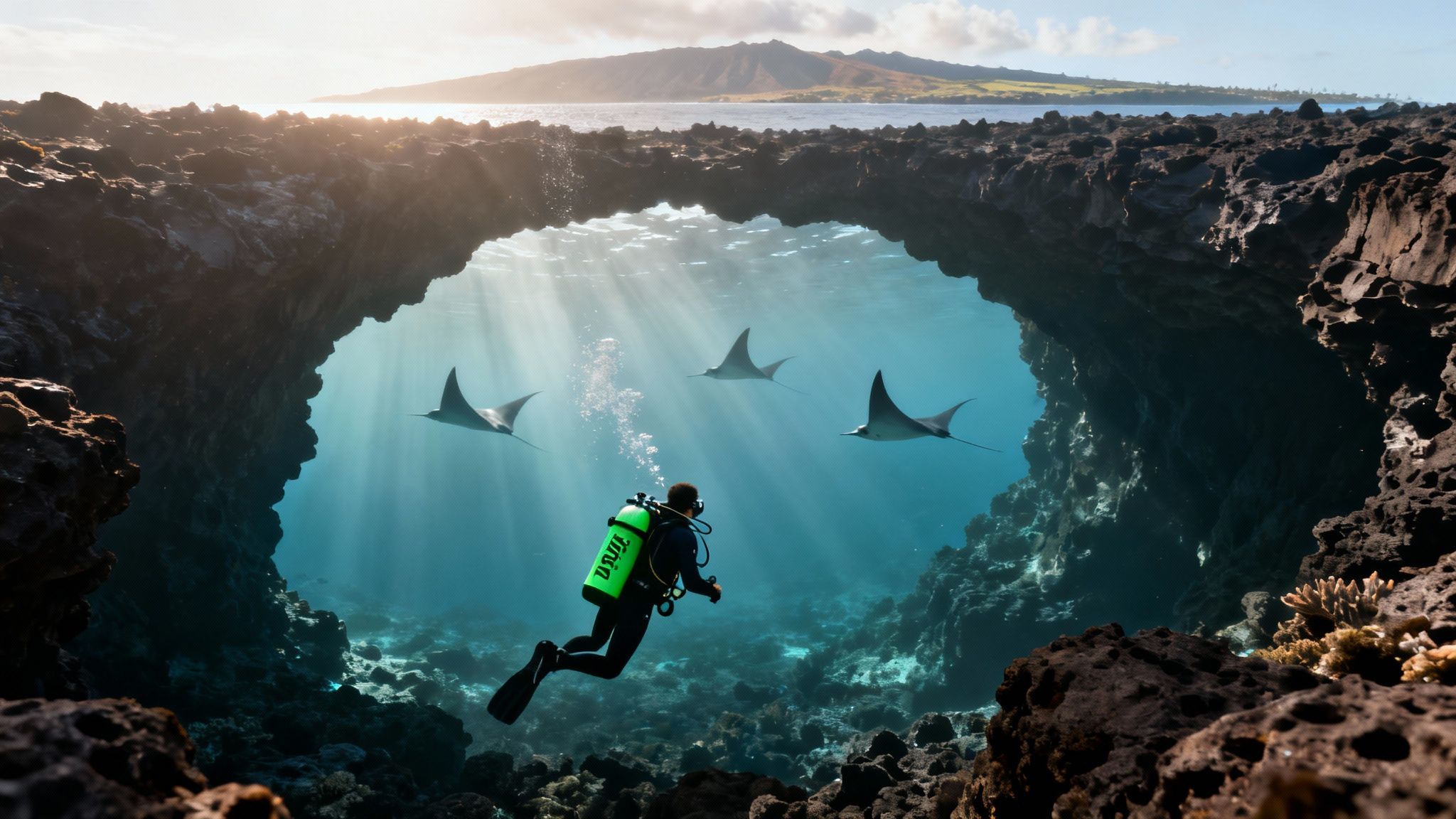
Imagine having a few more precious minutes to navigate the stunning lava tubes and archways that make our local reefs so unique. Or getting that extra bit of bottom time to fully soak in an unforgettable encounter with the gentle giants on our world-famous manta ray night dive.
For divers who want to pack in as much as possible, our 3-tank local charter is the perfect way to experience how nitrox can transform a full day in the water, helping you feel less tired and more ready for that third plunge.
Not certified yet? No problem. Our expert instructors make the PADI Enriched Air (Nitrox) course fast, easy, and convenient, so you can start enjoying these advantages on your very next trip. But don't just take our word for it—see what other divers have to say about their experience with us.
Your Nitrox Questions, Answered
We've explored why so many divers love nitrox, but you probably still have a few questions. Let's tackle the most common ones we hear on the dive boat to clear things up.
Does Nitrox Let Me Dive Deeper?
This is probably the biggest myth out there, and the answer is a firm no. In fact, it's the opposite.
Because nitrox has more oxygen, it actually gives you a shallower Maximum Operating Depth (MOD) than regular air. The real magic isn't about going deeper; it’s about safely staying longer at the most popular recreational depths—think anywhere from 40 to 100 feet.
Do I Need a Whole New Set of Gear for Nitrox?
For the standard nitrox mixes you'll use on most recreational dives (up to 40% oxygen), your regular regulator and BCD are almost always good to go.
The two non-negotiables are:
- A dedicated nitrox tank that has been properly cleaned for oxygen service and is clearly marked.
- A nitrox-compatible dive computer. This is your most important tool for tracking oxygen exposure and unlocking those longer bottom times safely.
How Hard is the Nitrox Certification Course?
Not hard at all! There’s a reason the PADI Enriched Air (Nitrox) Diver certification is one of the most popular specialties in the world. It’s mostly about building knowledge, not complex in-water skills.
You'll learn the important stuff: how to manage your oxygen exposure, analyze the gas in your tank before every dive, and properly set your dive computer. Most divers can get through the coursework in just a few hours.
Will I Breathe Less Air on Nitrox?
Nope. Your gas consumption—how quickly you breathe through a tank—is all about your breathing rate, how hard you're working, and your depth. The oxygen percentage doesn't change that.
Think of it this way: Nitrox extends your no-deco time, not your gas supply. You get more time before your computer says you have to go up, but your dive will still end when you get low on air.
Ready to see for yourself what all the fuss is about? Kona Honu Divers provides complimentary nitrox for all our certified divers. It’s the best way to get the most out of every single minute exploring the Big Island’s incredible underwater world.