
Reliable nighttime viewing of manta rays in Hawaii centers on the Kona coast of Hawaiʻi Island, at Garden Eel Cove and Keauhou, where records include more than 23,000 sightings of 167 identified reef mantas. Their year-round presence makes Kona a strong choice, but it doesn't guarantee an animal on your particular night.
That distinction should shape your booking, your expectations, and your behavior in the water. A sheltered observation area helps people stay comfortable and predictable. It doesn't give anyone control over the plankton, the sea state, or a manta's decision to feed somewhere else.
Garden Eel Cove is my first choice for the dive, because its protected setting, defined viewing area, and surrounding reef make passive watching easier. The best encounter isn't the closest possible pass. It's one where a manta keeps feeding without having to dodge a person.
Where to See Manta Rays in Hawaii
Start with Kona's established nighttime feeding sites, rather than assuming every Hawaiian island offers the same experience. Garden Eel Cove, also called Manta Heaven, serves the airport side of the coast. Keauhou, commonly called Manta Village, is the south Kona option.
Kona manta sites and what the record shows
| Place | Where | What records show | Best conditions | Who it suits |
|---|---|---|---|---|
| Garden Eel Cove, Manta Heaven | Just offshore the Keahole Airport runway | Larger nighttime groups in the long-term Kona record | Sheltered cove, calmer and clearer water, sandy viewing area, nearby reef | Divers positioned on sand and snorkelers at the surface |
| Keauhou, Manta Village | South Kona, near the former Kona Surf Hotel | Smaller groups, disproportionately female visitors, high female site fidelity | Settled seas around the shore-adjacent viewing area; wind and swell still matter | Snorkel-focused evenings and guests staying in south Kona |
| Other Hawaiian islands | Maui Nui, Oʻahu, and separate island coasts | Local manta occurrence isn't the Kona night aggregation | Suitable nearshore conditions for incidental sightings, not an assumed Kona-style show | Travelers who shouldn't expect to reproduce a Kona encounter elsewhere |
The strongest evidence comes from a University of Hawaiʻi study of community-sourced observations, which analyzed records collected from 2010 through 2022, including more than 23,000 sightings of 167 individually identified reef manta rays, Mobula alfredi. Garden Eel Cove consistently supported larger aggregations, while Keauhou attracted disproportionately more females with strong site fidelity; males appeared more mobile between locations.
Those are repeated observations of identified animals, not a count of different mantas available for every tour. They establish that these are important feeding locations, while also showing that the sites don't function identically.
Kona's organized viewing history also matters. Historical records summarized in this Kona manta guide place the beginning of organized night viewing near the former Kona Surf Hotel around 1991, initially with approximately one boat about once per week. Today's established operation grew around animals repeatedly using coastal feeding habitat, not around a guaranteed nightly appointment.
Historical reliability isn't nightly certainty
Manta sightings in Kona often exceed a 90% success rate. That's useful planning context, but a high encounter rate doesn't tell you how many animals will appear, how long they'll stay, or whether conditions will allow the boat to operate.
Food availability is central. When plankton is thin or dispersed, mantas have less reason to remain in the viewing area. Wind and swell can also make boarding, positioning, and observation uncomfortable or unsuitable, even when animals are nearby.
A quiet evening doesn't erase Kona's long sighting record. A long sighting record doesn't erase the possibility of a quiet evening.
Don't build your vacation around an unsupported claim about a perfect month or moon phase. Use this guide to the best time to see manta rays in Kona to plan your timing, and leave room for a weather backup.
How Reef Mantas Feed and Grow
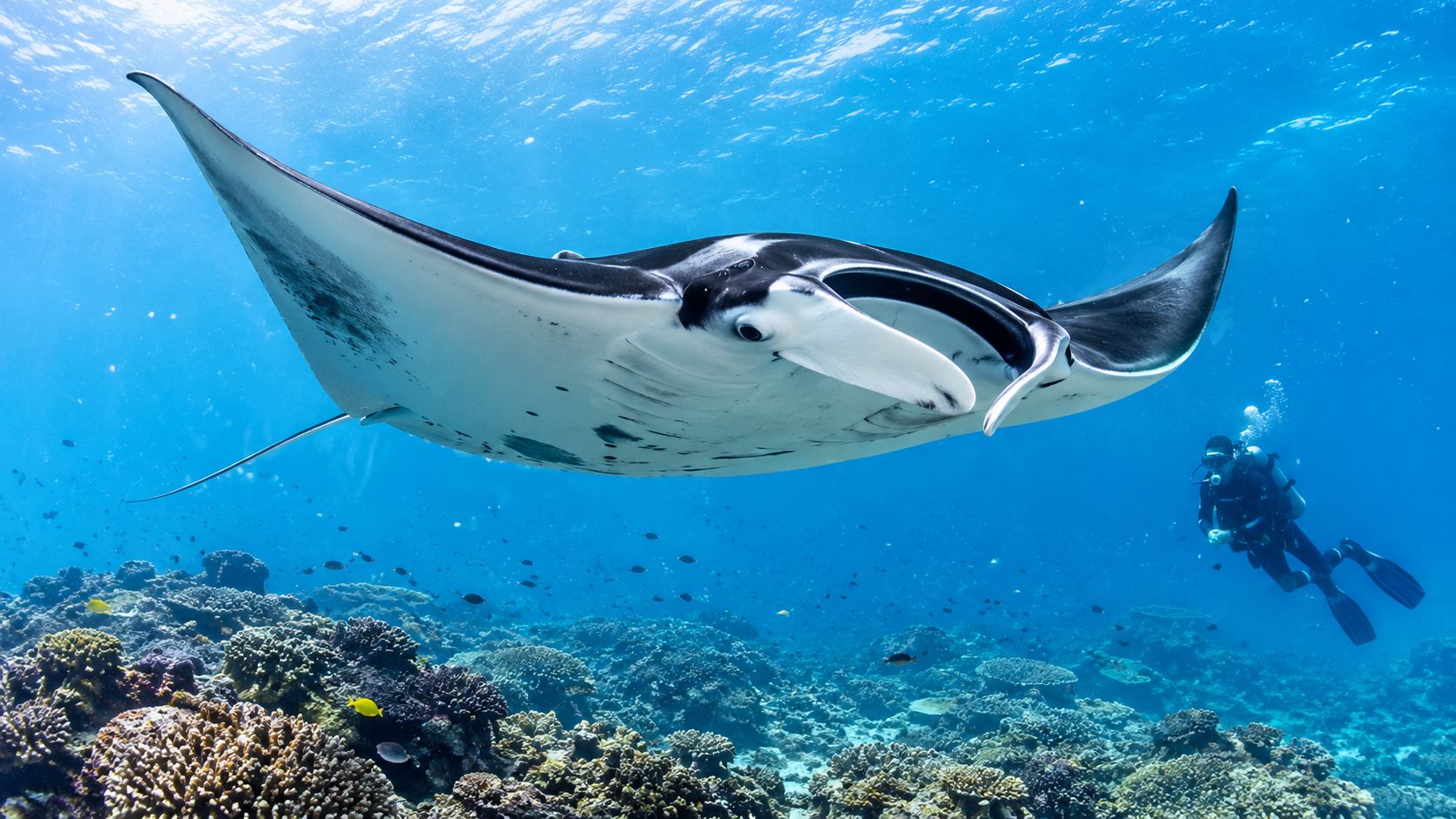
A reef manta moving through a light beam is feeding, not performing. Think of it as a broad-winged filter following a concentrated patch of food, rather than a hunter investigating divers.
Follow the plankton, not the people
Say you're settled at the viewing area and small organisms begin gathering in the light. A manta approaches with its mouth open, passes through that concentration, then turns back toward the same patch. If food remains concentrated, another pass makes sense.
The light works something like a porch lamp drawing moths. Plankton gathers in the illuminated water, and mantas arrive to eat the plankton. The people holding cameras around the edges aren't the attraction.
Water passes through the mouth and across specialized filtering structures associated with the gills. The Hawaiʻi Division of Aquatic Resources' sharks and rays guidance describes plankton-feeding behavior, including barrel rolls and feeding chains that help mantas exploit concentrated prey. Organisms such as copepods, mysids, euphausiids, and shrimp can make an otherwise unremarkable patch of water worth circling.
That explains why the same light arrangement can produce very different evenings. A bright beam isn't a substitute for food. More lamps, more people, or more frantic swimming won't improve a poor feeding patch.
Don't interpret a close pass as permission to interact. A manta may be following food through the space immediately beside you. Reaching toward it or moving into its next turn changes the conditions of that feeding pass.
Large animals, slow replacement
Hawaiʻi's Department of Land and Natural Resources manta profile describes giant manta rays with wingspans reaching 22 feet or more, habitat extending from nearshore waters to at least 120 feet, and females producing one or two young through aplacental vivipary. Those giant-manta size figures shouldn't be presented as the expected size of Kona's resident reef mantas.
The reproductive mechanism is unusual. Embryos initially use yolk, then receive nourishment through uterine milk before birth. Low reproductive output is a practical reason to protect individual animals, not just an interesting biological detail.
A feeding interruption isn't automatically a population disaster. But a population with low reproductive output can't replace lost adults as quickly as a fast-reproducing fish population can. Preventable injuries and repeated interference therefore deserve more attention than the apparent abundance at a busy viewing site might suggest.
Watch the turn: A looping manta is choosing a route through food. Leave that route open rather than treating the turn as an invitation to move closer.
Your best view often comes from staying still long enough to understand that route. Watch where the animal opens its mouth, where it banks, and whether it returns to the same part of the beam. The behavior makes more sense when you follow the food instead of assuming the manta is interested in you.
A Night at Garden Eel Cove
Garden Eel Cove is the superior choice for a manta dive when the priority is a protected viewing area with better surrounding reef. The Garden Eel Cove site description identifies its location offshore the airport runway and explains how its protection, bottom layout, and reef surroundings support concentrated observation. Shelter improves the setup, but it doesn't make the site immune to unsuitable ocean conditions.
Kona Honu Divers often takes its manta charter to Garden Eel Cove.
How the evening unfolds
Start with the briefing. Before entry, our crew explains the feeding biology, passive-observation rules, and where everyone will be positioned. Listen for the entry procedure, signals, and exit instructions, not just the exciting part about mantas.
Head toward the airport-side cove and use an established observation site. This is a stationary wildlife encounter, not a search conducted by swimming after animals.
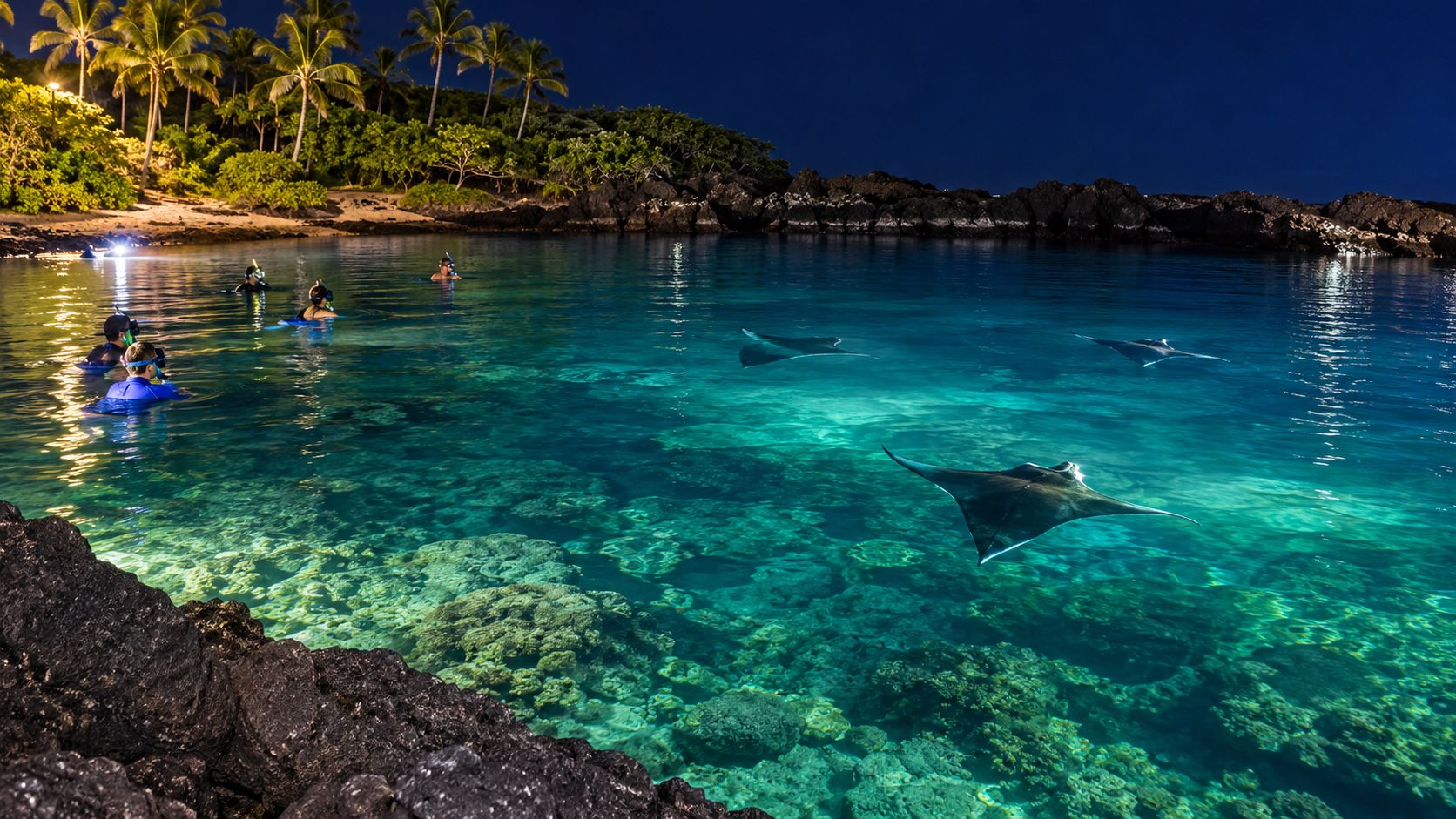
Settle into the assigned sandy viewing area. Divers kneel where directed, keeping off living reef. Powerful lights create a bright circle on the seafloor, so divers aren't sitting in complete darkness.
Snorkelers take the surface view above the illuminated water. The separation leaves the feeding space between the groups open.
Wait for the food response. Plankton may gather and mantas may loop through the beam. Their apparent size changes dramatically with distance, so don't turn an underwater impression into a precise wingspan estimate.
Our experienced divemasters and instructors remain in the water with divers. Stay in position instead of following a departing ray, blocking its mouth, or moving into its turning space.
Finish when directed. Follow the planned exit even if an animal is still feeding. Extending your own encounter complicates the group's supervision and departure.
Choose the position you can hold comfortably
Our manta ray dive and snorkel experience offers the bottom or surface perspective. The 2-tank manta charter requires Open Water certification or higher and diving within the past two years; snorkeling provides the surface view without requiring scuba certification.
Stationary doesn't mean effortless. Divers still need buoyancy control, gas awareness, and comfort following instructions after dark. Snorkelers need to be comfortable breathing through their equipment while floating in ocean conditions.
If darkness itself is unfamiliar, review the practical differences involved in scuba diving at night before choosing your position. Equipment matters, but the essential preparation is understanding the observation rules and being able to follow them calmly.
Safety Rules and Protecting the Population
Closer isn't automatically better. A controlled, low-contact encounter gives a manta room to feed and usually gives you a cleaner view than a chase through bubbles, fins, and suspended sand.
Treat the feeding route as occupied habitat, not empty water available for a better photograph. A person entering that route can force an animal to turn, interrupt a pass, or leave the concentration of food.
Hold a predictable position
The Big Island Now account of Hawaiian manta conservation and viewing guidance describes NOAA's voluntary standard: snorkelers remain at the surface, avoid the feeding column, and use organized positioning around lights, with an in-water guide and a flotation ring for groups of four or more. These are wildlife-interaction recommendations, not a reason to assume every ocean entry is suitable for every swimmer.
- Stay at the surface when snorkeling. Freediving into the beam puts your body directly into the route a manta may use with its mouth open. Surface positioning preserves that space.
- Keep divers in the assigned sandy area. Don't rise toward a belly or relocate to intercept the next pass. Stable positioning makes people easier for animals and guides to anticipate.
- Never touch, ride, chase, or herd a manta. If it leaves, let it leave. Following it extends the disturbance beyond the viewing area.
- Control fins, cameras, and loose equipment. Secure dangling accessories and avoid sweeping a fin or camera arm into a passing wing.
- Follow the lighting plan. Aim personal lights as directed instead of tracking an animal's face. Extra illumination isn't automatically helpful when the crew has already arranged the feeding light.
- Keep vessel movements predictable. Passengers should follow boarding and exit instructions rather than improvising a separate swim near operating boats.
These habits belong alongside ordinary responsible and considerate diver etiquette. Here, however, the reason isn't merely courtesy to another diver. It's preserving access to a feeding area for a locally vulnerable animal.
Frequent sightings can conceal a small breeding base
A NOAA-supported genetic study estimated approximately 104 adult breeders around Hawaiʻi Island, compared with about 129 in Maui Nui, and migration equivalent to roughly one female between island groups every 1,300 years and one male approximately every 64 years. These are genetic estimates of breeding population and interchange, not a headcount of animals you might see on a tour.
The especially limited female movement matters. Nearby islands aren't a ready source of replacement animals if a local group suffers losses. Injury, entanglement, vessel strikes, and repeated disruption therefore affect a population with little demographic backup from elsewhere.
Relatively stable aggregations under tourism demonstrate resilience, not permission to increase contact. A crowded viewing area can still contain a small, genetically distinct group of animals returning repeatedly.
The useful standard: A good night is one where a manta never has to change course for a person.
If you notice fishing line, a fresh wound, or unusual behavior, alert the guide. Don't grab the animal or pull at an entanglement yourself, because an attempted rescue can tighten line or provoke a dangerous struggle.
Belly-pattern photographs can support individual identification when taken without interception. Share useful images with the crew or an appropriate local identification program, along with the site and observation details. Documentation helps only when getting it doesn't obstruct the animal.
What to Pack and How to Photograph Rays
Pack for a wet ocean activity followed by a breezy boat ride, not for an afternoon sitting on the beach. Comfort helps you stay patient while waiting, which matters more than carrying extra gadgets.
Bring a compact, usable kit
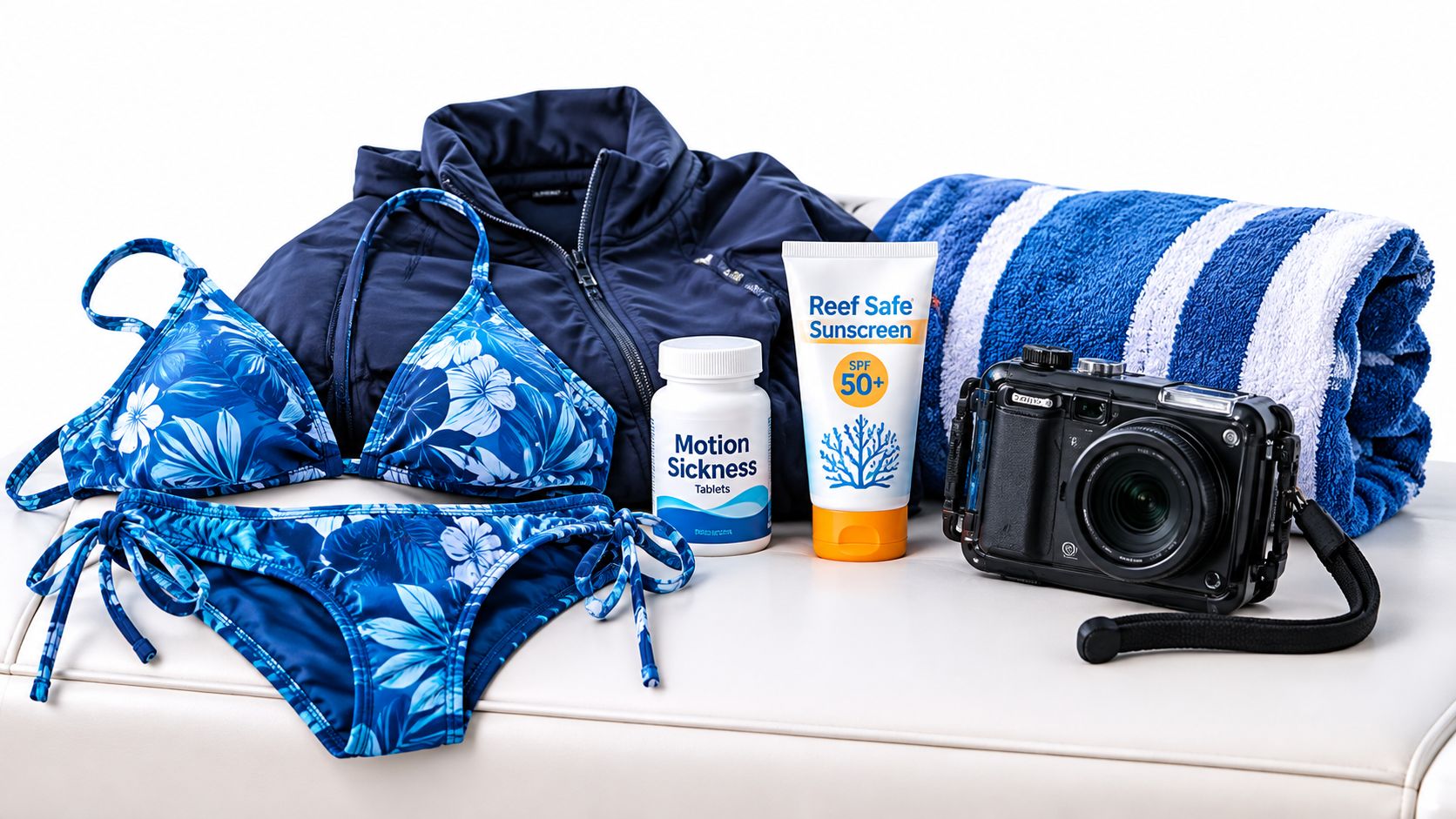
- Swimsuit and dry layer: Wear your swimsuit under your clothes and bring a towel plus a jacket or fleece for the return.
- Exposure protection: A shorty or lightweight wetsuit is a practical starting point. Choose warmth for a mostly stationary encounter rather than assuming active-swimming comfort will be enough.
- Tested mask and snorkel: Resolve leaks and mouthpiece discomfort before boarding. Use the flotation assigned by the crew.
- Motion-sickness preparation: If you need medication, follow its label and your clinician's advice. Don't leave preparation until nausea has started.
- Sun protection before departure: Apply sunscreen well before boarding if you'll be outside in daylight. Clothing also reduces the amount you need; a reef-safe label isn't a reason to apply lotion in the feeding water.
Leave drones and elaborate equipment you can't control at home. A personal dive light should help you manage equipment and follow instructions, not become another spotlight aimed at an animal.
Set the camera before entry
For stills, start with a wide lens, manual exposure or shutter priority, and continuous autofocus if your camera can track reliably in low light. Use a shutter speed fast enough to hold detail in a moving wing, then raise ISO as needed rather than accepting an unusably blurred frame.
Test exposure on the illuminated water before a manta arrives. Bright bellies can lose detail against dark backgrounds, so protect the highlights instead of trying to make the whole ocean look bright.
For video, follow the animal's arc with a slow pan and leave room for the entire wingspan. Tight zooming makes framing harder and exaggerates every movement of your hands.
Let the manta enter your composition. Don't enter its route to complete the composition.
Plankton makes backscatter likely. Avoid shining an extra light directly through the water in front of the lens, and accept that cropping later is better than swimming closer now.
Use these Kona manta ray photography examples to think about framing rather than treating any particular close-up as a shot you're owed. If no manta arrives, photograph the light column or an accessible reef subject from your assigned position.
Final packing check: warm layer, tested mask, manageable camera, and a backup evening that doesn't depend on an animal appearing.
Choose a Responsible Kona Manta Night
I would choose Garden Eel Cove for the dive and book early enough in the vacation to preserve another possible evening. Its sheltered viewing setup and reef surroundings make it a practical place to watch, while a backup date gives you flexibility if conditions prevent the trip.
Kona Honu Divers offers a 2-tank manta ray charter, and our flagship manta experience accommodates beginner through advanced divers and snorkelers within the requirements of their chosen activity. The right choice isn't whichever perspective sounds more adventurous. It's the position where you can breathe comfortably, manage your equipment, and remain still.
Decide by comfort, not proximity
Choose scuba if you're qualified, current, and comfortable managing a stationary night dive. Choose the surface view if you want to watch without managing scuba equipment, while remembering that snorkeling still requires comfort in open water.
The comparison of snorkeling versus diving with manta rays can help you make that decision. Neither option earns permission to approach an animal.
Our manta ray night dive has encounter rates of up to 92%. Treat that as an encounter record, not a promise that your evening will produce a particular number of animals or a particular photograph.
Before paying, make sure you understand what happens if weather prevents departure and what any no-sighting provision offers. A return opportunity, if available under a booking's terms, is different from a refund or a wildlife guarantee. Don't assume those policies are interchangeable.
Make the rest of the trip worthwhile
For daytime underwater plans, explore our Kona diving tours separately from the manta decision. A good daytime reef dive shouldn't depend on whether a night-feeding animal appears later.
Choose your evening, leave a weather backup, and arrive ready to listen. Judge the encounter by how naturally the animals could feed, not by how close you managed to get.
Kona Honu Divers offers guided manta ray diving and surface snorkeling on Kona's established nighttime feeding sites, with a detailed briefing and supervised observation. Visit Kona Honu Divers to choose your underwater or surface perspective and plan a Garden Eel Cove manta night around your qualifications, comfort, and vacation dates.