
The first time I settled onto the sand at Garden Eel Cove, the water above me looked empty for only a few seconds. Then a white belly flashed through the glow, wings spread wide, and a manta turned so close overhead that every diver in the circle forgot to breathe for a beat.
An Unforgettable Night Under the Waves
Night diving in Kona has a way of changing people. You back-roll into dark water, descend through a blue-black column, and then the seafloor lights switch the scene from mystery to theater. One moment you're kneeling on sand. The next, a giant ray glides in from the edge of the beam and loops overhead with perfect control.
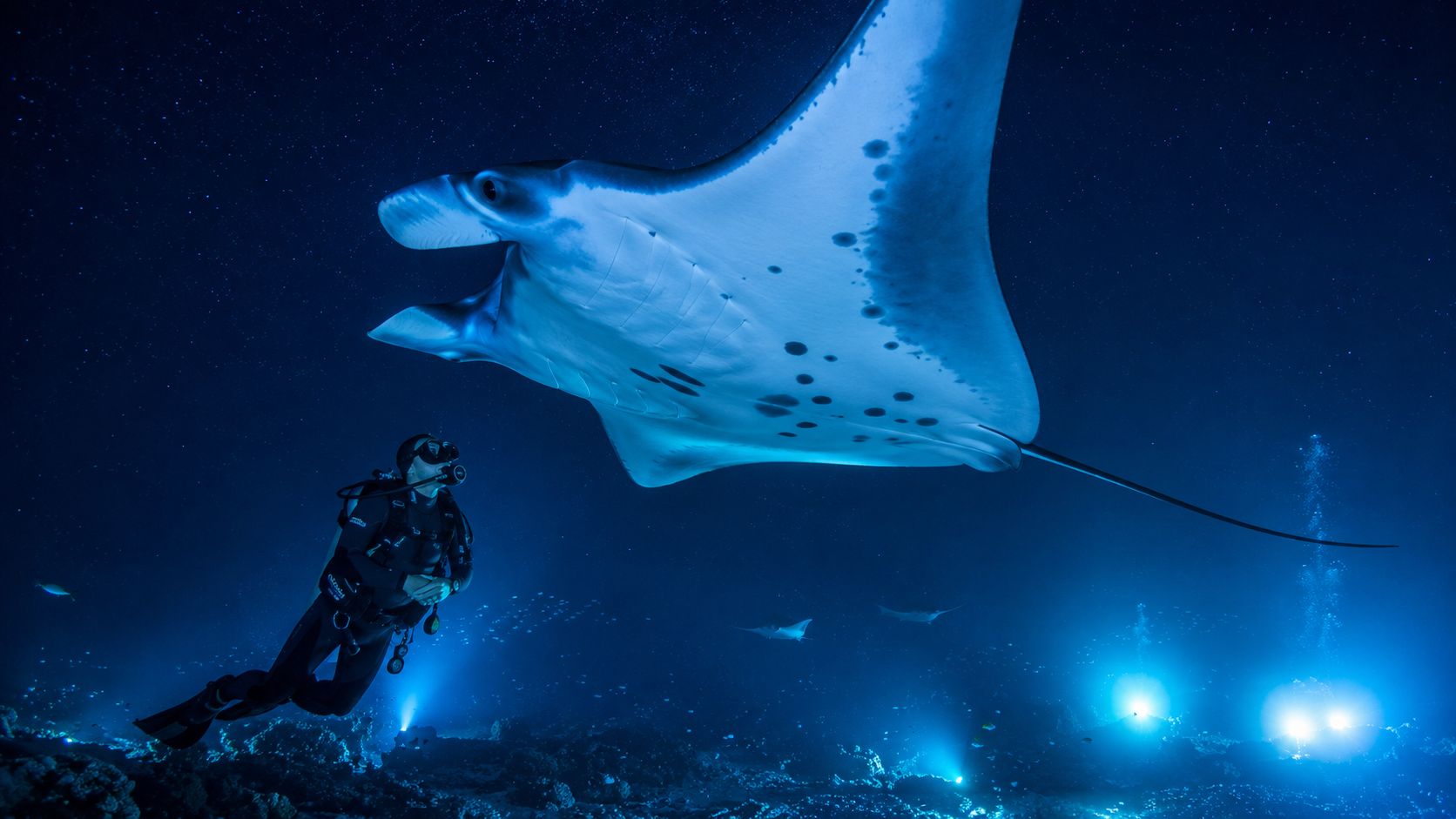
What surprises first-timers isn't just the size. It's the calm. Mantas don't charge, dart, or behave like predators. They move like huge birds underwater, banking through the light as they feed on tiny plankton. If you've looked at photos of the Kona manta ray night swim experience, the actual thing still feels bigger, quieter, and more graceful than the pictures suggest.
Why This Dive Feels Different
Most wildlife encounters involve searching. This one works the other way around. Divers hold position, the lights gather plankton, and the animals come to the feeding zone on their own terms.
That's why the manta ray dive Kona experience leaves such a deep impression. You're not chasing marine life through the reef. You become part of a carefully managed viewing setup that gives the mantas room to feed and gives divers a front-row seat.
Stay still, look up, and let the animals control the distance. That's when the encounter becomes magical.
What Makes Kona So Special
Kona is known around the world for this experience because the encounter is both dramatic and dependable. Visitors come here hoping for a bucket-list dive, but most leave talking about something more personal. They felt small in the best possible way.
That feeling matters. It's also why the details matter. Where you dive, how the lights are arranged, why divers stay on the bottom, and how operators manage the crowd all shape whether the night feels calm and respectful or chaotic and careless.
This guide is built around those details. If you want a manta experience that's safe, beautiful, and rooted in good in-water habits, you need more than a booking link. You need to understand why the system works.
What Is the Kona Manta Ray Night Dive
The manta ray dive Kona format is simple once you see the logic. Divers descend into shallow water, settle onto a sandy area, and shine lights upward. Those lights attract plankton. The plankton attracts manta rays. The result is a predictable feeding arena where the action happens above you instead of somewhere off in the dark.
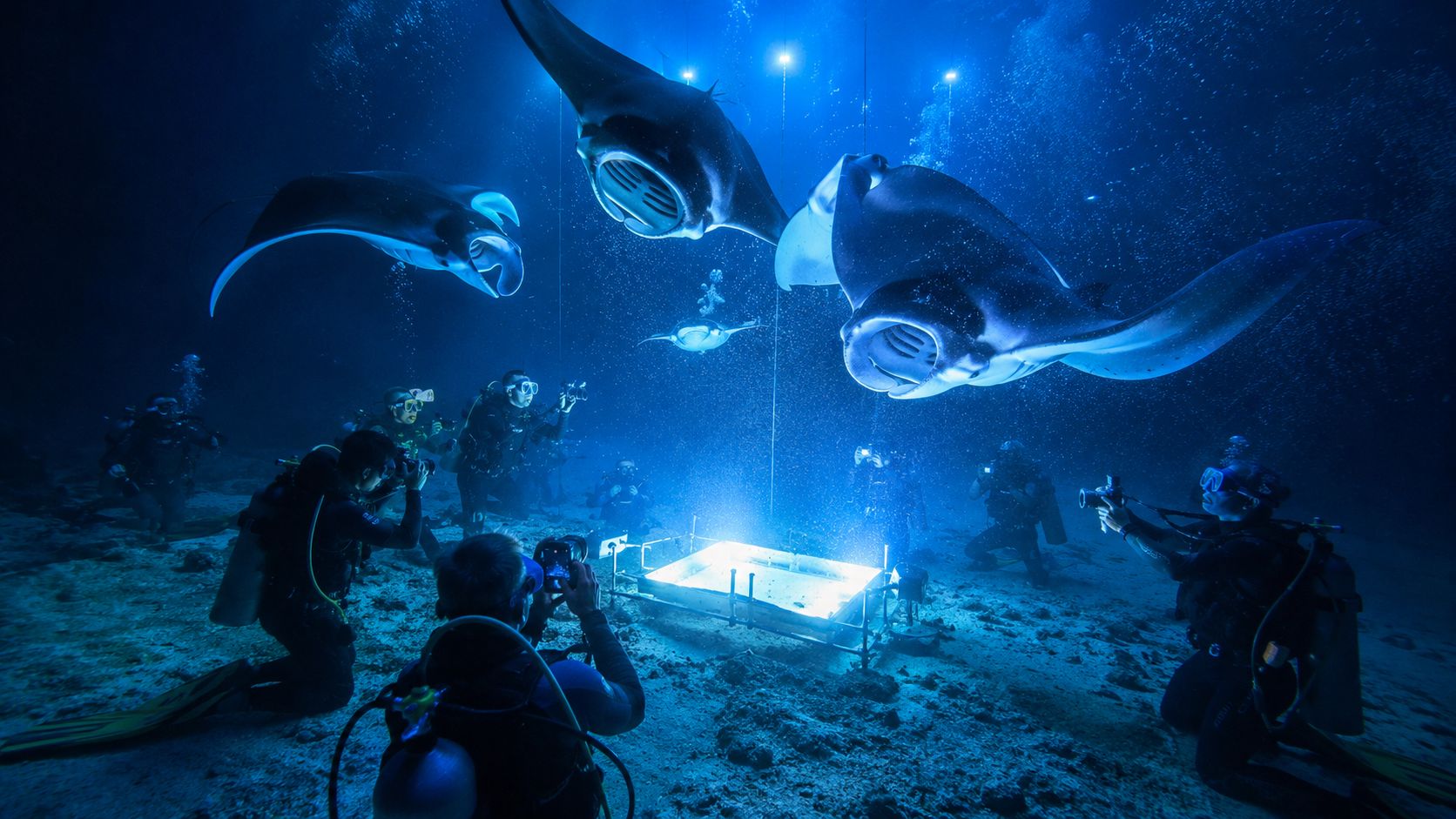
The setup is described clearly in this overview of how scuba divers encounter manta rays in Kona. The core mechanics are also well documented: “The Kona manta ray night dive is conducted in shallow water (25–40 feet) specifically to exploit the nocturnal feeding behavior of manta rays, which aggregate above sandy patches to filter plankton attracted by artificial bottom lights; this creates a predictable 'feeding arena' with an 80–90% sighting success rate year-round” according to Kona Snorkel Trips' explanation of the night dive setup.
The Dinner Bell Underwater
Think of the light array as a dinner bell, not bait. Nobody hand-feeds the mantas. The lights gather the food that's already in the water column.
That distinction clears up a lot of confusion. Guests often ask whether the encounter is natural. The honest answer is that the mantas are responding to an artificial light source, but they're still feeding on wild plankton, not being hand-fed by divers.
What Divers Actually Do
Most of the time, your job is to do less than you expect.
- Descend calmly: You go down with the group and settle onto the sandy bottom.
- Hold your position: Divers usually kneel or sit so the water column above stays open for the rays.
- Aim your light upward: Your beam helps concentrate plankton and improves visibility.
- Watch, don't pursue: The show comes to you.
The biggest mistake new divers make is assuming they should swim around for a better angle. That usually makes the viewing worse. Mantas need a clear lane to loop, roll, and pass overhead.
Practical rule: If you're moving around a lot, you're probably doing the dive wrong.
Why the Rules Are So Specific
The “stay on the bottom” rule isn't arbitrary. It protects both the encounter and the animals. A scattered group of divers in midwater creates obstacles. A tidy group on sand creates a clean vertical space where mantas can feed without dodging fins and bubbles from every direction.
That's also why this dive often feels easier than people expect. Once you're in position, there's very little task loading. You're not navigating through a reef at night. You're observing from a fixed viewing area while the mantas work the light.
For certified divers who are unsure about night diving, that structure is what makes the experience approachable.
Why Garden Eel Cove Is Kona's Premier Manta Site
If your goal is the strongest possible manta dive, Garden Eel Cove, also called Manta Heaven, deserves serious attention. Not every manta site offers the same combination of protection, viewing layout, and in-water organization. Garden Eel Cove does.
A detailed local write-up on where to find the best place to dive with manta rays points to the same core advantage. “Manta Heaven at Garden Eel Cove is located just offshore from the Keahole (Kona) Airport runway and is considered the best site for scuba diving due to its protection, depth, layout, and bottom topography, allowing for higher concentrations of mantas compared to other sites” as described in this site profile of Manta Heaven at Garden Eel Cove.
Why the Layout Matters
Garden Eel Cove works so well because it behaves like an underwater amphitheater. The sandy bottom gives divers a stable place to settle. The depth is well suited to the standard manta setup. The topography helps keep the viewing area organized instead of spread out.
That sounds technical until you compare it with a weaker site. On a less protected or less structured site, divers can end up drifting, crowding one another, or losing a clean view upward. At Garden Eel Cove, the geometry helps the dive stay orderly.
Better Protection Means Better Conditions
The cove's protected location is one of its biggest strengths. Calmer conditions usually make entries, descents, and bottom time more comfortable. That matters a lot on a night dive, especially for guests who don't have much experience in the dark.
When the ocean feels manageable, divers relax faster. When divers relax faster, they breathe better, move less, and interfere less with the manta feeding path.
Reliability and Viewing Quality
Garden Eel Cove is also known for strong manta activity. According to Sunlight on Water's overview of Kona manta tours, Garden Eel Cove typically hosts 10–20 manta rays on many evening dives, with historic single-night counts reaching up to 28 mantas. That doesn't mean every night is huge, but it does tell you why so many experienced local divers favor the site.
A second practical advantage is the bottom itself. Scuba Diving's feature on Garden Eel Cove notes the site sits at 35 feet with a sandy bottom where divers kneel or sit while lights on the seafloor attract plankton. From a divemaster's perspective, that's close to ideal. It supports clean group positioning and a consistent upward view.
| Feature | Why It Helps Divers |
|---|---|
| Protected location | Makes the dive feel calmer and more controlled |
| Sandy bottom | Gives divers a stable place to kneel or sit |
| Suitable depth | Supports long, comfortable viewing from the bottom |
| Defined layout | Keeps the manta feeding lane open overhead |
The site's reputation isn't hype. It's the product of geography, animal behavior, and a layout that supports both better viewing and better conduct underwater.
Planning Your Dive When to Go and How to Prepare
A lot of travelers assume there's a short manta season. That's one of the biggest misconceptions I hear. Kona's manta encounters are a year-round activity because the local manta population stays along the coast rather than passing through seasonally.
The broad reliability of the region is one reason this dive has become so famous. The Kona coast of Hawaii's Big Island is globally recognized as the world's most consistent location for manta ray encounters, with an average sighting success rate of 80% to 90% on any night of the year, according to this guide on the Big Island manta ray dive. For timing advice tied to trip planning, this local page on when to dive with manta rays in Kona is a useful companion.
When to Go
The short answer is simple. Go when you're in Kona.
Late spring, summer, and early fall are all popular travel periods, but the mantas don't disappear outside those windows. Because these are resident animals along the Kona coast, you're not trying to hit a narrow migration pulse.
That said, conditions always matter. A protected site helps, but ocean comfort still depends on weather, swell, and your own sea legs.
What to Bring and What to Leave in the Car
You don't need to overpack for a manta dive. You do need to pack smart.
- Bring a towel: You'll want it the second you get out of your wetsuit.
- Pack dry clothes: A warm shirt or light layer feels great on the ride back.
- Keep hair ties and basics handy: Small comfort items matter more at night.
- Leave bulky extras behind: The less clutter you bring aboard, the easier gearing up will be.
Most professional dive operators provide the core equipment for the tour, including your scuba setup, lights, and exposure protection. If you're unsure what's included on a specific charter, ask before you arrive so there's no scramble at check-in.
Seasickness Prep Matters More Than People Think
Even guests who never get motion sick on land can feel queasy on a boat at night. If you know you're sensitive, prepare early instead of hoping for the best.
Common options people use include the Ship-EEZ Seasickness Patch, Dramamine pills, Bonine pills, Sea Band wristbands, and Ginger chews.
If you're prone to seasickness, take action before boarding. Once nausea starts on a night boat, it's much harder to turn around.
A few practical habits also help:
- Eat lightly, not heavily: An empty stomach isn't always ideal, but a huge meal can backfire.
- Hydrate early: Don't wait until the boat leaves.
- Watch the horizon when possible: It helps some people settle quickly.
- Tell the crew if you're uneasy: They'd rather help early than late.
Who This Dive Suits Best
This is a great fit for certified divers who want a controlled wildlife encounter rather than a roaming reef dive. If you're comfortable with basic buoyancy and can follow a briefing well, you don't need to be a technical diver to enjoy it.
If you're not certified, the surface snorkel version can still be a terrific way to see the same feeding behavior. The key is matching the format to your comfort level, not forcing yourself into scuba just because it sounds more dramatic.
The Manta Dive Experience From Boat to Bottom
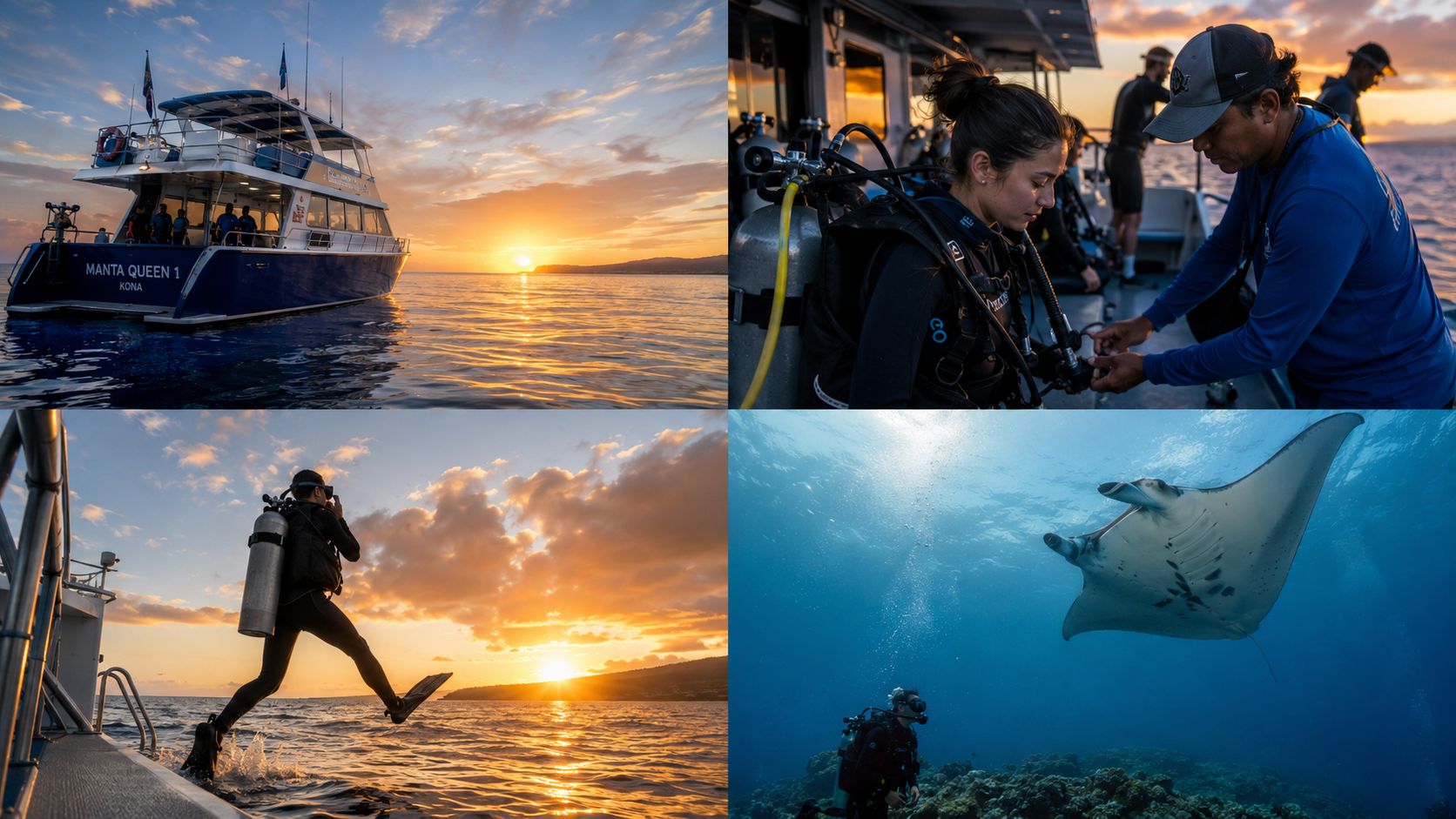
By the time you step onto the boat, most of the important work should already be happening. Good crews are thinking about group fit, gear setup, sea conditions, and how to keep the in-water portion quiet and organized.
The experience tends to feel smoother when you know the sequence. You're not guessing what comes next. You're following a rhythm that the crew has refined around the mantas' behavior.
Before You Enter the Water
The briefing is where the night really starts. The crew explains entry procedures, descent, hand signals, bottom positioning, and the absolute rule about not touching or chasing mantas.
That structure exists for a reason. Reef manta rays in Big Island waters have been identified by the nonprofit Manta Pacific Research Foundation, which has documented over 200 individual mantas and established engagement rules for divers, with encounters typically lasting 45–60 minutes and wingspans ranging from 10–14 feet, according to this article on magical manta ray night dives in Kona.
If you're wondering about the actual depth profile, this guide on how deep the Kona manta ray dive is gives a helpful snapshot.
The Ride and Descent
The boat ride is often short enough that the anticipation builds faster than nerves do. Sunset usually fades during setup. Masks get defogged. Regulators are checked. Divers do that familiar quiet mental review of small things that suddenly feel important at night.
Once in the water, the descent is usually straightforward. You follow the guide down to the sand, find your place in the formation, and get low without stirring up the bottom.
The Main Event on the Sand
This is the moment people remember.
The lights point upward. Plankton gathers in the beams. Then the first manta appears, circles once, and sweeps closer on the next pass. Soon you may have several rays feeding overhead, barrel rolling through the illuminated water as if the entire arena were built for them.
- Stay compact: Keep your fins and tank clear of your neighbor's space.
- Keep the lane open: Don't rise into midwater for a better look.
- Control your breathing: Slow breaths help you stay still and enjoy more.
- Let the manta choose the pass: The closer encounters usually happen when divers stop trying to force them.
The best manta moments happen when the whole group settles down and becomes part of the background.
Surfacing and the Ride Home
After the bottom portion ends, the ascent feels almost abrupt because the time goes fast. Back on the boat, the mood usually shifts from concentration to wide-eyed replay. People compare the nearest pass, the biggest barrel roll, or the moment a manta seemed to hover inches above the lights.
That post-dive energy is part of the charm. Night diving can feel intimidating before you do it. After a well-run manta trip, many divers come away feeling not rattled by the dark, but steadied by the structure.
Booking Your Adventure with Kona Honu Divers
A manta trip is set long before anyone rolls into the water. The booking choice shapes the whole night: how well the briefing prepares you, how orderly the group feels on the bottom, and whether the encounter gives the rays room to feed naturally.
That matters even more at a site like Garden Eel Cove. It works well because divers become a quiet, predictable audience while the mantas use the light field to hunt plankton. If an operator rushes the setup, crowds the site, or treats the rules like suggestions, the experience gets worse for both people and animals.
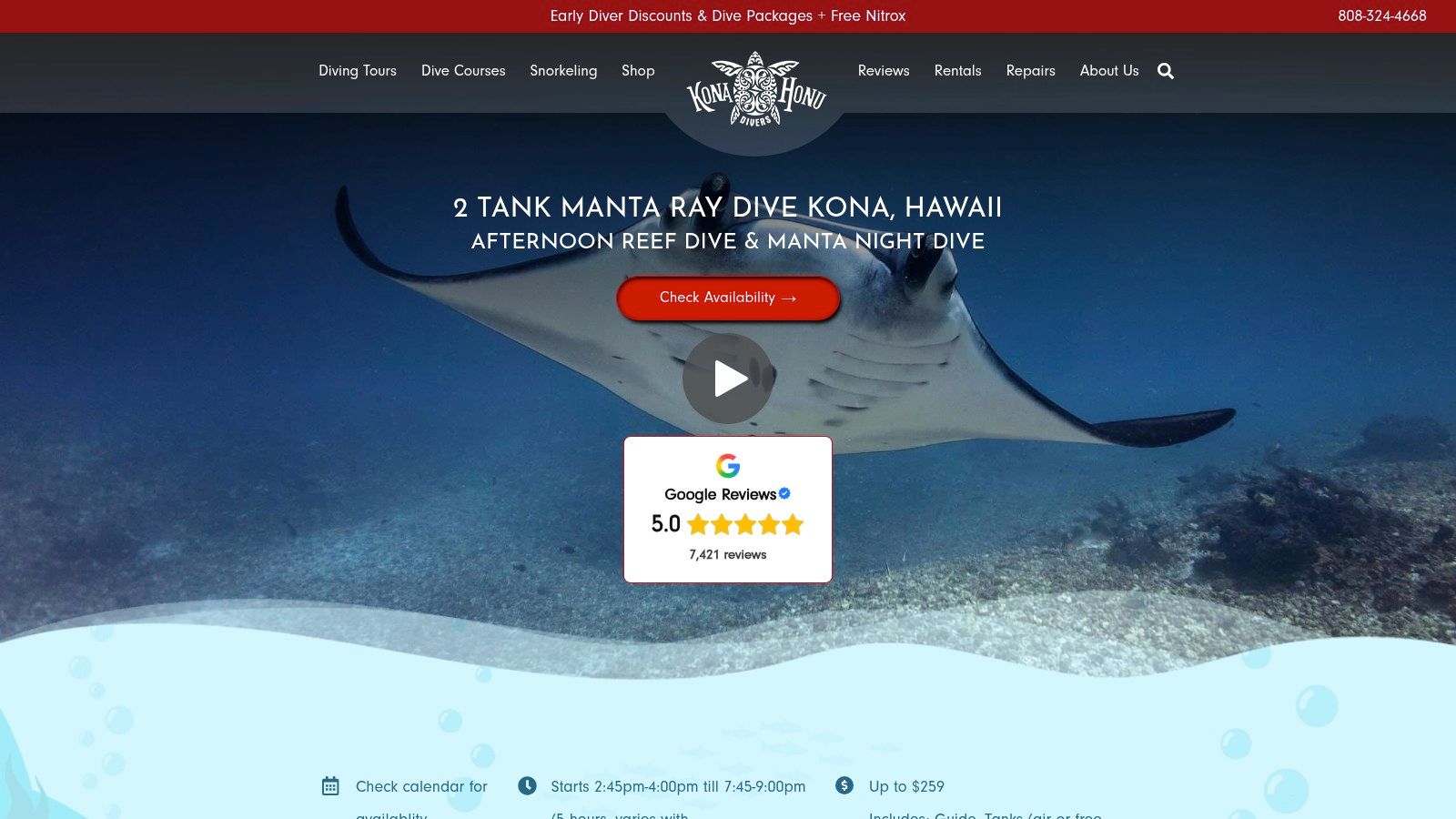
What to Prioritize When Booking
Price is only one piece of the decision. On this dive, the better question is whether the crew runs the site in a way that supports calm divers and undisturbed manta behavior.
| Booking Factor | Why It Matters |
|---|---|
| Group control | Smaller, well-managed formations are easier to supervise and less likely to push divers into the mantas' feeding lane |
| Clear briefings | Guests who understand the light setup and bottom position usually stay calmer and make fewer mistakes |
| Site choice | Garden Eel Cove gives scuba divers a dependable viewing layout because everyone can settle onto the sand and let the action come to them |
| Gear quality | Reliable lights, tanks, and rental gear reduce task loading on a night dive |
| Ethical standards | Passive viewing protects the mantas' mucus coating and helps keep the encounter natural |
A good operator should explain the rules in plain language. Stay on the bottom because midwater divers block feeding passes. Keep your hands in because contact can harm the rays. Aim lights as instructed because the beam is not just for visibility. It acts like a dinner bell for plankton, which is why the mantas come so close in the first place.
Choosing the Right Trip for Your Group
For certified divers, Kona Honu Divers' manta dive tour is built around that structured bottom-viewing format. Their broader Kona diving tours page includes other charters and training options if you want to add more diving to the trip.
For non-divers or mixed groups, Kona Snorkel Trips offers a surface-based manta experience focused on the same nighttime feeding behavior. That can be a smart fit for families or travelers who want the spectacle without scuba skills.
Some visitors also look at the Kona Blackwater Dive or the advanced long-range dive tour. Those are very different experiences. The manta night dive is more like an underwater theater. You hold your position, the lights create the stage, and the mantas decide how the show unfolds.
Reviews and Availability
Before you book, read recent reviews with a divemaster's eye. Look for comments about organized briefings, patient crew support, clear in-water positioning, and whether guests felt settled rather than hurried. Those details usually tell you more than generic praise.
Frequently Asked Questions About the Manta Dive
Good questions lead to better dives. If you want more detail after this section, the full Manta Dive FAQ answers common trip-planning and in-water questions in one place.
Is the manta ray night dive safe for beginners
For many certified divers, yes. The site is set up for observation, not roaming, and that makes a big difference at night. At Garden Eel Cove, divers settle into a defined viewing area on the bottom and stay there while the lights draw in plankton, which draws in manta rays. That structure removes much of the task-loading that makes some night dives feel intimidating.
The better question is whether you are ready for this kind of dive. A newly certified diver who has decent buoyancy, stays calm in the dark, and follows the briefing closely often does well. A diver with more logged dives but weak control can have a harder time.
The rules support safety and the manta encounter at the same time. Staying low keeps the water column open for the rays to feed and turn. It also prevents accidental ascents, finning into other guests, and the kind of drifting movement that can unsettle both divers and animals.
Are we allowed to touch the manta rays
No.
Mantas are covered by a protective mucus layer that helps shield their skin. Touching them can disturb that coating. Just as important, hands reaching up change the behavior of the whole group underwater. A respectful manta dive works like sitting still at the edge of a wildlife trail. If you stay still, the animal chooses the distance.
That is why guides repeat the same instruction so firmly. Keep your hands in, keep your fins down, and let the mantas fly above the lights. The closer they come on their own, the more memorable the encounter usually becomes.
What if I'm not a certified diver
You can still see manta rays at night by snorkeling. That option works well for mixed groups, nervous ocean guests, and travelers who want the experience without scuba training.
Snorkel guests usually hold a floating light board on the surface while the beams shine down into the water. Divers watch from below, snorkelers watch from above, and the mantas feed in the middle. It is a smart setup because it gives the animals a predictable feeding zone instead of having people scattered through the water.
Why do divers stay on the bottom with lights pointed up
This is one of the most misunderstood parts of the dive, and it is the reason a well-run trip feels so smooth. Your light is not there to search for mantas. It is there to help create a plankton buffet.
Light attracts plankton. Plankton attracts manta rays. A circle of steady beams rising from the bottom creates a bright column the mantas can feed through again and again. If divers swim around, wave lights, or hover high in the water, that feeding lane breaks apart. Garden Eel Cove tends to produce more reliable encounters because operators use a consistent method and the site layout supports it well.
What are the best tips for underwater photography
Simple wins here.
- Stay still: Good manta images usually come from a stable diver, not a busy one.
- Let the animal come to you: Chasing almost always ruins framing and can interfere with the manta's path.
- Aim your light carefully: Keep the feeding column bright without blasting another diver in the face.
- Shoot upward when possible: The white underside, open mouth, and looping passes often create the most striking photos.
One more tip matters more than camera settings. If handling your camera makes your buoyancy sloppy, put the camera down for a minute and reset. The best photographers on this dive look calm because they are calm.
Kona Honu Divers includes manta diving, snorkeling options, and other Kona charters for visitors who want a well-organized, low-impact experience centered on clear in-water procedures.