
You're standing on a Kona boat after sunset, wetsuit zipped, mask adjusted, and the last shoreline lights fading behind you. Below, a single beam cuts through black water. Then a broad white belly appears, turns above your head, and disappears before you've processed the size of the animal. A second manta follows, then another, each one using the light to find plankton.
That encounter with manta rays in Hawaiʻi is thrilling because it feels spontaneous, but the setting is carefully shaped by ecology, local rules, experienced crews, and visitor behavior. Kona's mantas aren't an endless statewide resource. They're resident animals using particular feeding areas, and the quality of your night depends on how well people protect those places.
Descending Into the Dark to Meet the Giants
The first few minutes underwater can feel oddly quiet. Your regulator becomes the loudest thing in the ocean, the boat's lights glow overhead, and the reef fades into darkness around your group. You hold position while a manta's cephalic fins unfurl and its wings curve through the light.
From a dive master's perspective, the best encounters don't come from chasing an animal. They happen when divers settle onto the bottom, snorkelers remain in their assigned area, and the manta chooses to make repeated passes. The animal controls the distance. Your job is to become predictable enough that it can feed without changing course.
Kona's nighttime viewing is built around that natural behavior. Artificial lights concentrate plankton near established feeding locations, and manta rays arrive when conditions provide enough food. Some nights bring several animals close to the lights. Other nights are quieter, because wild animals don't follow a schedule written for tourists.
The distinction matters. A manta encounter isn't an aquarium performance, and a successful trip isn't measured only by how many rays pass overhead. It's measured by whether the animals continue feeding naturally, whether divers leave the reef undisturbed, and whether visitors understand the local population they've come to see.
This guide covers the biology behind Kona's mantas, why Garden Eel Cove deserves serious consideration, how scuba and snorkeling differ, and the practical habits that make a night dive safer and better for everyone.
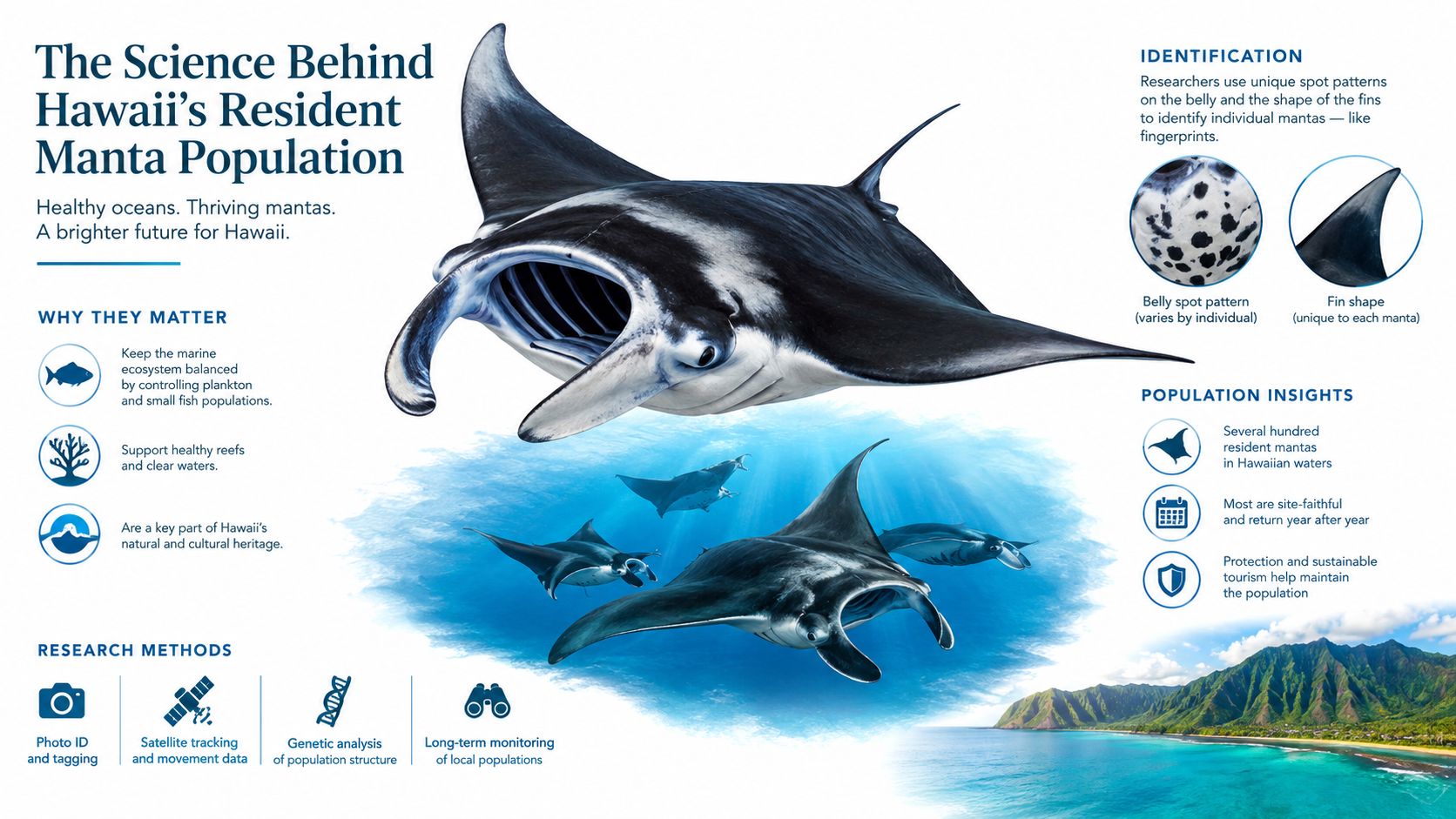
The Science Behind Hawaii's Resident Manta Population
Many observers see a huge animal moving through open ocean and assume it belongs to a huge, connected population. Kona's reef mantas tell a different story. They're part of small, island-specific groups with limited exchange between Hawaiʻi's islands.
Genomic research found strong differentiation between the Hawaiʻi Island and Maui Nui populations. The study examined mitochondrial genomes and 2,048 nuclear single-nucleotide polymorphisms, while NOAA summarizes the estimated reproductive population at approximately 104 adult breeders around Hawaiʻi Island and 129 across Maui Nui. Females show strong reproductive philopatry, meaning they tend to return to their birth island to reproduce, while males provide only limited cross-island gene flow. The genomic study explains this island-specific structure.
Effective population is not the same as a photo count
The distinction between breeding population and photographed animals is essential. Genomic estimates put Hawaiʻi Island's contemporary effective population size at about 104 animals, with a 95% confidence interval of 99 to 110. Photo-identification records, by comparison, have cataloged 318 unique manta rays around Hawaiʻi Island since 1979. Those figures aren't contradictory. The photo record counts animals seen over time, while effective population estimates approximate how many individuals contribute genes to future generations. The population research details both measures.
That smaller breeding base makes localized injuries, disturbance, or the loss of reproductive females more consequential. A depleted island population can't necessarily rely on a steady stream of migrants from another island to recover.
Size makes the encounter memorable, not invulnerable
Hawaiʻi's giant oceanic manta ray, Mobula birostris, can reach approximately 26 feet in wingspan and weigh more than 5,300 pounds. Photo-identification records indicate that the species can live for more than 45 years. A manta's size can make it appear indestructible, but its reproductive strategy is the opposite of rapid replacement. It gives birth to a single live pup, which must swim and forage independently immediately after birth. Hawaiʻi's protected-species overview describes this biology.
Kona's resident reef mantas are therefore a local conservation responsibility. Treating every individual as part of a finite island population changes how you enter the water, how close you position yourself, and how seriously you take the crew briefing. If you're wondering whether these rays can harm you, this guide to whether manta rays can sting you explains the anatomy and the practical safety picture without confusing mantas with stingrays.
Choosing the Right Viewing Location in Kona
Kona's main nighttime feeding areas don't offer identical conditions. Keauhou, commonly associated with the southern viewing area, can provide productive encounters and convenient access. Garden Eel Cove, however, is my preferred choice for a dive tour because its protected location generally supports calmer operating conditions, while its viewing layout gives divers a more structured place to settle above the reef.
That site choice affects more than comfort. A protected location makes entries, exits, surface management, and boat positioning easier for crews to control. A defined viewing area also helps divers avoid spreading across the reef or drifting into the animals' flight paths. Add the surrounding reef structure, and Garden Eel Cove offers the combination I want when the priority is a calm, organized encounter rather than just reaching a famous name on a map.
Garden Eel Cove and Keauhou serve different purposes
A 13-year citizen-science study, covering observations from 2010 through 2022, analyzed more than 23,000 sightings representing 167 individually identified manta rays at Garden Eel Cove and Keauhou. Garden Eel Cove consistently produced larger aggregations, supporting its importance as a reliable feeding area. Keauhou showed a visitation pattern dominated by females, while the overall sex ratio across both locations was approximately 1:1. The University of Hawaiʻi study provides the site comparison.
Those differences suggest that the locations aren't interchangeable from an ecological standpoint. Garden Eel Cove's larger aggregations make it the stronger choice when you want a dive tour built around a generous viewing area and a better chance of seeing repeated feeding passes. Keauhou remains important, but convenience alone shouldn't decide the site.
Practical rule: Choose the location for its conditions and ecological role, not just its reputation in a booking description.
Manta presence also changes with food. The same long-term study found that seasonal and year-to-year changes in aggregation size closely tracked zooplankton density. That's why even a well-run trip can't promise a fixed number of animals. A productive feeding site improves the setting, but the mantas still decide whether the night becomes busy or subdued.
For site-specific planning, compare the top Kona manta ray dive locations before booking, then ask the operator where the trip is expected to run and what happens if sea conditions require a change.
Night Dives Versus Snorkels and Booking Logistics
Scuba diving and snorkeling place you in the same wildlife encounter from different positions. A diver settles below the light structure and looks upward through the water column. A snorkeler floats at the surface and looks down as mantas rise toward the plankton concentrated below the lights.
Neither option is automatically superior. Scuba gives you a stable bottom position and a three-dimensional view, while snorkeling keeps the experience simple and accessible for people who don't want a tank. The right choice depends on your certification, comfort in open water, and how well you can remain calm after dark.
What a well-run excursion should include
Expect a crew briefing before entering the water. It should explain the site layout, entry and exit procedures, light positioning, emergency signals, and the boundaries that keep divers and snorkelers from blocking one another. The crew should also explain how to hold position without kneeling on living reef or swimming after mantas.
Bring a swimsuit, towel, and warm layer for the boat ride. A properly fitted mask matters more than an expensive camera, and a wetsuit or exposure layer helps you stay focused when the water feels cooler at night. If you're prone to seasickness, discuss appropriate medication with a medical professional and follow the operator's timing guidance.
For a combined experience, the two-tank manta dive and snorkel tour is designed around a sunset interval, a manta briefing, and nighttime viewing at Garden Eel Cove. Ask about boat layout and group size before you reserve. Spacious working areas make gearing up, moving to the entry point, and returning aboard less chaotic.
Match the trip to your experience
A first night dive should feel controlled, not rushed. Practice mask clearing, buoyancy, and regulator recovery before adding darkness and large animals. Advanced divers who want a different challenge can look at premium advanced dive opportunities, while experienced underwater explorers may be interested in a Kona blackwater dive.
If you're not comfortable descending, snorkeling still provides an excellent view. Stay with the raft or designated flotation, keep your face in the water when you're ready, and tell the crew if anxiety, cold, or fatigue starts affecting your breathing. A calm snorkeler sees more than a panicked one.
For a fuller scuba-versus-snorkel breakdown, use this guide to manta ray diving in Hawaiʻi.
In-Water Etiquette and Avoiding the Crowds
Crowding changes animal behavior and human behavior at the same time. Divers spread out to claim a better angle, snorkelers drift toward the brightest light, and mantas start moving between groups instead of feeding in a smooth circuit.
A Hawaii County testimony summarizing prior manta-tourism research reported that 82% of respondents felt crowded by snorkelers, 78% by boats, and 69% by scuba divers. The same material describes how poor positioning can cause mantas to move between groups rather than feed calmly. The testimony and cited research explain the crowding problem.
The answer isn't to demand access to every part of the viewing area. It's to make your position boring and predictable.
- Stay in your assigned zone: Let the manta choose the route instead of crossing the area to follow it.
- Keep your body still: Small, controlled movements preserve your position and reduce accidental contact.
- Point lights correctly: Follow the crew's instructions so the beam supports the viewing setup rather than shining into another diver's face.
- Never touch or chase: A close pass is a privilege, not an invitation to reach out.
- Protect the reef: Maintain neutral buoyancy and avoid resting fins, knees, cameras, or tanks on coral.
- Follow crew commands: A guide may ask you to shift, descend, or clear a path because the crew can see the group pattern from a better angle.
A quieter encounter is usually a better encounter
The premium experience isn't the one where crowds press toward the same manta. It's the one where the animals continue feeding naturally and every participant has enough space to observe without obstruction.
Kona Honu Divers offers guided manta diving and snorkeling with crew-led briefings and a Garden Eel Cove itinerary. The operator belongs in your comparison alongside other licensed businesses, but the deciding questions should remain practical: How does the crew manage groups? Where do divers position themselves? What happens when a manta changes direction?
Read this responsible diver etiquette guide before you board. Good behavior doesn't guarantee a close pass, but it gives the animal a reason to keep using the feeding area in front of you.
Photography Tips for Dark Water Encounters
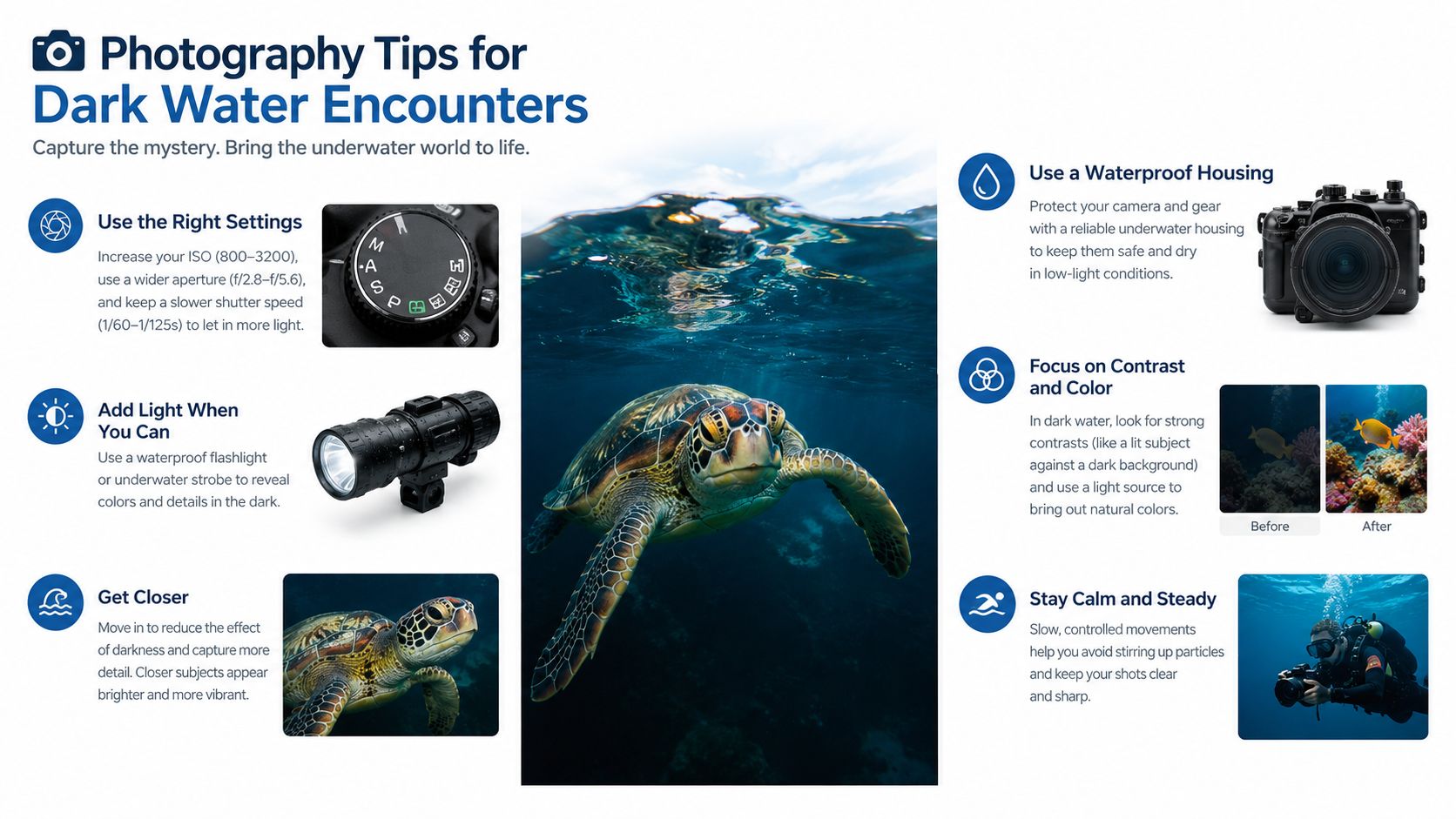
Night manta photography rewards restraint more than expensive equipment. The scene is high contrast, the animals move quickly, and every diver is sharing the same limited light. Your first goal is to avoid interfering with the encounter. The photograph comes second.
Start with the camera secured to your body or wrist so you can maintain buoyancy with both hands when necessary. A wide-angle lens works better than a tight zoom because a manta can fill the frame while remaining close to your position. Smartphone users should clean the lens, lock focus when possible, and avoid digital zoom, which magnifies blur in low light.
Work with the light, not against it
Use the continuous video lights supplied by the operator as your visual reference. They illuminate the manta's white underside and make it easier to anticipate an approach. If your camera has manual controls, test a faster shutter speed and a moderate ISO before the first animal arrives, then adjust conservatively. In dark water, a slightly noisy image is preferable to a blurred one.
Turn off strobes when mantas are close unless the crew and local operating procedure specifically allow their use. Sudden flashes can disturb animals and distract nearby divers. Your light should never become a reason for a manta to alter its path.
Position yourself at the edge of the group, not in the center of the flight line. Leave room above and ahead of the animal, and keep the camera close to your body while it passes. A low-angle frame showing the white belly against black water usually communicates scale better than a shot taken from directly underneath with the manta cropped.
If you want a crew-supported approach, review the Kona manta night dive photo package and ask what lighting and camera support are included. The strongest image is the one you capture without blocking another diver or forcing the animal to turn.
Conservation Rules and Securing Your Spot
The legal framework is straightforward. Hawaiʻi state rules protect all rays, and intentionally capturing, entangling, or killing a shark or ray in state marine waters is unlawful under state statutes. Commercial manta viewing is also limited to department-designated viewing zones or locations at least seven nautical miles from a designated zone boundary. The state's operating rules explain vessel restrictions and viewing requirements.
Inside regulated viewing areas, commercial vessels must operate at slow-no-wake speed, may not anchor, and generally may not raft. A vessel supporting a commercial operation must remain within the viewing-zone boundary while participants or guides are in the water. These rules reduce interference around the site and give crews a predictable framework for moving people safely.
The conservation lesson extends beyond compliance. Don't touch, feed, block, chase, or deliberately redirect a manta. Keep your buoyancy controlled, follow the guide's positioning instructions, and accept that a quiet night is still a valid wildlife encounter. The local population's resilience depends on repeated low-impact behavior, not one perfect vacation photograph.
Before booking, ask whether the operator provides the required equipment, explains the site rules clearly, and has a realistic plan for changing sea conditions. A responsible excursion treats the manta as a wild resident, not a guaranteed attraction.
Kona Honu Divers offers guided manta ray scuba and snorkel experiences focused on organized, low-impact viewing at Garden Eel Cove, with crew support for gear, briefings, and in-water positioning. Visit Kona Honu Divers to compare the manta trip with Kona's other diving options and secure a place on a conservation-minded night excursion.