
The best time to see manta rays on the Big Island is during the day for a calm, visible snorkel, or at night for the light-based feeding spectacle. Kona's documented manta population includes 167 individually identified reef manta rays observed across more than 23,000 sightings from 2010 through 2022.
You may be searching from a Kona hotel, comparing tours before your flight, or wondering whether a nighttime encounter is suitable for your family. The answer depends on what you want from the water. Daylight snorkeling offers natural color, easier orientation, and a gentler introduction to the coast. A night dive creates a very different scene, with beams of light gathering plankton and reef mantas gliding through the illuminated water.
Kona's mantas aren't appearing by chance. They return to established feeding locations, respond to changing food conditions, and share the water with visitors who need to understand how their behavior works. Once you know why the animals turn, circle, and pass so close, it becomes much easier to stay calm, hold your position, and let the encounter unfold on the mantas' terms.
The Magic of Swimming with Manta Rays
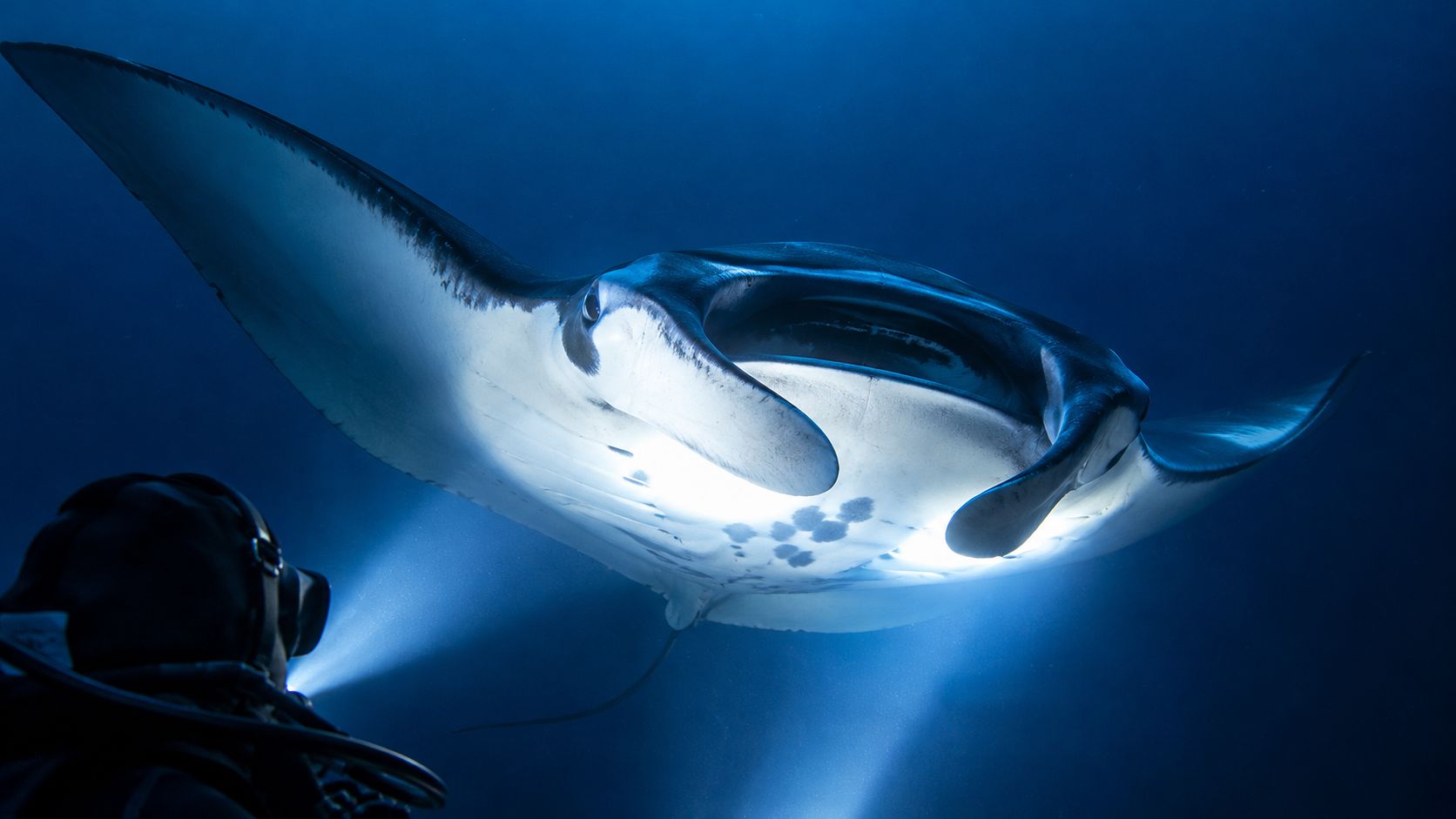
At night, the boat settles over dark water and the crew positions lights below the surface. You enter slowly, find your place, and look into a blue-black water column that seems empty at first. Then a broad wing shape rises into the beam, turns with quiet control, and disappears beyond the edge of your vision before returning on another pass.
A reef manta ray can make a large animal feel almost weightless. Its cephalic fins guide water toward its mouth as it feeds, and its sweeping pectoral fins let it bank without the abrupt movements that make many swimmers nervous. The animal may pass close enough to fill your view, but it isn't hunting you or competing with you. It's following food.
Two encounters, one coastline
A daytime snorkel feels more like coastal observation. Sunlight reveals the water's color, the reef structure, and the small fish sharing the habitat. You might see a manta traveling through the area, but daytime sightings aren't arranged around an artificial feeding-light setup, so the animal decides whether to approach and how long to remain.
The night experience concentrates your attention. You aren't watching a whole reef at once. You're watching a moving feeding pattern, with mantas turning through the brightest plankton-rich water. That focus makes the encounter feel intimate, even when several swimmers are present.
Practical rule: The manta controls the distance. Your job is to remain predictable and give it open water.
The wonder comes from that balance. A manta may pass inches from a mask, yet the best response is stillness rather than reaching out. It's a wildlife encounter, not a performance arranged for human contact. The closer the animal comes, the less you need to do.
Kona's reef mantas are Mobula alfredi, a species that feeds on zooplankton rather than people. Their presence reflects a living relationship between currents, prey, depth, and familiar coastal locations. That's why swimming with them feels different from seeing a large animal in an aquarium. You're entering a feeding place the rays already value.
Understanding Manta Night Dives vs. Day Snorkels
The phrase “manta ray experience” can hide two very different activities. A daytime snorkel keeps you near the surface in natural light. A night dive places a certified diver lower in the water, where lights draw plankton and the mantas follow their food.
Choose based on comfort in the water first, then on the kind of observation you want.
Daytime snorkeling
Day snorkeling generally requires a mask, snorkel, and flotation support suited to the swimmer. You stay at the surface, where you can orient yourself by looking toward the shoreline, boat, or guide. Natural light makes it easier to judge depth and movement, which can help nervous swimmers and families feel more settled.
Surface positioning also protects the animals' feeding space. A manta needs room to turn and rise through the water column. If a snorkeler dives down toward it, the ray may change direction or abandon the approach.
A good daytime participant can:
- Float calmly: Keep your body relaxed and avoid sudden kicking.
- Follow the guide: Stay with the group instead of swimming after an animal.
- Respect the surface plan: Remain where the crew places you, especially around boats and currents.
- Accept changing conditions: A wild manta may appear briefly, travel elsewhere, or never approach.
Night diving
A night dive requires scuba equipment, comfort underwater, and the appropriate certification. Divers normally establish themselves near the bottom while keeping the central water column open for the mantas. The view points upward, turning the lights and passing rays into the main focus of the dive.
The experience demands more equipment management. You'll monitor your breathing, buoyancy, position, and light while also leaving space for wildlife. Divers should hold lights above their heads so the beam helps illuminate the feeding area, and they should avoid shining equipment directly into a manta's face.
For a fuller comparison of equipment, positioning, and expectations, use this guide to manta ray diving in Hawaii, including scuba versus snorkeling.
Which option fits you?
A confident snorkeler who prefers daylight and a surface float may find the daytime route more comfortable. A certified diver who enjoys controlled buoyancy and nighttime marine life may prefer the dive. Neither choice is more respectful by itself. The quality of the encounter depends on preparation, supervision, and whether you can remain calm and predictable.
If you're an inexperienced open-water participant, don't let the word “snorkel” make the activity sound effortless. Nighttime open water adds darkness, boat traffic, currents, equipment concerns, and the possibility of panic. Ask the operator how guides supervise the group, what flotation is provided, and what happens if you decide you need to exit the water.
Best Spots and Conditions in Kona
Garden Eel Cove, also known as Manta Heaven, is the superior choice for a manta tour when the operator can use the site. Its protected setting can provide a more stable viewing area, and the location is associated with larger, dependable aggregations than Keauhou, commonly called Manta Village.
The reason is not just that one place has a better reputation. Mantas respond to food. Their presence changes with zooplankton density, currents, depth, and the structure of the water column. A calm surface may still conceal shifting conditions below, while a rougher-looking day can carry useful prey toward an established feeding area.
What the research shows
A University of Hawaiʻi study examined community-sourced observations collected over 13 years, from 2010 through 2022, at Garden Eel Cove and Keauhou. The record contained more than 23,000 sightings representing 167 individually identified reef manta rays, Mobula alfredi (University of Hawaiʻi research on Kona's manta aggregations).
Garden Eel Cove consistently produced larger aggregations than Keauhou. That makes it a particularly reliable feeding area, although no responsible crew can promise that wild animals will gather on a particular evening.
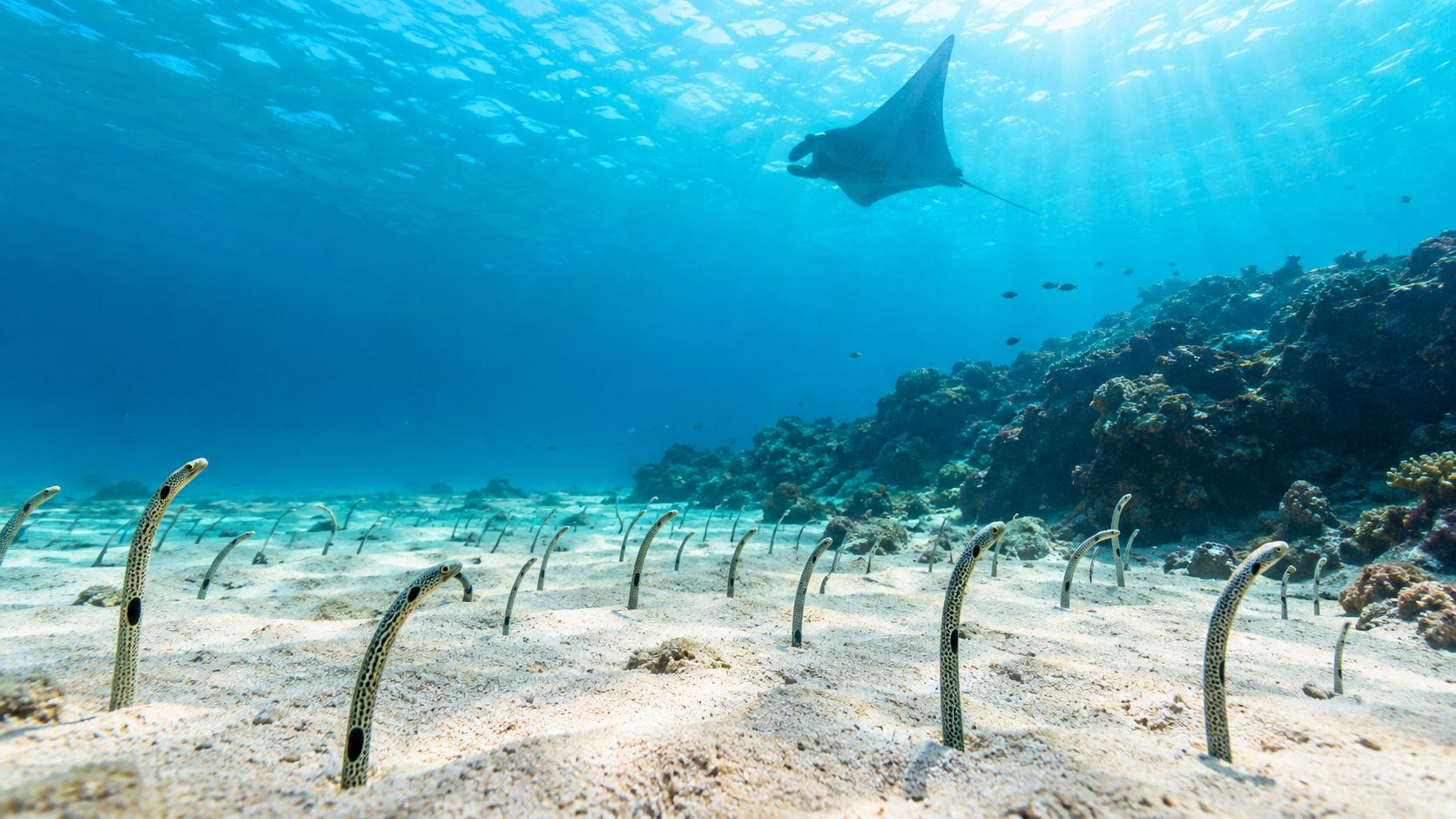
The same study found an overall balanced male-to-female ratio across both sites, while Keauhou was visited disproportionately by females. Seasonal and annual changes in aggregation size closely followed zooplankton density. In plain language, the rays aren't gathering because tourists are present. They're gathering because the abundance of food makes a location worthwhile.
Why Garden Eel Cove stands out
Garden Eel Cove's protected geography matters to visitors as well as mantas. A more sheltered viewing area can reduce the sense of exposure created by nighttime open water, especially for snorkelers who need to remain still at the surface. Better reef surroundings also add ecological context to a trip that might otherwise feel like a single-animal attraction.
The location doesn't eliminate weather, current, or visibility changes. It does give the encounter a strong ecological foundation. You can learn more about the coast's top Kona manta ray dive sites before choosing a departure point.
Booking Your Manta Ray Adventure
A good booking decision starts with matching the tour to the swimmer, not with choosing the earliest available departure. Ask whether the activity is a scuba dive, a surface snorkel, or a combined trip. Then ask what happens before entry, how guides position guests, and which flotation or thermal equipment is included.
The operator should explain the water plan in ordinary language. You should know where snorkelers remain, where divers settle, how lights are used, and how the crew manages a guest who becomes anxious. If the answers are vague, keep comparing.
Questions to ask before paying
- Site selection: Ask whether the trip is planned for Garden Eel Cove, Keauhou, or another location, and whether conditions can change that plan.
- Equipment: Confirm the availability of a properly fitted mask, snorkel, wetsuit, and flotation support if you need them.
- Water entry: Check whether you must swim from the boat to a viewing structure or whether a guide assists you.
- Group supervision: Ask how the crew separates divers and snorkelers and how they prevent group members from drifting away.
- No-sighting policy: Read the operator's terms instead of assuming a rebooking or refund applies.
- Physical suitability: Explain weak swimming ability, mobility limits, anxiety, or a history of motion sickness before you reserve.
Plan the manta activity early enough in your stay to leave room for a weather-related change. That isn't a guarantee of a second opportunity, but it gives you more flexibility than placing the trip on your final evening.
Preparing your body and expectations
Eat lightly before departure and hydrate during the day. Avoid arriving exhausted, overheated, or rushed. A night on the ocean can feel colder than the water suggests, particularly during the boat ride back, so bring a warm layer that can go over damp clothing.
If you want to compare a two-tank manta outing and its photo-package option, review the Kona manta night dive with photo package before booking. The right trip is the one whose pace, entry method, and supervision match your actual experience, not the version of yourself you hope to become on vacation.
Safety, Seasickness, and Conservation Tips
You are floating in dark water, the lights are glowing below, and a manta the width of a small car rises out of the black. For many guests, that is the moment when excitement and nerves arrive together. The animal is calm. The ocean may not be. Darkness, boat motion, current, cold, seasickness, equipment trouble, panic, and drifting away from the group are the problems to plan for, so treat the trip like a real open-water outing.
Seasickness deserves attention before the boat leaves the harbor. If you use a medication or prevention product, ask a medical professional or pharmacist about timing, drowsiness, interactions, and whether it fits your health needs. Common options travelers look at include the Ship-EEZ Seasickness Patch, Dramamine pills, Bonine pills, Sea Band wristbands, and ginger chews.
Make a personal go or no-go decision
Confidence matters more than bravado. A nervous swimmer may still do fine, but anxiety can turn into frantic kicking, mask pulling, fast breathing, or separation from the guide. Children need close adult attention. Anyone with mobility limits should ask about ladders, entry style, flotation, and exits before the trip, not while the boat is rocking in the dark.
Guidance linked through NOAA recommends an in-water guide for snorkel groups, a flotation ring for groups of four or more, and surface-only positioning for snorkelers. That setup works like a ceiling over the feeding area. The mantas use the lit water below, while people stay predictable above. Snorkelers should never touch, chase, or dive toward mantas, and good responsible diver etiquette around marine life follows the same idea. Divers should hold lights above their heads and remove snorkels from masks because a manta can catch a snorkel and pull the mask loose (NOAA-linked manta viewing guidance).
Before you enter: Tell the crew if you're seasick, frightened, cold, short of breath, or losing control of your gear. Early communication gives them time to help.
Let the population set the standard
Kona's manta encounter feels reliable because the same coast supports a resident population that returns to known feeding sites. A NOAA-hosted study documented 25,444 observations of 118 distinct reef manta rays between January 1, 2009, and December 31, 2014, with repeated returns to established sites. One individual was seen on more than 56% of study nights (NOAA-hosted study of Kona manta site fidelity).
That matters most at Garden Eel Cove, where the viewing pattern is built around a real feeding behavior, not a staged performance. Lights attract plankton. Plankton attracts mantas. If swimmers stay still and leave the lane open, the rays can keep cycling through the light field. If people lunge in for a better look, the whole system breaks rhythm. This is why Kona can feel so spectacular one night and quiet the next. You are watching wildlife respond to conditions, not clockwork.
Genomic research adds another layer. Hawaiian reef mantas appear to be relatively small, island-resident populations, with strong female site fidelity and limited male dispersal between islands. In plain terms, Kona cannot assume a steady refill of animals from somewhere else if local mantas are disturbed, injured, or pushed off productive feeding habitat (genomic research on Hawaiian reef manta populations).
So keep your body quiet. Do not block a manta's path, chase one for a photo, or push large camera rigs into the feeding lane. Use neutral buoyancy if you are diving, and let the animal choose the distance. The best encounters usually come when the ray feels no need to avoid you.
Hawaiʻi's Department of Land and Natural Resources has proposed operating limits for commercial viewing in Makako Bay, also known as Garden Eel Cove, and Kaukalaelae Point, also known as Keauhou Bay. The proposal includes 24 commercial viewing permits in each designated zone, a limit of 60 passengers for hire per vessel during a single 24-hour period, and two-hour shifts within a viewing window from 4:00 p.m. to 4:00 a.m. It also includes an 8-to-1 guide-to-customer ratio, lighting and propeller-guard or safety-lookout requirements, visible vessel identification, and a fishing prohibition during viewing hours (Hawaiʻi DLNR proposed manta-viewing rules).
Those rules are about more than crowd control. They reflect the ecological reality of Kona's resident mantas. A respectful trip leaves the water feeling magical because it also leaves the habitat working as it should.
Why Choose Kona Honu Divers
A manta tour should connect three things: competent water supervision, accurate natural-history guidance, and low-impact wildlife behavior. An operator that treats those as separate concerns misses the point. The crew's job is to help guests remain safe while giving the animals room to feed normally.
Kona Honu Divers offers manta ray dive and snorkel trips that use the surface and seafloor positions appropriately for each activity. The company also provides dive tours, courses, equipment support, and other Kona water experiences, so travelers can choose an outing that matches their training and comfort rather than forcing every guest into the same format.
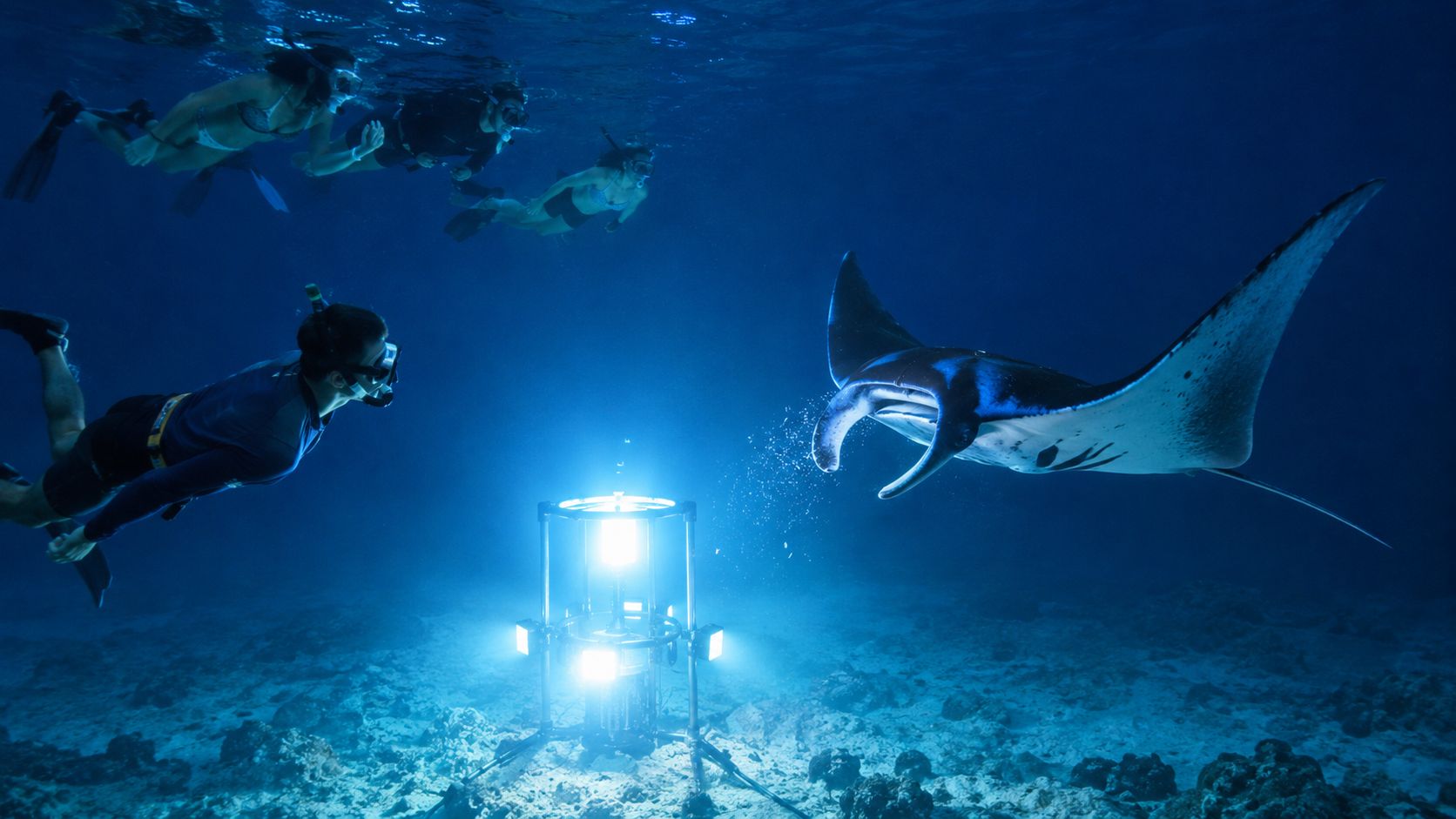
The practical value of a knowledgeable crew becomes clear when conditions change. A guide can adjust positioning, explain why a manta turns away, identify when a swimmer needs assistance, and keep photographers from crowding the feeding lane. Those choices protect both the guest experience and the resident population.
You can review the Kona Honu Divers diving team before deciding whether their approach fits your group. The strongest manta encounter isn't the one with the most dramatic contact. It's the one where you leave with a better understanding of the animal and the animal leaves with its normal behavior intact.
Kona Honu Divers offers guided manta ray dives and snorkel experiences designed around safe positioning, clear briefings, and respect for Kona's resident reef mantas. Visit Kona Honu Divers to choose the right water experience for your group and reserve a place on the Big Island.