
Table of Contents
- A resident population, not a scheduled performance
- Where you belong in the water
- Compare the sites before you book
- Let the animal make the photograph
- Crowding affects visitors, too
- What to ask before booking
You're standing on a Kona boat after dark, watching a cone of blue light reach into the water. Then the small fish part, and a broad manta ray glides through with its mouth open, close enough to make the whole group go quiet. If you're searching for manta rays on the Big Island, this is the encounter you're likely picturing, and Kona's west coast is known for reef mantas that return to familiar nighttime feeding areas.
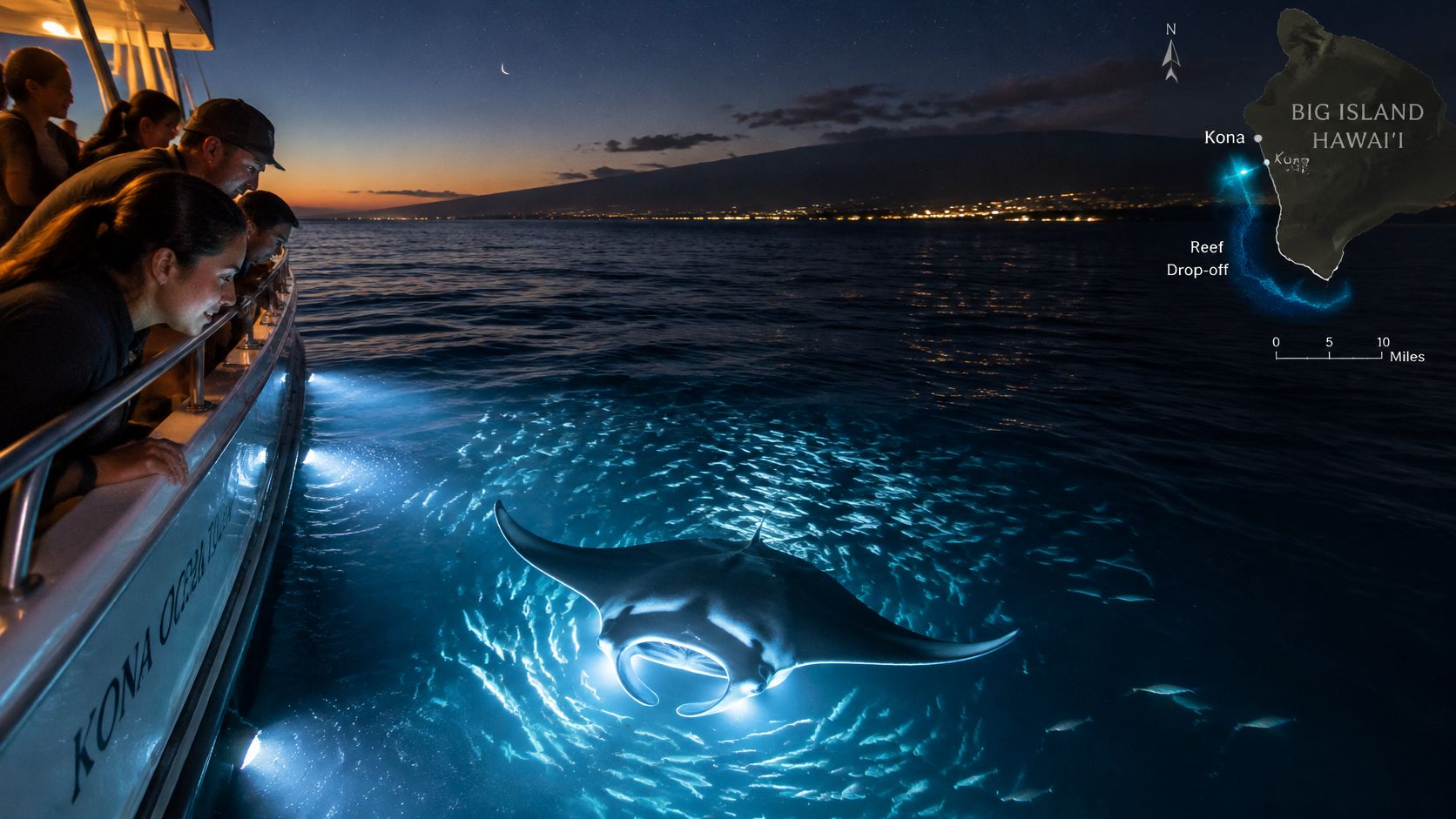
The two names you'll hear most are Garden Eel Cove and Keauhou. The right trip depends on whether you want to watch from the surface or join a scuba dive: confident swimmers and snorkelers can hold a float at the surface, while certified divers settle near the bottom and watch the rays pass overhead. This nighttime encounter is different from a daytime reef dive; for broader Kona scuba diving trips, choose an outing designed for the reefs and conditions you want to explore.
Kona's mantas aren't just passing through on a seasonal visit. A University of Hawaiʻi study of long-term records describes a localized, site-faithful population, with rays repeatedly identified at Kona's feeding sites (study of Kona manta sightings). For practical planning, start with this guide to when to see manta rays in Kona. The details that make a difference are how the lights work, why Garden Eel Cove is the stronger choice for a dive tour, and how sensible crowd management can improve the night.
Why Manta Rays Gather on the Big Island
The lights don't summon a show on demand. They create a concentrated patch of plankton-rich water that gives feeding mantas a reason to circle, while the animals remain free to arrive, feed, and leave. Kona's two well-known nighttime feeding areas, Garden Eel Cove and Keauhou, draw from the same local story: a resident population that researchers have tracked across repeated encounters.
In a University of Hawaiʻi study, researchers analyzed community-sourced records collected from 2010 through 2022 at both sites. The records contained more than 23,000 sightings of 167 individually identified manta rays. Those repeated observations help explain why Kona's encounters feel unusually dependable, even though no operator can guarantee what wildlife will do on any particular night. (Long-term Kona manta study)
A resident population, not a scheduled performance
The rays' presence varies with food. In the same study, aggregation size tracked zooplankton density, meaning the amount of available prey influences how many mantas gather. The animals aren't trained or fed by tour crews. Visitors are watching wild filter-feeders take advantage of plankton concentrated around underwater lights.
That distinction matters when expectations run high. Some nights bring repeated close passes; other nights are quieter. A quiet encounter is still a real night on the water, not evidence that the trip or site has failed.
The local record also connects manta tourism with decades of identification work. In testimony summarizing earlier monitoring, researchers described repeated photo-identification surveys along the Kona Coast and a catalog of individual rays seen again and again. That history is part of what makes the encounter more than a quick wildlife stop: Kona's mantas are recognized as individuals, and continued observation helps people understand how the population uses its feeding areas.
For visitors, the useful takeaway is simple. Treat the encounter as an opportunity to observe a wild resident population, not as a performance that must meet a promised number of rays or passes. That mindset makes it easier to enjoy the night on the animals' terms.
How Kona Manta Night Encounters Actually Work
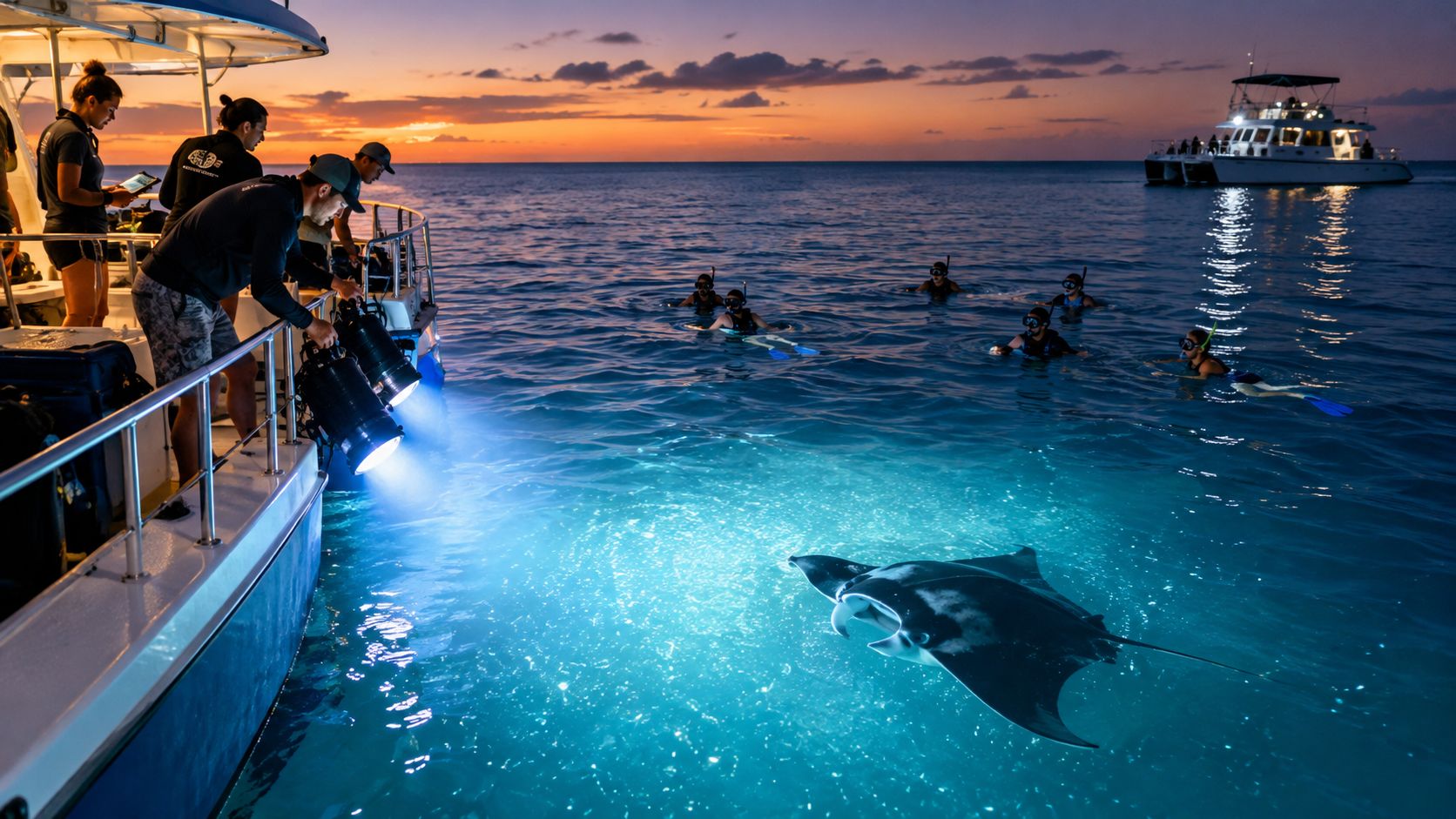
A Kona manta night is a plankton camp, not a feeding show. After sunset, crews position underwater lights that attract plankton. Manta rays, which feed on zooplankton, swim through the illuminated water with their mouths open and filter out their food. The lights make the plankton easier to gather in one place; they don't feed or handle the rays. (How Kona's light-based manta encounters work)
Where you belong in the water
For scuba divers, the rule is straightforward: stay on or near the bottom and leave the open water above the lights clear. A manta's turns can look like a ceiling fan moving in slow motion, with wide wingtips banking through the water. Holding your position gives the animal room to maneuver and lets you watch without becoming an obstacle.
Snorkelers stay at the surface, holding the float or line set up by the crew. Look down, keep your body in place, and let the rays choose their route through the beam. Dropping off the line to swim after a manta disrupts the encounter and can create a safety problem for you and others.
Keep your hands to yourself. Touching or chasing a manta is inappropriate and can damage the protective mucus layer on its skin.
This is an observation-only interaction. Nobody should feed, ride, handle, or pursue the animals. The same Kona coast has daytime scuba options, but the nighttime manta trip is its own experience. Compare the manta dive and snorkel tour if you're deciding whether you'd rather watch from the bottom or the surface. You can also read a practical comparison of snorkeling and diving with manta rays.
Sightings are reliable enough to make Kona a popular destination, but they're never guaranteed. Plankton availability affects how many rays gather, and the animals decide whether to feed. Go ready to watch patiently, not to demand a particular number of passes.
Garden Eel Cove Versus Keauhou for Manta Viewing
For a manta dive tour, Garden Eel Cove is the stronger first choice. Its more protected location, better viewing area, and better reefs around the viewing camp make it the more appealing setting for divers who want a stable place to watch the animals. Shelter matters after dark: calmer water can make it easier to hold position and keep the viewing area organized.
Keauhou is a real, long-used manta site, not a fallback with no wildlife value. The long-term Kona study found that it was visited predominantly by females, while Garden Eel Cove consistently supported larger aggregations. Across the two locations, researchers recorded an approximately even sex ratio overall and found that changes in aggregation size tracked zooplankton availability. (University of Hawaiʻi study of Garden Eel Cove and Keauhou)
Compare the sites before you book
| Site | What the water is like | What research shows | Best for |
|---|---|---|---|
| Garden Eel Cove | More protected, with a better viewing area and reef around the camp | It consistently supported larger aggregations in the long-term study | Divers who want a sheltered viewing area and a strong reef setting |
| Keauhou | A long-used nighttime feeding area | The study found it was visited predominantly by females | Visitors whose trip uses this site or shifts there based on conditions |
Garden Eel Cove's advantage is practical, not just a matter of reputation. A more protected pocket can help divers maintain their position and snorkelers stay with the viewing setup without fighting as much movement in the water. The surrounding reef also makes the site more appealing as a place to spend the dive, rather than treating the lights as the only thing worth seeing.
A boat may still move between sites when conditions or operating rules call for it. Choosing an operator that prefers Garden Eel Cove when it's suitable is a viewing decision, not a guarantee that every trip will use the same location. The research also found high female site fidelity, greater male mobility, and connectivity between the two feeding areas, so the sites are part of a connected local story, not separate populations with no relationship.
The same study reported relatively stable aggregations during its observation period despite increasing tourism. That's encouraging, but it doesn't mean the area can absorb unlimited use. Choose a trip that values a well-managed viewing camp over a crowded spectacle.
What a Manta Night Feels Like and How to Photograph It
The evening starts with check-in and a briefing, followed by a boat ride after sunset. The crew explains where divers should settle and where snorkelers should hold the line. Once the lights are in the water, there may be a wait. Then a pale shape can slide into the beam, turn on its wingtip, and feed in a smooth circle.
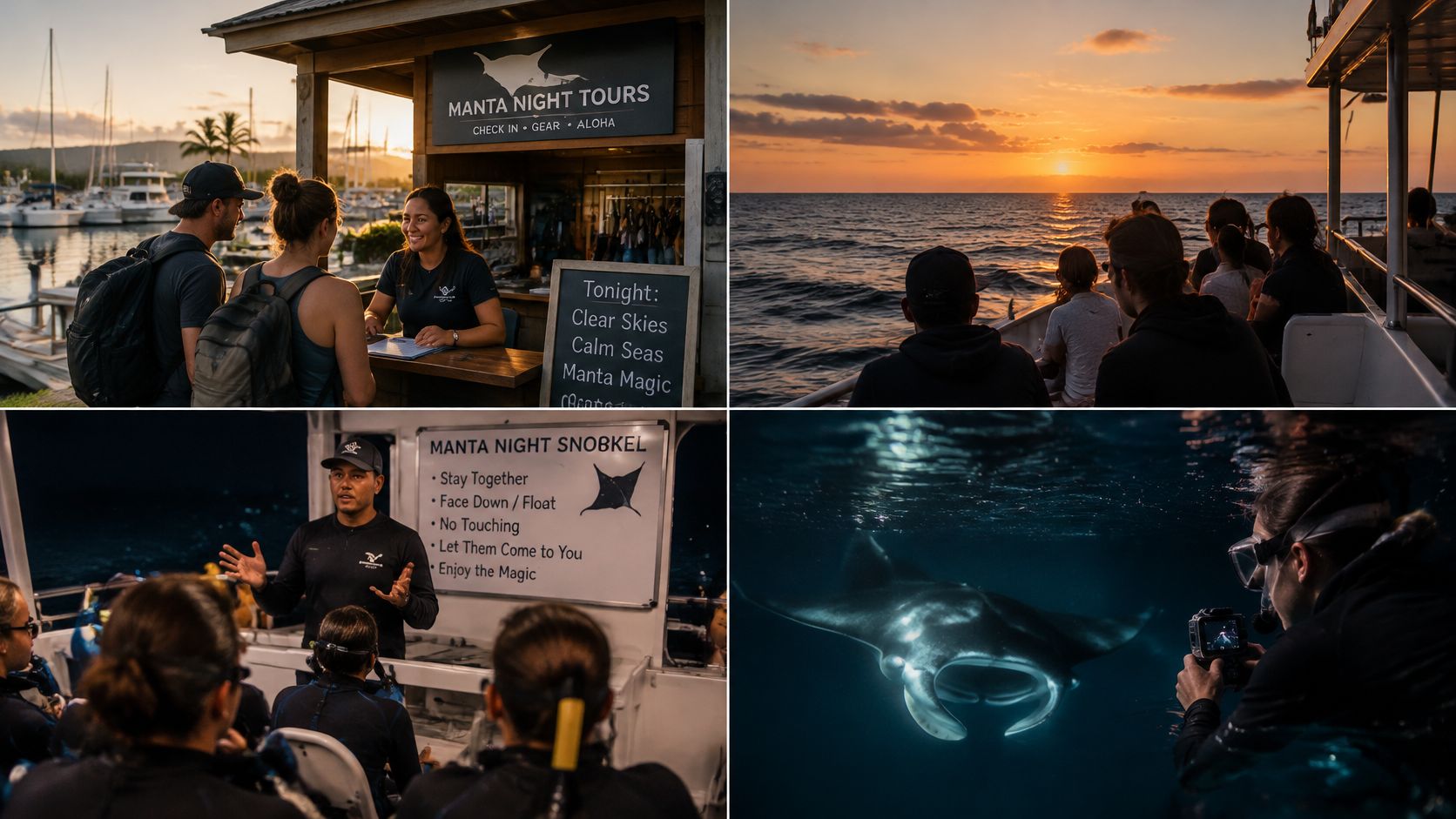
Mantas may barrel-roll through the light, mouth open as they feed, then glide past without acknowledging the people watching. A wingspan can reach about twelve feet, so a close pass can feel startling even when the animal moves gently. Your best view often comes when you stay still and let the ray cross the beam on its own route.
Let the animal make the photograph
Bring a camera in a housing you've already tested, and use a focus light only as the crew allows. Keep your position, wait for the manta to enter the frame, and photograph the belly markings rather than chasing a tail. The animal's pattern is more useful than a hurried shot of it disappearing into the dark.
A bright strobe blasted into a manta's face can spoil the moment for everyone. So can a snorkeler dropping off the line to swim after a ray. Both choices interrupt the pass, make the water less orderly, and rarely produce a better photograph. If you want to prepare for the trip, check the manta night dive with photo package information.
The site's operating rules can also affect how the evening unfolds. In designated viewing zones, operations are allowed from 4:00 p.m. to 4:00 a.m. Vessels must travel at slow-no-wake speed, keep required white lights visible, and leave the zone boundaries for at least 30 minutes after reaching their mooring time limit. Those controls can change how long a boat stays in the area and how crews manage the viewing setup. (Summary of Hawaiʻi nighttime manta viewing-zone controls)
The best time is after sunset, when the encounter is underway and mantas may be feeding. Calm evenings are the comfortable version of that plan, but patient observation and following the crew's directions matter more than trying to force a perfect shot.
Safety Rules Crowding and Reef Protection
Kona's mantas are a small, resident population, not a group that can be assumed to refill from nearby islands if animals are injured. NOAA's summary of genomic research reports approximately 104 adult breeders around Hawaiʻi Island and describes the island population as genetically distinct from Maui Nui. Females reproduce at their natal island, while males contribute more to dispersal. (NOAA summary of reef manta genetic research)
That's why the basics aren't optional: don't touch, chase, or block a manta's turn. Crews should control where lights point and keep escape routes open. These choices protect the animals and make the viewing area safer for everyone.
Crowding affects visitors, too
Crowding isn't just a reef-management concern. Survey participants reported feeling crowded by snorkelers (82%), boats (78%), and scuba divers (69%), and respondents encountered more people and vessels than they normally expected. Hawaiʻi officials raised safety, user-conflict, and environmental concerns and began rulemaking that contemplated limits of 24 commercial boats and 60 passengers per day at each site. (Survey findings and Hawaiʻi rulemaking testimony)
A captain may reposition the boat, separate groups, or end a visit when conditions or site management call for it. That can feel disappointing if you hoped for a packed viewing camp, but a less crowded setup can leave more room for people and animals to move safely. It may mean fewer rays in view at once, which is a fair trade for a more orderly encounter.
The evidence deserves both sides. The long-term study found that aggregations stayed relatively stable during its observation period, while survey research documents real perceived crowding. Stable observations don't cancel out visitor concerns, and crowding doesn't by itself prove that the population has declined.
Before you go, check your mask, bring your certification card if you're diving, pack a warm layer for the boat ride, and listen to the briefing. For more guidance on responsible diver etiquette, keep the same simple principle in mind: leave the animals room to choose their path.
How to Choose a Kona Manta Ray Operator
Don't choose a boat just because it advertises a dramatic crowd of rays. Choose an operator that explains the rules before anyone enters the water, keeps divers near the bottom, and keeps snorkelers with the surface line. The crew should manage lighting carefully and leave the viewing area rather than add another group to a camp that's already packed.
A good briefing is specific. It tells you where to wait, how to avoid blocking the rays, and what to do if the group or boat needs to reposition. If a trip treats mantas as photo props or encourages people to chase them, look elsewhere. The animals aren't there for anyone's close-up.
What to ask before booking
Ask which site the crew prefers when conditions allow and how they manage a crowded viewing area. Ask whether the trip is suitable for your experience level, particularly if you're a first-time snorkeler or a certified diver who hasn't done a night dive. You can also use this guide to choosing a Kona diving company to compare operators by practical details rather than promises.
Kona Honu Divers offers a manta night trip for certified divers and snorkelers, with custom dive boats, maintained gear, and a crew with more than 200 years of combined industry experience. The company also lists early-diver discounts and free nitrox among its practical extras. Its manta trip gives visitors a choice between watching from a scuba dive and joining from the surface. (Kona Honu Divers manta dive and snorkel tour)
The reason to pay attention to these habits goes beyond one evening. With a small local breeder population, a crew that protects space around the animals helps keep the encounter observation-only. Pick the trip that respects those limits, even if it promises less spectacle.
Book Your Big Island Manta Night
Make the booking choice based on how you want to experience the encounter. If you're a certified diver, choose the two-tank manta dive and snorkel option, where you can watch from the bottom. For non-divers and families, the snorkel trip keeps you on the surface line, looking down into the lit water. Either way, prioritize Garden Eel Cove when conditions allow, a crew that keeps the lane above the lights clear, and a boat that won't add to an already packed camp.
Scuba guests can compare Kona diving tours or go straight to the manta dive and snorkel trip.
Snorkelers can book the manta ray snorkel option and stay with the surface group.
Bring proof of certification if you're diving, a warm layer for the ride back, and the patience to let the first ray come to the light.
Kona Honu Divers offers Big Island scuba trips, including a manta night dive for certified divers and a surface option for snorkelers. Choose the viewing experience that fits you, then visit Kona Honu Divers to plan your Kona night on the water.