
There’s something truly magical about the manta ray tours on the Big Island. It's more than just a boat trip; it’s a front-row seat to one of nature’s most incredible spectacles. Imagine getting up close with these gentle giants as they feed at night—a graceful, silent ballet unfolding right before your eyes. The Kona coast is world-famous for this, easily making it the most reliable place on Earth for manta encounters.
If you want an adventure that you'll be talking about for years, going out with a top-notch operator like Kona Honu Divers is the way to do it. They have a reputation for creating tours that are not just safe and well-run, but deeply respectful of these amazing animals.
Experience the World-Famous Manta Ray Night Dive
Picture this: you’re floating in the calm, dark Pacific off the Kona coast. Suddenly, a massive, graceful shadow emerges from the deep. Then another. Soon, giant manta rays—some with wingspans wider than a car—are gliding silently just inches from you, looping and soaring in an effortless dance. This is the heart of the Big Island's most iconic adventure.
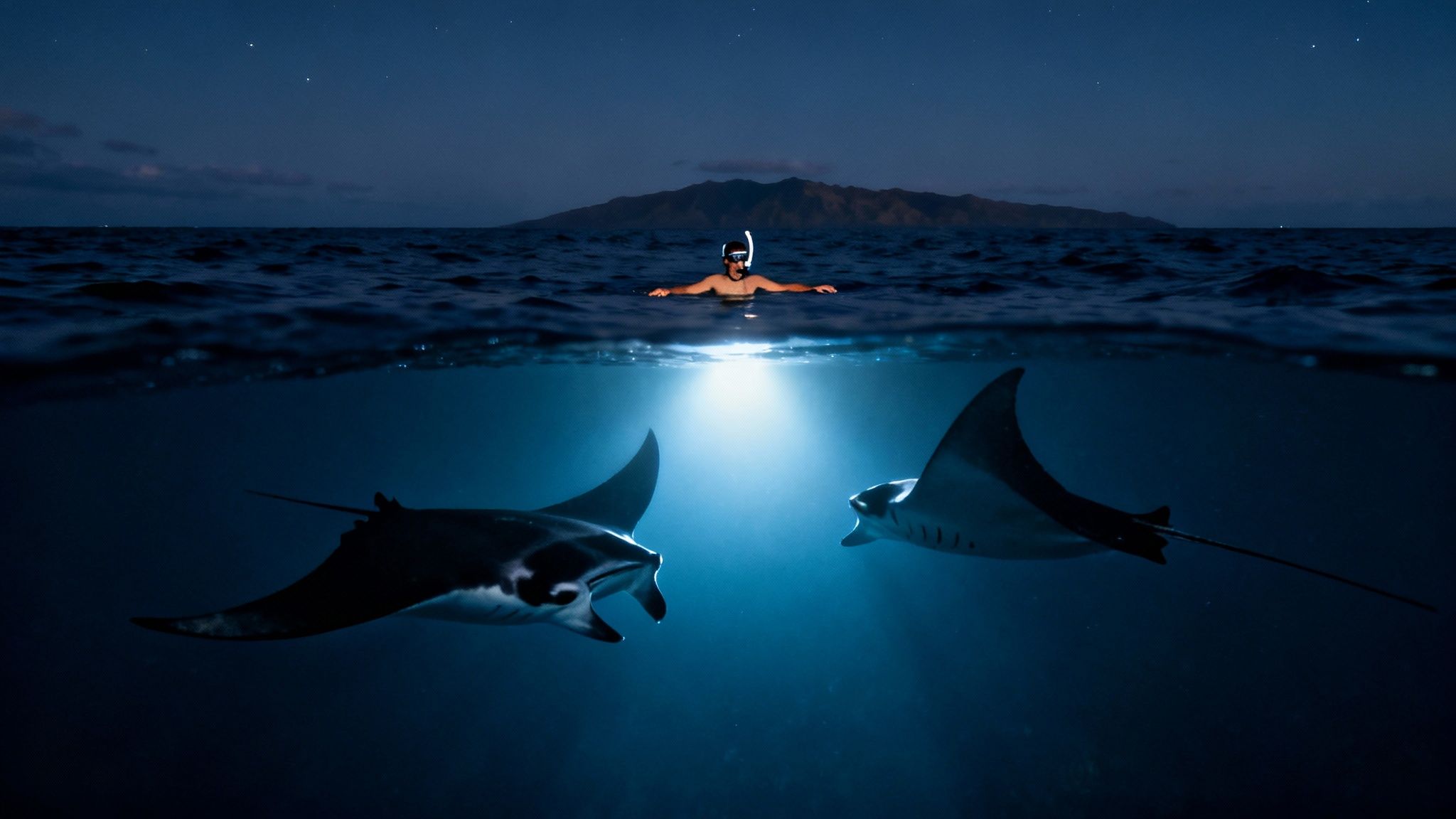
The setup is simple but ingenious. Tour boats shine bright lights into the water, which act like a massive bug zapper for tiny marine plankton. The plankton swarm to the light, creating a buffet that the manta rays just can't resist. They show up to feast, performing graceful barrel rolls as they scoop up mouthfuls of food. Whether you're a seasoned diver or a first-time snorkeler, it's an experience that will absolutely take your breath away.
Why Is the Big Island a Manta Ray Hotspot?
You can see manta rays in other parts of the world, but Hawaii’s Big Island is different. This is, without a doubt, the planet's most reliable, year-round destination for manta sightings. Why? Because unlike other spots that rely on seasonal migrations, Kona has its own resident population of reef mantas.
These local mantas are creatures of habit. They know where the "dinner bell" rings and return to the same feeding sites almost every single night. This incredible consistency gives tour operators a sighting success rate of over 90%, which is practically unheard of in wildlife tourism. It’s a bucket-list item you can actually count on.
"The feeling of watching a massive fish the shape of a stealth bomber coming into vision is impossible to describe. It's akin to finding a winning lottery ticket—a truly awesome experience."
Finding a Premier Operator for Your Adventure
Your guide makes all the difference on a trip like this. You want an operator who doesn't just get you in the water, but who does it safely and with deep respect for the animals and their home. That’s where Kona Honu Divers really shines. They’re committed to running tours that are as educational and respectful as they are thrilling.
By keeping their group sizes small, they ensure everyone gets an intimate, up-close view without overwhelming the mantas. Their professional crew handles all the details—from top-quality gear and thorough safety briefings to sharing fascinating facts about manta behavior. They truly set the stage for an unforgettable aquatic adventure.
Why Garden Eel Cove Is the Superior Manta Dive Site
When it comes to manta ray tours on the Big Island, location is everything. While you can find incredible encounters at several spots, one place truly stands out as the superior choice: Garden Eel Cove. Known affectionately as 'Manta Heaven,' it consistently delivers a world-class experience that few other sites can match.
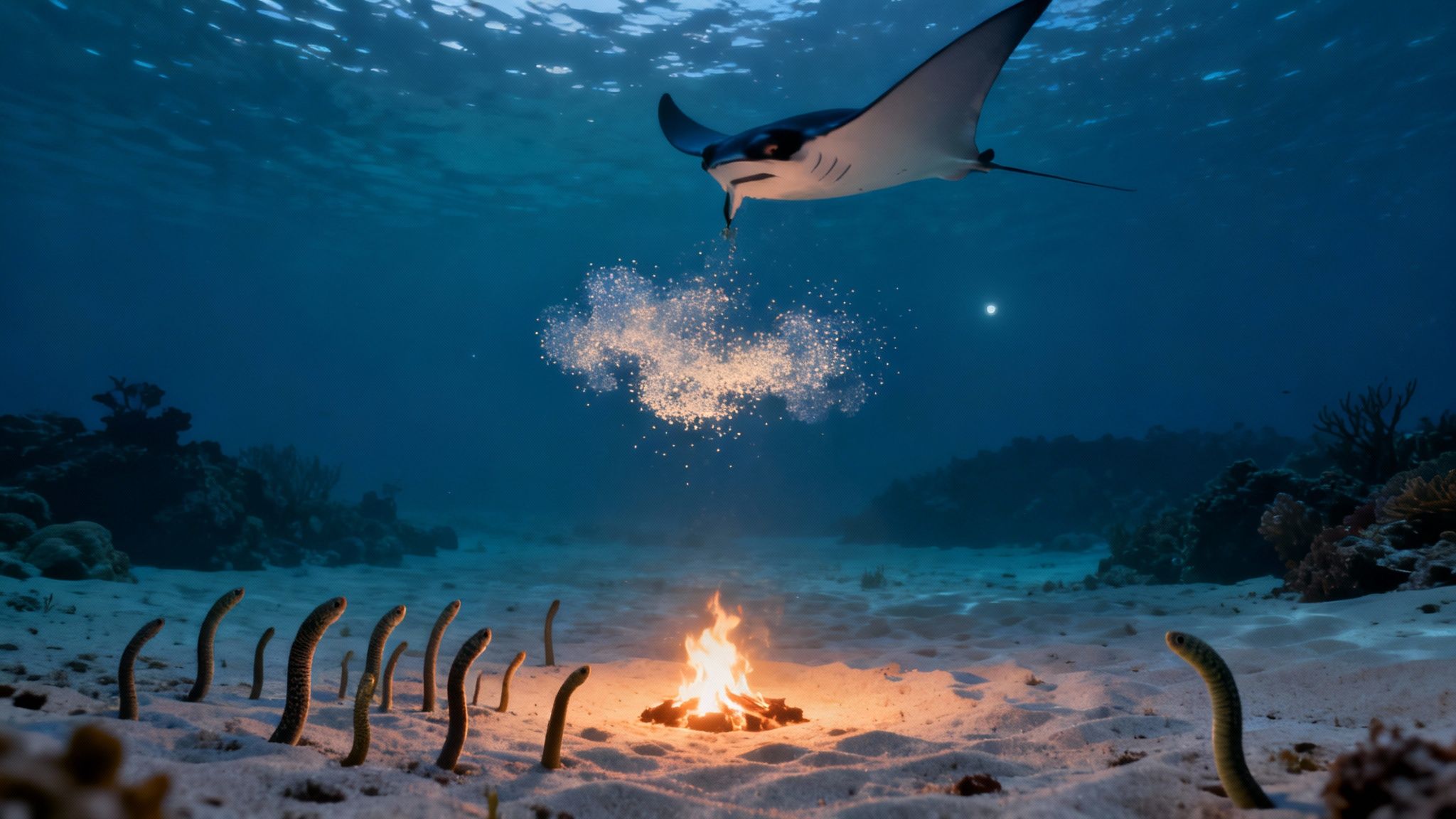
So, what’s the secret? It starts with its protected location. Tucked away near the Kona International Airport, the cove is naturally shielded from the big ocean swells that can churn up more exposed sites. This protection means the water is almost always calmer and clearer—a huge plus for everyone involved. The boat ride is smoother, and once you're in the water, the conditions are far more relaxed, with better visibility for a front-row seat to the show.
A Better Viewing Area: The Underwater "Campfire"
The real magic of Garden Eel Cove, however, lies in its famous underwater "campfire"—a superior viewing area for the manta show. This isn't a real fire, of course. It's a collection of powerful lights that tour operators carefully place on the sandy seafloor. These bright lights act like a magnet for plankton, drawing in a super-dense cloud of the microscopic creatures that mantas love to eat.
This brilliant setup creates an irresistible, all-you-can-eat buffet that does two amazing things:
- It attracts more mantas. A massive feast naturally brings in a bigger crowd of hungry rays.
- It keeps them there longer. With so much food concentrated in one spot, the mantas stick around, performing their graceful, looping acrobatics right in front of you for the entire dive.
This means you get more than just a fleeting glimpse; you get a sustained, breathtaking performance. It’s this reliability and the sheer spectacle of it all that has cemented Garden Eel Cove's reputation as the top spot for a manta ray dive tour.
Better Reefs and More to See
While the mantas are undoubtedly the headliners, the supporting cast at Garden Eel Cove is pretty spectacular, too, thanks to the better reefs surrounding the area. The site gets its name from the colonies of fascinating garden eels that poke their heads out of the sand, swaying in the current like a field of grass. The surrounding reefs are also vibrant and teeming with life, adding even more to see during your adventure.
Other sites are great, but they often can't offer this perfect trifecta of a protected location, a concentrated food source, and rich biodiversity. The consistently great conditions, better viewing, and high manta numbers at Garden Eel Cove make for a more dependable and visually stunning night.
Even when another site might have a slightly higher sighting percentage on a given night, Garden Eel Cove often boasts a significantly higher average number of mantas. More mantas means a more jaw-dropping experience.
This is why choosing an operator like Kona Honu Divers, who knows this premier site inside and out, is so important. We understand the nuances of the location and how to get our guests the best possible view of the action. You can learn more about this incredible spot in our guide to Manta Ray Heaven at Garden Eel Cove.
The Numbers Tell the Story
The incredible consistency of Kona’s manta ray population has been documented for years. Back in 2013, data from Manta Village (south of Kona) showed a 96% success rate with an average of 4 mantas per night. At the same time, Manta Heaven (Garden Eel Cove) clocked a 90% sighting rate but with an astounding average of 11 mantas showing up for dinner!
This is all thanks to a resident population that researchers have been studying for decades. Since 1979, they've photo-identified over 318 unique individuals, each with distinct belly markings that are as unique as a human fingerprint. These gentle giants average a massive 12-foot wingspan, making every encounter truly unforgettable.
Choosing Your Adventure: Scuba Diving vs. Snorkeling
So, how do you want to experience the famous manta ray ballet? This is the first big question you'll face when planning your tour, and it really comes down to what kind of adventure you're after. The two main ways to see the show—scuba diving and snorkeling—offer completely different, yet equally amazing, perspectives.
The best part? Both happen at the same site, often from the same boat. This is fantastic for groups with a mix of divers and non-divers. The real difference is where you'll be in the water and how you'll see the action.
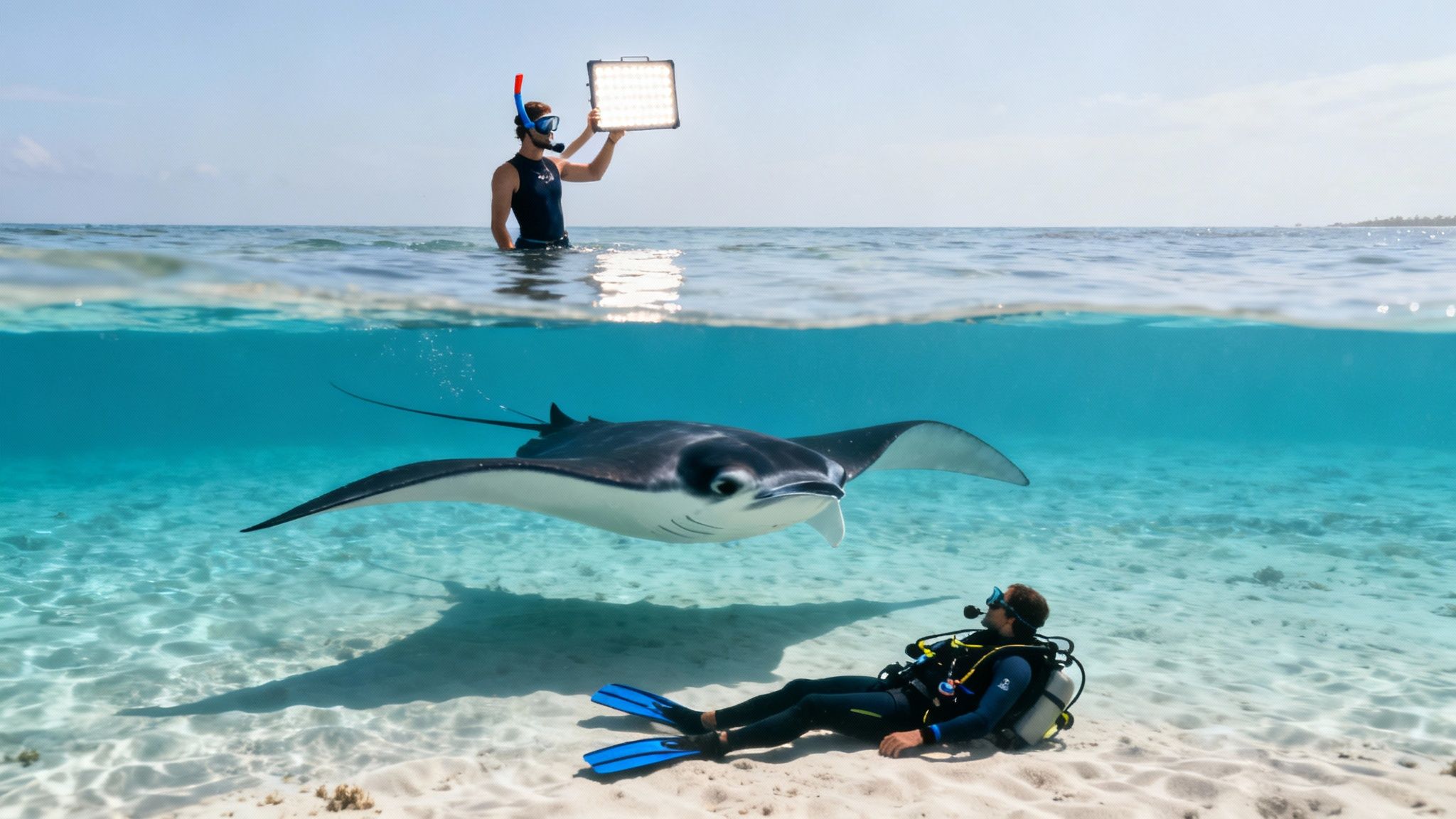
Let’s break down what each experience actually feels like.
The Scuba Diver's Perspective: A Front-Row Seat on the Seafloor
If you’re a certified diver, the night dive is something else entirely. It's an incredibly immersive and almost surreal experience. After your briefing, you'll descend with your guide to a sandy patch on the ocean floor, usually about 30-40 feet down. There, you’ll settle in with other divers, almost like you’re sitting around an underwater campfire made of dive lights.
Your only job is to relax, breathe, and look up. It’s like being in the front row of the most spectacular theater on Earth. Manta rays, some with wingspans over 12 feet, glide just inches above your head. You can actually feel the water move as they pass, getting a close-up look at their unique spot patterns.
This bottom-up view lets you witness their incredible barrel rolls as they feed on the plankton drawn to the light. It's a peaceful, profound encounter that truly makes you feel like you’ve entered their world for a little while.
To join the dive, you'll need at least an Open Water Diver certification. The whole operation is incredibly well-managed to keep both divers and mantas safe, making this one of the most unforgettable night dives you'll ever do.
The Snorkeler's View: A Bird's-Eye Look from Above
Not a diver? No problem at all. The snorkeling experience is just as mind-blowing and requires no special certification—just being comfortable in the water. As a snorkeler, you get a bird's-eye view of the entire spectacle unfolding below.
You’ll hang on to a custom-built, floating light board at the surface. These boards are super stable and have powerful lights that beam down into the dark water, creating a giant floating buffet of plankton that the mantas can't resist.
From your spot at the surface, you’ll watch these gentle giants rise from the darkness, their white bellies glowing as they come right up to feed just beneath you. You get a real sense of the scale of the event and can appreciate just how many mantas might be there, all dancing in the beams of light. It’s a completely different kind of thrill. If you want to dive deeper into what this is like, you can learn more about how to snorkel with manta rays on our dedicated page.
Manta Ray Scuba Diving vs. Snorkeling At a Glance
Still on the fence? Both options guarantee an incredible show, just from a different seat in the house. This table should help you figure out which one is the perfect fit for you.
| Feature | Scuba Diving | Snorkeling |
|---|---|---|
| Perspective | Bottom-up view from the seafloor, looking up at the mantas. | Top-down view from the surface, looking down as mantas ascend. |
| Proximity | Mantas often glide inches above your head as you remain stationary. | Mantas come very close to the surface, just below the light board. |
| Requirements | Must be a certified Open Water Diver or equivalent. | Basic swimming ability is sufficient; no certification needed. |
| Equipment | Full scuba gear: BCD, regulator, tank, weights, mask, and fins. | Basic snorkel gear: mask, snorkel, fins, and wetsuit. |
| Experience | A calm, immersive experience focused on the mantas' acrobatics. | An exciting, high-energy experience seeing the entire spectacle. |
Ultimately, there’s no wrong answer here. Because we take both divers and snorkelers out on the same trip, families and friends can share this amazing experience together, even if they have different comfort levels or certifications.
What to Expect on Your Tour with Kona Honu Divers
Your manta ray adventure with Kona Honu Divers starts the moment you step foot in the marina, long before you even see the water. The vibe is different here. You're greeted by a passionate crew, and the check-in is smooth and friendly. It’s a calm, professional start to the evening—no rushing, no crowded chaos, just genuine excitement for what's to come.
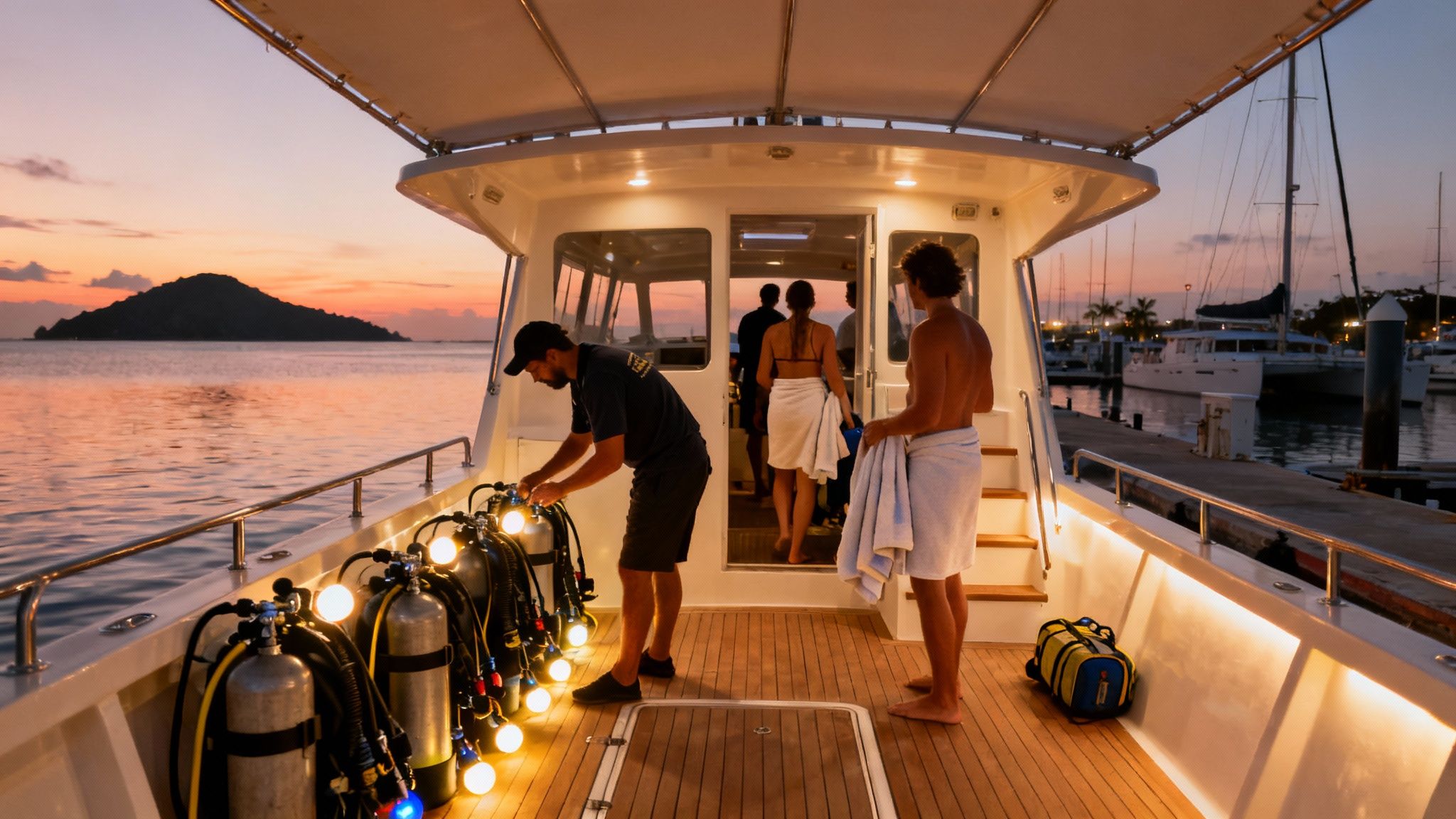
As we head out from the harbor, you get a front-row seat to a classic Kona sunset painting the sky over the Pacific. During the boat ride, our crew gives a thorough safety briefing that’s actually engaging. We don’t just recite rules; we explain why sustainable, eco-friendly practices matter and show you how to watch the mantas respectfully. It's all about making sure we're all good guests in their world.
Entering the Twilight Ocean
Once we anchor at the site, you can feel the energy build. The crew gets everyone sorted with high-quality, meticulously maintained rental gear. Whether you’re setting up your scuba tank or just grabbing fins for a snorkel, everything is handled with expert care. Then comes the moment everyone’s been waiting for—that first splash into the dark, inviting ocean.
With everyone in place, we flip the switch on the powerful underwater lights. These beams pierce the darkness, and almost instantly, you’ll see the water come alive with tiny plankton, the microscopic buffet that attracts the mantas. It's a show in itself. But then, a shadow emerges from the deep.
The arrival of the first manta is pure magic. A majestic silhouette glides effortlessly into the light. Soon, another follows, and then another, beginning their silent, acrobatic ballet right before your eyes.
The Kona Honu Divers Difference
What really sets our manta ray tours on the Big Island apart are the little things that add up to a huge difference. Our commitment to your comfort is everywhere, from the roomy boat decks to the amazing hot freshwater shower waiting for you after your swim. It's a small luxury that feels incredible after being in the ocean at night.
Our crew members aren't just guides; they're marine life fanatics who love sharing what they know and are laser-focused on your safety.
This dedication to a top-notch experience matters. The Kona Coast's manta ray tours fuel a massive eco-tourism industry, bringing in an estimated 80,000 visitors annually just to swim with these gentle giants. For us, that number highlights our responsibility to provide a world-class, sustainable adventure that honors both the animals and our guests.
By focusing on a superior guest experience and responsible practices, we make sure your adventure isn't just another tour—it's a memory you'll cherish for a lifetime. To see all the trip specifics, you can check out our complete guide to the manta ray night dive of Kona.
Getting Ready for Your Manta Ray Adventure
Showing up for your manta ray tour is just the first step. A little prep work beforehand can be the difference between a good night and an absolutely unforgettable one. It's all about making sure you're comfortable, safe, and ready for the magic.
Think about it: you’ll be out on the ocean at night. Even in Hawaii, the boat ride back can get surprisingly chilly after an evening swim. A few simple preparations will ensure you're cozy and focused on the incredible experience, not the goosebumps.
What to Pack (and What to Leave at Home)
Your tour operator will handle the heavy lifting with all the in-water gear like wetsuits and snorkel or dive equipment. Your job is to bring the personal items that will keep you comfortable.
Here’s a quick checklist of essentials:
- A Towel & Dry Clothes: Don't skip this! Having something warm and dry to slip into after you get out of the water makes the trip back to the harbor so much better.
- Reef-Safe Sunscreen: For sunset tours, you'll want to apply this before you even leave the dock. To protect Kona’s beautiful coral, make sure it’s a mineral-based sunscreen with ingredients like zinc oxide or titanium dioxide.
- Reusable Water Bottle: Staying hydrated is key. Most tour boats that care about the ocean have a refill station right on board.
- Seasickness Remedy: If you’re even a little prone to motion sickness, don’t risk it. Take your preferred remedy or pop on an acupressure band well before the boat leaves the harbor.
On the flip side, it’s a good idea to leave valuables like nice jewelry, extra electronics, and big bags behind. Space is always tight on a boat, so keeping your gear minimal just makes things easier for everyone.
Taking Pictures of the Mantas
Getting great photos of manta rays at night is a fun challenge, but the payoff is incredible. The key is working with the low-light conditions. If you're using a GoPro or another underwater camera, switch it to a video setting with a high frame rate and see if it has a low-light mode you can turn on.
Crucial Photo Tip: Never, ever use a flash. A sudden burst of bright light is jarring for the mantas. It can startle them and disrupt their natural feeding, ruining the experience for everyone. Your tour boat's powerful underwater lights are all you need to illuminate the scene beautifully.
Manta Viewing Etiquette: Our House, Their Rules
Above all else, we have to respect the mantas. We are visitors in their ocean home, and our behavior directly impacts their well-being. The golden rule is simple: look, don't touch.
- Hands Off: Manta rays are covered in a protective mucus coating, which is like their immune system. Touching them can strip this layer away, making them vulnerable to infections.
- Give Them Room: Let the mantas run the show. Stick to your spot—divers on the seafloor, snorkelers at the surface—and let them glide and swoop around you.
- Stay Horizontal: If you’re snorkeling, the best thing you can do is lie flat on the surface and hold onto the light board. Kicking and splashing or trying to dive down can get in their way and scare them off.
Following these guidelines doesn't just protect the animals; it actually creates a much better experience. When the mantas feel safe and unthreatened, they’ll stick around longer and put on the breathtaking ballet you came to see. At Kona Honu Divers, these responsible practices are the heart and soul of every single tour we lead.
Don’t Stop at the Mantas: Other World-Class Dives on the Big Island
The manta ray night dive is absolutely a bucket-list experience, and for good reason. But believe me when I say it's just scratching the surface of what the Kona coast has to offer. So many divers come for the mantas and end up booking two or three more trips with us once they realize what a diverse underwater playground we have here.
Once you’ve seen the famous manta ballet, it's time to discover a completely different side of Hawaii's marine world. At Kona Honu Divers, we've got something for everyone, whether you're looking for a peaceful cruise over the reef or an adrenaline-pumping adventure that will truly test your skills.
The Kona Blackwater Dive
If you're an experienced diver looking for something utterly unique, you have to try the Kona Blackwater Dive. This is nothing like a reef dive. We head miles offshore, drop a tether into the deep, dark ocean, and you get to float in the abyss. It’s here that you witness one of the planet's largest migrations, as bizarre, bioluminescent creatures rise from the depths to feed.
I can only describe it as floating through outer space. You come face-to-face with alien-like larval fish, glowing jellies, and squids that most people will never see. It’s a mind-bending, humbling experience for any adventurous diver.
Advanced Dives and Lava Tubes
Ready to explore Kona's wild volcanic side? Our premium advanced dive tour is designed to get you into the geological wonders that most visitors miss. We take certified divers deep into ancient lava tubes and intricate swim-throughs, navigating along underwater pinnacles that have become thriving habitats for all sorts of unique marine life.
It's amazing to think about how all these sites are connected. Recent tracking data showed one manta, Jolene Ray, traveled 42 miles in just 8 days, cruising from the Kohala Coast down to Kailua-Kona and back again. Knowing how far these animals roam just makes you appreciate the scale of this ecosystem even more. You can discover more fascinating insights about Big Island manta movements and see just how interconnected their world is.
From the legendary manta encounter to the deep, mysterious blackwater, the Big Island offers a lifetime of diving adventures. Whether you’re here for a single dive or a full week of them, Kona Honu Divers has a trip that will deepen your love for the ocean. Take a look at everything we offer on our main diving tours page.
Your Manta Ray Tour Questions Answered
It's totally normal to have a few last-minute questions, even when you're this excited. We get it! Feeling prepared is the first step to having an incredible, worry-free adventure. So, let’s clear up some of the most common things people ask before they book.
Our goal here is simple: to make sure you feel 100% confident and ready for an unforgettable night with Kona's gentle giants.
What If We Don't See Any Manta Rays?
This is the big one, and it's a perfectly fair question! While the Kona coast has a ridiculously high success rate—we see mantas well over 90% of the time—we are still dealing with wild animals.
On the very slim chance the mantas decide to skip dinner, most reputable companies have a "manta guarantee." This usually means you can come back another night for free. That’s why we always suggest booking your manta tour early in your vacation, just in case you need to use that second chance.
Is There a Specific Manta Ray Season?
Nope! And that's one of the best parts about planning this trip. The manta rays here are year-round residents; they don't migrate. They show up for their plankton buffet pretty much every single night, whether it's July or December.
The only thing that can really get in the way is the weather. Kona is usually calm, but a big ocean swell or a storm might force a cancellation for safety. If that happens, any good operator will help you reschedule or get you a refund.
Is Swimming with Manta Rays Safe?
Absolutely, 100% safe. There’s a reason we call them "gentle giants." They’re massive, but they are completely harmless to people. As filter feeders, their diet consists of tiny plankton, not people.
And here’s a key fact: unlike their stingray cousins, manta rays do not have a stinger or a barb on their tail. They’re just curious, graceful animals, and the whole encounter is designed to be completely passive and safe for both you and them.
Ready to claim your spot for this incredible underwater ballet? We'd love to be the ones to show you why Garden Eel Cove is the best place for your manta ray dive tour.