
Picture this: you're floating in the warm, dark Pacific Ocean, and a gentle giant with a wingspan stretching up to 16 feet glides silently past, close enough to touch. This isn't a special effect from a movie. It's the real, world-famous manta ray night dive right here on the Big Island, and the Kona coast is, without a doubt, the best and most reliable place on the planet to experience it.
Experience Kona’s World-Famous Manta Ray Ballet
The manta ray tours on the Big Island are less like a wildlife viewing and more like an underwater ballet. It’s a breathtaking spectacle where these graceful creatures perform flips and barrel rolls, and it's all possible thanks to a unique combination of local geography and biology. The sheltered bays along the Kona coast are natural gathering spots for plankton, the manta rays' favorite meal.
This whole phenomenon actually started by accident. Decades ago, coastal hotels discovered that their bright lights shining on the water attracted huge clouds of plankton. In turn, this drew in the local manta rays for a nightly buffet. Smart tour operators realized they could replicate this by taking powerful lights out on the water, creating dedicated and reliable feeding sites for this incredible encounter.
What Makes This Encounter So Magical
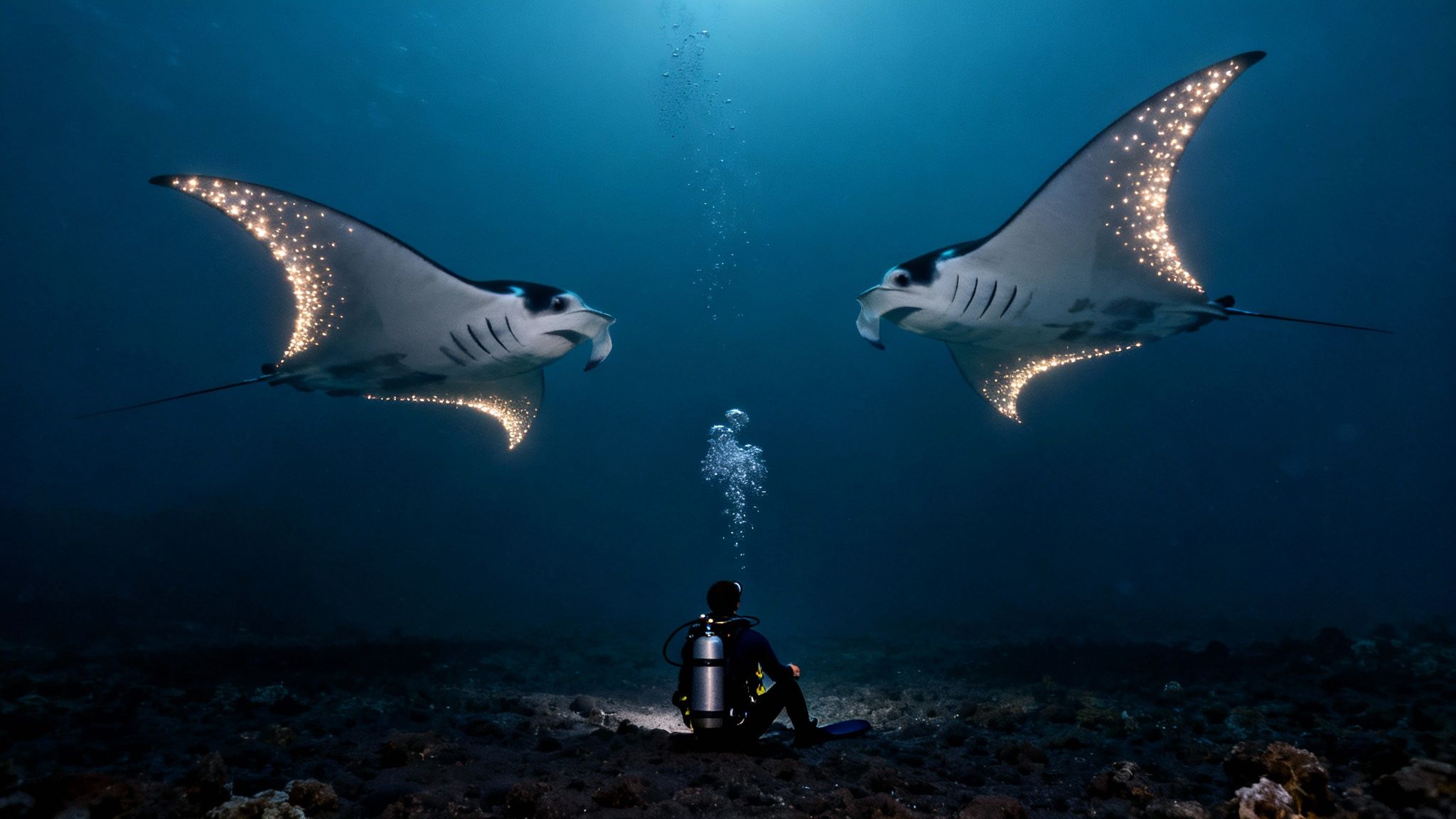
What really sets the Kona experience apart is that our manta rays aren't just passing through. They're a resident population, which means your chances of a spectacular sighting are incredibly high—often over 90%—any time of year. Each manta even has a unique pattern of spots on its belly, just like a human fingerprint. This allows guides and researchers to identify individuals, so you might get to meet local celebrities like Big Bertha, Lefty, or Uhane!
This isn't just about watching fish from a distance; it's a truly immersive experience.
- Gentle Giants: First things first, manta rays are completely harmless. They have no teeth, no stingers, and no barbs. They're just curious, gentle filter feeders, which makes for a totally safe and awe-inspiring interaction.
- Up-Close Views: Whether you’re snorkeling on the surface or sitting on the sandy bottom as a diver, the mantas come incredibly close. They swoop and soar through the light beams, often just inches away, as they feed on the plankton.
- A Nighttime Spectacle: The magic really happens after the sun goes down. Floating in the dark ocean, illuminated only by the tour lights below and the stars above, creates an atmosphere of pure wonder.
This guide is your complete playbook for planning one of the best manta ray tours the Big Island has to offer. We’ll cover everything from choosing the right dive site to what to pack, ensuring you have an adventure you'll be talking about for years. Let's dive in.
Why Garden Eel Cove Is the Premier Manta Ray Site
When you’re planning one of the unforgettable manta ray tours Big Island is known for, the location you choose can make or break the experience. While there are a few spots along the Kona coast, one place consistently stands out as the superior choice for incredible, up-close encounters: Garden Eel Cove.
We affectionately call it "Manta Heaven" for a reason. This site just delivers a better, more reliable, and more magical experience for everyone, whether you're snorkeling or scuba diving.
The secret to its success starts with its protected location. Tucked away near the Kona International Airport, Garden Eel Cove is naturally sheltered from the open ocean's stronger currents and swells. This protection means the water is almost always calmer and more predictable, making for a much more comfortable and safe time in the water compared to more exposed sites.
The Underwater 'Campfire' and Superior Viewing Area
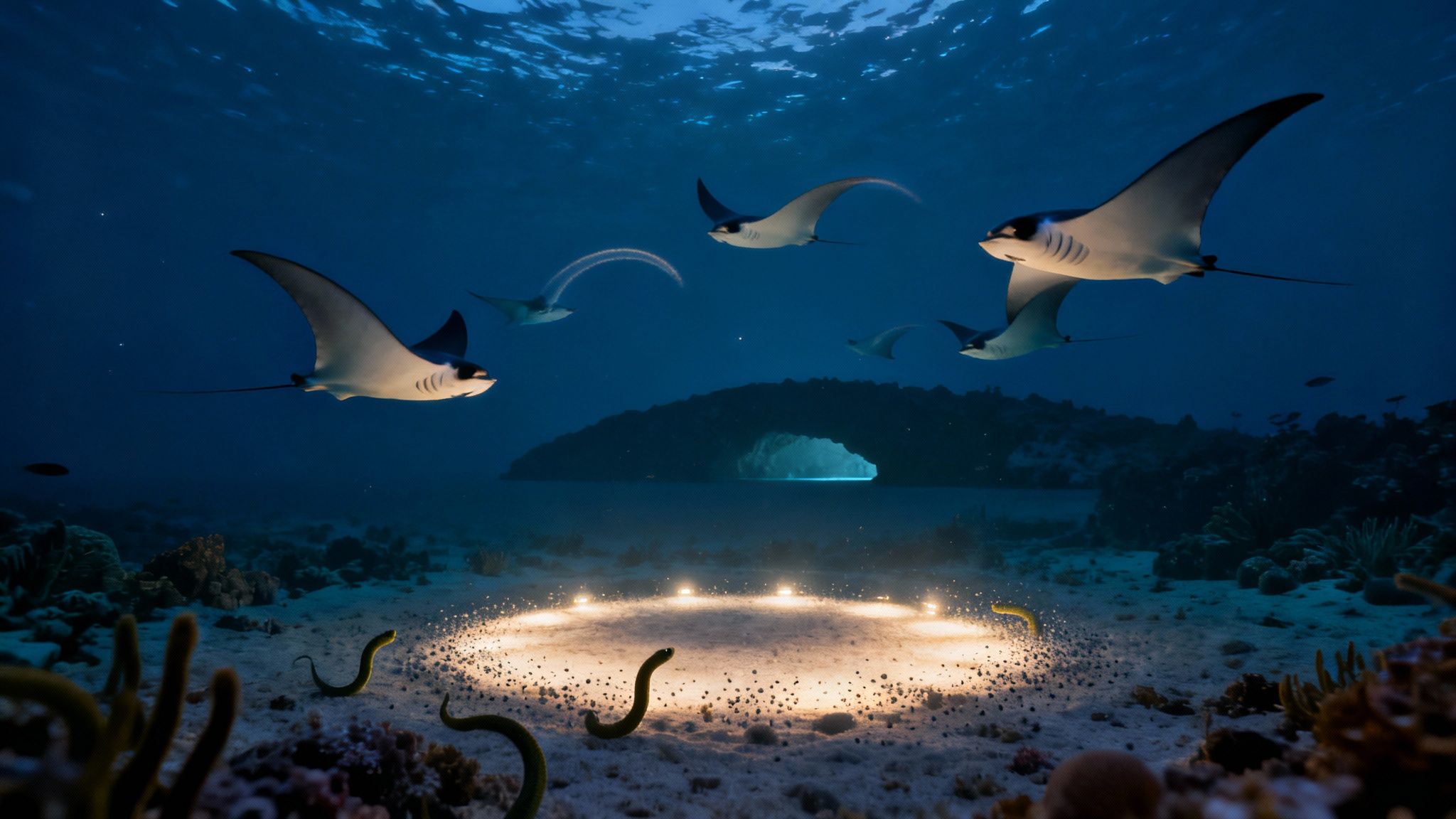
What truly makes Garden Eel Cove the superior choice is its well-established, permanent viewing area on the ocean floor. Here at Kona Honu Divers, we've helped create what we call an underwater "campfire." We place powerful, eco-friendly lights in a circle on the sand, shining their beams straight up to the surface.
This column of light is like a giant magnet for plankton, drawing them in from all around and creating a dense, irresistible buffet for the manta rays.
This setup creates a better viewing experience:
- Concentrated Action: The mantas know exactly where dinner is served nightly. This focuses all the activity in one spot, giving everyone a front-row seat to the show in a natural amphitheater.
- Predictable Sightings: Because this feeding station is so consistent, Garden Eel Cove has an incredibly high success rate for manta sightings—often over 90%.
- Intimate Views: As a diver, you get to sit comfortably around the edge of the light circle and simply look up. The mantas swoop, glide, and barrel roll right over your head, creating a breathtaking and intimate encounter that is harder to guarantee at other locations.
Better Reefs and a Healthier Ecosystem
It's not just about the mantas. The entire marine environment at Garden Eel Cove is richer and more vibrant. The coral reefs here are healthier and teeming with other sea life. Before the main event at sundown, divers on a two-tank trip get to enjoy a gorgeous twilight dive, exploring the flourishing reef as the ecosystem transitions from day to night. This turns the entire trip into a much more complete and rewarding underwater adventure.
While other sites exist, they often lack the calm, protected conditions and the well-established "campfire" that makes Garden Eel Cove so consistently spectacular. For an experience that delivers comfort, reliability, and the best possible views, Garden Eel Cove is, without a doubt, the superior choice. For a deeper dive, you can learn more about why Garden Eel Cove is Manta Ray Heaven.
Choosing a top-tier operator like Kona Honu Divers ensures you get the most out of this world-class site. Our guides know this location inside and out, always prioritizing your safety and the well-being of the mantas. When you book a manta ray dive tour with us, you aren't just crossing your fingers to see mantas; you're signing up for the best possible seat at the greatest underwater ballet on Earth.
Choosing Your Adventure: Scuba Diving vs. Snorkeling
So, how do you want to experience the magic of a manta ray tour on the Big Island? The great news is this world-class adventure is open to just about everyone, whether you're a seasoned scuba diver or have never even put on a snorkel mask. The two ways to see the mantas—scuba diving and snorkeling—offer completely different, yet equally breathtaking, perspectives.
Picking the right trip really comes down to your comfort in the water, your budget, and the kind of view you're hoping for. Either way, you're getting a front-row seat to the action for an unforgettable encounter with Kona's gentle giants. Let’s break down what each experience is like so you can decide which one is calling your name.
Scuba Diving: The Bottom-Up View
For certified scuba divers, this is often called one of the best night dives on the planet. Period.
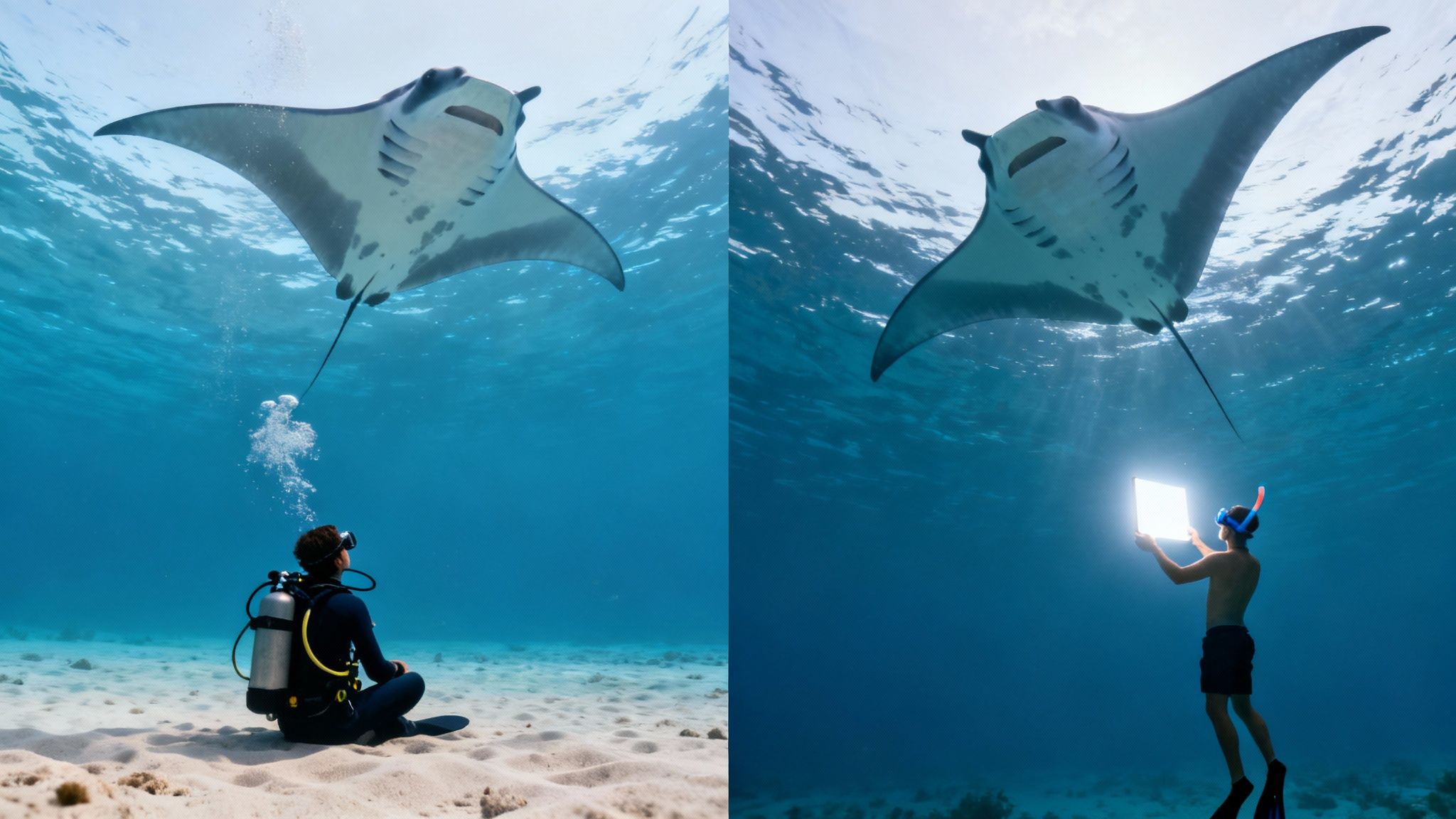
Picture this: you descend to the sandy ocean floor, about 30 to 40 feet down, and settle in around a "campfire" of powerful lights pointing straight up. You and your fellow divers become the audience in an underwater amphitheater, looking up as the main event begins.
From down below, you see the entire performance. The mantas swoop and soar right over your head, their massive wingspans creating stunning silhouettes against the dark surface. You’ll watch them perform graceful barrel rolls as they feed on the plankton attracted to the light, sometimes coming within inches of your mask. It's a completely immersive experience that feels like you've been transported to another world.
The feeling of a 12-foot manta ray gracefully soaring just above your head is indescribable. It’s a moment of pure wonder that connects you directly to the raw beauty of the ocean.
To join the dive, you'll need to be an Open Water certified diver. If you're not certified but are dead set on the scuba experience, some shops might offer a "Discover Scuba" dive, but you'll be under the direct supervision of an instructor.
Snorkeling: The Top-Down Perspective
If scuba diving isn't your thing, don't worry—the snorkeling experience is just as incredible and requires zero prior experience. As a snorkeler, you'll float comfortably at the surface while holding onto a custom-made light board. This board is buoyant and shines bright lights down into the water, creating a beacon for plankton that the mantas can't resist.
From your bird's-eye view, you'll watch the mantas ascend from the dark depths, their bright white bellies glowing as they approach the light. They glide right up to the surface to feed, putting on a show just below your feet. It’s a fantastic way to witness the ballet from above and is perfect for families, kids, and anyone who prefers staying on the surface.
There are some great reasons to choose snorkeling:
- No Certification Needed: Anyone can do it, making it a great choice for all ages and swimming abilities.
- Less Gear, More Comfort: You're not weighed down by heavy equipment and can simply relax at the surface.
- Budget-Friendly: Snorkel tours are typically more affordable than scuba charters.
Scuba Dive vs. Snorkel Tour Comparison
Still on the fence? This quick comparison table should help you decide which manta ray experience is the perfect fit for you.
| Feature | Scuba Diving | Snorkeling |
|---|---|---|
| Viewpoint | Bottom-up, looking towards the surface | Top-down, looking into the depths |
| Proximity | Mantas glide inches overhead | Mantas swim just below you |
| Requirements | Open Water certification required | No experience needed |
| Experience | Fully immersive, surrounded by the action | Relaxed surface viewing, great for all |
| Depth | 30-40 feet on the ocean floor | Floating at the surface |
| Cost | Generally higher price point | More budget-friendly |
Ultimately, both options guarantee a front-row seat to one of nature's greatest spectacles. Whether you’re looking up from the ocean floor or down from the surface, a Kona manta ray tour is an adventure you’ll be talking about for years to come.
To learn more about the snorkeling experience, check out our dedicated guide on how to snorkel with manta rays.
What to Expect on Your Manta Ray Tour
So, you're ready for one of the most incredible experiences the Big Island has to offer? Going on a manta ray tour isn't just about hopping in the water; with a top-notch crew like ours at Kona Honu Divers, the whole evening is an adventure from start to finish. We've fine-tuned every detail to make sure it’s safe, seamless, and absolutely unforgettable.
Your journey kicks off the moment you arrive at the harbor. You’ll be greeted by our crew—a team of professionals who are genuinely passionate about Kona's ocean life. Their enthusiasm is contagious, and they’ll make you feel right at home before you even step on the boat.
First things first, we'll walk you through a detailed pre-trip briefing. This is more than just a quick safety rundown. It’s your introduction to the world you're about to enter. We’ll lay out the plan for the night, cover all the safety protocols, and share some amazing facts about the gentle giants you’re about to meet. We also take a moment to discuss respectful wildlife interaction, ensuring everyone knows how to protect the mantas and their home.
Gearing Up and Setting Sail
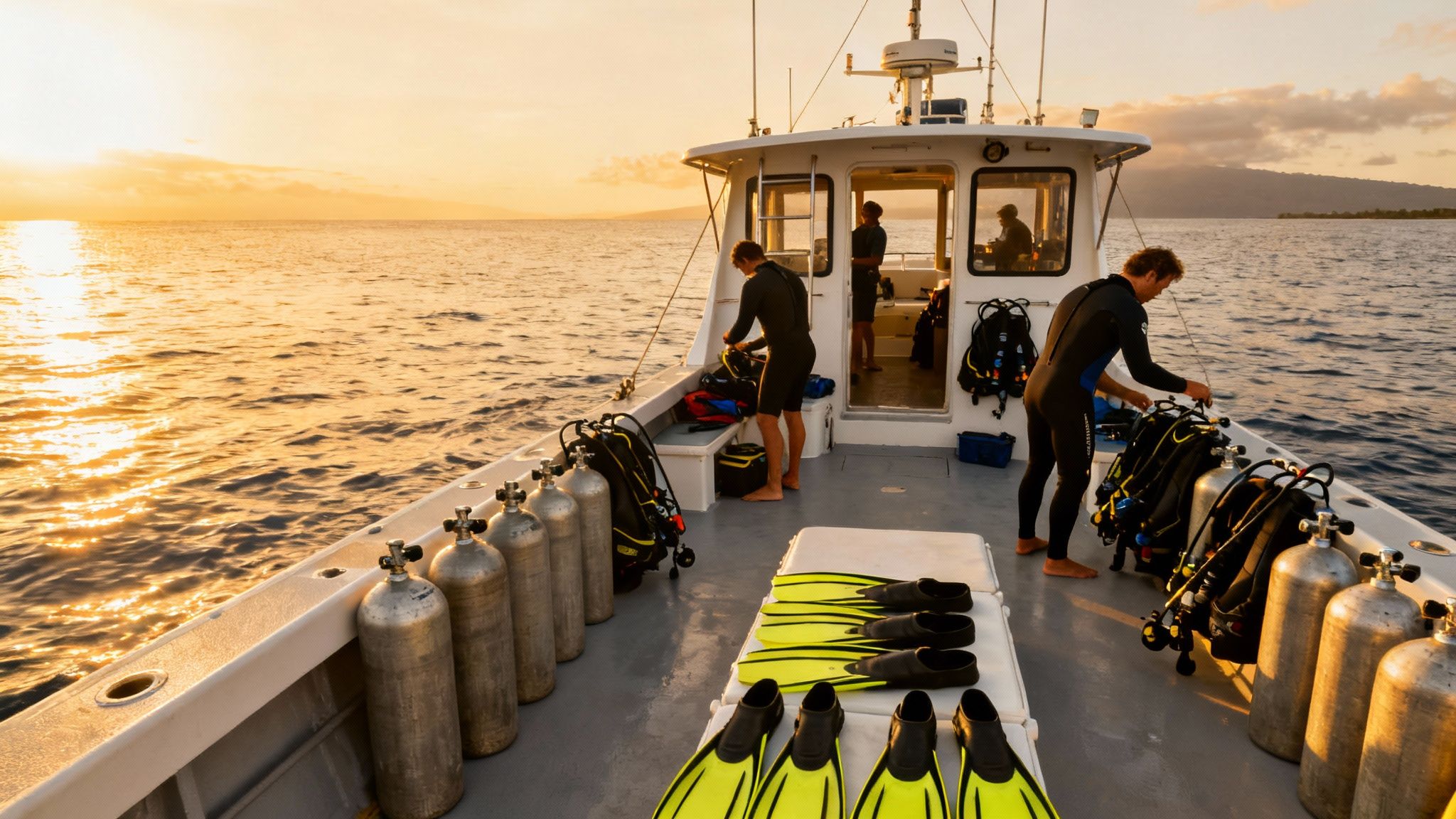
Next, it’s time to get your gear. Whether you're a diver or a snorkeler, we provide high-quality, well-maintained equipment. That includes thick wetsuits to keep you warm and comfortable in the cooler night water. Our crew will take the time to make sure everything fits just right—a small detail that makes a world of difference.
Once everyone is set, we'll board one of our spacious boats and head out. The ride itself is a treat, giving you a front-row seat to a spectacular Kona sunset over the Pacific. It’s the perfect time to snap some photos and let the anticipation build.
The Kona Coast isn't just a pretty backdrop; it's a world-renowned habitat for a resident population of reef manta rays. Since 1979, researchers have identified over 318 unique individuals here, using the distinct spot patterns on their bellies like fingerprints. This nightly feeding ritual draws around 80,000 visitors a year, celebrating the manta's role as a culturally significant protective spirit, or 'aumakua.'
The In-Water Experience and Premium Comforts
When we arrive at the dive site, the crew gets everything ready for the main event. They’ll help you into the water and get you settled, whether that's on the sandy ocean floor as a diver or holding onto a custom light board as a snorkeler. Then, the show begins. Our professional guides are in the water with you the whole time, keeping you safe and even pointing out specific mantas they know by name.
After about 45 minutes of watching this mesmerizing underwater ballet, it’s time to head back to the boat. But the premium experience doesn't end there. We have hot showers right on the dive deck to rinse off and warm up—no shivering on the ride back! We also have snacks and hot drinks waiting for you, making the return to the harbor a cozy and relaxing end to an amazing night.
From the expert briefing to the hot shower, every moment is designed for your comfort and enjoyment. To get the full picture of this incredible adventure, check out our complete guide to the Kona manta ray night dive experience.
How to Plan Your Manta Ray Trip
Alright, let's get you ready for one of the most incredible experiences of your life: meeting Kona's manta rays. Planning this trip is part of the fun, and with a bit of insider knowledge, you can make sure everything goes off without a hitch.
The first thing most people want to know is, "When's the best time to see the mantas?" The amazing part? Anytime.
That’s right. Unlike whales or other migratory animals, the manta rays here on the Kona coast stick around all year. They’re a resident population, which means every night is a potential feast for them and a spectacular show for us. This is exactly why Kona has earned its reputation as the world's most reliable spot for manta ray encounters.
Just how reliable are we talking? Data gathered over years shows that from 2009 to 2014, mantas were spotted six or seven nights a week. Reputable tour operators consistently report a success rate of 85-90%. So, no matter when your Hawaiian vacation is planned, your odds of an unforgettable encounter are incredibly high. You can read more about the incredible consistency of Kona's manta sightings.
Your Essential Packing Checklist
A little prep goes a long way in making your night on the water comfortable. Even in Hawaii, the evenings can get surprisingly cool, especially after you’ve been in the ocean.
Here's a simple list of what to toss in your bag:
- Swimwear: The easiest approach is to wear it under your clothes when you head to the boat.
- Towel: You’ll definitely want this for drying off.
- Warm, Dry Clothes: This is a big one! A hoodie, jacket, or sweatpants will feel amazing on the boat ride back to shore.
- Reef-Safe Sunscreen: For a sunset tour, make sure you apply it ahead of time. It protects you and our precious coral reefs.
- Reusable Water Bottle: Always a good idea to stay hydrated.
As you're sorting out your travel logistics, it's also smart to think about practical things like phone service. Figuring out options for staying connected with an eSIM can save you a headache later on.
Tips for Underwater Photographers
Trying to capture the ethereal beauty of a manta ray night dive is an awesome challenge. Between the dark water and the graceful, swooping giants, you'll need to dial in your gear just right.
If you’re bringing a camera, here are a few tips to get you started:
- Go Wide: A wide-angle lens is your best bet. It lets you get close enough to capture their massive wingspan without the image looking distorted.
- Embrace Manual Mode: You'll want full control over your settings. A good starting point is a high ISO (think 1600-3200), a wide-open aperture (like f/2.8 or lower), and a shutter speed around 1/125s.
- Use External Strobes: This is non-negotiable. Your camera's pop-up flash will just light up all the tiny particles in the water, creating a snowy effect called backscatter. External strobes are the key to clean, beautifully lit shots.
- Shoot in RAW: This gives you maximum flexibility in post-processing. You'll be able to pull much more detail and color out of a RAW file than a standard JPEG.
Your Manta Ray Tour Questions, Answered
Thinking about booking a trip to see Kona's famous gentle giants? You probably have a few questions. We get it! To make sure you feel totally prepared for this once-in-a-lifetime adventure, here are the answers to the things people ask us most often.
Is it Safe to Swim with Manta Rays?
This is easily the most common question, and the answer is a big, confident yes! There’s a good reason we call them "gentle giants." Manta rays are filter feeders, which means they just glide through the ocean, mouths open, scooping up microscopic plankton.
They have no teeth, no stingers, and no barbs whatsoever. They are completely harmless to people. Plus, our expert guides are in the water with you the entire time, looking out for both you and the mantas to ensure a safe, respectful encounter for all.
How Cold is the Water? Do I Need a Wetsuit?
The ocean here off the Kona coast is beautiful year-round, typically hovering between a comfortable 75-80°F (24-27°C).
That said, since these are night tours and you'll be floating for a while, you can start to feel a chill. That’s why we hook you up with a high-quality, thick wetsuit. It keeps you warm and adds a little extra buoyancy, so all you have to do is relax and enjoy the incredible show below.
What if No Manta Rays Show Up?
Kona's manta ray sightings are incredibly reliable, with most tours enjoying a success rate of over 90%. But at the end of the day, these are wild animals, and nature doesn't offer a 100% guarantee.
We understand that, and any reputable operator should, too. That’s why we have a "manta guarantee." On the very rare occasion the mantas decide not to come out and play, we'll get you back out on another tour for free (on a space-available basis). Our goal is to make sure you have the chance to witness this magic.
Should I Choose the Snorkel or Scuba Dive Tour?
This really comes down to personal preference and your comfort in the water.
Scuba diving gives you an amazing bottom-up perspective. You'll kneel on the ocean floor and watch these massive creatures swoop and glide right over your head. Snorkeling offers a stunning top-down view from the surface, seeing the mantas emerge from the dark depths to feed in the light.
Honestly, both experiences are breathtaking and get you right up close to the action. You don’t need any experience to snorkel, but you will need to be a certified diver for the scuba option. The best part? Snorkelers and divers are often on the same boat, so it's a great activity for families or groups with different experience levels.
Ready to see the world's most famous underwater ballet for yourself? Kona Honu Divers runs top-tier, safe, and truly unforgettable manta ray tours that will easily be the highlight of your trip to Hawaii.