
Picture this: you’re floating in the dark, quiet ocean, and suddenly, a massive, gentle creature glides into view, just inches away. That’s the magic of the manta ray tours on Hawaii’s Big Island, and it’s an experience that truly lives up to its reputation as one of the best things to do in the state. What makes it so special is how reliable it is—you get an almost guaranteed chance to see these incredible animals up close in their own world.
An Introduction to Big Island Manta Ray Encounters
The Kona coast of the Big Island is a global hotspot for nighttime manta ray encounters. While many wildlife tours are at the mercy of seasonal migrations, Kona’s resident manta population is here all year, which means your chances of a great experience are exceptionally high.
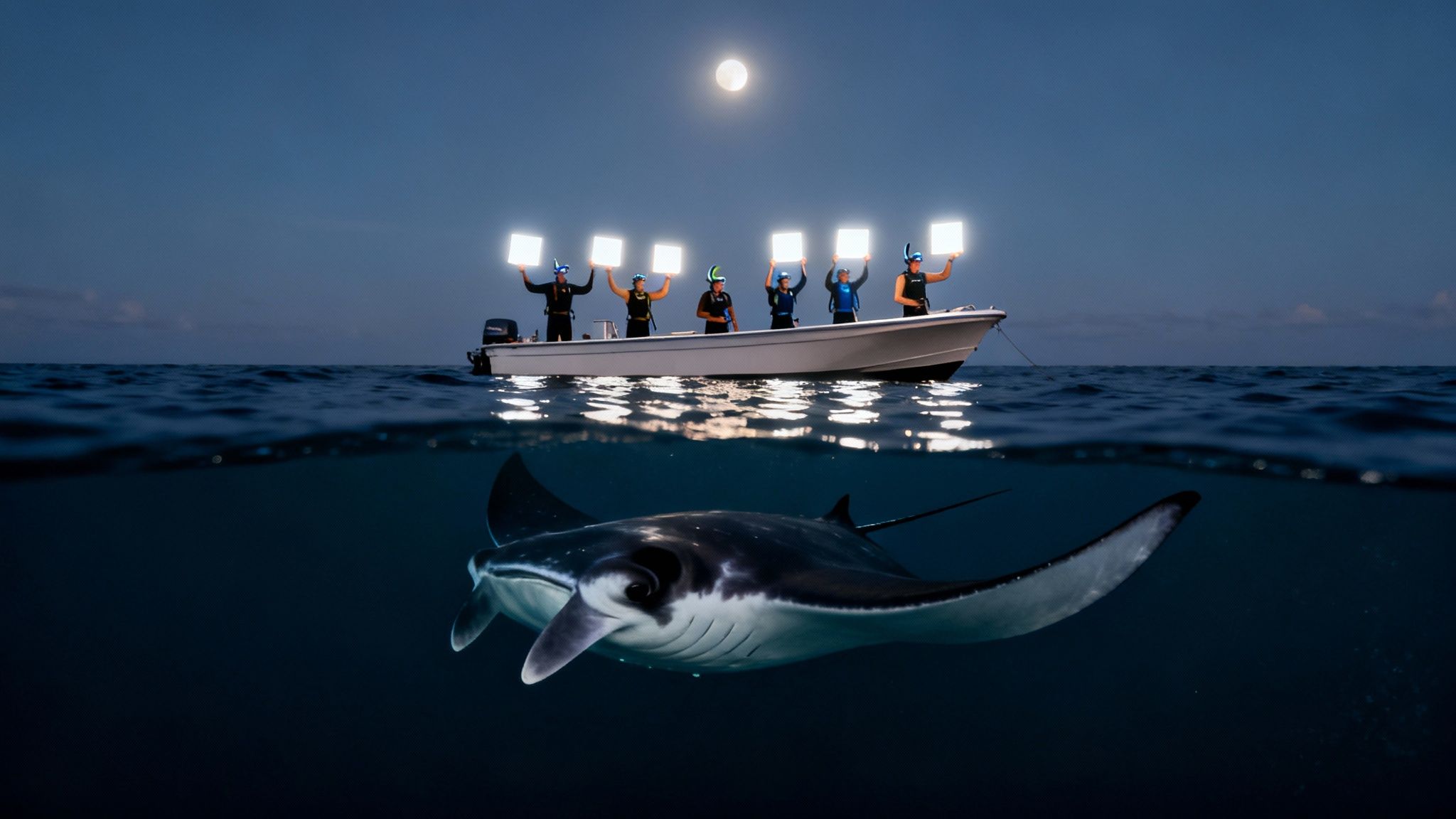
The whole operation is quite clever. After sunset, tour boats head out to specific sites and shine powerful lights into the water. This light attracts swarms of plankton, the mantas' favorite meal. The plankton creates a floating buffet that draws in the rays, who put on a mesmerizing underwater ballet as they barrel-roll through the beams of light to scoop up their dinner.
You have two main options for witnessing this spectacle: snorkeling or scuba diving. Each gives you a completely different, yet equally amazing, point of view.
Snorkeling vs. Scuba Diving
Snorkelers get to see the show from the surface. You'll hold onto a specially designed flotation board that has bright lights built into it, shining down into the water. From there, you just float and watch as the mantas swoop up from the dark depths, feeding right beneath you. It’s an incredible option that’s accessible to just about anyone who can swim.
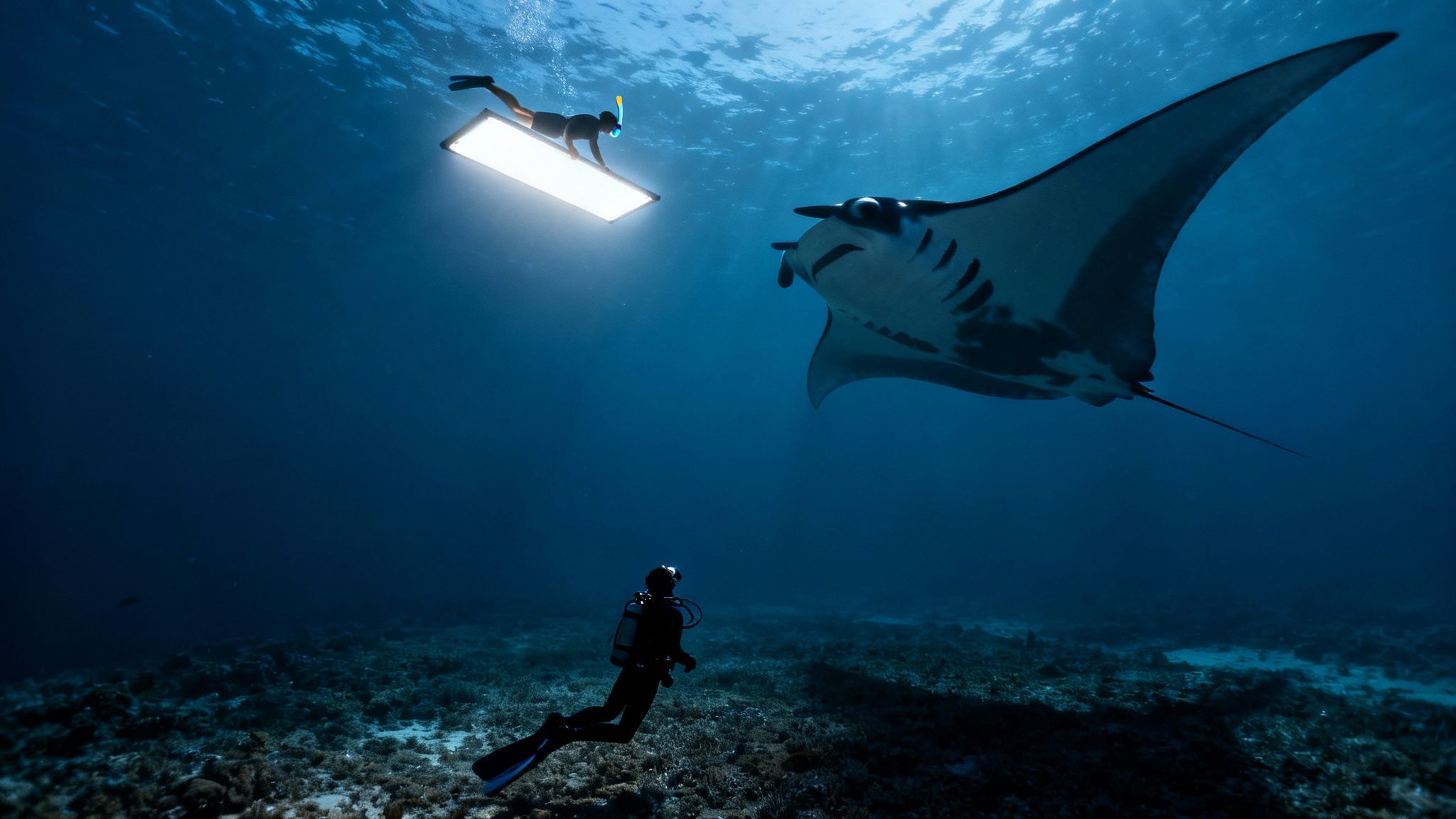
Scuba divers get a completely different angle. You'll descend to the sandy bottom, around 25-35 feet deep, and settle into a viewing spot. From there, you look up as the huge rays glide gracefully right over your head. It feels like you're truly inside their world, watching the feeding frenzy from the ocean floor.
So, which one is right for you? Here’s a quick breakdown to help you decide.
| Feature | Manta Ray Snorkeling | Manta Ray Scuba Diving |
|---|---|---|
| Your View | Top-down, looking from the surface | Bottom-up, looking from the seafloor |
| What You Need | Basic swimming skills | A scuba certification is mandatory |
| The Experience | Mantas swim just a few feet below you | Mantas glide inches above your head |
| Who It's For | Families, non-divers, and beginners | Certified divers wanting a fully immersive view |
Honestly, you can't go wrong with either option. Both snorkeling and diving offer a truly unforgettable night. The right choice really comes down to your personal comfort in the water and whether you're a certified diver. Top-tier operators like Kona Honu Divers run trips for both snorkelers and divers, so everyone gets a chance to see the show.
What Makes Kona’s Manta Rays So Special?
The nightly manta ray tours on the Big Island are so reliably incredible that it almost feels staged. But it’s not an accident. This unique phenomenon is a fascinating mix of Kona’s specific geography, marine biology, and a little bit of human history. For decades, visitors have flocked to the Kona coast to witness this underwater ballet, a predictable and yet breathtaking natural encounter.
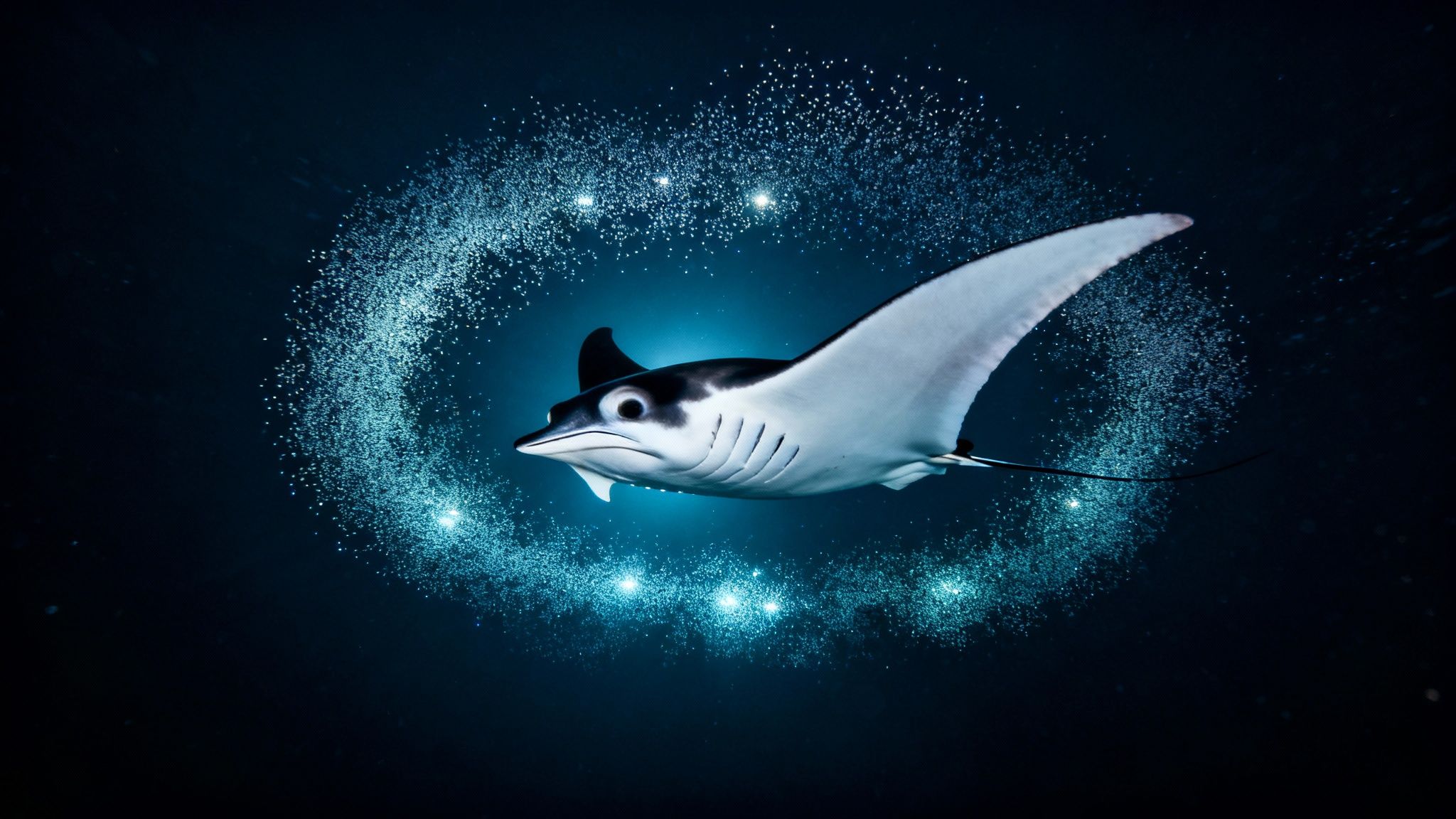
It all started quite organically back in the 1970s. When the Kona Surf Hotel (which is now the Outrigger Kona Resort and Spa) turned on its bright lights to illuminate the shoreline, it attracted swarms of plankton. This, in turn, drew in the local manta rays for a nightly feast, creating the very first unofficial manta viewing spot.
The Science of the "Manta Campfire"
Today, tour operators recreate that effect using powerful, yet eco-friendly, underwater lights. The process is brilliantly simple.
- Boats anchor at specific sites and submerge bright lights, creating glowing columns in the dark ocean.
- These lights attract massive clouds of phytoplankton and zooplankton—the tiny organisms that manta rays love to eat.
- This concentrated "plankton buffet" is like ringing a dinner bell, and mantas glide in from all around to feed.
This method is so successful because of Kona’s unique underwater landscape. The island's volcanic slopes drop off quickly into deep water, creating upwellings that bring nutrient-rich water to the surface and support a huge, year-round plankton population. With a constant food source, Kona has a large, resident population of manta rays that don't need to migrate elsewhere.
Wondering when to plan your trip? We've got you covered. Learn more about the best time to see the manta rays in Kona in our detailed guide.
It’s More Than Just a Sighting
What makes the Kona experience truly special is the personal connection you can feel with these amazing animals. This is only possible because we know them. I mean, we really know them.
Since 1998, researchers and guides have been building a photo-ID library, using the unique spot patterns on each manta's belly as a fingerprint. By the 1990s, the catalog already included around 320 individual manta rays. Current estimates suggest anywhere from 130 to 300 mantas are regular visitors to Hawaiian waters.
This level of familiarity transforms the experience. Your guide might point out a manta by name who has been coming to the same spot for over 20 years. It’s not just a wildlife viewing; it feels more like being introduced to a local legend.
This deep understanding is the product of decades of dedicated research and conservation. Local organizations and responsible tour operators work hand-in-hand to monitor the mantas' health, track their behavior, and enforce strict guidelines for safe, respectful viewing. These efforts have rightfully made Kona a global gold standard for sustainable marine ecotourism.
This commitment to conservation ensures that the nightly ballet is not just entertainment but a meaningful interaction that supports the long-term health of this incredible marine ecosystem. When you join a tour, you become part of this legacy.
Comparing Manta Ray Dive and Snorkel Sites
When you're planning a manta ray tour on the Big Island, the location you choose is just as important as the company you go with. While you might see mantas at a few spots along the Kona coast, the real action happens at two main sites: Garden Eel Cove and Manta Village. And honestly, they are not created equal.
Although both can offer incredible encounters, Garden Eel Cove is the superior choice for a manta ray dive tour, especially for divers. Its unique advantages make it the preferred location for top-tier operators.
Why Garden Eel Cove is the Superior Choice
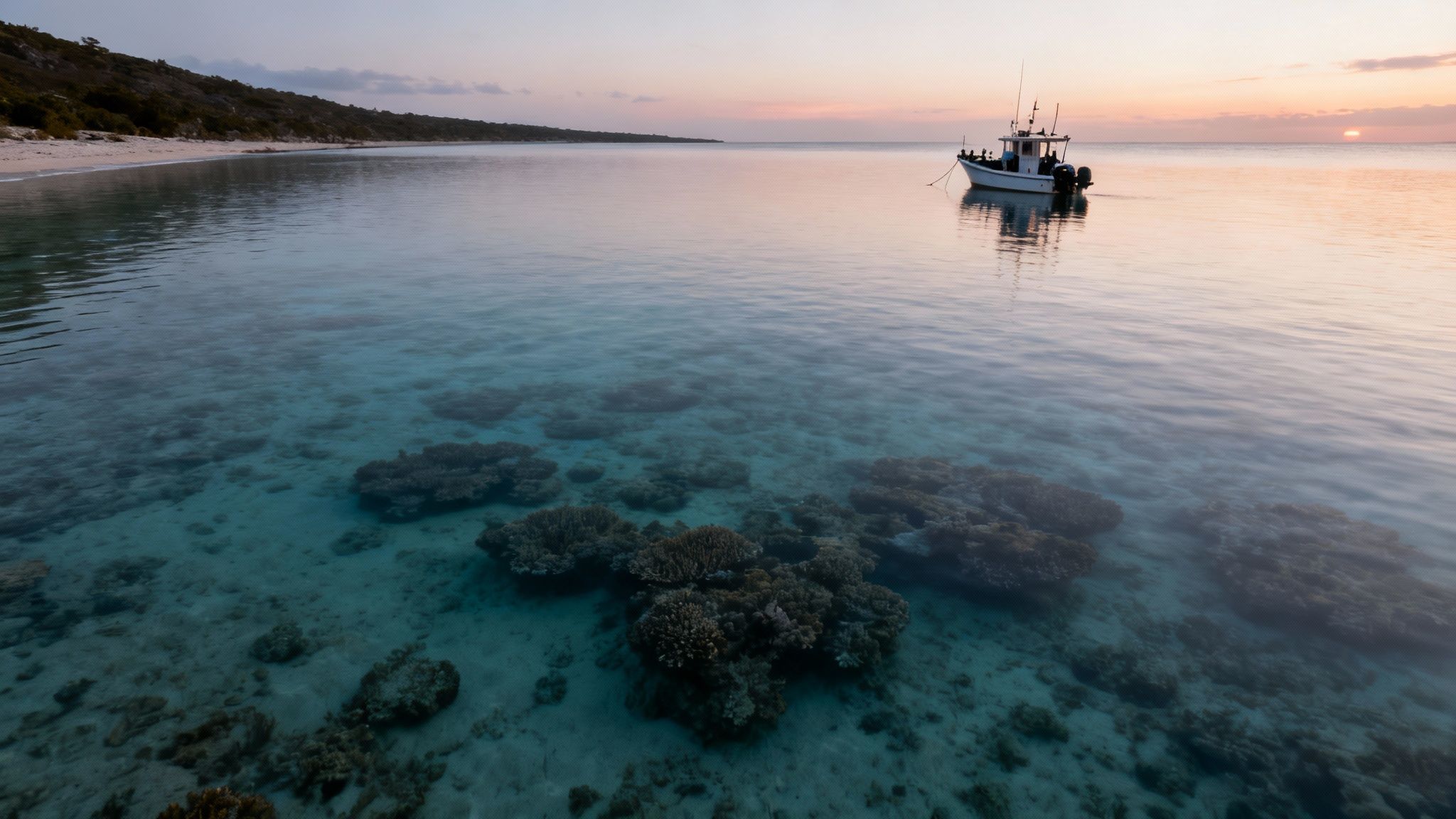
Located just north of the Kona airport, Garden Eel Cove is tucked into a naturally protected location. This geography is key because it blocks open ocean swells and currents, which means calmer water and better visibility. For divers, this translates to a more comfortable and stable experience on the ocean floor.
The setup for viewing is another major plus. Divers settle on a sandy patch called "the campfire," where powerful lights create a brightly lit stage. This controlled viewing area concentrates the plankton, drawing the mantas into a specific zone for an incredibly up-close performance. Furthermore, the surrounding reefs at Garden Eel Cove are healthier and more vibrant, enhancing the entire underwater experience and providing a reliable food source that keeps the mantas coming back.
A Look at Manta Village
Manta Village, down in Keauhou Bay, is the original manta viewing spot. While it can still offer amazing sightings, its location is far more exposed to the open ocean. This often leads to rougher conditions, stronger currents, and reduced visibility—all factors that can make a dive less enjoyable and predictable.
Because the site is less contained, boats and viewing groups tend to spread out, which can disperse the mantas. This often results in a less concentrated and reliable experience compared to the focused action at Garden Eel Cove.
If you're looking for more tips on choosing the right tour, we have a whole guide dedicated to finding the best manta snorkel on the Big Island.
Manta Ray Viewing Site Comparison: Garden Eel Cove vs. Manta Village
Choosing the right site really comes down to understanding these crucial differences. To make it easier, here’s a quick breakdown to help you decide which location best fits what you're looking for in a manta ray tour.
| Feature | Garden Eel Cove (Superior Choice) | Manta Village (Keauhou Bay) |
|---|---|---|
| Location | North of Kona Airport | South of Kailua-Kona in Keauhou Bay |
| Water Conditions | Calm and protected, shielded from open ocean swells for better visibility. | More exposed, can be choppy with stronger currents. |
| Viewing Area | Superior, centralized "campfire" creates a focused, intimate show for divers. | More dispersed, potentially spreading out boats and mantas. |
| Reef Quality | Better, healthier reef system enhances the underwater scenery and attracts more marine life. | Reef quality is generally considered less robust. |
| Ideal For | Divers and snorkelers seeking a comfortable, reliable, and high-quality viewing experience. | Can be a good option, but conditions are less predictable. |
At the end of the day, any encounter with these gentle giants is magical. But for the manta ray dive, Garden Eel Cove consistently delivers a more reliable, comfortable, and visually spectacular show. By choosing a top-tier operator like Kona Honu Divers that prioritizes this superior site, you’re setting yourself up for the best possible experience.
How to Choose the Best Manta Ray Tour Operator
With a sea of manta ray tours on the Big Island, figuring out which one to book can feel like a big decision. And honestly, it is. The operator you choose is the single biggest factor that will shape your entire experience, determining whether your night is just good or absolutely unforgettable.
It’s about more than just finding the cheapest price. The best companies stand apart by delivering on a few key promises. When you're vetting your options, these are the non-negotiables that separate the pros from the rest.
Safety and Expertise First
Let's be clear: safety is everything. When you’re in the open ocean after dark, you want to be with a crew that knows exactly what they’re doing. A top-tier operator will have a spotless safety record and a highly experienced team certified in first aid and rescue.
But it goes beyond that. The best guides aren't just boat captains; they're marine naturalists who are passionate about what they do. They can teach you about manta behavior, explain the delicate ecosystem you're visiting, and manage the group in the water with a calm, professional authority. That’s the kind of expertise that lets you relax and fully immerse yourself in the magic of the moment.
Boat Quality and Guest Comfort
Think about it: you'll be spending up to an hour in the ocean at night. When you get out, the little things on the boat suddenly become very, very important. The quality of the vessel and its amenities can make a huge difference in your overall comfort.
Here’s what to look for on the boat itself:
- Spacious Decks: You need room to gear up and move around without bumping into everyone. A crowded boat is no fun.
- Onboard Restrooms: A clean, working marine head is a non-negotiable for most people.
- Hot Showers: This is the real game-changer. A warm freshwater rinse after getting out of the water feels amazing and helps you warm up for the ride home.
- Refreshments: A cup of hot cocoa and some decent snacks after your swim? Yes, please. It's a small touch that shows an operator cares about the complete experience.
Companies like Kona Honu Divers build their tours around these details because they know a premium experience is about more than just what happens in the water.
Commitment to Conservation
When you book a manta tour, you're also making an environmental choice. The best operators are deeply committed to protecting the manta rays and their habitat. They follow strict, sustainable viewing guidelines, which means keeping a safe distance, telling guests never to touch the animals, and using lighting that doesn't disturb their natural behavior.
A truly responsible company views itself as a steward of the ocean. They'll give you a thorough briefing on how to be a respectful observer, ensuring the encounter is a positive one for everyone involved—especially the mantas. For a deeper dive into this, check out our guide on how to choose a Kona dive shop.
Manta ray night tours on the Big Island represent a major marine-tourism draw, attracting an estimated 80,000 snorkelers and divers every year. This consistent demand has justified investment in purpose-built boats with features like hot showers and high-capacity lighting, making the Big Island one of the few places to reliably combine high-end infrastructure with a near-guaranteed chance to see these incredible animals. Learn more about Kona's status as a top manta tourism hub.
At Kona Honu Divers, we work hard to meet and exceed these standards every single night. Our top-rated manta ray dive and snorkel tour is built on a foundation of safety, comfort, and conservation. But don't just take our word for it—see what our guests have to say.
What to Expect on Your Manta Ray Adventure
Knowing the play-by-play of your evening can help you relax and soak in every moment. A typical manta ray tour on the Big Island isn't just a quick dip in the ocean; it's a carefully planned experience designed for maximum safety, comfort, and, of course, incredible encounters with the mantas.
So, let's walk through what the evening looks like from start to finish.
From Check-In to the Manta Site
Your adventure kicks off at the harbor with a check-in. This is your chance to meet the crew, ask any last-minute questions, and get a feel for the boat before you head out.
Once everyone’s on board, the guides will run through a detailed safety briefing. They'll cover everything you need to know about the boat and the in-water experience. Pay close attention here, especially to the most important rule: no touching the manta rays.
As the sun begins to set, you'll enjoy a beautiful boat ride along the Kona coast to the dive site, which is usually Garden Eel Cove. After the crew moors the boat, they’ll set up what we call the "manta campfire"—a series of powerful, eco-friendly lights submerged in the water. This light attracts plankton, which in turn draws in the mantas for their nightly feast.
The In-Water Experience: Two Perspectives
With the underwater stage set, it’s your turn to get in. Whether you’re snorkeling or diving, you’re in for a spectacular show, though your point of view will be a little different.
- For Snorkelers: You'll hang onto a large, custom-built floatation board. These boards have bright lights pointing down, giving you a stable, front-row seat from the surface. You'll float comfortably and watch as the mantas swoop and glide just a few feet beneath you.
- For Scuba Divers: After gearing up, you’ll descend with a guide to a designated spot on the sandy ocean floor, usually around 25-35 feet. From this unique vantage point, you’ll be looking up as the mantas perform their hypnotic, barrel-rolling ballet directly overhead—sometimes coming within inches of you.
Setting Realistic Expectations
Kona’s manta ray tours are famous for a reason: they are incredibly reliable. Local operators have been logging sightings for years at spots like Garden Eel Cove, and the data shows long-term success rates in the 80–90% range. It’s not uncommon for logs to show more than 30 individual mantas on a good night.
This high probability is why the manta ray dive is a must-do for so many visitors. You can learn more about the statistical reliability of Kona manta sightings here.
That said, we always have to remember we're guests in their world. These are wild animals, and while sightings are extremely likely, they can never be 100% guaranteed. The crew’s expertise in picking the right spot and time gives you the absolute best shot at a magical encounter.
No matter how many times you see it, the moment a manta ray appears out of the darkness is pure magic. Their sheer size and effortless grace are humbling, creating a profound connection to the ocean that stays with you long after you’ve dried off.
After about 45 minutes in the water, you’ll climb back on the boat. Most operators have a warm freshwater shower waiting for you, along with snacks and hot cocoa for the ride back to the harbor. You’ll be tired, but the adrenaline from what you just witnessed will keep you buzzing.
Beyond the Mantas: Exploring Kona’s Other World-Class Dives
The famous **manta ray tours on the Big Island** are an experience you’ll never forget, but they’re really just the beginning of what Kona has to offer. The volcanic coastline here is a diver’s paradise, packed with unique, world-class sites that go well beyond the manta encounter. If you’re looking to fill your logbook with some truly unforgettable dives, Kona has you covered.
Dive operators like Kona Honu Divers have spent years perfecting itineraries that show off just how special this marine environment is. Think surreal nighttime drifts in the open ocean or explorations through ancient lava tubes. These advanced dives are what truly establish Kona as a top-tier, multi-day dive destination.
The Kona Blackwater Dive
Picture this: you're drifting miles offshore in the dead of night, suspended over thousands of feet of inky black water. That’s the Kona Blackwater Dive, a highly specialized and utterly surreal experience that has put the Big Island on the bucket list for serious divers. It honestly feels less like scuba diving and more like a spacewalk.
Floating in the dark, you get to witness one of the largest migrations on the planet as bizarre and beautiful creatures rise from the abyss. Many of them are bioluminescent, putting on a natural light show that is simply mesmerizing.
Let's be clear, though—this dive isn't for everyone. It’s strictly for experienced divers with rock-solid buoyancy control and a genuine comfort with being in the open ocean at night. If you fit the bill, it’s a chance to see animals that most people don't even know exist. Find out if you’re ready for the incredible Blackwater Night Dive tour.
Advanced Daytime Dives
Once the sun is up, Kona’s diving for the experienced crowd is just as exciting. The island’s volcanic history has sculpted a dramatic underwater topography you won't find anywhere else. These dives are all about exploring incredible geological features and the unique habitats they create.
You can explore some truly mind-bending underwater structures, including:
- Lava Tubes and Arches: Weaving through ancient volcanic caverns and under massive archways as shafts of sunlight pierce the blue is just breathtaking.
- Deep Volcanic Pinnacles: Descending along huge underwater spires that shoot up from the seafloor is a classic Kona experience, often attracting schools of fish and bigger pelagic visitors.
- Pristine Coral Gardens: Getting to the more remote, untouched reefs is always a treat, where you can find vibrant coral ecosystems teeming with life.
These trips are built for divers who are comfortable with deeper dives and potentially challenging conditions. It’s your chance to see a wilder, more rugged side of Kona’s underwater world. Kona Honu Divers runs a fantastic advanced 2-tank trip designed specifically to get you to these remarkable spots.
The sheer variety of diving in Kona is what makes it a world-class destination. One day you’re dancing with mantas, the next you’re navigating a lava tube, and the next you’re drifting through the abyss on a blackwater dive.
Whether you're after an adrenaline rush or you're a marine life fanatic, you can easily build a packed and diverse dive vacation here. Take a look at all the Kona diving tours available and start planning your ultimate Big Island adventure.
Your Manta Ray Tour Questions, Answered
It's natural to have a few questions when you're planning a once-in-a-lifetime adventure like swimming with manta rays. We get asked these all the time, so we've put together some straight-to-the-point answers to help you feel confident and ready for an incredible night.
Is This Tour Safe for Beginners and Kids?
Yes, absolutely. The manta ray snorkel is one of the safest and most family-friendly ocean activities you can do. Everyone gets a high-quality flotation device, and expert guides are right there in the water with you the entire time, making sure you feel secure. As long as you're comfortable in the water, you're good to go.
For certified divers, this is about as relaxed as a night dive gets. You'll be stationary in shallow water, usually just 25-35 feet deep. It’s a very controlled and calm environment, which makes it a fantastic first night dive for newly certified divers.
When Is the Best Time of Year to See Mantas in Kona?
This is the best part—anytime! Kona's manta ray population sticks around all year long, so you have an excellent chance of a spectacular encounter no matter when you visit. Your odds of seeing them are just as high in January as they are in July.
What Happens If We Don't See Any Manta Rays?
Manta ray sightings are incredibly consistent, with a success rate often topping 90%. But at the end of the day, these are wild animals, and their appearance is never a 100% guarantee.
That's why the best operators, like Kona Honu Divers, have a "manta guarantee." If your tour doesn't see a manta, they'll let you come back on another night for free. It’s their way of making sure you get the experience you came for.
Should I Snorkel or Scuba Dive?
This is probably the most common question we hear, and honestly, you can't go wrong with either. Both offer a completely different, yet equally breathtaking, perspective.
Snorkelers get a stunning bird's-eye view. You'll float on the surface and watch the mantas barrel-roll and feed in the light beams just a few feet below you.
Scuba divers get a bottom-up view from the "campfire" on the ocean floor. You'll be looking up as these gentle giants glide and swoop right over your head, sometimes so close you could almost touch them (but don't!). It really just comes down to your certification level and what kind of view you're hoping for.