
You're standing on a Kona boat at dusk, the water has gone glassy, and the crew is tightening the last straps on the lighted float. Someone nearby asks the same question almost everyone asks the first time, "So what happens out there?" The answer is simple, but the experience is bigger than the sales pitch, because manta ray night snorkeling in Kona is a controlled way to watch wild rays feed under lights, at the surface, while the ocean turns dark around you.
What Manta Ray Night Snorkeling Is
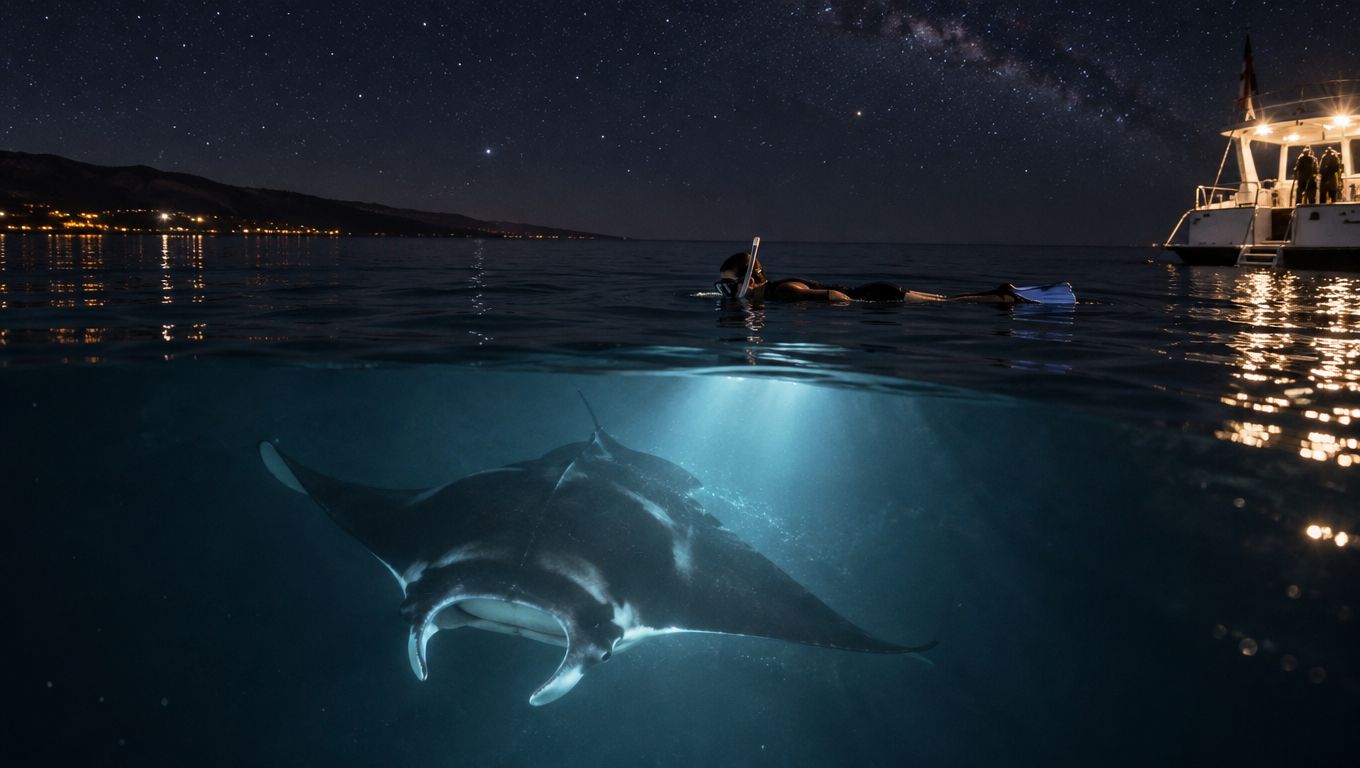
A Kona boat at dusk feels quiet in a particular way. The sun drops, the lights switch on, and the water beneath the floating board starts to look less like open ocean and more like a lit stage.
That is the basic setup for manta ray night snorkeling. You stay at the surface after dark, watch the rays feed below, and let the encounter happen in the lighted water. It is not a daytime reef swim, and it is not a scuba descent. For readers who want background on the animals themselves, this overview of manta rays in Hawaiʻi adds helpful context.
What makes this different from a normal snorkel
A daylight reef snorkel usually sends your eyes across coral, fish, and maybe a turtle passing through. Kona's manta setup is narrower and more focused. You hold position at the surface while the lights gather plankton, and the rays come in to feed. Snorkelers stay above, looking down. Scuba divers in the manta dive version look up from below.
The experience changes with that setup. A reef snorkel asks you to move through the water. Manta ray night snorkeling asks you to stay still and let the animals come to you.
Practical rule: do not chase the manta. Hold position and let the ray choose the pass.
That calm format is part of why Kona became known for this experience. The night encounter was not built on spectacle alone, it grew from long observation in Kona waters, including repeated surveys at the well-known sites around Kona that recorded many manta sightings. The result is a snorkel that feels less like swimming after wildlife and more like watching a living pattern form and re-form in front of you.
How the Lights and Plankton Attract Manta Rays
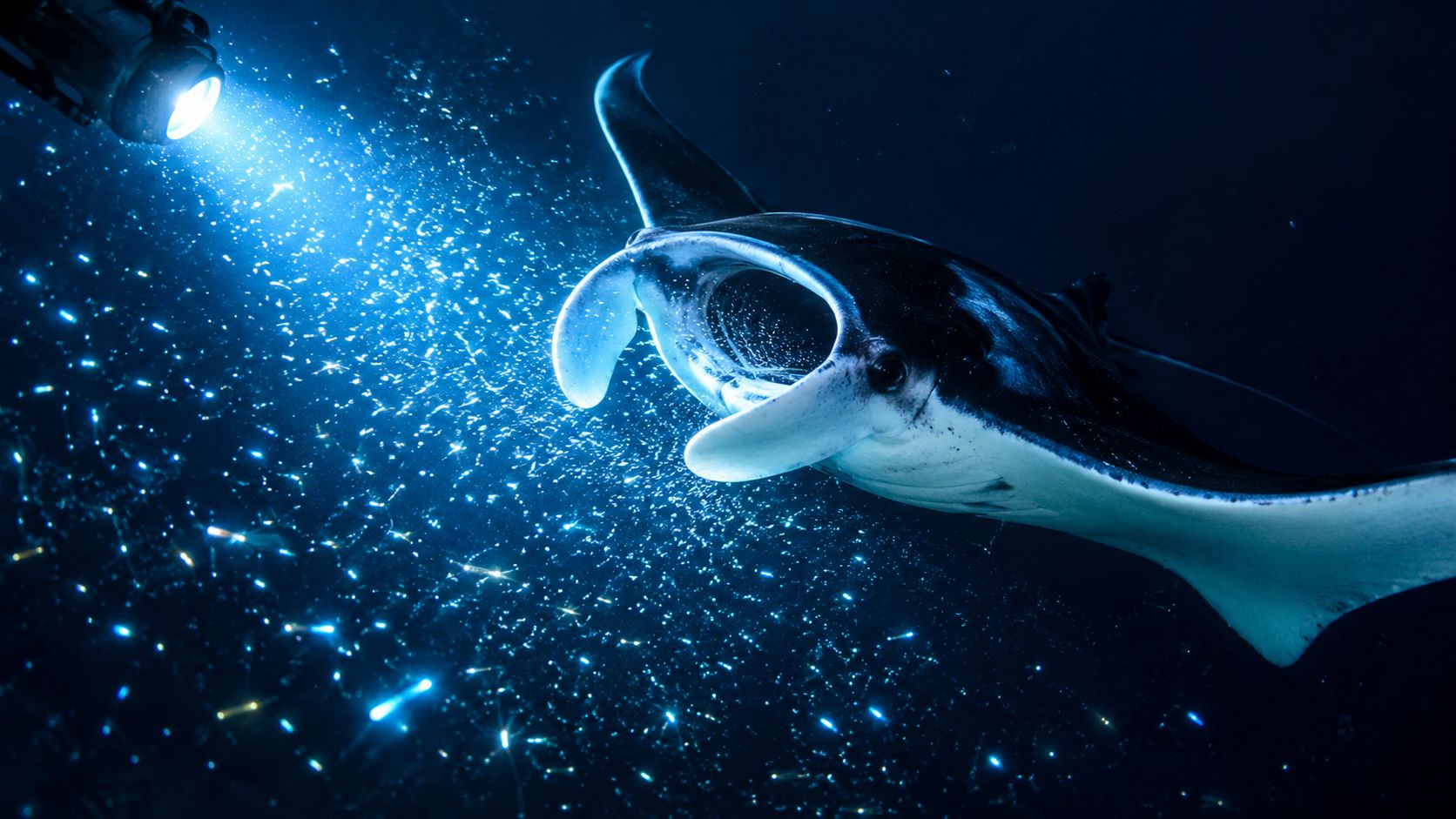
Kona's night snorkel works because light gathers plankton, plankton attracts mantas, and still snorkelers get the view. The lights do not call rays from nowhere. They create a feeding zone in the water, so the scene looks carefully arranged when conditions are right.
The feeding chain in plain language
At night, zooplankton rise through the water column, and manta rays feed on that movement. Their cephalic lobes guide plankton-rich water toward the mouth, then the gill structures filter out the food while water passes through. When everything lines up, the ray glides through the beam in slow, controlled passes.
Your behavior shapes what happens next. A manta that is following a steady feeding path is more likely to keep feeding when snorkelers stay calm, remain at the edge of the lit zone, and avoid sudden shifts in position. The quiet observer usually gets the clearer view.
The board works like a viewing platform, not a launch point. Holding position at the surface gives the guide a stable group, keeps the light pattern consistent, and leaves an open lane below for repeated manta passes. The human role is to stay out of the way.
Keep your body flat, your kicks minimal, and your head down in the water. The less you disturb the light field, the more natural the feeding pattern stays.
For a closer look at the underwater lighting concept, see how Kona manta night encounters are described. Once you understand that chain, the encounter stops feeling mysterious and starts feeling legible.
Kona's Top Manta Snorkel Sites Compared
Kona has two names you'll hear again and again, Manta Village near Keauhou and Manta Heaven at Garden Eel Cove, also called Makako Bay. Both are recurring feeding areas, but they don't behave the same way. If you're choosing between itineraries, the site matters, because the shape of the cove, the viewing angle, and the aggregation pattern all affect what guests see at the two sites.
How the two sites compare
| Feature | Manta Village (Keauhou) | Manta Heaven (Garden Eel Cove) |
|---|---|---|
| Setting | Near Keauhou Bay | Near Kona International Airport, offshore at Garden Eel Cove |
| Viewing feel | Familiar, established, and close to town | More protected, with a clearer viewing layout |
| Research pattern | Strong female site fidelity and female-biased visitation | Larger aggregations in long-term monitoring |
| Practical takeaway | Good option when Keauhou conditions line up | Often the stronger choice for a snorkel-focused viewing area |
The long-term record is useful here. Research covering 2010 to 2022 found more than 23,000 sightings of 167 individual reef manta rays at Garden Eel Cove and Keauhou, and it showed that aggregation size tracked zooplankton density in the study data. It also found Garden Eel Cove consistently supported larger aggregations, while Keauhou showed stronger female site fidelity and a female-biased visitation pattern.
That means the sites are not interchangeable. For snorkelers, Garden Eel Cove often makes more sense because the viewing area feels more protected and the group structure tends to be stronger for a public encounter. Keauhou can still be excellent, but it behaves more like a site-specific wildlife stop than a guaranteed repeat of the same scene every night.
The practical decision is simple. If you want the most reliable snorkel-format viewing geometry, prioritize Garden Eel Cove. If you're comparing operators, ask which site they expect to use that night and what they'll do if ocean conditions push the plan elsewhere.
What a Manta Ray Night Snorkel Tour Feels Like
The first surprise for many first-timers is how quiet the boat feels once it leaves the harbor. The crew gives a briefing, checks your mask and snorkel fit, and shows you where to hold once you are in the water. After that, the ride shifts from casual conversation to a more focused kind of anticipation.
From check-in to the water
A typical tour begins at the dock or harbor with check-in. Then comes the briefing, which should cover entry, flotation, hand placement, and what to do if you feel uneasy. When the boat reaches the site, the crew sets out the lighted board and helps everyone enter in a controlled way.
Snorkelers stay at the surface for the manta experience. Scuba divers on the companion dive descend to about 30 feet and view the rays from below, while snorkelers remain above with the board and lights as described in the snorkel-versus-dive format. No certification is needed for the snorkel format, which is why many non-divers can join without much trouble.
Once you are in the water, the feeling is a mix of nerves and concentration. You float, breathe steadily, and stay near the board while the crew keeps the light field steady. When a manta shows up, it often looks larger and closer than it does in photos, because the dark water makes the white underside and wide shape stand out at once.
A good guide is not asking you to perform. They are asking you to stay calm enough for the ray to keep feeding.
Getting back on the boat is usually as controlled as getting in. Guests climb aboard, peel off masks, and talk through what they just saw, often with the same surprised tone. The sight can feel sudden, but the setup behind it is deliberate, from the lights to the spacing to the way the group is held together around the board.
Staying Safe and Comfortable in Crowded Water
Crowding is the part most brochures skip, yet it shapes comfort, safety, and the whole mood in the water. A survey of 444 manta-viewing participants found 82% felt crowded by other snorkelers, 78% by boats, and 69% by scuba divers, while 79% experienced conflict within their own group in the survey data. The main challenge is not only seeing the manta, it is keeping your body relaxed while other people are trying to see it too.
How to stay useful instead of disruptive
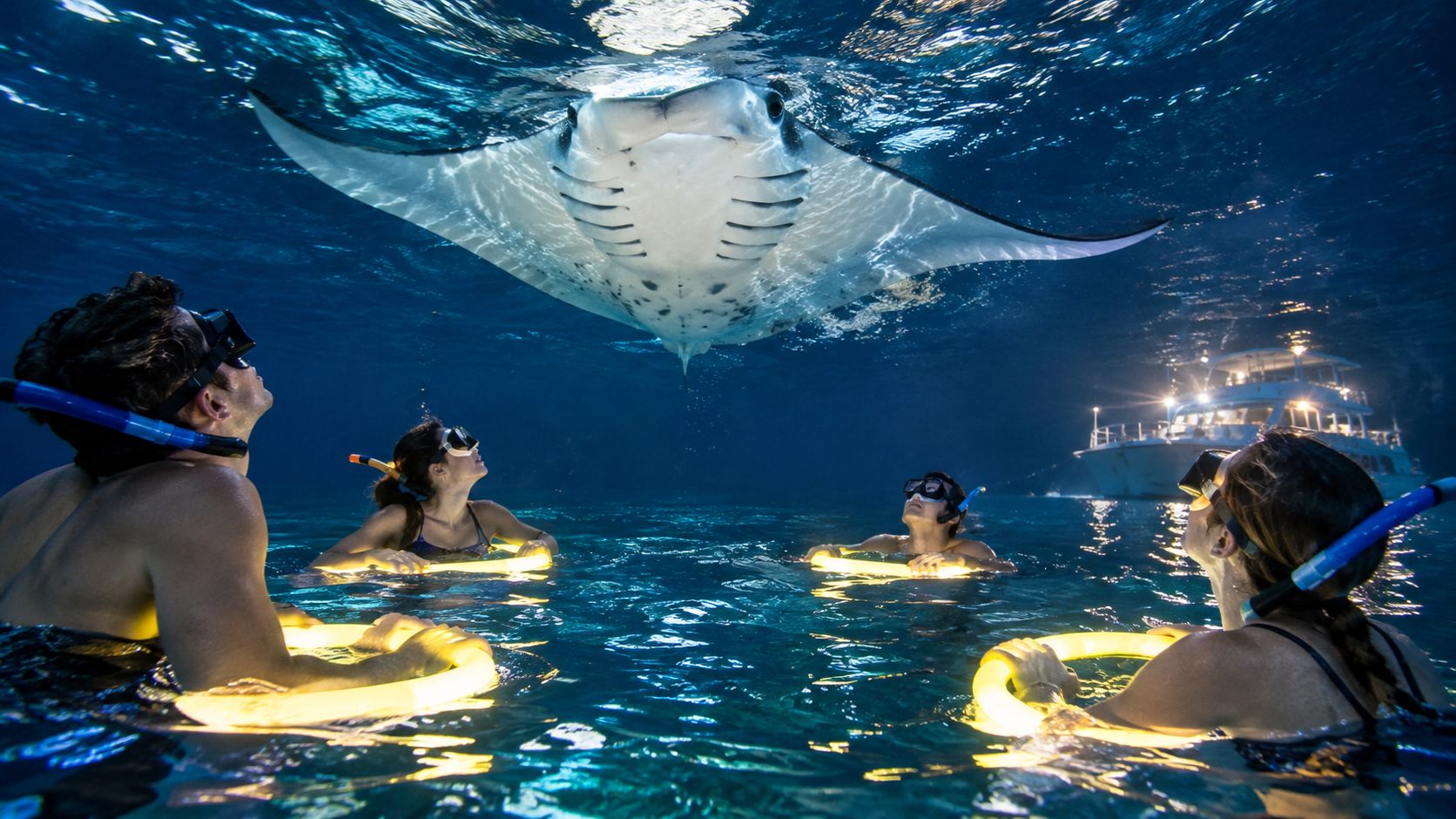
Stay where the crew places you, keep your lights pointed as instructed, and leave a little room around your body so fins, boards, and elbows do not collide. That spacing matters because the light field works best when it stays steady, like a small feeding window in the dark. If a manta swims overhead, hold your position and let the animal pass through the light instead of rising, twisting, or drifting into someone else's space.
Use flotation support if the operator offers it. A stable body position keeps your breathing smoother and your attention on the ray instead of on staying afloat.
If your breathing gets ragged, your legs tire, or the dark water starts to feel disorienting, tell the crew and climb out early rather than forcing yourself to stay in. Those moments are where comfort matters most.
Tour choice changes the crowding experience too. Smaller, better-managed groups usually feel calmer even on a busy night. Responsible viewing is not only about protecting the mantas, it is also how you protect your own experience from turning into a tangle of lights and stress. See this guide to responsible, considerate diver etiquette, and keep the viewing space orderly for everyone.
Gear, Clothing, and Seasickness Preparation
The right gear doesn't make the manta show happen, but it makes the night easier on your body. Start with a swimsuit that fits snugly, since loose fabric shifts around when you're floating. Add a rashguard or light top for the ride, because the boat can feel cooler after sunset, even when the air is warm.
What to bring and what helps most
A short gear list keeps the evening simple:
- Mask and snorkel fit: A well-fitting mask matters more than fancy features, because leaking masks turn a calm night into constant adjustment.
- Flotation support: Use it if offered, especially if you're new to night snorkeling or not fully confident in open water.
- Water shoes: These help on slippery decks and uneven dock surfaces.
- Dry bag: Useful for phones, keys, and anything you don't want splashed.
- Light jacket or hoodie: Handy for the ride home, when wet skin and wind make the boat feel cooler.
If seasickness is part of your world, plan for it before boarding. Some guests prefer a Ship-EEZ seasickness patch, while others use Dramamine pills, Bonine pills, Sea Band wristbands, or ginger chews. The right choice depends on what usually works for you, but the key is to decide early instead of waiting until the boat starts moving.
If you want a deeper look at motion-management basics before you book, this guide on how to avoid sea sickness is worth a look. In practical terms, a calm stomach helps you enjoy the mantas, and a calm guest is easier for the crew to position safely.
Conservation, Ethics, and Respectful Viewing
The manta encounter only works because the animals keep returning to a human-made light field. That makes visitor behavior part of the system, not an afterthought. Both manta species are classified as globally Vulnerable by the International Union for Conservation of Nature, and their slow life history, with lifespans estimated at about 45 years and large wingspans, makes every disturbance more consequential than it might seem at first glance on the IUCN fact sheet.
Respect is part of the viewing method
A good encounter depends on distance, calmness, and predictable movement. That means no touching, no chasing, no blocking the manta's path, and no uncontrolled freediving beneath the animal. It also means keeping lights pointed where the crew asks, because the light field is what concentrates the plankton and holds the feeding area together.
The ethics here are straightforward. If the ray changes direction because of your body position, your fin wash, or your light, you've interfered with the experience you came to see. If you stay passive, the ray can continue feeding naturally, and the encounter often lasts longer and feels better for everyone in the water.
This is why “responsible” isn't a marketing word here. It's the operating condition. A respectful guest isn't being cautious for appearances, they're preserving the exact behavior that makes the snorkel worth taking in the first place.
Booking Your Tour and Common Questions
If you're comparing operators, start with the site, then move to group management. Ask whether the tour expects to use Garden Eel Cove or Keauhou that night, how the crew handles crowding, and what flotation or board setup they use. For most snorkelers, Garden Eel Cove is the site I'd want to hear about first, because the viewing geometry and aggregation pattern tend to support a cleaner experience.
A smart booking also leaves room for variability. Manta presence depends on food conditions, site behavior, and short-term ocean changes, so a light, calm night still isn't a guarantee. Build your Big Island schedule with flexibility, especially if you're traveling early in the trip and want a backup night in case weather or ocean conditions shift plans.
For certified divers who want a deeper version of the same encounter, a manta dive can pair naturally with the snorkel outing, and Kona Honu Divers offers manta-focused dive options alongside other Kona trips. If you're comparing choices, ask about departure time, cancellation policy, minimum age, and what support they give guests who aren't strong swimmers.
Quick questions first-timers usually ask
Can weak swimmers join? Often yes, if they're comfortable floating and can follow instructions, but they should be honest with the crew before booking.
What if the manta doesn't show? Treat it as a wildlife encounter, not a performance. No operator can force a feeding event.
Do cancellations happen? Yes, weather and ocean conditions can change the plan, so a flexible itinerary helps.
Is there a right season? Kona's manta viewing is not tied to one narrow season, but your operator can tell you what local conditions are doing on your dates.
Should I book if I'm nervous in dark water? Only if you're willing to stay passive, use flotation support, and exit early if needed.
If you want a tour that respects the animal, manages the crowd, and gives you the clearest possible first look at Kona's night manta world, start with a Garden Eel Cove departure, ask direct questions before you pay, and choose the operator that explains the experience plainly.
If you're ready to see manta ray night snorkeling with a crew that takes the briefing, the lighting, and the wildlife seriously, visit Kona Honu Divers and compare their manta-focused options with your travel dates. Their approach fits first-timers who want clear instructions and certified divers who want a stronger underwater view of Kona's night life.