
Table of Contents
- What if no manta appears?
- How long is the trip?
- Do I need my own gear?
- Can I combine a scuba and a snorkel trip?
A dark Kona bay can feel quiet until a beam of light catches a cloud of plankton and a manta glides beneath it. If you're choosing a manta ray night snorkel on the Big Island, the useful questions aren't just “Will I see one?” They're where the boat goes, how the group is positioned, and whether you'll be comfortable floating in open water after dark.
The encounter is a wildlife viewing trip, not a show on a schedule. Understanding how the lights, feeding behavior and viewing setup work helps you choose a tour that suits you, and enjoy the night without expecting the animals to perform on demand.
Manta Ray Night Snorkeling at a Glance
Reef manta rays (Mobula alfredi) come to feed on plankton concentrated near the surface by underwater lights. The light attracts prey, not the rays directly, so it's better understood as a feeding opportunity than as bait. NOAA lists manta prey including euphausiids, copepods, mysids, decapod larvae and shrimp. As mantas feed, they unfurl their cephalic fins and open their mouths to funnel water across their gill plates, as described in NOAA's giant manta ray profile.
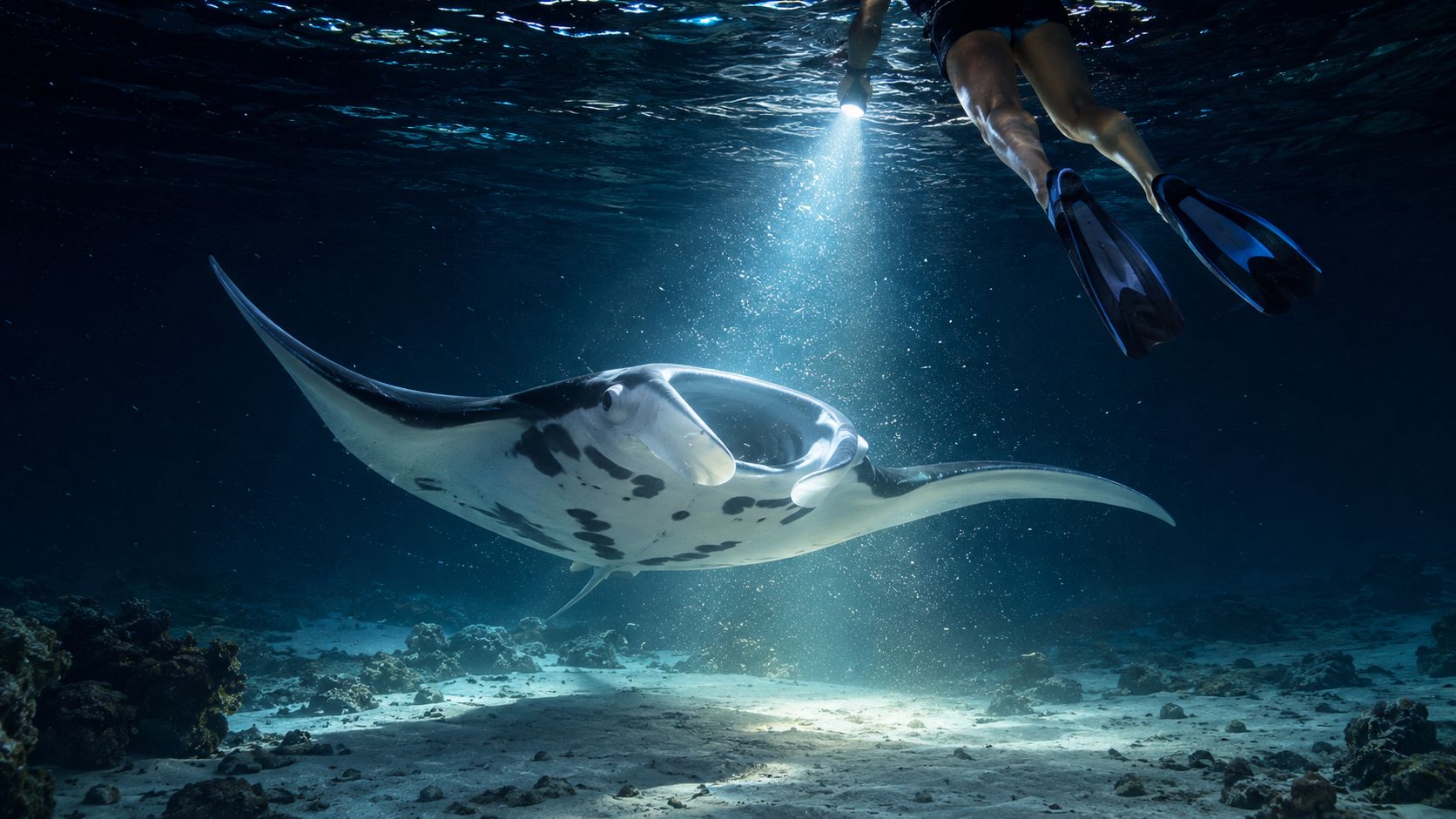
A 13-year study of Garden Eel Cove and Keauhou analyzed more than 23,000 sightings of 167 individual mantas and found that seasonal and annual changes in aggregation size tracked zooplankton density. That's why a quiet start can turn into a busy feeding session, or why a night with good conditions can still bring fewer rays. Plankton, currents and weather shape activity; a timetable doesn't guarantee a sighting.
| Question | Short answer |
|---|---|
| Do I need scuba certification? | No for the surface snorkel. Certified divers can book the night dive. |
| How do I see the manta rays? | From the surface in the light, or from the seafloor on the night dive. |
| How big are the manta rays? | Giant mantas can have wingspans well over 12 feet. |
| How often do guests see them? | Ask the operator for recent sighting reports. |
| When does the trip happen? | After dark, when the lights attract plankton. |
| Is a sighting guaranteed? | No. Plankton density, currents and weather drive activity. |
The surface snorkel suits confident swimmers who can remain calm and follow crew directions in the dark. The night dive is for certified divers who want to view the feeding from below.
Best Times and Locations for Night Viewing
| Site | Viewing setup | Why it matters | Best for |
|---|---|---|---|
| Garden Eel Cove | Protected cove with a dedicated viewing area | More sheltered water and larger manta aggregations than Keauhou | First-timers, families and photographers |
| Keauhou | Second main nighttime feeding site | Smaller aggregations; females show high site fidelity | Guests who want a comparison or a repeat visit |
Garden Eel Cove is the site I'd request first. Its protected location and dedicated viewing area make it a strong choice for a stationary observation experience, with generally calmer water and a healthier reef. A 13-year analysis of more than 23,000 sightings of 167 identified mantas found that Garden Eel Cove consistently supported larger aggregations than Keauhou. The same University of Hawaiʻi thesis summary describes differences in site use: females showed high site fidelity at Keauhou, while males were more mobile between locations.
Crowding is a real trade-off, not just a comfort issue. In a survey of 444 manta-viewing participants, 82% felt crowded by snorkelers, 78% by boats and 69% by scuba divers, according to testimony submitted to Hawaiʻi County. Manta Ray Advocates has reported that busy nights at each of the two main viewing sites could bring 400 to 500 people at once in its overview of manta tourism.
More boats don't automatically mean worse viewing. Coordinated lighting and positioning can keep people and rays in one viewing area; scattered groups can disperse both and make it easier to miss the encounter. But concentrated viewing can still feel crowded, and the testimony describes potential manta impacts including stress, injury, disease, altered feeding behavior and habituation.
Ask the operator how many guests share the light, where boats position themselves, and how guides keep the group together. Ask, too, whether the crew explains its low-impact protocol before anyone enters the water. For a closer look at the locations, see this guide to where to see manta rays in Hawaiʻi.
A Sample Night From Check-In to Dry Towel
The exact order can vary by trip, but expect an evening built around a boat ride, a briefing, time in the water and a return after dark. Most of the experience takes place on the water, so patience matters if the first minutes at the viewing site feel quiet.
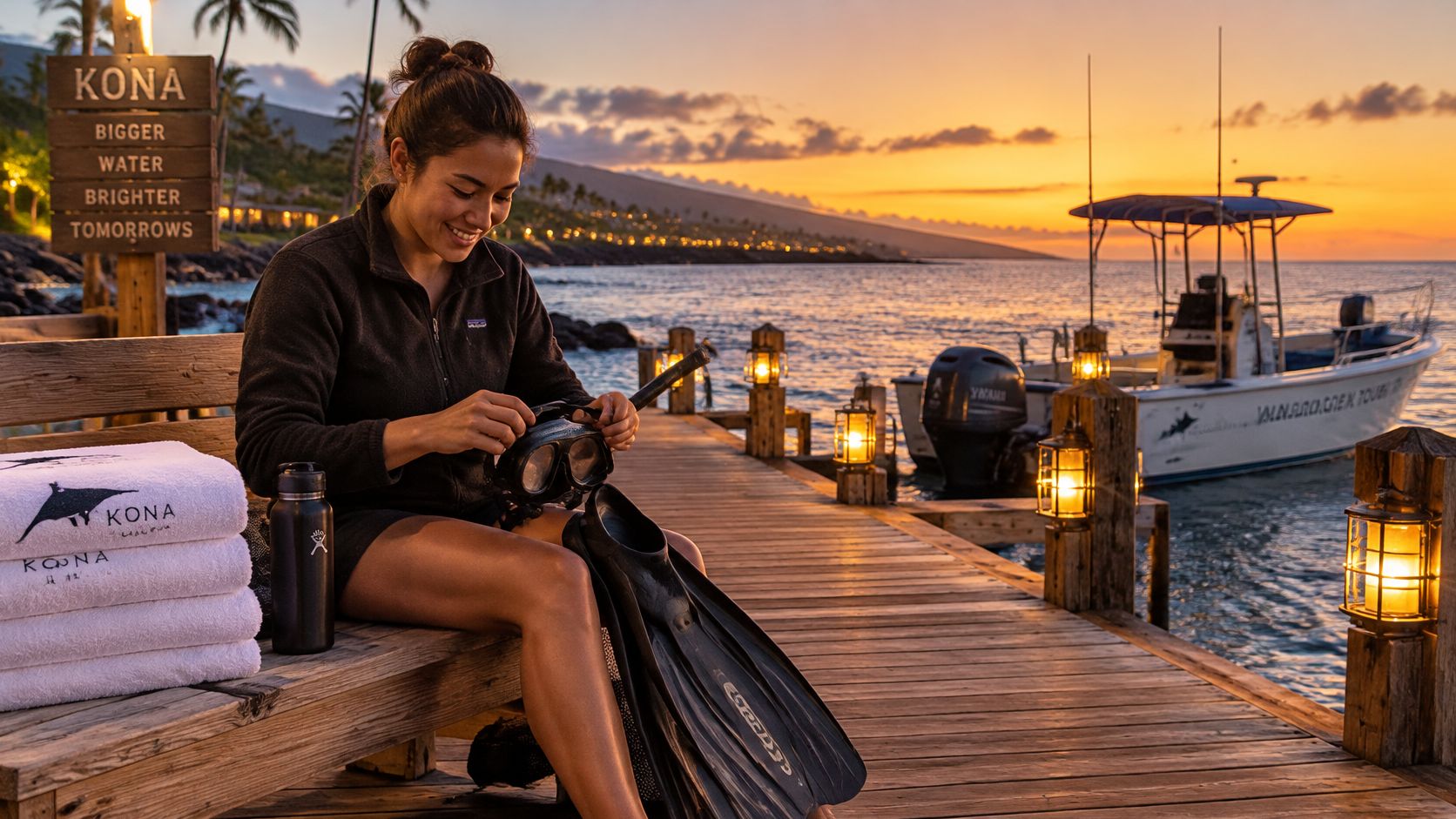
Check in and get fitted. Arrive before dusk, get your mask and fins sorted, and change into a warm layer for the ride. The air can feel cooler once you're wet, so keep a dry towel and clothing ready for the return.
Listen to the crew briefing. As the sky dims, the crew explains the science behind the dive and the golden rules of passive observation. On a manta night dive, that briefing covers how to observe without interfering; the crew also positions divers in a designated viewing area.
Enter and settle in. At the lit site, divers settle on sand, rubble or boulders. Snorkelers hold the lighted board at the surface, where its steady glow gives the group a clear place to gather.
Wait for the feeding activity. The lights bring plankton into the viewing area. Experienced divemasters and instructors are in the water with divers to manage the group; snorkelers should stay with the board and follow the crew's signals.
Watch without chasing. A manta may glide through the beam, circle and return, or take time to appear. The water can look almost black beyond the lit patch, but that's no reason to swim after a ray. Hold position and let it choose its route.
Exit in an orderly way. When the crew signals the end of the water portion, use the ladder carefully and wait for the headcount. Nighttime makes it harder to see where others are, so don't hurry past people boarding.
Warm up and debrief. Back on deck, a warm drink and a short recap give you time to dry off and let the evening settle in. The trip usually takes a few hours overall, with much of that time spent on the boat and at the site.
Surface Rules That Protect You and the Mantas
Stay still at the surface and let the rays come to you. This is the most useful rule for both safety and viewing. Mantas need room to feed, and a calm group makes it easier for them to continue moving naturally through the light.
Stay horizontal. Don't dive toward a ray or chase it. Sudden movement can startle an animal and put you in its path.
Keep clear of the feeding route. Never touch, grab or block a manta. The animal funnels plankton-rich water across its gill plates, so leave open water above and around the group.
Secure your equipment. Tuck in straps and keep fins and cameras close to your body. Loose gear can snag or drift into a ray's route.
Skip the flash. A flash can startle wildlife and spoil other guests' night vision. Use available light or a camera setting designed for low light, and keep the camera out of the feeding path.
Stay near the flag. Hawaiʻi's boating guidance says snorkelers and divers must not surface more than 100 feet from their diver-down flag in ocean waters. At night, limited visibility and boat traffic make it especially important to remain within the marked area, as explained in the state's snorkeling and diving guidance.
Follow the crew's signals. Stay near the lighted board and respond promptly when the crew asks the group to shift or exit. The board is a practical boundary, not a launching point for swimming around the site.
Divers should protect the reef. Settle on sand, rubble or boulders, never on live coral. Keep the viewing area clear so the group and the animals can move without contact.
For more on low-impact conduct, read this guide to responsible and considerate diver etiquette. Calm, compact positioning protects the mantas' feeding route and often gives you a better view than trying to get closer.
Readiness Checklist for Night Snorkelers
No scuba certification is required for the surface snorkel, but no certification doesn't mean no physical requirements. You'll need to be comfortable in open water after dark, stay with a flotation board, and board the boat without being lifted. The night dive and the 2-Tank Morning Dive are open to certified divers.
| Requirement | What it means in practice | Red flag |
|---|---|---|
| Water comfort | Floating calmly for long stretches in dark water | Panic when the lights dim or the water feels deep |
| Swimming | Staying afloat with a flotation aid and no help | Cannot stay up without assistance |
| Boat boarding | Climbing the ladder without lifting help | Cannot climb or needs to be lifted |
| Following instructions | Responding to crew signals in darkness | Struggles to follow directions |
| Cold and motion | Tolerating cool water and a moving boat | Chills or seasickness that cannot be managed |
| Health or mobility | Disclosing conditions to the operator before departure | Undisclosed conditions discovered on the boat |
Families should ask about minimum age, child flotation and boarding assistance before booking. A child who's comfortable in a pool may still find dark, open water unfamiliar, so discuss their confidence and swimming ability with the operator rather than relying on age alone.
If you have limited mobility, a medical condition or anxiety about open water, disclose it before departure. That gives the crew a chance to discuss entry and exit, the boat ladder and whether the conditions are a sensible fit. For questions about the animals themselves, see this guide to whether manta rays can sting you.
Decision rule: If two or more red flags apply, choose a calmer option or a daytime snorkel instead of trying to push through the night trip.
Gear Checklist and Seasickness Prep
Pack for the ride home as carefully as you pack for the water. Confirm in advance which items the operator supplies, especially the mask, fins, flotation and thermal gear.
- Rash guard or wetsuit: Wear a layer that helps you stay comfortable in cool water.
- Reef-safe sunscreen: Apply it before boarding, not while you're preparing to enter the water.
- Mask, snorkel and fins: Bring your own only if the operator doesn't provide them.
- Warm layer and dry towel: Keep both accessible for the boat ride back.
- Waterproof bag: Protect your phone and ID from spray.
- Booking confirmation: Keep it handy for check-in.
Motion sickness can make it hard to focus on the encounter. If you're prone to it, plan ahead rather than waiting until you're already on the boat. Follow the product label or a pharmacist's advice, and test a remedy at home first so you know how you respond. This guide to how to avoid seasickness offers additional preparation tips.
Options include a Ship-EEZ Seasickness Patch, Dramamine pills, Bonine pills, Sea Band wristbands, described as a cheaper generic brand with better ratings, and ginger chews. These aren't interchangeable for everyone; check product directions and suitability before use. If you have a health condition or take medication, ask a doctor or pharmacist before trying a seasickness remedy.
Frequently Asked Questions About Manta Night Snorkels
What if no manta appears?
A sighting isn't guaranteed, and a slow start at the site is normal. Ask the operator for recent sighting reports before booking so you can set expectations, but remember that wild animals don't follow a schedule.
How long is the trip?
Plan for a few hours, mostly on the water, with departure before dusk and the return after dark. The crew wraps up with a brief deck debrief before you leave.
Do I need my own gear?
Bring a warm layer, towel and rash guard or wetsuit, and confirm what's included when you book. The operator may supply a flotation board, mask and fins; check the readiness checklist above if you're unsure about the physical demands.
Can I combine a scuba and a snorkel trip?
Yes. The 2-Tank Manta Dive & Snorkel pairs two sessions in one booking, so check which formats are running and in what order. You can also browse all Kona Honu Divers scuba options before choosing.
Pricing and How to Book Your Manta Night
There isn't one price for every manta night trip. The cost depends on the format, certification requirements, equipment and group setup, so check the current rate on the booking page and compare what's included rather than choosing on price alone.
| Option or factor | What changes | What to ask |
|---|---|---|
| Surface snorkel, no certification | Lower skill and gear requirement | Is a wetsuit, mask and fins included? |
| Night manta dive, certified divers | Dive gear, certification check and divemaster supervision | Is the dive included, and what gear is required? |
| 2-Tank Manta Dive & Snorkel | Two sessions in one booking | Which sessions run, and in what order? |
| Small group versus larger group | Per-person cost and closeness of supervision | How many guests per guide? |
| Gear rental | Added cost for equipment you don't own | What's the rental price, and are sizes available? |
Choose a format. Pick the surface snorkel, the night dive or the 2-Tank Manta Dive & Snorkel, which pairs two sessions.
Check your readiness. Be honest about swimming, open-water comfort, cold tolerance and ladder access. If something may affect your entry or exit, discuss it before you reserve.
Choose a suitable weather window. Ask about recent sighting reports and whether the forecast looks appropriate for the trip. A report can set expectations, but it can't promise what the mantas will do that night.
Confirm the details. Book early, check the departure time and viewing site, and ask how many guests share the light. Kona Honu Divers' Manta Ray Night Dive is a stationary, closely supervised signature tour, and a 2-tank manta charter is also available.
For certified divers, use the centered booking button to check availability:
For the surface snorkel, check the snorkel booking option:
Kona Honu Divers offers a surface manta snorkel and a closely supervised night dive at Garden Eel Cove, along with a 2-tank manta charter. Compare the options, choose the format that fits your comfort in the water, and visit Kona Honu Divers to plan your Kona night.