
The Kona manta ray night dive is, without a doubt, one of the most incredible underwater experiences you can have anywhere on the planet. It's legendary for a reason—you get to witness the silent, graceful ballet of giant manta rays feeding on plankton, drawn to powerful underwater lights. They swoop and barrel roll just inches away from you, creating a spectacle that's hard to put into words. It’s no wonder this manta ray dive tour is consistently at the top of every Big Island bucket list.
Your Essential Guide to the Manta Ray Night Dive
So, you’re thinking about diving with giants? You've come to the right place. Let's break down what makes this adventure so unique and why Kona is the world's best spot for it.
The secret ingredient is Kona's underwater landscape. The volcanic topography has created the perfect environment for plankton to thrive, and that consistent, all-you-can-eat buffet has attracted a huge, year-round population of reef manta rays. They don't just pass through; they live here.
That's what sets Kona apart. In many other world-class destinations, seeing a manta is a matter of luck and timing. Here, it’s a nightly event. This reliable feeding frenzy allows local operators to offer an experience with an incredible success rate, often topping 90%. You aren’t just hoping to glimpse a manta from a distance; you're literally sitting ringside at their dinner table.
What Makes This Dive So Special?
Forget everything you know about a typical dive. This isn't about swimming around and searching for marine life. Instead, you become part of the environment, a quiet observer right in the middle of the action.
The concept is beautifully simple:
- Setting the Stage: Powerful lights are placed on the seafloor (for divers) or on floating rafts (for snorkelers).
- The Dinner Bell Rings: These lights act like a massive bug zapper for the ocean, attracting dense clouds of plankton—the mantas' favorite food.
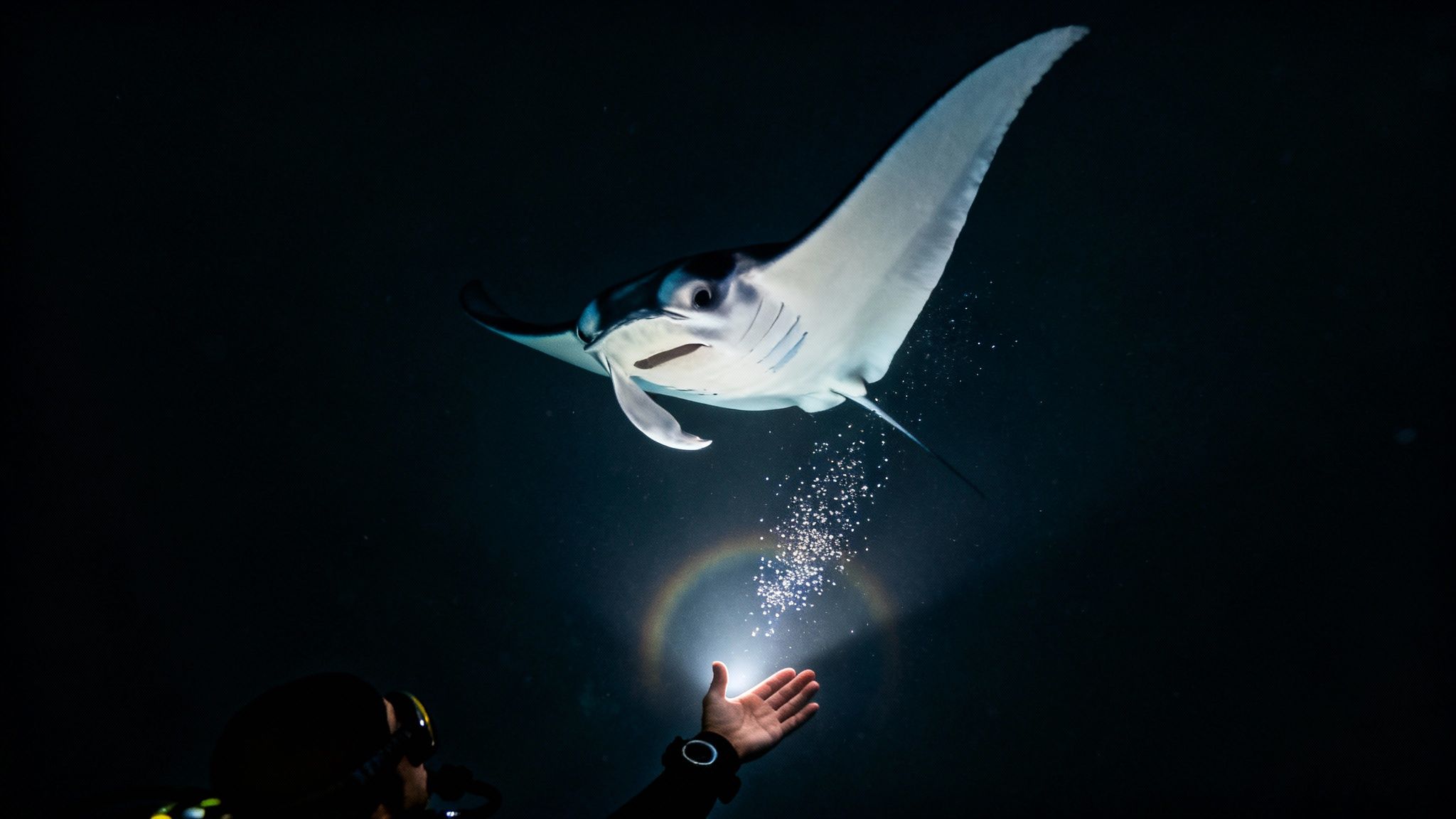
- The Main Event: The mantas arrive. With wingspans that can stretch over 12 feet, they glide in from the darkness to feast, performing mesmerizing somersaults and barrel rolls as they filter the water for food.
This guide will walk you through everything you need to know, from the logistics of the trip to what it actually feels like to be in the water surrounded by these gentle giants. By the end, you'll be more than ready for this incredible journey.
The magic of the Kona Manta Ray Night Dive is how personal it feels. You're not just watching nature on a screen; you are in it, holding your breath as these massive, graceful creatures dance in the light. It’s both a blockbuster spectacle and a deeply intimate encounter.
To get you started, here is a quick summary of the essential details for planning your manta ray night dive adventure in Kona.
Kona Manta Ray Night Dive at a Glance
| Aspect | Details |
|---|---|
| Best Time to Go | Year-round, thanks to Kona's resident manta population. |
| Experience Level | Open to certified divers and non-swimming snorkelers. |
| Primary Dive Sites | Garden Eel Cove ("Manta Heaven") – The superior choice. |
| Typical Duration | 2-3 hours, including boat travel and about 45 minutes in the water. |
| What You'll See | Reef Manta Rays performing mesmerizing feeding acrobatics. |
Now that you have the basics, we'll dive deeper into each of these topics, giving you the insider tips you need to have a safe, respectful, and absolutely unforgettable experience.
Why Garden Eel Cove Is the Premier Manta Dive Location

When you’re planning a manta ray night dive in Kona, you quickly learn that not all dive sites are created equal. While you can find mantas at a few spots, there's one location that consistently delivers the most reliable and jaw-dropping show on the Big Island: Garden Eel Cove, or as we affectionately call it, "Manta Heaven." It is the superior choice for your dive tour.
What makes it so special? It really comes down to geography. Garden Eel Cove is a naturally protected bay, perfectly shielded from the big ocean swells that can roll in and disrupt other sites. This natural shelter is why we at Kona Honu Divers almost always head here—it means calmer, safer, and far more comfortable conditions for everyone.
Fewer canceled trips and a more relaxed experience in the water are the direct result. Instead of fighting surge, you can just settle in and focus completely on the incredible spectacle about to unfold in front of you.
An Underwater Amphitheater for the Mantas
The real secret to Garden Eel Cove's magic is its superior underwater layout. The site features a huge, sandy patch completely surrounded by gorgeous coral reefs, which creates a perfect natural amphitheater. We call this setup the "campfire." Divers gather on the sandy bottom, get comfortable, and shine their lights up into the water column.
From this amazing vantage point, you look up as the manta rays put on their mesmerizing ballet, swooping and barrel-rolling right over your head to feast on the plankton drawn to the lights. It’s an absolutely surreal experience.
This campfire setup is more than just a convenient viewing spot; it's a responsible, non-intrusive way to watch the mantas. By staying in one designated area, we minimize our impact on the reef and the mantas' natural feeding behavior. This leads to a much more authentic and respectful encounter.
This immersive and better viewing arrangement gives Garden Eel Cove a huge edge over other locations where the viewing areas might be less defined or comfortable. You can get the full story on what makes this spot legendary in our deep dive on Manta Ray Heaven at Garden Eel Cove.
More Than Just Mantas
Another thing we love about Garden Eel Cove is the fantastic quality of its surrounding reefs, which are much better than at other locations. Our two-tank manta dive tour always includes a twilight dive before the main event, and this location makes that first dive a true adventure.
The reefs here are just buzzing with life. You'll see the garden eels that give the cove its name, plus octopuses, bizarre-looking frogfish, and a whole kaleidoscope of colorful reef fish. This vibrant ecosystem turns the entire trip into a comprehensive marine life experience—not just a single-species show.
Simply put, Garden Eel Cove delivers on every front:
- Protection: The bay is naturally shielded from ocean swells, which means consistently calm water.
- Viewing: A perfect sandy "campfire" gives you an intimate, front-row seat.
- Biodiversity: The thriving, superior reefs make for an incredible twilight dive before the mantas even show up.
This winning combination is what solidifies its reputation as the absolute best place for an unforgettable manta ray night dive. We know it, and that’s why we’re committed to taking you there for this once-in-a-lifetime experience.
What to Expect During This Underwater Ballet
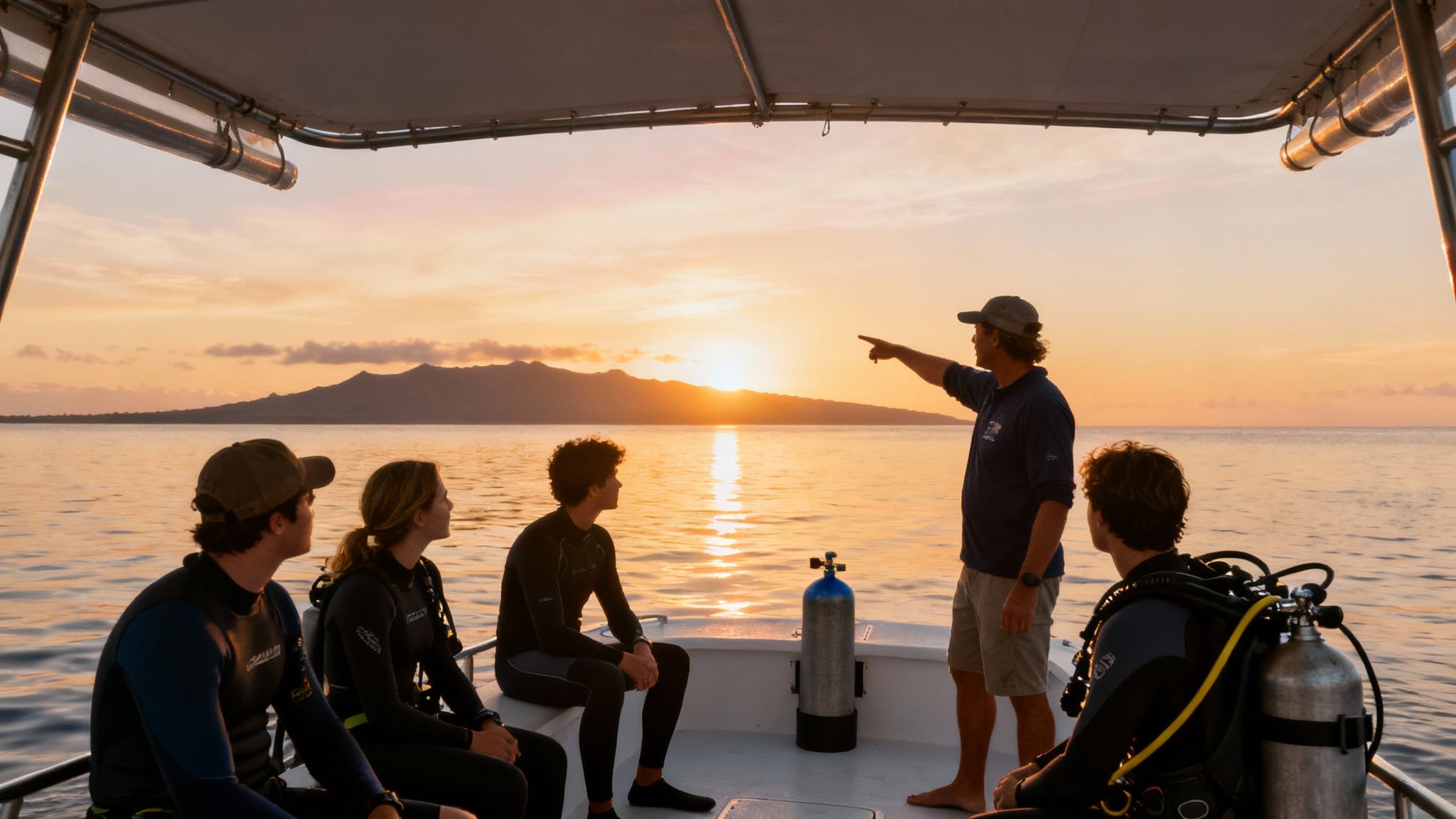
The magic of a manta ray night dive in Kona starts well before you even touch the water. Your trip kicks off in the late afternoon, with a boat ride out from the harbor just as the Hawaiian sun begins its spectacular descent, setting the sky ablaze in fiery shades of orange and gold. This isn't just a commute to the dive site; it's the perfect, scenic prelude to the main event.
While you're soaking in that incredible Kona sunset, the crew will walk you through a detailed briefing. They’ll go over the plan for the evening, cover all the safety points, and share some amazing facts about the gentle giants you're about to meet. Forget a stuffy lecture—this is passionate storytelling that builds real anticipation and a deep respect for the animals.
The Descent into Twilight
Once the last sliver of sun dips below the horizon, it's time to gear up and slip into the warm, twilight ocean. The descent itself is a surreal, calming experience. You'll head down to a specific spot on the sandy bottom, usually around 30-40 feet deep, where the crew has set up a powerful, centralized light source.
Think of this light as a dinner bell for the entire ecosystem. It attracts massive clouds of microscopic plankton, which just so happens to be the mantas' favorite food. As you and the other divers find your spots and aim your own lights upward, you become part of the beacon, creating an irresistible plankton buffet in the water column above.
The manta ray night dive in Kailua-Kona has rightfully earned its spot as one of the world's top wildlife encounters, attracting about 80,000 visitors annually. The odds of seeing mantas are incredibly high, with a consistent 80% to 90% success rate, cementing Kona’s reputation as the most reliable place on the planet for this experience. While sites like Manta Village typically host around four mantas, a premier spot like Garden Eel Cove can draw a much larger crowd—divers have reported seeing as many as 11 mantas in one go. You can find more details on the Kona manta ray night dive here to understand what makes it such a global phenomenon.
The Performance Begins
And then it happens. A huge, dark shape emerges from the blackness, gliding effortlessly into the illuminated water. The sheer size of them will take your breath away—some of these mantas have wingspans stretching over 12 feet. Soon, that first shadow is joined by another, and then another, until you are completely surrounded by these silent, graceful giants.
What follows is nothing short of an underwater ballet. The mantas perform hypnotic barrel rolls and somersaults, sometimes just inches above your head. This isn't just a playful dance; it's their highly efficient way of gulping down as much plankton as possible. It's a powerful and profoundly personal experience, watching these "ballerinas of the sea" feast in the spotlight you're helping to create. All the while, your guides are right there, ensuring the encounter is safe and respectful for everyone—divers and mantas alike.
Choosing the Best Manta Ray Tour Operator
When it comes to the manta ray night dive in Kona, picking the right company is easily the most important choice you'll make. It’s the kind of decision that separates a good dive from a truly unforgettable, life-changing experience. Your tour operator shapes everything—your safety, your comfort, and the quality of your time with these incredible animals.
Here at Kona Honu Divers, we’ve built our entire manta ray experience around a simple idea: deliver a premium, safe, and deeply personal adventure. The biggest difference you'll notice is our absolute commitment to small group sizes. We refuse to pack people onto a boat like sardines. This approach completely avoids that chaotic "cattle boat" feeling you might find elsewhere, guaranteeing every single diver gets a front-row seat to the show without constantly bumping into other people’s fins.
Why Small Groups and Expert Guides Make All the Difference
A smaller, more intimate group setting does more than just give you extra elbow room. It allows you to form a real connection, not just with the mantas, but with your guides. Our crew aren't just dive leaders; they are passionate ocean advocates who live and breathe this stuff. During the pre-dive briefing, they’ll share fascinating details about manta biology and behavior, turning what could be just a cool dive into a rich, educational experience.
This dedication to a higher standard touches every part of our operation.
- Top-Tier Boats: Our custom-built dive boats are designed specifically for the Kona coast, so you'll be comfortable and safe on the ride out and back.
- Meticulous Gear: We take equipment seriously. All our rental gear is carefully maintained because your safety and comfort underwater are non-negotiable.
- Prime Location Focus: We almost always head to Garden Eel Cove. Why? It consistently offers the best conditions and a superior viewing area, giving you the best possible shot at a spectacular encounter.
Ultimately, choosing an operator comes down to trust and quality. You want a team that puts your experience first. To see how different outfits compare, check out this in-depth guide to the top 10 Kona diving companies ranked.
"The difference with Kona Honu Divers is palpable. The small group meant we never felt rushed or crowded. The guides' passion was infectious, and it made the entire experience more meaningful. We weren't just tourists; we were welcomed guests."
This is the kind of feedback we live for, and it's why we consistently earn stellar reviews.
If you're looking for a truly exceptional manta ray night dive tour, the choice is clear. Don't settle for a crowded boat and a rushed experience. Dive with the experts who care as much about your memories as they do about the mantas.
How to Prepare for Your Manta Ray Adventure

A little prep work can make the difference between a good manta ray night dive in Kona and an unforgettable one. Running through a quick mental checklist before you go ensures you're comfortable, safe, and ready to soak in every moment of the underwater ballet.
First things first, let's talk about what to bring along. Comfort is everything, especially when you climb out of the ocean after sunset. You’ll definitely want a towel and something warm to throw on—like a hoodie or a jacket—for the boat ride back to shore. While we provide all the high-quality dive or snorkel gear you'll need, you're always welcome to bring personal items like your own mask or wetsuit if they fit you just right. For a full rundown, take a look at our guide on the gear you will need for your Kona diving adventure.
Manta Etiquette and Photography Tips
Packing your bag is the easy part. The most important thing to prepare for is understanding and respecting "manta etiquette." Our guides will cover this in detail during the pre-dive briefing, but the number one rule is passive interaction.
You must never, ever touch a manta ray. Their skin is covered in a delicate, protective mucus coating. Touching them can strip this layer away, leaving them vulnerable to nasty infections. Your job is to be a quiet, respectful observer in their world.
To keep both you and the mantas safe, everyone stays in their designated spot on the seafloor. This simple rule gives the rays the space they need to swoop, glide, and feed without feeling threatened.
Trying to photograph these graceful giants? It’s a challenge, but so rewarding. Here are a few quick tips to get you started:
- Go wide. A wide-angle lens is your best friend for capturing that massive, awe-inspiring wingspan.
- Embrace the dark. You’ll need to bump up your camera’s ISO (think 800-1600) to get enough light.
- Light it right. Position your strobes or video lights far out to the sides to minimize backscatter—those pesky white specks that can ruin a great shot.
This incredible experience is open to all certified divers, and snorkelers don't need any prior experience to join in the fun. Of course, brushing up on some general scuba diving information is always a good idea for anyone looking to spend more time exploring the underwater world.
The Kona manta population isn't just a random group of animals; it's a well-known and closely-studied community. Thanks to incredible conservation work, researchers have identified and named over 300 individual rays, each one recognizable by the unique spot patterns on its belly. This project has logged more than 10,000 sightings, providing crucial data that helps protect these magnificent creatures for generations to come.
Exploring More World-Class Kona Diving
The manta ray night dive is an absolute must-do, a world-famous spectacle you won't forget. But it's really just the opening act for everything the Big Island’s underwater world has to offer. For certified divers hungry for more, Kona is a playground packed with unique and thrilling experiences.
Once you’ve seen the manta ballet, it's hard not to wonder, "What's next?" Luckily, the adventure doesn't have to end there. Kona is a top-tier destination for a whole range of scuba diving tours, each one showing off a different side of its incredible volcanic seascape.
The Thrill of the Kona Blackwater Dive
Picture this: you're floating miles offshore in the pitch-black ocean, suspended over thousands of feet of water. That's the Kona Blackwater Dive, and it’s a mind-bending experience for advanced divers.
You'll come face-to-face with creatures that seem like they're from another planet—translucent squid, glowing jellies, and bizarre larval fish—as they journey up from the deep under the cover of night. It feels less like scuba diving and more like a spacewalk. Ready to see what emerges from the abyss? Find out more about this unique Blackwater Dive tour.
Advanced Dives and Lava Tubes
If you're looking to challenge yourself and explore Kona's rugged underwater terrain, an advanced dive charter is your ticket. These trips head out to more remote sites that feature dramatic lava tubes, intricate swim-throughs, and deep reefs that many divers never get to see. You'll get to navigate ancient volcanic formations and meet the marine life that calls these deeper, more complex environments home.
The Kona coast has a fascinating history, with organized night dives growing in popularity since the early 1990s and boasting consistently high success rates. You can learn more about the history of this amazing dive on the Big Island. Beyond the manta experience, those curious about the wider world of specialty recreation and marine activities will find that Kona offers truly endless opportunities for adventure.
Your Manta Dive Questions, Answered
Thinking about joining us for a manta ray night dive in Kona? It's natural to have a few questions before you take the plunge. We get these all the time, so let's clear up some of the most common ones.
Is This Manta Ray Dive Actually Safe?
Yes, 100%. This is probably the number one question we hear, and the answer is simple. Manta rays are incredibly gentle. They're often called "gentle giants" for a reason—they have no teeth, no stingers, and no barbs. They are purely filter feeders, which means their only interest is in the tiny plankton we attract with our lights, not the people watching them.
Beyond the mantas themselves, every part of the tour is built around safety. Our crew gives a detailed briefing before anyone gets in the water, and our expert guides are with you the entire time. We choose dive sites like Garden Eel Cove specifically because it is the superior choice—sheltered and calm, making for a smooth and secure experience for everyone.
What If I'm Not a Certified Diver?
No certification? No worries at all. The experience is just as incredible for snorkelers.
We have custom-made light boards that float on the surface. You'll hold onto the board, which shines a light down into the water to attract the plankton. The mantas then come right up to the surface to feed, giving you an amazing bird's-eye view of their graceful underwater ballet. You'll see them barrel roll and glide just a few feet beneath you—it's an unforgettable perspective.
When Is The Best Time of Year To Go?
This is the best part: any time is a great time. Unlike a lot of marine life encounters around the world that are seasonal, the manta rays on the Kona coast live here all year.
Our local ecosystem provides a consistent food supply for them, so they don't migrate. That means your chance of seeing them is incredibly high whether you book a trip in January or July.
Will I Get Cold in the Water?
Kona's water is pretty warm, usually hovering in the high 70s Fahrenheit (around 25-26°C). That said, you'll be in the water for about 45 minutes after the sun goes down, so a chill can definitely set in.
We provide everyone with a good-quality wetsuit to keep you comfortable during the dive. The thing people often forget is the boat ride back! That's when you'll feel the coldest. We always tell our guests to bring a towel and something warm—like a hoodie or jacket—to throw on as soon as you're back on the boat.
This is truly one of nature's most magnificent shows, and it's waiting for you.
Here at Kona Honu Divers, our passion is sharing this world-class experience safely and memorably. When you're ready for an adventure you'll be talking about for years, book your manta ray dive tour with us.