
Picture this: you're sinking into the warm, dark waters of the Pacific Ocean. Your dive light cuts through the black, and suddenly, you see it—the silent, graceful ballet of giant manta rays. This isn't something you watch on a nature documentary; this is the Kona Manta Ray Night Dive, and it’s one of the most incredible wildlife encounters on the planet.
The whole concept is beautifully simple. Dive operators shine powerful lights into the water, which act like a magnet for plankton. Before you know it, the mantas arrive for an acrobatic feast right in front of your eyes.
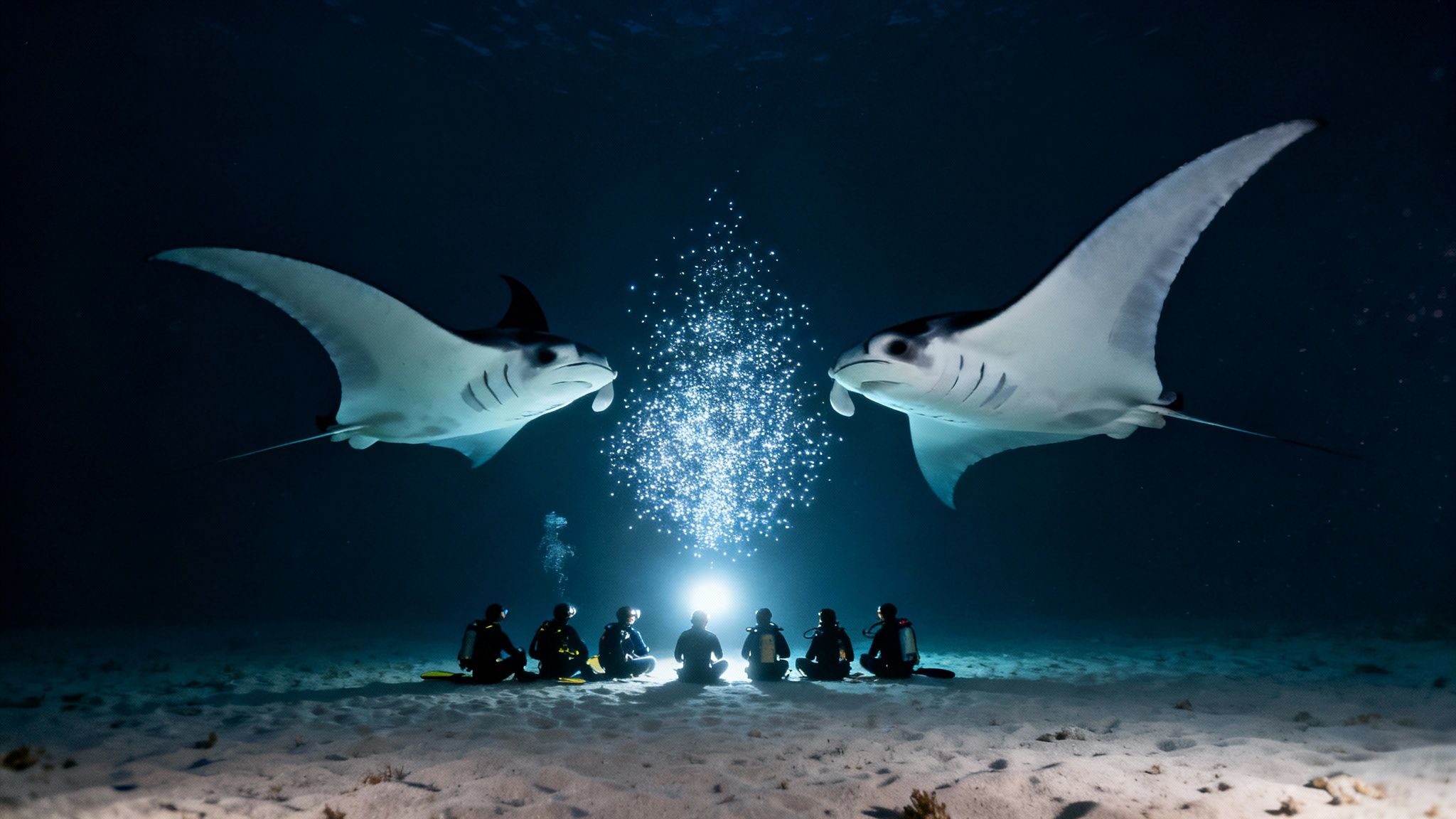
This guide is your complete blueprint for an adventure that has become legendary on Hawaii's Big Island. We’ll get into why Kona is the world’s best spot for manta encounters, how to pick the right tour, and exactly what to expect from the moment you step on the boat.
The magic of the manta ray night dive in Kona really comes down to a special, passive interaction. As a diver or snorkeler, you’re just part of the audience in a spectacular underwater theater. Your guide sets up the lights, creating a glowing column of plankton—the mantas' favorite meal. Then, the stars of the show appear. These gentle giants, with wingspans that can stretch over 12 feet, glide in from the darkness to feed.
Why This Dive Belongs on Your Bucket List
The Kona coast just happens to have the perfect setup for this nightly show. The unique volcanic underwater landscape forms sheltered bays where plankton gathers, attracting a local population of over 300 identified manta rays.
This is what makes Kona so unique. The reliability is off the charts, with sighting success rates consistently hitting above 90% year-round. It’s easily one of the most dependable big-animal encounters you can find anywhere.
But it’s more than just seeing them. You're watching an immersive performance. The mantas do barrel rolls and swoop gracefully through the water, sometimes coming within inches of you as they filter-feed. It's a peaceful, awe-inspiring, and deeply moving experience.
"Diving with mantas is one of the most satisfying things a person can do in the water. It’s impossible to describe the feeling of watching a massive fish the shape of a stealth bomber coming into vision."
The Unbeatable Experience at Garden Eel Cove
While you can see mantas at a few different sites, this guide is going to focus on why Garden Eel Cove (often called Manta Heaven) offers a consistently superior and more magical experience. Its protected location, better viewing setup, and healthier reefs make it the absolute best choice for your adventure.
When you book this incredible manta ray dive tour with a reputable operator, you aren't just signing up for an excursion. You're becoming part of a carefully managed ecotourism success story. Get ready for one of nature’s greatest performances.
Why Garden Eel Cove Is The Premier Manta Dive Site
Ask any seasoned Kona diver where to go for the best manta ray night dive, and you'll almost always get the same answer: Garden Eel Cove. While Kona has a couple of great spots, this one, affectionately nicknamed "Manta Heaven," is in a league of its own. It's the site that consistently turns an incredible dive into a truly unforgettable, once-in-a-lifetime experience. It's the superior choice for any manta ray dive tour because of its protected location, exceptional viewing area, and vibrant reefs.
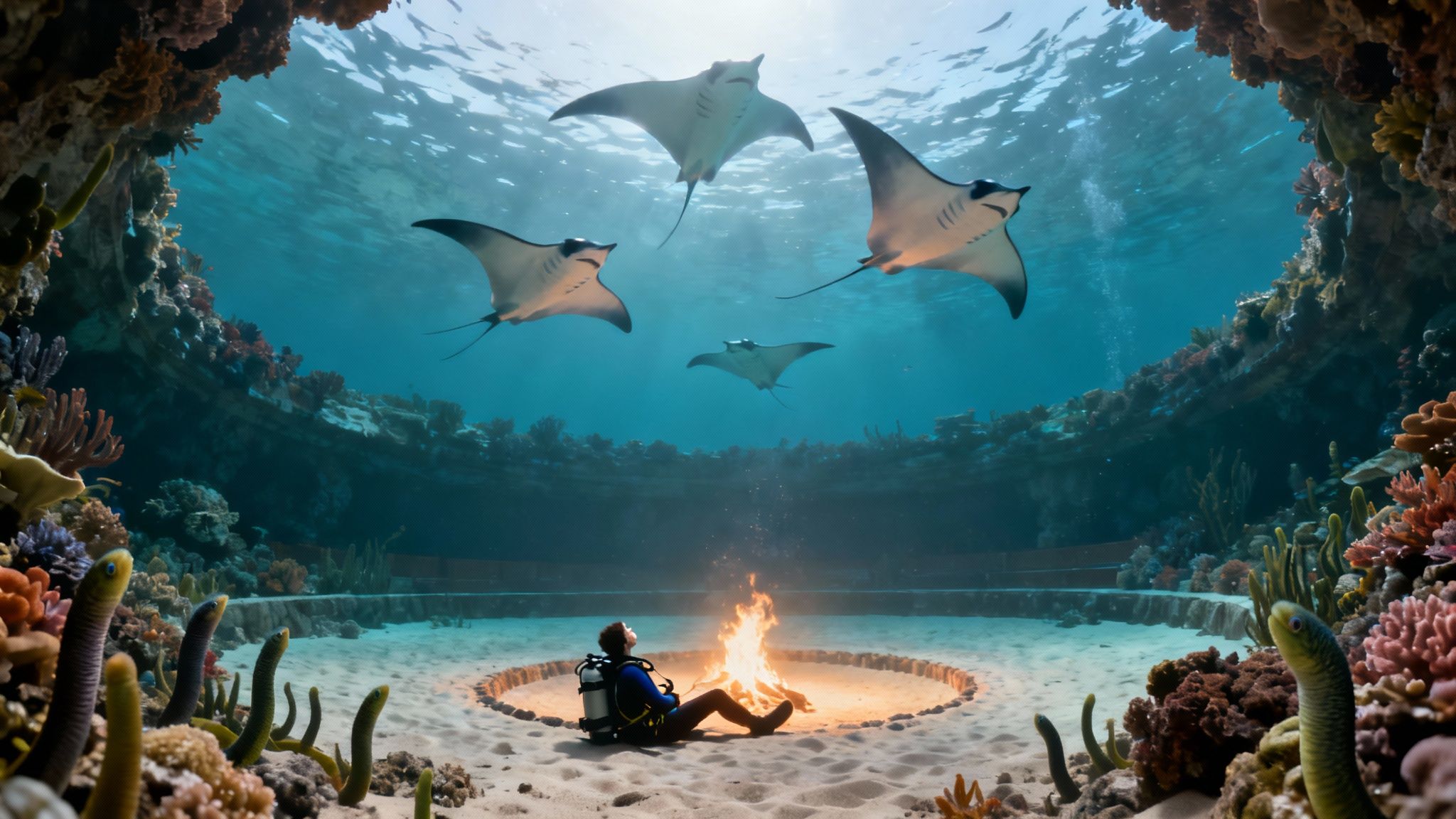
So, what’s the secret? It starts with geography. Garden Eel Cove is nestled inside a naturally protected bay, shielding it from the open ocean swells and currents that can churn up other, more exposed sites.
This natural protection means the water is almost always calm and predictable—a huge plus for any night dive. For divers, this means less time fighting surge and more time just floating in peaceful awe as the show unfolds above you. Calm water also helps plankton concentrate in the dive lights, creating a richer buffet that draws in more mantas for a longer time.
An Amphitheater Built by Nature
The physical layout of Garden Eel Cove is what truly seals the deal. The site features a wide, gently sloping patch of sand that creates a perfect underwater amphitheater. It’s almost as if nature designed it specifically for this purpose.
Dive groups can settle comfortably on the sandy bottom, arranging themselves in a semi-circle. From there, all you have to do is relax, look up, and watch the mantas perform their hypnotic, swooping ballet right overhead. You get a front-row seat to one of the most magnificent spectacles in the natural world.
This setup is brilliant because it gives everyone an unobstructed view without having to jostle for position. It's a stable, comfortable way to spend the entire dive totally immersed in the action, and it makes getting those amazing photos and videos so much easier.
More Than Just Mantas: A Thriving Reef Ecosystem
Another thing that makes Garden Eel Cove so special is that you get two world-class dives in one trip. The first dive happens at twilight, just before the main event, and the surrounding reef is absolutely teeming with life. It's a spectacular adventure all on its own.
As the sun begins to set, you'll explore a healthy, vibrant coral garden. Keep your eyes peeled for:
- Endemic Fish: Schools of colorful butterflyfish, parrotfish, and wrasses found nowhere else on Earth.
- Unique Critters: Octopuses starting their nightly hunt, moray eels peeking out from their rocky homes, and, of course, the thousands of garden eels that give the cove its name.
- Green Sea Turtles: It’s very common to spot a few Honu (Hawaiian Green Sea Turtles) settling down on the reef for the night.
This incredible twilight dive is the perfect opening act. By the time you surface, you're already buzzing with excitement, ready for the mantas to make their grand entrance. It makes the whole trip feel like a complete adventure, showcasing the very best of Kona’s marine biodiversity. You can get a deeper look into what makes this spot so incredible in our guide to Manta Ray Heaven at Garden Eel Cove.
It's this powerful combination—a protected location, the perfect viewing layout, and a stunning reef system—that makes Garden Eel Cove the absolute pinnacle of the manta ray night dive Kona experience.
How To Choose Your Manta Ray Dive Operator
Picking the right company for your manta ray night dive is probably the single most important decision you'll make for this trip. It's what separates a "good" dive from an unforgettable, once-in-a-lifetime experience. The best operators don't just ferry you out to a dive site; they curate a safe, ethical, and deeply educational encounter that puts the well-being of these incredible animals first.
Your first filter should always be the Manta Ray Green List. Think of this certification as a seal of approval. It tells you that an operator follows strict, well-established guidelines designed to protect both the mantas and their delicate environment. When you go with a Green List operator, you're directly supporting a sustainable model that helps keep this natural wonder around for years to come.
This commitment to conservation is the bedrock of what we do at Kona Honu Divers, and it’s something our guests notice and appreciate.
What Defines a Top-Tier Operator
Beyond the certification, a few things really make an operator stand out. Small group sizes are a huge one. Fewer people in the water means a more intimate and less chaotic experience, giving you a better view and more personal attention from your guide.
A knowledgeable, passionate crew is another non-negotiable. The best guides are more than just underwater tour leaders; they're marine life experts who are genuinely excited to share their world with you. They’ll give you a comprehensive pre-dive briefing that covers manta biology, their behaviors, and the crucial rules for passive interaction—the most important of which is to never, ever touch the manta rays. This context transforms the dive from just watching big fish to truly connecting with them.
A great operator understands that we are visitors in the mantas' home. Their primary goal is to facilitate a respectful encounter that is safe for both the divers and the animals.
And of course, well-maintained gear and a comfortable, properly equipped dive boat are absolute musts. Safety should be the foundation of everything else.
The Kona Honu Divers Difference
The Kona coast isn't just a place to see mantas; it's a global hotspot. This dive draws an estimated 80,000 people every year, a testament to its reliability. We see a consistent sighting success rate of 80% to 90% year-round, making it one of the most dependable big animal encounters on the planet. While some sites might average four mantas a night, a premier spot like Garden Eel Cove can have up to 11 or more gracefully gliding overhead.
At Kona Honu Divers, our entire operation is built around delivering this world-class experience responsibly. We exclusively use Garden Eel Cove because its protected setting and excellent underwater "campfire" layout consistently produce the most magical encounters. Our crew lives and breathes this stuff, and they make sure every single diver understands how to be a good guest in the mantas' world.
For a deeper dive into picking the right company for all your dives, check out our guide on how to choose a Kona dive shop. A little research upfront ensures you have an amazing, responsible adventure.
What To Expect On Your Manta Ray Night Dive
It helps to know the rhythm of the trip before you go. That way, you can just relax and soak in every single moment of the experience. Let's walk through what a typical manta ray night dive in Kona actually looks like, from the moment you step on the boat to that final, breathtaking ascent.
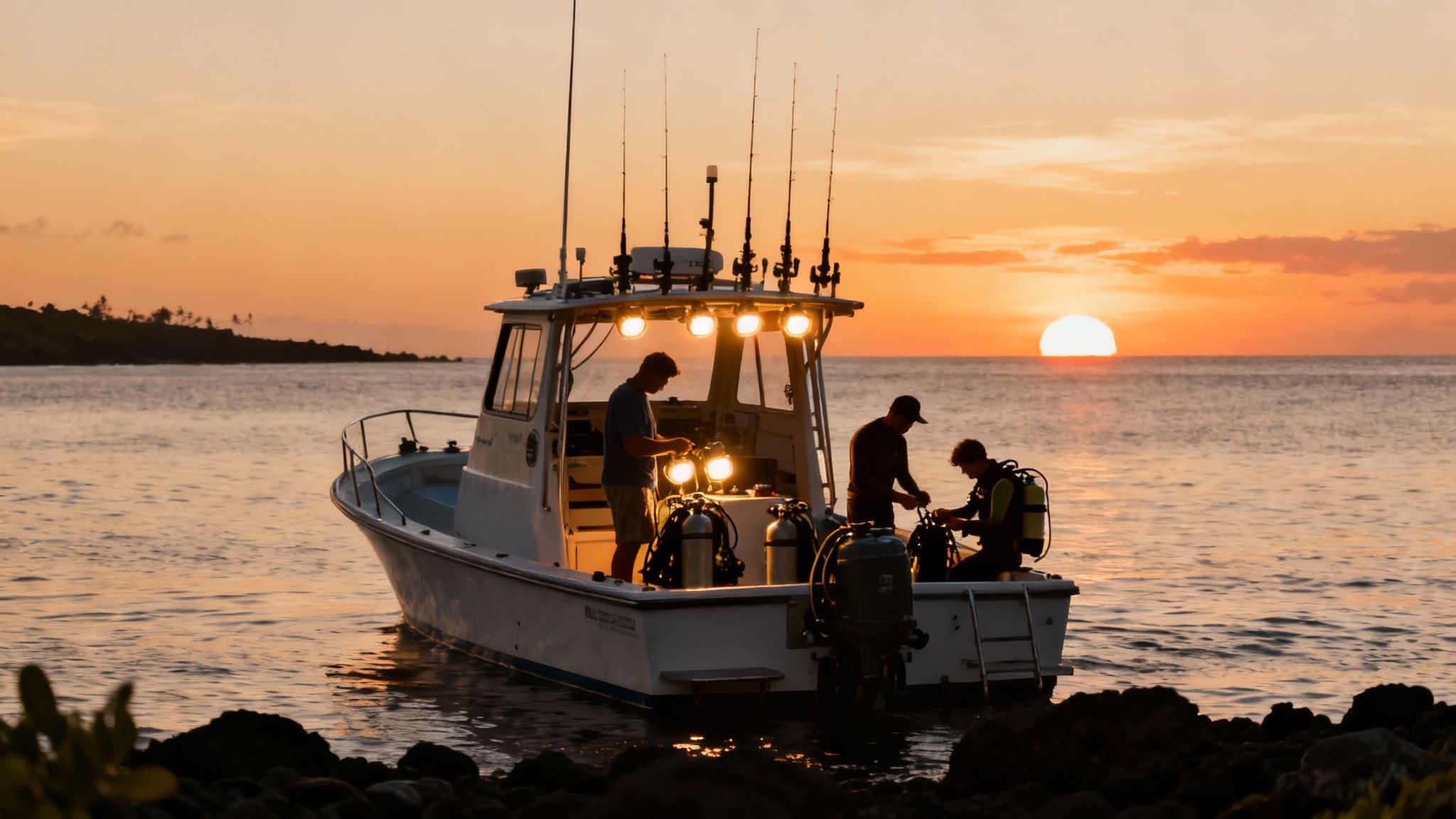
Most adventures kick off in the late afternoon with a beautiful boat ride along the Kona coast. The best operators, including those offering a top-tier 2-Tank Manta Dive, start with a twilight reef dive. This first dip is your chance to see the reef in transition—daytime critters heading to bed as the nocturnal hunters start to wake up.
After you surface, you'll have a nice break to enjoy some snacks and watch the sun melt into the Pacific. While you’re relaxing, the crew gets busy setting up the powerful underwater lights that are the key to the whole experience.
The Main Event Begins
Once the sky is completely dark, it’s time. You’ll head down for your second dive, this time to a specific viewing spot on the ocean floor. Your guide will get everyone situated on the sand, often in a semi-circle, creating what we affectionately call the human "campfire."
The crew aims the bright lights straight up, creating beams that look like something out of a sci-fi movie. This light attracts a massive cloud of plankton, which is exactly what the mantas are here for. Then, you wait. But you usually don't have to wait long.
Before you know it, a giant, shadowy shape glides out of the darkness. For the next 45 to 60 minutes, you'll have a front-row seat to one of nature's greatest shows. The mantas swoop, soar, and perform graceful barrel rolls right through the light beams, sometimes coming within inches of your head.
That Unforgettable Feeling of a Close Encounter
There's really nothing that can prepare you for how surreal it feels to be that close to these gentle giants. It's a peaceful, almost spiritual experience. You’ll feel the gentle push of water as their huge wings pass by and get a perfect view of the unique spot patterns on their bellies. It's a silent, mesmerizing ballet.
What makes Kona so special is just how reliable this encounter is. Research conducted between 2009 and 2014 showed incredibly predictable patterns, with an average of six mantas per night at Manta Village and some incredible nights boasting over 36 individuals! With sightings on about 80% of nights, it’s no wonder the manta ray night dive in Kona is world-famous. You can dive deeper into the research behind Kona's manta ray sightings to see just how unique this ecosystem is.
To give you a better idea of the flow, here’s a look at a typical itinerary for a two-tank manta ray trip.
Your Kona Manta Ray Night Dive Itinerary
| Phase | Approximate Timing | Key Activities |
|---|---|---|
| Check-in & Departure | 3:00 PM – 4:00 PM | Meet the crew, gear up, and get your initial briefing as the boat heads to the dive site. |
| Twilight Reef Dive | 4:30 PM – 5:30 PM | Explore a vibrant Kona reef as daytime fish prepare for the night and nocturnal creatures begin to emerge. |
| Surface Interval | 5:30 PM – 6:30 PM | Enjoy snacks and the sunset while the crew prepares the lights for the manta dive. |
| Manta Ray Night Dive | 6:30 PM – 7:30 PM | Descend to the "campfire" and watch the manta rays perform their incredible feeding ballet. |
| Return to Harbor | 7:30 PM – 8:30 PM | Enjoy a warm drink and share stories with fellow divers during the relaxing boat ride back. |
This timeline gives you a great framework, but remember that every trip is unique.
The absolute best thing you can do to get a great view is to stay calm and still on the bottom. Good buoyancy control is your best friend here, as it helps you stay put without kicking up sand. Just settle in, breathe, and let these magnificent animals put on a show you'll be talking about for the rest of your life.
How To Prepare for a Safe and Amazing Dive
The secret to turning a great manta ray dive into an unforgettable, once-in-a-lifetime experience? It's all in the preparation. When you feel confident, comfortable, and know exactly what's coming, you can ditch the pre-dive jitters and just soak in the incredible show happening right in front of you.
This really comes down to three things: sharpening your skills, packing smart, and getting in the right headspace.
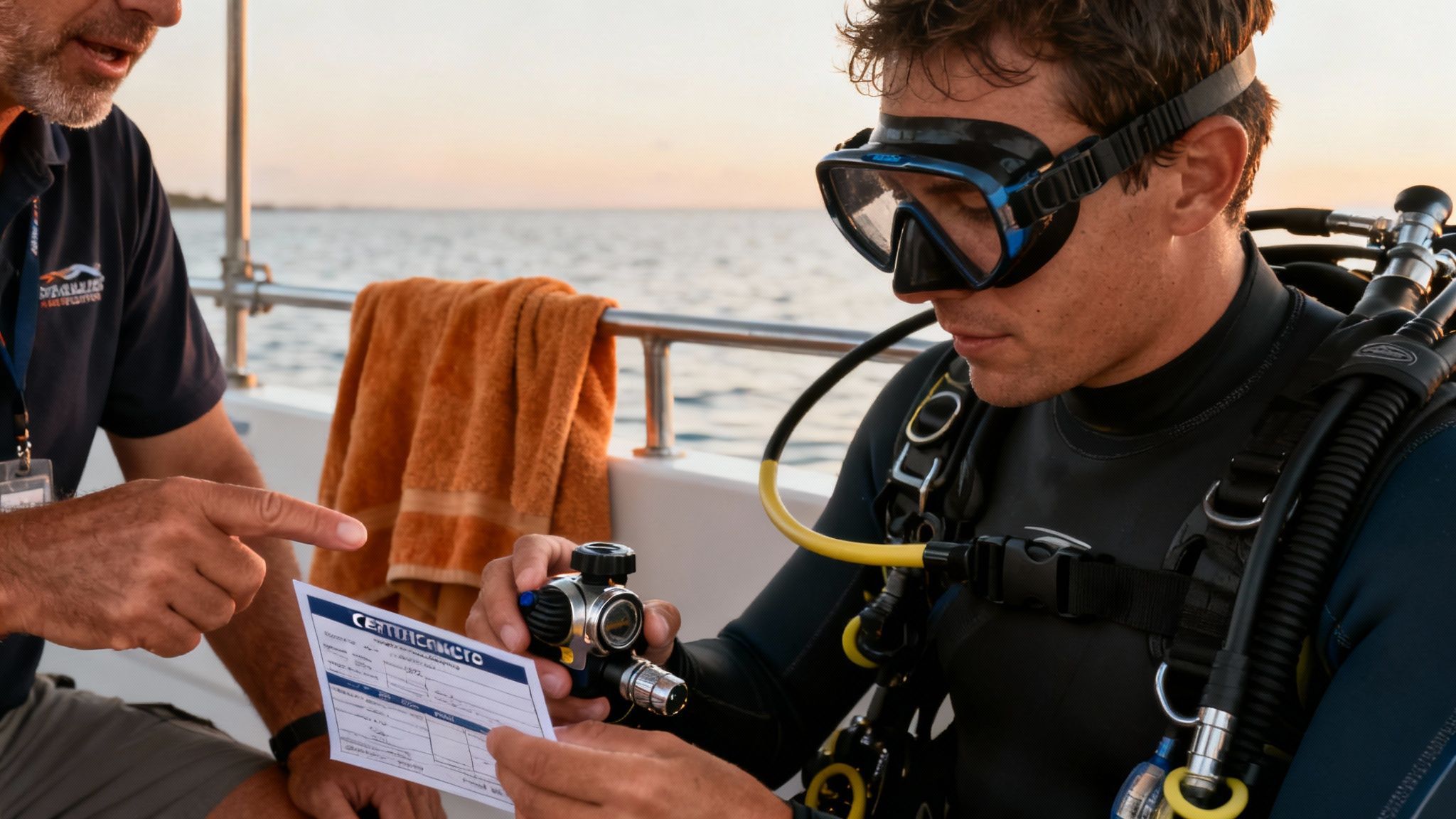
First things first, you don't need to be a divemaster, but you absolutely must have at least an Open Water certification. More than that, you need to be genuinely comfortable in the water after dark. The name of the game is staying still on the sandy bottom, so having rock-solid buoyancy control is key. Nobody wants a face full of sand, and good buoyancy ensures a clear view for everyone.
And please, don't forget your certification card! If it’s been a year or more since you last logged a dive, I strongly recommend a refresher course. It’s a fantastic way to knock the rust off, boost your confidence, and let you truly relax and enjoy the main event.
What to Pack for Your Trip
Packing the right gear is all about comfort. Your dive operator will handle the heavy stuff—tanks, regs, BCDs—but a few personal items can make all the difference.
- Swimwear: The easiest approach is to wear it under your clothes. You'll be ready to gear up the moment you get on the boat.
- Towel: Seems obvious, but you’d be surprised how often it's forgotten!
- A Warm Layer: Even in paradise, that boat ride back can get surprisingly chilly once you’re out of the water. A hoodie or a light jacket is a lifesaver.
- Personal Dive Gear: If you have a mask that fits your face perfectly or a computer you know inside and out, bring it! There’s nothing like the comfort of your own gear.
For a complete checklist, our guide on the gear you will need for your Kona diving adventure breaks down everything you might want to bring.
The Golden Rules of a Safe Manta Dive
Your dive guide will walk you through a detailed safety briefing, but a few rules are so critical they’re worth knowing before you even step on the boat. These aren't just about keeping you safe; they're about protecting the fragile marine environment and the magnificent mantas themselves.
The Kona manta population is a world-renowned natural treasure. Researchers have cataloged over 300 individual rays from more than 10,000 documented sightings. It's why some operators can report an incredible 85-90% success rate. This amazing ecosystem, which has been thriving since the early 1990s, depends on all of us being responsible divers.
The number one rule is simple but absolute: Never touch the manta rays. Their skin is covered in a protective mucus layer, and even a gentle touch from us can strip it away, leaving them vulnerable to nasty infections. Let them be the ones to get close.
Your guide will also stress other important points, like staying with your group, keeping a close eye on your air, and being mindful of where you place your hands and fins on the seafloor. By preparing ahead of time and respecting these rules, you're setting yourself up for a safe, respectful, and truly mind-blowing adventure.
Beyond the Mantas: More World-Class Diving in Kona
The Kona manta ray night dive is an experience that changes people. It’s a breathtaking, almost surreal underwater ballet you'll carry with you long after you've dried off. But as unforgettable as it is, it's really just the beginning of what the Big Island has to offer. Think of it less as a grand finale and more as the perfect introduction to Hawaii's incredible underwater world.
The same volcanic geology and pristine waters that create a haven for manta rays have sculpted a diver's paradise along the entire coast. Once you've seen the gentle giants, the natural next question is, "What else is out there?" The answer is, a lot. Kona’s coastline is a maze of dramatic lava tubes, stunning archways, and vibrant coral gardens teeming with life. From the moment you drop in, you’re surrounded by a kaleidoscope of endemic fish, ancient green sea turtles, and even frequent fly-bys from playful dolphins or majestic sharks. Every dive here peels back another layer of Hawaii's rich biodiversity.
The Famous Kona Blackwater Dive
If the manta dive ignited a passion for exploring the ocean after dark, your next adventure is waiting out in the deep. The Kona Blackwater Dive is a pelagic experience so unique it's hard to compare it to anything else. It's an otherworldly journey into the open ocean, far from any reef.
So, what’s it like? You're tethered to the boat, suspended in the inky blackness, as bizarre and beautiful creatures ascend from the abyss. You're literally watching the largest nightly migration on Earth as tiny, translucent larval creatures, glowing jellies, and other rarely-seen organisms float up to feed. It feels less like an ocean dive and more like floating through deep space. For any diver seeking something truly different, this is an absolute must.
Advanced Diving and Unique Topography
Ready to take your skills up a notch? Kona is home to some of the most spectacular underwater landscapes on the planet, where the raw, creative power of the island's volcanic origins is on full display. Our premium advanced diving tours are specifically designed to get you into these incredible formations.
Picture yourself navigating through ancient lava tubes, swimming under arches carved by the ocean over millennia, or exploring deep reefs that plunge into the mysterious blue. These advanced sites are magnets for larger marine life, including various shark species, eagle rays, and if you’re lucky, even whale sharks. These dives demand solid buoyancy control and an adventurous spirit, but the payoff is seeing a side of Kona that few ever experience.
At Kona Honu Divers, we're dedicated to showing you everything this amazing island has to offer. The manta dive is just the start. Let us show you the rest.
Explore our full range of Kona diving tours and find your next underwater obsession.
Your Manta Dive Questions, Answered
Have questions about the Kona manta ray night dive? You're not alone. Here are the answers to the most common queries we get, so you can feel completely prepared for this incredible adventure.
Is The Manta Ray Night Dive Safe?
Absolutely. When you go with a professional, reputable operator, the manta dive is an extremely safe and well-managed experience. The manta rays themselves are the definition of gentle giants—they’re filter feeders with no teeth, barbs, or stingers. They are completely harmless to people.
The real focus is simply on following standard night diving procedures. Your dive guide will give you a comprehensive briefing before you even get in the water, covering everything from how the group will operate to underwater communication. It’s all designed to make sure you feel confident and secure from start to finish.
When Is The Best Time Of Year To Go?
Here's the great news: there really isn't a bad time! The Kona manta ray night dive is a year-round spectacle. The local manta population sticks around all year, so you have an excellent chance of an amazing encounter whenever you visit. Sighting success rates are consistently over 90%.
That said, if you're looking for the calmest, glassiest water, the summer months are often your best bet. From about May through September, the ocean surface tends to be smoother, which can make the boat ride out and your time on the surface a little more comfortable.
The most important rule of the dive is also the simplest: Never touch the manta rays. This protects their delicate skin and ensures a respectful, sustainable encounter for years to come.
What If I’m Not A Certified Diver?
No problem at all! You don't need a scuba tank on your back to witness this underwater ballet. Most dive boats, including ours at Kona Honu Divers, run an amazing snorkel experience at the same time. It’s perfect for non-divers, families, or anyone who just prefers staying at the surface.
Snorkelers get their own custom-built, floating light board to hold onto. These boards shoot powerful beams of light down into the water, attracting the plankton just like the divers' lights on the seafloor. The mantas swim right up to the surface to feed, giving you a breathtaking, up-close view that’s every bit as magical as what the divers see below.
Can I Touch The Manta Rays?
This is a hard no, and it's the single most important rule of the dive. You must never, ever touch the manta rays. Their skin is covered in a delicate slime coat, which is their primary defense against harmful bacteria and infections.
Touching them, even with the lightest graze, can rub off this protective layer and leave them vulnerable to disease. Every responsible operator in Kona is strict about this "passive observation" rule. We're guests in their home, and our goal is to watch their incredible natural behavior without interfering.
Ready to witness this underwater ballet for yourself? Join Kona Honu Divers for the adventure of a lifetime. Book your spot on the world-famous 2-Tank Manta Ray Night Dive and prepare to be amazed.