
Picture this: a colossal, graceful creature with a wingspan wider than a car emerges from the darkness, gliding silently past you, just feet away. This isn't something you watch on a nature channel; this is the Kona manta ray night dive, an experience so profound it’s consistently ranked as one of the best underwater encounters in the world.
Why Kona is the World’s Manta Ray Capital
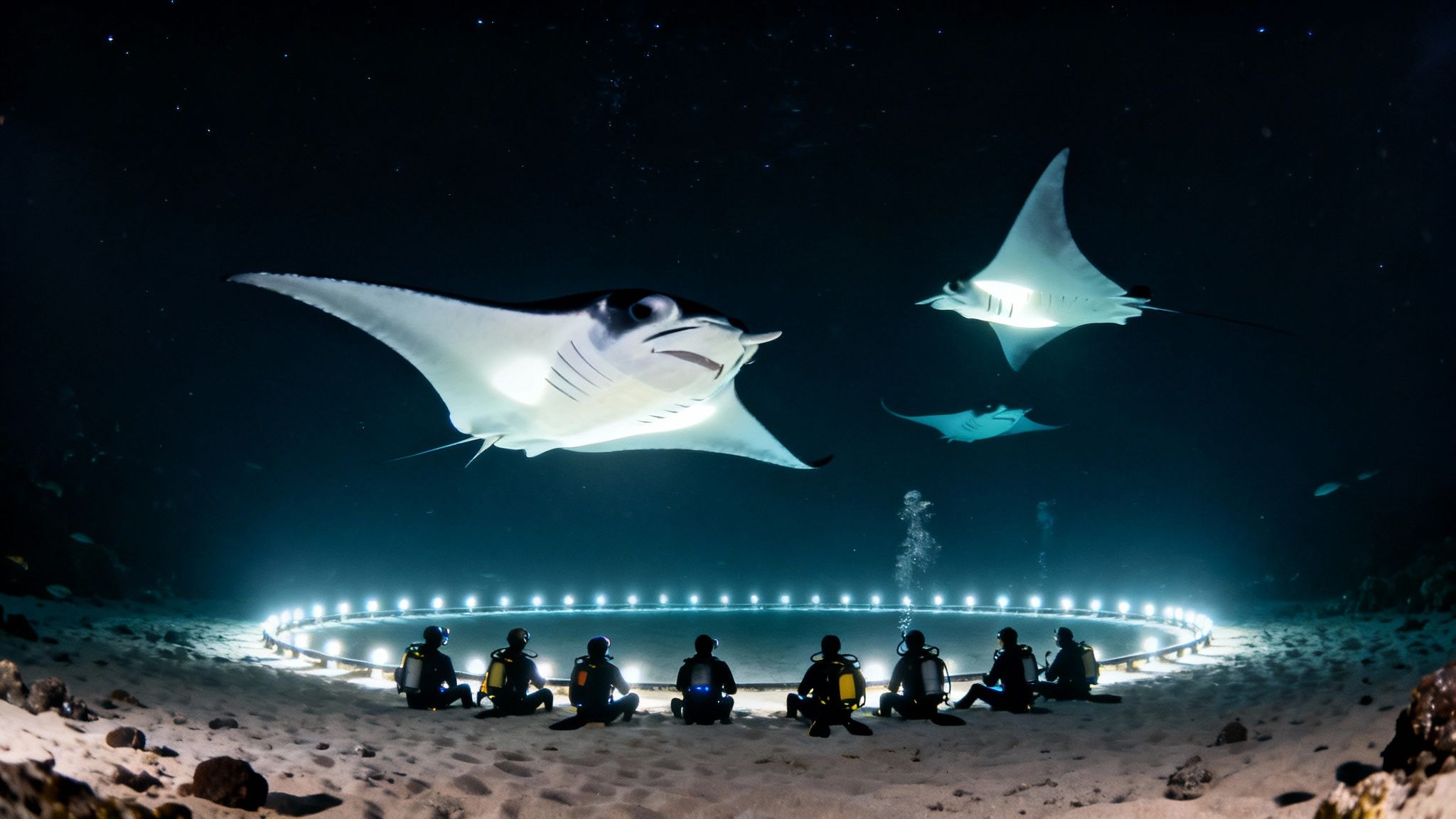
So, how did the Kona coast earn its title as the most reliable place on the planet to see manta rays? The secret is actually pretty simple, and it's brilliant. After the sun sets, dive operators head to specific sites and shine powerful lights into the water. We affectionately call this the "underwater campfire."
These lights attract a massive buffet of microscopic plankton, which is exactly what manta rays love to eat. The gentle giants show up for their nightly feast, swooping and barrel-rolling through the beams of light with their huge mouths wide open. It’s this predictable, nightly gathering that creates such a reliable and jaw-dropping show for anyone in the water.
An Unmatched Success Rate
The manta ray night dive has become a cornerstone of marine tourism in Kailua-Kona, drawing around 80,000 visitors every single year. But what truly sets Kona apart is the incredible success rate. You have an 80% to 90% chance of seeing mantas on any given night, all year long. That kind of dependability for a wild animal encounter is almost unheard of, making Kona the undisputed champ for manta sightings.
I’ve been on hundreds of these dives, and I still get chills. The feeling of watching a massive fish shaped like a stealth bomber materialize out of the dark is just impossible to describe. It’s pure magic, every single time.
Your Front-Row Seat to Nature's Ballet
Whether you're a certified scuba diver settled on the sandy bottom or a snorkeler floating up on the surface, you get a front-row seat to the performance. You'll watch these majestic animals—some with wingspans stretching over 15 feet—effortlessly glide just inches from you in a silent, mesmerizing underwater ballet.
For a deep dive into everything this experience entails, check out the ultimate guide to the Kona Manta Ray Night Snorkel. Going with a top-notch, responsible operator is key to ensuring the encounter is safe, respectful, and absolutely unforgettable.
Choosing the Best Manta Ray Dive Site
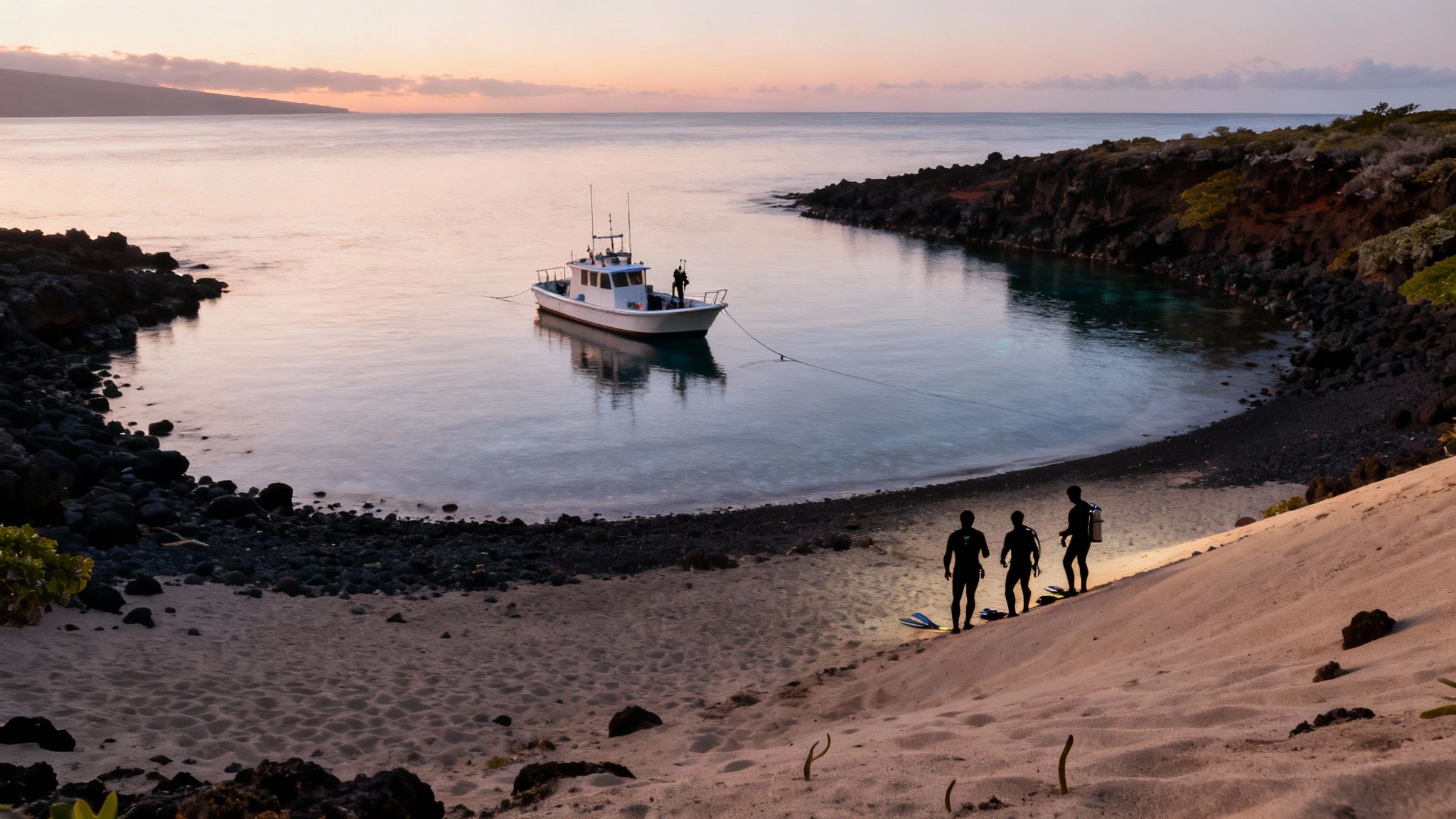
When you're gearing up for a manta ray night dive in Kona, the single most important decision you'll make is where you go. There are two main spots, and they are not created equal. For the superior choice, Garden Eel Cove is the hands-down winner. We affectionately call it "Manta Heaven" for a reason. Tucked away in a naturally protected bay up by the Kona airport, its location is its superpower.
Being shielded from the big, open-ocean swells means the boat ride is smoother and the water is calmer. This is a huge deal, especially at night. More importantly, it means far fewer trips get canceled because of rough weather, which is the last thing you want after getting excited for your dive.
The Perfect Underwater Amphitheater
What really makes Garden Eel Cove the superior site is the setup underwater. Imagine a huge, sandy patch sitting in about 35-40 feet of water, completely surrounded by a beautiful, healthy coral reef. This sandy bottom creates a perfect natural amphitheater for the main event.
Dive operators set up a collection of powerful lights—what we call the "campfire"—right in the middle of the sand. As a diver, you get to settle in on the soft sand around the edge, giving you an amazing, unobstructed, front-row seat. The mantas swoop and glide right over your head as they feed. No jockeying for position, and no risk of accidentally bumping into fragile coral. This organized viewing area and the healthier surrounding reefs are precisely why Garden Eel Cove delivers a more reliable and jaw-dropping show every time.
Want to dive deeper into the different spots? You can learn more about where to see manta rays in Hawaii in our complete guide.
Why Location Matters for Your Dive
So, what about the other main spot? It's called "Manta Village," and it's located further south. The biggest difference is its exposure to the open ocean. While you can certainly see mantas there, the conditions can be a lot rougher on the surface and the surge can be stronger underwater. On some nights, this can make for a much less comfortable dive and, frankly, increases the chances of your tour being called off.
To help you see the differences side-by-side, here's a quick comparison of the two main Kona manta ray dive sites.
Kona Manta Ray Dive Site Comparison
| Feature | Garden Eel Cove (Superior Choice) | Manta Village |
|---|---|---|
| Location | North Kona, near the airport | South Kona, near Keauhou Bay |
| Protection | Well-protected in a natural bay | Exposed to open ocean swells |
| Conditions | Consistently calm, minimal surge | Can be rough, stronger surge |
| Reef Health | Healthier, more vibrant reef | Reefs can show more impact |
| Viewing Area | Sandy "amphitheater" for front-row seats | Divers hold onto a rock ledge |
| Comfort | High; easy to settle on the sand | Moderate; holding on can be tiring |
Ultimately, choosing the right spot is about stacking the odds in your favor for an unforgettable night.
The protected nature of Garden Eel Cove is a game-changer. It not only enhances safety and comfort but also contributes to the high success rate of sightings, making it the most dependable stage for Kona's nightly manta ray spectacle.
When you book a manta ray dive tour, you’re investing in a once-in-a-lifetime memory. Going with an operator that heads to the superior Garden Eel Cove site helps ensure that your memory is filled with calm water, impossibly close encounters, and pure underwater magic.
What to Expect on Your Manta Adventure
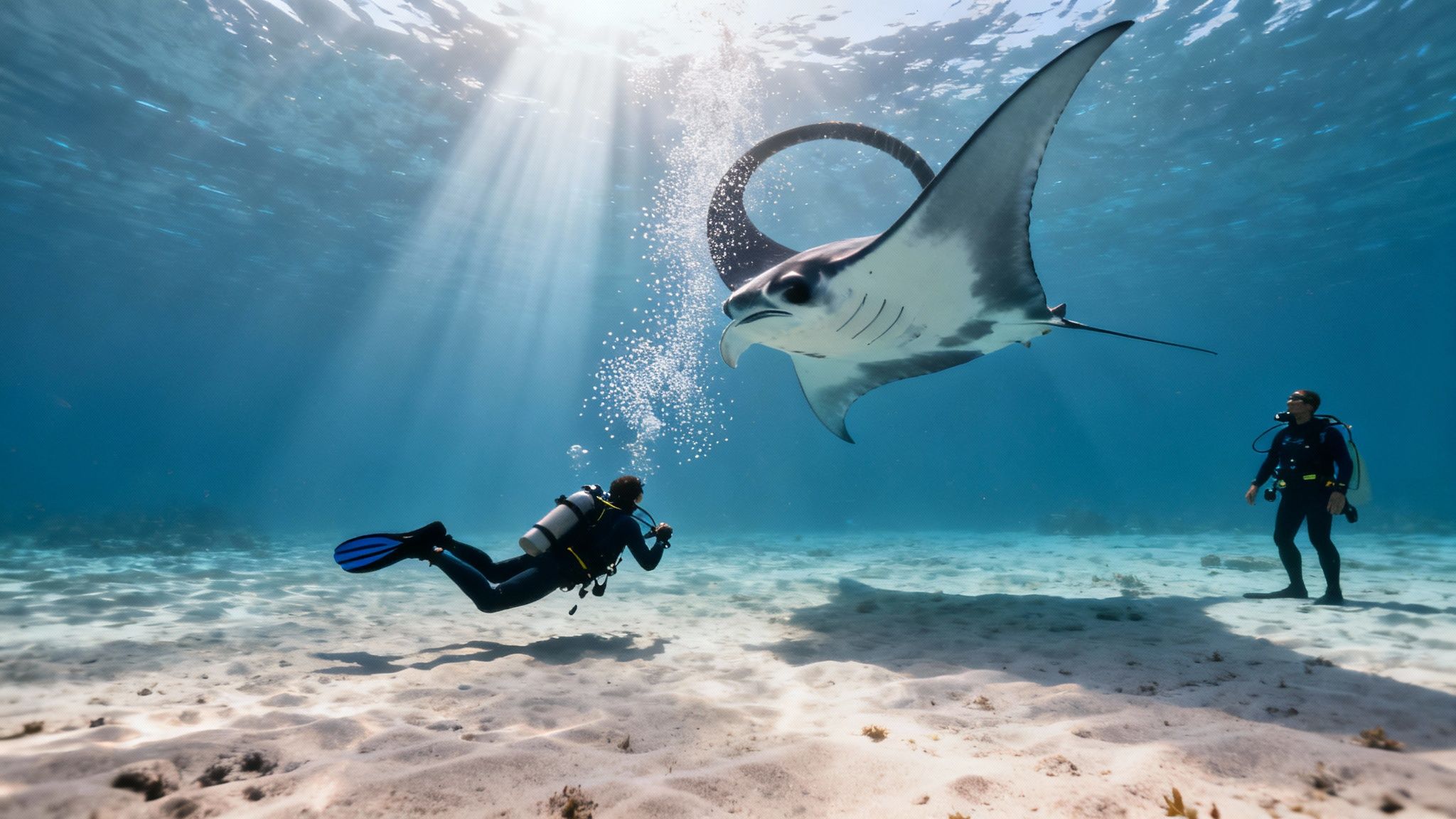
The moment you arrive at the dock, you can feel the excitement. There’s a palpable buzz in the air as you and the other divers and snorkelers get ready for one of the most incredible experiences of your life. Before you even set foot on the boat, your crew will walk you through a detailed briefing, covering everything from safety procedures to the best ways to respectfully interact with the mantas.
The boat ride out to the dive site is an event in itself. As you leave the harbor, you’re treated to a front-row seat for a stunning Kona sunset painting the sky over the Pacific. It's the perfect backdrop to get your gear prepped and soak in the anticipation of what’s to come.
The Twilight Reef Dive
If you've booked a two-tank trip, your adventure often begins with a gorgeous twilight reef dive. This is your chance to get comfortable in the water and explore the reef as it transitions from day to night. You'll see the daytime fish finding their spots to sleep while the nocturnal creatures start to stir. It's a fantastic warm-up for the main show.
Once the last bit of daylight fades, things really get going. The crew will set up what we call the "underwater campfire"—a circle of powerful lights placed on the sandy bottom. This bright beacon is the secret sauce for the entire experience, essentially becoming a giant magnet for plankton.
The Main Event: The Manta Ray Ballet
Those bright lights attract a massive cloud of plankton, which is dinner for the manta rays. As a diver, you'll settle onto the sand around the lights, forming a kind of natural amphitheater. Your job is simple: get comfortable, look up, and wait for the performance to begin.
It doesn’t take long. Soon, the first graceful shadow emerges from the darkness. Manta rays, some with wingspans stretching over 12 feet, glide into the light to feed. They swoop and soar in mesmerizing barrel rolls, sometimes passing just inches above your head with their huge mouths open to filter the water. It's a silent, awe-inspiring ballet. To get a real sense of this, you can read more about what it's like to go on the manta ray dive in Kona.
There’s nothing quite like the feeling of a 1,000-pound animal gliding silently over you. You can feel the water displaced by their wings, yet they move with unbelievable precision. It's a moment of pure, humbling connection with nature.
Snorkelers get an equally breathtaking view from the surface. You'll hold onto a specially designed floatation board that has its own powerful lights pointing down, creating another feeding station. The mantas come right up to the surface, performing their acrobatics just feet below you.
Throughout the dive, experienced divemasters are in the water with everyone. They’re there to ensure your safety, but just as importantly, they're monitoring the mantas to make sure our interaction is safe and respectful for them. Their expert guidance is what makes the manta ray night dive Kona a truly sustainable and world-class adventure.
The Best Time of Year for Your Manta Dive
One of the first questions on every diver’s mind is, “When should I book my manta ray night dive in Kona?” The simple, and frankly fantastic, answer is: anytime you can get here. Kona’s manta rays are residents, not tourists. They stick around all year, so you have an excellent chance to see their mesmerizing underwater ballet no matter which month you visit.
That said, while the mantas are always here, the ocean conditions do shift with the seasons. The main difference you'll experience has more to do with the weather on the surface than the number of mantas you’re likely to see below.
Planning for the Best Conditions
If you're aiming for the smoothest boat ride and clearest water, Kona's dry season is a great bet. Typically running from April to October, this period often delivers calmer seas and excellent visibility, which can definitely enhance the adventure. But don't count out the winter months—they can also serve up spectacularly flat and beautiful nights on the water.
Ultimately, the number that matters most is the sighting success rate, and it’s consistently sky-high. Tour operators across Kona report an 85-90% chance of seeing mantas on any given night, regardless of the season. The exact count can fluctuate—some nights you might see a handful, others you could be surrounded by over thirty—but the odds are always stacked in your favor. For a more detailed breakdown of seasonal trends, you can learn more about the best time to see manta rays in Kona in our dedicated article.
To give you a real-world example of this variability, sighting data from a single week in June showed nightly encounters ranging from 14 to 33 mantas. This highlights the natural ebb and flow of the encounters while proving just how incredibly reliable the experience is. This is exactly what makes Kona a premier global destination for marine life. You can even read more about these manta sighting patterns on uwphotographyguide.com.
The key takeaway is simple: don't overthink the calendar. The absolute best time to book your manta ray dive is whenever you can make it to Kona. The gentle giants will be here, ready for the show.
Meet Kona’s Famous Manta Ray Residents

The graceful giants you’ll meet on a manta ray night dive in Kona aren't just random visitors. They are a well-known community of year-round residents, each with a name, a distinct personality, and a history. This is what makes the Kona experience so profound—you're not just observing wildlife; you're being introduced to a celebrated and closely-studied local family.
So, how can anyone tell them apart? The secret is on their bellies. Like a human fingerprint, the pattern of black spots on each manta's white underside is completely unique. For years, veteran divemasters and researchers have used these markings to identify individuals, track their health, and follow their lives.
This simple fact completely changes the dive. It’s no longer an anonymous animal encounter. You aren't just seeing a manta ray; you might be meeting "Lefty," famous for his damaged cephalic fin, or "Big Bertha," one of the largest and most legendary matriarchs of the Kona coast. Hearing their stories adds an incredible layer of connection to the whole experience.
A Well-Documented Community
The research and conservation work here is truly world-class. Over the decades, this diligent identification effort has built an amazing database of the local population. Researchers have cataloged over 300 individual manta rays that call this area home.
This ongoing project has recorded more than 10,000 separate manta ray sightings, and new individuals are still being discovered. You can explore more about this impressive research on Oceanographicmagazine.com.
Knowing the individual mantas by name deepens the connection immeasurably. When you can point out a specific ray and share its history, it reinforces the importance of protecting these magnificent animals for future generations.
This intimate knowledge allows your dive guides to offer insights you won't get anywhere else, sharing details about the specific mantas you see barrel-rolling right in front of you.
Why This Matters for Your Dive
Diving with a well-known community of mantas elevates the entire adventure. It's a powerful example of sustainable eco-tourism in action, where your visit directly contributes to the ongoing research and protection of these incredible animals.
It’s a fantastic reminder that every graceful spin and close pass is performed by a recognized individual with a special place in Kona's underwater family.
When you book your manta ray night dive tour, you're not just signing up for a dive; you're getting an invitation to meet some of Kona's most famous and beloved residents. Make sure to ask your guide which "celebrities" have shown up for your dive!
How to Book Your Kona Manta Ray Night Dive
Alright, you're ready to take the plunge and book this incredible experience. So, what's next? Getting your spot locked in for a manta ray night dive in Kona is pretty simple, but there's one golden rule: book ahead.
This is especially true during the peak season, which runs roughly from April to October. Tours fill up fast, and you don’t want to miss out. The first, and most important, decision is choosing the right dive operator. Look for a company that’s serious about conservation, like Kona Honu Divers. We’re proud to follow the strict Manta Ray Green List guidelines, which exist to protect the mantas and their habitat.
When you’re booking, it's a good idea to double-check what's included in the price. Most operators, including our popular 2-Tank Manta Dive & Snorkel tour, will provide tanks and weights. But if you're not traveling with your own gear, you'll want to confirm the availability and cost of rental equipment like BCDs, regulators, and wetsuits.
Choosing the right operator makes all the difference. An experienced crew dedicated to conservation not only ensures a safe and spectacular dive but also contributes to the protection of these magnificent animals for future generations.
Expanding Your Underwater Adventures
The manta ray dive is an absolute must-do, but don’t let your underwater exploration end there. Kona is a world-class diving destination with plenty more to see. We offer a wide variety of other diving tours on the Big Island to round out your vacation.
Once you’ve experienced the manta ballet, why not try something completely different? The Kona Blackwater Dive is a truly unique adventure where you'll drift over the deep ocean abyss and watch as bizarre, bioluminescent creatures rise from the depths. It’s like diving in outer space.
If you’re an experienced diver looking for a daytime challenge, our advanced dive tours are perfect. We’ll take you to explore Kona’s dramatic underwater lava tubes and remote sites that most divers never get to see.
Booking your trip is the final step. With a little bit of planning, you'll soon have a front-row seat to one of the most mesmerizing shows in the entire ocean.
Your Manta Ray Night Dive Questions, Answered
Even the most seasoned travelers have questions, and when you’re about to jump into the dark ocean with giant rays, it’s only natural to have a few. Let's clear up some of the most common things people ask before they take the plunge.
Do I Have to Be a Certified Scuba Diver to Do This?
Not at all! This is one of the best parts about the Kona manta experience—it’s amazing for everyone, whether you’re a diver or a snorkeler.
Scuba divers get the awesome perspective from the seafloor, looking up as the mantas swoop and glide overhead. But snorkelers get an equally breathtaking view from the surface. You'll hold onto a specially designed light board, which acts as a float and illuminates the water below, attracting the mantas right to you. They often come within inches! This makes it a perfect adventure for families or groups with mixed experience levels.
Is It Safe to Be in the Water with Manta Rays?
Yes, it is 100% safe. Manta rays are often called "gentle giants," and they truly live up to the name.
They are completely harmless to humans. They don't have teeth, stingers, or barbs like their stingray cousins. Manta rays are filter feeders, so their only interest is in the tiny plankton that swarm around the dive lights. The professional dive operators in Kona have this down to a science, with experienced guides in the water with you the whole time, making sure both you and the mantas are safe and comfortable.
What Should I Pack for the Trip?
Packing is pretty simple. Think of it like a day at the beach, but at night.
You’ll definitely want to bring your swimsuit (many people wear it under their clothes to the boat), a towel, and something warm to put on for the ride back to shore. A hoodie or a windbreaker is a great idea, as the ocean breeze can feel pretty chilly after your swim. If you’re prone to motion sickness, it’s a good idea to take something before you get on the boat.
Most operators provide all the scuba or snorkel gear you need, but feel free to bring your own mask or fins if you have them. And while an underwater camera is a fantastic way to capture the magic, just remember the golden rule: look, but don’t touch. Keeping our distance is how we ensure these incredible animals stick around for generations to come.
Booking ahead is always a smart move to guarantee you get a spot on this once-in-a-lifetime adventure.